
Evolution of Pertussis Diagnostic Testing in the U

- Slides: 19
Evolution of Pertussis Diagnostic Testing in the U. S. : 1990 -2008 National Immunization Conference April 22, 2010 Atlanta, GA Amanda Faulkner, MPH Meningitis and Vaccine Preventable Diseases Branch National Center for Immunization and Respiratory Diseases Centers for Disease Control and Prevention
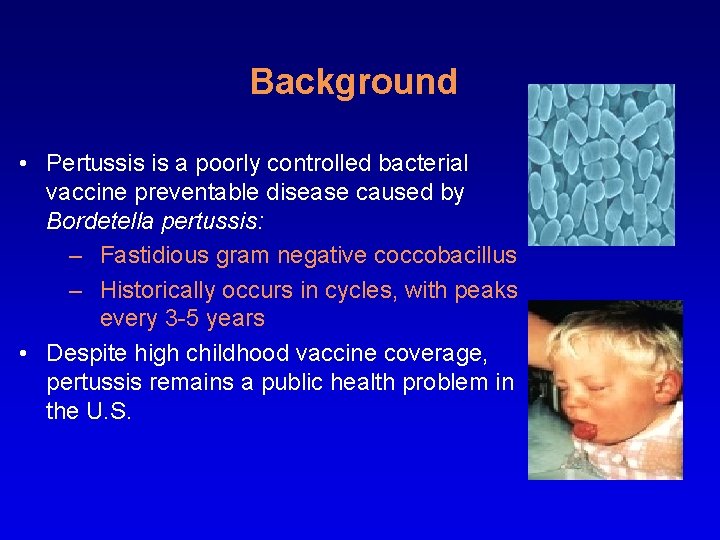
Background • Pertussis is a poorly controlled bacterial vaccine preventable disease caused by Bordetella pertussis: – Fastidious gram negative coccobacillus – Historically occurs in cycles, with peaks every 3 -5 years • Despite high childhood vaccine coverage, pertussis remains a public health problem in the U. S.
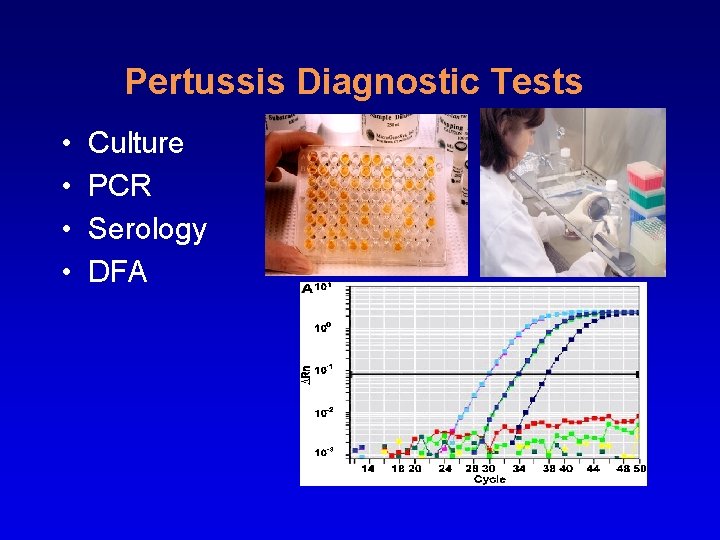
Pertussis Diagnostic Tests • • Culture PCR Serology DFA
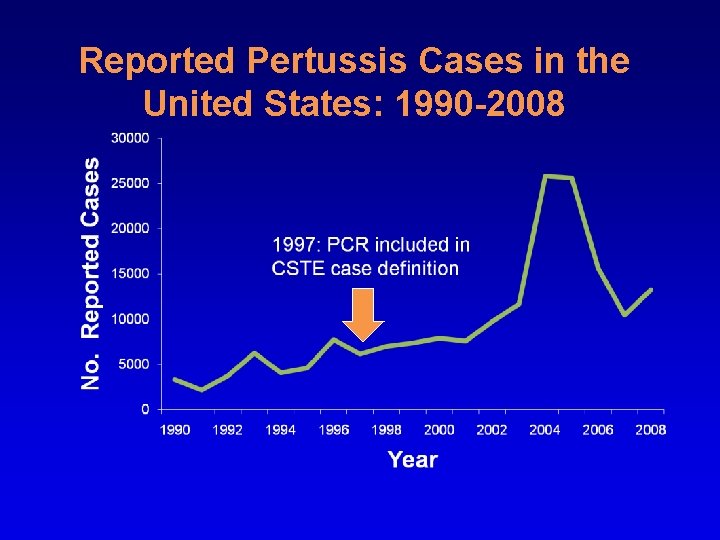
CSTE Case Definition for Pertussis • Clinical case definition: Cough ≥ 2 weeks AND paroxysms, inspiratory whoop, or posttussive vomiting Probable -Meets clinical case definition Confirmed - Culture positive + cough any duration - PCR positive* + clinical case definition - Epi link* + clinical case definition *Added to the CSTE case definition in 1997
Reported Pertussis Cases in the United States: 1990 -2008
Methods • Analyzed NNDSS data 1990 -2008 for all reported cases of pertussis • Identified all laboratory tests performed on each case reported • Lab test reported did not have to be positive to be included
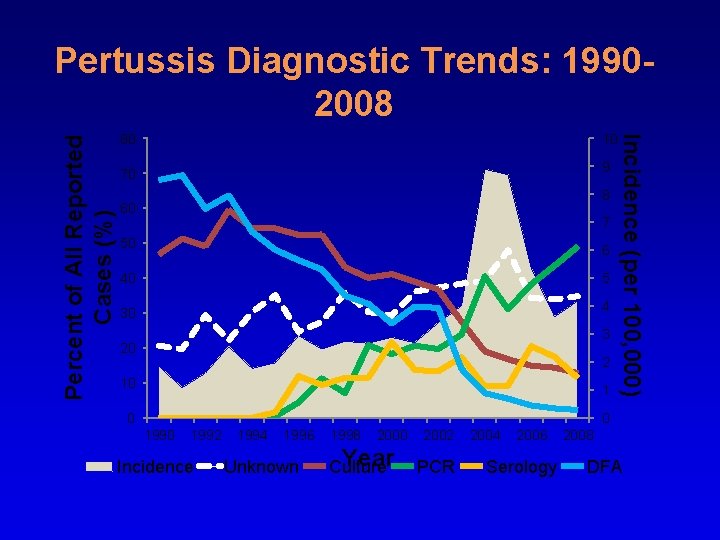
80 10 70 9 8 60 7 50 6 40 5 30 4 3 20 2 10 1 0 0 1992 Incidence 1994 1996 Unknown 1998 2000 Year Culture 2002 PCR 2004 2006 Serology Incidence (per 100, 000) Percent of All Reported Cases (%) Pertussis Diagnostic Trends: 19902008 DFA
No. of Tests Reported Test Type by Age: 2008 4000 3500 3000 2500 2000 1500 1000 500 0 <1 1 -4 5 -9 10 -14 15 -18 19+ Unknown Age (years) PCR Culture Serology DFA No Test
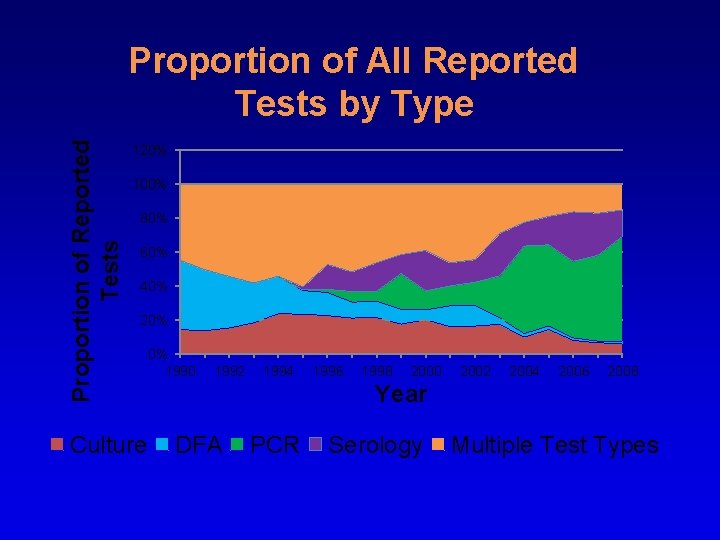
Proportion of Reported Tests Proportion of All Reported Tests by Type 120% 100% 80% 60% 40% 20% Culture 0% 1990 1992 1994 1996 1998 2000 2002 2004 2006 2008 Year DFA PCR Serology Multiple Test Types
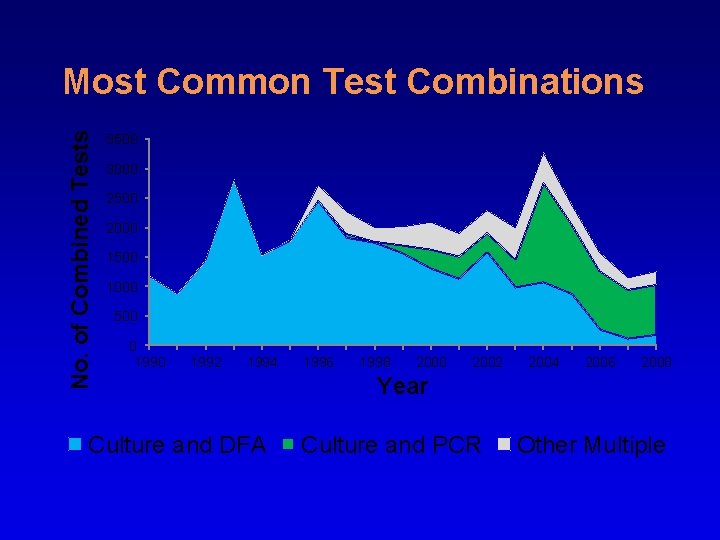
No. of Combined Tests Most Common Test Combinations 3500 3000 2500 2000 1500 1000 500 0 1992 1994 Culture and DFA 1996 1998 2000 2002 2004 2006 2008 Year Culture and PCR Other Multiple
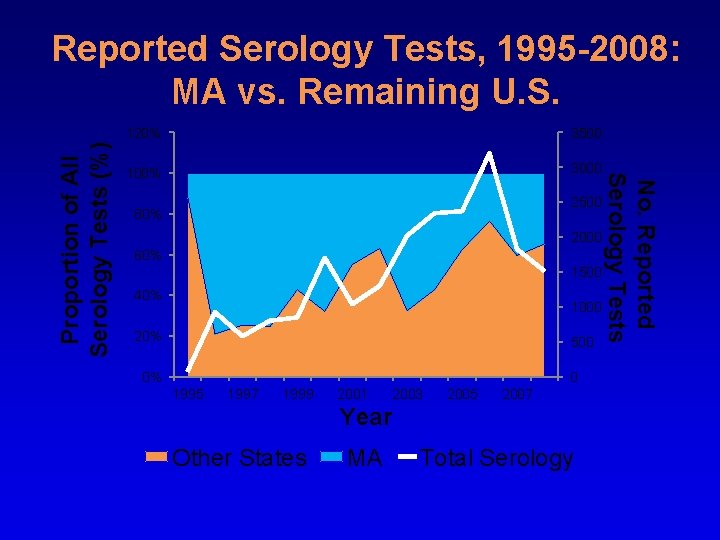
120% 3500 100% 3000 2500 80% 2000 60% 1500 40% 1000 20% 500 0% 0 1995 1997 1999 2001 2003 2005 2007 Year Other States MA Total Serology No. Reported Serology Tests Proportion of All Serology Tests (%) Reported Serology Tests, 1995 -2008: MA vs. Remaining U. S.
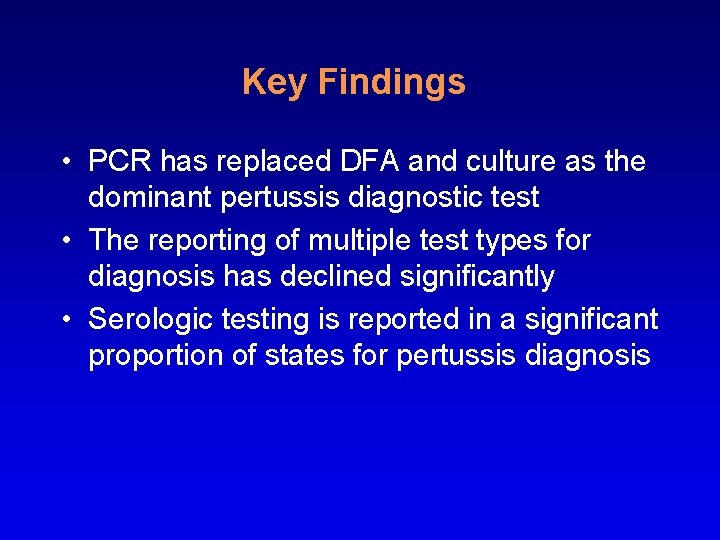
Key Findings • PCR has replaced DFA and culture as the dominant pertussis diagnostic test • The reporting of multiple test types for diagnosis has declined significantly • Serologic testing is reported in a significant proportion of states for pertussis diagnosis
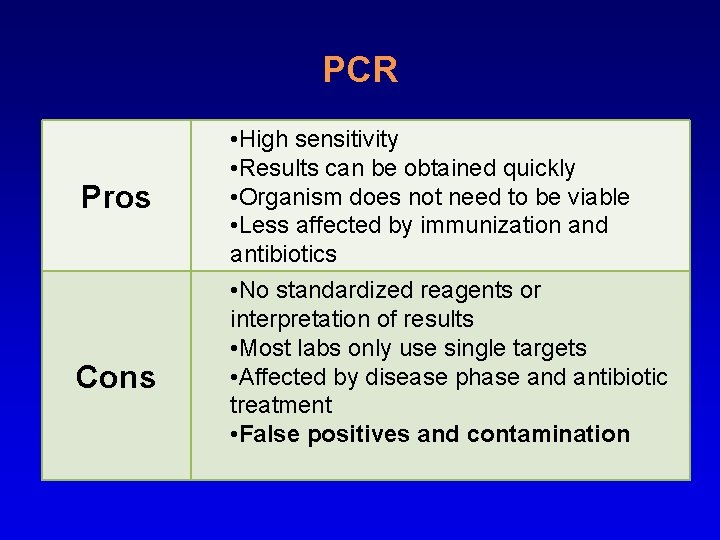
PCR Pros Cons • High sensitivity • Results can be obtained quickly • Organism does not need to be viable • Less affected by immunization and antibiotics • No standardized reagents or interpretation of results • Most labs only use single targets • Affected by disease phase and antibiotic treatment • False positives and contamination
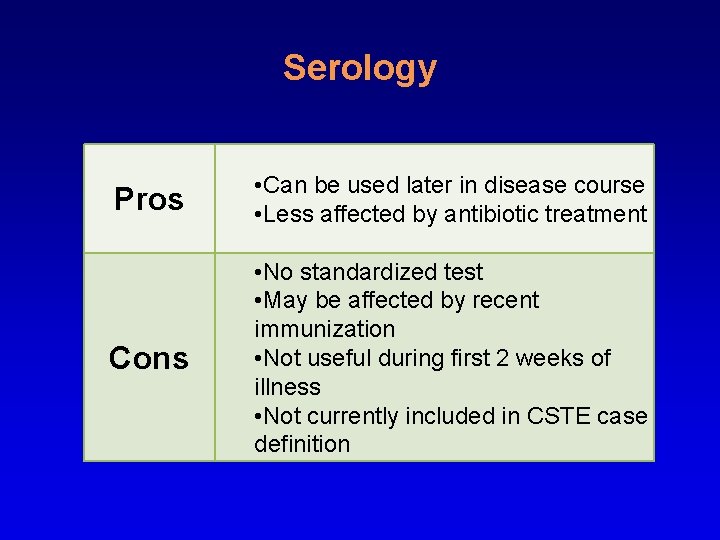
Serology Pros • Can be used later in disease course • Less affected by antibiotic treatment Cons • No standardized test • May be affected by recent immunization • Not useful during first 2 weeks of illness • Not currently included in CSTE case definition
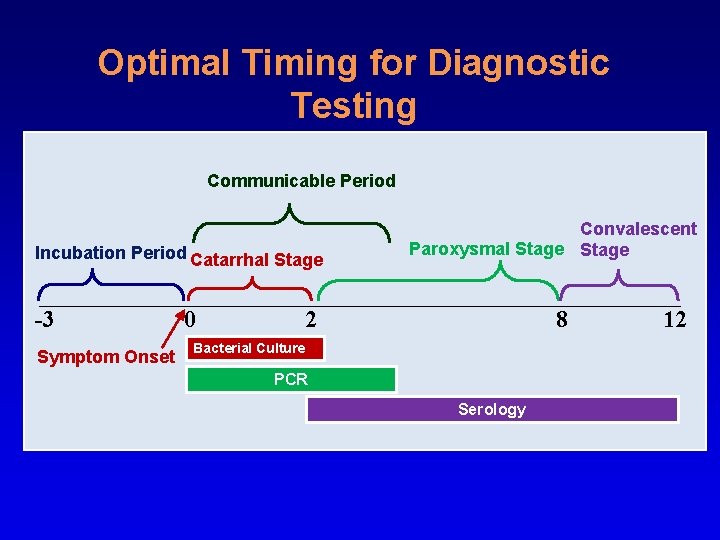
Optimal Timing for Diagnostic Testing Communicable Period Incubation Period Catarrhal Stage -3 Symptom Onset 0 Convalescent Paroxysmal Stage 2 8 Bacterial Culture PCR Serology 12
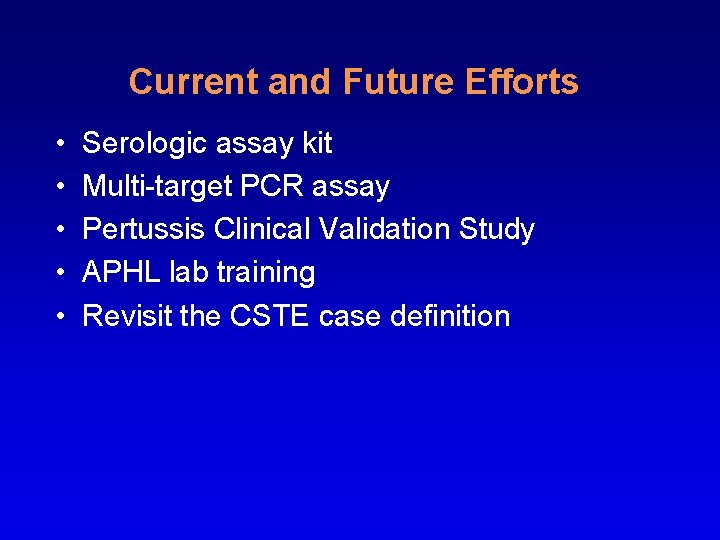
Current and Future Efforts • • • Serologic assay kit Multi-target PCR assay Pertussis Clinical Validation Study APHL lab training Revisit the CSTE case definition
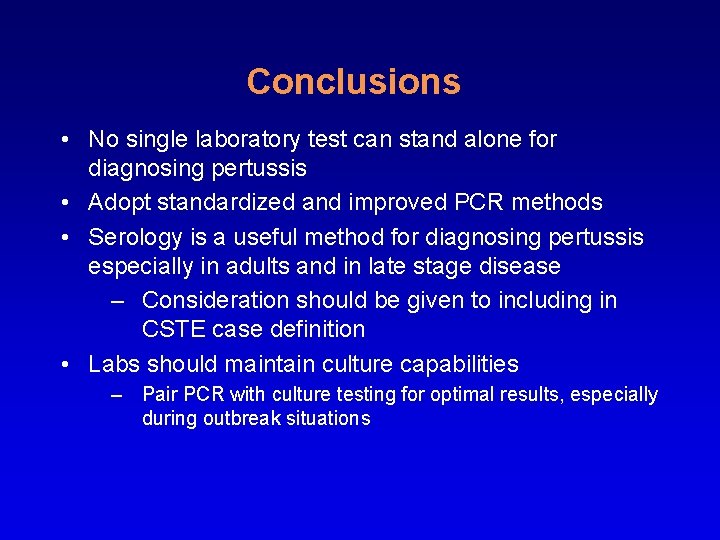
Conclusions • No single laboratory test can stand alone for diagnosing pertussis • Adopt standardized and improved PCR methods • Serology is a useful method for diagnosing pertussis especially in adults and in late stage disease – Consideration should be given to including in CSTE case definition • Labs should maintain culture capabilities – Pair PCR with culture testing for optimal results, especially during outbreak situations
Acknowledgements Stacey Martin Christine Mitchell Tami Skoff Tom Clark Grace Ejigiri Nancy Messonnier Lucia Pawloski Kathi Tatti Monte Martin Kathryn O’Connell Lucia Tondella Pam Cassiday
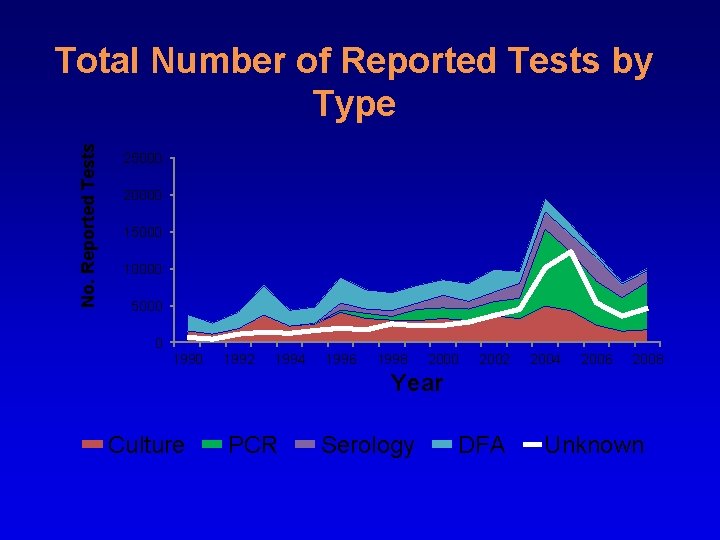
No. Reported Tests Total Number of Reported Tests by Type 25000 20000 15000 10000 5000 0 1992 1994 1996 1998 2000 2002 2004 2006 2008 Year Culture PCR Serology DFA Unknown