
Evolution of Music 11 th century 1600 s
- Slides: 28
Evolution of Music 11 th century 1600 s 1800 s … 2010
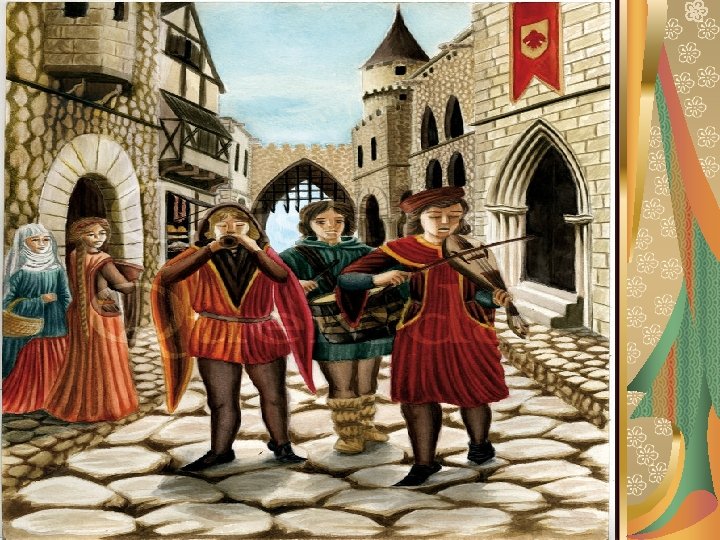
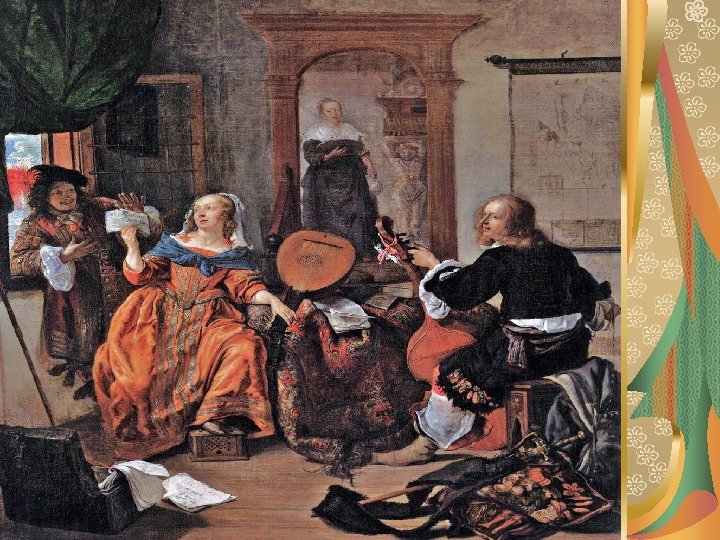
11 th century Medieval music is Wester music written during the Middle Ages. This era begins with the fall of the Roman Empire and ends sometime in the early fifteenth century. Medieval music was both sacred and secular. The music theory of the Medieval period saw several advances over previous practice both in regard to tonal material, texture, and rhythm.
1600 s Start of monody which will last until the 1700 s. Monody refers to an accompanied solo music. The said book (Le Nuove Musiche ) is a collection of songs for the figured bass and solo voice, it also included madrigal. Le Nuove Musiche is considered one of Caccini's most important work. 1650 - During this era, musicians did a lot of improvisation. The basso continuo or figured bass is music created by combining keyboard music and one or more bass instruments. The period from 1650 to 1750 is known as the Age of Instrumental Music where other forms of music developed including the suite and sonata.
1800 s There was a wide variety of music in the 1800 s. There were classical composers Dance music was very popular, the waltz became widely popular in the 1800 s, There were many popular songs, some of them very sentimental, others comic. From the 1880 s, the operettas of Gilbert and Sullivan were extremely popular, everyone would have been familiar with the songs and music from The Mikado, HMS Pinafore, Pirates of Penzance, Iolanthe, The Gondoliers etc. Until the late 1800 s, if people wanted music at home, they had to make their own. Every household that could afford it had a piano, and children would have piano lessons (girls in particular would learn as a regular thing)
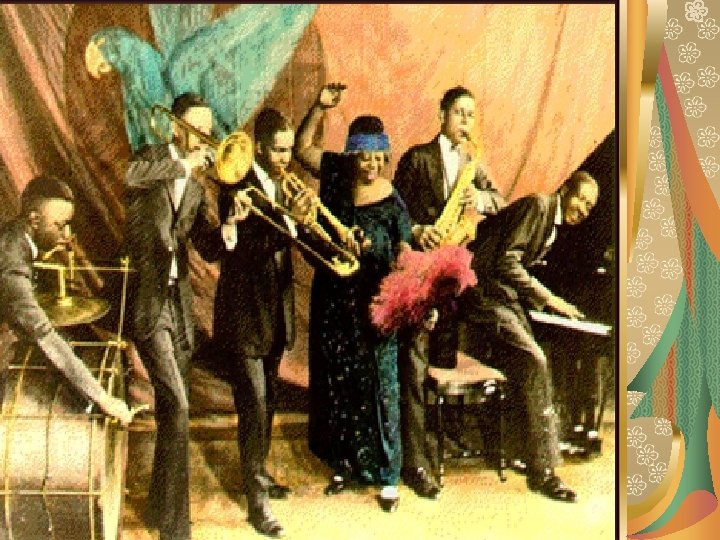
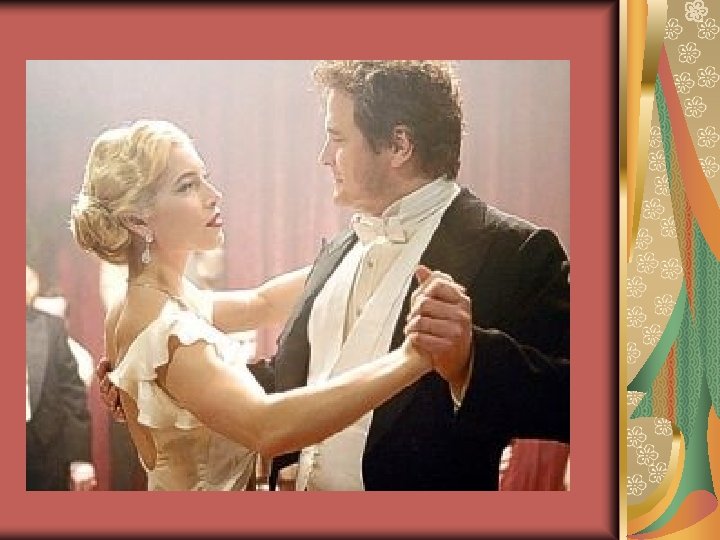
1910 s The 1910 s were called the Ballroom Decade. Many of the trendier restaurants were equipped with dance floors. Black Americans continued to write and perform ragtime, blues and jazz. Popular songs of the decade (many made popular because of WWI) included Alexander's Ragtime Band, Danny Boy, You Made Me Love You (Al Jolson), Ah! Sweet Mystery of Life, The Aba Daba Honeymoon, and All I Do is Dream of You.
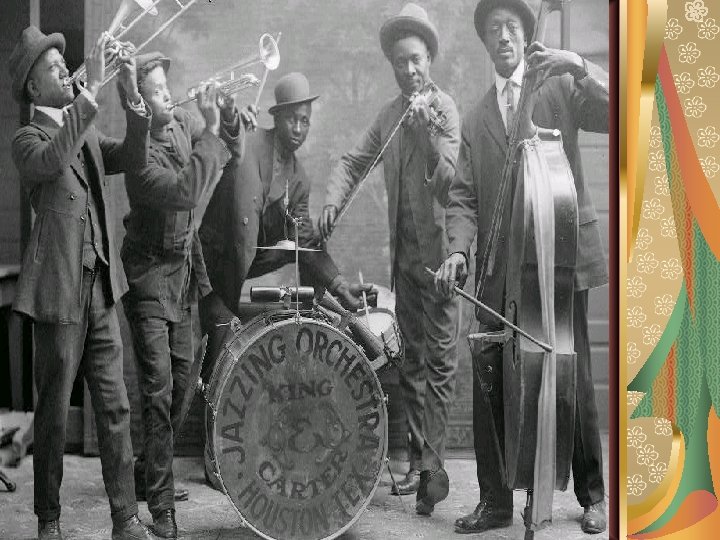
1920 s The period from the end of the First World War until the start of the Depression in 1929 is known as the "Jazz Age". Jazz had become popular music in America, although older generations considered the music immoral and threatening to old cultural values. Dances such as the Charleston and the Black Bottom were very popular during the period, and jazz bands typically consisted of seven to twelve musicians.
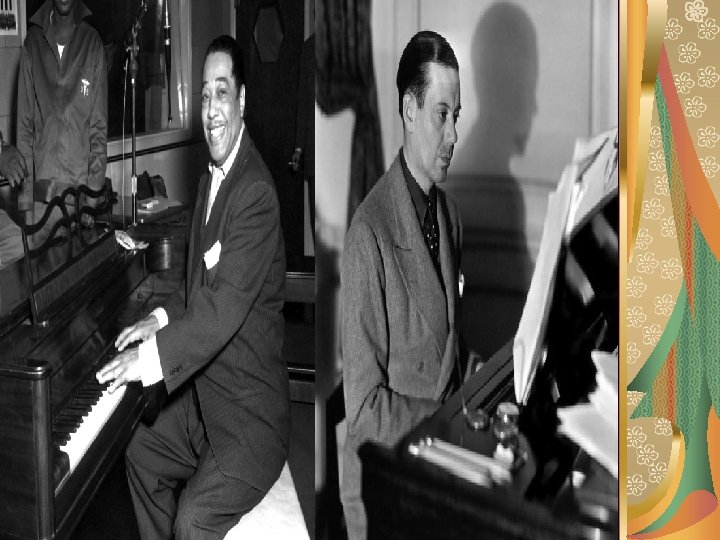
1930 s-1940 s Pop: In the US, by the late 1930 s and early 1940 s, swing music had become the most popular musical style and remained so for several years, until it was supplanted* in the late 1940 s by the pop standards sang by the crooners who grew out of the big band Swing Era tradition. Jazz: In the 1940 s, pure jazz began to become more popular, along with the blues, with artists like Ella Fitzgerald ("ATisket, A-Tasket") and. Billie Holiday ("Strange Fruit") becoming nationally successful. Country music: Throughout the 1930 s and 1940 s, cowboy songs, or Western music, became widely popular through the romanticization of the cowboy and idealized depictions of the west in Hollywood films. In the post-war period, country music was called "folk" in the trades, and "hillbilly" within the industry.
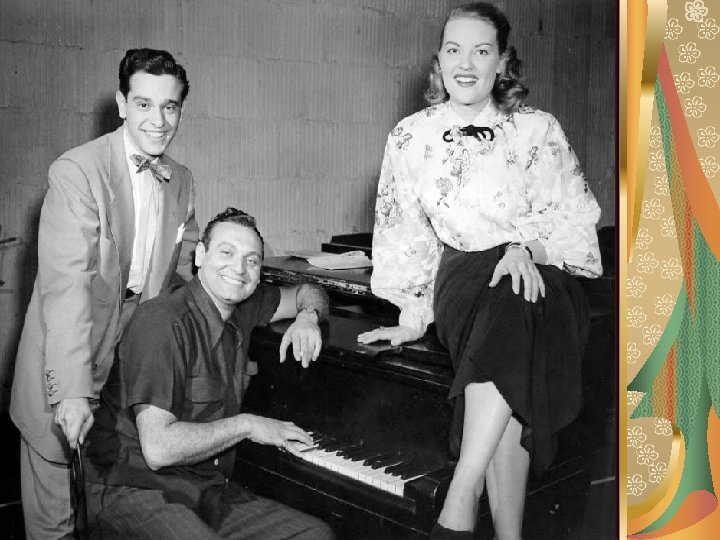
1950 s The 1950's were a time of changes and the music of the decade both reflected the cultural changes that were happening while still holding on to the societal norms of the past. Following the detrimental effects of World War II, the United States was about to embark on a musical journey that would change the face of music for decades to come. Racial tensions were being strained with the beginning of the civil rights movement and music reflected many of those tensions. Rhythm & Blues (R&B) and Rock 'n' Roll popularized "black" music and many African-American musicians rose to prominence* and enjoyed success, but while some were able to reap the benefits of their work, many others were forgotten or denied access to audiences through segregation.
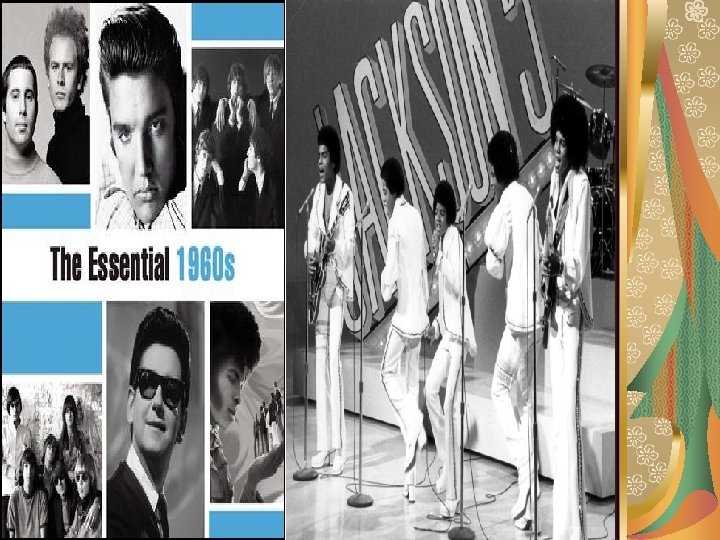
1960 s-1970 s The 60 s began with soul music topping the charts, including pure soul divas and singers specializing in the new, R&B-gospel fusion with a secular approach. Later specialties in soul cropped up, including girl groups, blue - eyed soul, brown-eyed soul, Memphis soul, Philly soul and, most popular, Motown. In North America, Europe, and Oceania, the decade saw the rise of disco, which became one of the biggest genres of the decade, especially in the mid-to-late 1970 s. In Europe, a variant known as Euro disco rose in popularity towards the end of the 1970 s. Aside from disco, funk, smooth jazz, jazz fusion, and soul remained popular throughout the decade. Rock music played an important part in the Western musical scene, with punk rock thriving throughout the mid to late 1970 s.
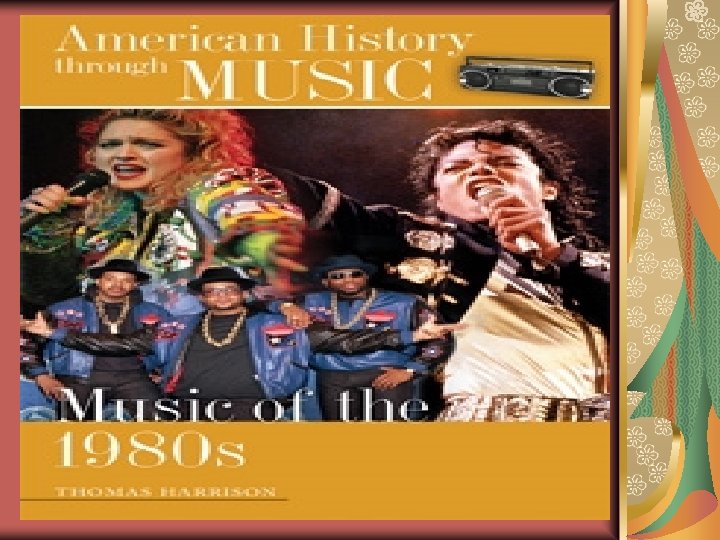
1980 s Popular music of the United States in the 1980 s saw New Wave entering the year as the single biggest mainstream market, with heavy metal, punk , rock and hardcore punk, and hip hop achieving increased crossover success. With the demise of punk rock, a new generation of punk-influenced genres arose, including Gothic rock, post-punk, alternative rock, emo and thrash metal. Hip hop underwent its first diversification, with Miami bass, Chicago hip house, Washington DC go-go, Detroit ghettotech, Los Angeles electroclash and the golden age of old school hip hop in New York City. House music developed in Chicago, techno music developed in. Detroit which also saw the flowering of the Detroit Sound in gospel*. This helped inspire the greatest crossover success of Christian Contemporary Music (CCM), as well as the Miami Sound of Cuban pop.
1990 s Popular music in the 1990 s saw the continuation of teen pop and dance -pop trends which had emerged in the 1970 s and 1980 s. Furthermore, hip hop grew and continued to Popular music in the 1990 s saw the continuation of teen pop and dance-pop trends which had emerged in the 1970 s and 1980 s. Furthermore, hip hop grew and continued to be highly successful in the decade, with the continuation of the genre's golden age. Aside from rap, contemporary R&B and urban music in general remained extremely popular throughout the decade; urban music in the late-1980 s and 1990 s often blended with styles such as soul, funk and jazz, resulting in fusion genres such as new jack swing, neo-soul hip hop soul and g-funk which were popular. be highly successful in the decade, with the continuation of the genre's golden age. Aside from rap, contemporary R&B and urban music in general remained extremely popular throughout the decade; urban music in the late-1980 s and 1990 s often blended with styles such as soul, funk and jazz, resulting in fusion genres such as new jack swing, hop soul and g-funk which were popular.
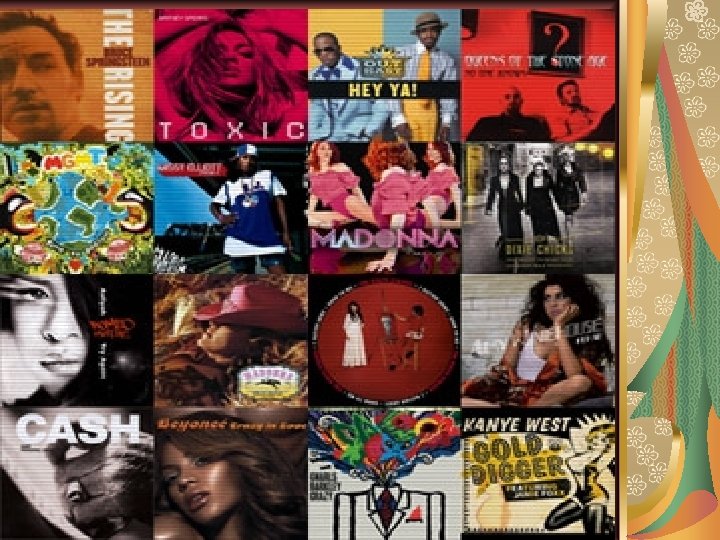
2000 s Hip hop: Hip hop dominated popular music in the early 2000 s. Artists such as Eminem, 50 Cent, The Black Eyed Peas, T. I. , Nas, Jay-Z, Snoop Dogg, Missy Elliott, Lil Wayne and Ludacris were among the dominant mainstream hip hop artists to have represented the Hip hop genre for the decade.
Rock Post-grunge Hard rock, alternative metal and heavy metal Pop punk Emo Alternative rock and Indie rock Garage rock, post-punk and new wave revival Indie rock Pop Adult contemporary Contemporary R&B Country Reggae
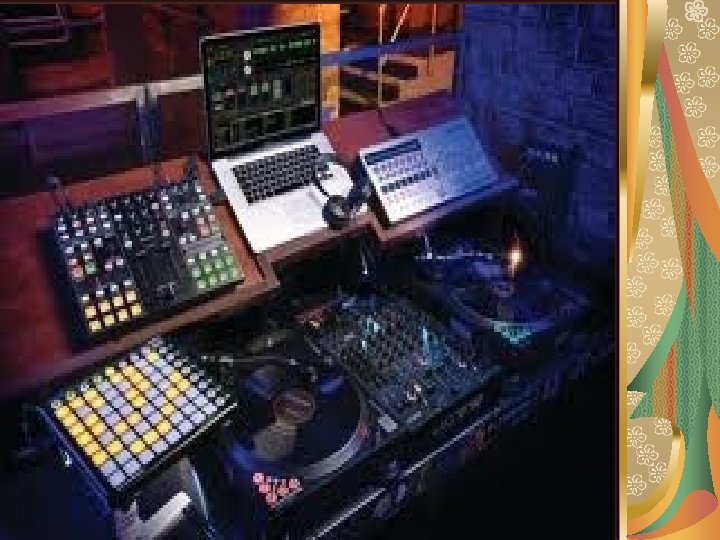
2010 s In North. America, Europe and Oceania the second wave synthpop, electronic music, alternative music, indie music, teen pop, dance music, dancepop, glitchpop and electropop genres have been popular. Whilst, the melismatic vocals popular in the 1990 s and 2000 s in pop and R&B music lost favor by 2010, with vocally lower-key artists such as Kesha, Cheryl Cole, and Katy Perry starting to outsell new releases by perennial melismatic favourites like Mariah Carey.
Πηγές: http: //en. wikipedia. org/wiki/1920 s_in_jazz http: //kclibrary. lonestar. edu/decade 10. html http: //en. wikipedia. org/wiki/Music_history http: //en. wikipedia. org/wiki/Baroque_music http: //en. wikipedia. org/wiki/Medieval_music http: //en. wikipedia. org/wiki/1940 s_in_music http: //www. thepeoplehistory. com/50 smusic. html http: //en. wikipedia. org/wiki/Music_history_of_the_United_Sta tes_in_the_1960 s http: //en. wikipedia. org/wiki/1970 s_in_music http: //en. wikipedia. org/wiki/Music_history_of_the_United_Sta tes_in_the_1980 s http: //en. wikipedia. org/wiki/1990 s_in_music http: //en. wikipedia. org/wiki/2000 s_in_music http: //en. wikipedia. org/wiki/2010 s_in_music