
Evolution of models of atomic structure Breakdown of
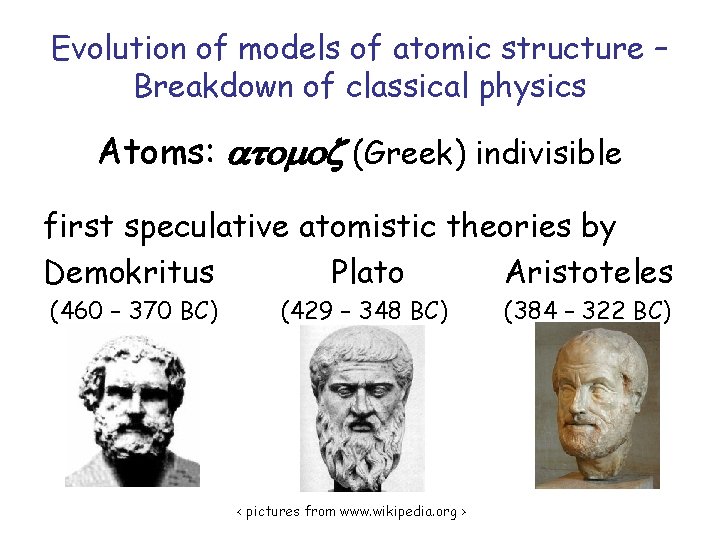
Evolution of models of atomic structure – Breakdown of classical physics Atoms: atomo (Greek) indivisible first speculative atomistic theories by Demokritus Plato Aristoteles (460 – 370 BC) (429 – 348 BC) < pictures from www. wikipedia. org > (384 – 322 BC)
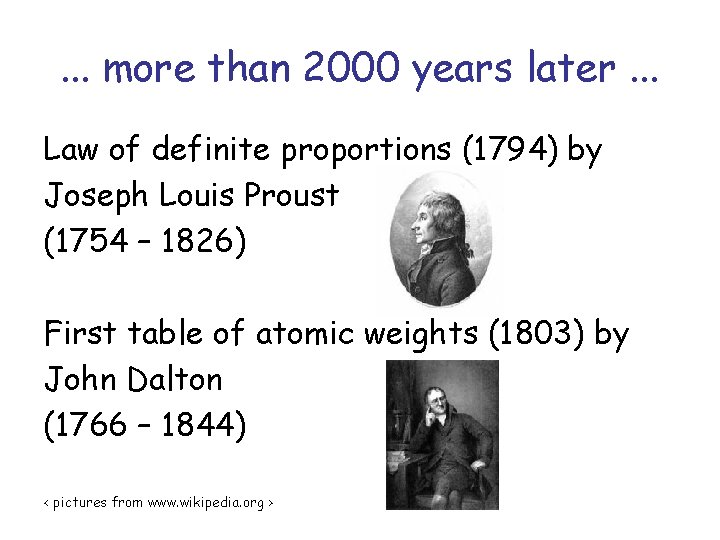
. . . more than 2000 years later. . . Law of definite proportions (1794) by Joseph Louis Proust (1754 – 1826) First table of atomic weights (1803) by John Dalton (1766 – 1844) < pictures from www. wikipedia. org >
. . . more than 2000 years later. . . 1833: “atomic properties” of electricity in electrolysis found by Michael Faraday (1791 -1861) < picture from www. wikipedia. org >
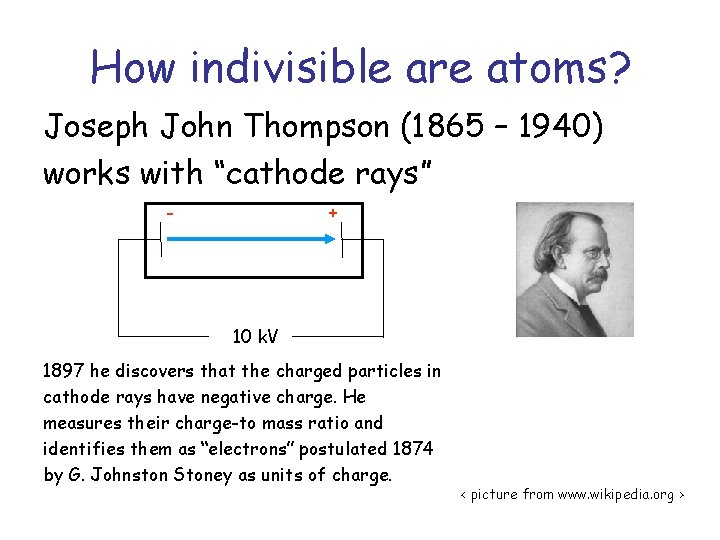
How indivisible are atoms? Joseph John Thompson (1865 – 1940) works with “cathode rays” - + 10 k. V 1897 he discovers that the charged particles in cathode rays have negative charge. He measures their charge-to mass ratio and identifies them as “electrons” postulated 1874 by G. Johnston Stoney as units of charge. < picture from www. wikipedia. org >
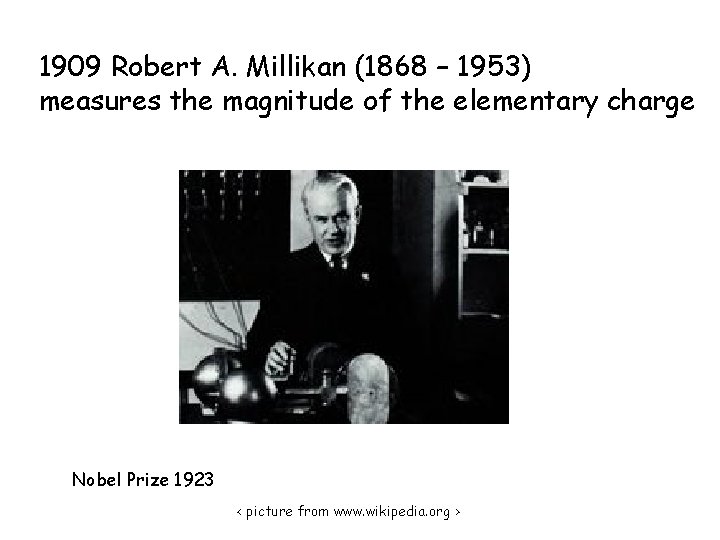
1909 Robert A. Millikan (1868 – 1953) measures the magnitude of the elementary charge Nobel Prize 1923 < picture from www. wikipedia. org >

Thompson’s Plum Pudding Model raisins pudding electrons are discrete particles embedded in a smeared out positive background charge < picture from www. wikipedia. org >
![Rutherford’s Experiment Scattering Intensity (arb. units) random walk (Thompson model) [°] from Gerthsen, Kneser,](http://slidetodoc.com/presentation_image_h2/b8ff8bfe3ebaf1de2c2715e18409d6f3/image-7.jpg "Rutherford’s Experiment Scattering Intensity (arb. units) random walk (Thompson model) [°] from Gerthsen, Kneser,")
Rutherford’s Experiment Scattering Intensity (arb. units) random walk (Thompson model) [°] from Gerthsen, Kneser, Vogel: “Physik” Rutherford model
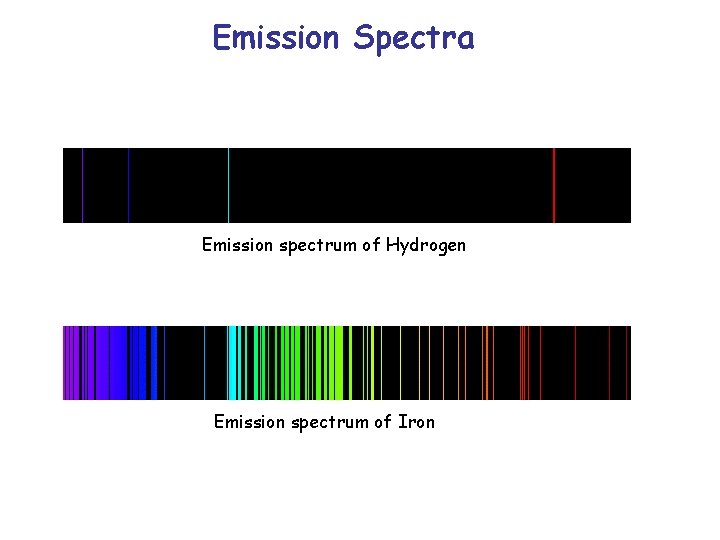
Emission Spectra Emission spectrum of Hydrogen Emission spectrum of Iron
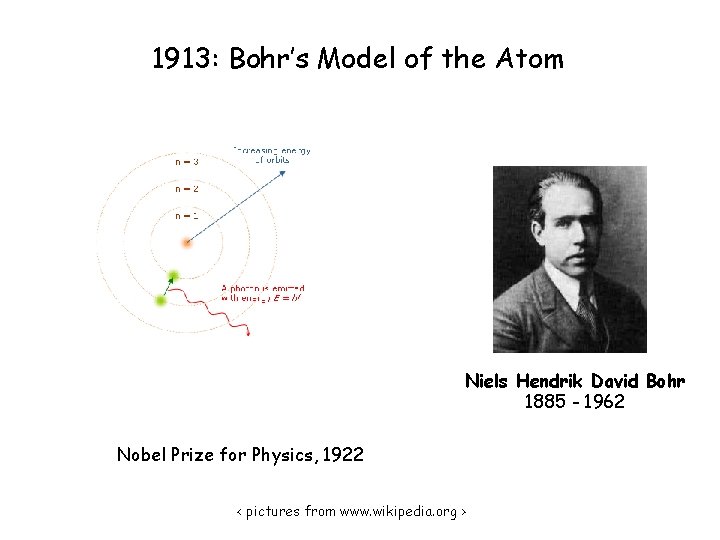
1913: Bohr’s Model of the Atom Niels Hendrik David Bohr 1885 - 1962 Nobel Prize for Physics, 1922 < pictures from www. wikipedia. org >
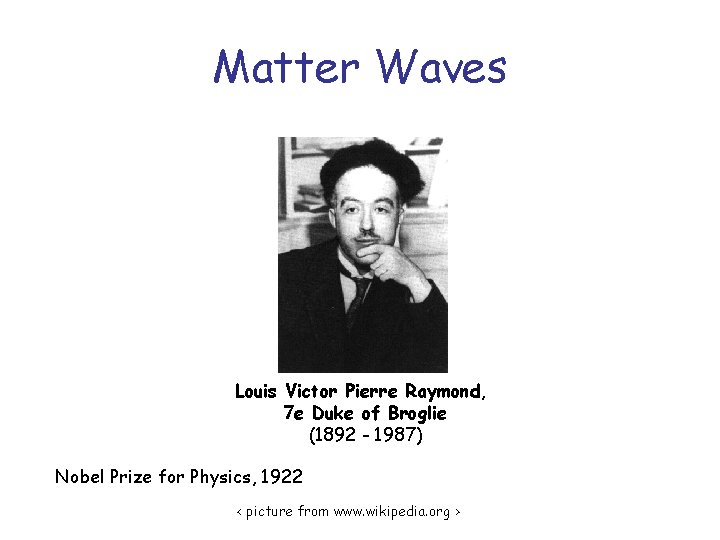
Matter Waves Louis Victor Pierre Raymond, 7 e Duke of Broglie (1892 - 1987) Nobel Prize for Physics, 1922 < picture from www. wikipedia. org >
Superimpose 2 waves with different momenta:
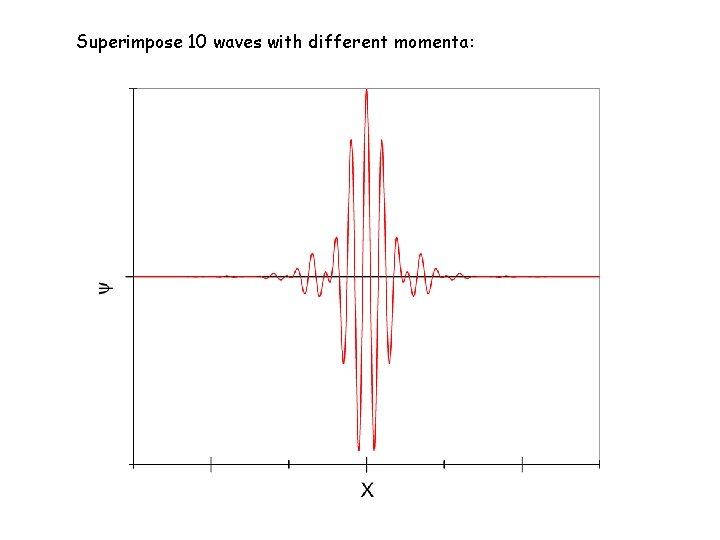
Superimpose 10 waves with different momenta:
- Slides: 12