
EVOLUTION OF GENOMES Chapter 21 GENOMICS The study

- Slides: 10
EVOLUTION OF GENOMES Chapter 21
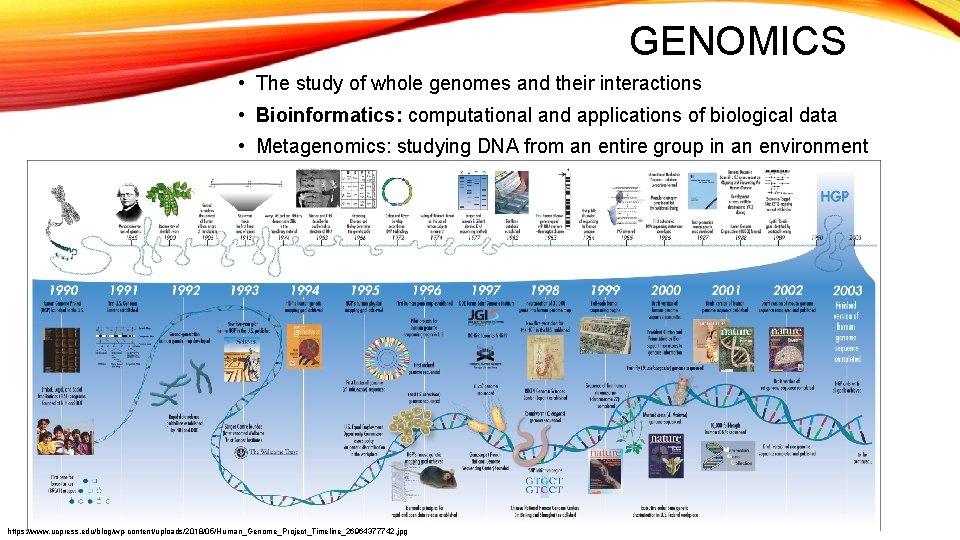
GENOMICS • The study of whole genomes and their interactions • Bioinformatics: computational and applications of biological data • Metagenomics: studying DNA from an entire group in an environment https: //www. ucpress. edu/blog/wp-content/uploads/2018/05/Human_Genome_Project_Timeline_26964377742. jpg
BIOINFORMATICS TOOLS • Various databases (such as NIH) have genome data bases • Genbank from NCBI (National Center for Bio Technology Information) uses BLAST software to compare sequences • Different programs compare proteins or amino acids • These technologies allow scientists to look at specific genes instead of working backwards from the phenotype • Gene annotation: use Gen. Bank to identify all protein coding genes • Proteomics: study of a set of proteins (to determine how the proteins interact and work)
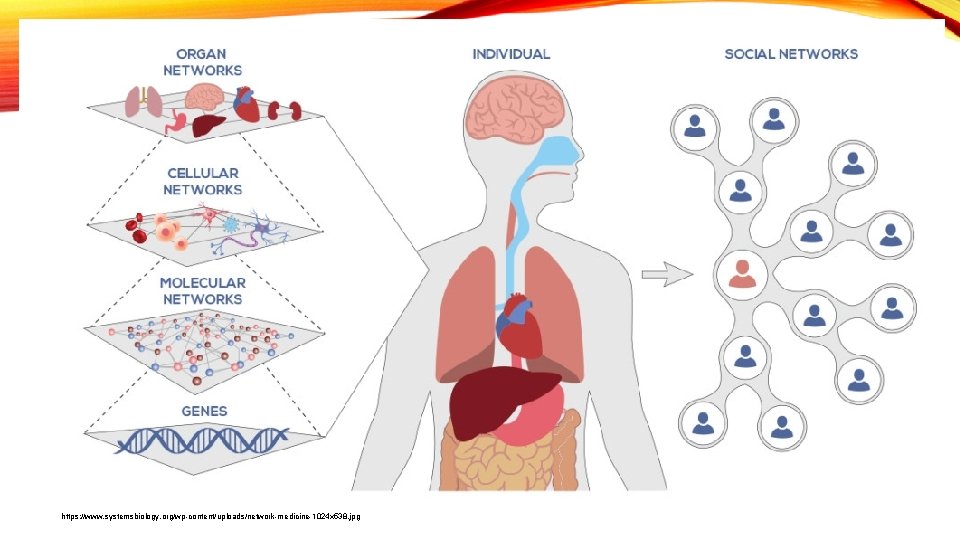
https: //www. systemsbiology. org/wp-content/uploads/network-medicine-1024 x 538. jpg
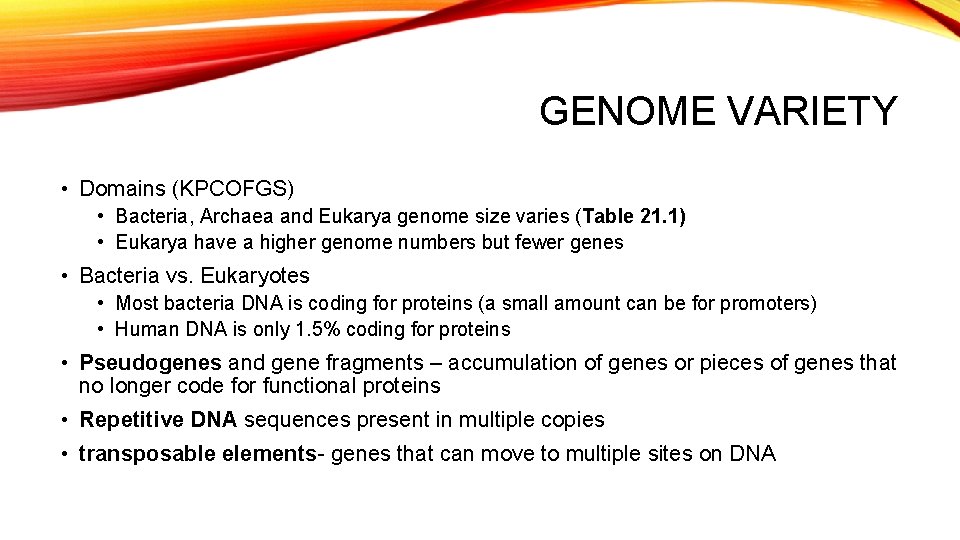
GENOME VARIETY • Domains (KPCOFGS) • Bacteria, Archaea and Eukarya genome size varies (Table 21. 1) • Eukarya have a higher genome numbers but fewer genes • Bacteria vs. Eukaryotes • Most bacteria DNA is coding for proteins (a small amount can be for promoters) • Human DNA is only 1. 5% coding for proteins • Pseudogenes and gene fragments – accumulation of genes or pieces of genes that no longer code for functional proteins • Repetitive DNA sequences present in multiple copies • transposable elements- genes that can move to multiple sites on DNA
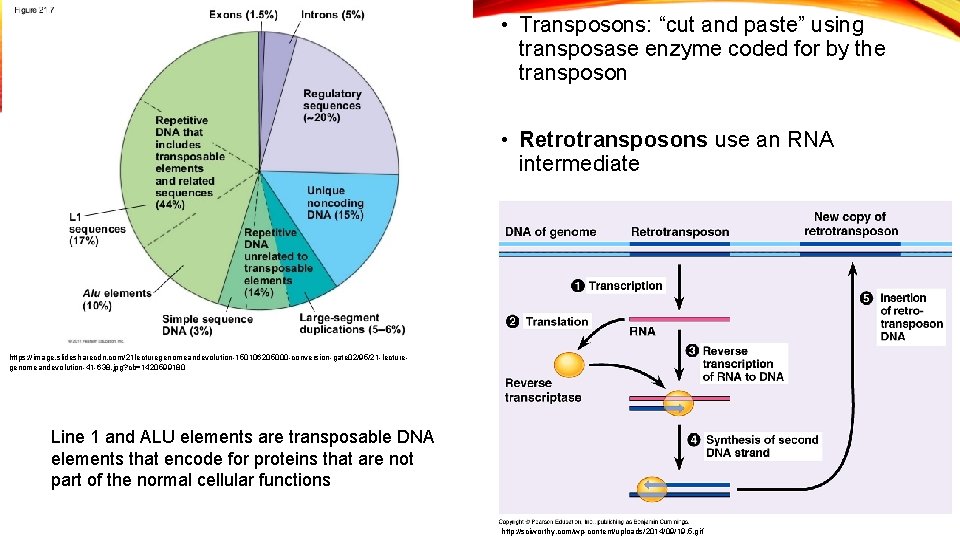
• Transposons: “cut and paste” using transposase enzyme coded for by the transposon • Retrotransposons use an RNA intermediate https: //image. slidesharecdn. com/21 lecturegenomeandevolution-150106205000 -conversion-gate 02/95/21 -lecturegenomeandevolution-41 -638. jpg? cb=1420599180 Line 1 and ALU elements are transposable DNA elements that encode for proteins that are not part of the normal cellular functions http: //sciworthy. com/wp-content/uploads/2014/09/19. 5. gif
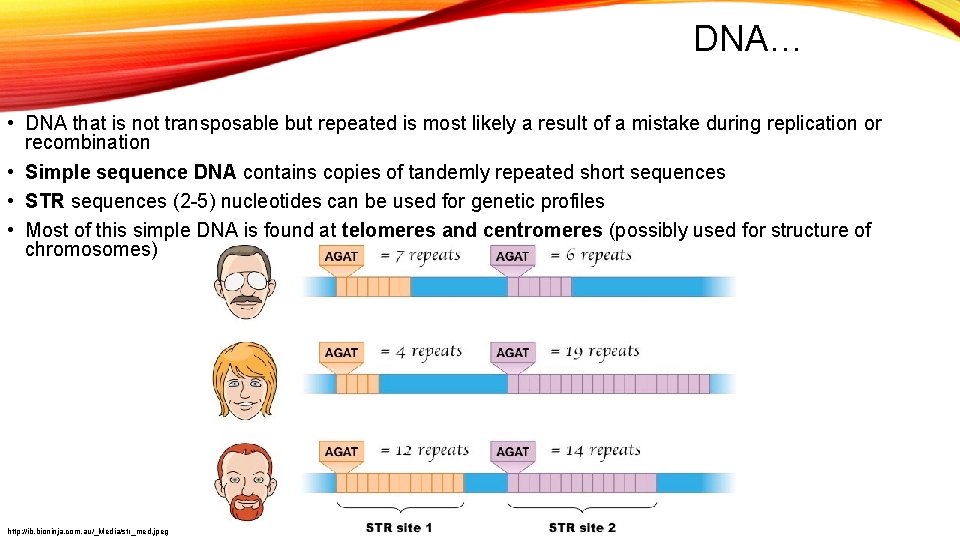
DNA… • DNA that is not transposable but repeated is most likely a result of a mistake during replication or recombination • Simple sequence DNA contains copies of tandemly repeated short sequences • STR sequences (2 -5) nucleotides can be used for genetic profiles • Most of this simple DNA is found at telomeres and centromeres (possibly used for structure of chromosomes) http: //ib. bioninja. com. au/_Media/str_med. jpeg
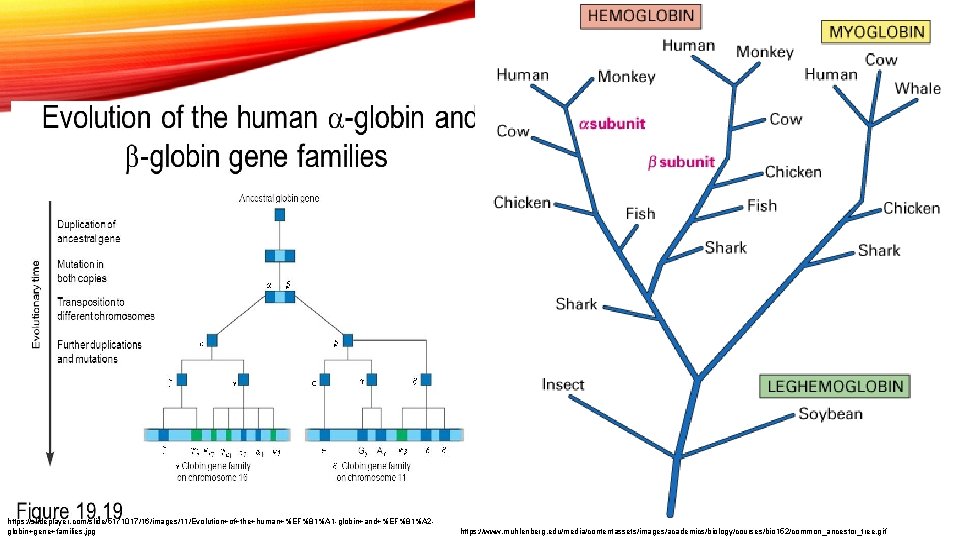
https: //slideplayer. com/slide/5171017/16/images/11/Evolution+of+the+human+%EF%81%A 1 -globin+and+%EF%81%A 2 globin+gene+families. jpg https: //www. muhlenberg. edu/media/contentassets/images/academics/biology/courses/bio 152/common_ancestor_tree. gif
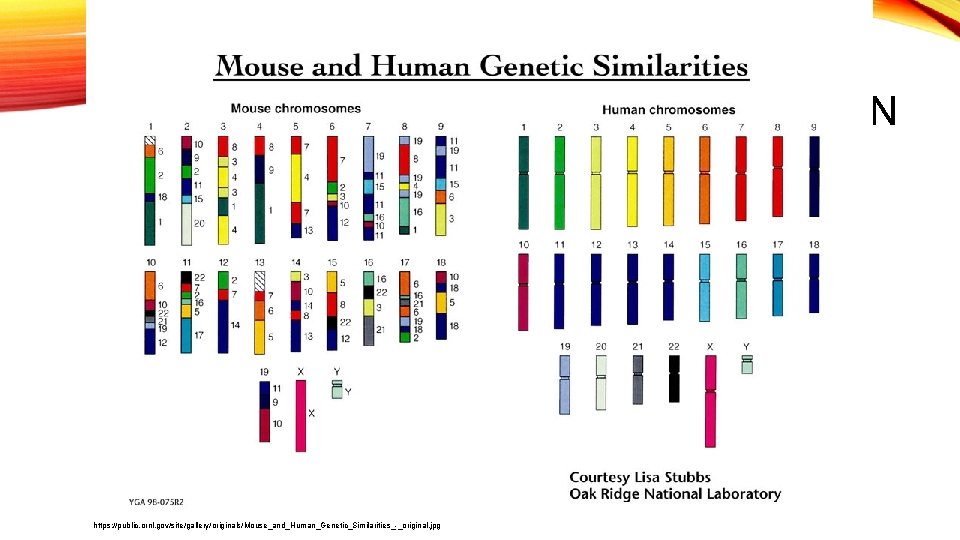
GENOME EVOLUTION https: //public. ornl. gov/site/gallery/originals/Mouse_and_Human_Genetic_Similarities_-_original. jpg