
Evolution of functional traits Recap Traits as functions



- Slides: 28
Evolution of functional traits (Recap) • Traits as functions: functional, functionvalued, infinite-dimensional • A primer in evolutionary models: – Variation, inheritance, selection, evolution • Approaches to analysing functional traits: – understanding and estimating genetic variation
Age-specific mortality rates (Drosophila) Pletcher et al, Genetics (1999)
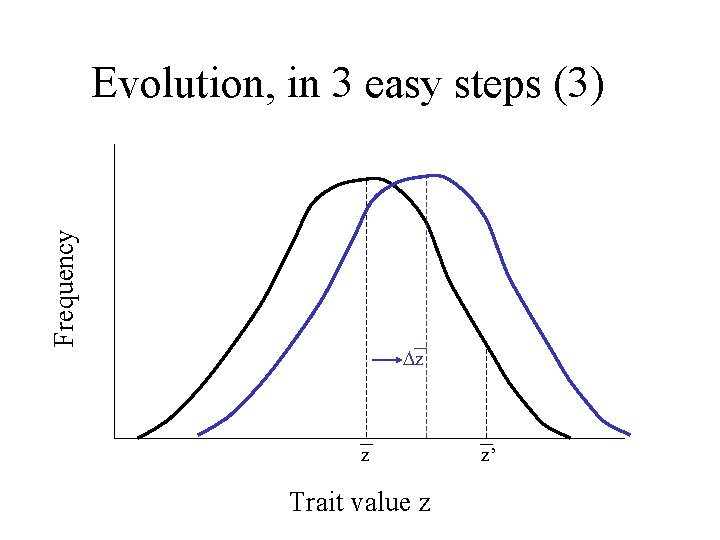
Frequency Evolution, in 3 easy steps (3) Dz z Trait value z z’
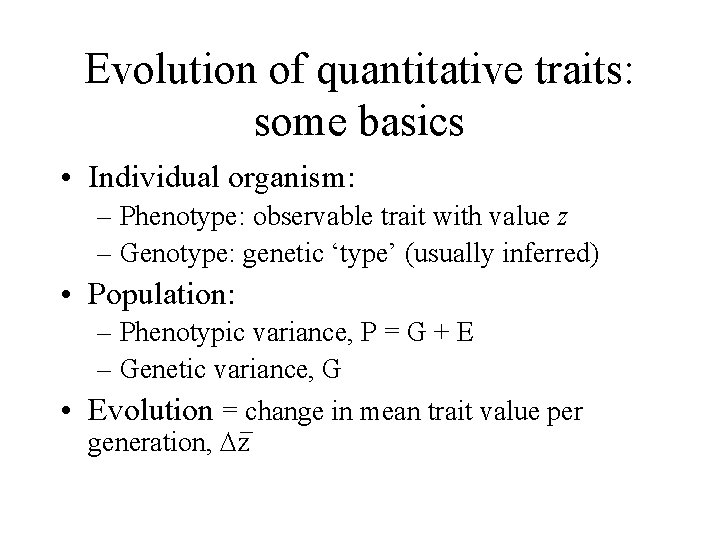
Evolution of quantitative traits: some basics • Individual organism: – Phenotype: observable trait with value z – Genotype: genetic ‘type’ (usually inferred) • Population: – Phenotypic variance, P = G + E – Genetic variance, G • Evolution = change in mean trait value per generation, Dz
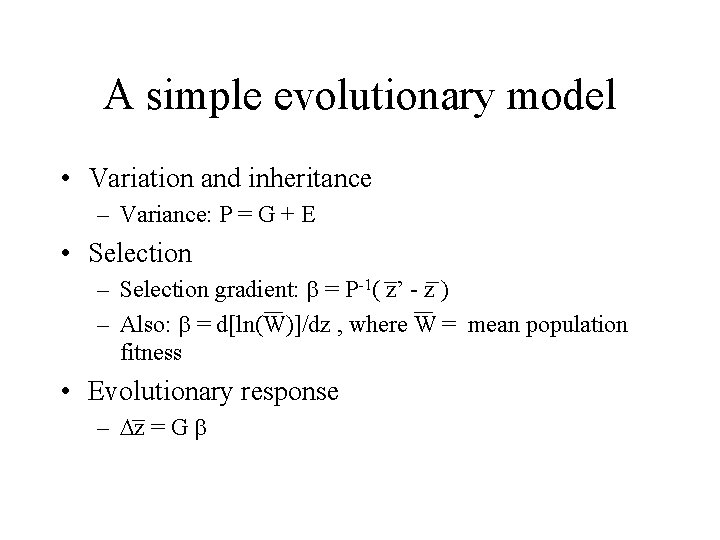
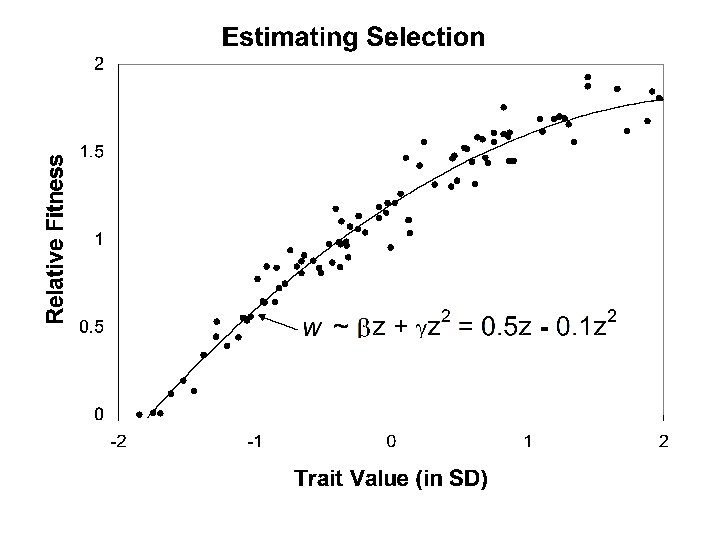
A simple evolutionary model • Variation and inheritance – Variance: P = G + E • Selection – Selection gradient: b = P-1( z’ - z ) – Also: b = d[ln(W)]/dz , where W = mean population fitness • Evolutionary response – Dz = G b
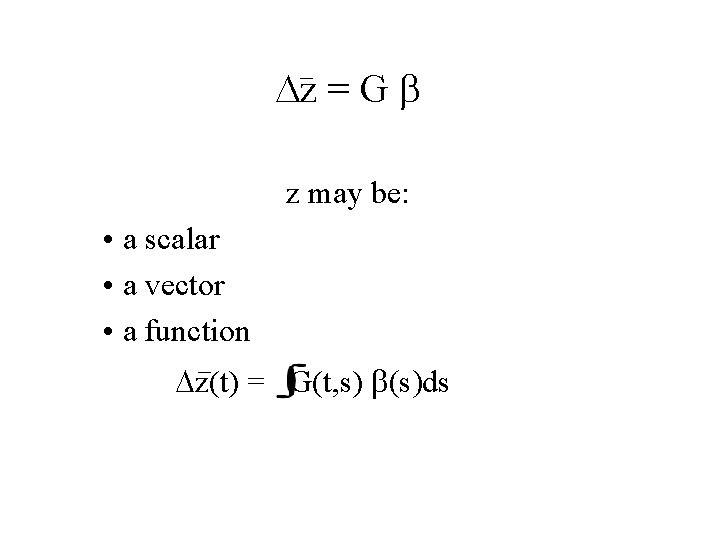
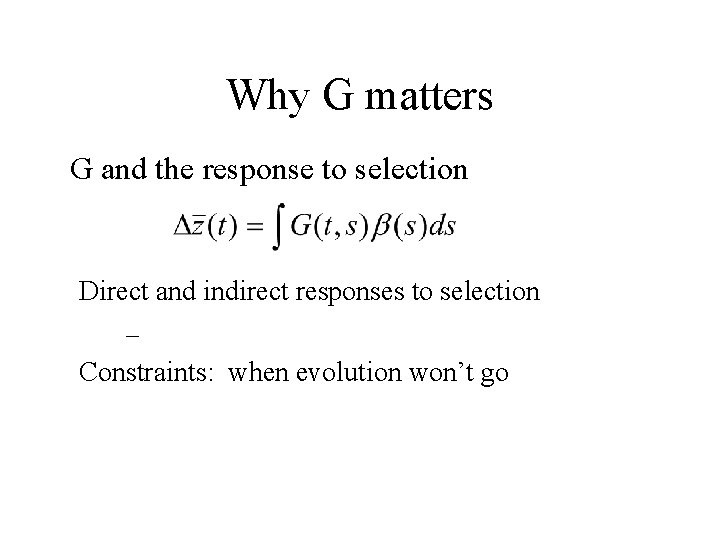
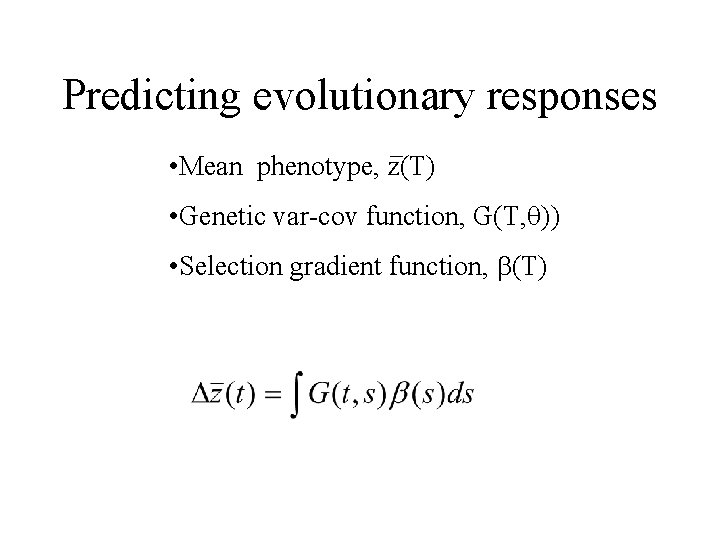
Dz = G b z may be: • a scalar • a vector • a function Dz(t) = G(t, s) b(s)ds
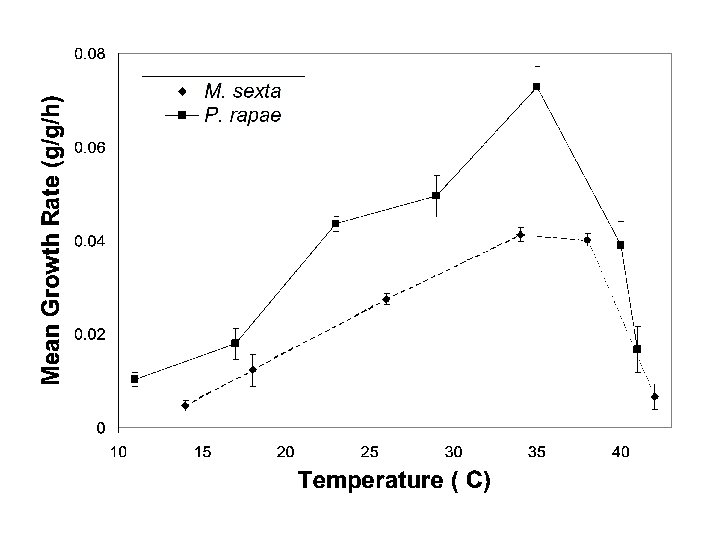
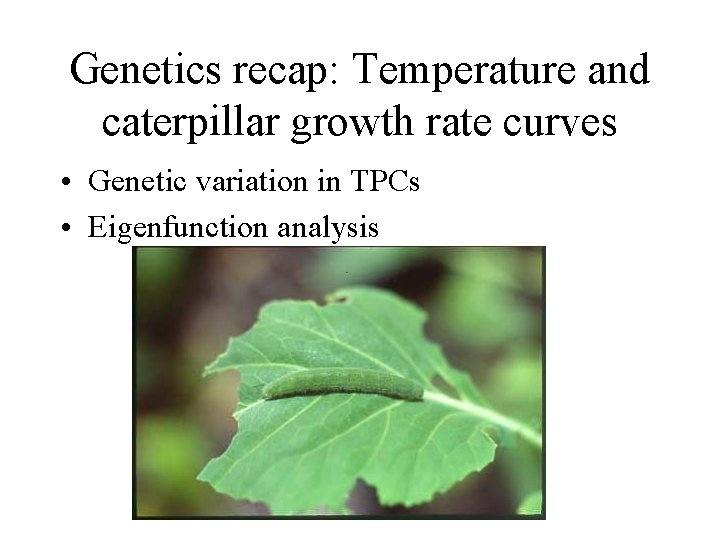
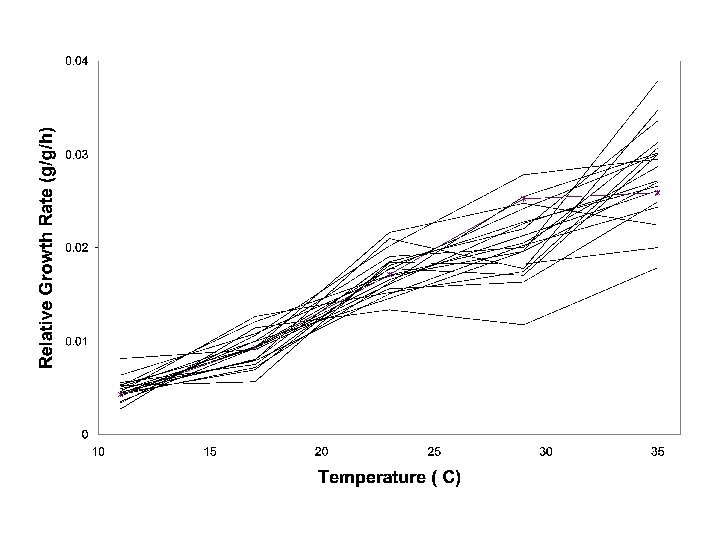
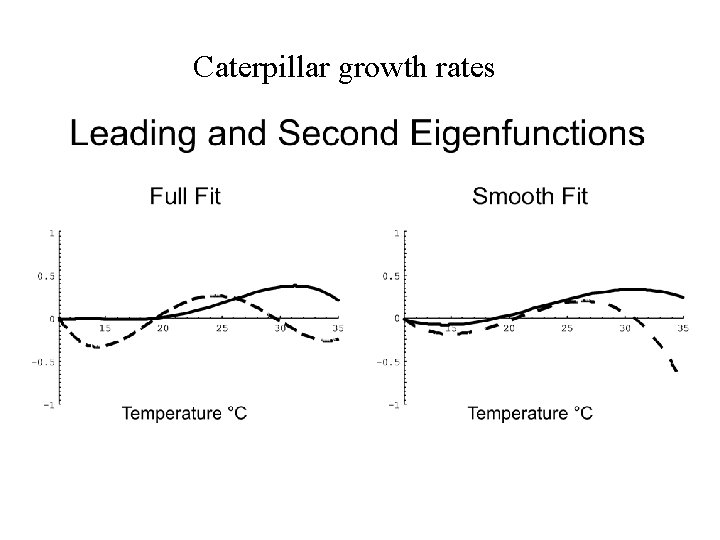
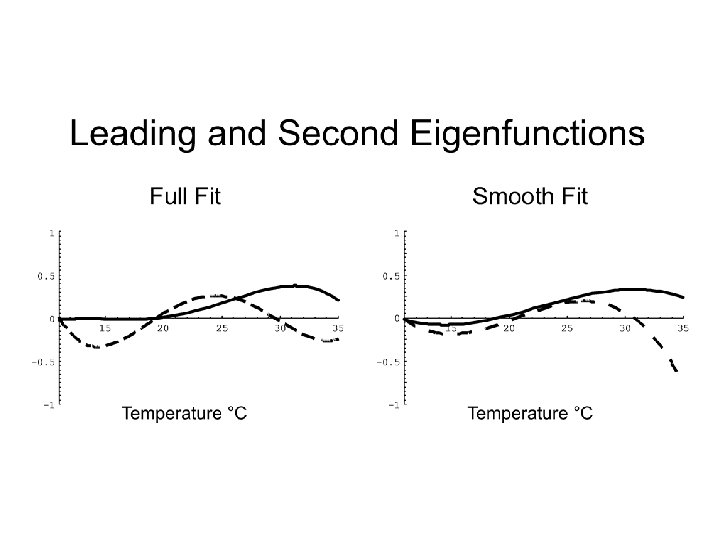
Genetics recap: Temperature and caterpillar growth rate curves • Genetic variation in TPCs • Eigenfunction analysis
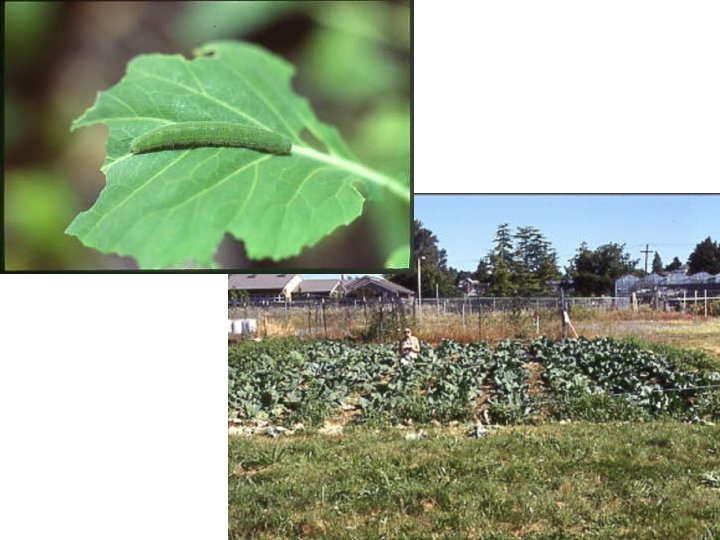
Caterpillar growth rates
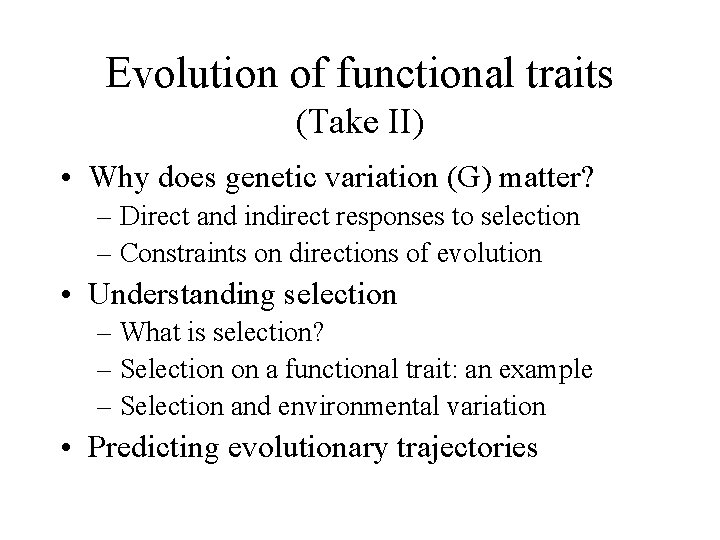
Evolution of functional traits (Take II) • Why does genetic variation (G) matter? – Direct and indirect responses to selection – Constraints on directions of evolution • Understanding selection – What is selection? – Selection on a functional trait: an example – Selection and environmental variation • Predicting evolutionary trajectories
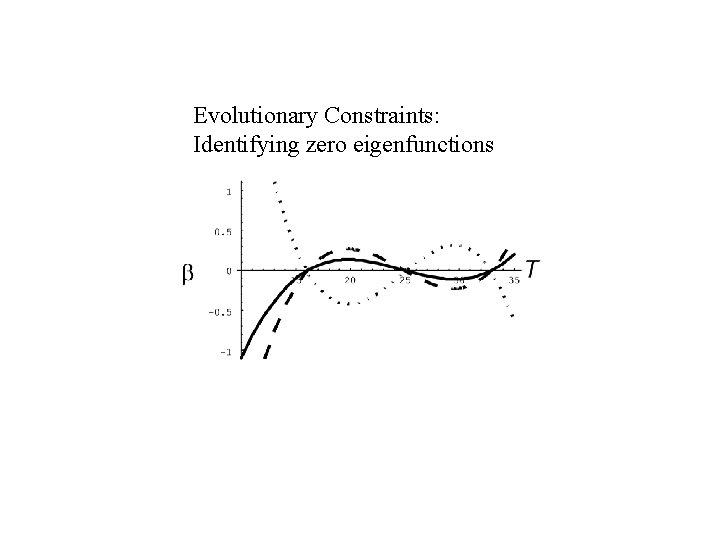
Why G matters G and the response to selection Direct and indirect responses to selection Constraints: when evolution won’t go
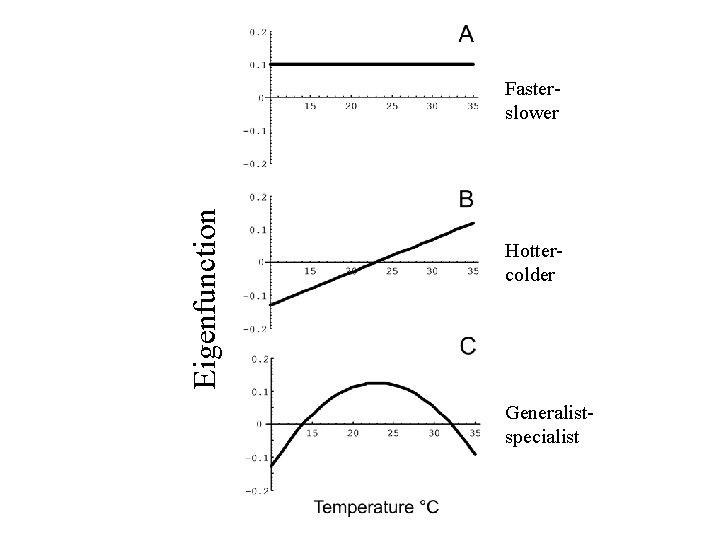
Eigenfunction Fasterslower Hottercolder Generalistspecialist
Evolutionary Constraints: Identifying zero eigenfunctions
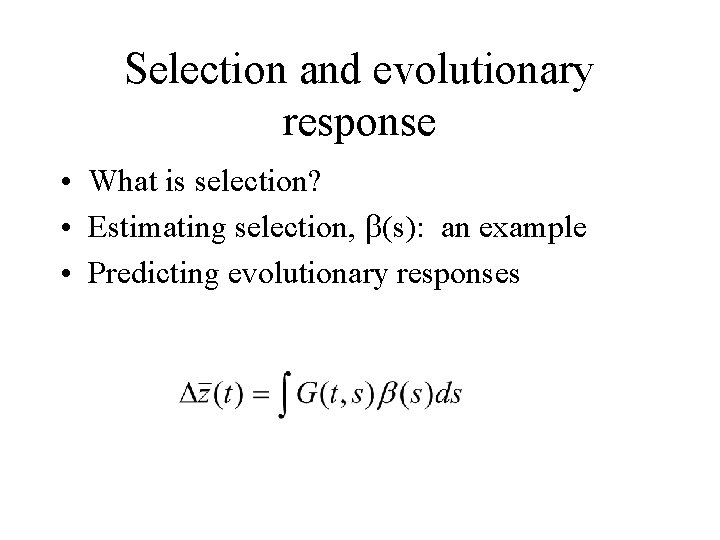
Selection and evolutionary response • What is selection? • Estimating selection, b(s): an example • Predicting evolutionary responses
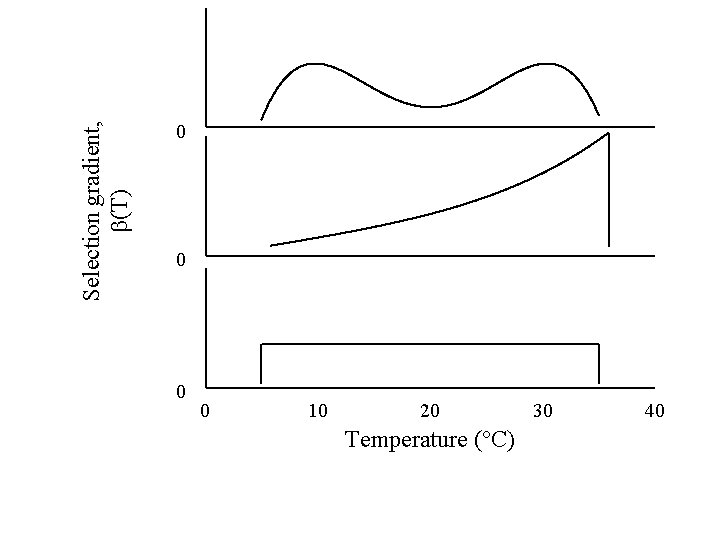
Selection gradient, b(T) 0 0 10 20 Temperature (°C) 30 40
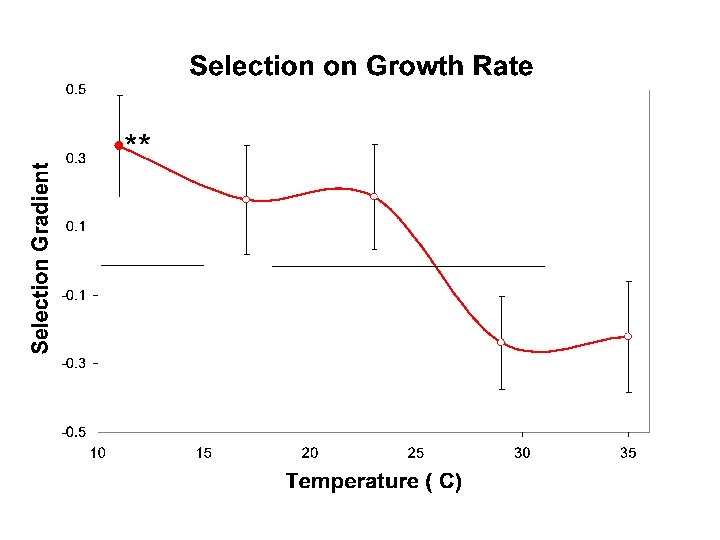
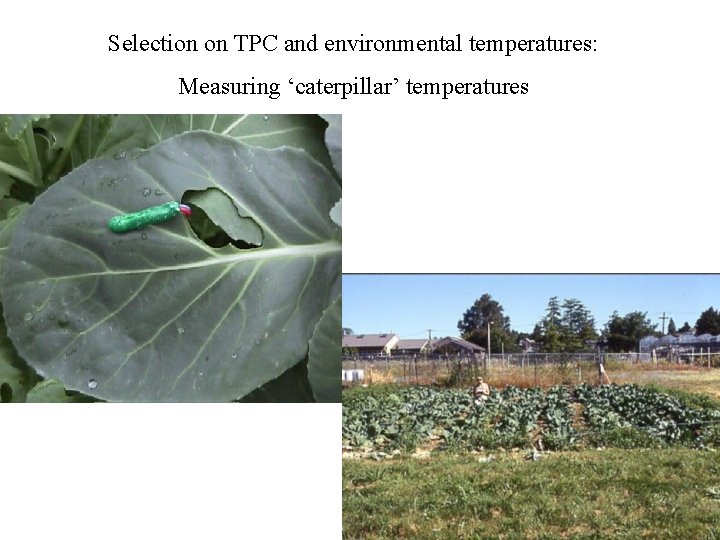
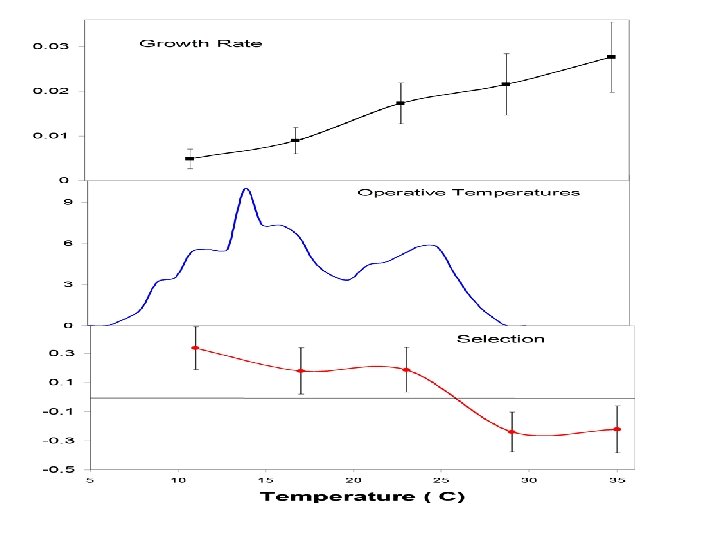
Selection on caterpillar growth rate TPCs • Measure z(T) for a sample of individuals in the lab --> estimate P(T, q) • Measure fitness of those individuals in the field (survival and time to pupation; pupal mass) • Estimate b(T) (functional models? )
Selection on TPC and environmental temperatures: Measuring ‘caterpillar’ temperatures
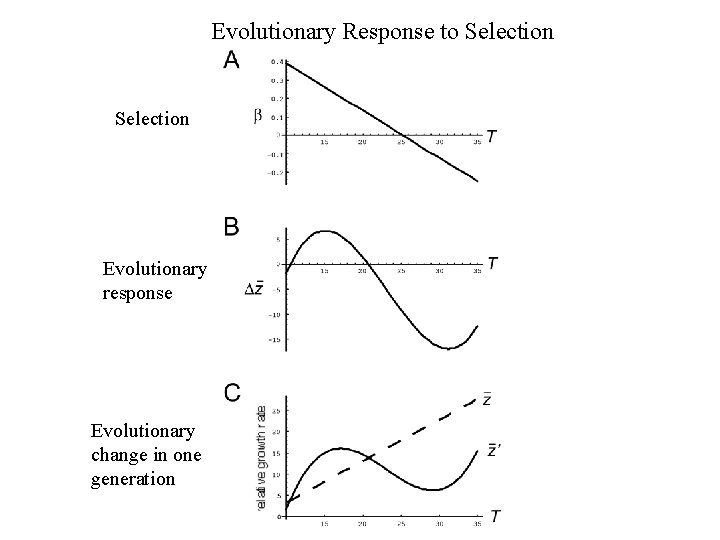
Predicting evolutionary responses • Mean phenotype, z(T) • Genetic var-cov function, G(T, q)) • Selection gradient function, b(T)
Evolutionary Response to Selection Evolutionary response Evolutionary change in one generation
Challenges • Estimating zero eigenfunctions • Estimation methods for b • Incorporating environmental information (distribution of T) • Predicting evolutionary responses