
Evolution of Educational Robots Discovery at Every Turn
Evolution of Educational Robots Discovery at Every Turn
Robot Evolution Discovery at Every Turn © Dave Catlin, Feb 2008
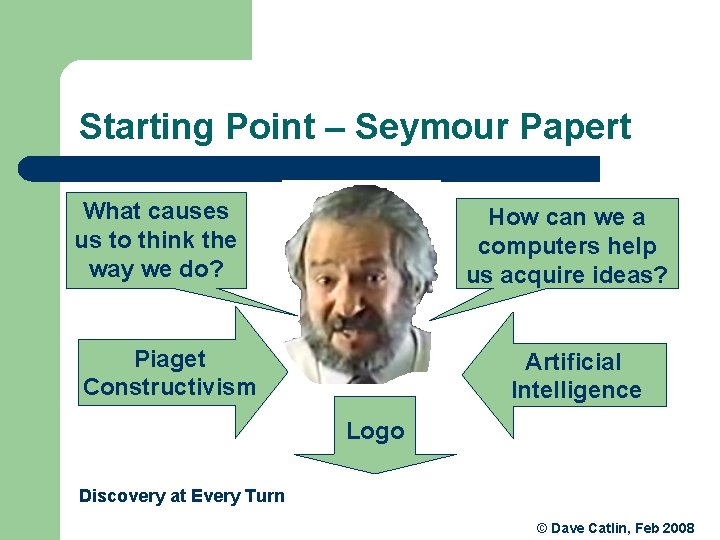
Starting Point – Seymour Papert What causes us to think the way we do? How can we a computers help us acquire ideas? Piaget Constructivism Artificial Intelligence Logo Discovery at Every Turn © Dave Catlin, Feb 2008
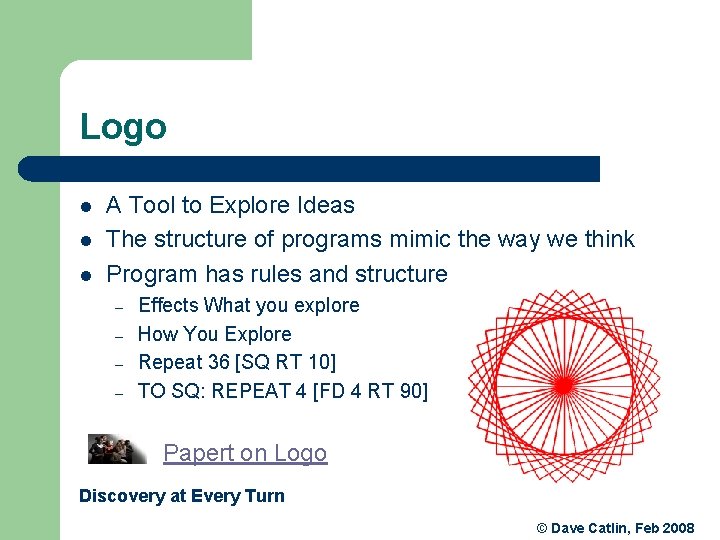
Logo l l l A Tool to Explore Ideas The structure of programs mimic the way we think Program has rules and structure – – Effects What you explore How You Explore Repeat 36 [SQ RT 10] TO SQ: REPEAT 4 [FD 4 RT 90] Papert on Logo Discovery at Every Turn © Dave Catlin, Feb 2008
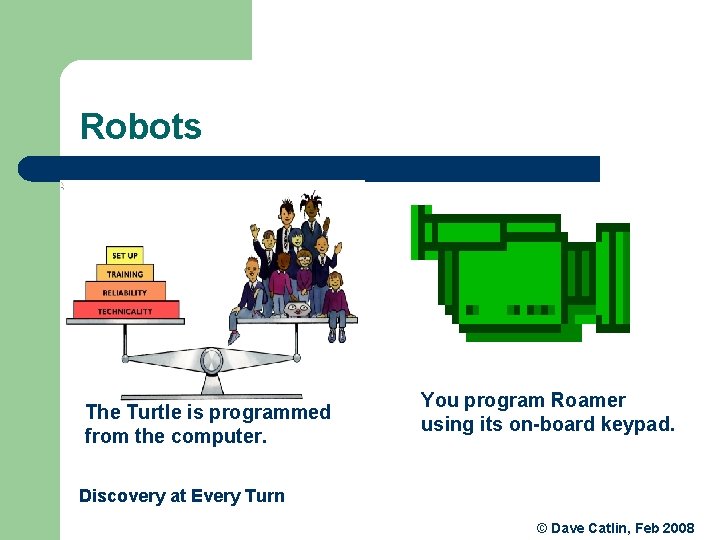
Robots The Turtle is programmed from the computer. You program Roamer using its on-board keypad. Discovery at Every Turn © Dave Catlin, Feb 2008
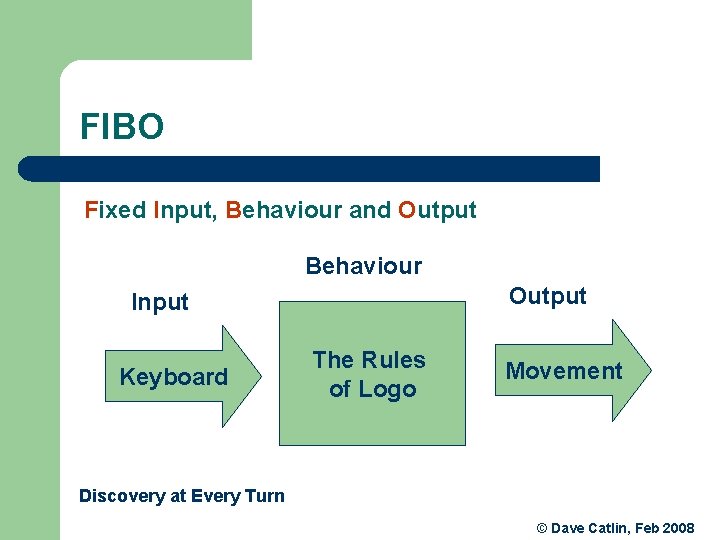
FIBO Fixed Input, Behaviour and Output Behaviour Output Input Keyboard The Rules of Logo Movement Discovery at Every Turn © Dave Catlin, Feb 2008
Start of Roamer-Too l Canterbury Project – 1992 – l SEN Modular Conception – – – Different Inputs Different Outputs Different Behaviours Discovery at Every Turn © Dave Catlin, Feb 2008
New Roamer Features l l l l Different Behaviours Speech Speed Quiet Running Size Shape Appearance Durability l l l l Accuracy Drawing User Keys Power Drives In-Built Sense Capability In-Built Power Outputs Improved Battery System Discovery at Every Turn © Dave Catlin, Feb 2008
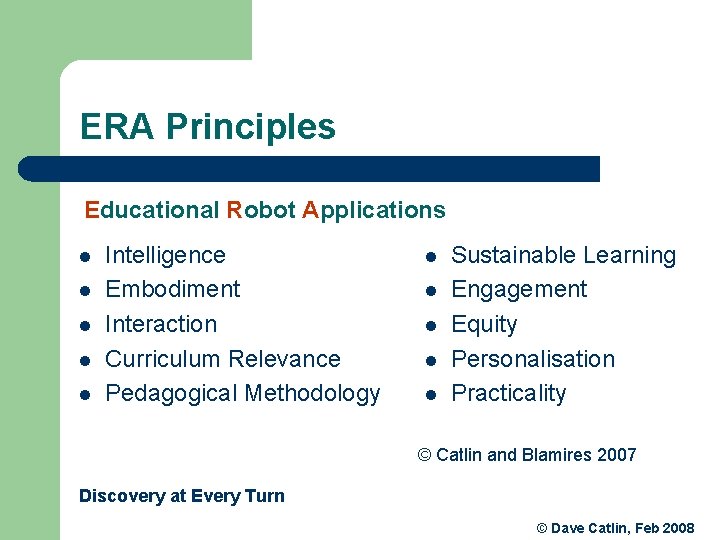
ERA Principles Educational Robot Applications l l l Intelligence Embodiment Interaction Curriculum Relevance Pedagogical Methodology l l l Sustainable Learning Engagement Equity Personalisation Practicality © Catlin and Blamires 2007 Discovery at Every Turn © Dave Catlin, Feb 2008
Holistic Nature of ERA l l ERA Principles are not separate ideas They characterise the use of robots Discovery at Every Turn © Dave Catlin, Feb 2008
Intelligence Educational Robots can have range of intelligent behaviours that enable them to effectively participate in educational activities. Discovery at Every Turn © Dave Catlin, Feb 2008
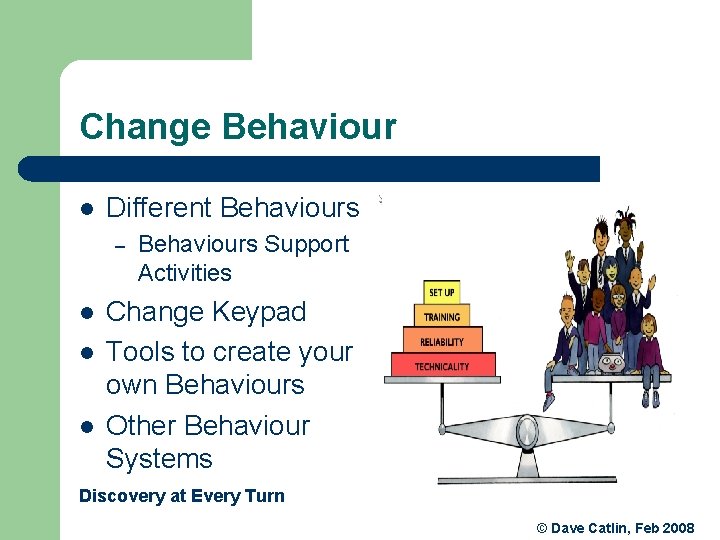
Change Behaviour l Different Behaviours – l l l Behaviours Support Activities Change Keypad Tools to create your own Behaviours Other Behaviour Systems Discovery at Every Turn © Dave Catlin, Feb 2008
Embodiment Students learn by intentional and meaningful interactions with educational robots situated in the same space and time. Papert on Turtle Embodiment Discovery at Every Turn © Dave Catlin, Feb 2008
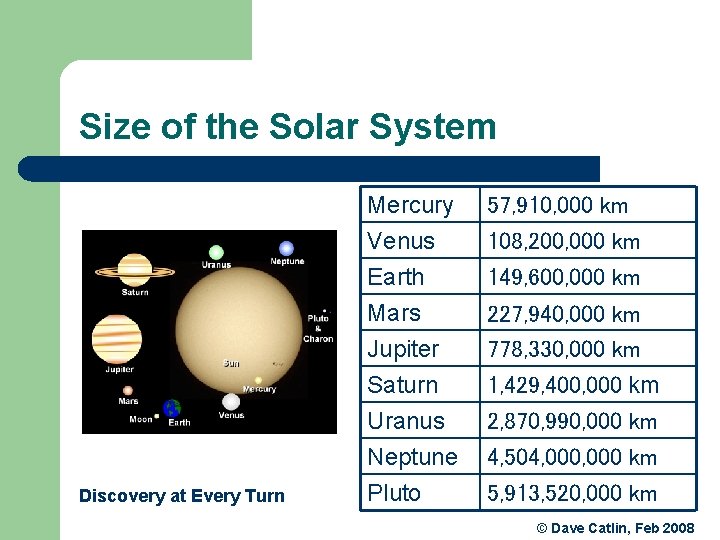
Size of the Solar System Mercury Venus Earth Mars Discovery at Every Turn Jupiter Saturn Uranus Neptune Pluto 57, 910, 000 km 108, 200, 000 km 149, 600, 000 km 227, 940, 000 km 778, 330, 000 km 1, 429, 400, 000 km 2, 870, 990, 000 km 4, 504, 000 km 5, 913, 520, 000 km © Dave Catlin, Feb 2008
Interaction Students are active learners whose multimodal interactions with educational robots takes place via a variety of appropriate semiotic systems. MIT’s Sylvia Weir on Active Learning Discovery at Every Turn © Dave Catlin, Feb 2008
Semiotics: The study of signs and their use, focussing on the mechanisms and patterns of human communication and on the nature and acquisition of knowledge. Crystal, David, (1999) The Penguin Dictionary of Language (2 nd Edition) Discovery at Every Turn © Dave Catlin, Feb 2008
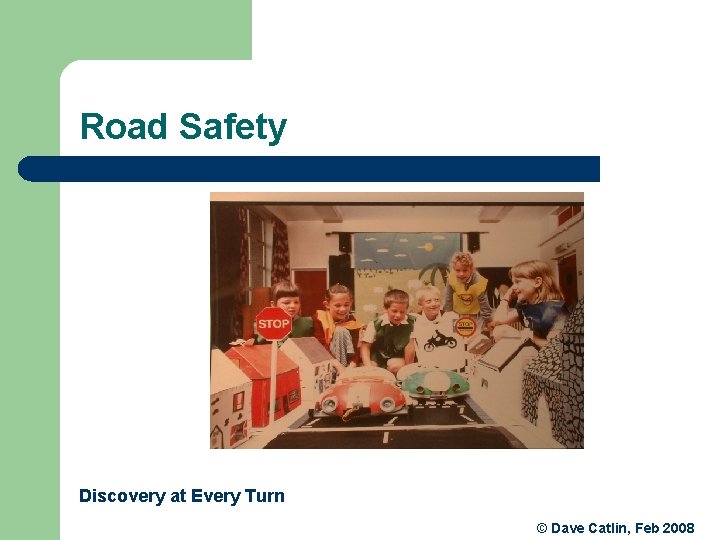
Road Safety Discovery at Every Turn © Dave Catlin, Feb 2008
Pedagogical Method A wide range of effective pedagogical methods is available for using educational robots in powerful learning scenarios that integrate them into regular lessons. Discovery at Every Turn © Dave Catlin, Feb 2008
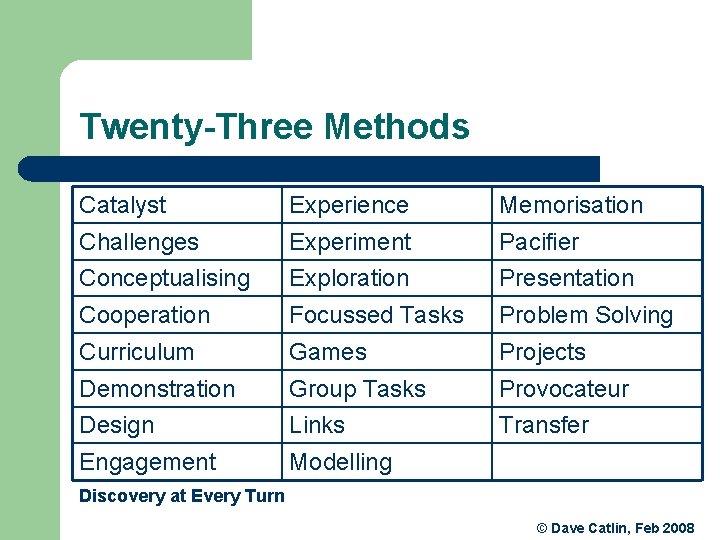
Twenty-Three Methods Catalyst Experience Memorisation Challenges Experiment Pacifier Conceptualising Exploration Presentation Cooperation Focussed Tasks Problem Solving Curriculum Games Projects Demonstration Group Tasks Provocateur Design Links Transfer Engagement Modelling Discovery at Every Turn © Dave Catlin, Feb 2008
Curriculum Relevance Educational Robots can facilitate learning in traditional curriculum areas by supporting good teaching practice. Discovery at Every Turn © Dave Catlin, Feb 2008
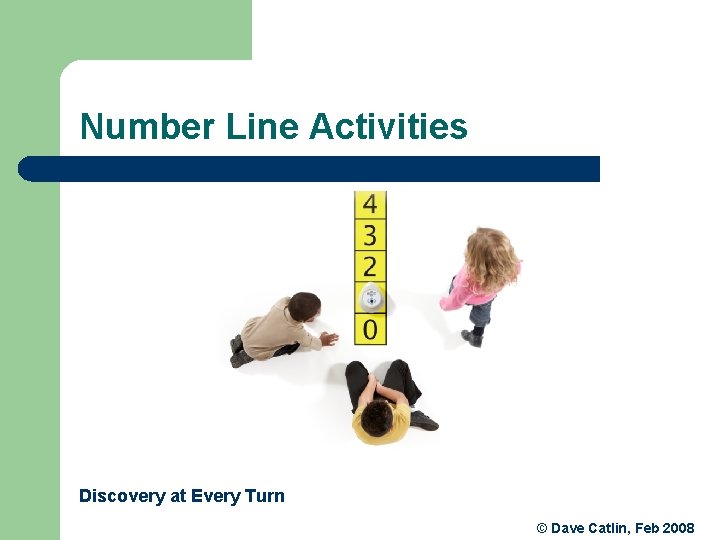
Number Line Activities Discovery at Every Turn © Dave Catlin, Feb 2008
Learning Not Teaching Instructionalism Vs Constructionism Science is facts; just as houses are made of stone, so is science made of facts; but a pile of stones is not a house and collection of facts is not necessarily science. Henri Poincaré Discovery at Every Turn © Dave Catlin, Feb 2008
Sustainable Learning Educational Robots can enhance learning in the longer term through the development of meta-cognition, life skills and learner selfknowledge. Discovery at Every Turn © Dave Catlin, Feb 2008
Engagement Educational Robots can foster affirmative emotional states and social relationships that promote the creation of positive learning attitudes and environments. Discovery at Every Turn © Dave Catlin, Feb 2008
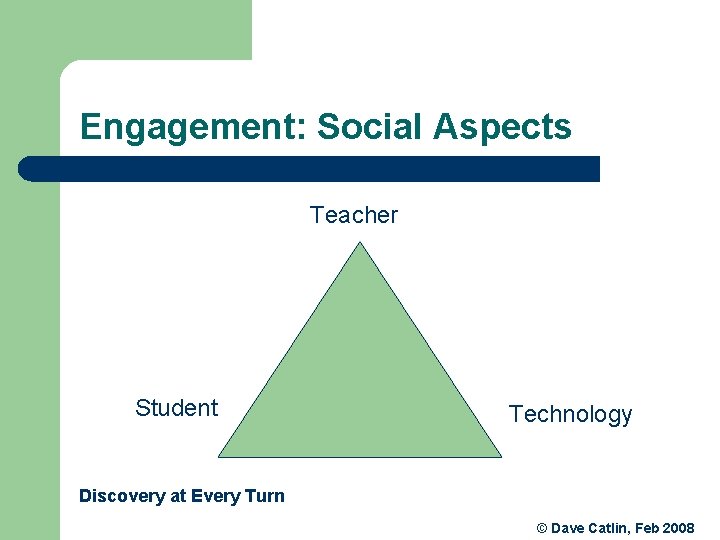
Engagement: Social Aspects Teacher Student Technology Discovery at Every Turn © Dave Catlin, Feb 2008
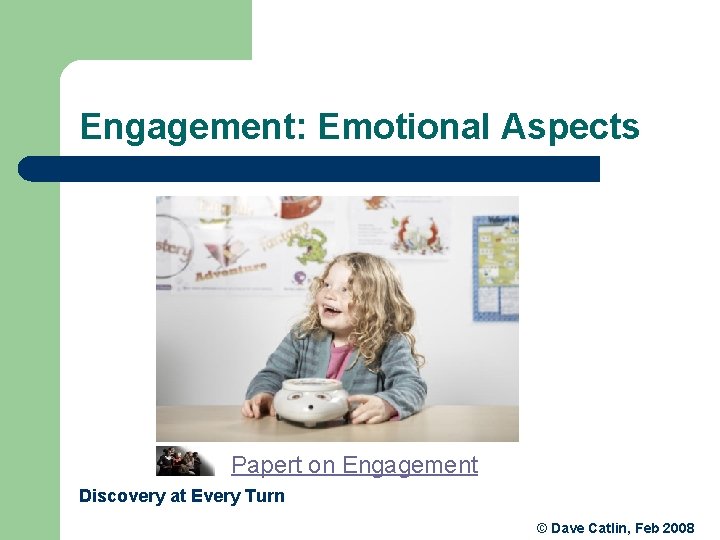
Engagement: Emotional Aspects Papert on Engagement Discovery at Every Turn © Dave Catlin, Feb 2008
Equity Educational robots support principles of equity of age, ability, race, culture and gender. Discovery at Every Turn © Dave Catlin, Feb 2008
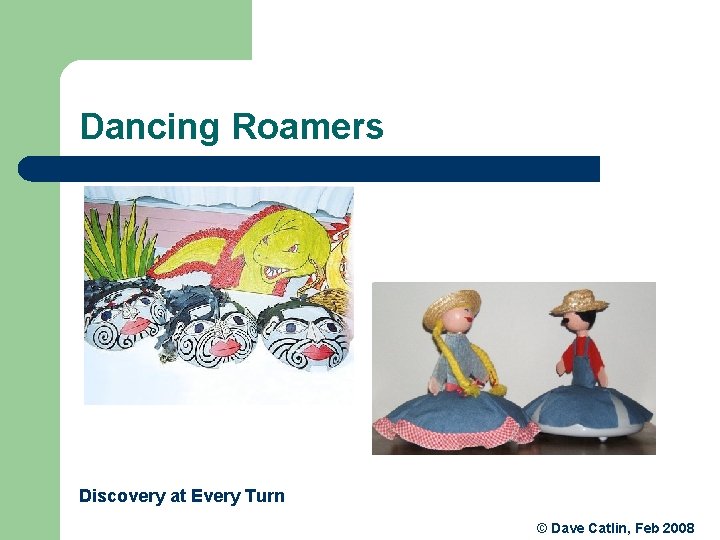
Dancing Roamers Discovery at Every Turn © Dave Catlin, Feb 2008
Personalisation Educational robots personalise the learning experience to suit the individual needs of students across a range of subjects. Discovery at Every Turn © Dave Catlin, Feb 2008
What is Personalisation? l l l Giving each child the chance to fulfil their potential The fulfilment of excellence Being responsive to the different ways students achieve their best Df. ES Discovery at Every Turn © Dave Catlin, Feb 2008
Practicality Educational robots meet the practical issues involved in organising and delivering education in both formal and informal learning situations. Discovery at Every Turn © Dave Catlin, Feb 2008
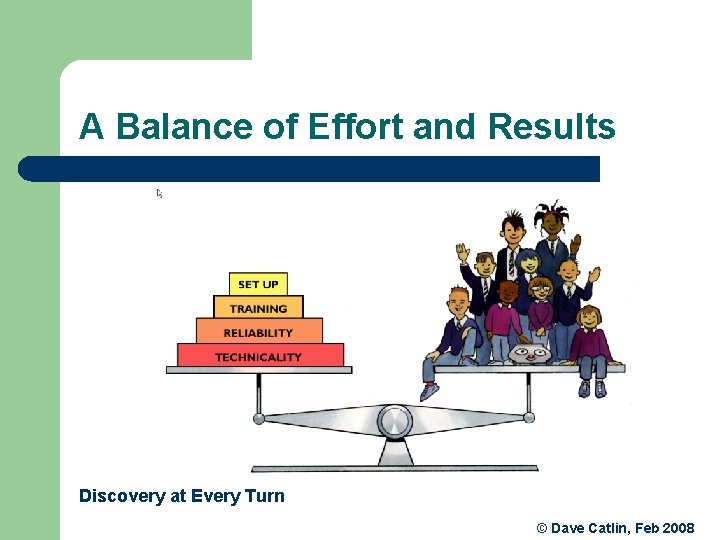
A Balance of Effort and Results Discovery at Every Turn © Dave Catlin, Feb 2008
Graded Complexity Beginners Experienced Expert Discovery at Every Turn © Dave Catlin, Feb 2008
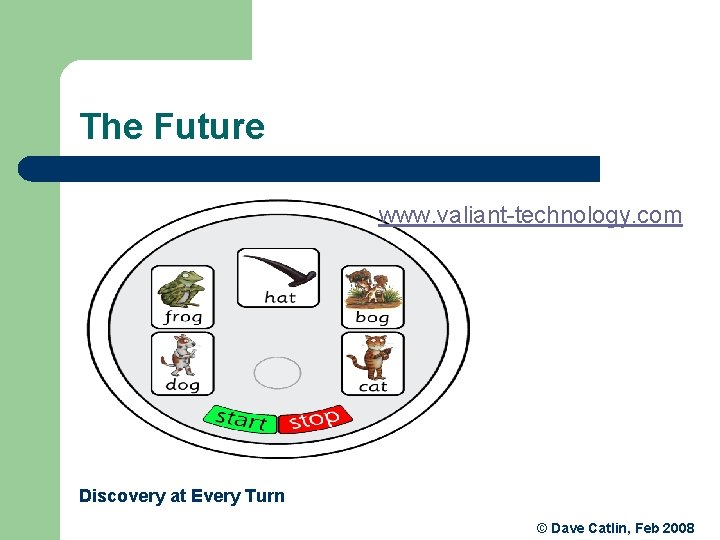
The Future www. valiant-technology. com Discovery at Every Turn © Dave Catlin, Feb 2008
- Slides: 34