
EVOLUTION OF COMPUTERS History The first computer was

- Slides: 11
EVOLUTION OF COMPUTERS
History ◦ The first computer was invented in 1820 s by Charlse Babbage. However the first electronic digital computer were developed between 1940 and 1945 in the United States and in the United Kingdom. ◦ In the beginning they were mainly used for arithmetic calculations. ◦ During the first half of the 20 th century, many scientific computing needs were met by increasingly sophisticated analog computers , which used a direct mechanical or electrical model of the problem as a basis for computation. ◦ Then digital and Hybrid computers were invented and they are used till this day
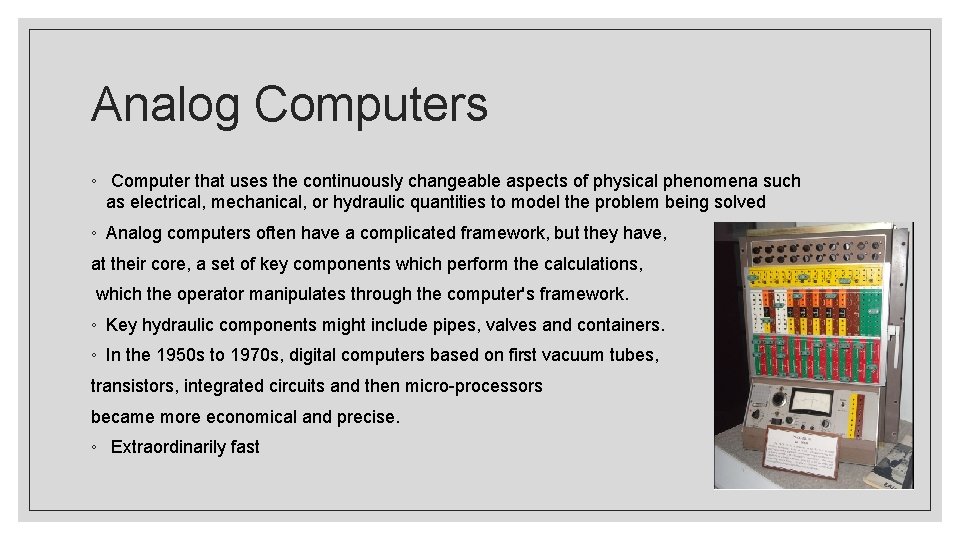
Analog Computers ◦ Computer that uses the continuously changeable aspects of physical phenomena such as electrical, mechanical, or hydraulic quantities to model the problem being solved ◦ Analog computers often have a complicated framework, but they have, at their core, a set of key components which perform the calculations, which the operator manipulates through the computer's framework. ◦ Key hydraulic components might include pipes, valves and containers. ◦ In the 1950 s to 1970 s, digital computers based on first vacuum tubes, transistors, integrated circuits and then micro-processors became more economical and precise. ◦ Extraordinarily fast
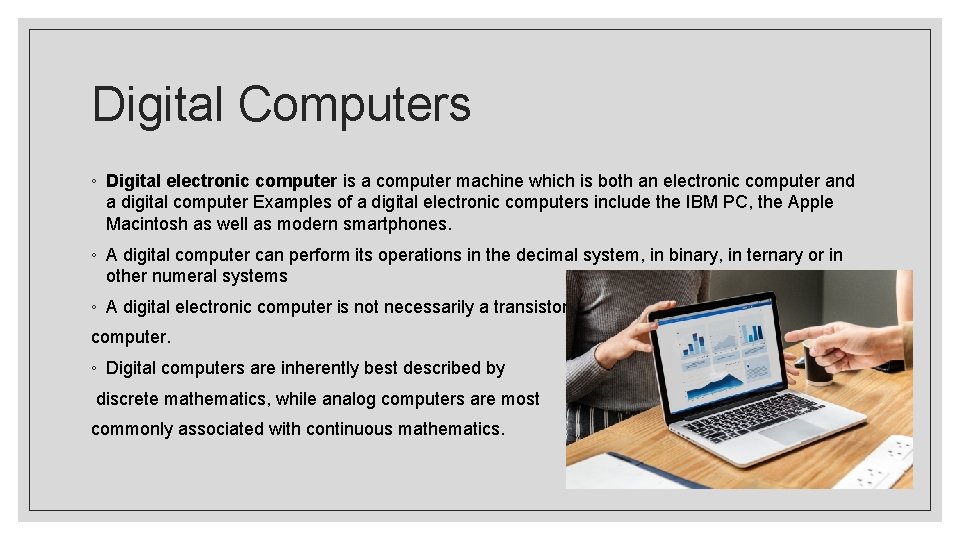
Digital Computers ◦ Digital electronic computer is a computer machine which is both an electronic computer and a digital computer Examples of a digital electronic computers include the IBM PC, the Apple Macintosh as well as modern smartphones. ◦ A digital computer can perform its operations in the decimal system, in binary, in ternary or in other numeral systems ◦ A digital electronic computer is not necessarily a transistorized computer. ◦ Digital computers are inherently best described by discrete mathematics, while analog computers are most commonly associated with continuous mathematics.
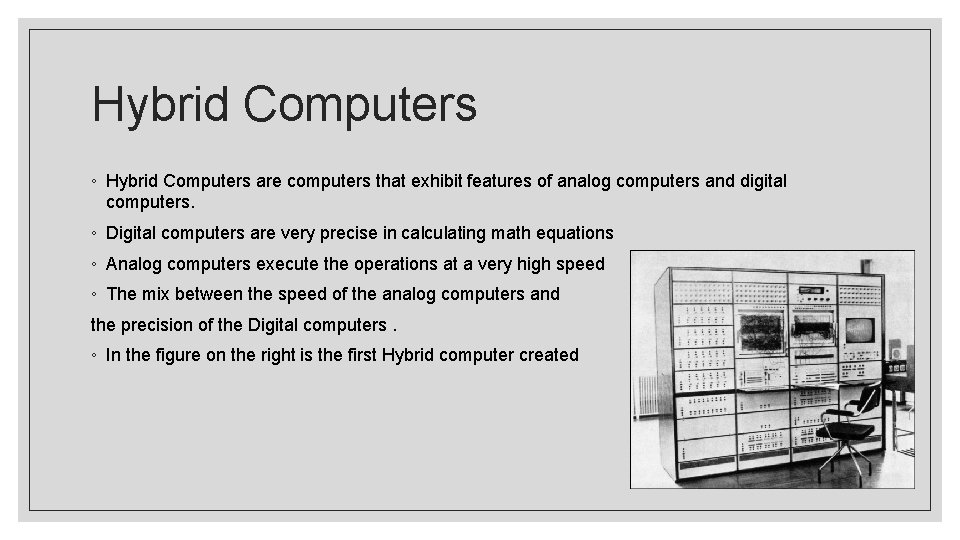
Hybrid Computers ◦ Hybrid Computers are computers that exhibit features of analog computers and digital computers. ◦ Digital computers are very precise in calculating math equations ◦ Analog computers execute the operations at a very high speed ◦ The mix between the speed of the analog computers and the precision of the Digital computers. ◦ In the figure on the right is the first Hybrid computer created
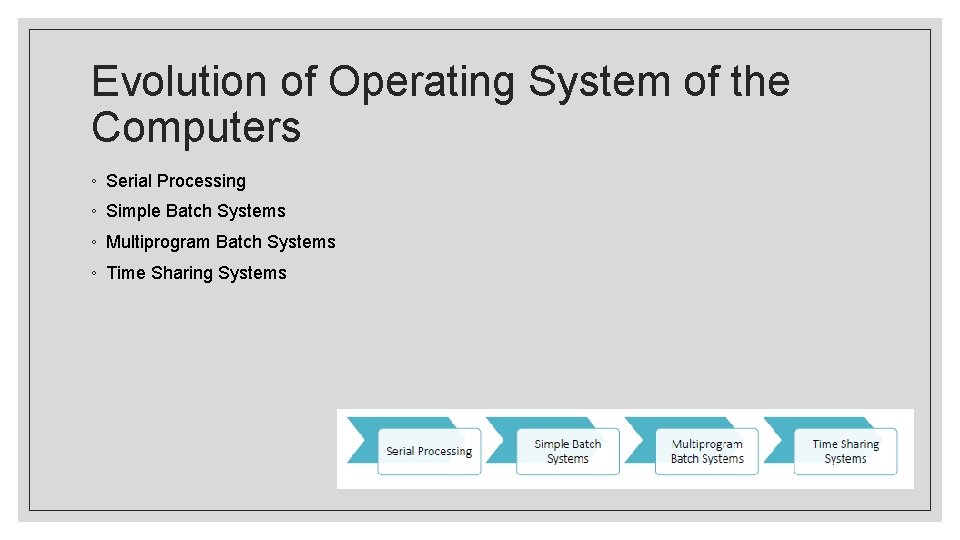
Evolution of Operating System of the Computers ◦ Serial Processing ◦ Simple Batch Systems ◦ Multiprogram Batch Systems ◦ Time Sharing Systems
Serial Processing ◦ late 1940 s to mid-1950 s ◦ No operating system ◦ Machines run from a console with display lights, toggle switches, input device, and printer ◦ Challenges include: ◦ Scheduling: using a sign-up sheets ◦ Setup time: ◦ loading compiler and source program into memory ◦ saving the object program ◦ loading and linking object program and common functions
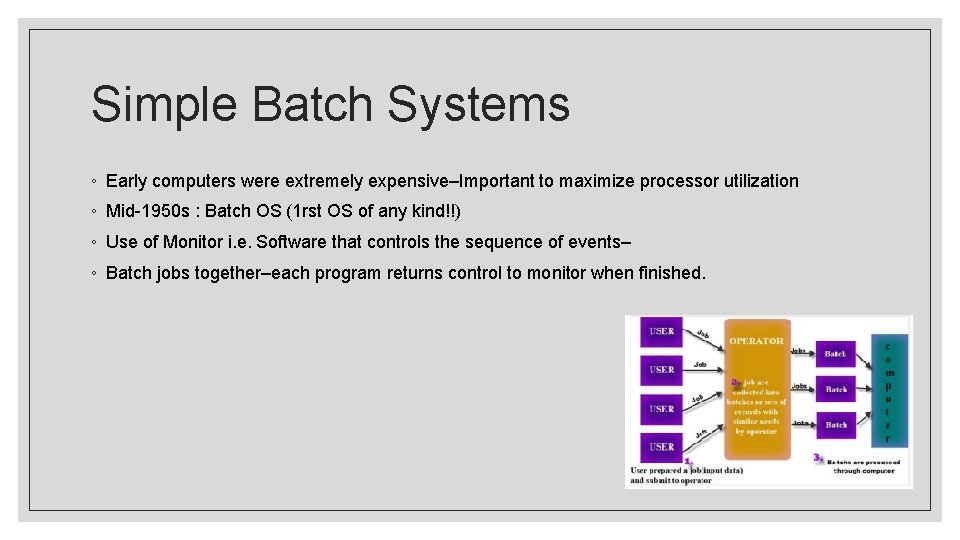
Simple Batch Systems ◦ Early computers were extremely expensive–Important to maximize processor utilization ◦ Mid-1950 s : Batch OS (1 rst OS of any kind!!) ◦ Use of Monitor i. e. Software that controls the sequence of events– ◦ Batch jobs together–each program returns control to monitor when finished.
Multiprogram Batch Systems ◦ CPU is often idle–Even with automatic job sequencing. –I/O devices are slow compared to the CPU. ◦ There are several issues : 1. which job should sit in memory 2. which CPU pick up 3. How to manage memory 4. What happens to the job which is suspended
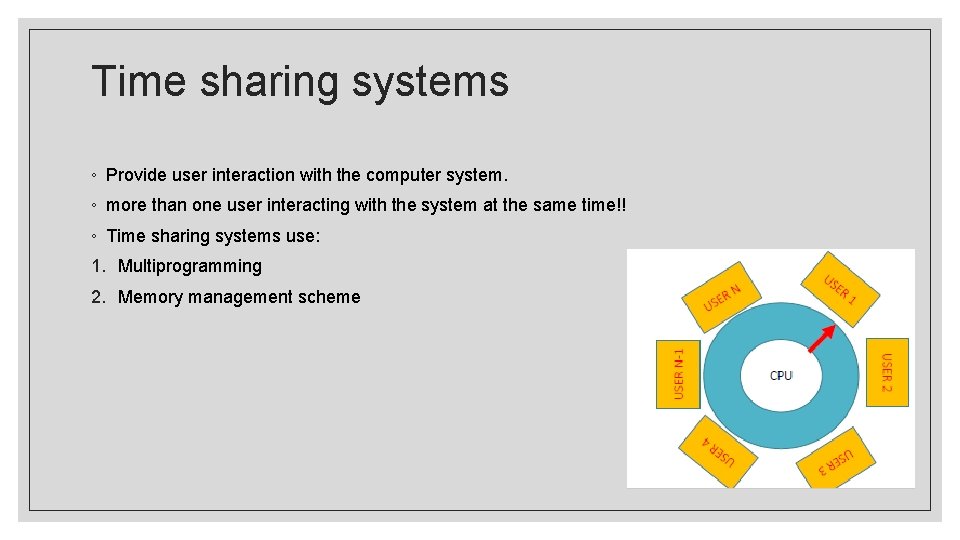
Time sharing systems ◦ Provide user interaction with the computer system. ◦ more than one user interacting with the system at the same time!! ◦ Time sharing systems use: 1. Multiprogramming 2. Memory management scheme
THANK YOU !