
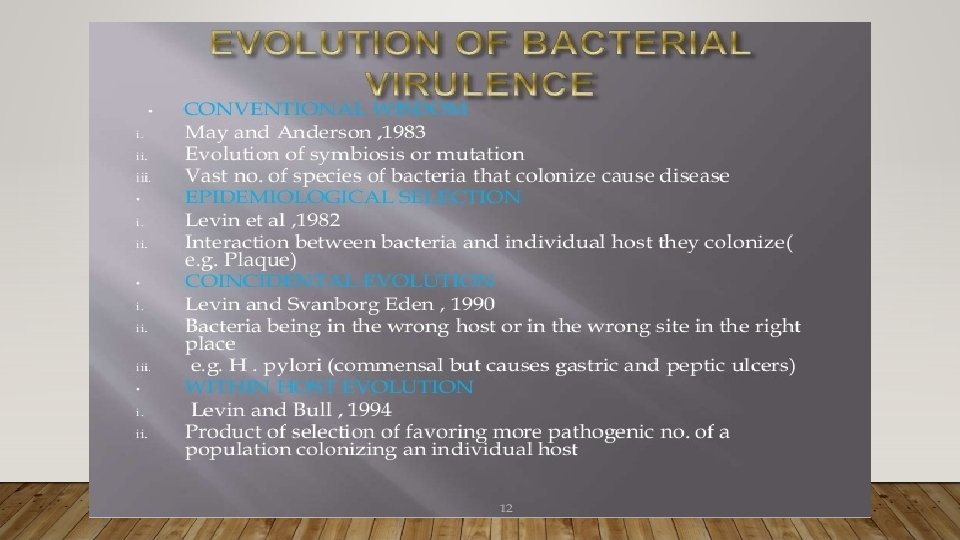
EVOLUTION OF BACTERIAL VIRULENCE Genomic island GI A

EVOLUTION OF BACTERIAL VIRULENCE

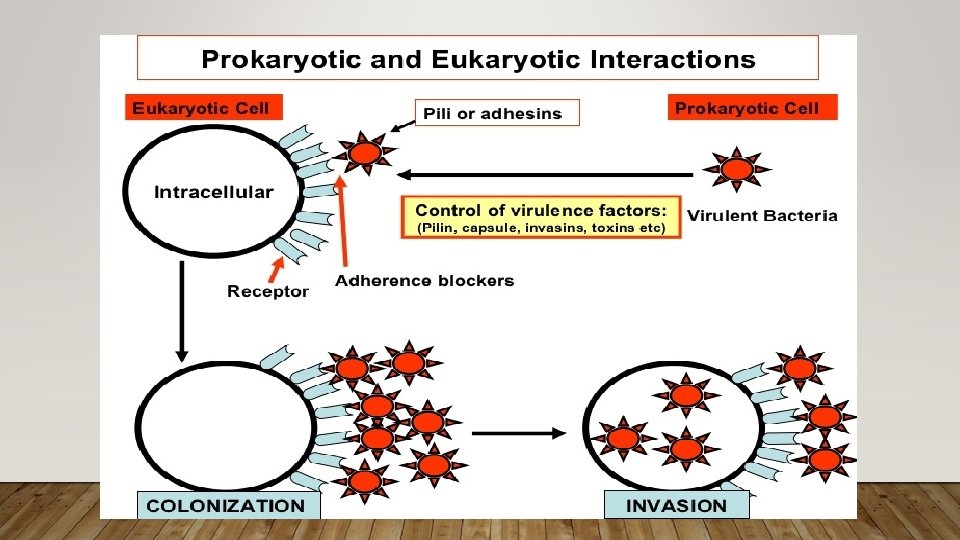
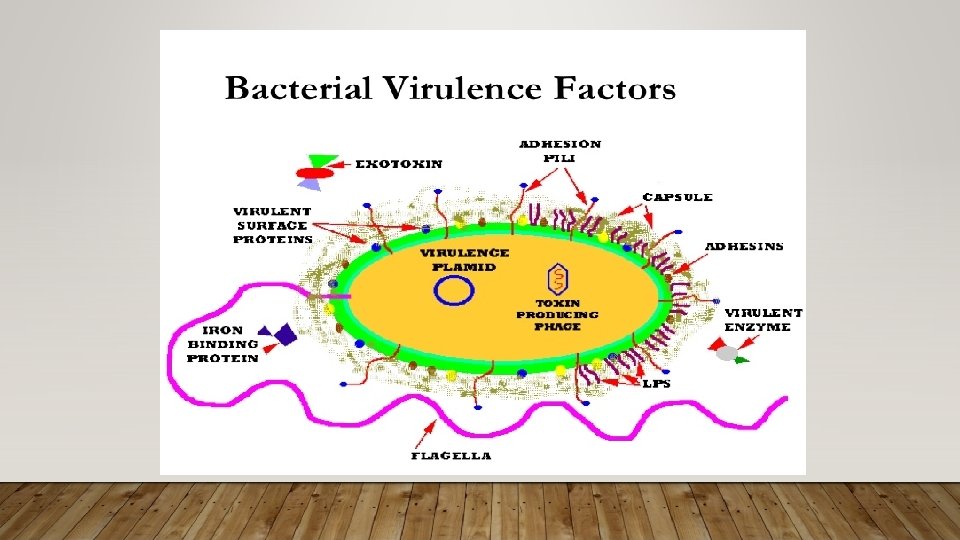
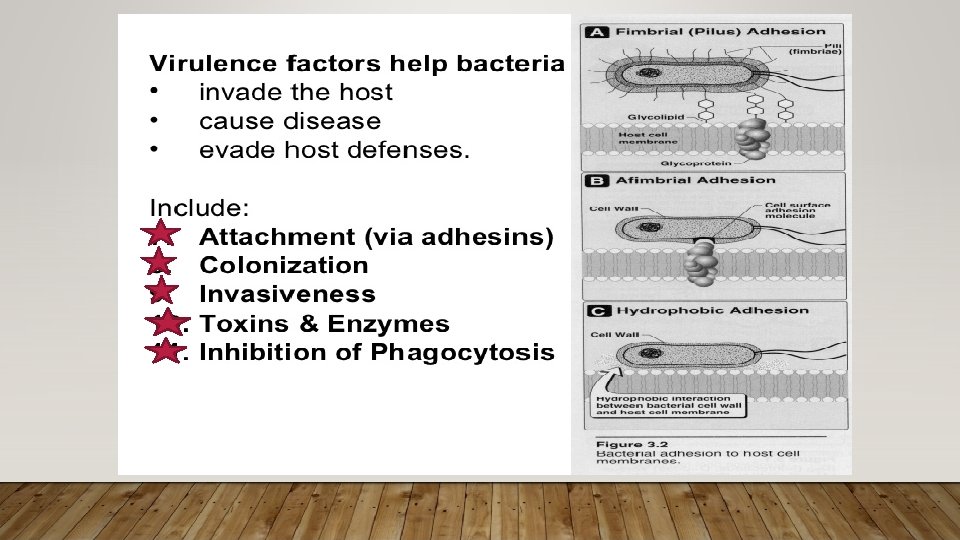

Genomic island (GI) • A genomic island (GI) is part of a genome that has evidence of horizontal origins. • The term is usually used in microbiology, especially with regard to bacteria. • A GI can code for many functions, can be involved in symbiosis or pathogenesis, and may help an organism's adaptation. • Many sub-classes of GIs exist that are based on the function that they confer. • For example, a GI associated with pathogenesis is often called a pathogenicity island (PAIs), while GIs that contain many antibiotic resistant genes are referred to as antibiotic resistance islands. • The same GI can occur in distantly related species as a result of various types of horizontal gene transfer (transformation, conjugation, transduction). • This can be determined by base composition analysis, as well as phylogeny estimations.
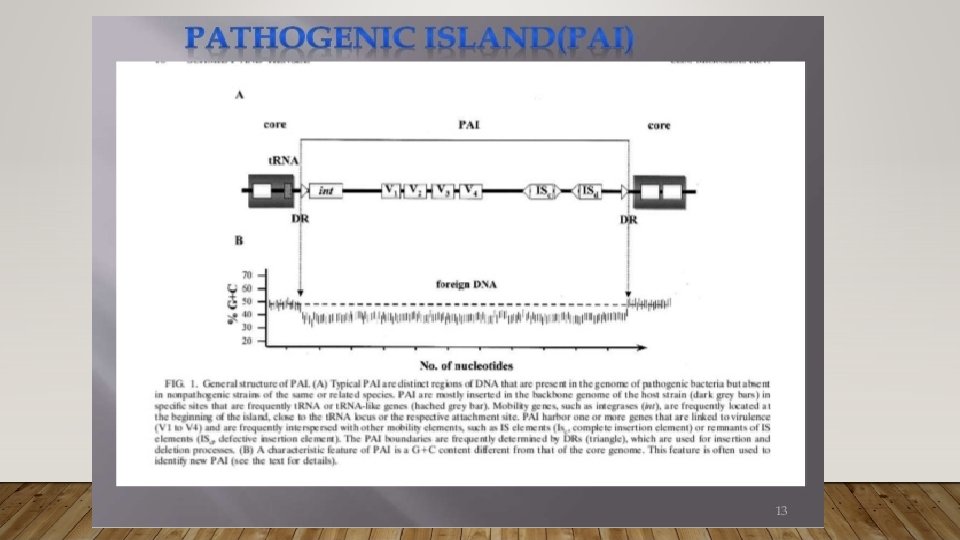

CHARACTERISTICS OF PATHOGENICITY ISLANDS 1. Pathogenicity islands carry genes encoding one or more virulence factors, including, but not limited to, adhesins, toxins, or invasins 2. They may be located on a bacterial chromosome or may be transferred within a plasmid. The GCcontent of pathogenicity islands often differs from that of the rest of the genome, potentially aiding in their detection within a given DNA sequence 3. PAIs are flanked by direct repeats; the sequence of bases at two ends of the inserted sequence is the same. They carry functional genes, such as integrases, transposases, or part of insertion sequences, to enable insertion into host DNA 4. PAIs are often associated with t. RNA genes, which target sites for this integration event. They can be transferred as a single unit to new bacterial cells, thus conferring virulence to formerly benign strains. 5. A host may have more than one pathogenicity island 6. Pathogenicity islands are transferred horizontally, through plasmids or transposons 7. The addition of a pathogenicity island to a non-invasive species can make the non-invasive species pathogen

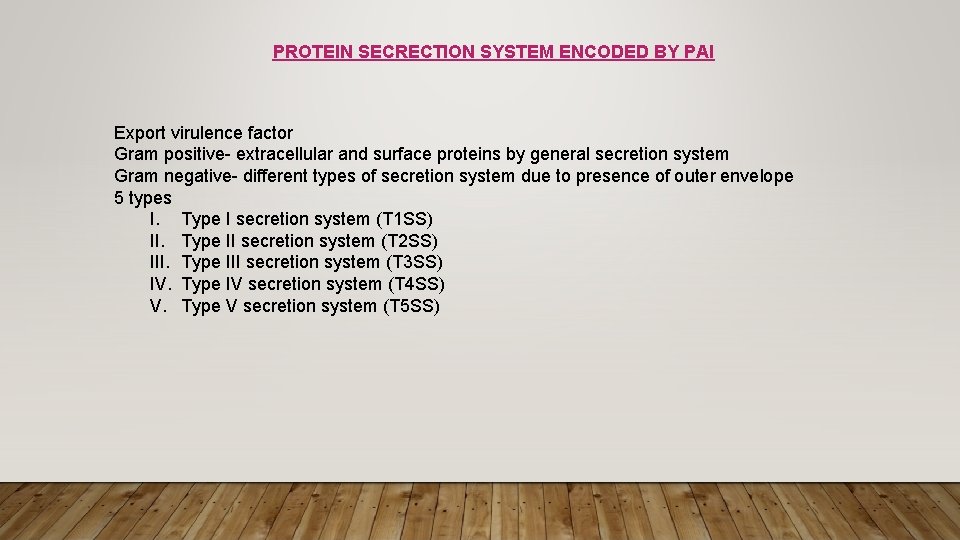
PROTEIN SECRECTION SYSTEM ENCODED BY PAI Export virulence factor Gram positive- extracellular and surface proteins by general secretion system Gram negative- different types of secretion system due to presence of outer envelope 5 types I. Type I secretion system (T 1 SS) II. Type II secretion system (T 2 SS) III. Type III secretion system (T 3 SS) IV. Type IV secretion system (T 4 SS) V. Type V secretion system (T 5 SS)
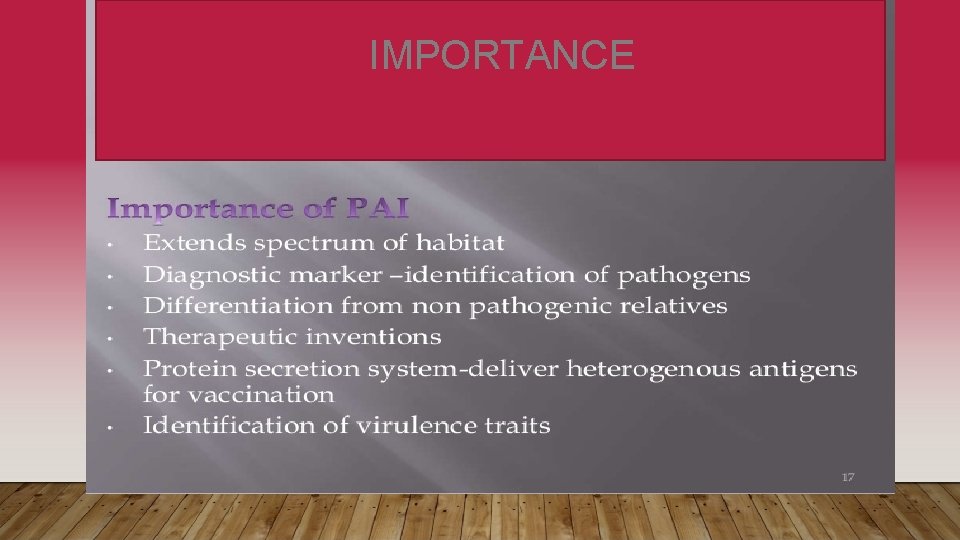
IMPORTANCE
- Slides: 13