
Evolution of Aging and Other Life History Characteristics

- Slides: 14
Evolution of Aging and Other Life History Characteristics Chapter 13 1) Life history, energy allocation, and trade-offs 2) What is the Rate-of-Living Theory of Aging? 3) What are two mechanisms associated with the Evolutionary Theory of Aging?
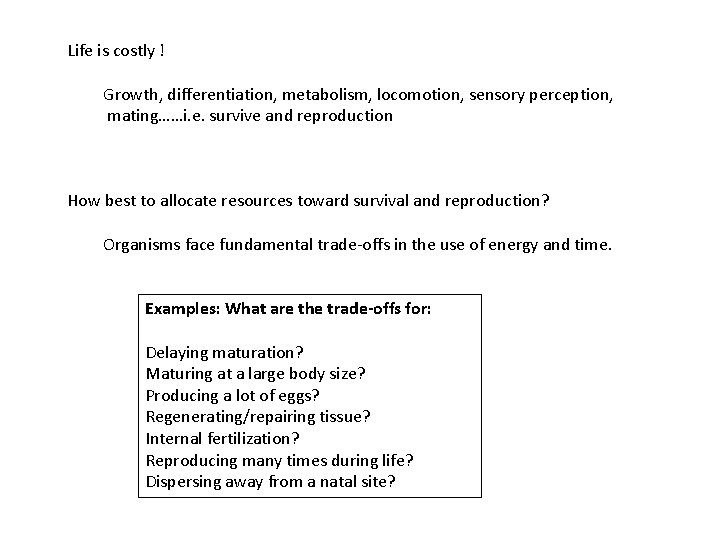
Life is costly ! Growth, differentiation, metabolism, locomotion, sensory perception, mating……i. e. survive and reproduction How best to allocate resources toward survival and reproduction? Organisms face fundamental trade-offs in the use of energy and time. Examples: What are the trade-offs for: Delaying maturation? Maturing at a large body size? Producing a lot of eggs? Regenerating/repairing tissue? Internal fertilization? Reproducing many times during life? Dispersing away from a natal site?
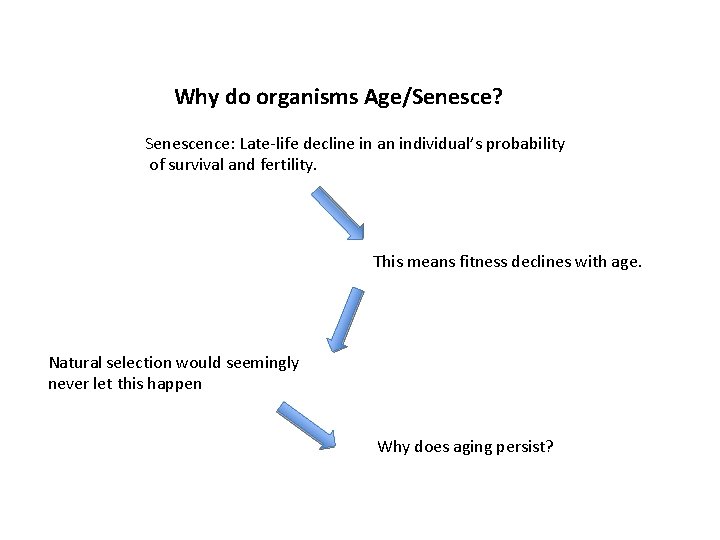
Why do organisms Age/Senesce? Senescence: Late-life decline in an individual’s probability of survival and fertility. This means fitness declines with age. Natural selection would seemingly never let this happen Why does aging persist?
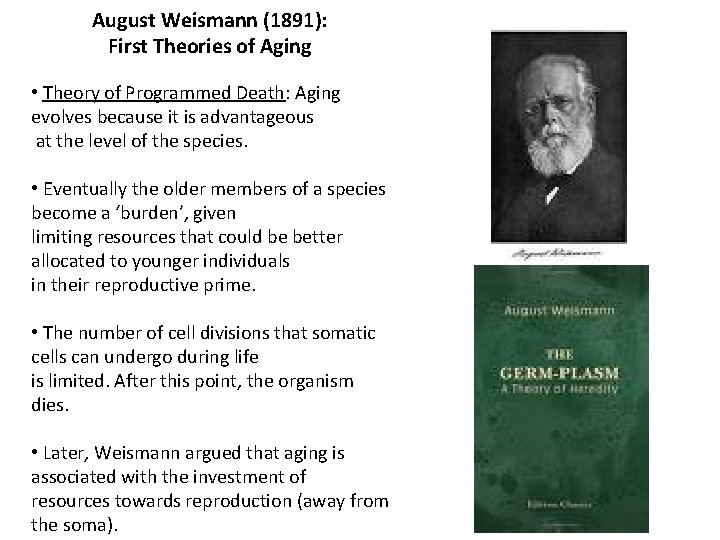
August Weismann (1891): First Theories of Aging • Theory of Programmed Death: Aging evolves because it is advantageous at the level of the species. • Eventually the older members of a species become a ‘burden’, given limiting resources that could be better allocated to younger individuals in their reproductive prime. • The number of cell divisions that somatic cells can undergo during life is limited. After this point, the organism dies. • Later, Weismann argued that aging is associated with the investment of resources towards reproduction (away from the soma).
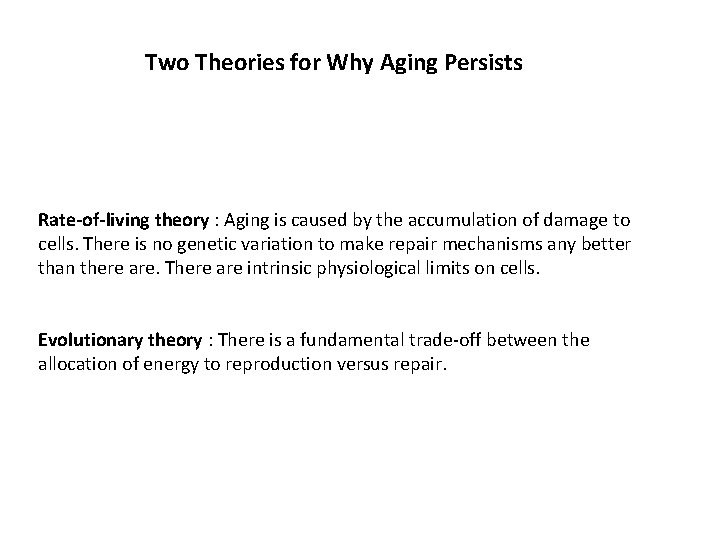
Two Theories for Why Aging Persists Rate-of-living theory : Aging is caused by the accumulation of damage to cells. There is no genetic variation to make repair mechanisms any better than there are. There are intrinsic physiological limits on cells. Evolutionary theory : There is a fundamental trade-off between the allocation of energy to reproduction versus repair.
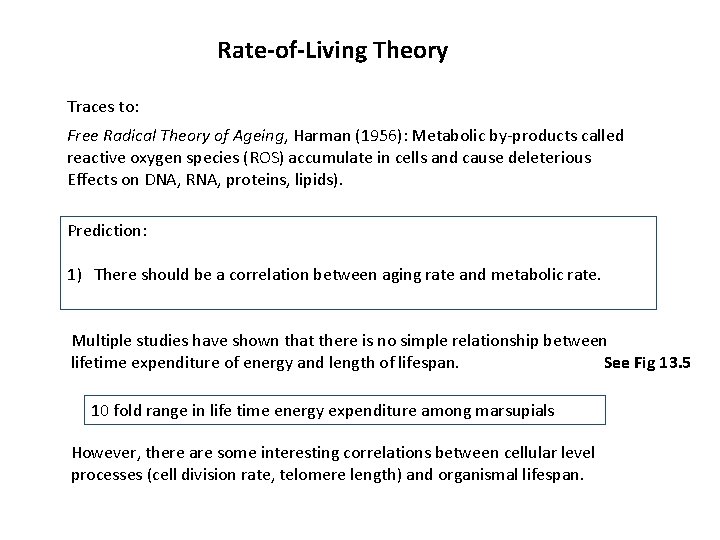
Rate-of-Living Theory Traces to: Free Radical Theory of Ageing, Harman (1956): Metabolic by-products called reactive oxygen species (ROS) accumulate in cells and cause deleterious Effects on DNA, RNA, proteins, lipids). Prediction: 1) There should be a correlation between aging rate and metabolic rate. Multiple studies have shown that there is no simple relationship between lifetime expenditure of energy and length of lifespan. See Fig 13. 5 10 fold range in life time energy expenditure among marsupials However, there are some interesting correlations between cellular level processes (cell division rate, telomere length) and organismal lifespan.
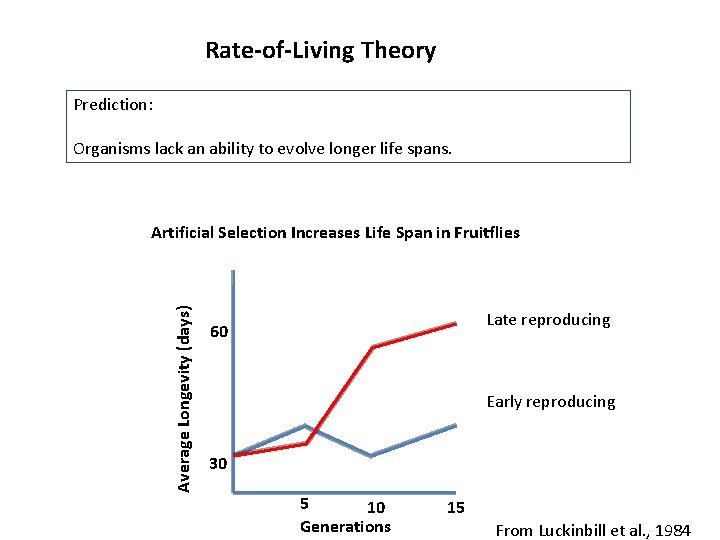
Rate-of-Living Theory Prediction: Organisms lack an ability to evolve longer life spans. Average Longevity (days) Artificial Selection Increases Life Span in Fruitflies Late reproducing 60 Early reproducing 30 5 10 Generations 15 From Luckinbill et al. , 1984
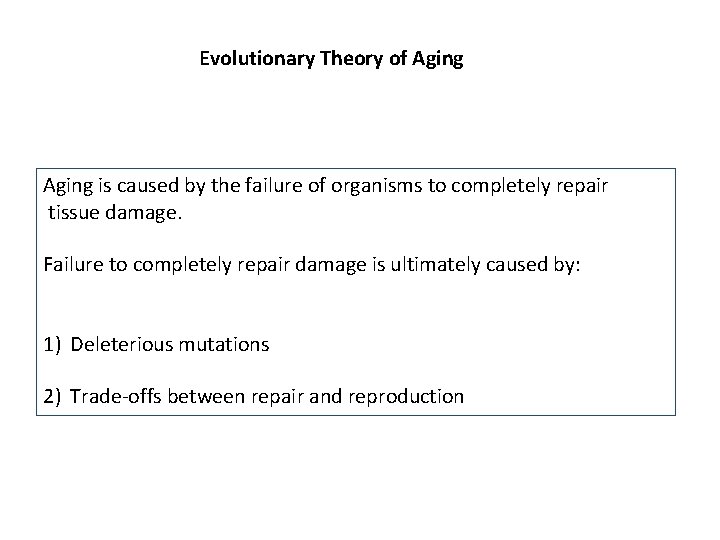
Evolutionary Theory of Aging is caused by the failure of organisms to completely repair tissue damage. Failure to completely repair damage is ultimately caused by: 1) Deleterious mutations 2) Trade-offs between repair and reproduction
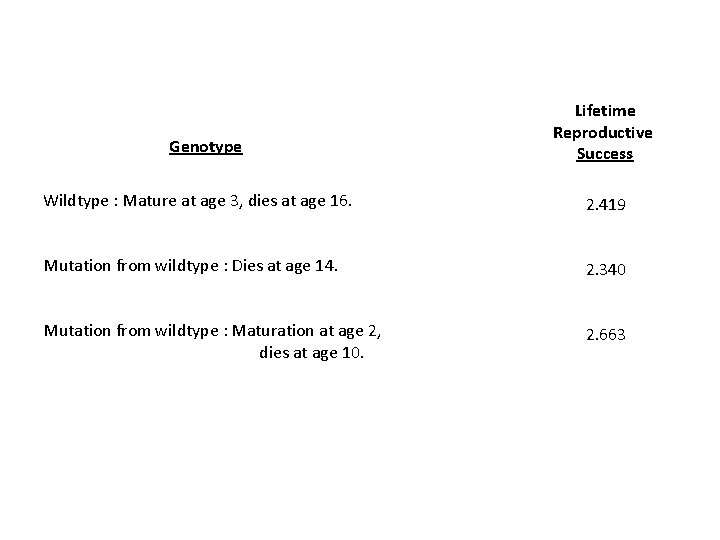
Genotype Lifetime Reproductive Success Wildtype : Mature at age 3, dies at age 16. 2. 419 Mutation from wildtype : Dies at age 14. 2. 340 Mutation from wildtype : Maturation at age 2, dies at age 10. 2. 663
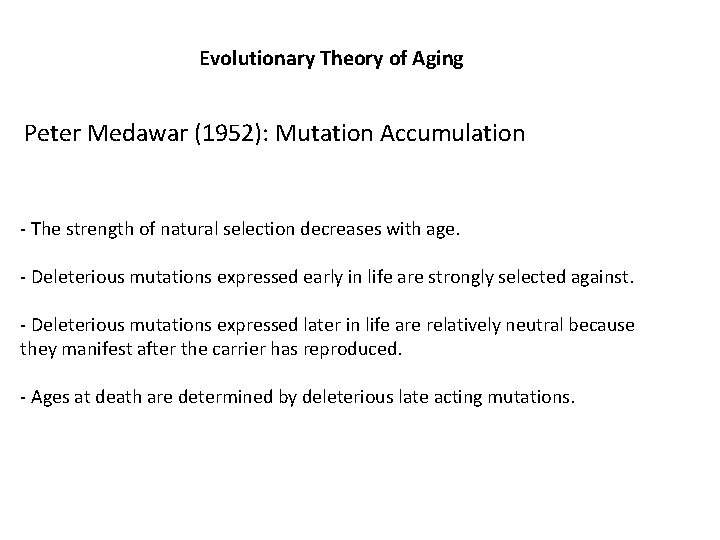
Evolutionary Theory of Aging Peter Medawar (1952): Mutation Accumulation - The strength of natural selection decreases with age. - Deleterious mutations expressed early in life are strongly selected against. - Deleterious mutations expressed later in life are relatively neutral because they manifest after the carrier has reproduced. - Ages at death are determined by deleterious late acting mutations.
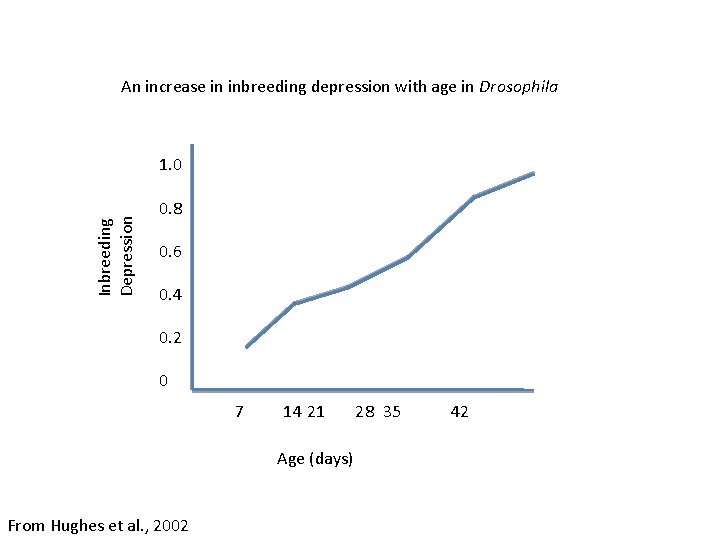
An increase in inbreeding depression with age in Drosophila Inbreeding Depression 1. 0 0. 8 0. 6 0. 4 0. 2 0 7 14 21 Age (days) From Hughes et al. , 2002 28 35 42
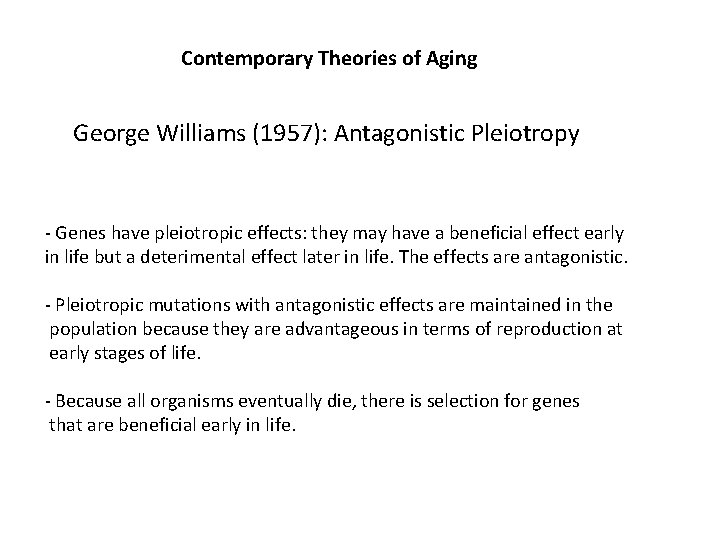
Contemporary Theories of Aging George Williams (1957): Antagonistic Pleiotropy - Genes have pleiotropic effects: they may have a beneficial effect early in life but a deterimental effect later in life. The effects are antagonistic. - Pleiotropic mutations with antagonistic effects are maintained in the population because they are advantageous in terms of reproduction at early stages of life. - Because all organisms eventually die, there is selection for genes that are beneficial early in life.
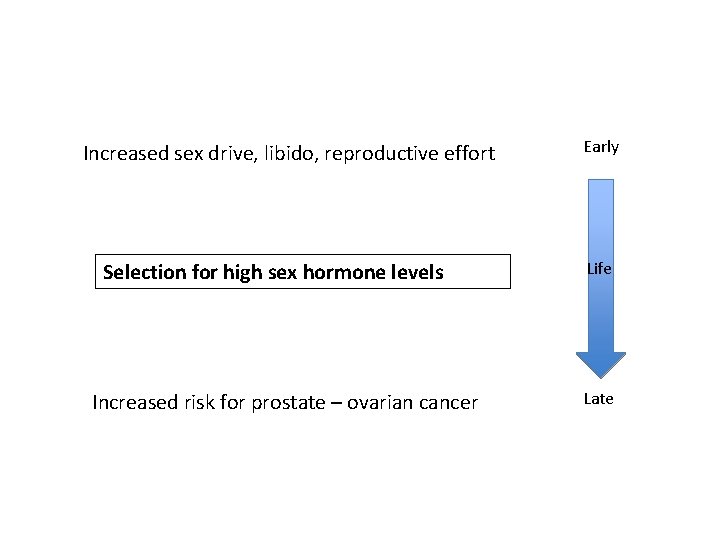
Increased sex drive, libido, reproductive effort Selection for high sex hormone levels Increased risk for prostate – ovarian cancer Early Life Late
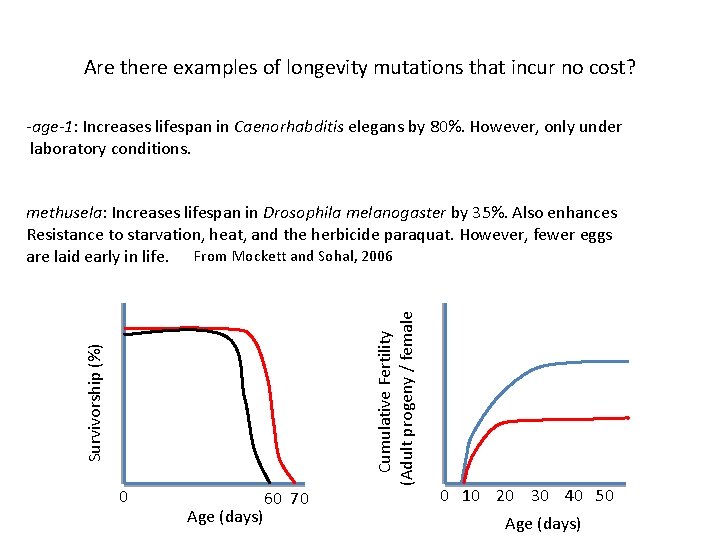
Are there examples of longevity mutations that incur no cost? -age-1: Increases lifespan in Caenorhabditis elegans by 80%. However, only under laboratory conditions. Survivorship (%) Cumulative Fertility (Adult progeny / female methusela: Increases lifespan in Drosophila melanogaster by 35%. Also enhances Resistance to starvation, heat, and the herbicide paraquat. However, fewer eggs are laid early in life. From Mockett and Sohal, 2006 0 Age (days) 60 70 0 10 20 30 40 50 Age (days)