
Evolution of a Prototype Archival System for Preserving
- Slides: 38
Evolution of a Prototype Archival System for Preserving & Reviewing Electronic Records 2008 SAA Annual Meeting August 30, 2008
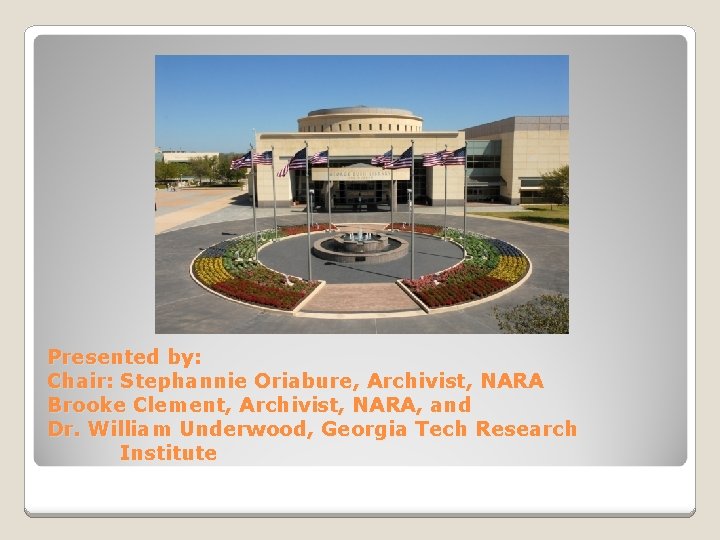
Presented by: Chair: Stephannie Oriabure, Archivist, NARA Brooke Clement, Archivist, NARA, and Dr. William Underwood, Georgia Tech Research Institute
�What were the Issues? �Our Approach �Archival Processing �Preservation �New Technologies �Conclusion Overview
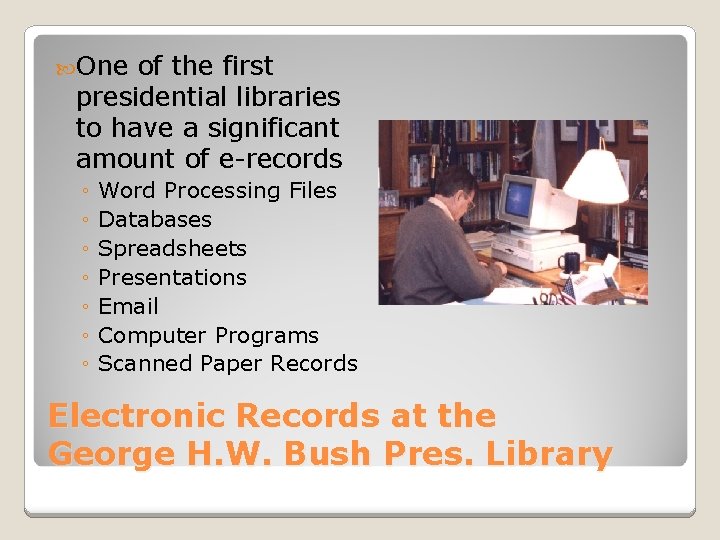
One of the first presidential libraries to have a significant amount of e-records ◦ ◦ ◦ ◦ Word Processing Files Databases Spreadsheets Presentations Email Computer Programs Scanned Paper Records Electronic Records at the George H. W. Bush Pres. Library
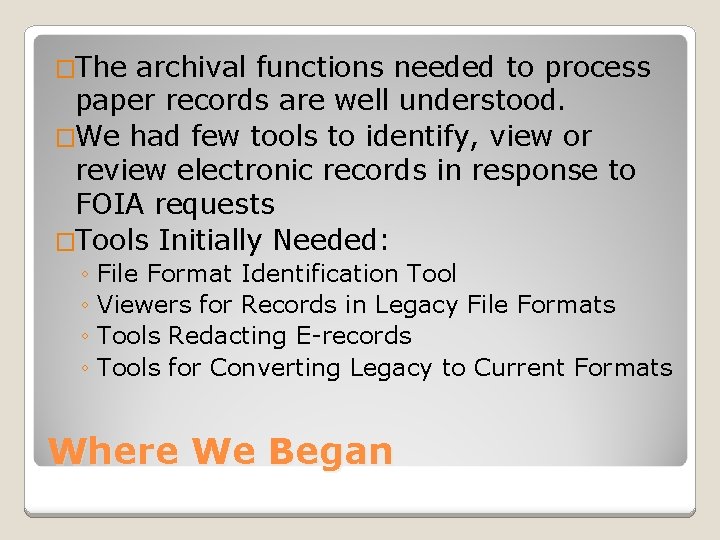
�The archival functions needed to process paper records are well understood. �We had few tools to identify, view or review electronic records in response to FOIA requests �Tools Initially Needed: ◦ File Format Identification Tool ◦ Viewers for Records in Legacy File Formats ◦ Tools Redacting E-records ◦ Tools for Converting Legacy to Current Formats Where We Began
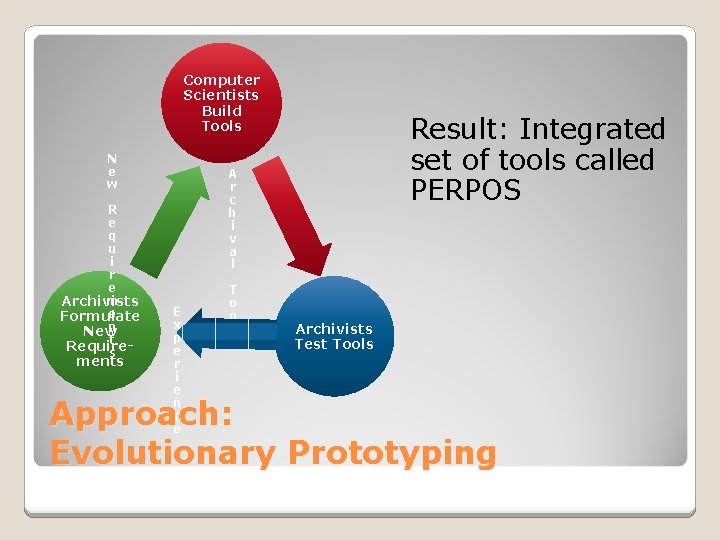
Computer Scientists Build Tools N e w R e q u i r e m Archivists e Formulate n New t Requires ments Result: Integrated set of tools called PERPOS A r c h i v a l E x p e r i e n c e T o o l s Archivists Test Tools Approach: Evolutionary Prototyping
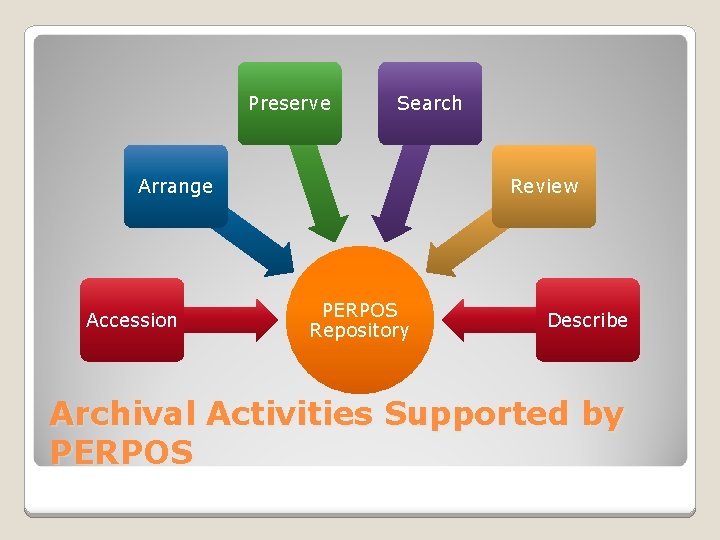
Preserve Search Arrange Accession Review PERPOS Repository Describe Archival Activities Supported by PERPOS
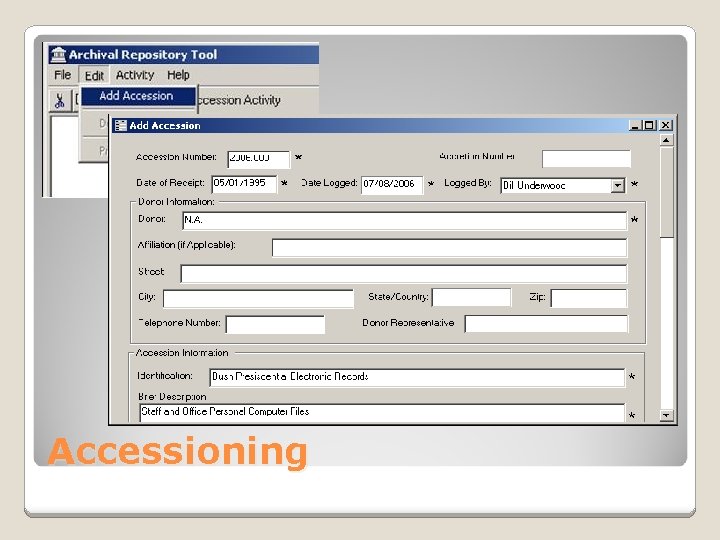
Accessioning
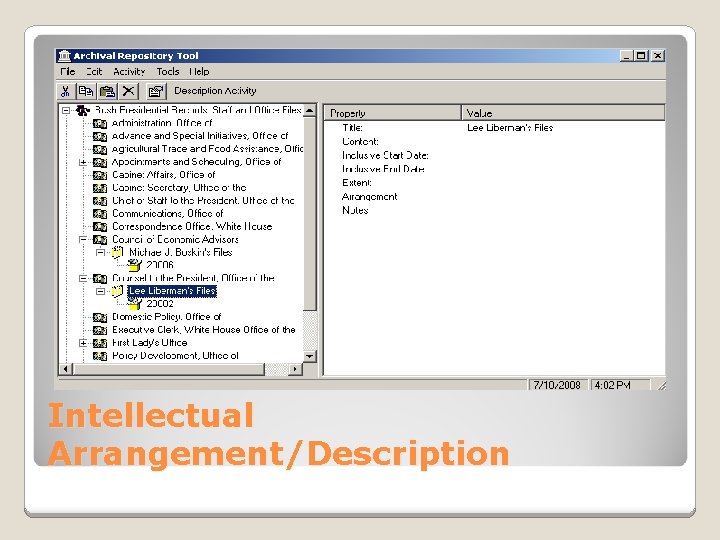
Intellectual Arrangement/Description
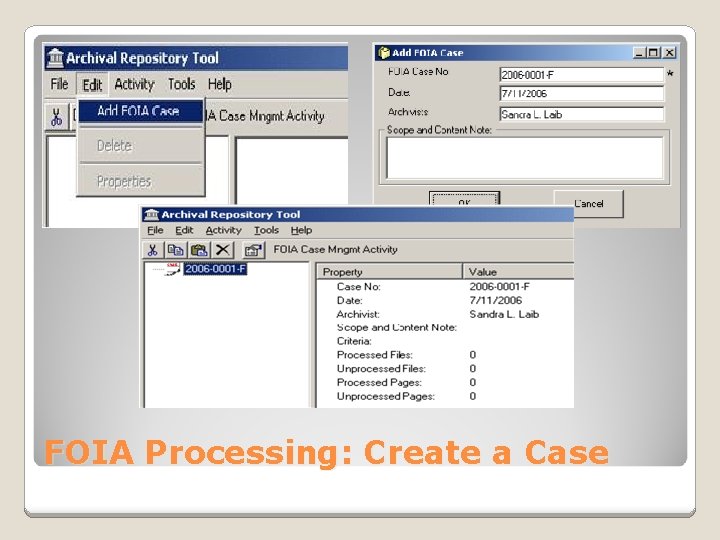
FOIA Processing: Create a Case
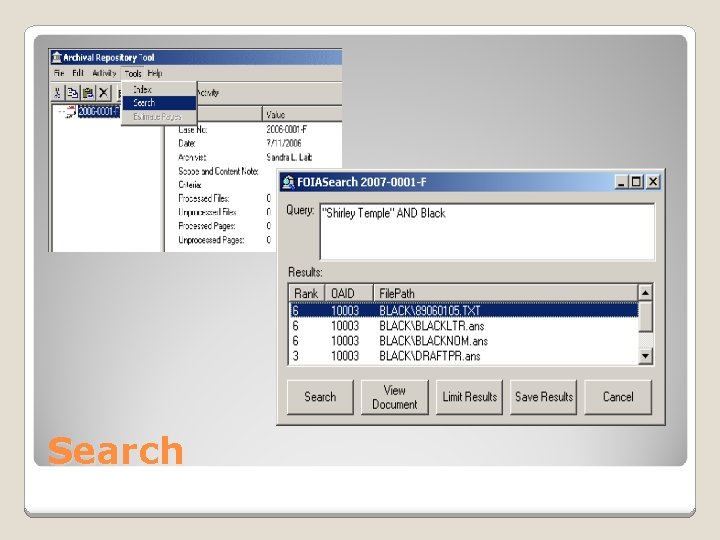
Search
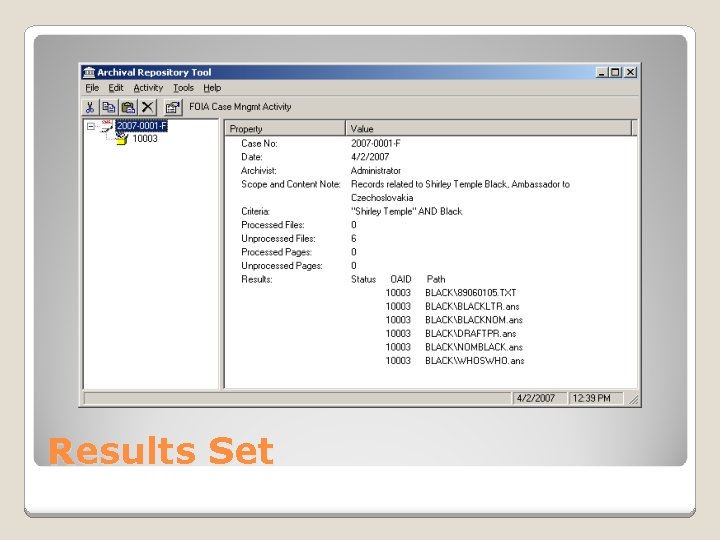
Results Set
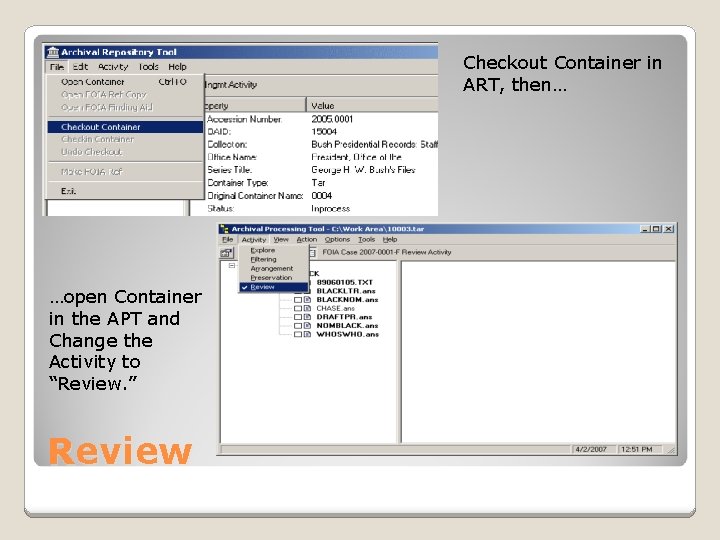
Checkout Container in ART, then… …open Container in the APT and Change the Activity to “Review. ” Review
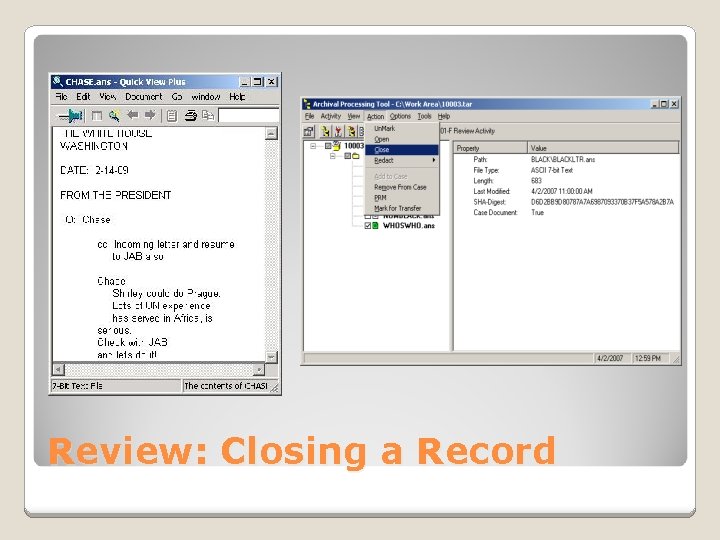
Review: Closing a Record
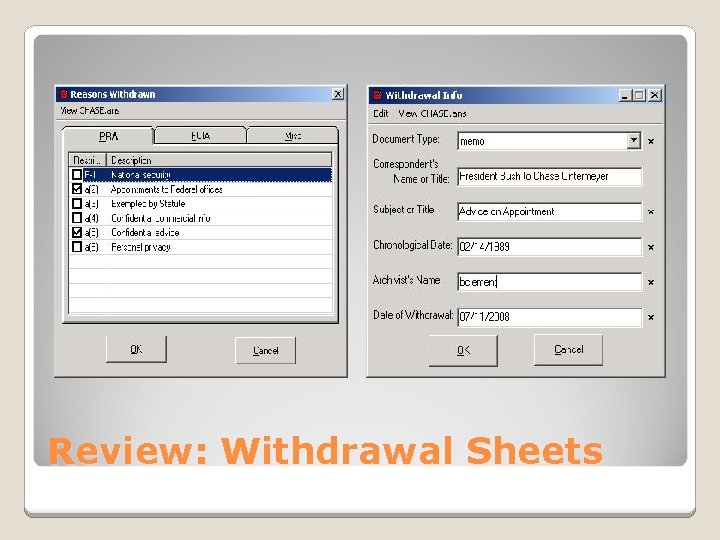
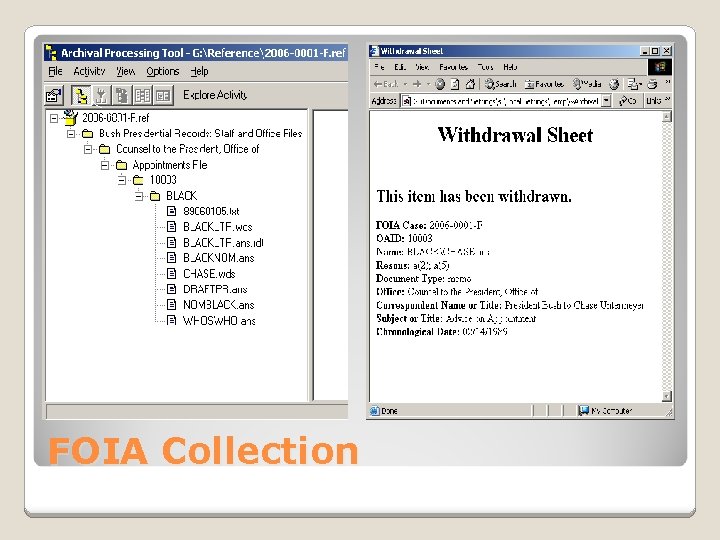
Review: Withdrawal Sheets
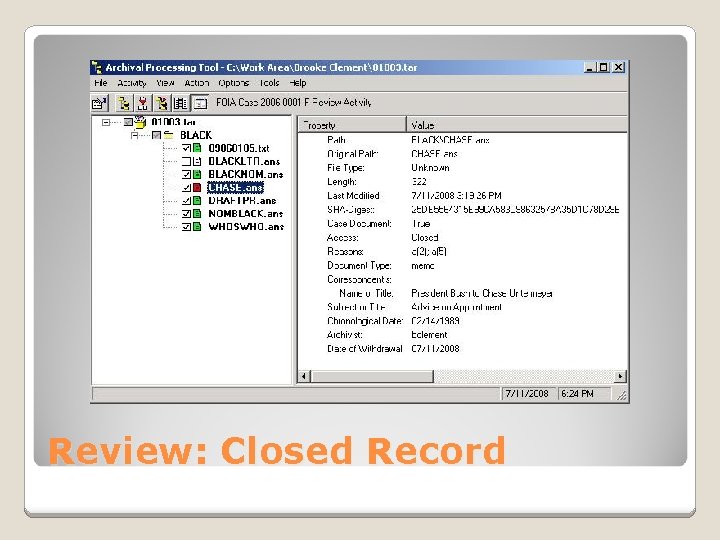
Review: Closed Record
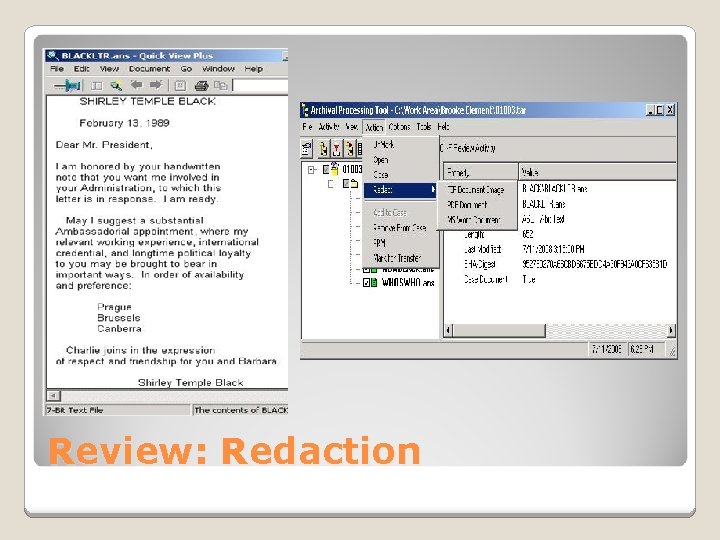
Review: Redaction
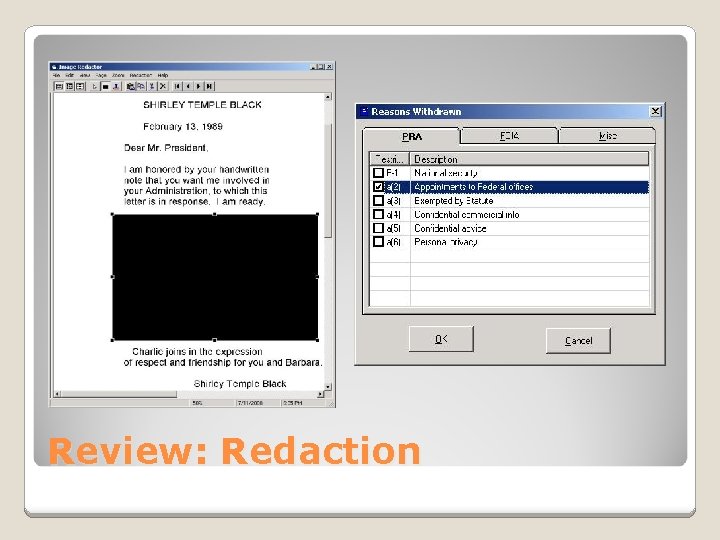
Review: Redaction
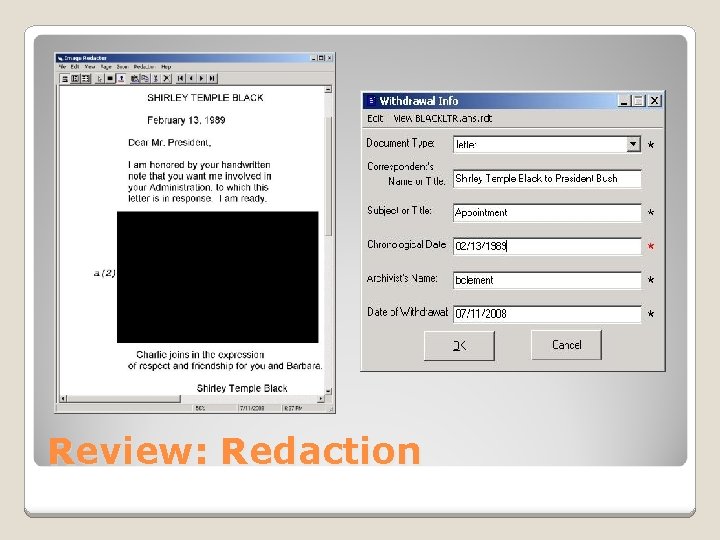
Review: Redaction
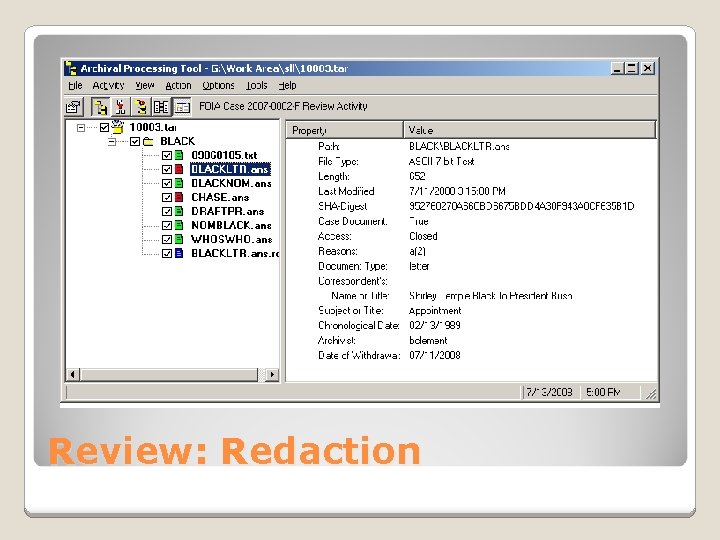
Review: Redaction
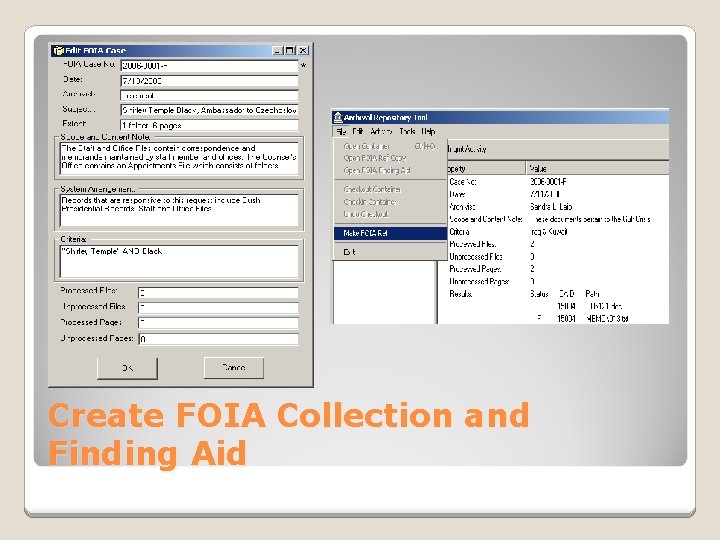
Create FOIA Collection and Finding Aid
FOIA Collection
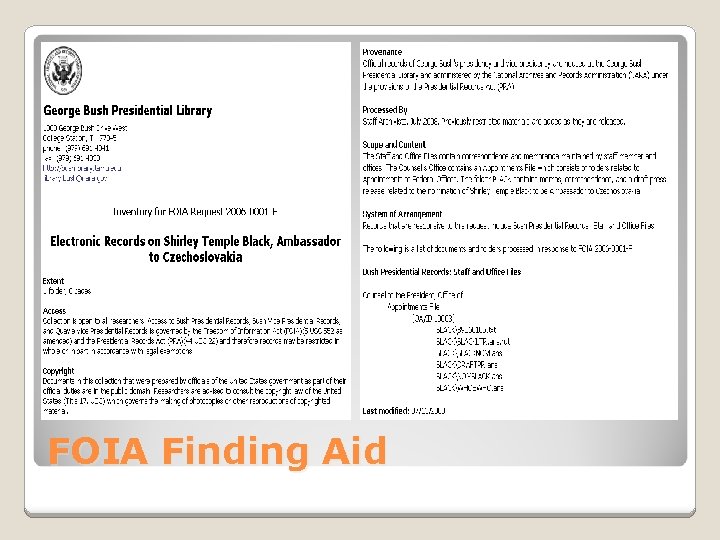
FOIA Finding Aid
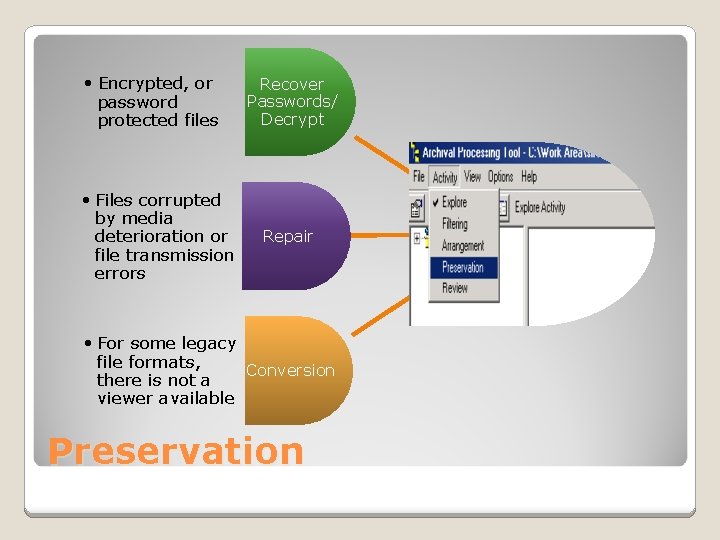
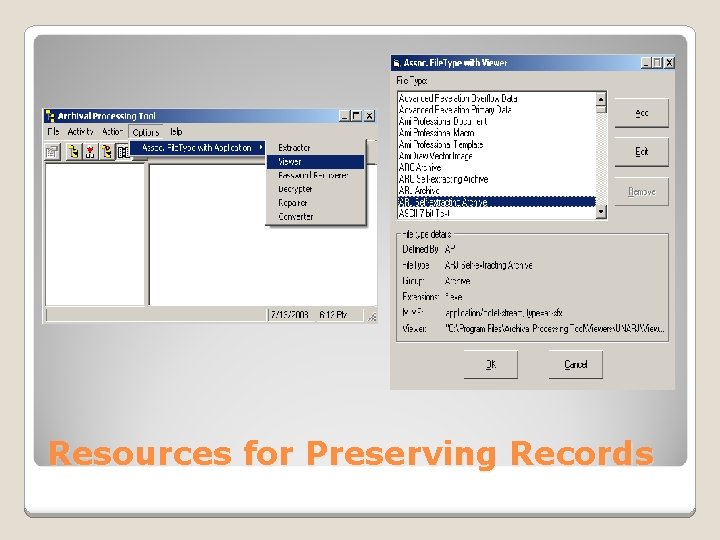
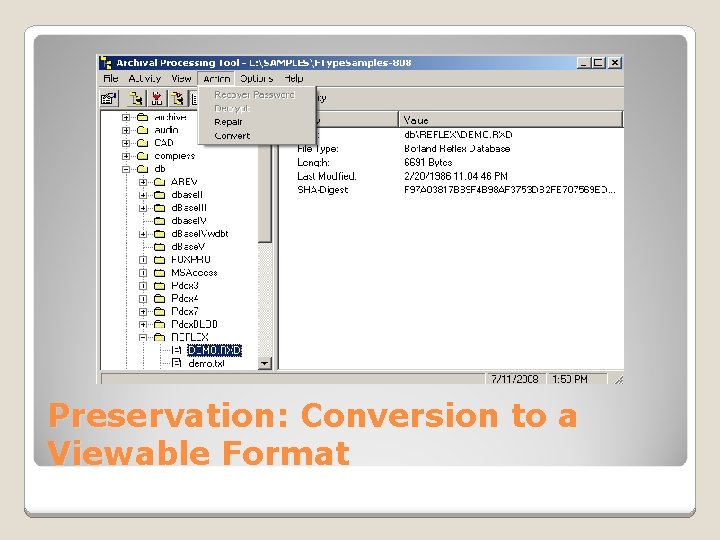
• Encrypted, or password protected files • Files corrupted by media deterioration or file transmission errors Recover Passwords/ Decrypt Repair • For some legacy file formats, Conversion there is not a viewer available Preservation
Resources for Preserving Records
Preservation: Conversion to a Viewable Format
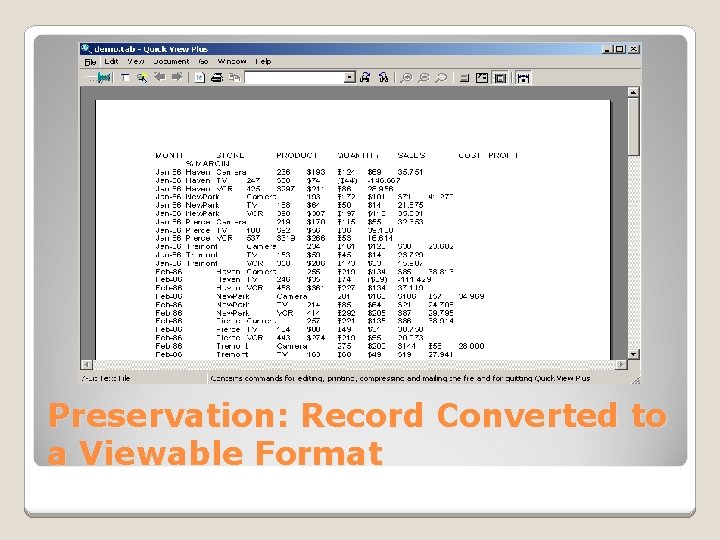
Preservation: Record Converted to a Viewable Format
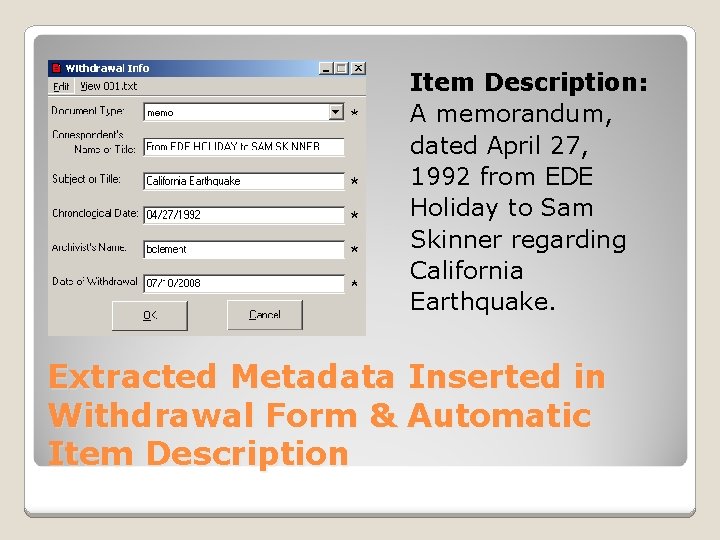
�Automatically information filling in withdrawal �Automatic description of items, file units (folders), and record series Research in Assisting Archivists in Processing E-Records
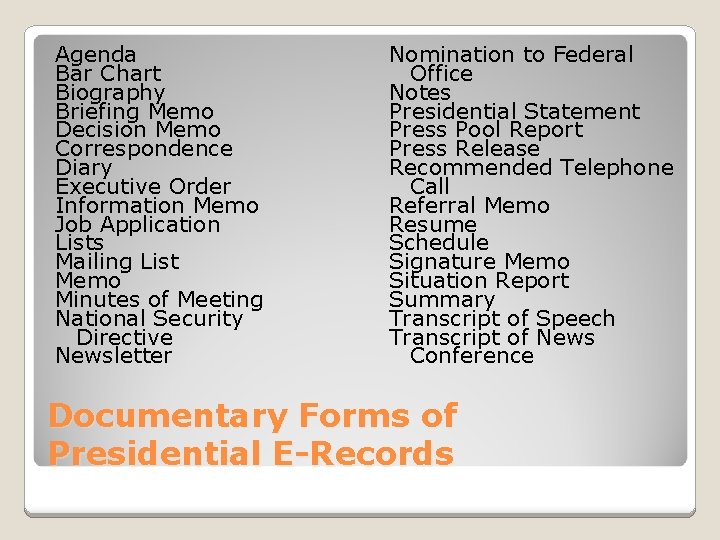
Agenda Bar Chart Biography Briefing Memo Decision Memo Correspondence Diary Executive Order Information Memo Job Application Lists Mailing List Memo Minutes of Meeting National Security Directive Newsletter Nomination to Federal Office Notes Presidential Statement Press Pool Report Press Release Recommended Telephone Call Referral Memo Resume Schedule Signature Memo Situation Report Summary Transcript of Speech Transcript of News Conference Documentary Forms of Presidential E-Records
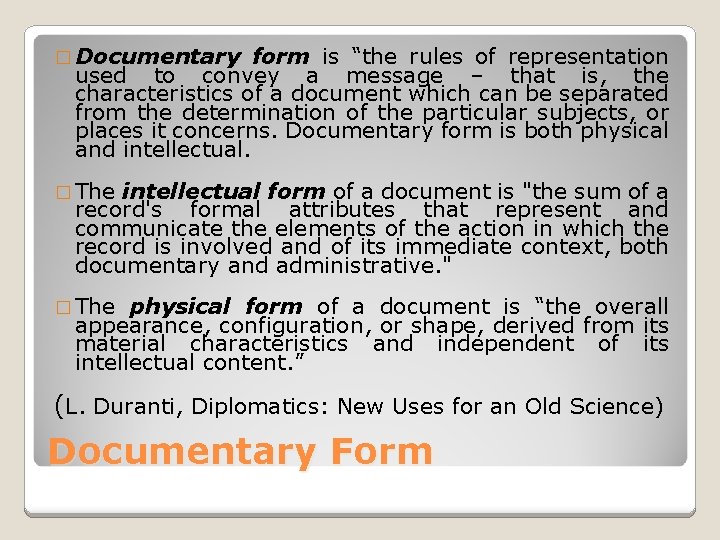
� Documentary form is “the rules of representation used to convey a message – that is, the characteristics of a document which can be separated from the determination of the particular subjects, or places it concerns. Documentary form is both physical and intellectual. � The intellectual form of a document is "the sum of a record's formal attributes that represent and communicate the elements of the action in which the record is involved and of its immediate context, both documentary and administrative. " � The physical form of a document is “the overall appearance, configuration, or shape, derived from its material characteristics and independent of its intellectual content. ” (L. Duranti, Diplomatics: New Uses for an Old Science) Documentary Form
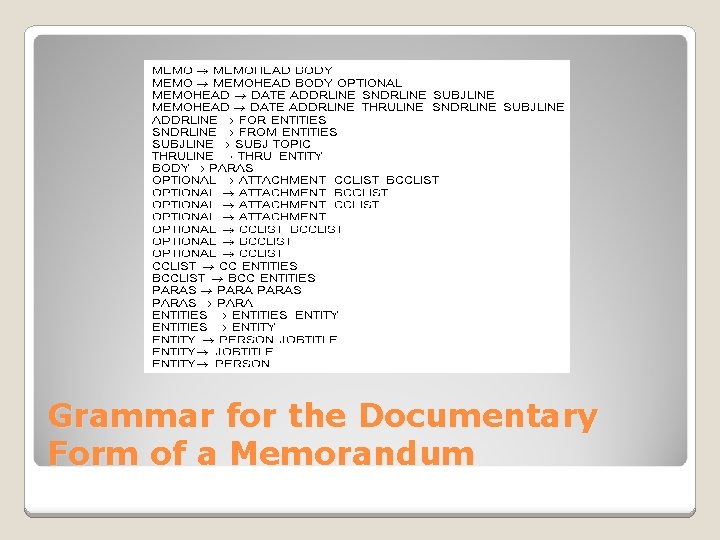
Grammar for the Documentary Form of a Memorandum
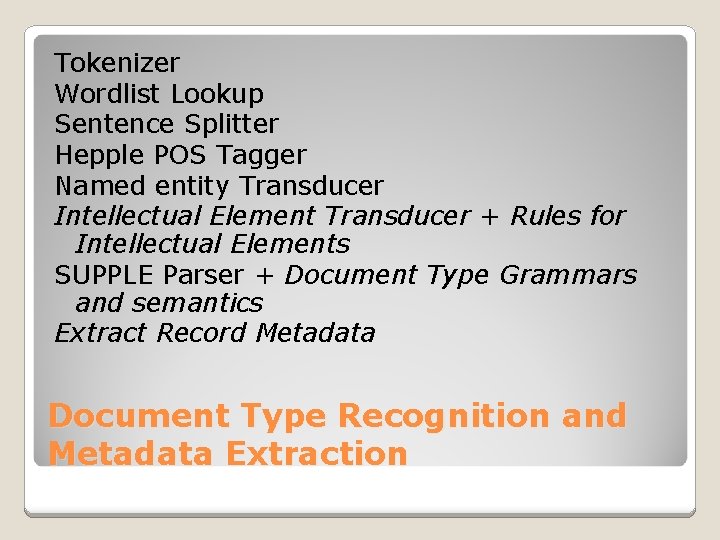
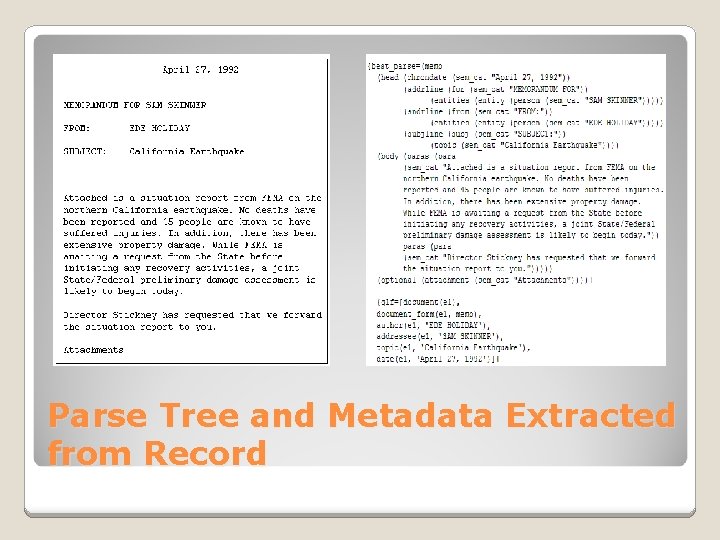
Tokenizer Wordlist Lookup Sentence Splitter Hepple POS Tagger Named entity Transducer Intellectual Element Transducer + Rules for Intellectual Elements SUPPLE Parser + Document Type Grammars and semantics Extract Record Metadata Document Type Recognition and Metadata Extraction
Parse Tree and Metadata Extracted from Record
Item Description: A memorandum, dated April 27, 1992 from EDE Holiday to Sam Skinner regarding California Earthquake. Extracted Metadata Inserted in Withdrawal Form & Automatic Item Description
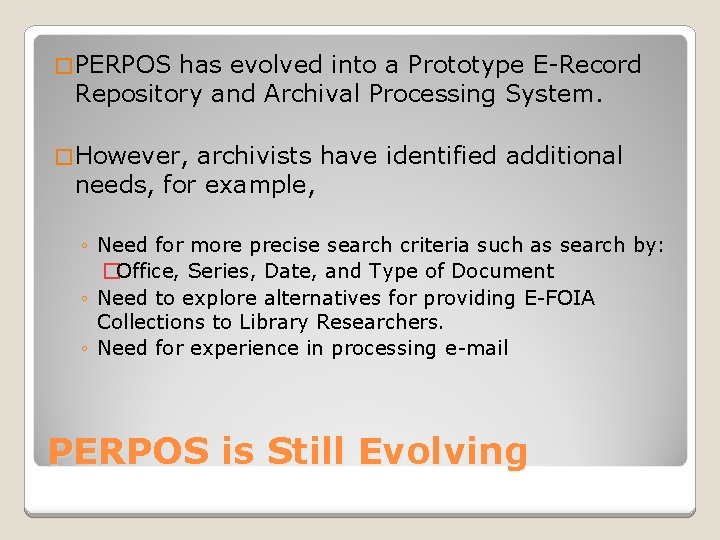
� PERPOS has evolved into a Prototype E-Record Repository and Archival Processing System. � However, archivists have identified additional needs, for example, ◦ Need for more precise search criteria such as search by: �Office, Series, Date, and Type of Document ◦ Need to explore alternatives for providing E-FOIA Collections to Library Researchers. ◦ Need for experience in processing e-mail PERPOS is Still Evolving
�Evolutionary Prototyping is a good strategy of system development when there is a need to learn more about the problem. The system evolves until the prototype meets all the needs and has thus evolved into a system. �PERPOS ◦ Has been demonstrated to support to a high degree both systematic and FOIA processing of e-records. ◦ Environment for learning new requirements for processing electronic records and discovering new opportunities for improving the process. ◦ Environment for exploring preservation strategies. ◦ Environment for experimental application of advanced information technologies to support archival tasks. Summary: Research Results and Benefits
� Publications: ◦ D. Carter, B. Clement, S. Laib, and W. Underwood, “Results of Pilot Testing of FOIA Processing Using PERPOS. ” ◦ S. Oriabure, L. Spencer, and W. Underwood, “Launching ERecords with a PERPOS, ” 2005 NAGARA Meeting. ◦ S. Laib and W. Underwood, “FOIA Processing in the Presidential Electronic Records Pil. Ot System. ” ◦ Underwood, et al. “Reference Manual for PERPOS: An Electronic Records Repository and Archival Processing System, Version 3. 1. ” � These and other publications are available at: http: //perpos. gtri. gatech. edu Additional Information
�Thank you! Questions from the Audience