
Evolution Natural Selection Diane Philip I Definition of
- Slides: 7
Evolution: Natural Selection Diane Philip
I. Definition of Evolution A. Evolution is an inherited change in a group of organisms through time. This changes the phenotypic ratio of a population over time. 1. 2. 3. Inherited: genetic transmission of information Group: no such thing as an individual evolving Time: evolution is a process occurring over generations
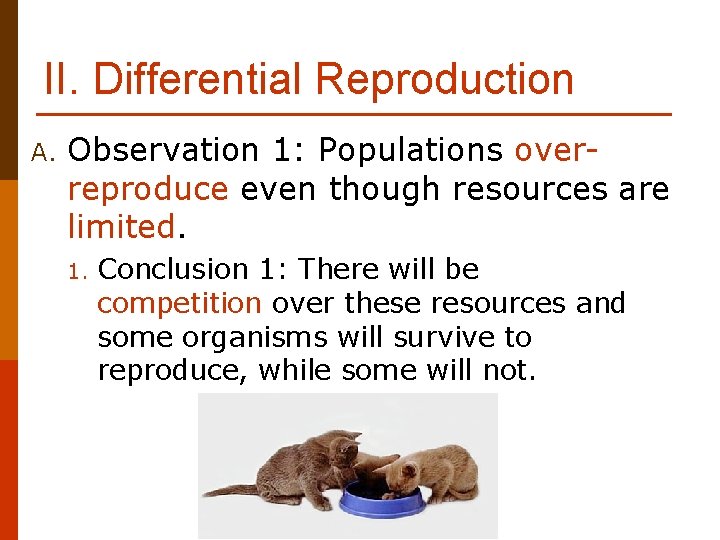
II. Differential Reproduction A. Observation 1: Populations overreproduce even though resources are limited. 1. Conclusion 1: There will be competition over these resources and some organisms will survive to reproduce, while some will not.
II. Differential Reproduction B. Observation 2: Individuals in a population vary and some of that variation is heritable. (ex. color of fur) 1. Conclusion 2: Organisms that are wellsuited to the environment will be more likely to reproduce than others, passing on these well-suited traits (if the trait is heritable). The next generation will most likely have a higher proportion of those traits. This is known as differential reproduction.
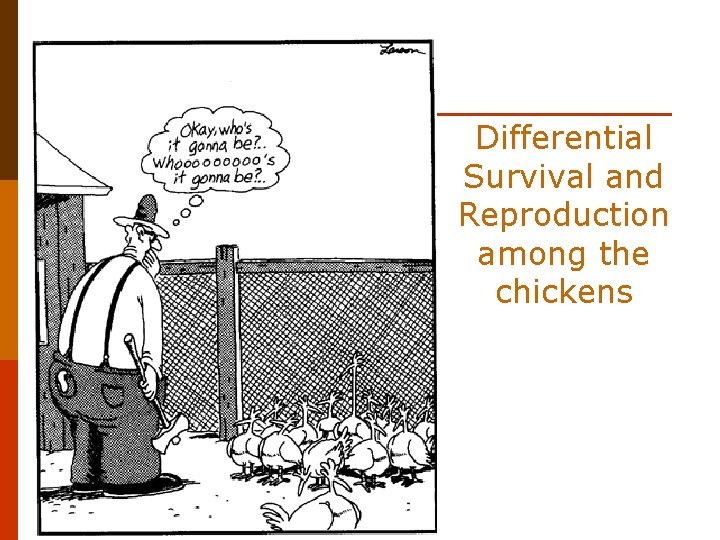
Differential Survival and Reproduction among the chickens
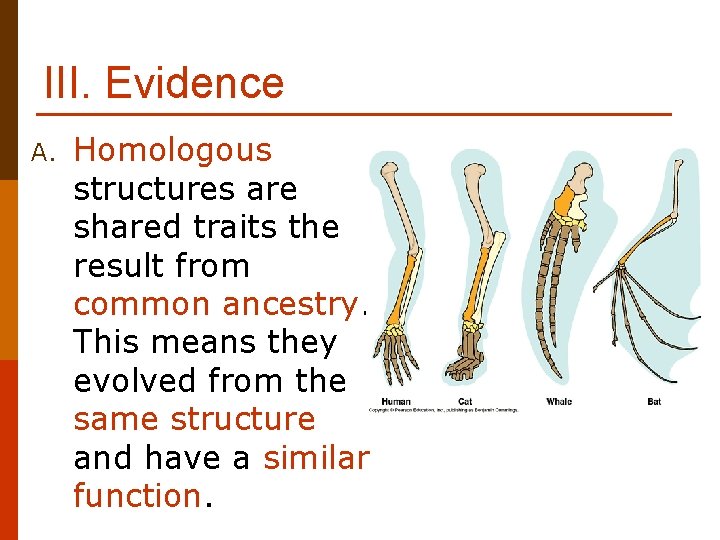
III. Evidence A. Homologous structures are shared traits the result from common ancestry. This means they evolved from the same structure and have a similar function.
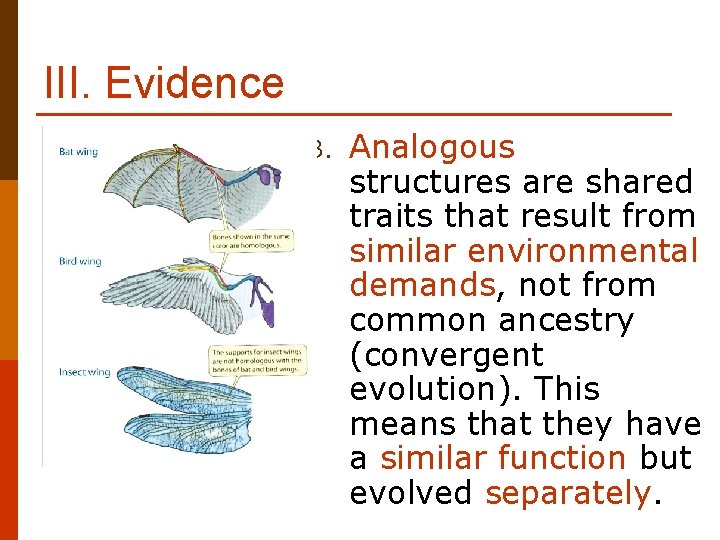
III. Evidence B. Analogous structures are shared traits that result from similar environmental demands, not from common ancestry (convergent evolution). This means that they have a similar function but evolved separately.