
Evolution Learning Goals 1 Define Evolution Natural Selection
- Slides: 45
Evolution
Learning Goals § 1. Define "Evolution" & "Natural Selection". § 2. Describe the 4 steps of Natural Selection, giving an example of each. § 3. Explain the importance of "Variation". § 4. Does Natural Selection act on an organism phenotype or genotoype? Explain! § 5. List the 5 evidences that support the Theory of Evolution.
Theory of Evolution § Evolution The process of change over time. Specifically, a change in the frequency of a gene or allele in a population over time
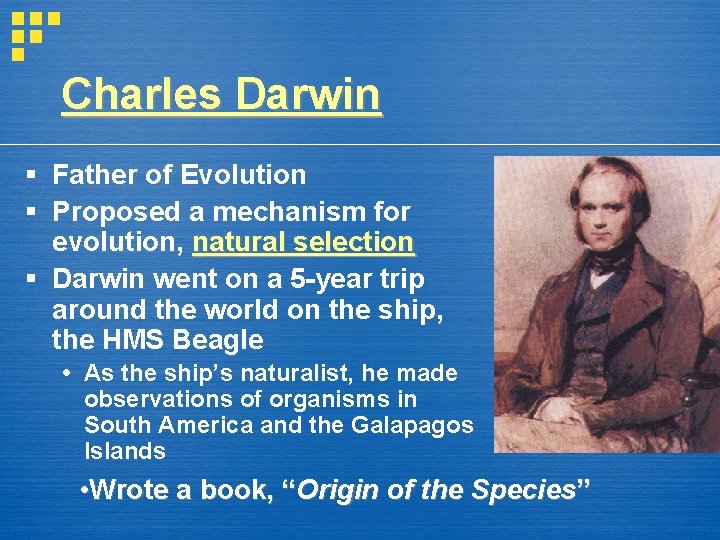
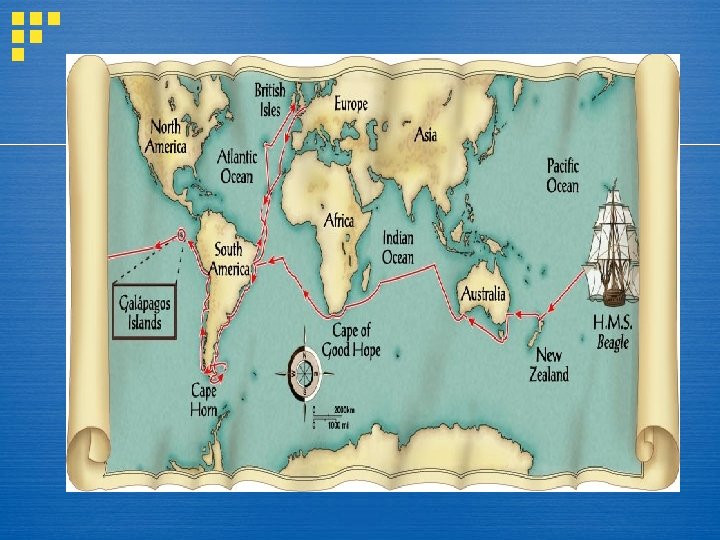
Charles Darwin § Father of Evolution § Proposed a mechanism for evolution, natural selection § Darwin went on a 5 -year trip around the world on the ship, the HMS Beagle As the ship’s naturalist, he made observations of organisms in South America and the Galapagos Islands • Wrote a book, “Origin of the Species”
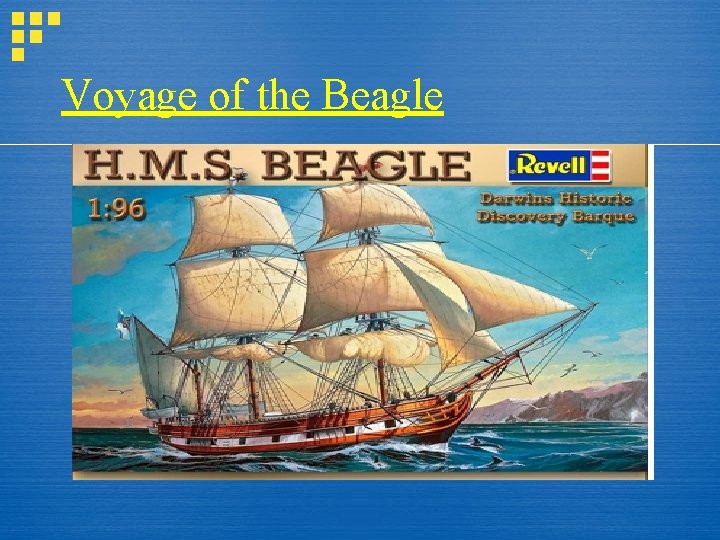
Voyage of the Beagle
Voyage of Beagle n Dates: February 12 th, 1831 n Captain: Charles Darwin n Ship: H. M. S. Beagle n Destination: Voyage around the world. n Findings: evidence to propose a revolutionary hypothesis about how life changes over time
Video on Darwin https: //youtu. be/6 GNUl. Zh. E_j. E -Darwin https: //youtu. be/Zb. ITQ 0 dqx. CQ Galapagos Island https: //youtu. be/XOi. UZ 3 yc. Zw. U Theory
Patterns of Diversity n Darwin visited Argentina and Australia which had similar grassland ecosystems. uthose grasslands were inhabited by very different animals. uneither Argentina nor Australia was home to the sorts of animals that lived in European grasslands.
Patterns of Diversity n Darwin posed challenging questions. u. Why were there no rabbits in Australia, despite the presence of habitats that seemed perfect for them? u Why were there no kangaroos in England?
Patterns of Diversity n Darwin collected the preserved remains of ancient organisms, called fossils. n Some of those fossils resembled organisms that were still alive today.
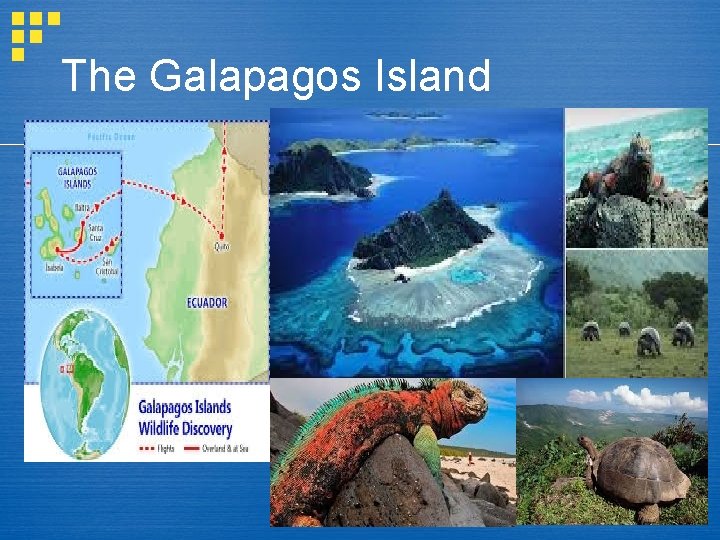
The Galapagos Island
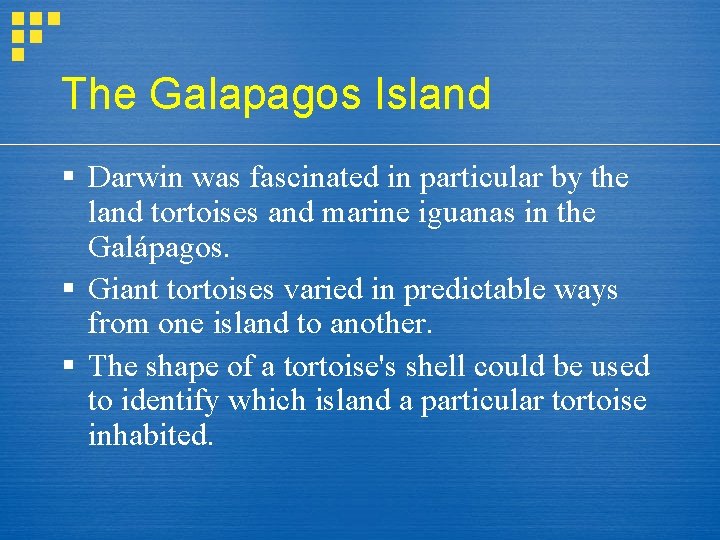
The Galapagos Island § Darwin was fascinated in particular by the land tortoises and marine iguanas in the Galápagos. § Giant tortoises varied in predictable ways from one island to another. § The shape of a tortoise's shell could be used to identify which island a particular tortoise inhabited.
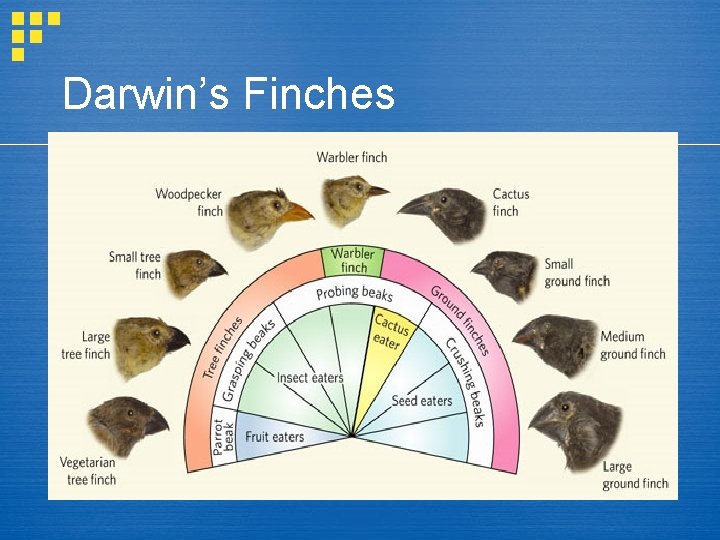
Animals found in the Galapagos n Land Tortoises n Darwin Finches n Marine Iguanas
Darwin’s Finches
The Journey Home n Darwin Observed that characteristics of many plants and animals vary greatly among the islands. n Hypothesis: Separate species may have arose from an original ancestor
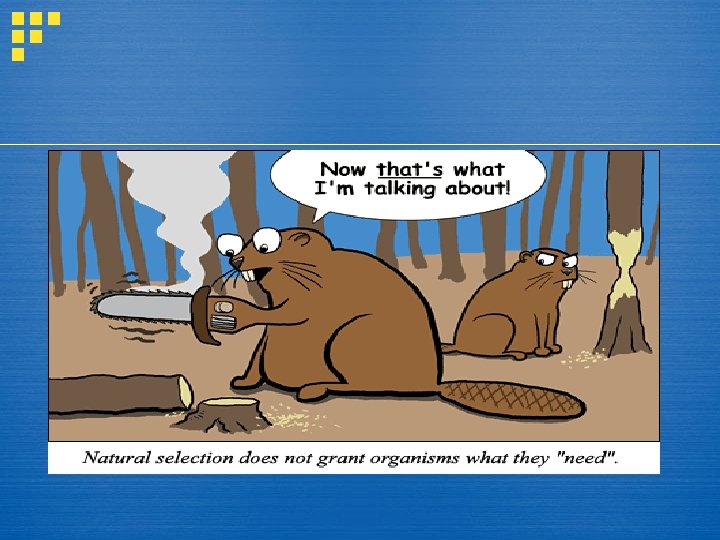
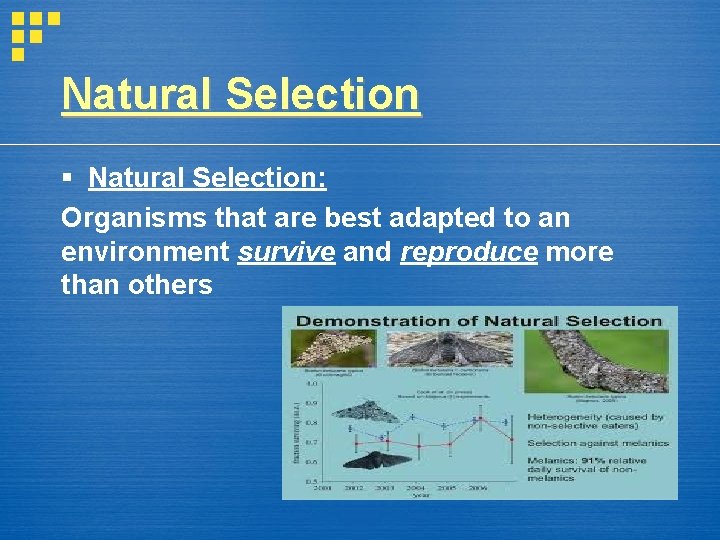
Natural Selection § Natural Selection: Organisms that are best adapted to an environment survive and reproduce more than others
§ Darwin’s Theory of Natural Selection occurs in four steps: Overproduction Variation Competition Selection
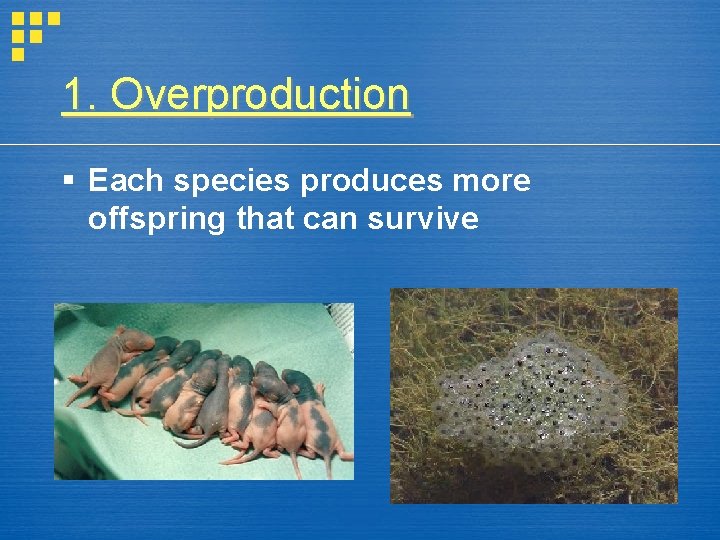
1. Overproduction § Each species produces more offspring that can survive
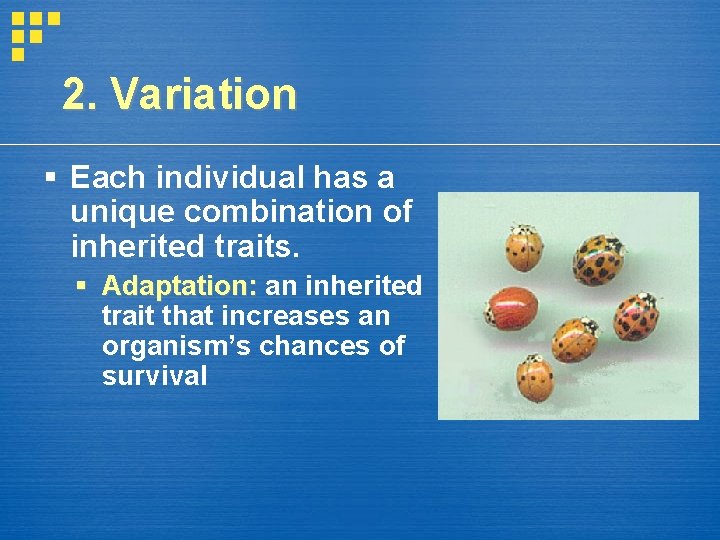
2. Variation § Each individual has a unique combination of inherited traits. § Adaptation: an inherited trait that increases an organism’s chances of survival
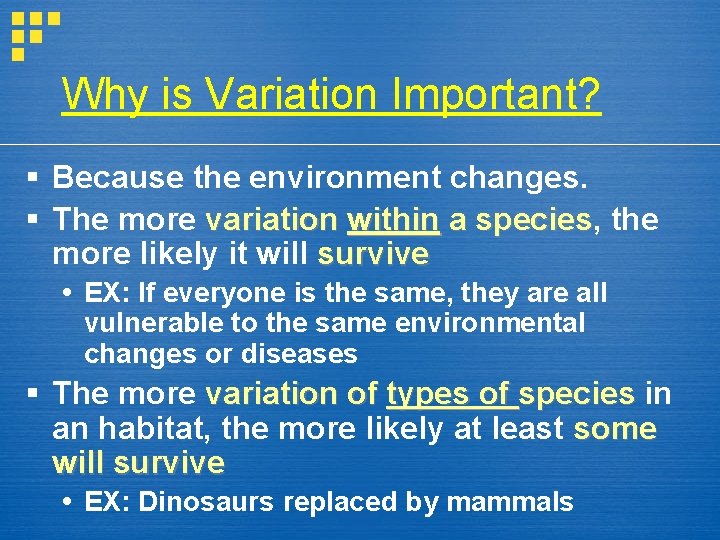
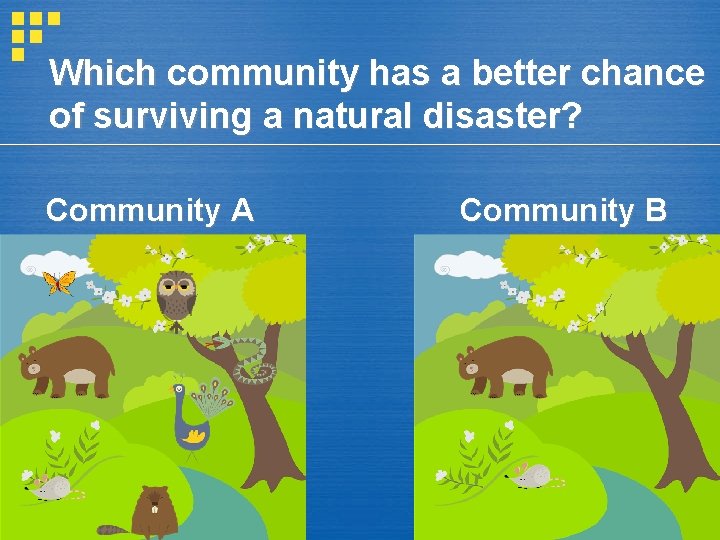
Why is Variation Important? § Because the environment changes. § The more variation within a species, species the more likely it will survive EX: If everyone is the same, they are all vulnerable to the same environmental changes or diseases § The more variation of types of species in an habitat, the more likely at least some will survive EX: Dinosaurs replaced by mammals
Which community has a better chance of surviving a natural disaster? Community A Community B
3. Competition § Individuals COMPETE for limited resources: Food, water, space, mates § Natural selection occurs through “Survival of the fittest” fittest § Fitness: Fitness the ability to survive and reproduce § Not all individuals survive to adulthood
4. Selection § The individuals with the best traits / adaptations will survive and have the opportunity to pass on it’s traits to offspring. Natural selection acts on the phenotype (physical appearance), not the genotype (genetic makeup) Ex: When a predator finds its prey, it is due to the prey’s physical characteristics, like color or slow speed, not the alleles (BB, Bb)
§ Individuals with traits that are not well suited to their environment either die or leave few offspring. § Evolution occurs when good traits build up in a population over many generations and bad traits are eliminated by the death of the individuals
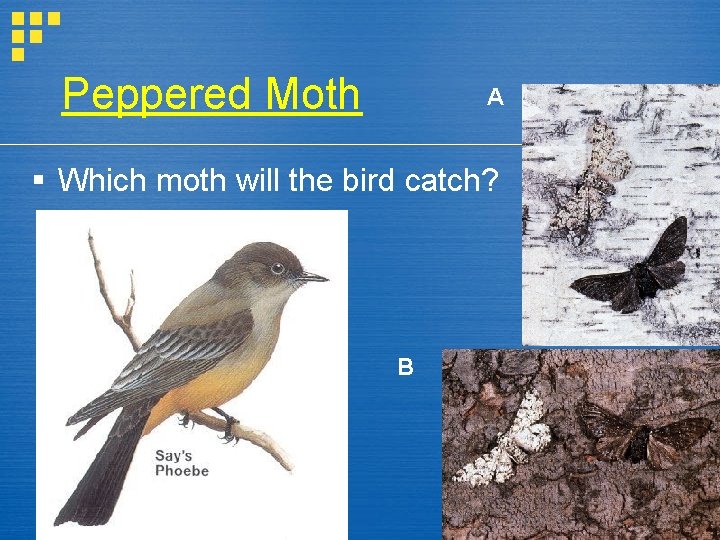
Peppered Moth A § Which moth will the bird catch? B
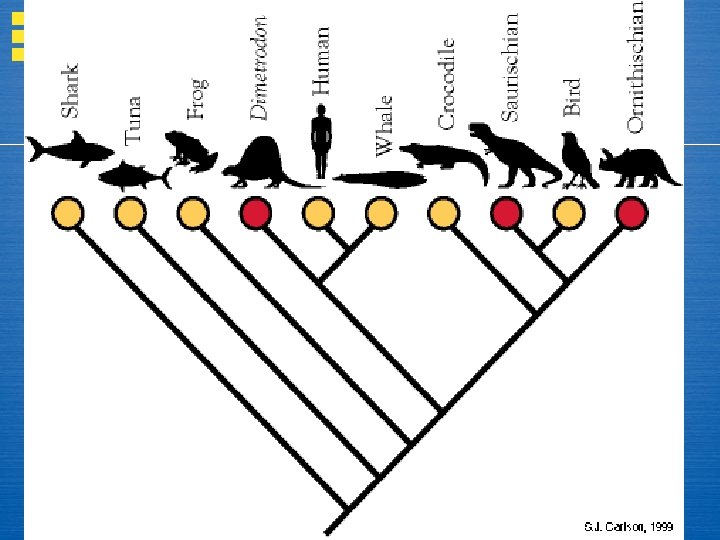
Descent with Modification § Descent with Modification – each living species has descended, with changes, from other species over time. § Common Descent – all living organisms are related to one another
Evidence for Evolution: § § § Fossil Record Homologous Body Structures Vestigial Organs Embryology Biochemical Evidence
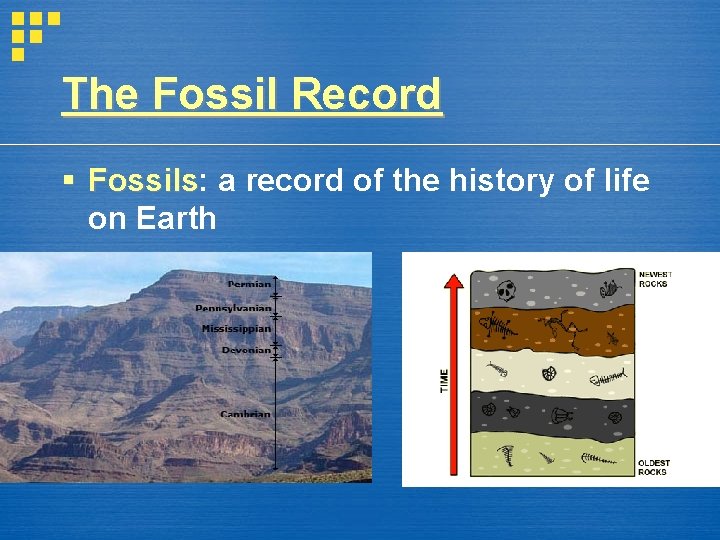
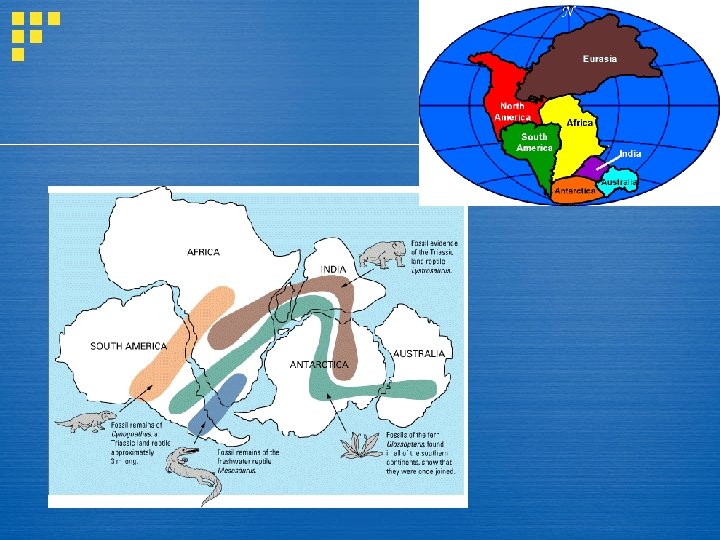
The Fossil Record § Fossils: Fossils a record of the history of life on Earth
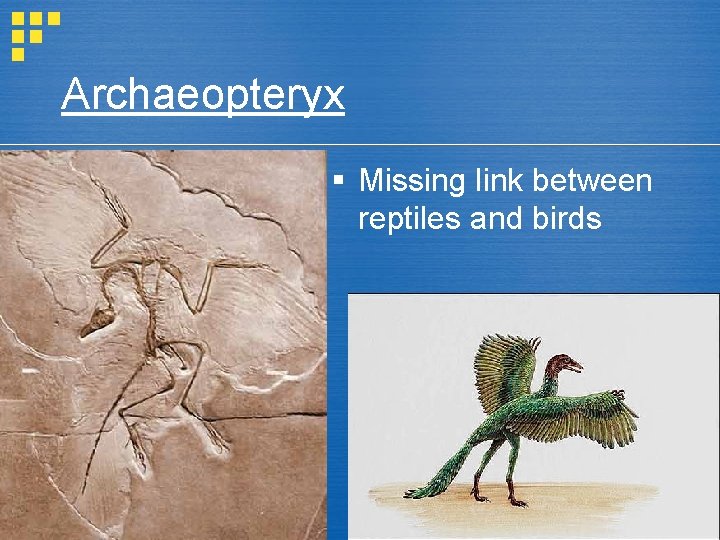
Archaeopteryx § Missing link between reptiles and birds
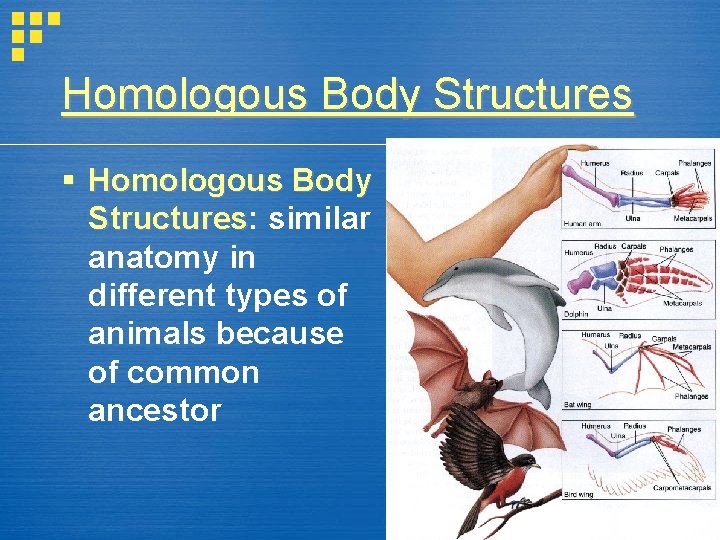
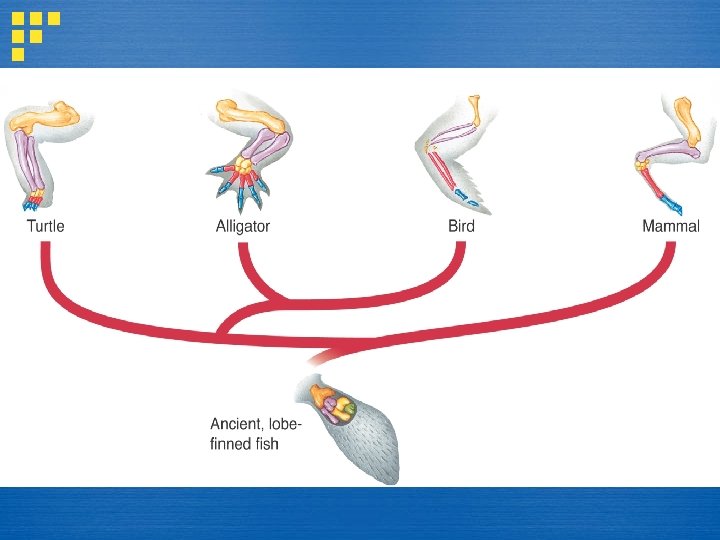
Homologous Body Structures § Homologous Body Structures: Structures similar anatomy in different types of animals because of common ancestor
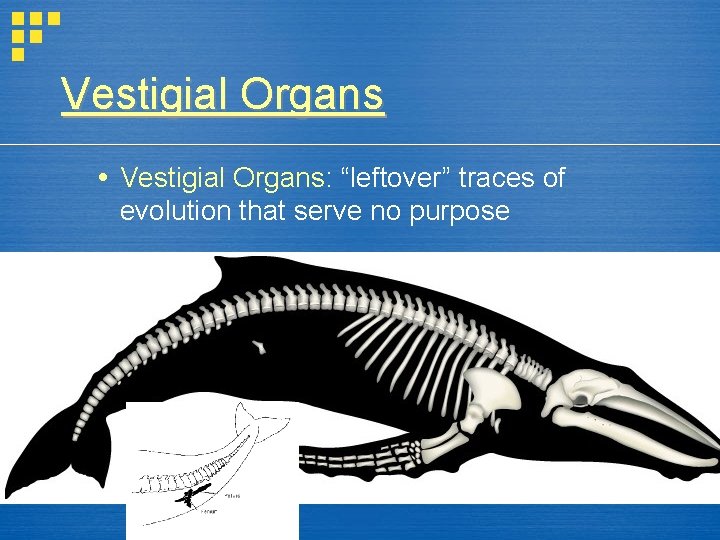
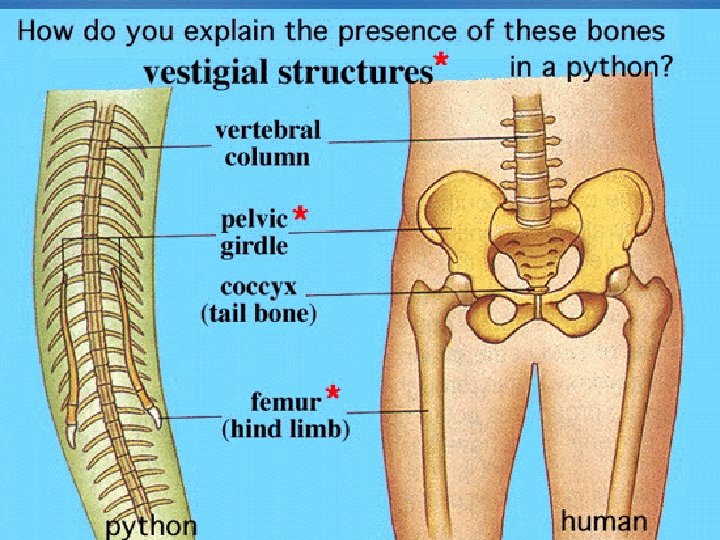
Vestigial Organs Vestigial Organs: “leftover” traces of evolution that serve no purpose
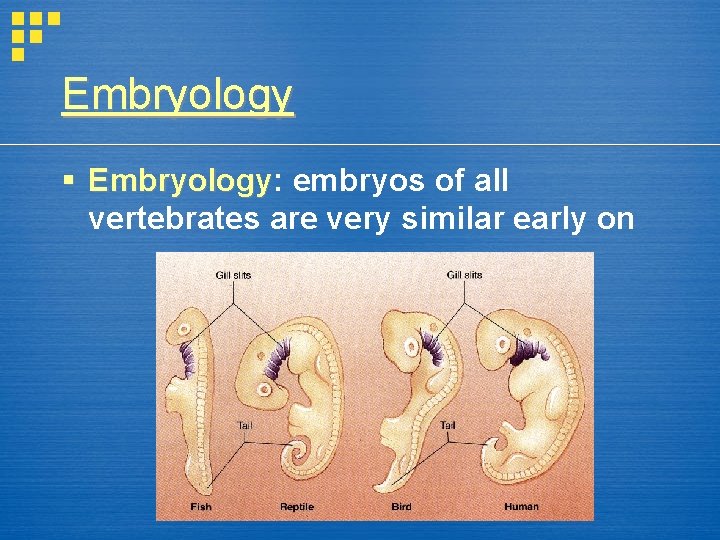
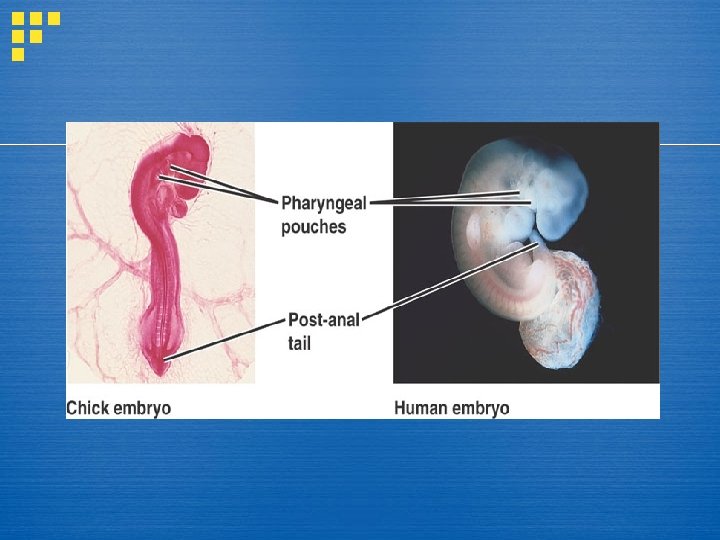
Embryology § Embryology: Embryology embryos of all vertebrates are very similar early on
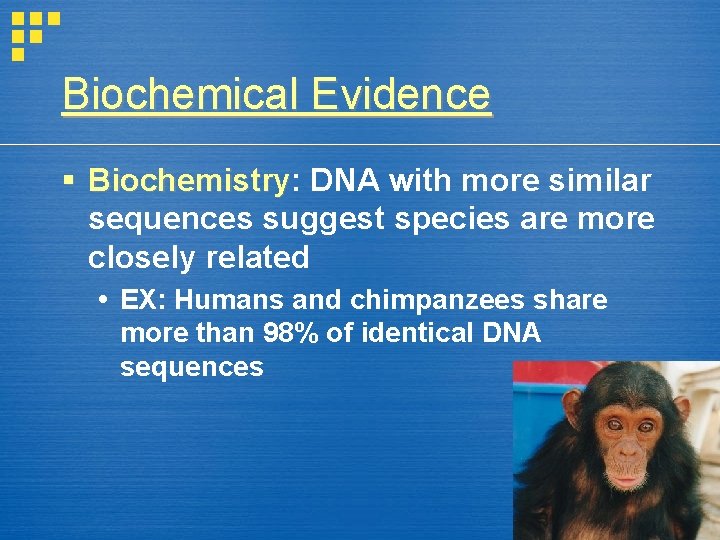
Biochemical Evidence § Biochemistry: Biochemistry DNA with more similar sequences suggest species are more closely related EX: Humans and chimpanzees share more than 98% of identical DNA sequences
Summary of Darwin’s Theory n Individuals in nature differ from one another n Organisms in nature produce more offspring than can survive, and many of those who do not survive do not reproduce. n Individuals best suited for the environment survive and reproduce most successful n Species change over time
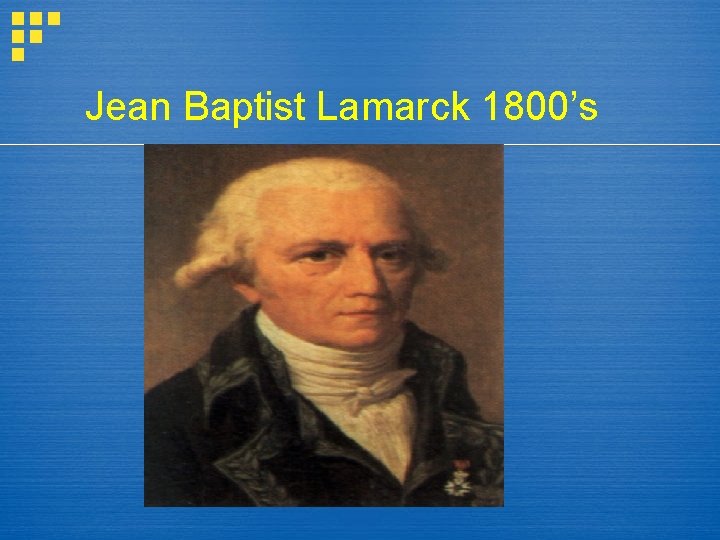
Jean Baptist Lamarck 1800’s
Lamarck’s Theory of Evolution § Tendency toward Perfection(Giraffe necks) § Use and Disuse – § If a body part were used, it got stronger § If body part NOT used, it deteriorated § Inheritance of Acquired Traits§ acquired changes were passed to offspring
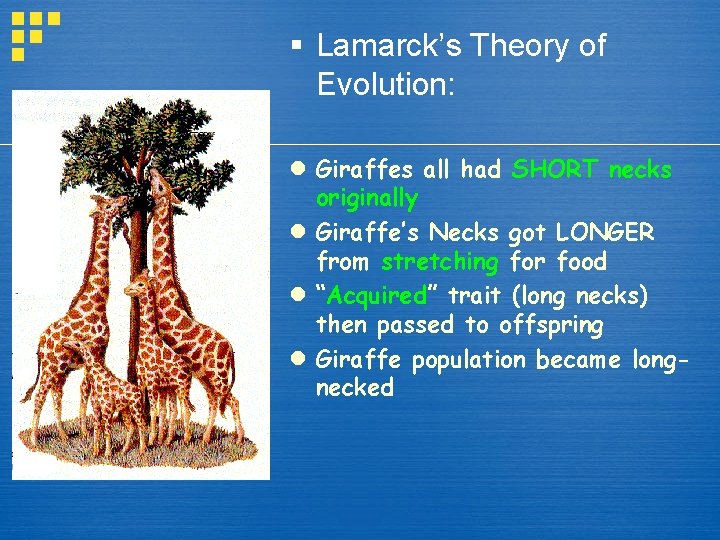
§ Lamarck’s Theory of Evolution: l Giraffes all had SHORT necks originally l Giraffe’s Necks got LONGER from stretching for food l “Acquired” trait (long necks) then passed to offspring l Giraffe population became longnecked
Lamarck’s Mistakes § Was he correct? ? NO! § Traits are passed down from one generation to the next by GENES, not by an individual’s life experiences or activities § Lamarck did NOT know how traits were inherited (Traits are passed through genes) § Genes Are NOT Changed By Activities In Life § Change Through Mutation Occurs Before An Organism Is Born