
Evolution is not a progression towards a perfect
- Slides: 23
Evolution is not a progression towards a “perfect” organism 1) Evolution is limited by historical constraints. • • Each species has a legacy of descent with modification from a long line of ancestral forms. Ex. Birds with 4 legs for speed on land & wings 2) Adaptations are often compromises • • Each organism must do many different things Ex. Humans agility from prehensile hands and flexible limbs; very susceptible to tears and sprains
Evolution is not a progression towards a “perfect” organism 3) Chance and natural selection interact • Ex. when a storm blows insects or birds hundreds of miles over an ocean to an island, the wind does not necessarily transport the population, or members of a population, that are best suited to the new environment. Thus, not alleles present in the founding population′s gene pool are better suited to the new environment than alleles “left behind. ” 4) Selection can only edit existing variations • Natural selection favors only the fittest phenotypes among those currently in the population, which may not be the ideal traits. New alleles do not arise on demand. With these constraints, evolution cannot craft perfect organisms. Natural selection operates on a “better than” basis. We can see evidence for evolution in the many
Macroevolution The change of species over large periods of time Speciation: The divergence of two different species from one ancestral species
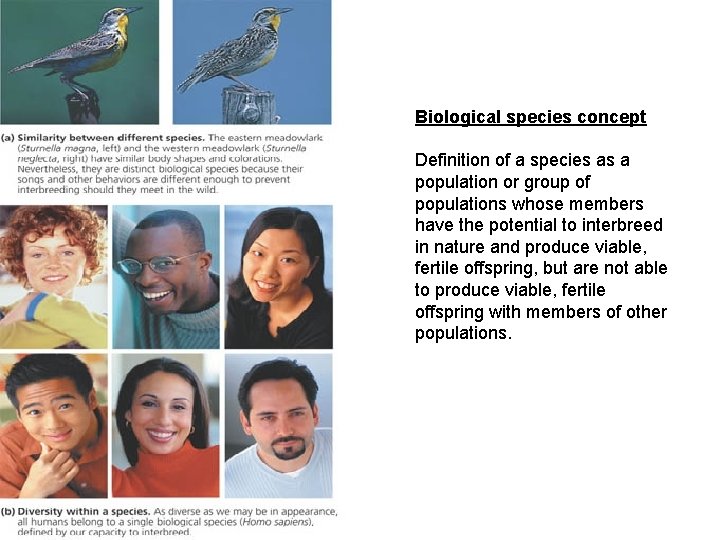
Biological species concept Definition of a species as a population or group of populations whose members have the potential to interbreed in nature and produce viable, fertile offspring, but are not able to produce viable, fertile offspring with members of other populations.
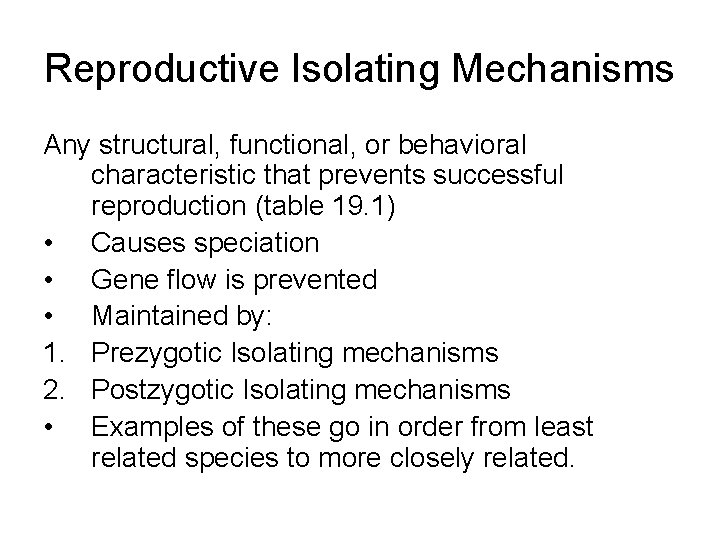
Reproductive Isolating Mechanisms Any structural, functional, or behavioral characteristic that prevents successful reproduction (table 19. 1) • Causes speciation • Gene flow is prevented • Maintained by: 1. Prezygotic Isolating mechanisms 2. Postzygotic Isolating mechanisms • Examples of these go in order from least related species to more closely related.
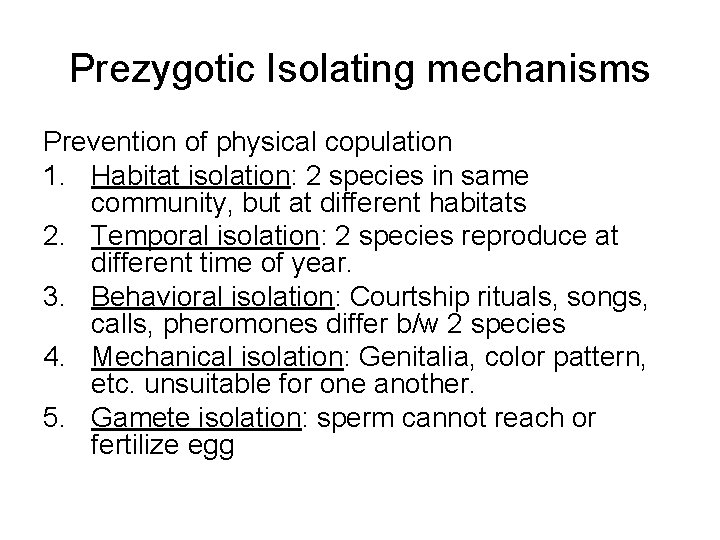
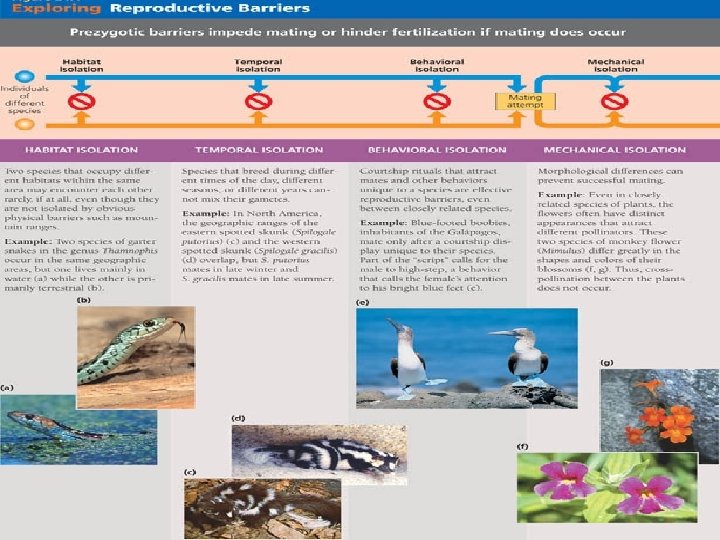
Prezygotic Isolating mechanisms Prevention of physical copulation 1. Habitat isolation: 2 species in same community, but at different habitats 2. Temporal isolation: 2 species reproduce at different time of year. 3. Behavioral isolation: Courtship rituals, songs, calls, pheromones differ b/w 2 species 4. Mechanical isolation: Genitalia, color pattern, etc. unsuitable for one another. 5. Gamete isolation: sperm cannot reach or fertilize egg
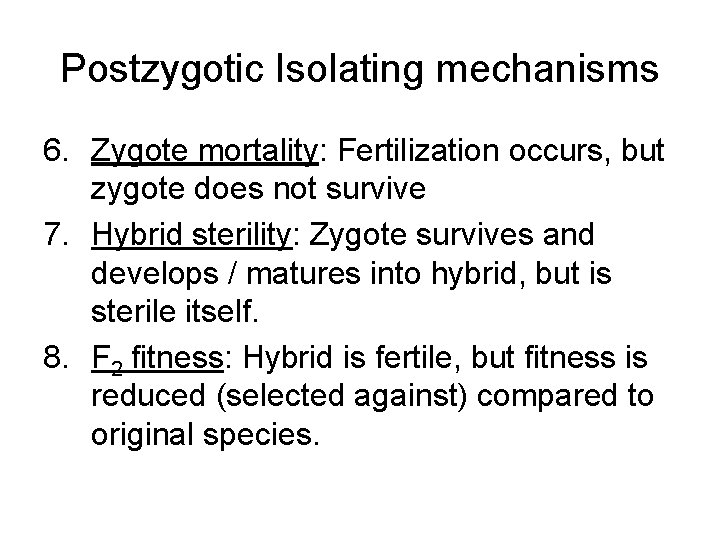
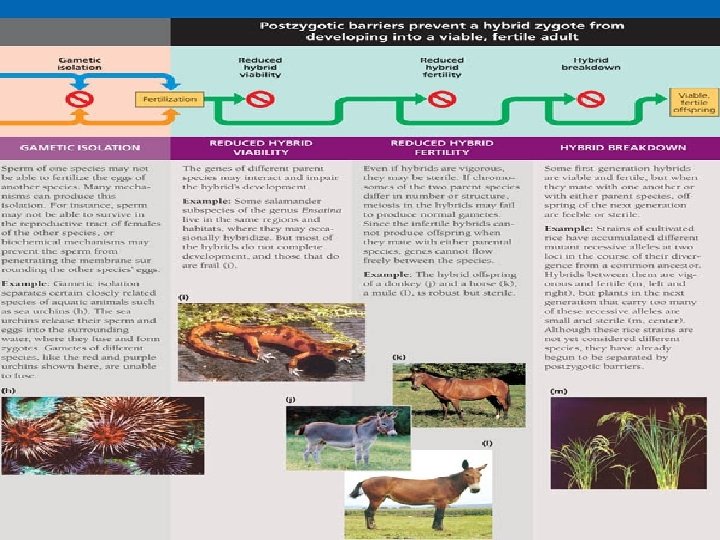
Postzygotic Isolating mechanisms 6. Zygote mortality: Fertilization occurs, but zygote does not survive 7. Hybrid sterility: Zygote survives and develops / matures into hybrid, but is sterile itself. 8. F 2 fitness: Hybrid is fertile, but fitness is reduced (selected against) compared to original species.
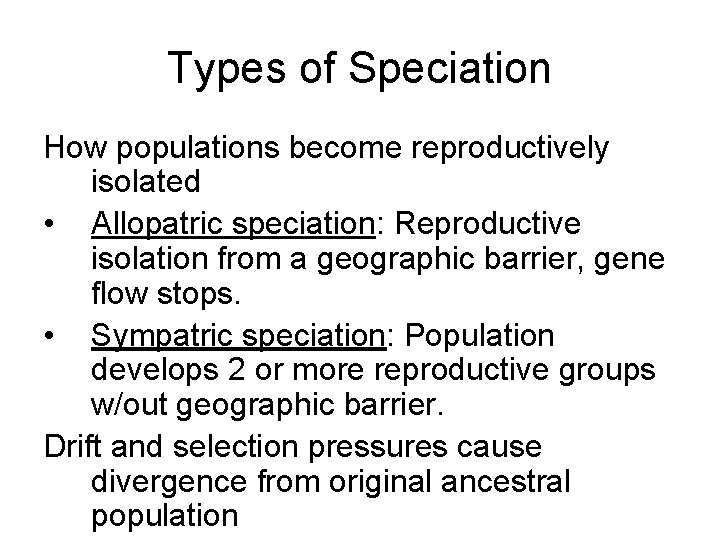
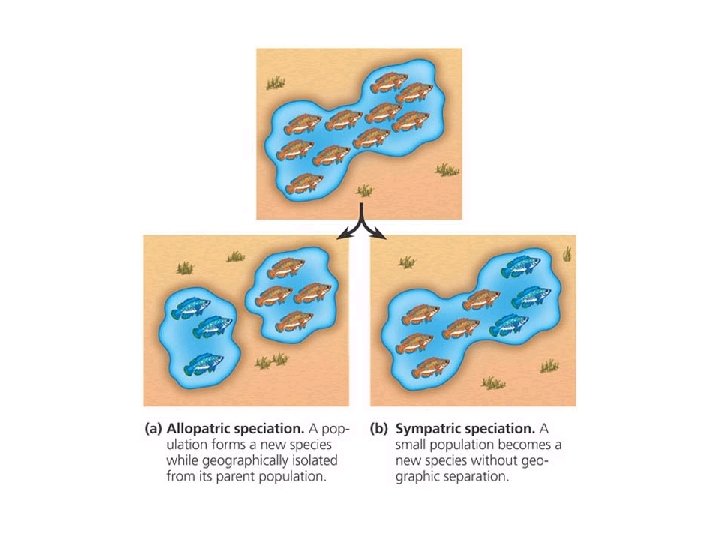
Types of Speciation How populations become reproductively isolated • Allopatric speciation: Reproductive isolation from a geographic barrier, gene flow stops. • Sympatric speciation: Population develops 2 or more reproductive groups w/out geographic barrier. Drift and selection pressures cause divergence from original ancestral population
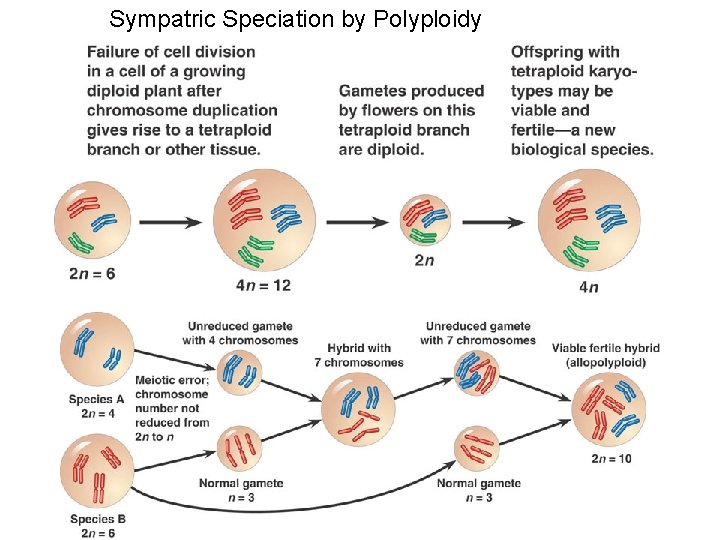
Sympatric Speciation by Polyploidy
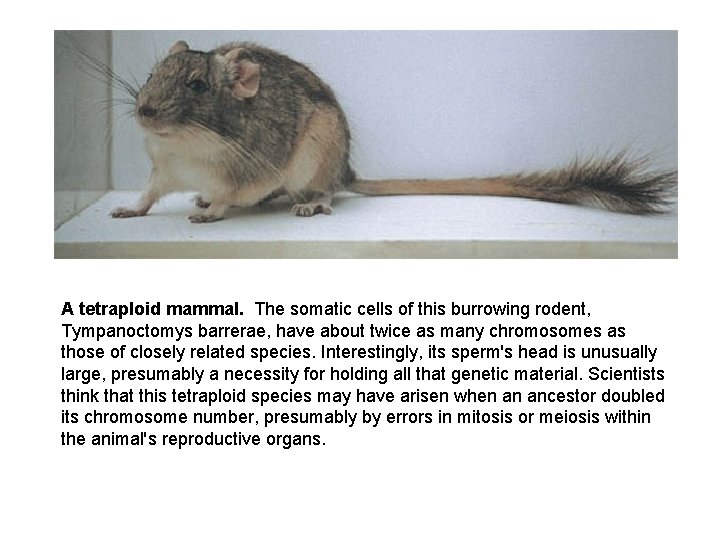
A tetraploid mammal. The somatic cells of this burrowing rodent, Tympanoctomys barrerae, have about twice as many chromosomes as those of closely related species. Interestingly, its sperm's head is unusually large, presumably a necessity for holding all that genetic material. Scientists think that this tetraploid species may have arisen when an ancestor doubled its chromosome number, presumably by errors in mitosis or meiosis within the animal's reproductive organs.
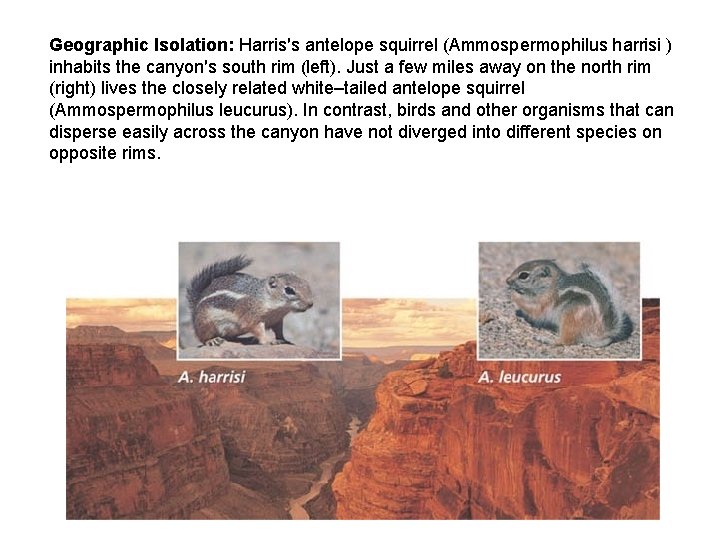
Geographic Isolation: Harris′s antelope squirrel (Ammospermophilus harrisi ) inhabits the canyon′s south rim (left). Just a few miles away on the north rim (right) lives the closely related white–tailed antelope squirrel (Ammospermophilus leucurus). In contrast, birds and other organisms that can disperse easily across the canyon have not diverged into different species on opposite rims.
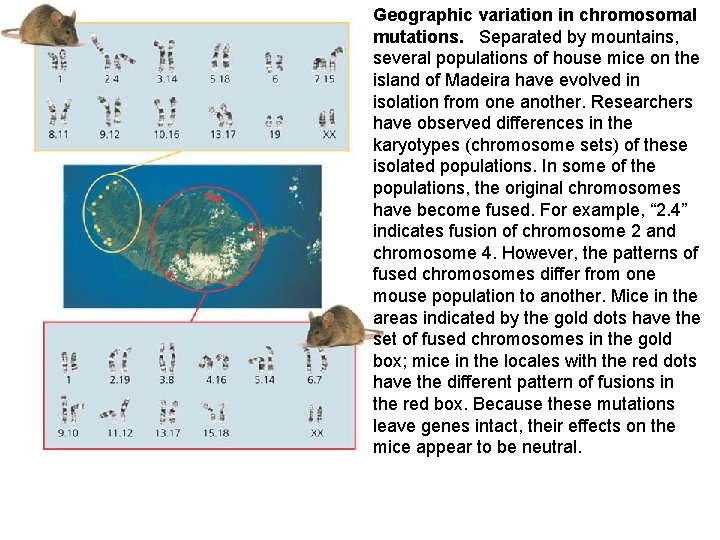
Geographic variation in chromosomal mutations. Separated by mountains, several populations of house mice on the island of Madeira have evolved in isolation from one another. Researchers have observed differences in the karyotypes (chromosome sets) of these isolated populations. In some of the populations, the original chromosomes have become fused. For example, “ 2. 4” indicates fusion of chromosome 2 and chromosome 4. However, the patterns of fused chromosomes differ from one mouse population to another. Mice in the areas indicated by the gold dots have the set of fused chromosomes in the gold box; mice in the locales with the red dots have the different pattern of fusions in the red box. Because these mutations leave genes intact, their effects on the mice appear to be neutral.
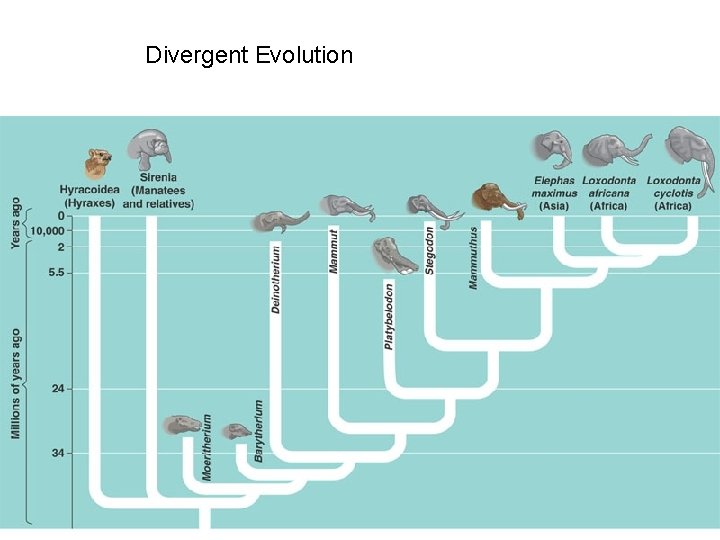
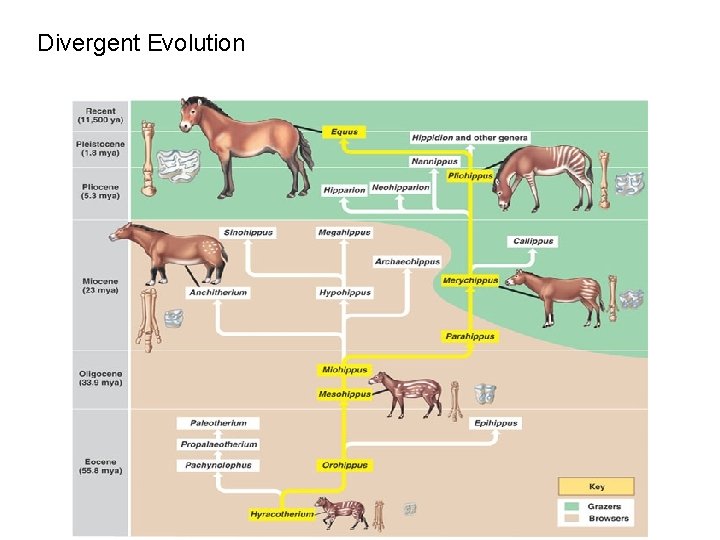
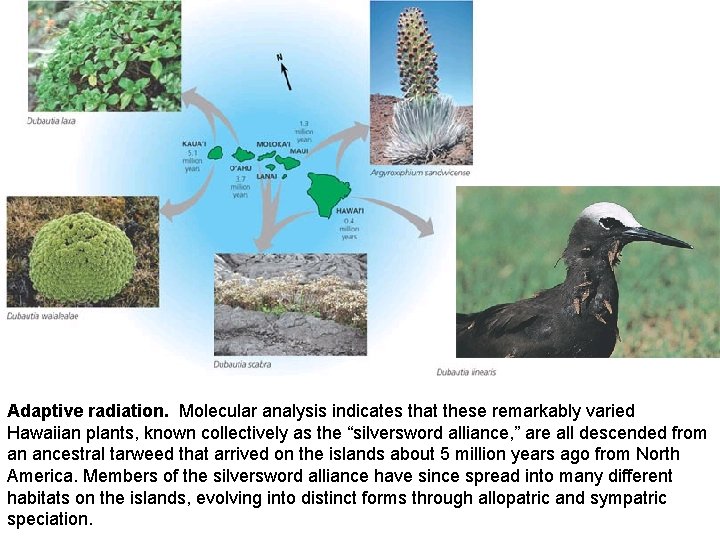
Patterns of Macroevolution Species diversify when introduced to new environments, or when environments change. Divergent Evolution: Species that were once similar become distinct • Occurs when an ancestral species adapts to different environments • Adaptive radiation: ancestral species evolve into an array of species that occupy different niches – Resource partitioning reduces intraspecific competition • Results in homologous structures
Divergent Evolution
Divergent Evolution
Adaptive radiation. Molecular analysis indicates that these remarkably varied Hawaiian plants, known collectively as the “silversword alliance, ” are all descended from an ancestral tarweed that arrived on the islands about 5 million years ago from North America. Members of the silversword alliance have since spread into many different habitats on the islands, evolving into distinct forms through allopatric and sympatric speciation.
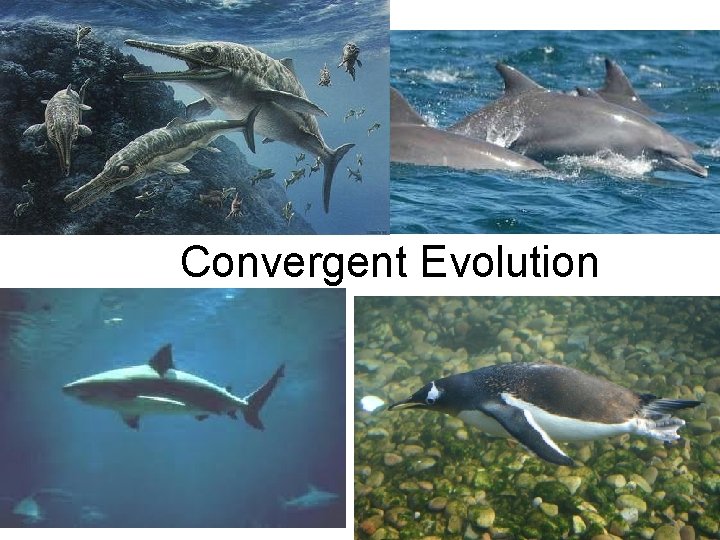
Patterns of Macroevolution Convergent Evolution: Distantly related organisms evolve similar traits. • Happens when different species respond to similar selective pressures or adapt to similar habitats. • Results in analogous structures
Convergent Evolution
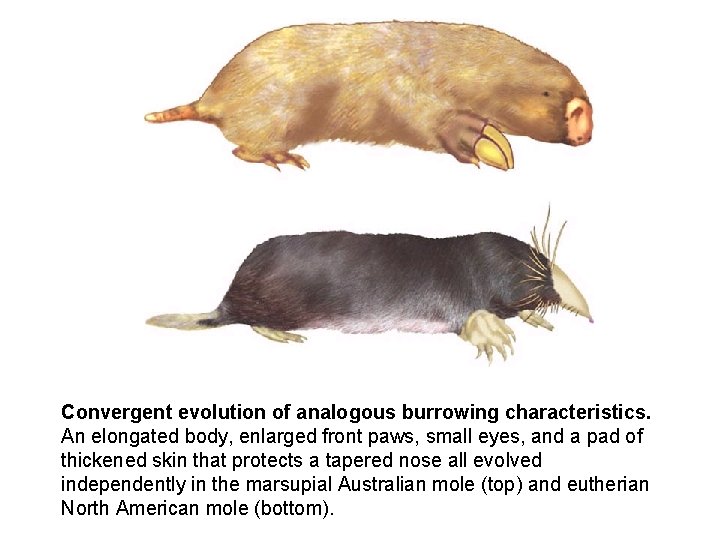
Convergent evolution of analogous burrowing characteristics. An elongated body, enlarged front paws, small eyes, and a pad of thickened skin that protects a tapered nose all evolved independently in the marsupial Australian mole (top) and eutherian North American mole (bottom).
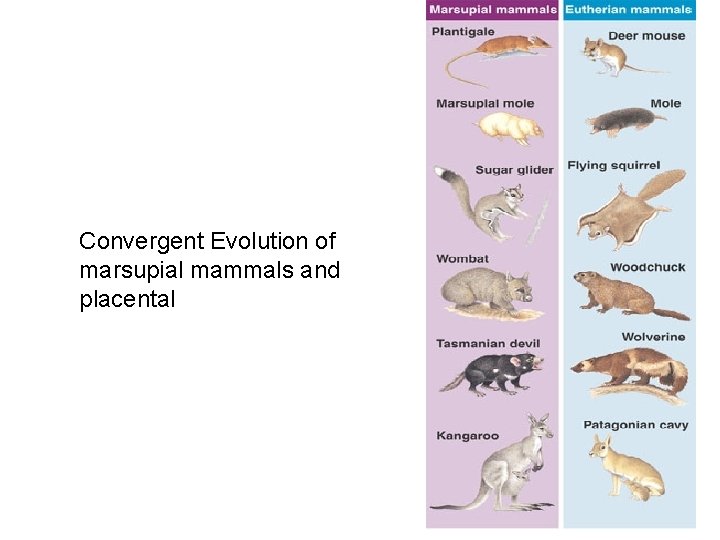
Convergent Evolution of marsupial mammals and placental