
Evolution In this presentation you will n explore
- Slides: 33
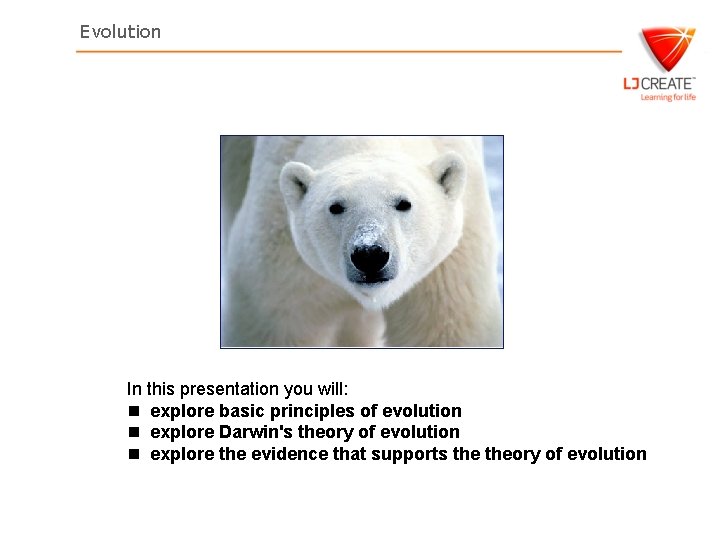
Evolution In this presentation you will: n explore basic principles of evolution n explore Darwin's theory of evolution n explore the evidence that supports theory of evolution
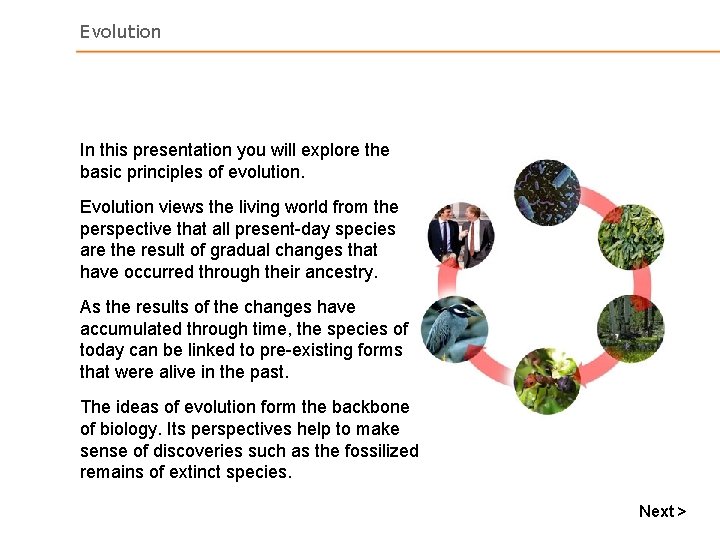
Evolution In this presentation you will explore the basic principles of evolution. Evolution views the living world from the perspective that all present-day species are the result of gradual changes that have occurred through their ancestry. As the results of the changes have accumulated through time, the species of today can be linked to pre-existing forms that were alive in the past. The ideas of evolution form the backbone of biology. Its perspectives help to make sense of discoveries such as the fossilized remains of extinct species. Next >
Evolution Question 1 "Evolution views the living world from the perspective that all presentday species are the result of gradual changes that have occurred through their ancestry. " Is this statement true or false? Answer True or False.
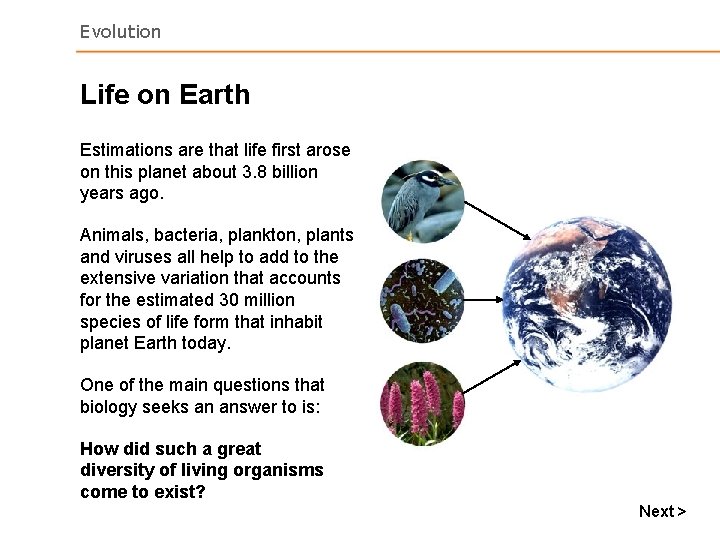
Evolution Life on Earth Estimations are that life first arose on this planet about 3. 8 billion years ago. Animals, bacteria, plankton, plants and viruses all help to add to the extensive variation that accounts for the estimated 30 million species of life form that inhabit planet Earth today. One of the main questions that biology seeks an answer to is: How did such a great diversity of living organisms come to exist? Next >
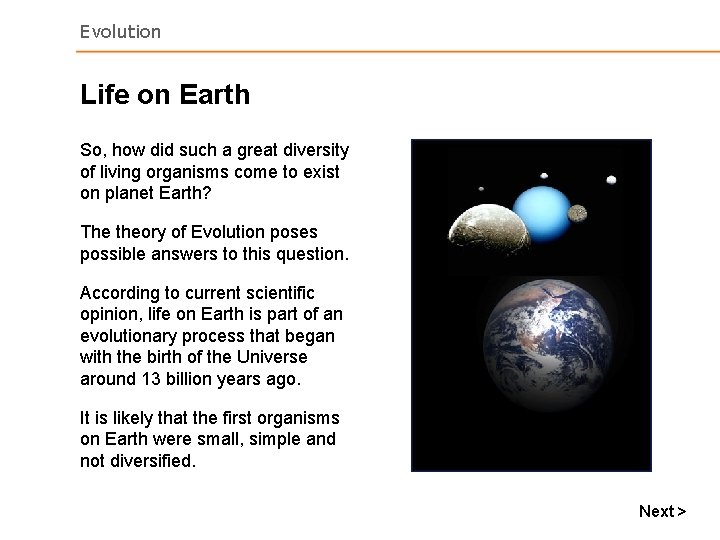
Evolution Life on Earth So, how did such a great diversity of living organisms come to exist on planet Earth? The theory of Evolution poses possible answers to this question. According to current scientific opinion, life on Earth is part of an evolutionary process that began with the birth of the Universe around 13 billion years ago. It is likely that the first organisms on Earth were small, simple and not diversified. Next >
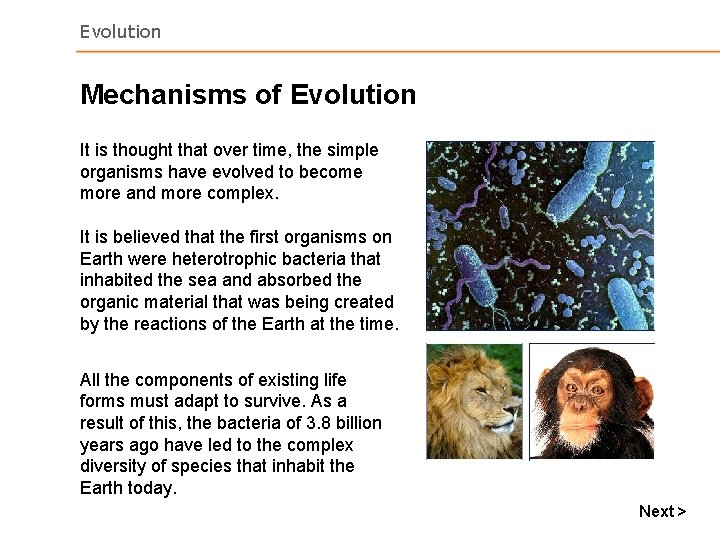
Evolution Mechanisms of Evolution It is thought that over time, the simple organisms have evolved to become more and more complex. It is believed that the first organisms on Earth were heterotrophic bacteria that inhabited the sea and absorbed the organic material that was being created by the reactions of the Earth at the time. All the components of existing life forms must adapt to survive. As a result of this, the bacteria of 3. 8 billion years ago have led to the complex diversity of species that inhabit the Earth today. Next >
Evolution Question 2 Which of the following organisms were thought to be the first life forms on Earth? A) Simple bacteria B) Simple plants C) Multi-celled animals D) Fungi
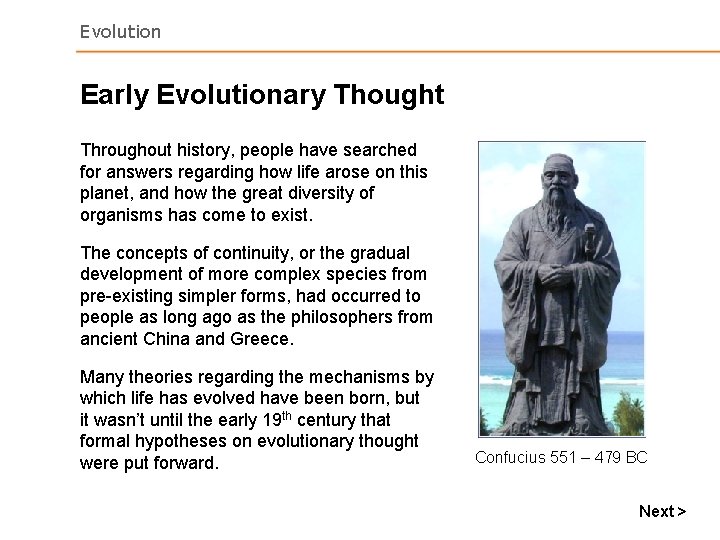
Evolution Early Evolutionary Thought Throughout history, people have searched for answers regarding how life arose on this planet, and how the great diversity of organisms has come to exist. The concepts of continuity, or the gradual development of more complex species from pre-existing simpler forms, had occurred to people as long ago as the philosophers from ancient China and Greece. Many theories regarding the mechanisms by which life has evolved have been born, but it wasn’t until the early 19 th century that formal hypotheses on evolutionary thought were put forward. Aristotle 384 – 322 BC Confucius 551 – 479 BC Next >
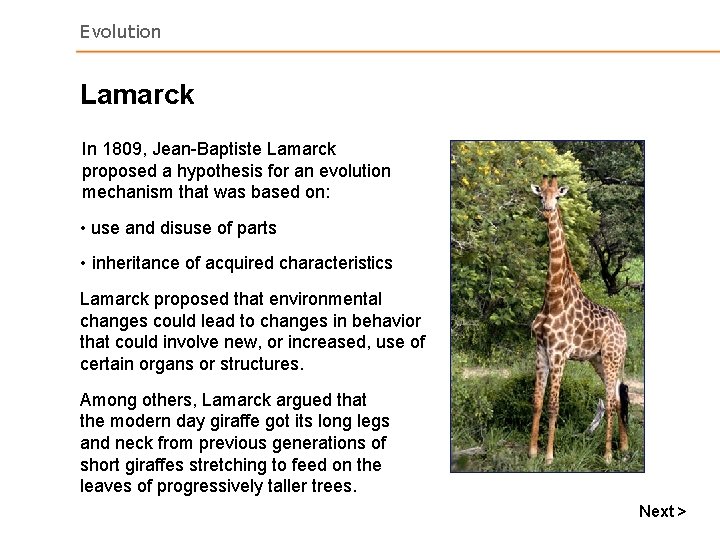
Evolution Lamarck In 1809, Jean-Baptiste Lamarck proposed a hypothesis for an evolution mechanism that was based on: • use and disuse of parts • inheritance of acquired characteristics Lamarck proposed that environmental changes could lead to changes in behavior that could involve new, or increased, use of certain organs or structures. Among others, Lamarck argued that the modern day giraffe got its long legs and neck from previous generations of short giraffes stretching to feed on the leaves of progressively taller trees. Next >
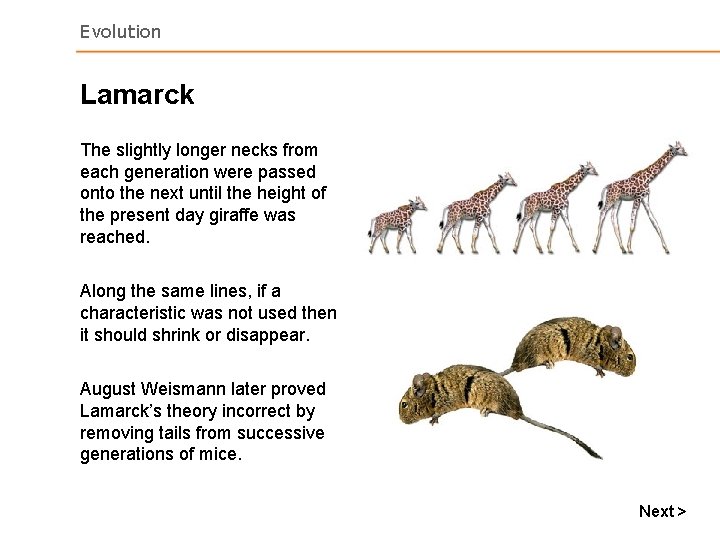
Evolution Lamarck The slightly longer necks from each generation were passed onto the next until the height of the present day giraffe was reached. Along the same lines, if a characteristic was not used then it should shrink or disappear. August Weismann later proved Lamarck’s theory incorrect by removing tails from successive generations of mice. Next >
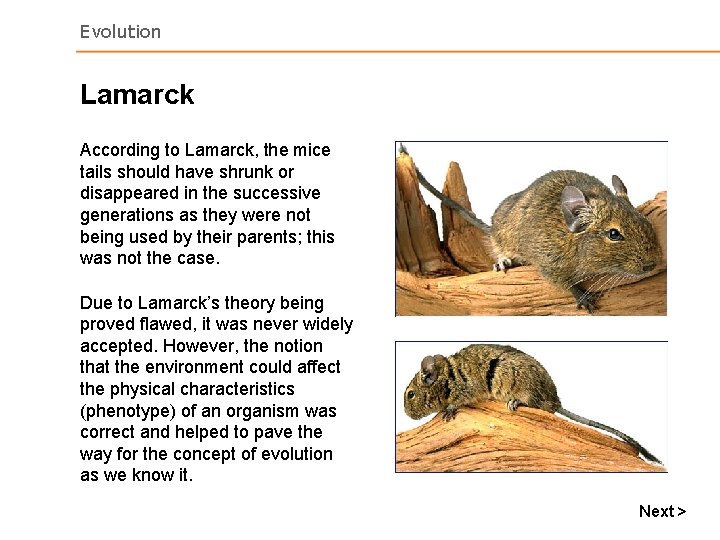
Evolution Lamarck According to Lamarck, the mice tails should have shrunk or disappeared in the successive generations as they were not being used by their parents; this was not the case. Due to Lamarck’s theory being proved flawed, it was never widely accepted. However, the notion that the environment could affect the physical characteristics (phenotype) of an organism was correct and helped to pave the way for the concept of evolution as we know it. Next >
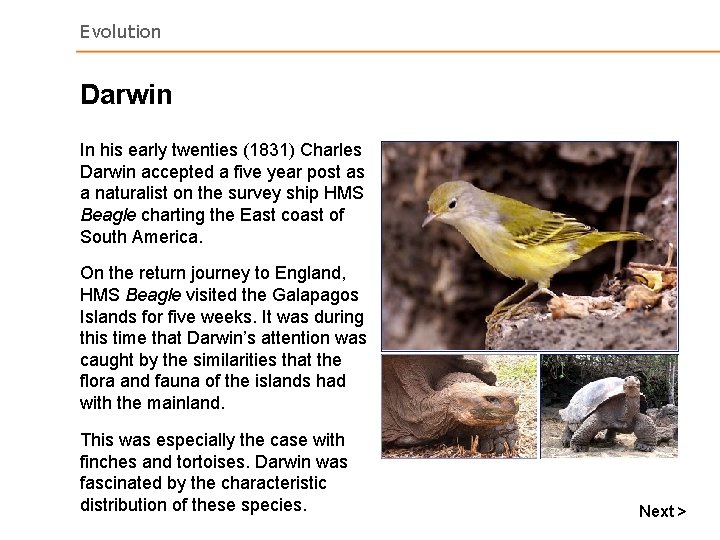
Evolution Darwin In his early twenties (1831) Charles Darwin accepted a five year post as a naturalist on the survey ship HMS Beagle charting the East coast of South America. On the return journey to England, HMS Beagle visited the Galapagos Islands for five weeks. It was during this time that Darwin’s attention was caught by the similarities that the flora and fauna of the islands had with the mainland. This was especially the case with finches and tortoises. Darwin was fascinated by the characteristic distribution of these species. Culpepper I. Wenman I. Abingdon I. Bindloe I. Tower I. James I. Narborough I. Seymour I. Chatham I. Albemarle I. 0 20 40 60 80 100 Barrington I. Charles I. Hood I. Next >
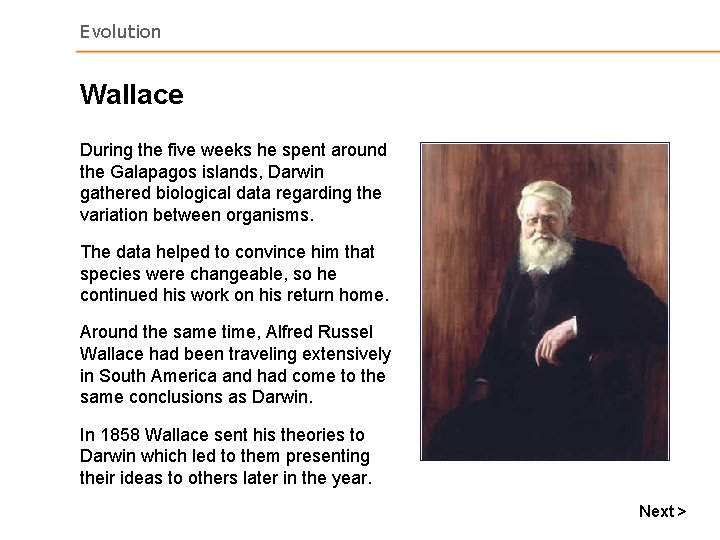
Evolution Wallace During the five weeks he spent around the Galapagos islands, Darwin gathered biological data regarding the variation between organisms. The data helped to convince him that species were changeable, so he continued his work on his return home. Culpepper I. Wenman I. Abingdon I. Bindloe I. Tower I. James I. Narborough I. Seymour I. Chatham I. Around the same time, Alfred Russel Wallace had been traveling extensively in South America and had come to the same conclusions as Darwin. Albemarle I. 0 20 40 60 80 100 Barrington I. Charles I. Hood I. In 1858 Wallace sent his theories to Darwin which led to them presenting their ideas to others later in the year. Next >
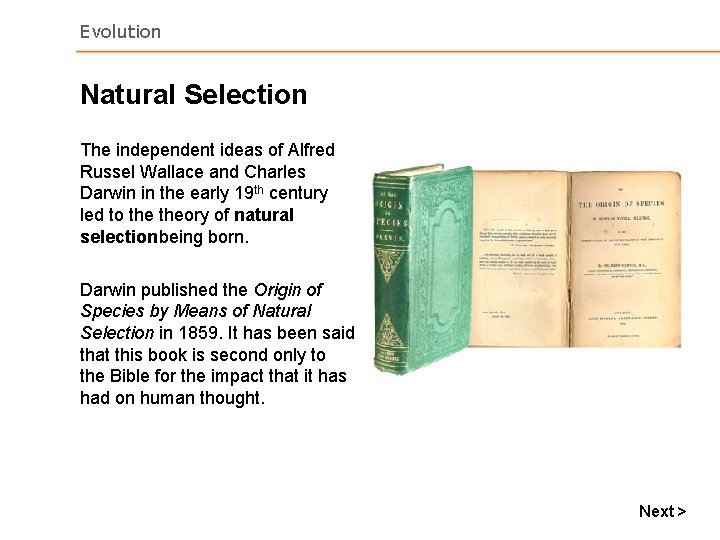
Evolution Natural Selection The independent ideas of Alfred Russel Wallace and Charles Darwin in the early 19 th century led to theory of natural selection being born. Darwin published the Origin of Species by Means of Natural Selection in 1859. It has been said that this book is second only to the Bible for the impact that it has had on human thought. Next >
Evolution Natural Selection Darwin and Wallace proposed that natural selection is the mechanism by which new species arise from pre-existing species. This theory was based on the following observations (O) and deductions (D): O 1: Individuals within a population produce more offspring than are needed to replace themselves. O 2: The number of individuals within a population remain approximately constant. D 1: Many individuals fail to survive or reproduce; so there is a ‘struggle for existence’ within a population. O 3: Variation of individuals exist within all populations. D 2: In the ‘struggle for existence’, individuals whose variations are best suited to their environment have a ‘reproductive advantage’ and so produce more offspring than the less well-suited organisms. Next >
Evolution Question 3 The evolutionary mechanism by which new species arise from preexisting species is known as. . . A). . . the struggle for existence. B). . . reproductive advantage. C). . . survival of the fittest. D). . . natural selection.
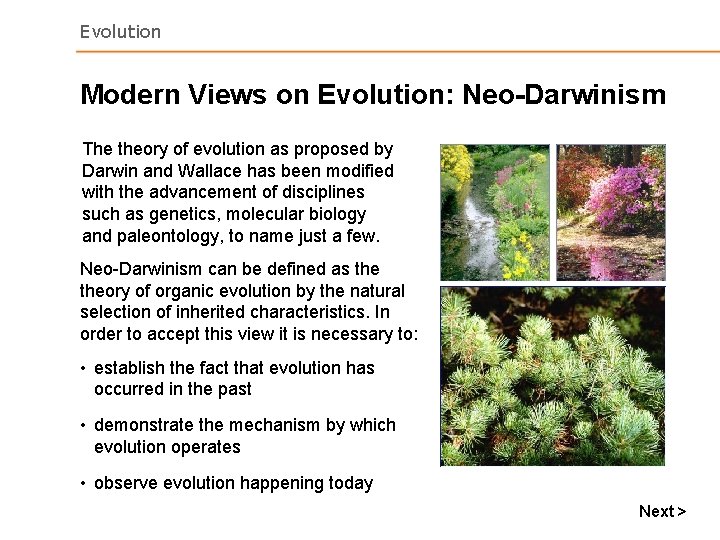
Evolution Modern Views on Evolution: Neo-Darwinism The theory of evolution as proposed by Darwin and Wallace has been modified with the advancement of disciplines such as genetics, molecular biology and paleontology, to name just a few. Neo-Darwinism can be defined as theory of organic evolution by the natural selection of inherited characteristics. In order to accept this view it is necessary to: • establish the fact that evolution has occurred in the past • demonstrate the mechanism by which evolution operates • observe evolution happening today Next >
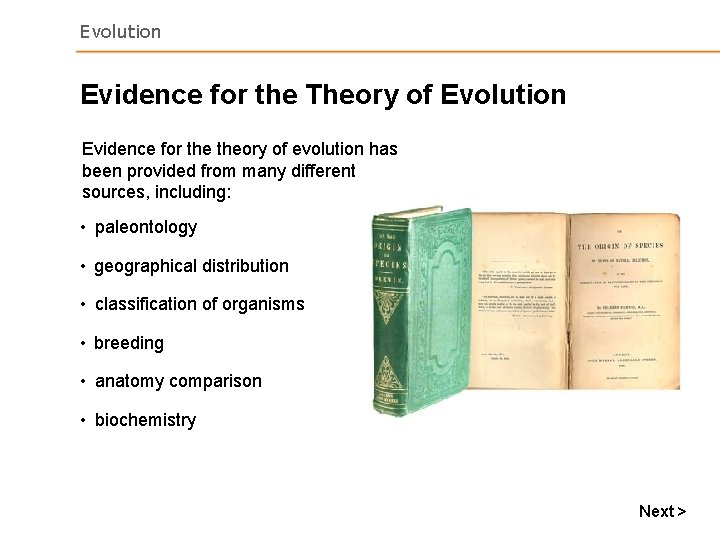
Evolution Evidence for the Theory of Evolution Evidence for theory of evolution has been provided from many different sources, including: • paleontology • geographical distribution • classification of organisms • breeding • anatomy comparison • biochemistry Next >
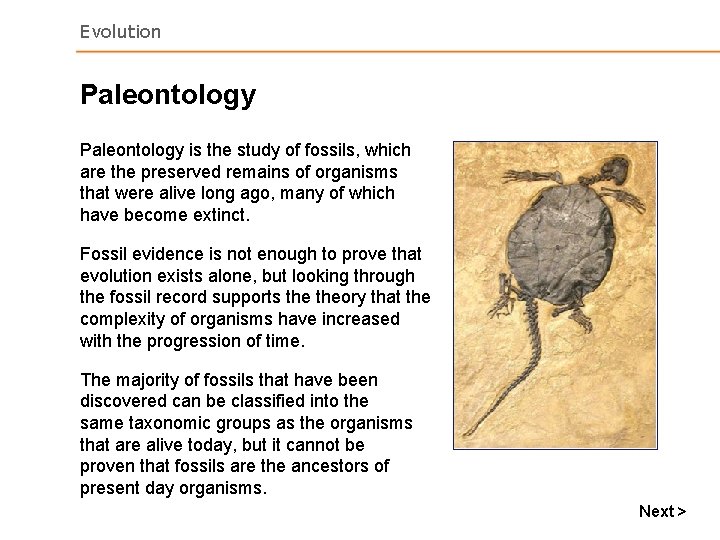
Evolution Paleontology is the study of fossils, which are the preserved remains of organisms that were alive long ago, many of which have become extinct. Fossil evidence is not enough to prove that evolution exists alone, but looking through the fossil record supports theory that the complexity of organisms have increased with the progression of time. The majority of fossils that have been discovered can be classified into the same taxonomic groups as the organisms that are alive today, but it cannot be proven that fossils are the ancestors of present day organisms. Next >
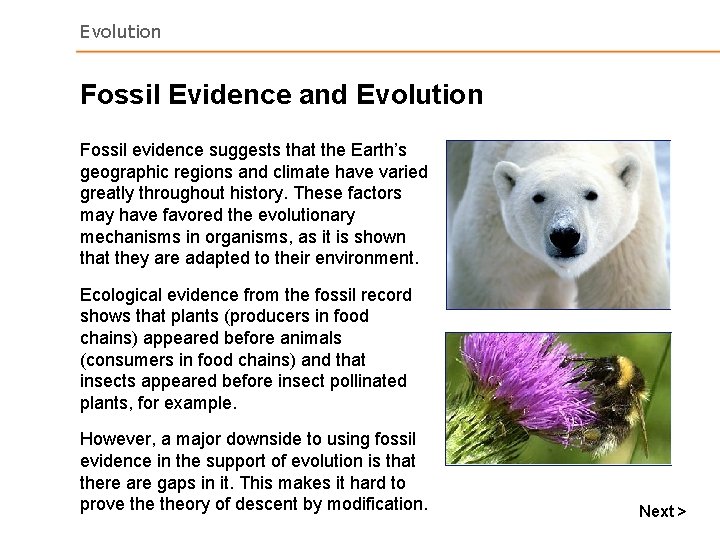
Evolution Fossil Evidence and Evolution Fossil evidence suggests that the Earth’s geographic regions and climate have varied greatly throughout history. These factors may have favored the evolutionary mechanisms in organisms, as it is shown that they are adapted to their environment. Ecological evidence from the fossil record shows that plants (producers in food chains) appeared before animals (consumers in food chains) and that insects appeared before insect pollinated plants, for example. However, a major downside to using fossil evidence in the support of evolution is that there are gaps in it. This makes it hard to prove theory of descent by modification. Next >
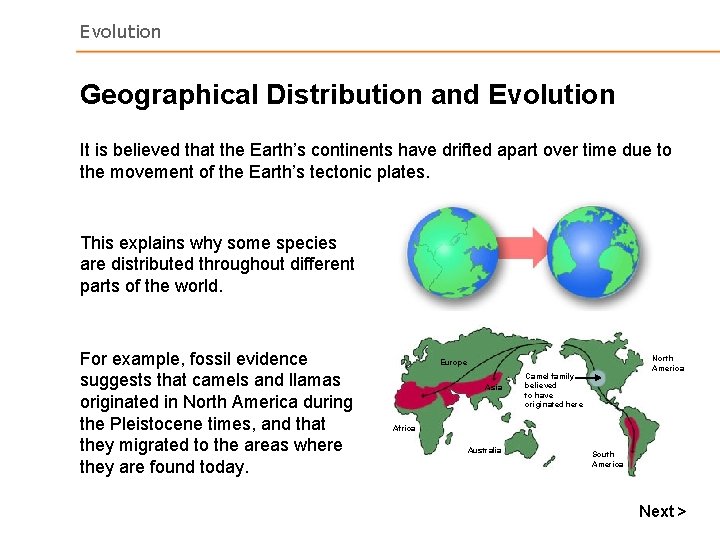
Evolution Geographical Distribution and Evolution It is believed that the Earth’s continents have drifted apart over time due to the movement of the Earth’s tectonic plates. This explains why some species are distributed throughout different parts of the world. For example, fossil evidence suggests that camels and llamas originated in North America during the Pleistocene times, and that they migrated to the areas where they are found today. North America Europe Asia Camel family believed to have originated here Africa Australia South America Next >
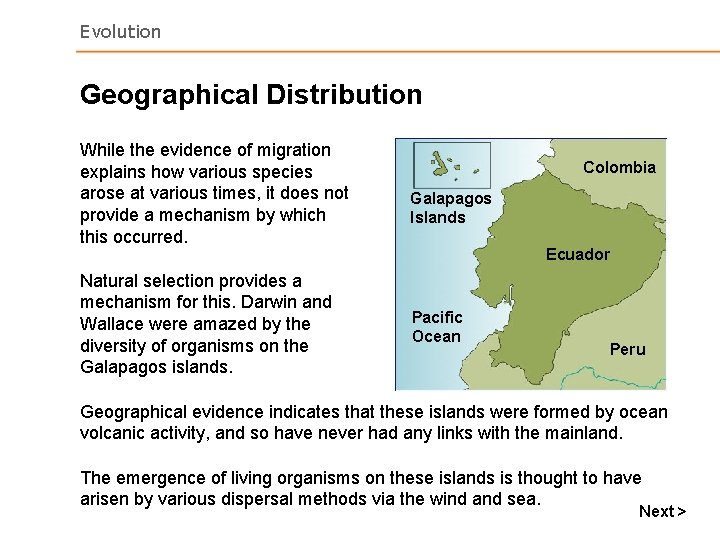
Evolution Geographical Distribution While the evidence of migration explains how various species arose at various times, it does not provide a mechanism by which this occurred. Natural selection provides a mechanism for this. Darwin and Wallace were amazed by the diversity of organisms on the Galapagos islands. Colombia Galapagos Islands Ecuador Pacific Ocean Peru Geographical evidence indicates that these islands were formed by ocean volcanic activity, and so have never had any links with the mainland. The emergence of living organisms on these islands is thought to have arisen by various dispersal methods via the wind and sea. Next >
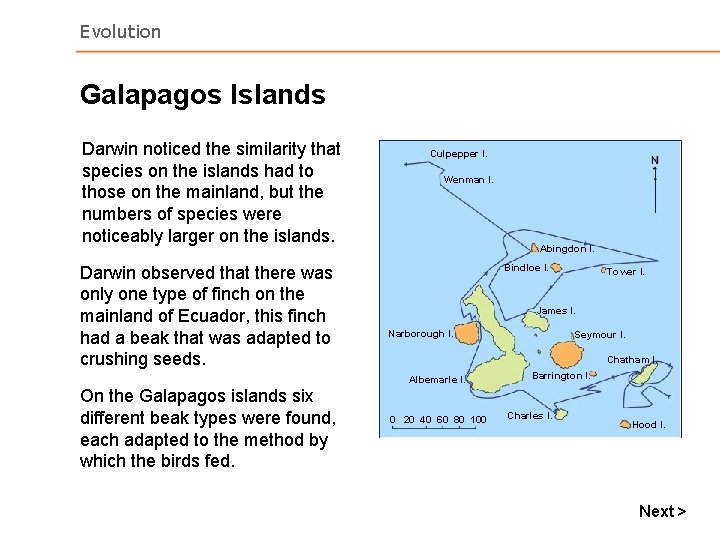
Evolution Galapagos Islands Darwin noticed the similarity that species on the islands had to those on the mainland, but the numbers of species were noticeably larger on the islands. Darwin observed that there was only one type of finch on the mainland of Ecuador, this finch had a beak that was adapted to crushing seeds. Culpepper I. Wenman I. Abingdon I. Bindloe I. James I. Narborough I. Seymour I. Chatham I. Albemarle I. On the Galapagos islands six different beak types were found, each adapted to the method by which the birds fed. Tower I. 0 20 40 60 80 100 Barrington I. Charles I. Hood I. Next >
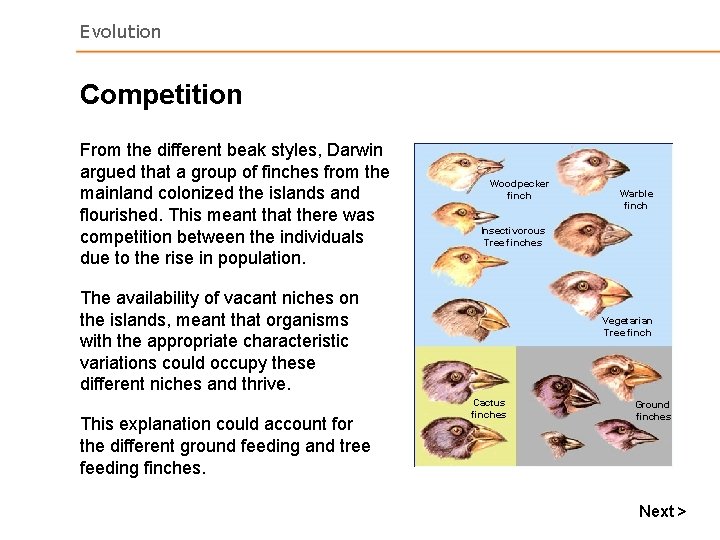
Evolution Competition From the different beak styles, Darwin argued that a group of finches from the mainland colonized the islands and flourished. This meant that there was competition between the individuals due to the rise in population. Woodpecker finch Insectivorous Tree finches The availability of vacant niches on the islands, meant that organisms with the appropriate characteristic variations could occupy these different niches and thrive. This explanation could account for the different ground feeding and tree feeding finches. Warble finch Vegetarian Tree finch Cactus finches Ground finches Next >
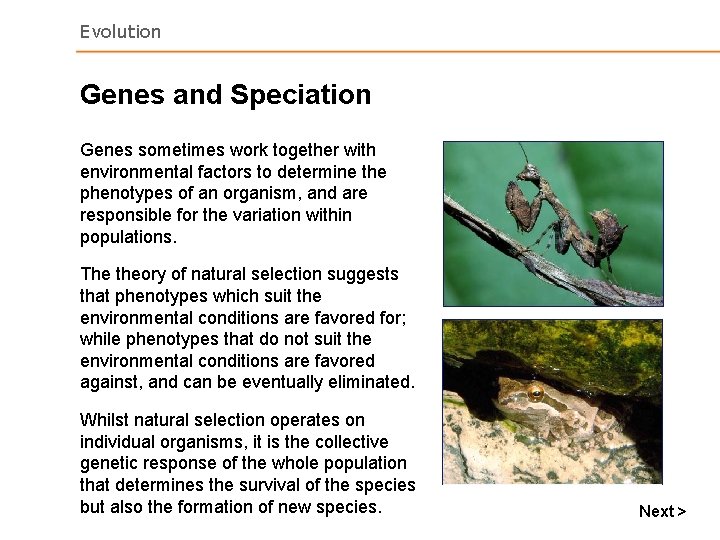
Evolution Genes and Speciation Genes sometimes work together with environmental factors to determine the phenotypes of an organism, and are responsible for the variation within populations. The theory of natural selection suggests that phenotypes which suit the environmental conditions are favored for; while phenotypes that do not suit the environmental conditions are favored against, and can be eventually eliminated. Whilst natural selection operates on individual organisms, it is the collective genetic response of the whole population that determines the survival of the species but also the formation of new species. Next >
Evolution Question 4 Does theory of natural selection suggest that organisms which are suited to their environment are favored, and so are more likely to reproduce than the organisms that are not suited to their environment? Answer Yes or No.
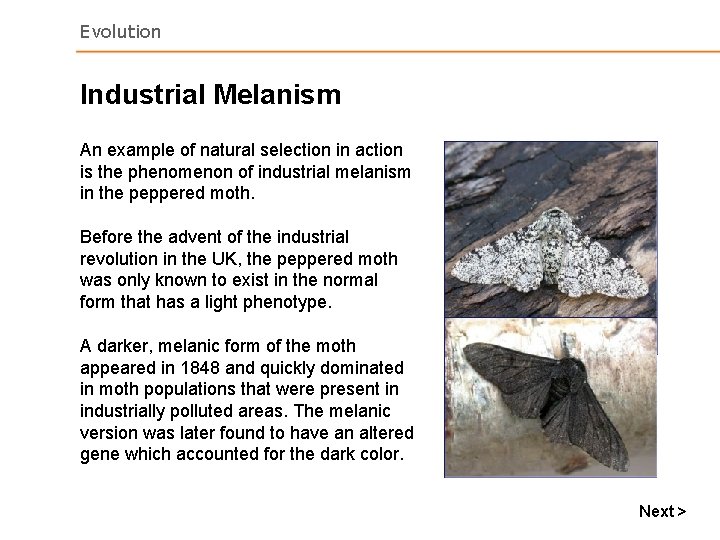
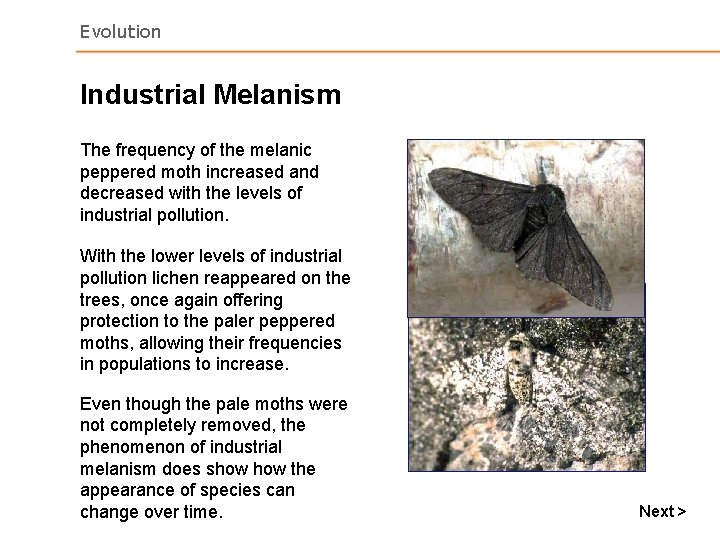
Evolution Industrial Melanism An example of natural selection in action is the phenomenon of industrial melanism in the peppered moth. Before the advent of the industrial revolution in the UK, the peppered moth was only known to exist in the normal form that has a light phenotype. A darker, melanic form of the moth appeared in 1848 and quickly dominated in moth populations that were present in industrially polluted areas. The melanic version was later found to have an altered gene which accounted for the dark color. Next >
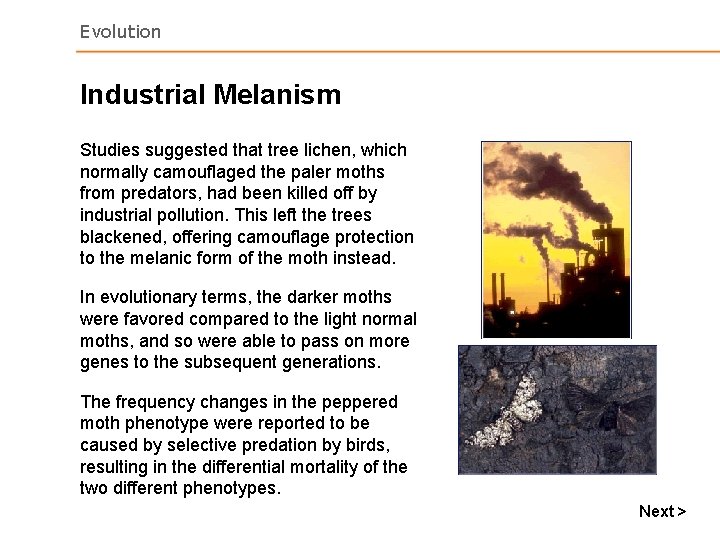
Evolution Industrial Melanism Studies suggested that tree lichen, which normally camouflaged the paler moths from predators, had been killed off by industrial pollution. This left the trees blackened, offering camouflage protection to the melanic form of the moth instead. In evolutionary terms, the darker moths were favored compared to the light normal moths, and so were able to pass on more genes to the subsequent generations. The frequency changes in the peppered moth phenotype were reported to be caused by selective predation by birds, resulting in the differential mortality of the two different phenotypes. Next >
Evolution Industrial Melanism The frequency of the melanic peppered moth increased and decreased with the levels of industrial pollution. With the lower levels of industrial pollution lichen reappeared on the trees, once again offering protection to the paler peppered moths, allowing their frequencies in populations to increase. Even though the pale moths were not completely removed, the phenomenon of industrial melanism does show the appearance of species can change over time. Next >
Evolution Question 5 Can the environment affect the physical characteristics of organisms within a species? Answer Yes or No.
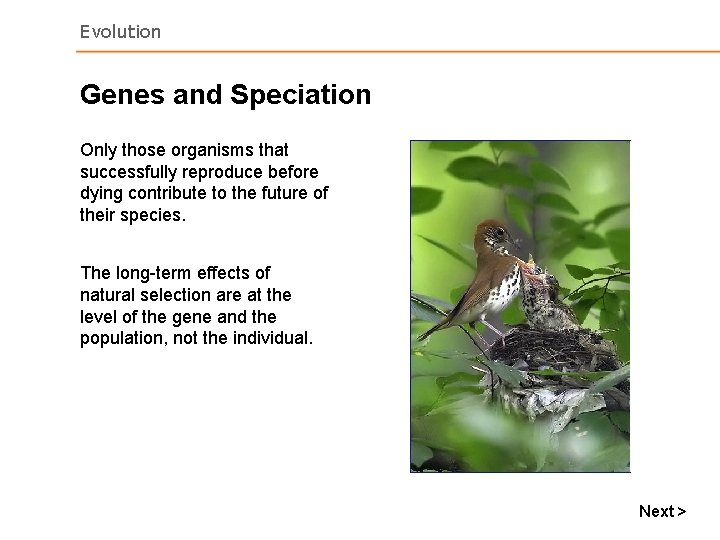
Evolution Genes and Speciation Only those organisms that successfully reproduce before dying contribute to the future of their species. The long-term effects of natural selection are at the level of the gene and the population, not the individual. Next >
Evolution Question 6 Which of the following is NOT a level at which natural selection operates? A) The gene B) The individual C) The population D) All of these
Evolution Summary After completing this presentation you should be able to: n show knowledge and understanding of the basic principles of evolution n show knowledge and understanding of Darwin's theory of evolution n show knowledge and understanding of some of the evidence that supports theory of evolution End >