
Evolution in Open Source Software A Case Study



![Growth of fetchmail [Raymond]](https://slidetodoc.com/presentation_image_h/be17760e317155fbd661fb4b284b665b/image-25.jpg "Growth of fetchmail [Raymond]")

- Slides: 37
Evolution in Open Source Software: A Case Study Michael W. Godfrey Qiang Tu Software Architecture Group University of Waterloo
Overview n What is software evolution? n n Why should we care? Previous research A case study: The Linux OS kernel Observations, hypotheses, and future research
What is software evolution? “Evolution is what happens while you’re busy making other plans. ” n Usually, we consider evolution to begin once the first version has been delivered: n n Maintenance is the planned set of tasks to effect changes. Evolution is what actually happens to the software.
Previous research n n n Lehman’s laws Parnas on software geriatrics Eick et al. on code decay (10 MLOC telecom) Gall et al. (10 MLOC telecom) Munro, Burd et al. (2 MLOC gcc)
Lehman’s Laws in a nutshell n Observations: n n (Most) useful software must evolve or die. As a software system gets bigger, its resulting complexity tends to limit its ability to grow. Development progress/effort is (more or less) constant; growth is at best constant. Advice: n n n Need to manage complexity. Do periodic redesigns. Treat software and its development process as a feedback system (and not as a passive theorem).
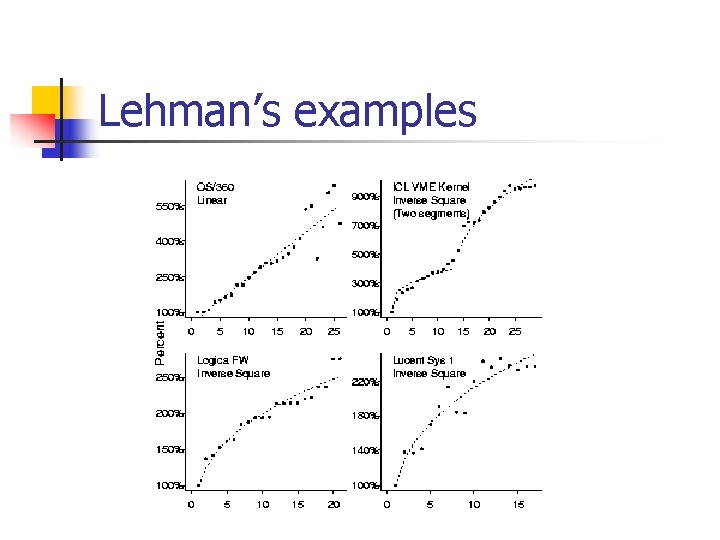
Lehman’s examples
A case study in evolution: The Linux OS kernel
A case study in evolution: The Linux OS kernel n It’s Linux! n n n Large system, very stable, many releases over several years, many developers Growing mainstream adoption Open source development model n n n Interesting phenomenon in itself Easy to track, can publish results, many experts Not much previous study
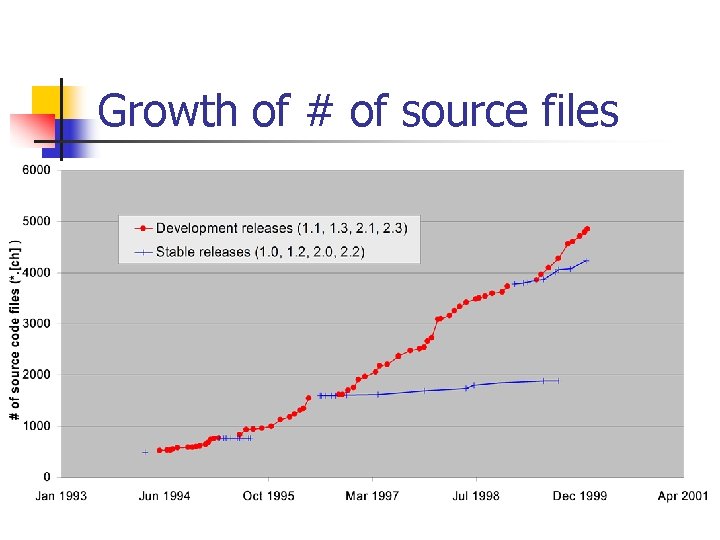
Linux background n Linux kernel v 1. 0 released March 1994 n n Linux kernel v 2. 3. 39 released January 2000 n n 487 source files, 165 KLOC, i 386 only 4854 source files, 2. 2 MLOC, 10 hardware architectures supported, over 300 developers credited Maintained along two parallel paths: n development and stable
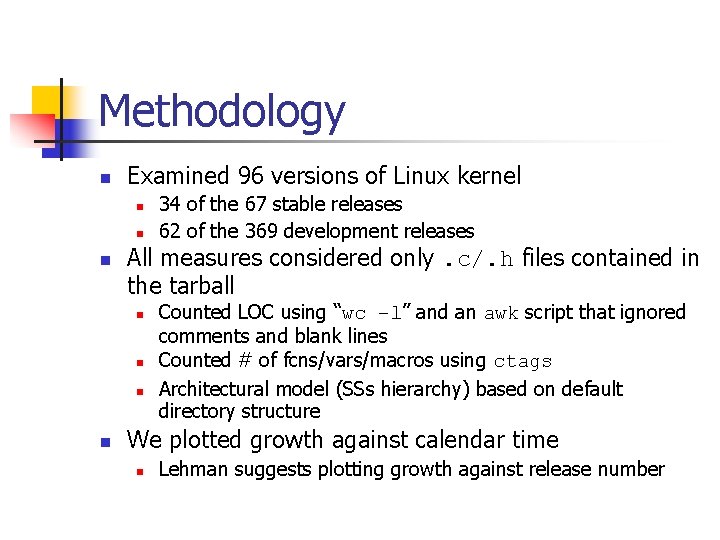
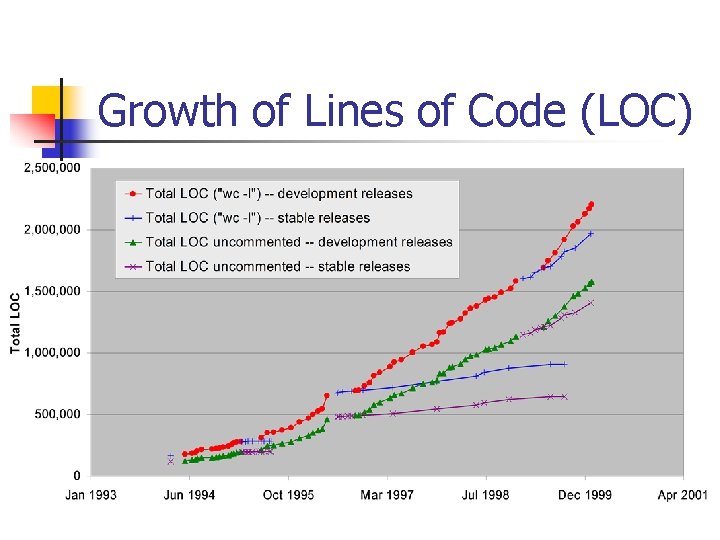
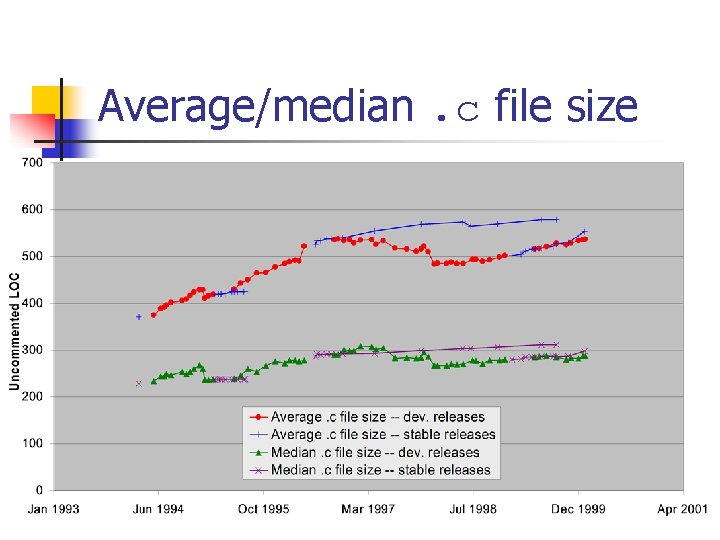
Methodology n Examined 96 versions of Linux kernel n n n All measures considered only. c/. h files contained in the tarball n n 34 of the 67 stable releases 62 of the 369 development releases Counted LOC using “wc –l” and an awk script that ignored comments and blank lines Counted # of fcns/vars/macros using ctags Architectural model (SSs hierarchy) based on default directory structure We plotted growth against calendar time n Lehman suggests plotting growth against release number
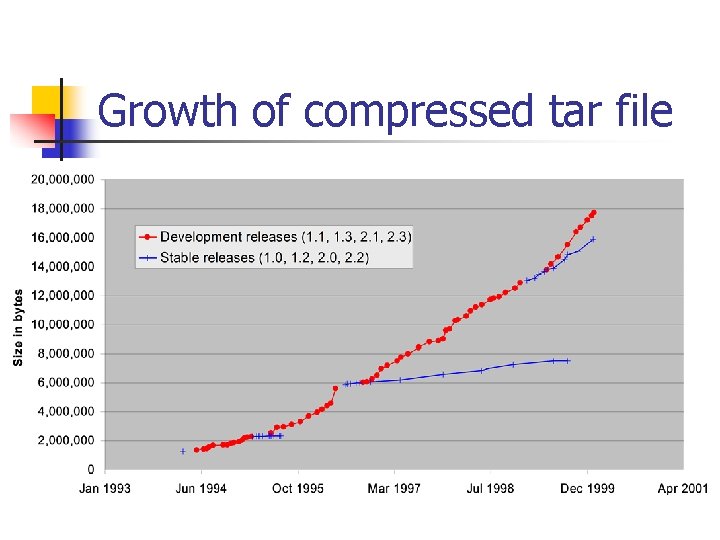
Growth of compressed tar file
Growth of # of source files
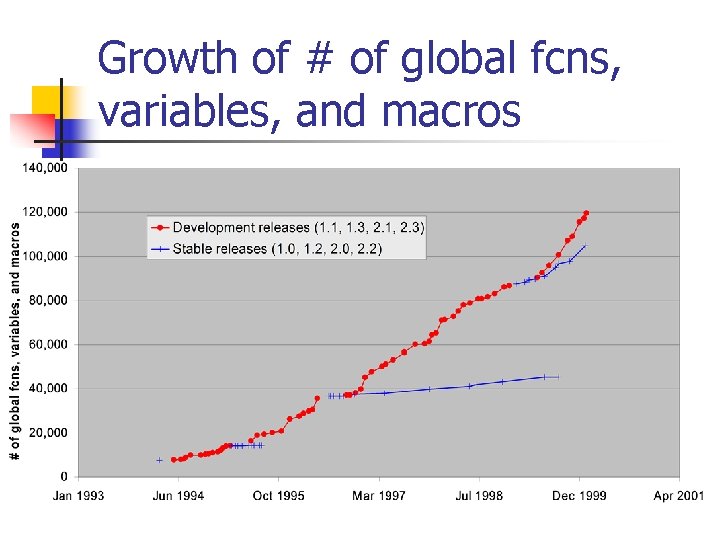
Growth of # of global fcns, variables, and macros
Growth of Lines of Code (LOC)
Average/median. c file size
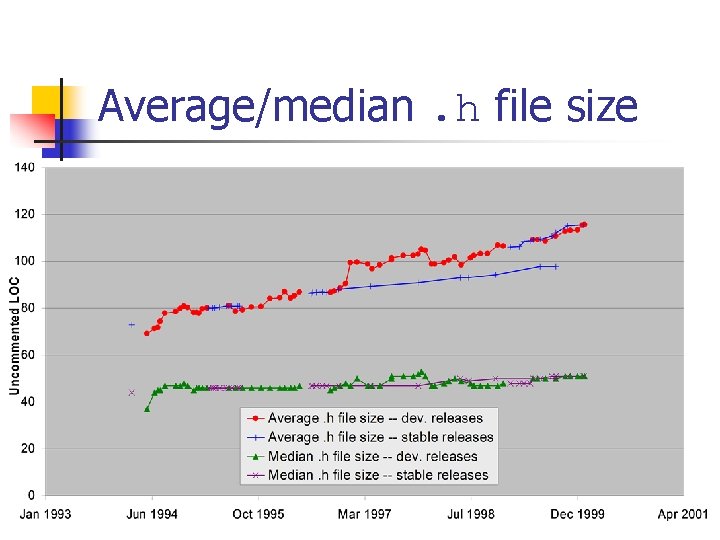
Average/median. h file size
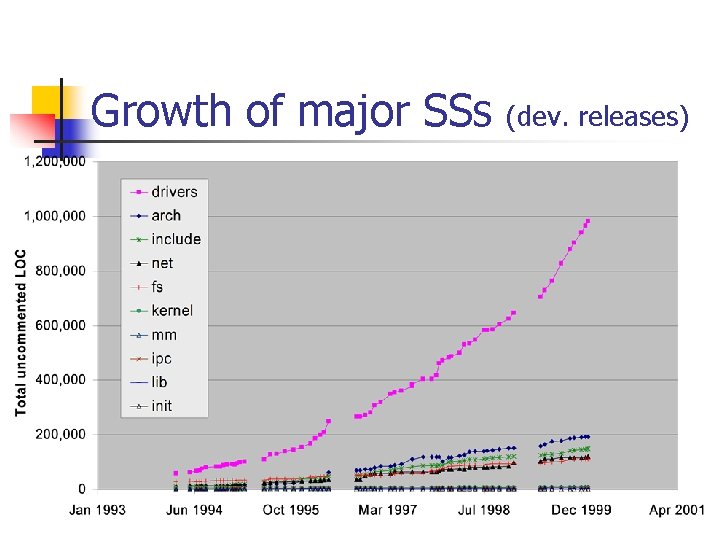
Growth of major SSs (dev. releases)
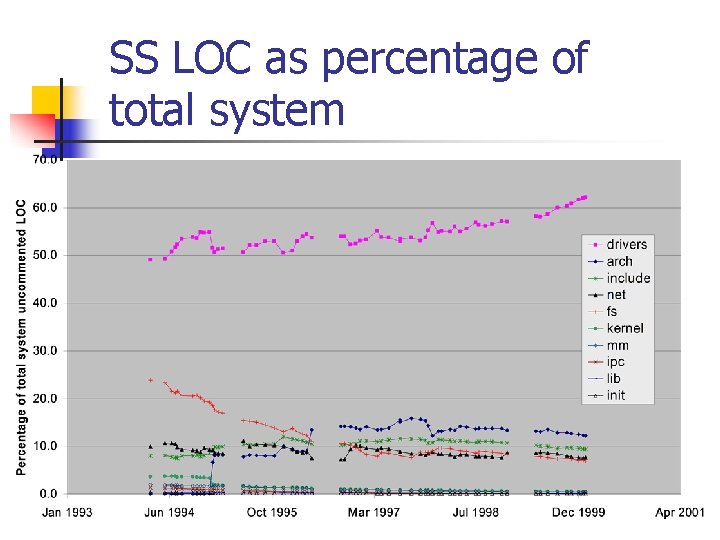
SS LOC as percentage of total system
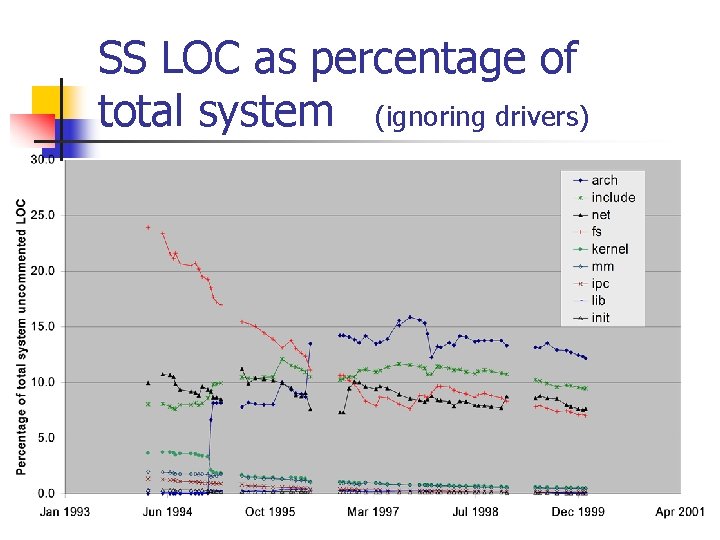
SS LOC as percentage of total system (ignoring drivers)
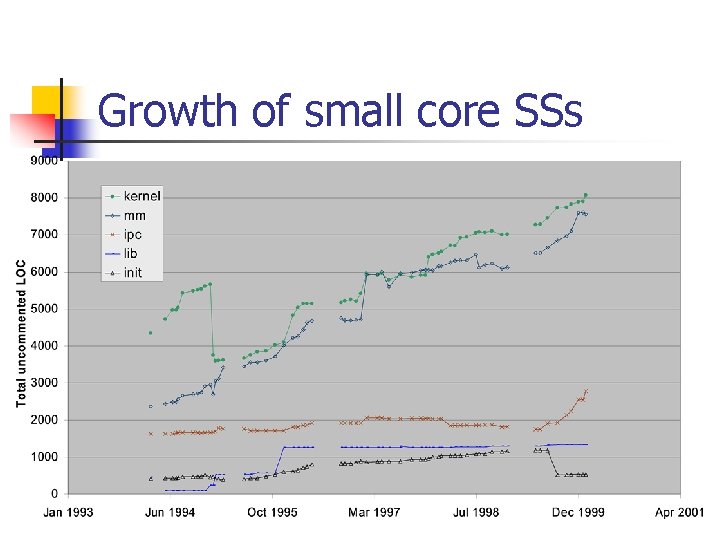
Growth of small core SSs
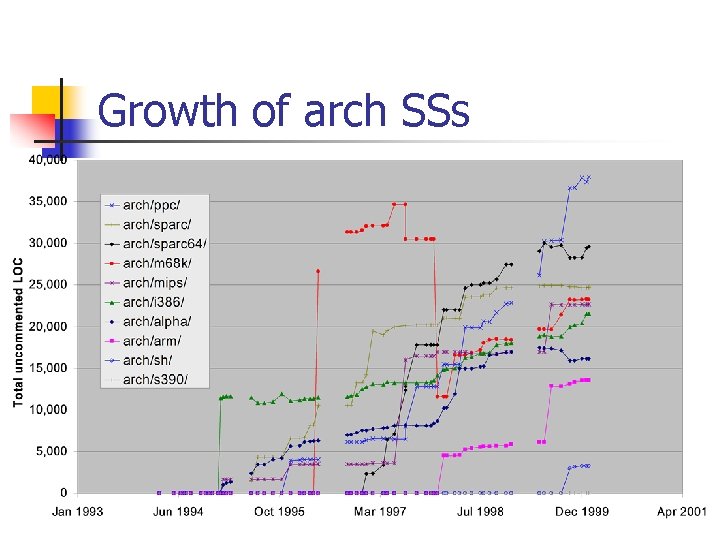
Growth of arch SSs
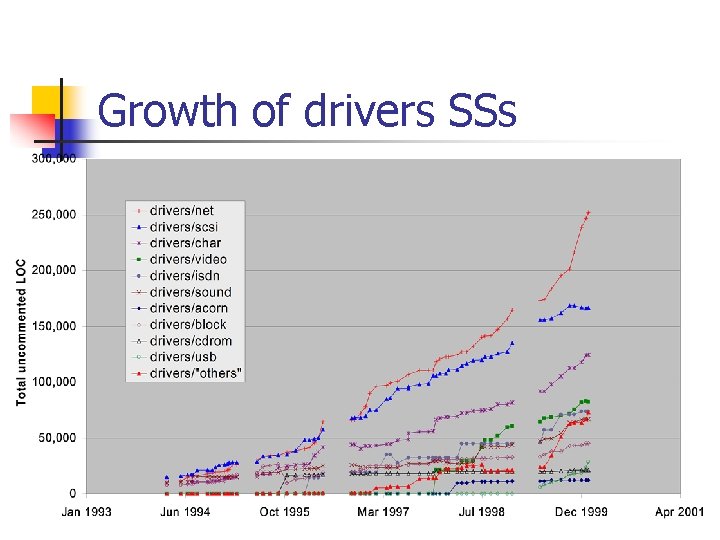
Growth of drivers SSs
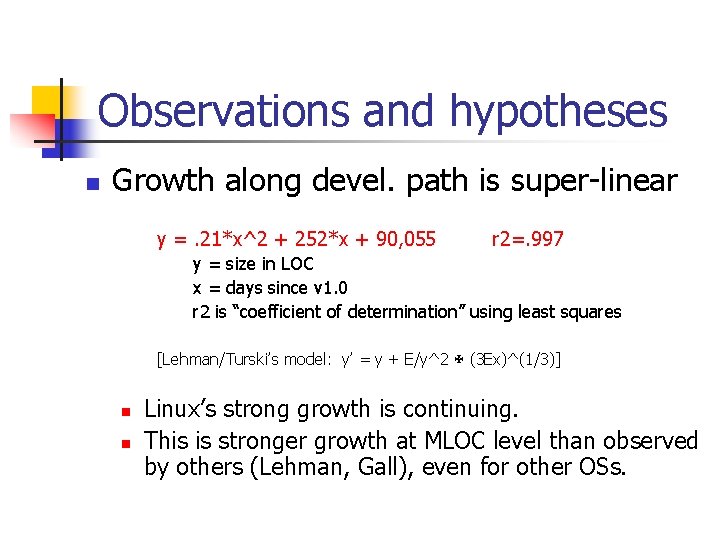
Observations and hypotheses n Growth along devel. path is super-linear y =. 21*x^2 + 252*x + 90, 055 r 2=. 997 y = size in LOC x = days since v 1. 0 r 2 is “coefficient of determination” using least squares [Lehman/Turski’s model: y’ = y + E/y^2 (3 Ex)^(1/3)] n n Linux’s strong growth is continuing. This is stronger growth at MLOC level than observed by others (Lehman, Gall), even for other OSs.
Why has Linux been able to continue its geometric growth? n n Core code quality is carefully maintained Architecture/problem domain n It’s largely drivers Much of the code is “parallel” It’s not as big as you might think n n Vanilla configuration used only 15% of files Development model (OSD) and its sociology n Popularity and visibility has encouraged outsiders (both hackers and industry) to contribute
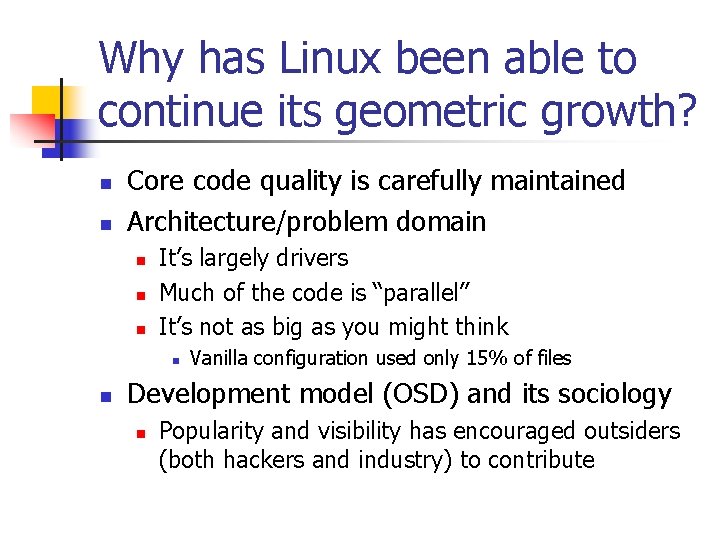
Growth of fetchmail [Raymond]
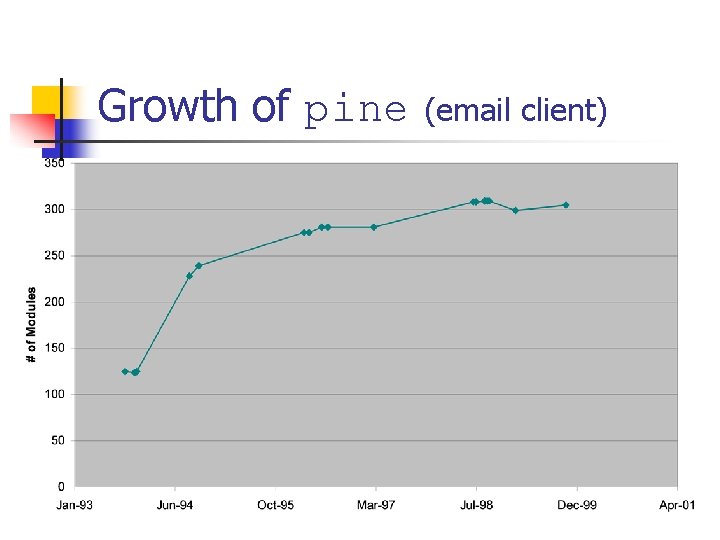
Growth of pine (email client)
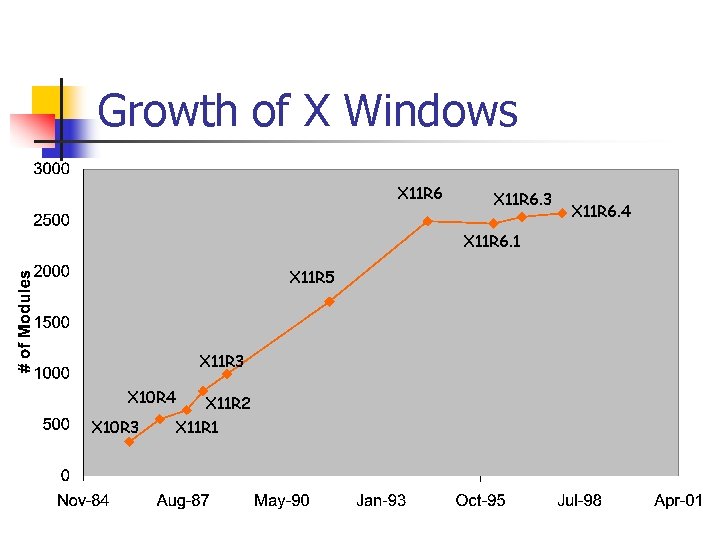
Growth of X Windows X 11 R 6. 3 X 11 R 6. 1 X 11 R 5 X 11 R 3 X 10 R 4 X 10 R 3 X 11 R 2 X 11 R 1 X 11 R 6. 4
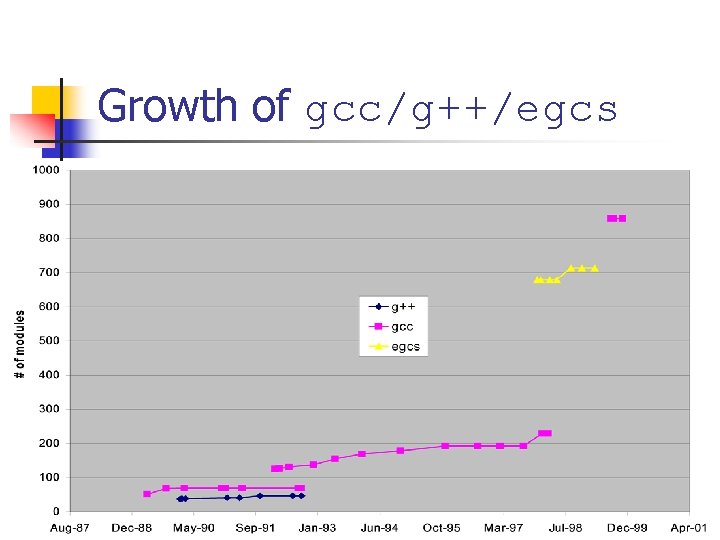
Growth of gcc/g++/egcs
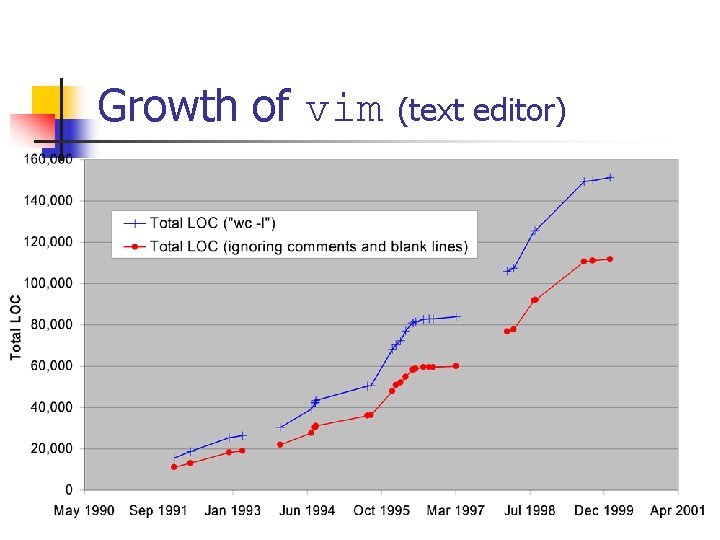
Growth of vim (text editor)
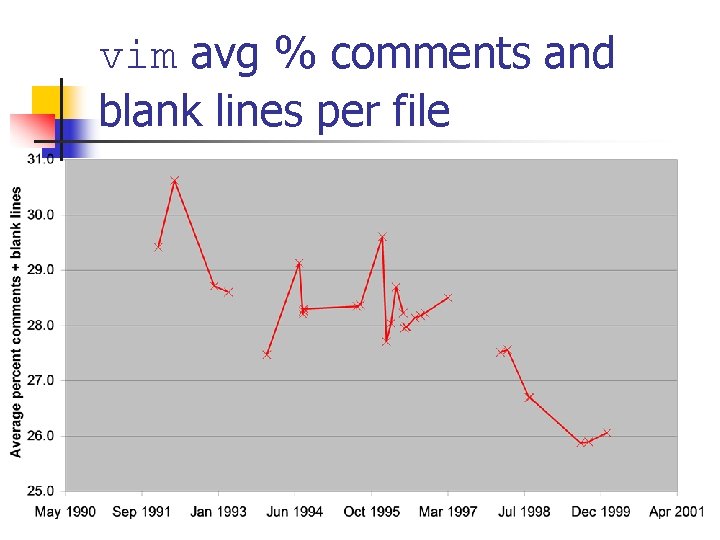
vim avg % comments and blank lines per file
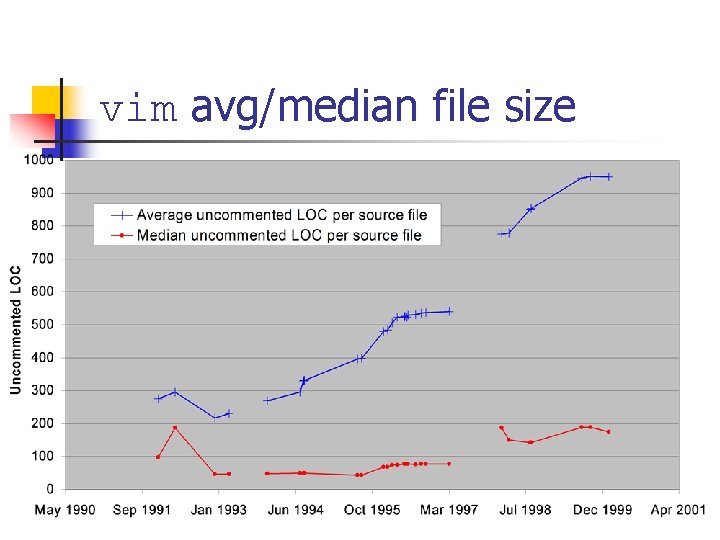
vim avg/median file size
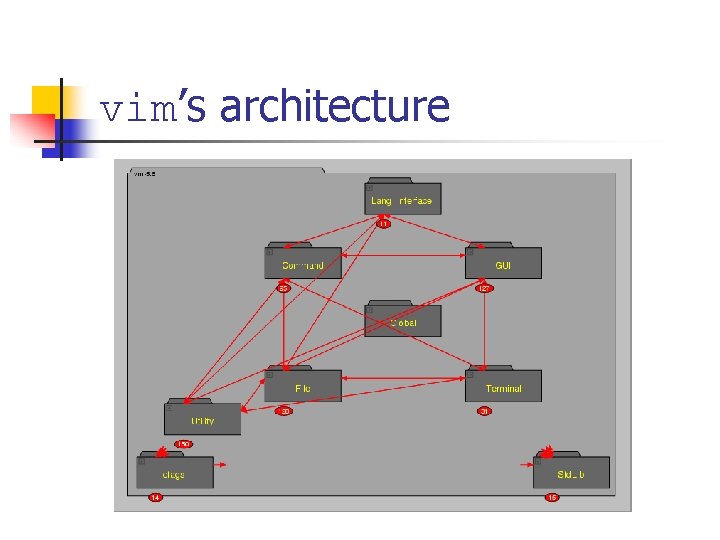
vim’s architecture
Hypotheses Factors affecting evolution include n n Size and age of system Use of traditional sw. eng. principles during development PLUS n Problem domain n n Problem complexity, multi-platform, multi-features Software architecture Process model Sociology, market forces, and acts-of-God
Software evolution research: What next? So far, we have examined only growth. n More case studies needed n n Supporting tools to aid analysing, visualizing, and querying program evolution n Qualitative and quantitative Industrial and open source systems Different problem domains, architectures More than just RCS and perl Support for architecture repair Codified knowledge: Why and how does software change? n Build catalogue of change patterns and evolutionary narratives
Codified knowledge n n Mature engineering disciplines codify knowledge and experience. Arguably, this is lacking in software engineering. n n n Software architecture styles Design patterns [Shaw] [Go. F] Codified knowledge of how and why programs evolve: n Evolutionary narratives n n Long term, coarse granularity Change patterns n Short term, fine granularity [Godfrey]
Change patterns and evolutionary narratives n Phenomena observed in Linux evolution n n Bandwagon effect Contributed third party code “Mostly parallel” enables sustained growth Clone and hack Careful control of core code; more flexibility on contributed drivers, experimental features