
Evolution history of MSDOS MSDOS is a wellknown

- Slides: 14
Evolution history of MS-DOS
• MS-DOS is a well-known product of Microsoft, know as Microsoft Disk Operating System. • Implemented on the first IBM PC that was developed by IBM 1981. • The user interface remain the same until the end of the nineties of the 20 th century. • It was basically an operating system that deals with disk or DOS, that did not have any graphical interface (It was a textual interface), and running applications and typing commands with the system is performed with the keyboard. • For mass usage, he began to squeeze Microsoft vindous (A family of operating systems for personal computers and servers operated by Microsoft) , which in his early years was dependent on MS-DOS. • It represented only slightly more than a DOS graphical interface, but from the NT(new technology) and ME(Management Engine) version of the windows, DOS it became unnecessary and ceased to be used.
• Today it is used to run old programs that do not work on Windows. • Installing DOS on newer generation computers is sometimes impossible, and the easiest way to start is from the emulator.
Development history • Microsoft, which needed an operating system for the IBM Personal Computer hired Tim Paterson in May 1981 and bought 86 -DOS 1. 10 for $75, 000 in July of the same year. Microsoft kept the version number, but renamed it MS-DOS. • MS-DOS was actually developed by Seattle Computer Products, called 86 -DOS, then acquired by Microsoft and licensed the product to IBM as MS-DOS
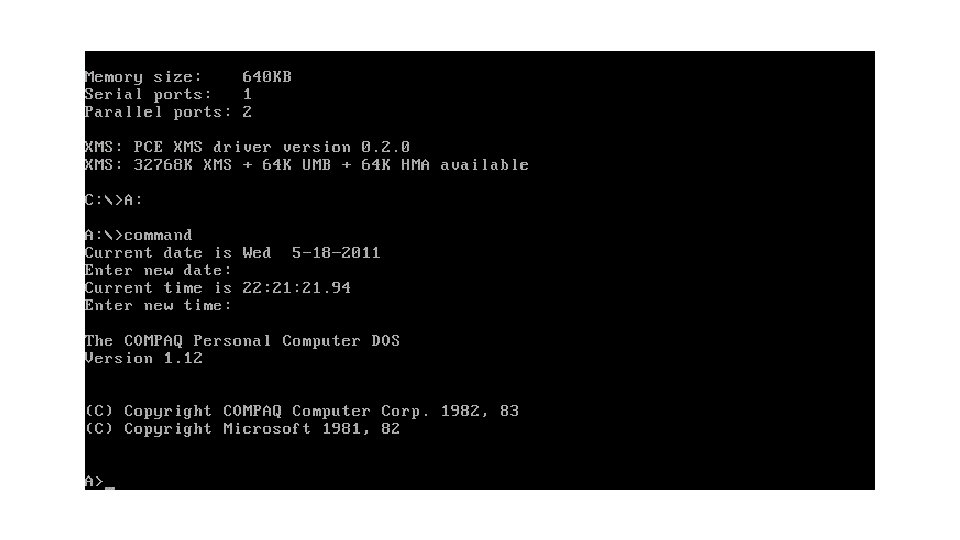
• In parallel with MS-DOS, IBM also released its PC-DOS, and the difference could be seen in two ways: version and system files. • the command ”ver “ would print either MS-DOS or PC-DOS and the version code (1. 0, 3. 3, 6. 22) • The MS-DOS bootable floppy had system files io. sys and msdos-sys, while the PCDOS version had ibmbio. com and ibmdos. com
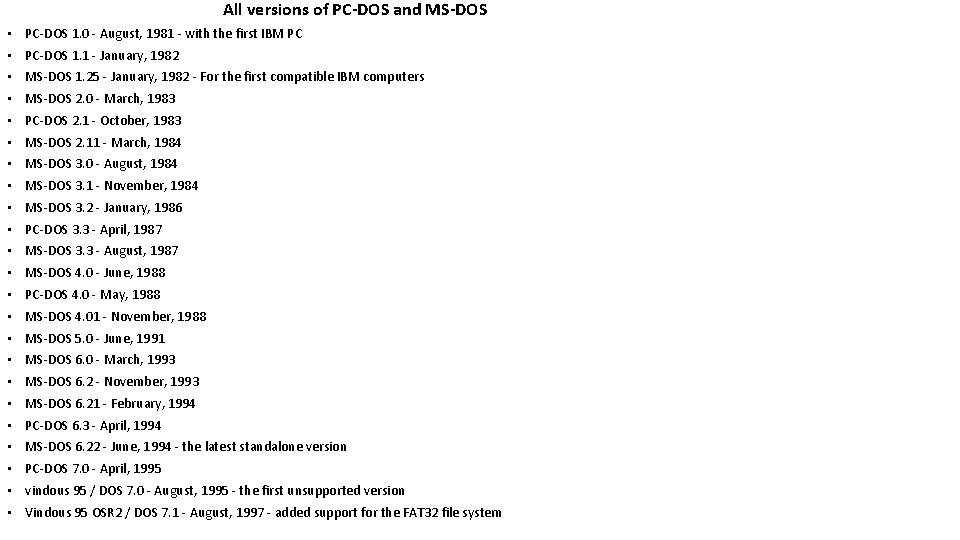
All versions of PC-DOS and MS-DOS • PC-DOS 1. 0 - August, 1981 - with the first IBM PC • PC-DOS 1. 1 - January, 1982 • MS-DOS 1. 25 - January, 1982 - For the first compatible IBM computers • MS-DOS 2. 0 - March, 1983 • PC-DOS 2. 1 - October, 1983 • MS-DOS 2. 11 - March, 1984 • MS-DOS 3. 0 - August, 1984 • MS-DOS 3. 1 - November, 1984 • MS-DOS 3. 2 - January, 1986 • PC-DOS 3. 3 - April, 1987 • MS-DOS 3. 3 - August, 1987 • MS-DOS 4. 0 - June, 1988 • PC-DOS 4. 0 - May, 1988 • MS-DOS 4. 01 - November, 1988 • MS-DOS 5. 0 - June, 1991 • MS-DOS 6. 0 - March, 1993 • MS-DOS 6. 2 - November, 1993 • MS-DOS 6. 21 - February, 1994 • PC-DOS 6. 3 - April, 1994 • MS-DOS 6. 22 - June, 1994 - the latest standalone version • PC-DOS 7. 0 - April, 1995 • vindous 95 / DOS 7. 0 - August, 1995 - the first unsupported version • Vindous 95 OSR 2 / DOS 7. 1 - August, 1997 - added support for the FAT 32 file system
Tim Paterson
Evolution history of IBM DOS
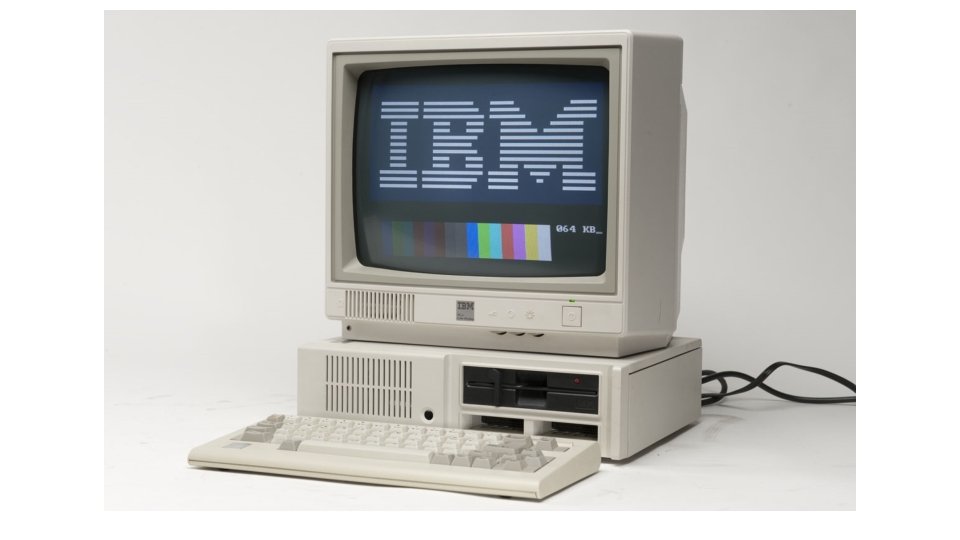
• IBM PC DOS (an acronym for IBM personal computer disk operating system), is a discontinued operating system for the IBM Personal Computer, manufactured and sold by IBM from the early 1980 s into the 2000 s. • The IBM task force assembled to develop the PC decided that critical components of the machine, including the operating system, would come from outside vendors. • One of the key decision that made the IBM PC an industry standard was the radical break from company tradition of in-house development. • At that time, the private company Microsoft, founded five years earlier by bill gates, was eventually selected for the operating system. • IBM wanted nothing to do with helping Microsoft, and wanted Microsoft to retain ownership of whatever software it developed.
• According to a task force member, Jack Sams : “ The reasons were internal. We had a terrible problem being sued by people claiming we had stolen their stuff. It could be horribly expensive for us to have our programmers look at code that belonged to someone else because they would then come back and say we stole it and made all this money. We had lost a series of suits on this, and so we didn't want to have a product which was clearly someone else's product worked on by IBM people. We went to Microsoft on the proposition that we wanted this to be their product. “ • IBM first contacted Microsoft to look the company over in July 1980. Negotiations continued over the months that followed, and the paperwork was officially signed in early November. • ”CP/M-86 c” became available six months after “PC DOS” and “UCSD p. System” operating systems. And a survey showed 96. 3% of PCs were ordered with the $40 PC-DOS compared to 3. 4% with the $240 CP/M-86.
• In 1986, IBM announced PC DOS support for client access to the file services defined by Distributed Data Management Architecture (DDM). Which enables PCs to create, manage, and access record-oriented files available on IBM System/36, IBM System/38 and IBM mainframe computers running CICS. • In 1988, client support for stream-oriented files and hierarchical directories was added to PC DOS when they became available on the DDM server systems.