
Evolution Evolution is the change of hereditary features


- Slides: 44
Evolution
Evolution is the change of hereditary features of an organism over time
In 1809, Jean Baptiste de Lamarck proposed the “theory of aquired characteristics”
This theory said that organisms evolve by keeping traits that their parents developed during their lives.
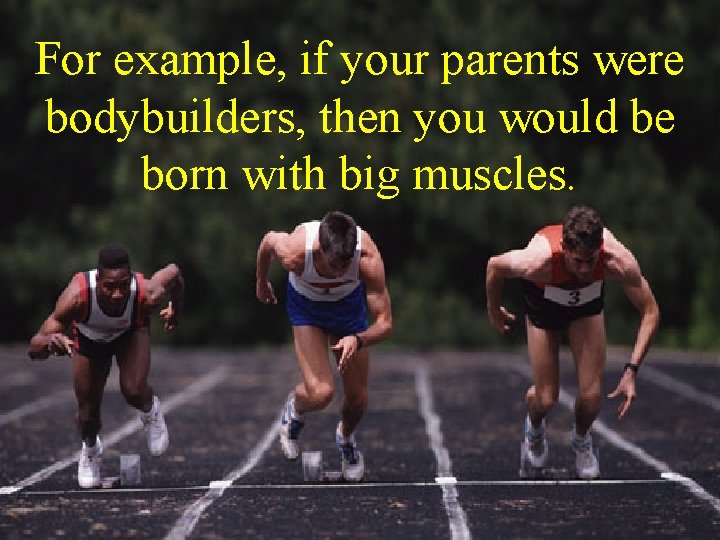
For example, if your parents were bodybuilders, then you would be born with big muscles.
This theory was not accepted!
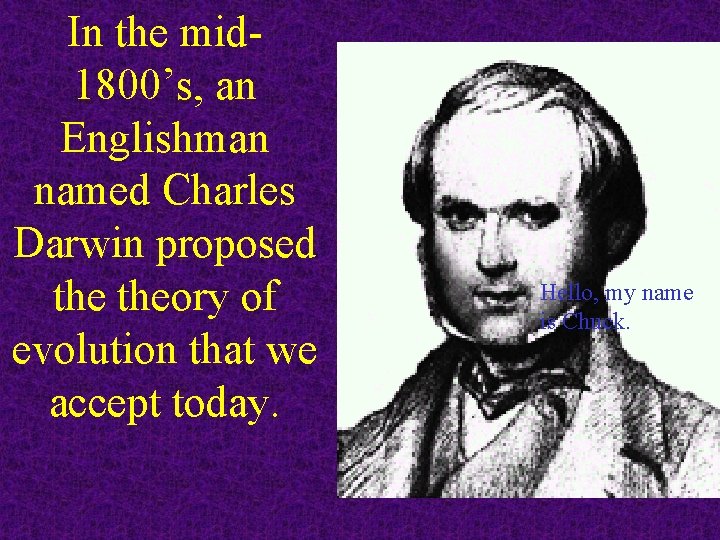
In the mid 1800’s, an Englishman named Charles Darwin proposed theory of evolution that we accept today. Hello, my name is Chuck.
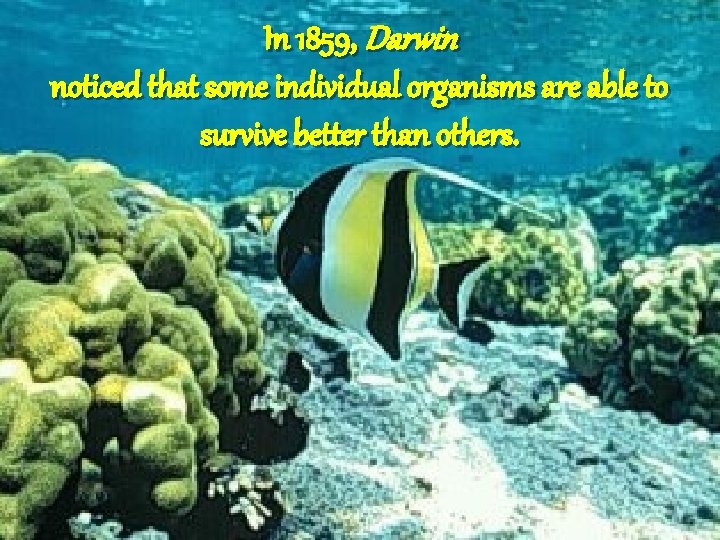
In 1859, Darwin noticed that some individual organisms are able to survive better than others.
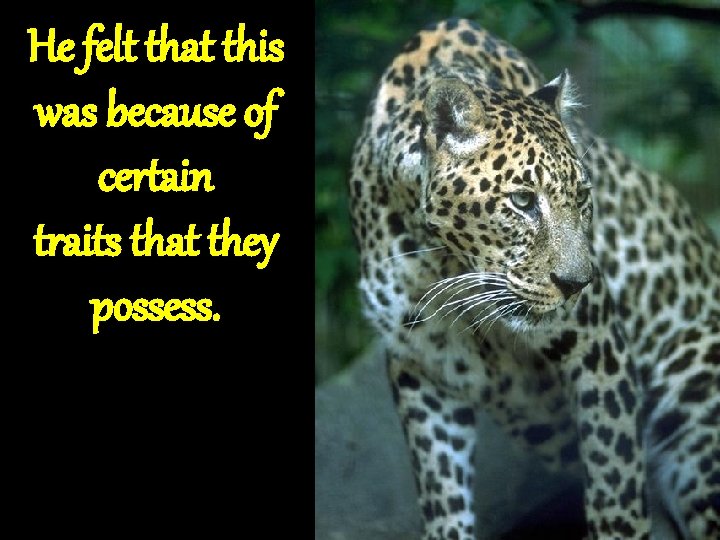
He felt that this was because of certain traits that they possess.
Darwin found that animals with favorable traits live to pass them on.
He called this theory of Natural Selection
This is also known as the “survival of the fittest”
The five factors Darwin identified that govern natural selection are:
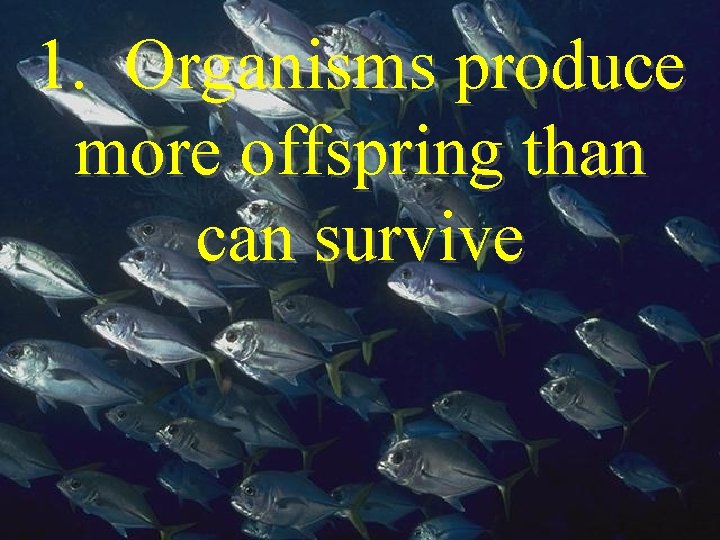
1. Organisms produce more offspring than can survive
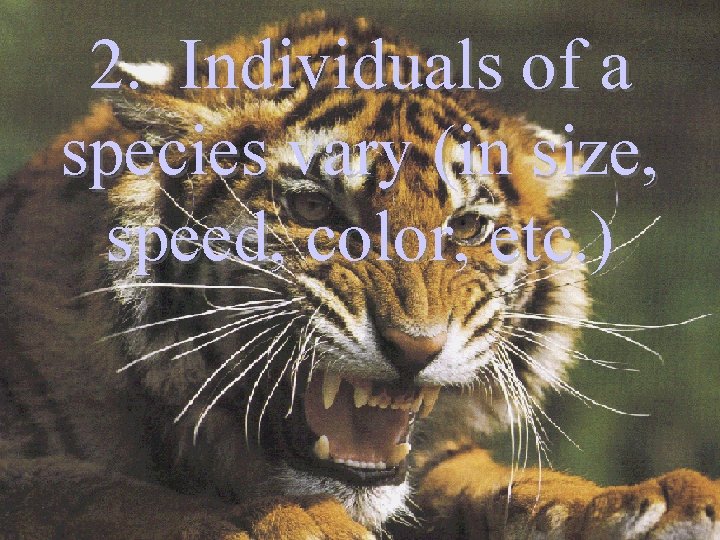
2. Individuals of a species vary (in size, speed, color, etc. )
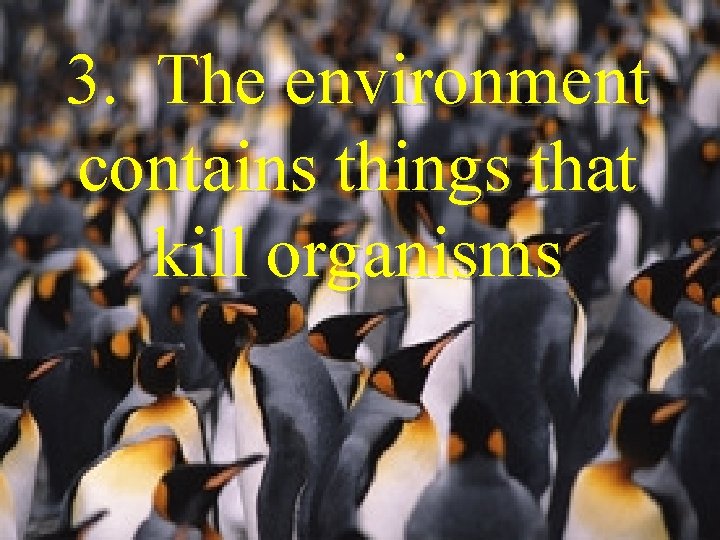
3. The environment contains things that kill organisms
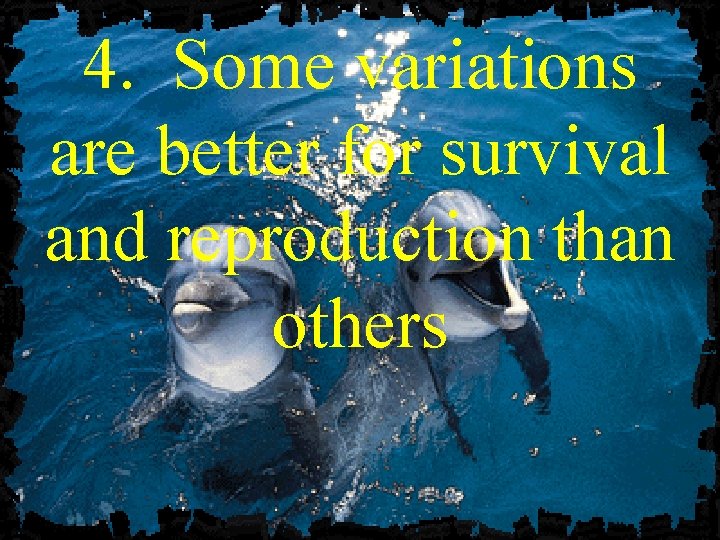
4. Some variations are better for survival and reproduction than others
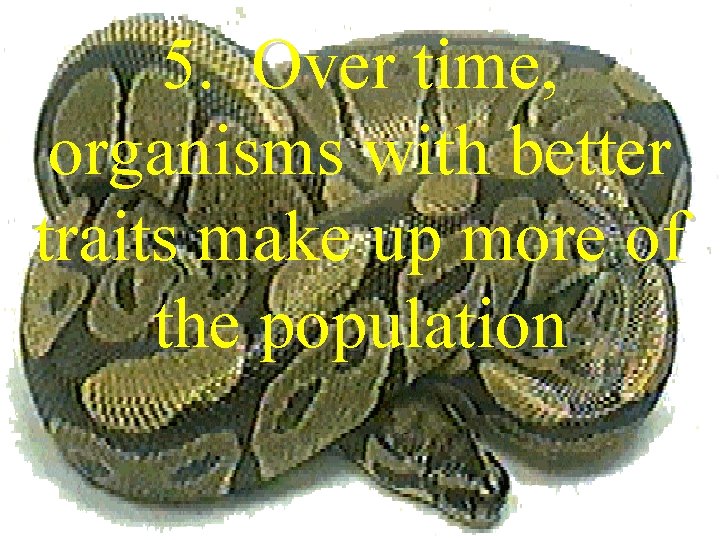
5. Over time, organisms with better traits make up more of the population
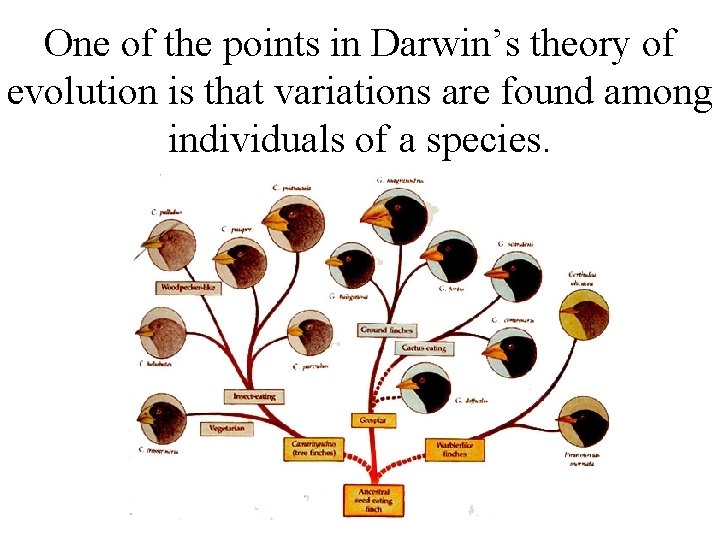
One of the points in Darwin’s theory of evolution is that variations are found among individuals of a species.
A variation is the appearance of an inherited trait that makes an individual different from other members of the same species. (A species is a group of organisms whose members successfully reproduce among themselves)
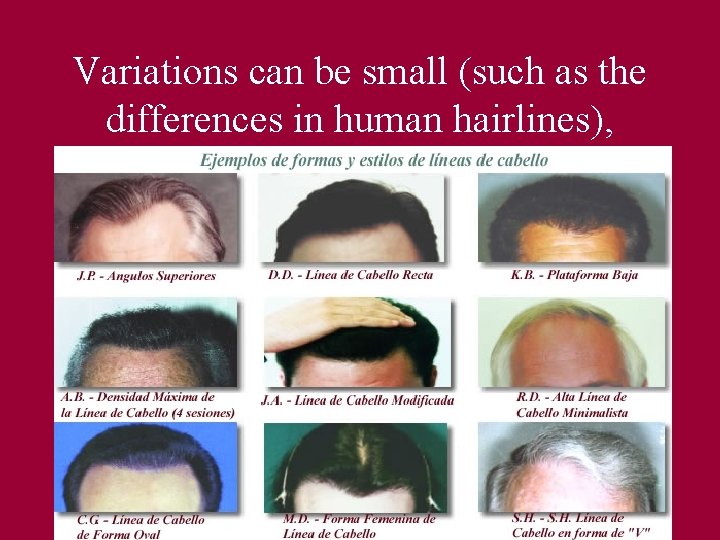
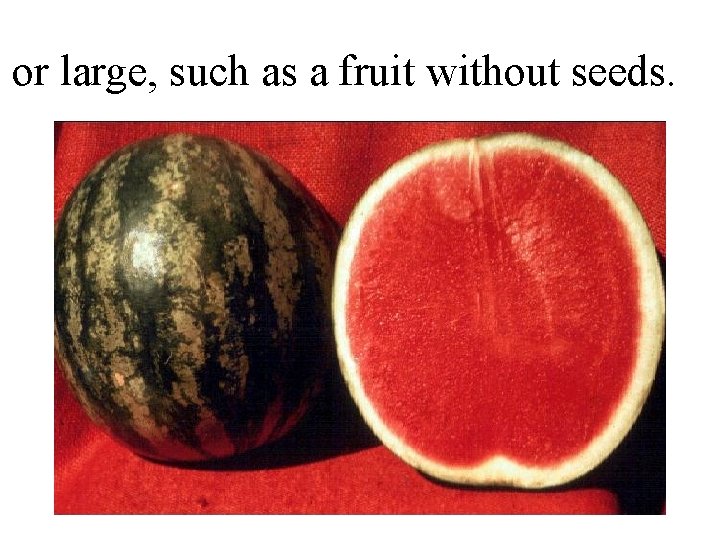
Variations can be small (such as the differences in human hairlines),
or large, such as a fruit without seeds.
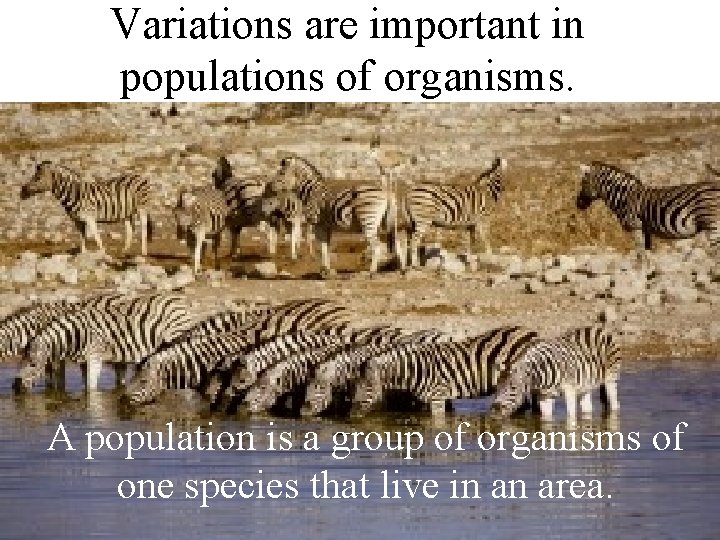
Variations are important in populations of organisms. A population is a group of organisms of one species that live in an area.
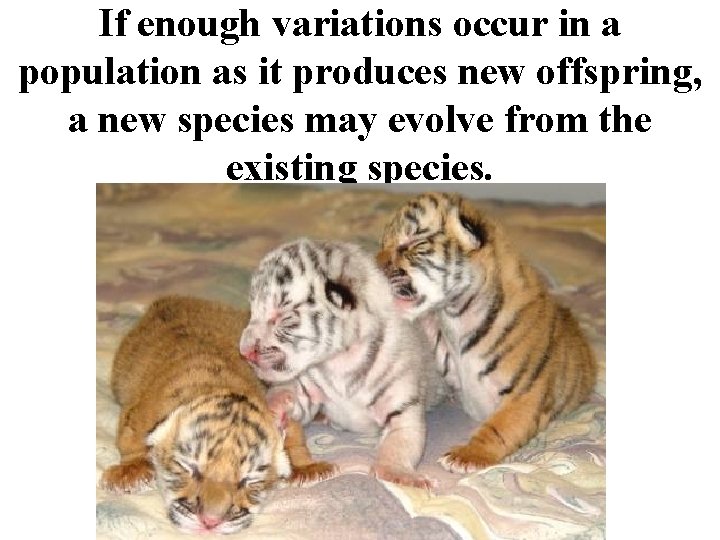
If enough variations occur in a population as it produces new offspring, a new species may evolve from the existing species.
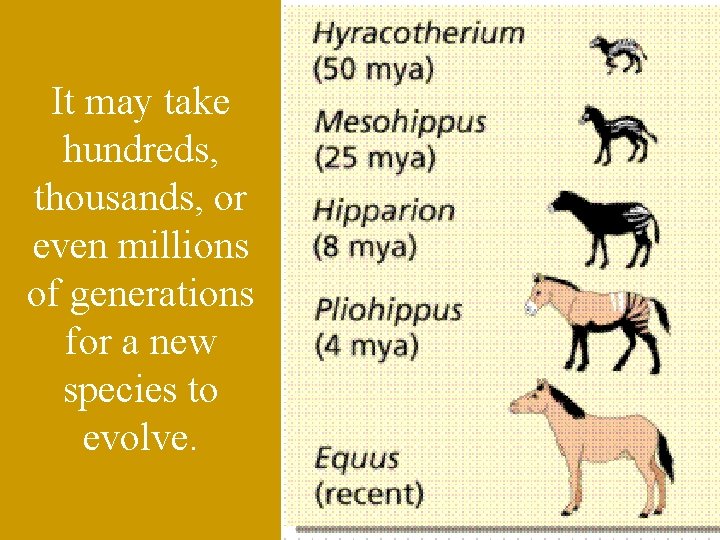
It may take hundreds, thousands, or even millions of generations for a new species to evolve.
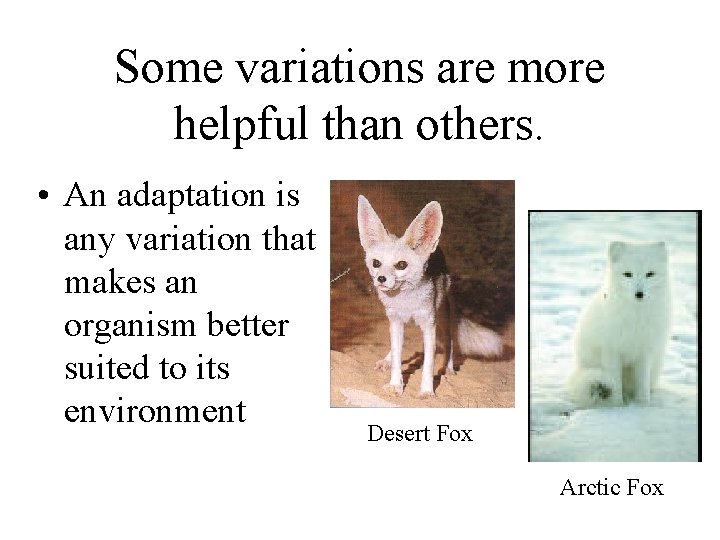
Some variations are more helpful than others. • An adaptation is any variation that makes an organism better suited to its environment Desert Fox Arctic Fox
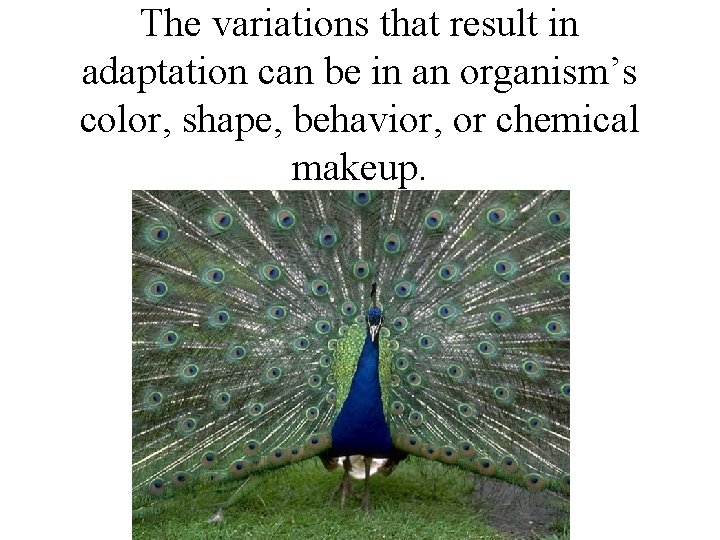
The variations that result in adaptation can be in an organism’s color, shape, behavior, or chemical makeup.
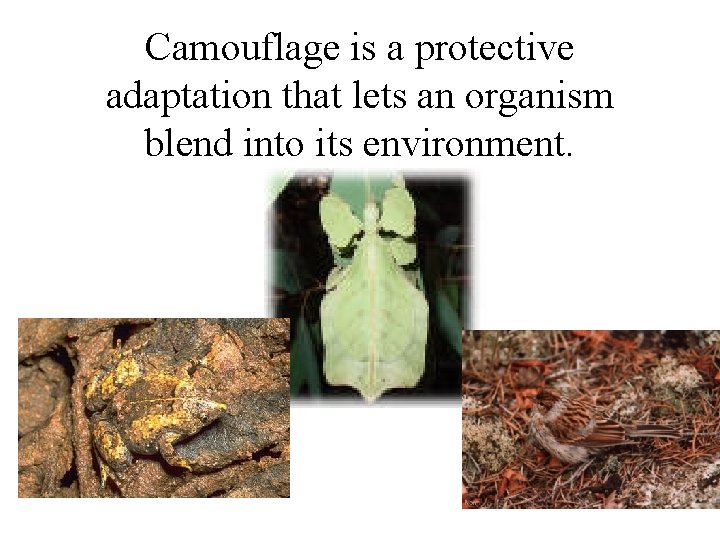
Camouflage is a protective adaptation that lets an organism blend into its environment.
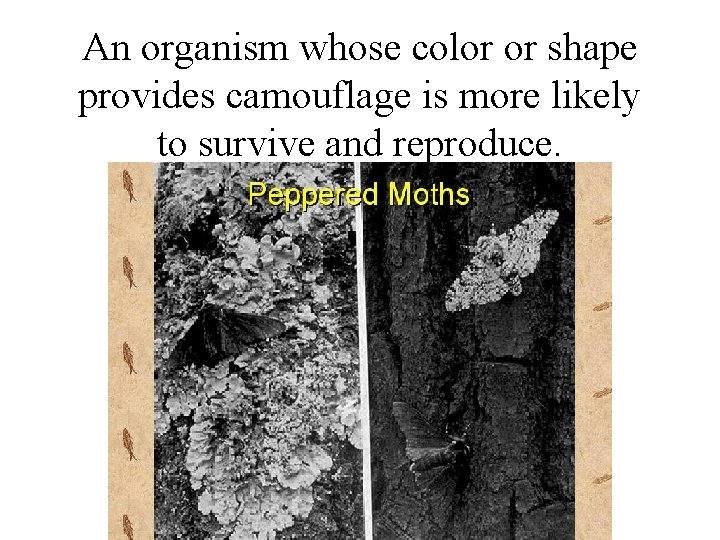
An organism whose color or shape provides camouflage is more likely to survive and reproduce.
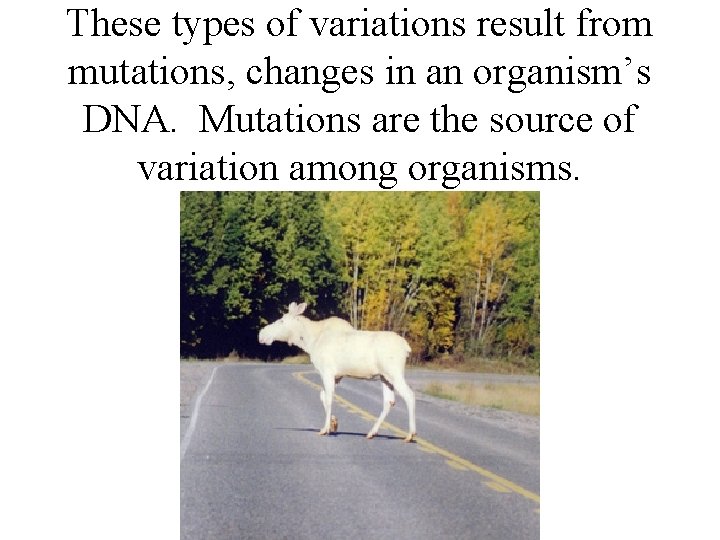
These types of variations result from mutations, changes in an organism’s DNA. Mutations are the source of variation among organisms.
How fast does evolution occur? Scientists are debating that question. Most scientists hypothesize that evolution occurs very slowly, perhaps taking tens or hundreds of millions of years.
Other scientists hypothesize that evolution may occur very quickly, perhaps in a million years.
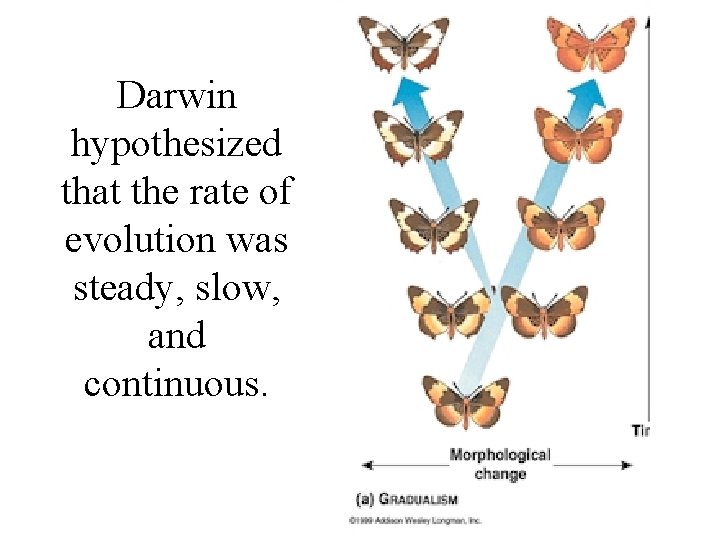
Darwin hypothesized that the rate of evolution was steady, slow, and continuous.
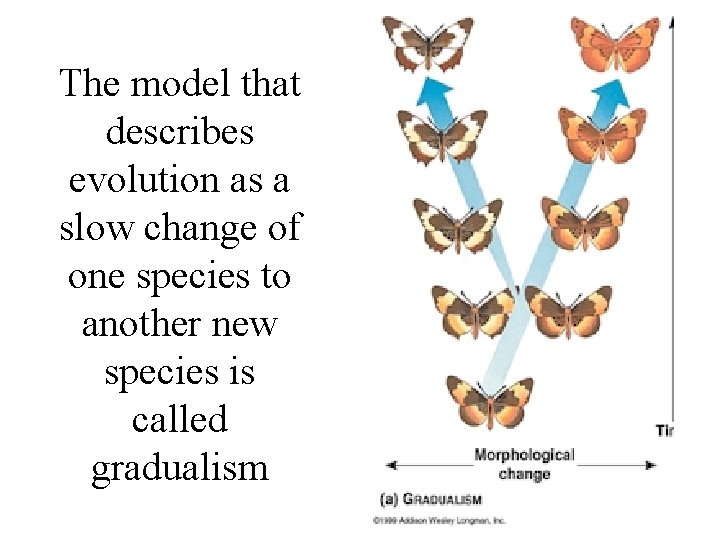
The model that describes evolution as a slow change of one species to another new species is called gradualism
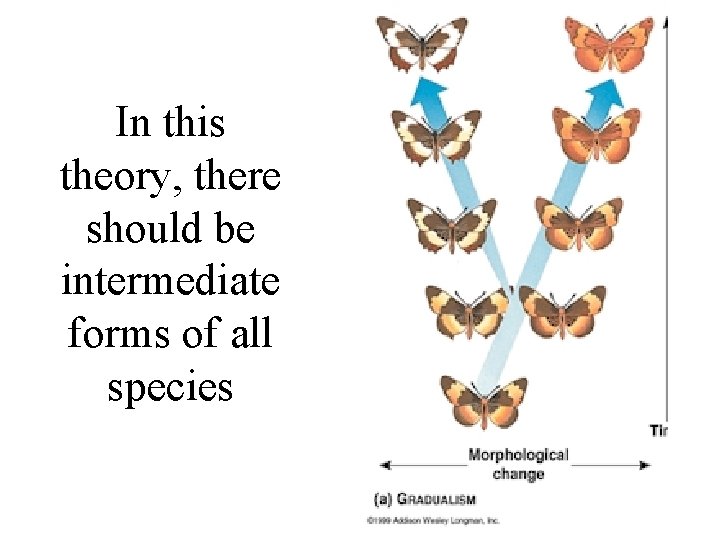
In this theory, there should be intermediate forms of all species
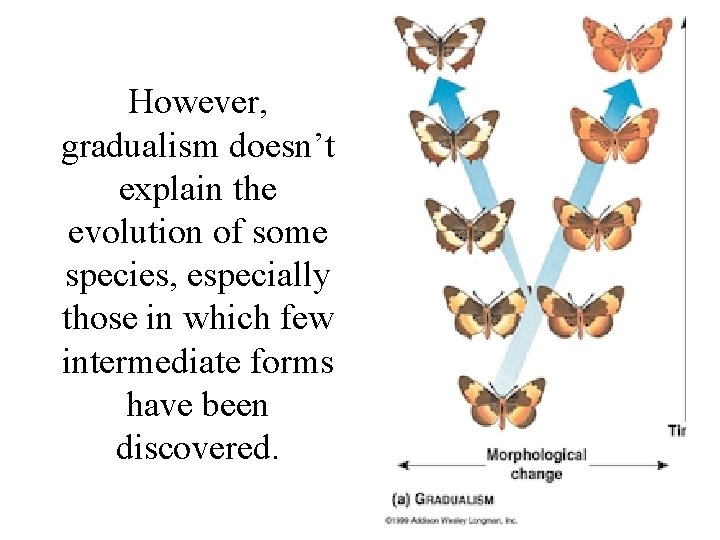
However, gradualism doesn’t explain the evolution of some species, especially those in which few intermediate forms have been discovered.
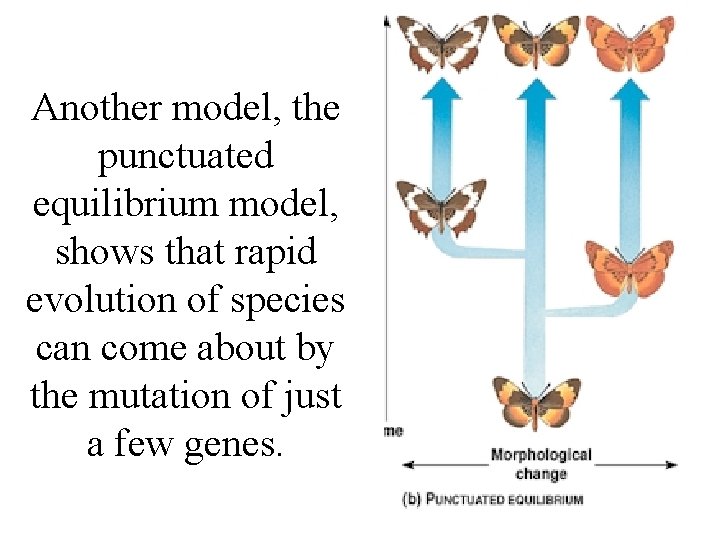
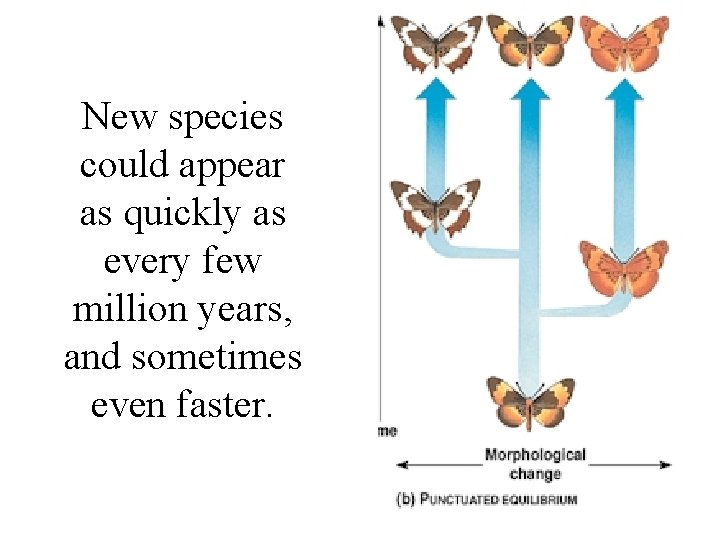
Another model, the punctuated equilibrium model, shows that rapid evolution of species can come about by the mutation of just a few genes.
New species could appear as quickly as every few million years, and sometimes even faster.
Antibiotics have only been available for about 50 years, and in that time, many bacteria have become resistant to this form of treatment.
Some bacterial strains have evolved quickly, which is an example of punctuated equilibrium. Mutations produce large changes in a short period of time.
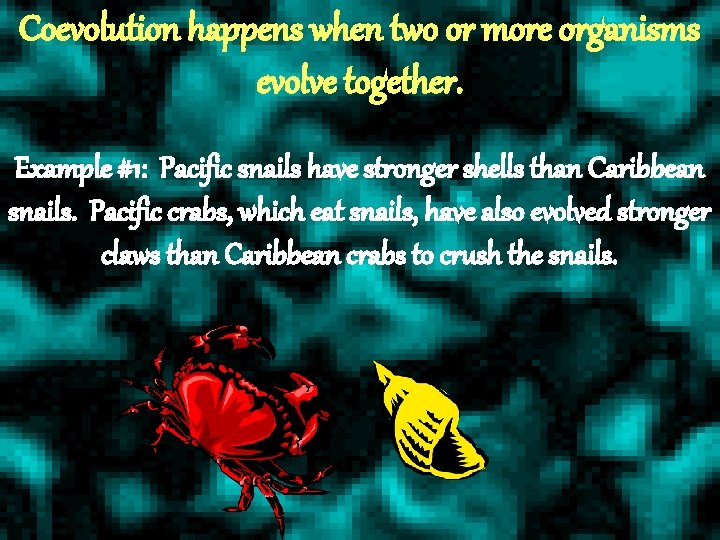
Coevolution happens when two or more organisms evolve together. Example #1: Pacific snails have stronger shells than Caribbean snails. Pacific crabs, which eat snails, have also evolved stronger claws than Caribbean crabs to crush the snails.
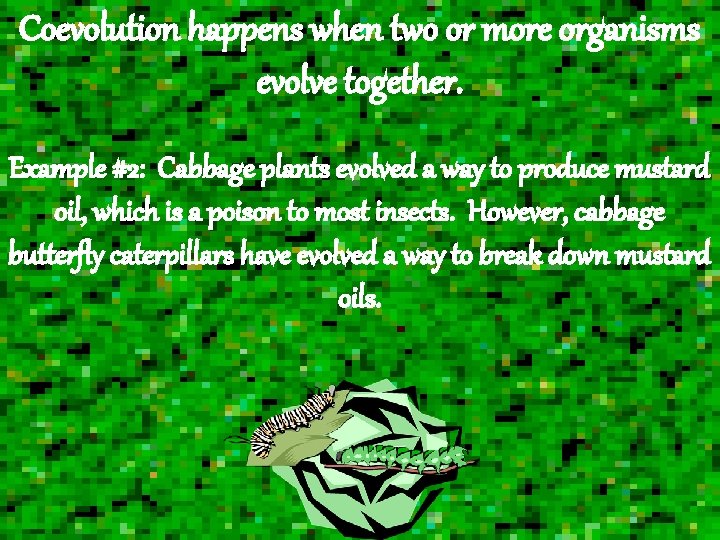
Coevolution happens when two or more organisms evolve together. Example #2: Cabbage plants evolved a way to produce mustard oil, which is a poison to most insects. However, cabbage butterfly caterpillars have evolved a way to break down mustard oils.
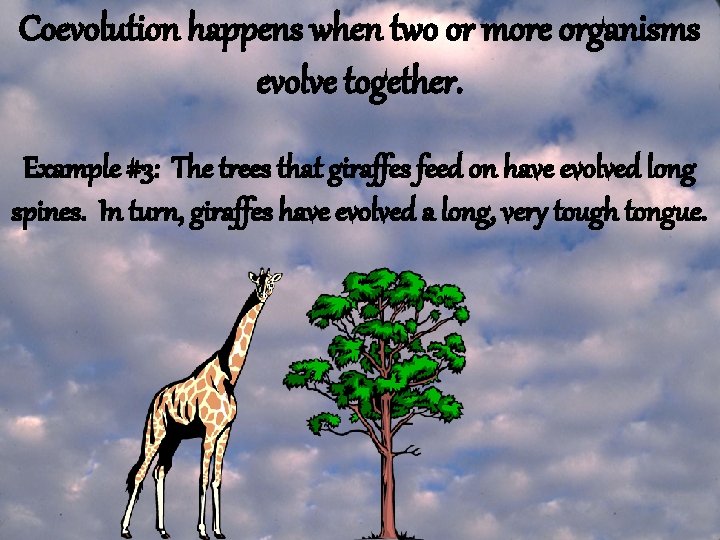
Coevolution happens when two or more organisms evolve together. Example #3: The trees that giraffes feed on have evolved long spines. In turn, giraffes have evolved a long, very tough tongue.
When a species cannot adapt to the environment quickly enough, it becomes extinct.