
Evolution Evidences A Anatomical 1 Fossils a Remains

- Slides: 31
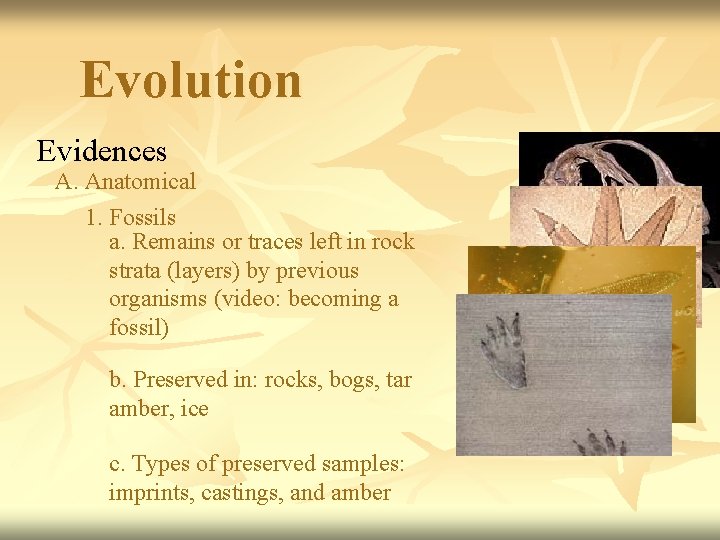
Evolution Evidences A. Anatomical 1. Fossils a. Remains or traces left in rock strata (layers) by previous organisms (video: becoming a fossil) b. Preserved in: rocks, bogs, tar amber, ice c. Types of preserved samples: imprints, castings, and amber
Evolution Evidences A. Anatomical 1. Fossils d. Transitional records i. Classic example: the horse e. Famous fossils i. archeopteryx; ii. • bird or reptile?
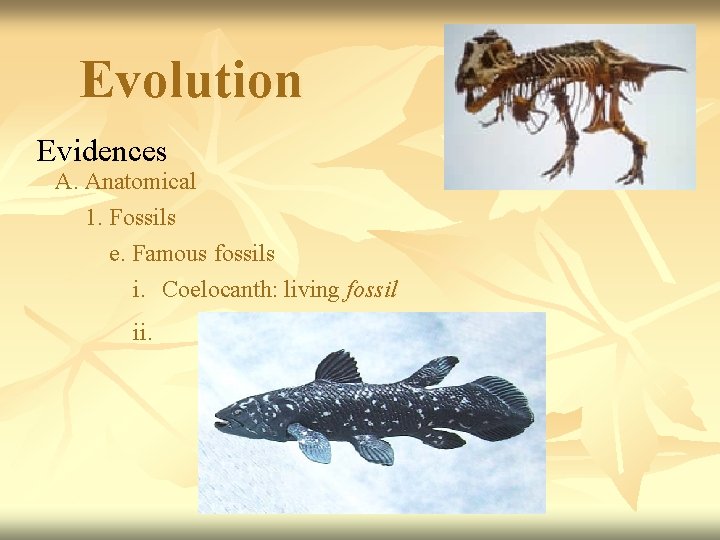
Evolution Evidences A. Anatomical 1. Fossils e. Famous fossils i. Coelocanth: living fossil ii.
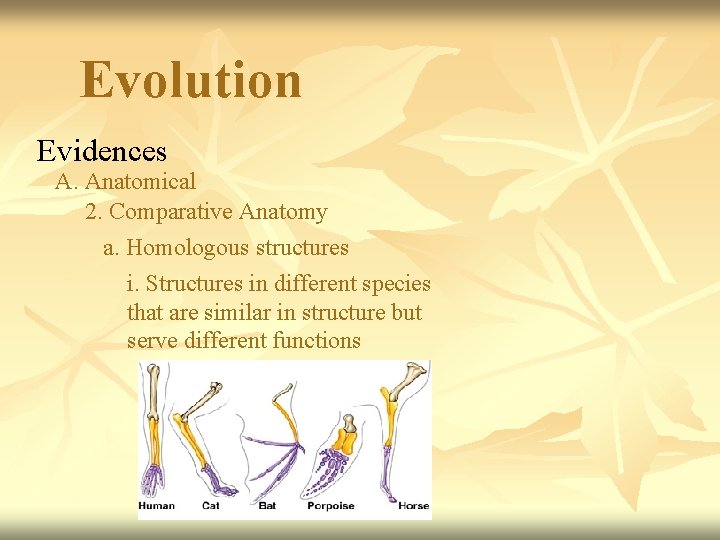
Evolution Evidences A. Anatomical 2. Comparative Anatomy a. Homologous structures i. Structures in different species that are similar in structure but serve different functions
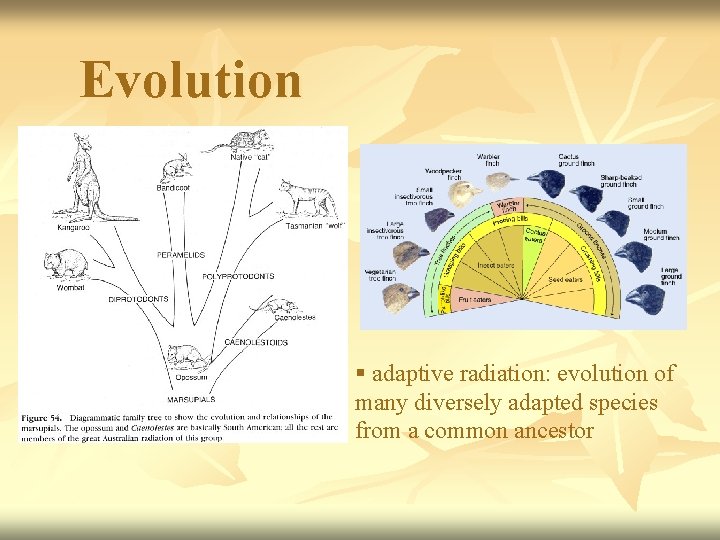
Evolution Evidences A. Anatomical 2. Comparative Anatomy a. Homologous structures i. Divergent evolution v Divergent evolution § when isolated populations of a species evolve independently § adaptive radiation: evolution of many diversely adapted species from a common ancestor
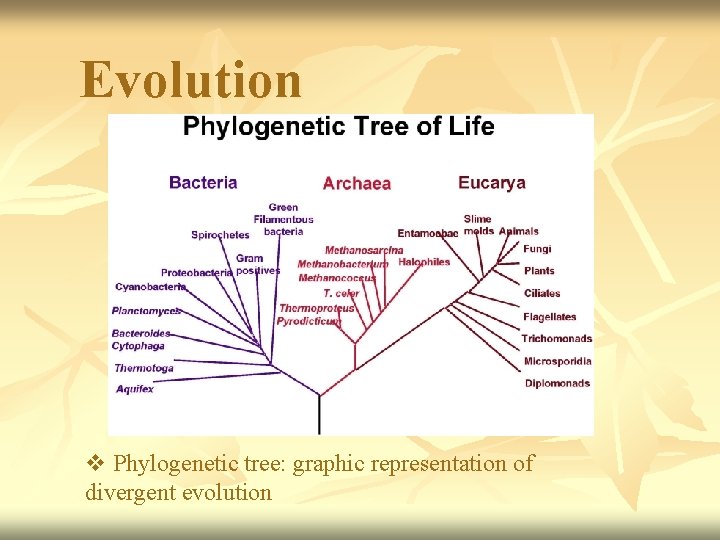
Evolution v Phylogenetic tree: graphic representation of divergent evolution
Evolution § adaptive radiation: evolution of many diversely adapted species from a common ancestor
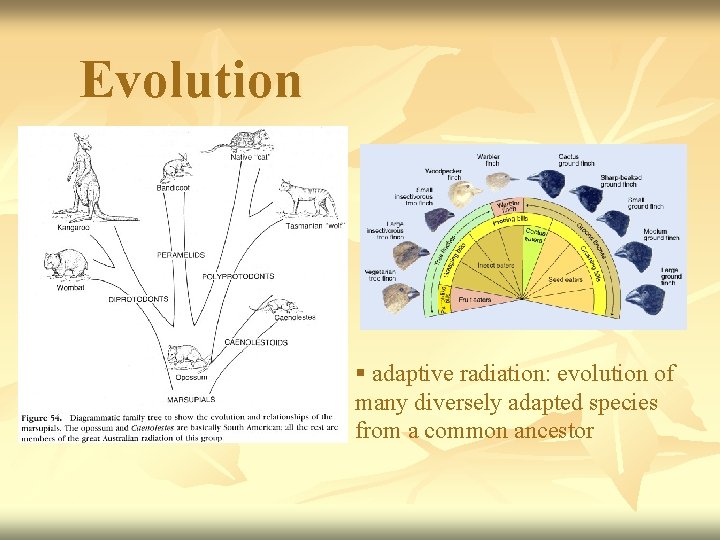
Evolution § adaptive radiation: evolution of many diversely adapted species from a common ancestor
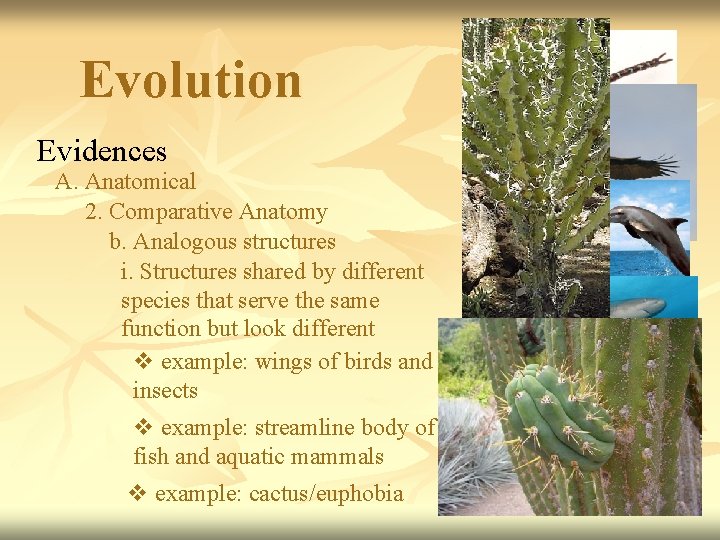
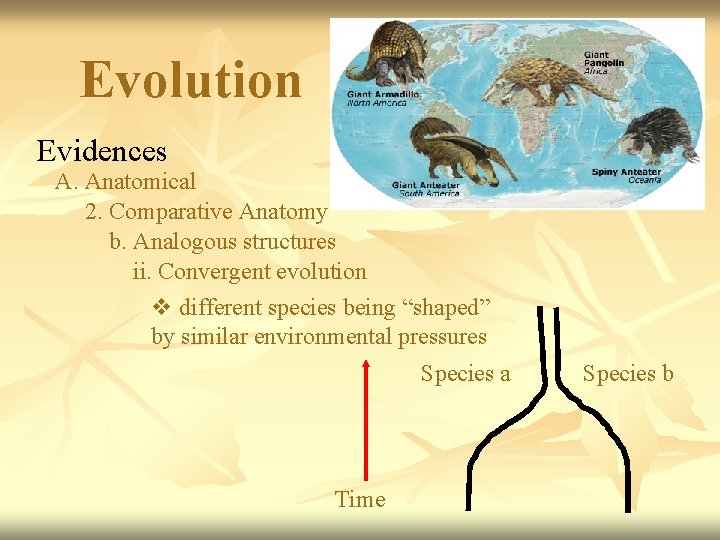
Evolution Evidences A. Anatomical 2. Comparative Anatomy b. Analogous structures i. Structures shared by different species that serve the same function but look different v example: wings of birds and insects v example: streamline body of fish and aquatic mammals v example: cactus/euphobia
Evolution Evidences A. Anatomical 2. Comparative Anatomy b. Analogous structures ii. Convergent evolution v different species being “shaped” by similar environmental pressures Species a Time Species b
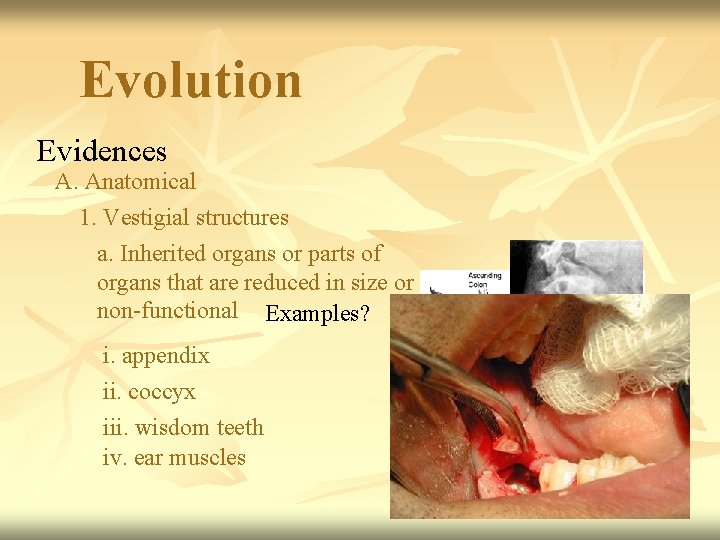
Evolution Evidences A. Anatomical 1. Vestigial structures a. Inherited organs or parts of organs that are reduced in size or non-functional Examples? i. appendix ii. coccyx iii. wisdom teeth iv. ear muscles
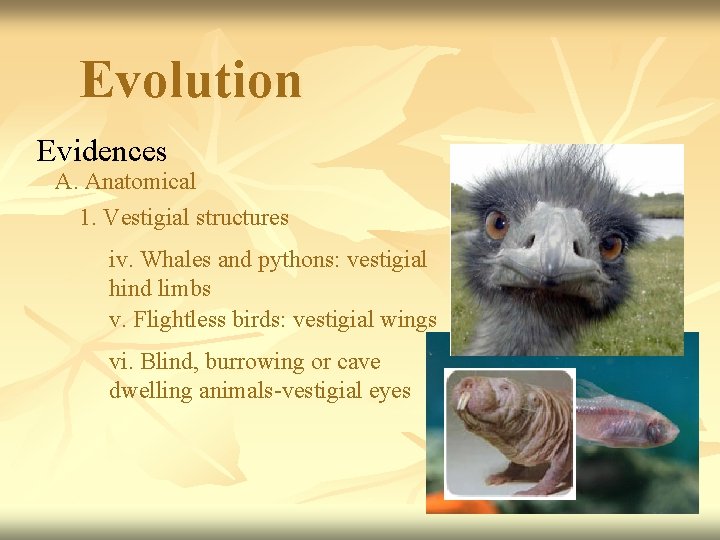
Evolution Evidences A. Anatomical 1. Vestigial structures iv. Whales and pythons: vestigial hind limbs v. Flightless birds: vestigial wings vi. Blind, burrowing or cave dwelling animals-vestigial eyes
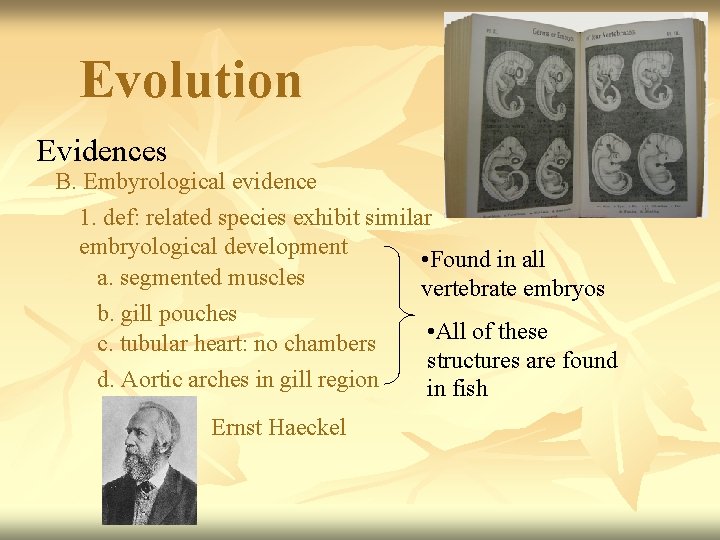
Evolution Evidences B. Embyrological evidence 1. def: related species exhibit similar embryological development • Found in all a. segmented muscles vertebrate embryos b. gill pouches • All of these c. tubular heart: no chambers structures are found d. Aortic arches in gill region in fish Ernst Haeckel
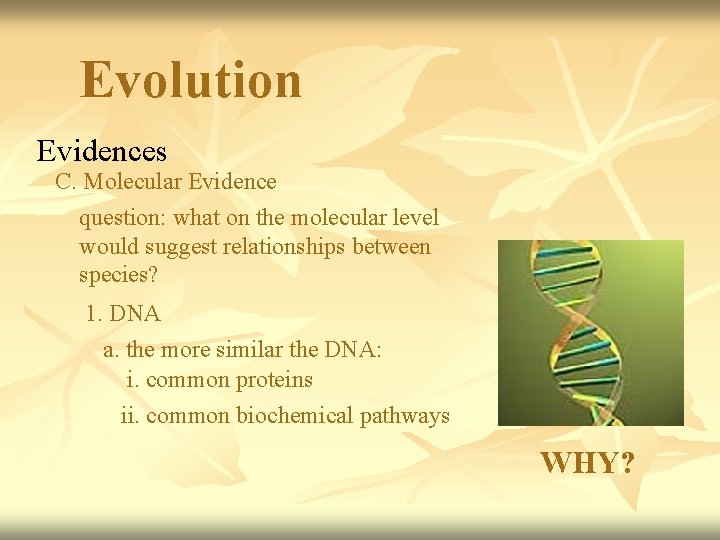
Evolution Evidences C. Molecular Evidence question: what on the molecular level would suggest relationships between species? 1. DNA a. the more similar the DNA: i. common proteins ii. common biochemical pathways WHY?
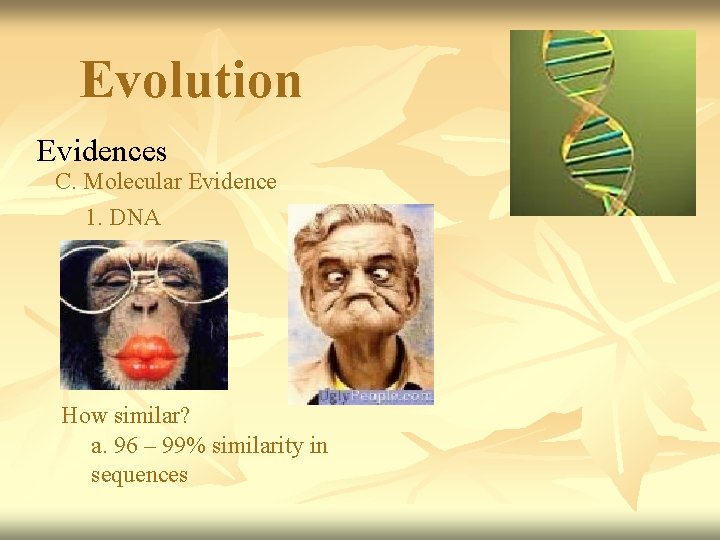
Evolution Evidences C. Molecular Evidence 1. DNA How similar? a. 96 – 99% similarity in sequences
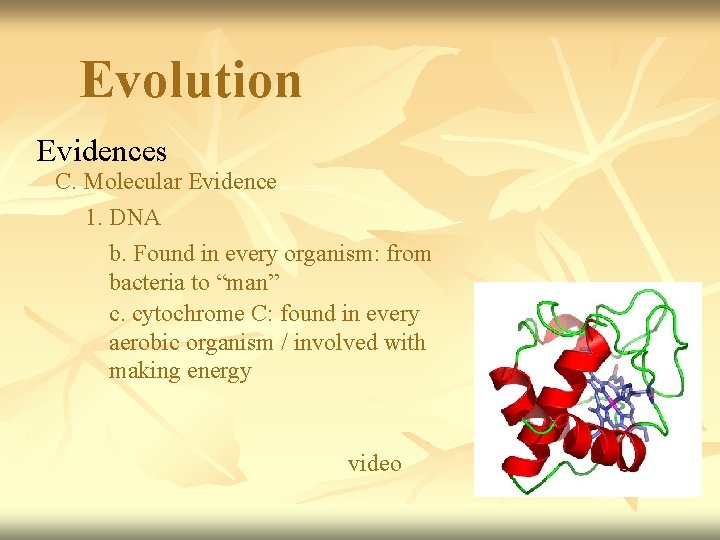
Evolution Evidences C. Molecular Evidence 1. DNA b. Found in every organism: from bacteria to “man” c. cytochrome C: found in every aerobic organism / involved with making energy video
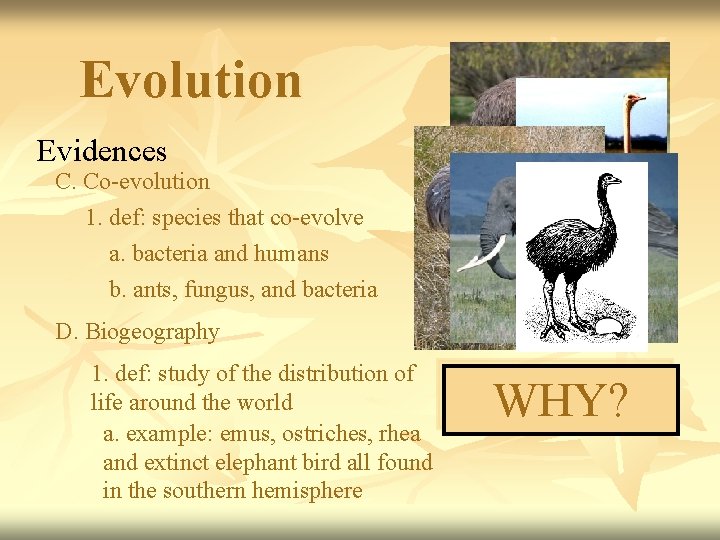
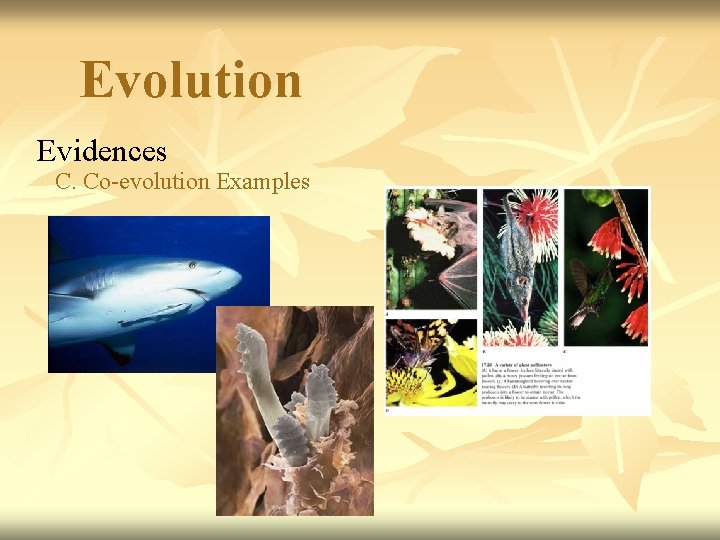
Evolution Evidences C. Co-evolution 1. def: species that co-evolve a. bacteria and humans b. ants, fungus, and bacteria D. Biogeography 1. def: study of the distribution of life around the world a. example: emus, ostriches, rhea and extinct elephant bird all found in the southern hemisphere WHY?
Evolution Evidences C. Co-evolution Examples
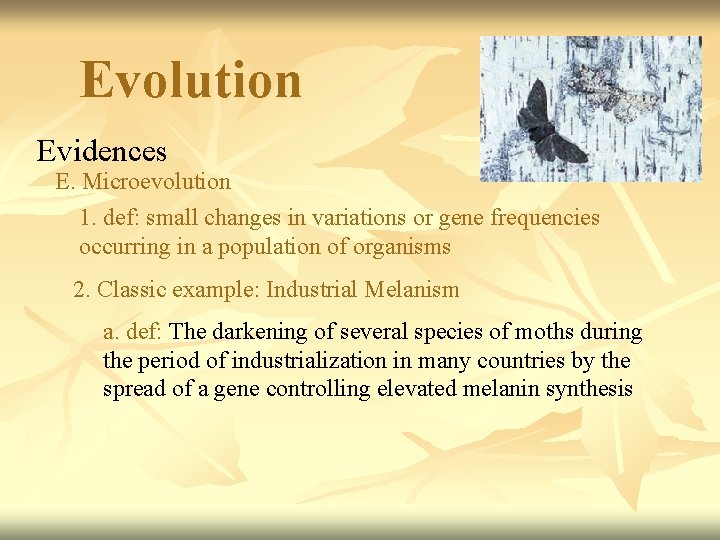
Evolution Evidences E. Microevolution 1. def: small changes in variations or gene frequencies occurring in a population of organisms 2. Classic example: Industrial Melanism a. def: The darkening of several species of moths during the period of industrialization in many countries by the spread of a gene controlling elevated melanin synthesis
Evolution Evidences 2. Classic example: Industrial Melanism a. The selective pressure came from predators (insect eating birds). The moth’s color provides camouflage. b. Moths rest during the daytime on trees. c. In rural areas where the air is clean the trees are covered in lichen. d. The peppered variety is better camouflaged when it rests on these trees. The melanic form is easily seen. e. In industrial areas air is polluted and the lichens die. f. The tree trunks may also be covered in soot giving a black background. g. This favors the melanic form giving them a selective advantage.
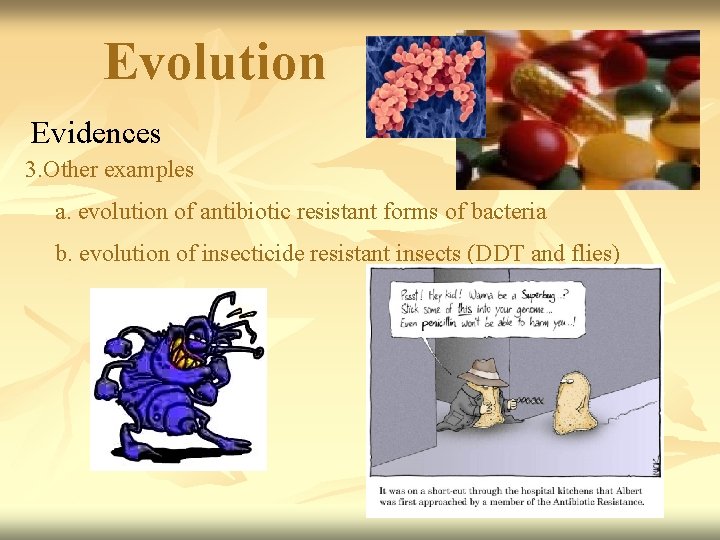
Evolution Evidences 3. Other examples a. evolution of antibiotic resistant forms of bacteria b. evolution of insecticide resistant insects (DDT and flies)
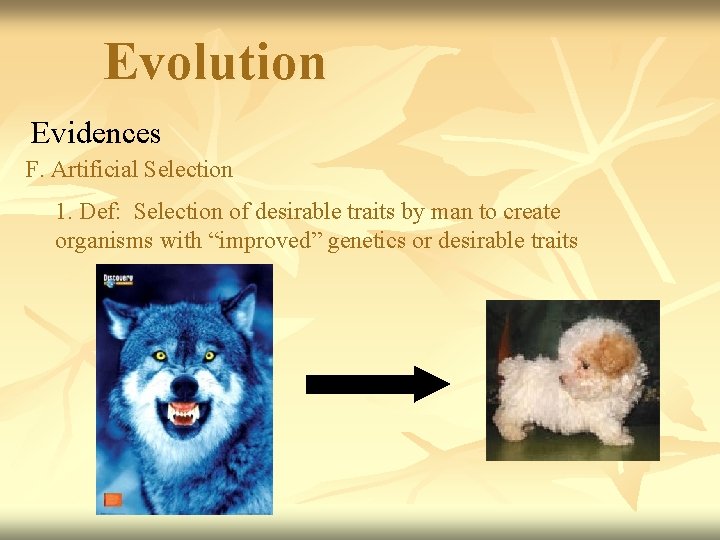
Evolution Evidences F. Artificial Selection 1. Def: Selection of desirable traits by man to create organisms with “improved” genetics or desirable traits
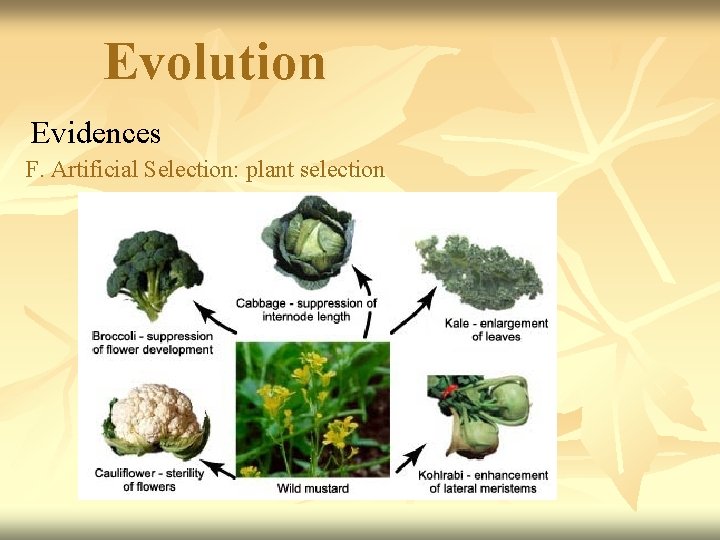
Evolution Evidences F. Artificial Selection: plant selection
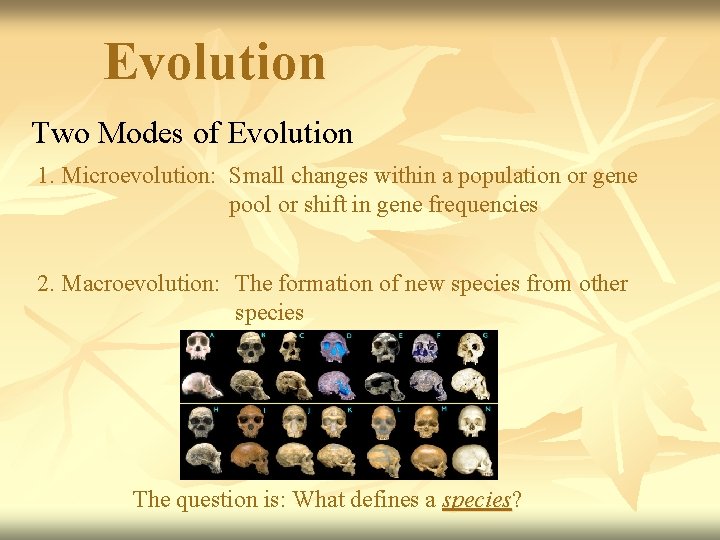
Evolution Two Modes of Evolution 1. Microevolution: Small changes within a population or gene pool or shift in gene frequencies 2. Macroevolution: The formation of new species from other species The question is: What defines a species? species
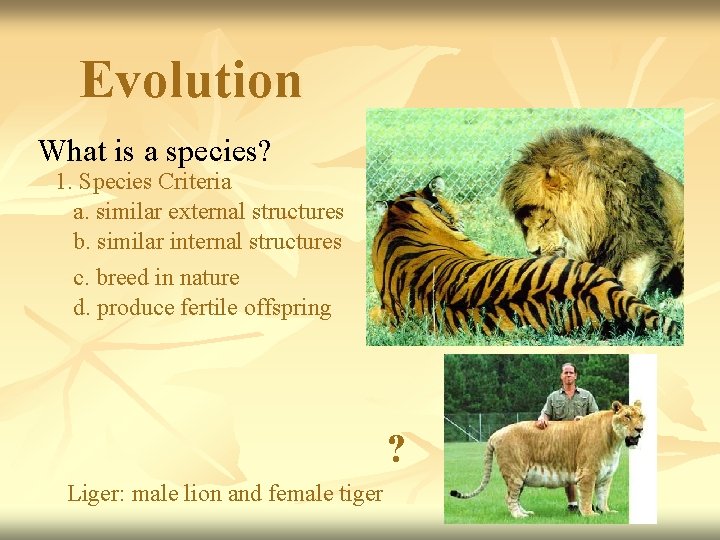
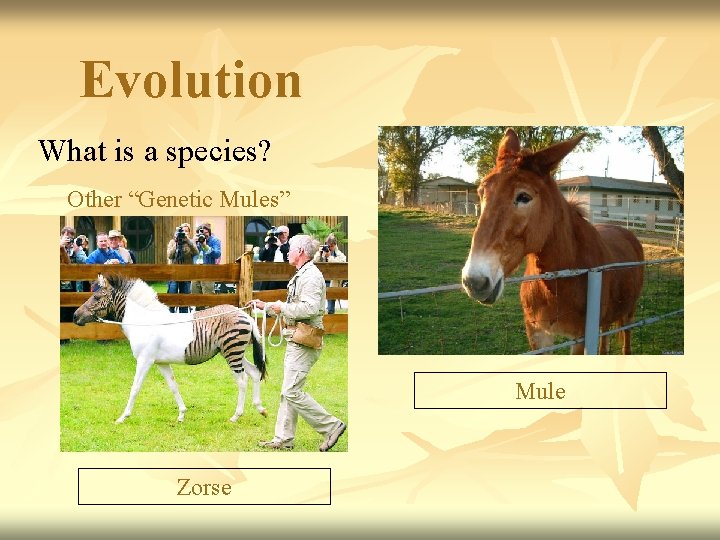
Evolution What is a species? 1. Species Criteria a. similar external structures b. similar internal structures c. breed in nature d. produce fertile offspring ? Liger: male lion and female tiger
Evolution What is a species? Other “Genetic Mules” Mule Zorse
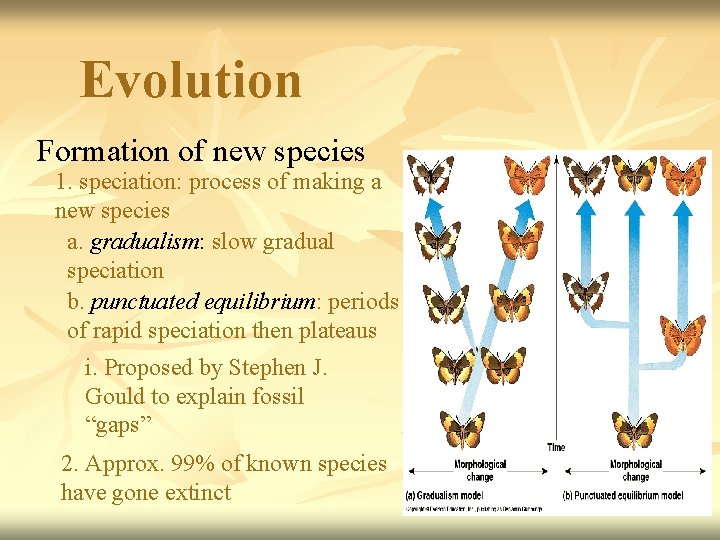
Evolution Formation of new species 1. speciation: process of making a new species a. gradualism: slow gradual speciation b. punctuated equilibrium: periods of rapid speciation then plateaus i. Proposed by Stephen J. Gould to explain fossil “gaps” 2. Approx. 99% of known species have gone extinct
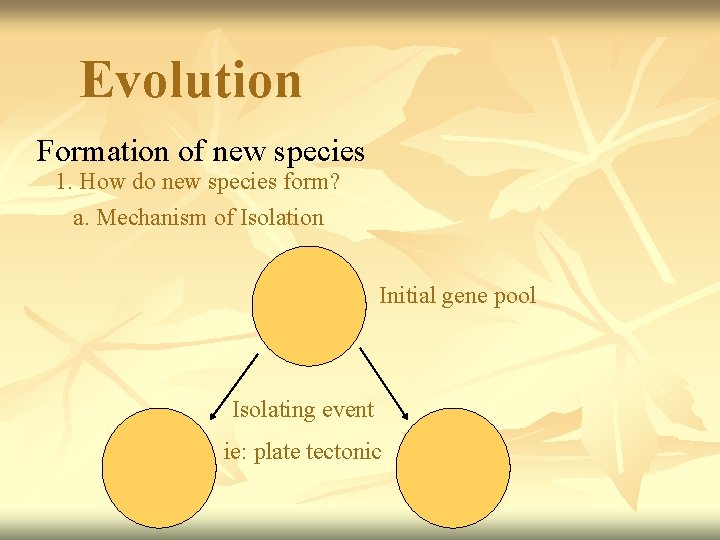
Evolution Formation of new species 1. How do new species form? a. Mechanism of Isolation Initial gene pool Isolating event ie: plate tectonic
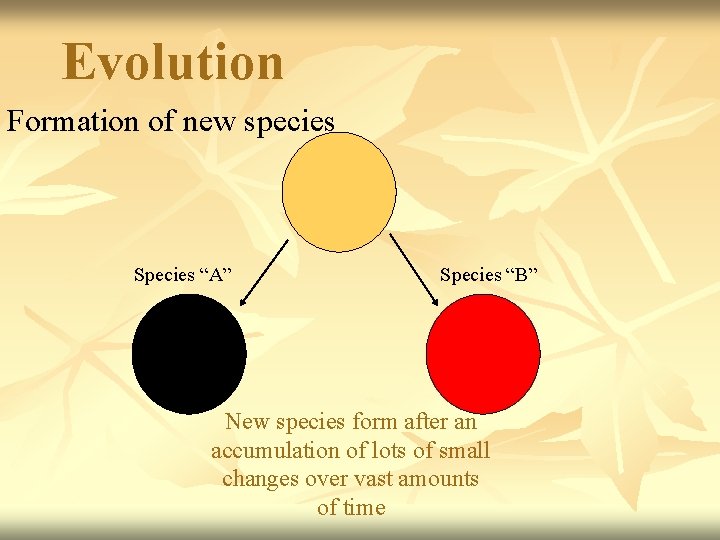
Evolution Formation of new species Species “A” Species “B” New species form after an accumulation of lots of small changes over vast amounts of time
Evolution C. The Controversy 1. Scopes Trial a. Dayton, Tennessee-1925 b. “Monkey Trial” i. State of Tennessee vs John Scopes ii. Scopes was accused of violating the Butler Act which prohibited the teaching of Evolution iii. Defense Attorney: Clarence Darrow iv. Prosecuting Attorney: William Jennings Bryant v. ACLU: recruited Scopes and paid legal fees
Evolution C. The Controversy 1. Scopes Trial b. “Monkey Trial” vi. Guilty or Not Guilty? vii. Guilty and fined $100 c. Susan Epperson (1967 -68) i. Issue made it to the United States Supreme Court overturning laws against laws banning the teaching of Evolution