
Evolution Darwins Ideas HardyWeinberg Evidence for Evolution Speciation
Evolution Darwin’s Ideas Hardy-Weinberg Evidence for Evolution Speciation and Mechanisms Origins AP Biology
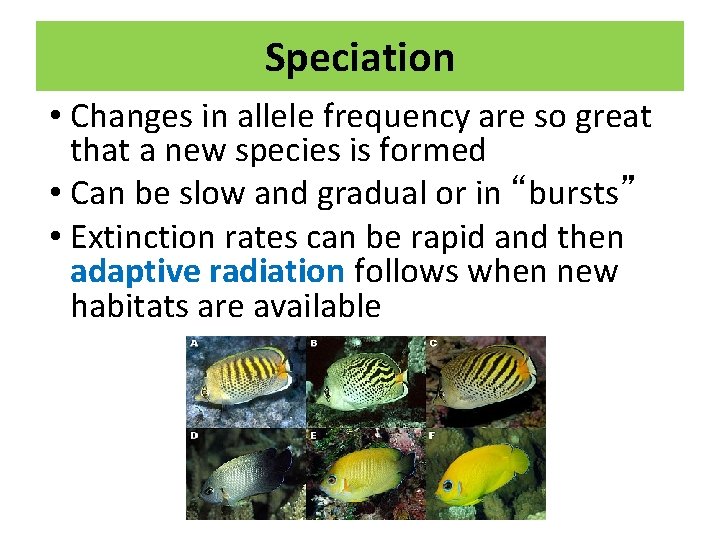
Speciation • Changes in allele frequency are so great that a new species is formed • Can be slow and gradual or in “bursts” • Extinction rates can be rapid and then adaptive radiation follows when new habitats are available
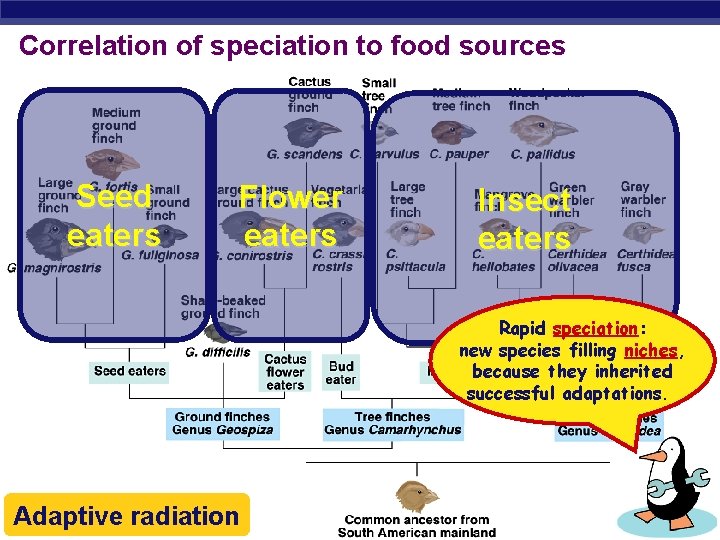
Correlation of speciation to food sources Seed eaters Flower eaters Insect eaters Rapid speciation: new species filling niches, because they inherited successful adaptations. AP Biology radiation Adaptive

So…what is a species? • Population whose members can interbreed & produce viable, fertile offspring • Reproductively compatible Distinct species: songs & behaviors are different enough to prevent interbreeding Eastern Meadowlark Western Meadowlark
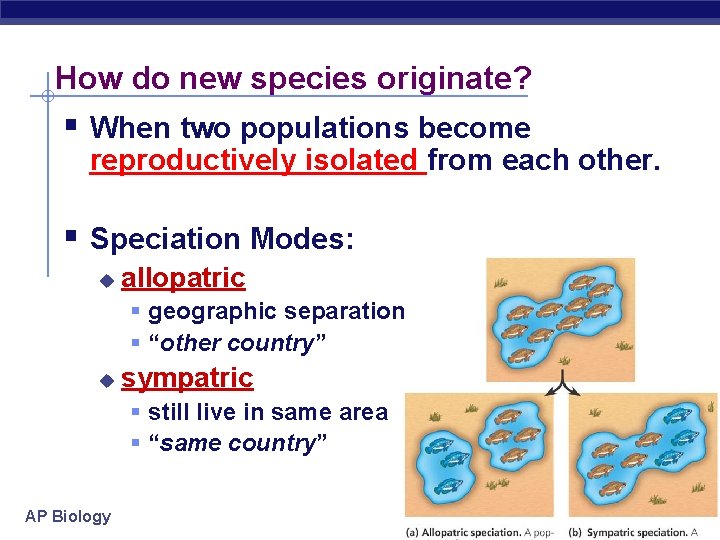
How do new species originate? § When two populations become reproductively isolated from each other. § Speciation Modes: u allopatric § geographic separation § “other country” u sympatric § still live in same area § “same country” AP Biology
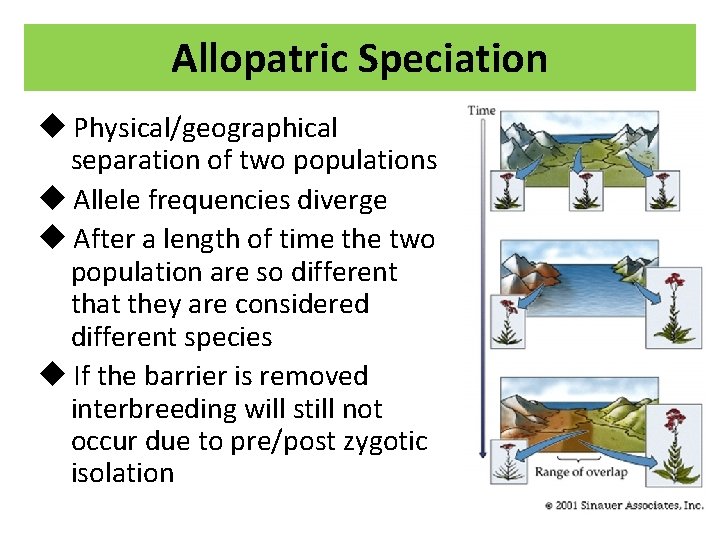
Allopatric Speciation u Physical/geographical separation of two populations u Allele frequencies diverge u After a length of time the two population are so different that they are considered different species u If the barrier is removed interbreeding will still not occur due to pre/post zygotic isolation
Sympatric Speciation Formation of a new species without geographic isolation. Causes: – Pre-zygotic barriers exist to mating – Polyploidy (only organism with an even number of chromosomes are fertile…speciation occurs quickly) – Hybridization: two different forms of a species mate in common ground (hybrid zone) and produce offspring with greater genetic diversity than the parents…. eventually the hybrid diverges from both sets of parents
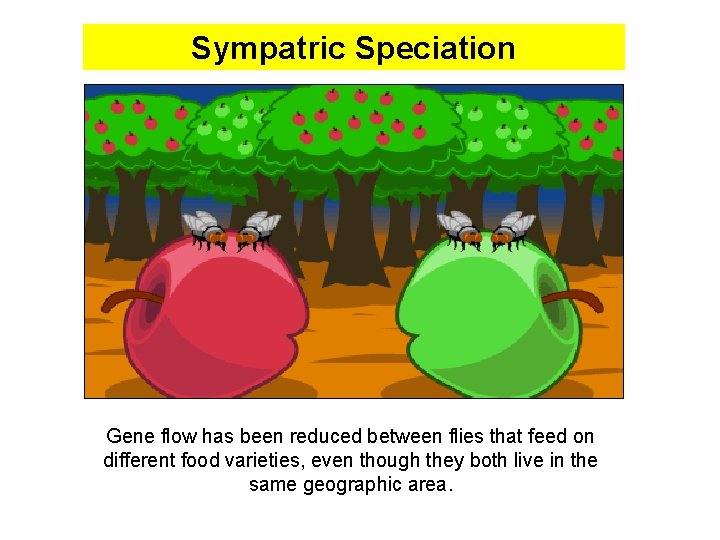
Sympatric Speciation Gene flow has been reduced between flies that feed on different food varieties, even though they both live in the same geographic area.
Pre-zygotic Isolation Sperm never gets a chance to meet egg • Geographic isolation: barriers prevent mating • Ecological isolation: different habitats in same region • Temporal isolation: different populations are fertile at different times • Behavior Isolation: they don’t recognize each other or the mating rituals • Mechanical isolation: morphological differences • Gamete Isolation: Sperm and egg do not recognize each other
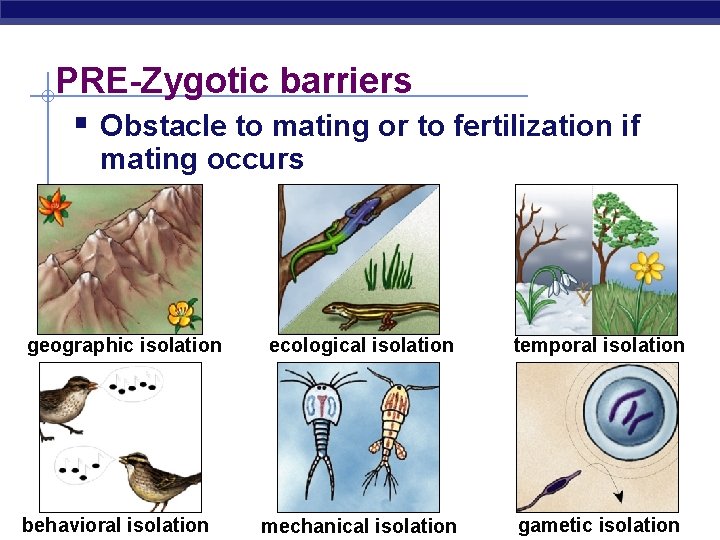
PRE-Zygotic barriers § Obstacle to mating or to fertilization if mating occurs geographic isolation AP Biology behavioral isolation ecological isolation temporal isolation mechanical isolation gametic isolation
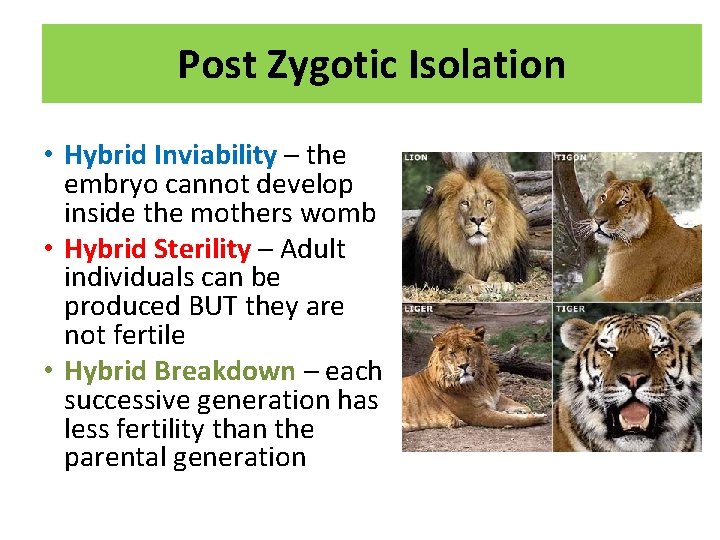
Post Zygotic Isolation • Hybrid Inviability – the embryo cannot develop inside the mothers womb • Hybrid Sterility – Adult individuals can be produced BUT they are not fertile • Hybrid Breakdown – each successive generation has less fertility than the parental generation
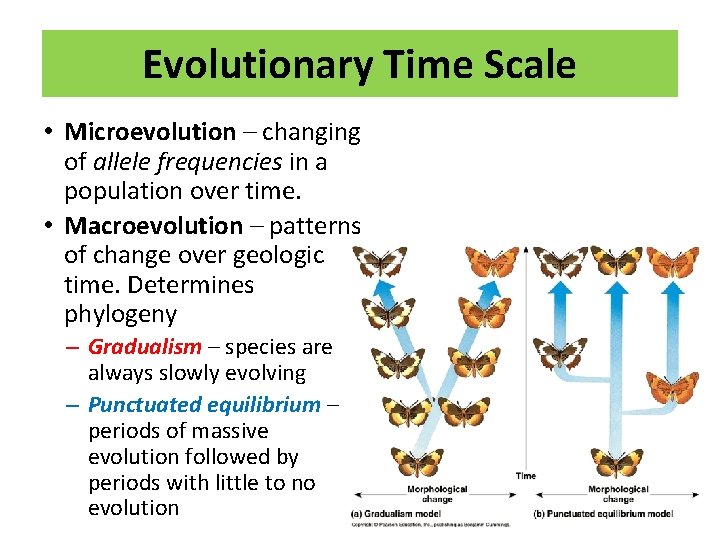
Evolutionary Time Scale • Microevolution – changing of allele frequencies in a population over time. • Macroevolution – patterns of change over geologic time. Determines phylogeny – Gradualism – species are always slowly evolving – Punctuated equilibrium – periods of massive evolution followed by periods with little to no evolution
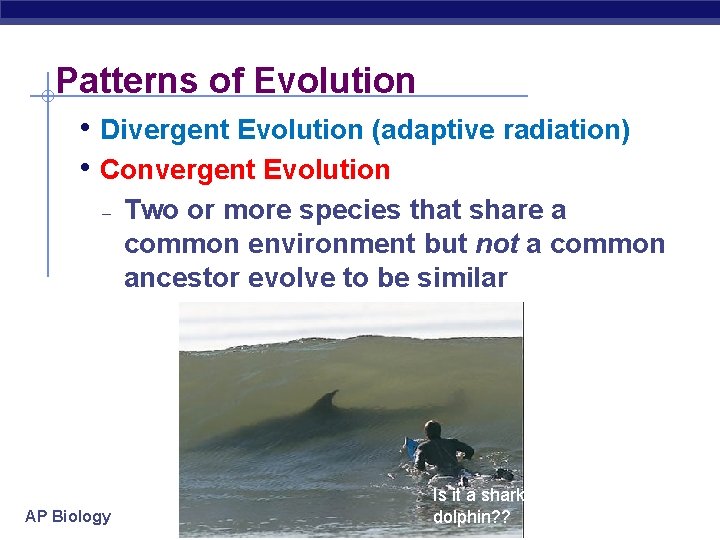
Patterns of Evolution • Divergent Evolution (adaptive radiation) • Convergent Evolution – AP Biology Two or more species that share a common environment but not a common ancestor evolve to be similar Is it a shark or a dolphin? ?
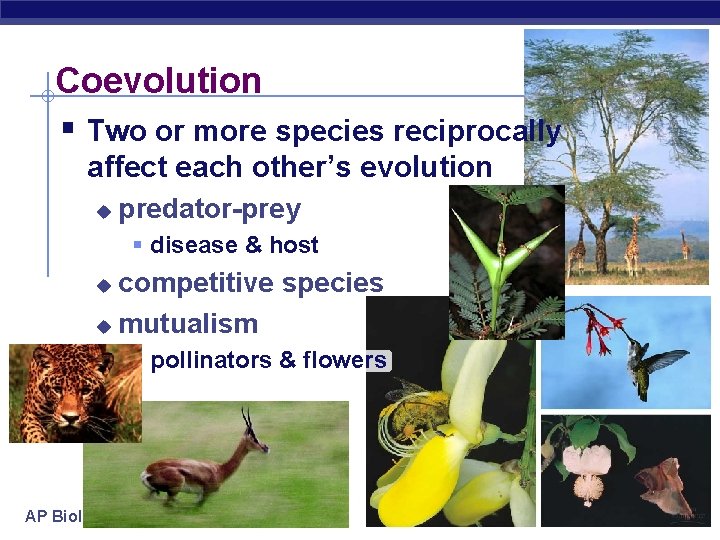
Coevolution § Two or more species reciprocally affect each other’s evolution u predator-prey § disease & host competitive species u mutualism u § pollinators & flowers AP Biology
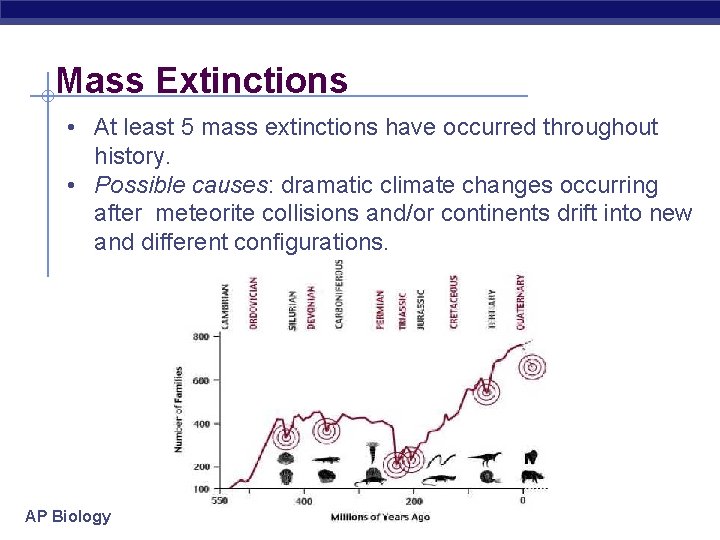
Mass Extinctions • At least 5 mass extinctions have occurred throughout history. • Possible causes: dramatic climate changes occurring after meteorite collisions and/or continents drift into new and different configurations. AP Biology
- Slides: 15