
Evolution classification and identification of bacteria Early life
Evolution, classification, and identification of bacteria Early life on Earth Naming microorganisms Classifying and identifying microorganisms Major groups of bacteria
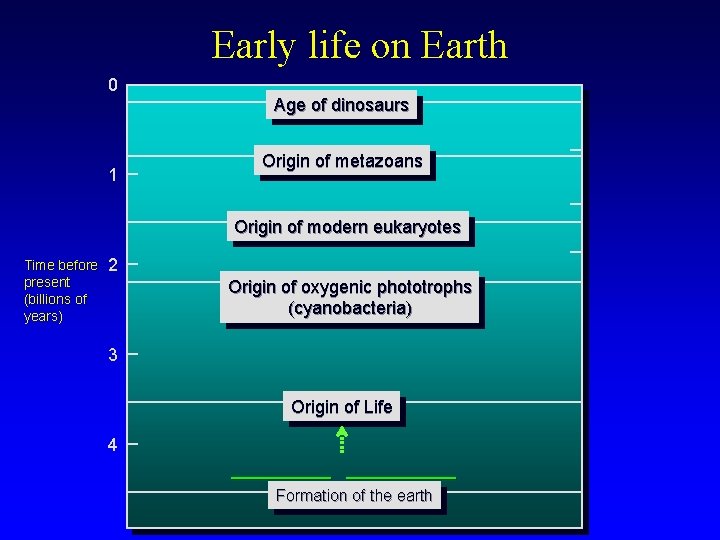
Early life on Earth 0 1 Age of dinosaurs Origin of metazoans Origin of modern eukaryotes Time before present (billions of years) 2 Origin of oxygenic phototrophs (cyanobacteria) 3 Origin of Life 4 ___________ Formation of the earth
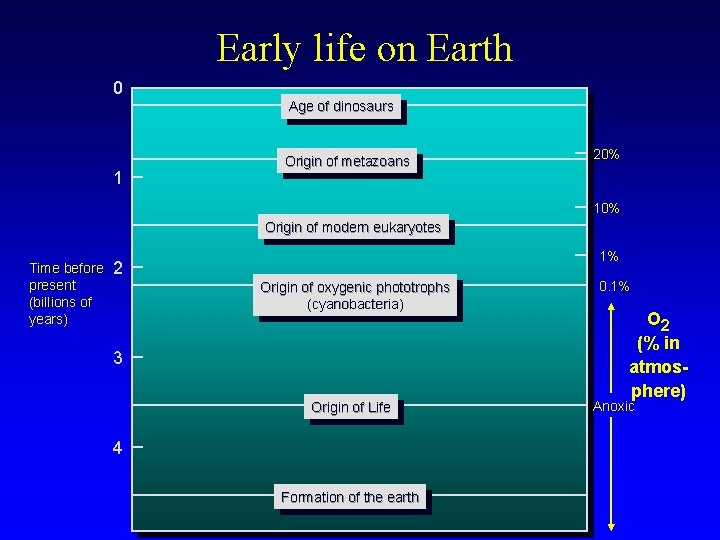
Early life on Earth 0 Age of dinosaurs 1 Origin of metazoans 20% 10% Origin of modern eukaryotes Time before present (billions of years) 1% 2 Origin of oxygenic phototrophs (cyanobacteria) 3 Origin of Life 4 Formation of the earth 0. 1% O 2 (% in atmosphere) Anoxic

_______ Planktothrix Lyngbya http: //www-cyanosite. bio. purdue. edu/
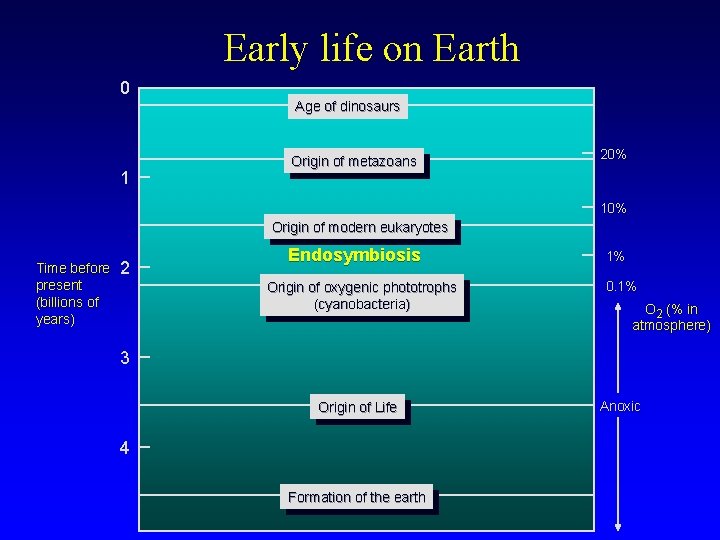
Early life on Earth 0 Age of dinosaurs 1 Origin of metazoans 20% 10% Origin of modern eukaryotes Time before present (billions of years) 2 Endosymbiosis Origin of oxygenic phototrophs (cyanobacteria) 1% 0. 1% O 2 (% in atmosphere) 3 Origin of Life 4 Formation of the earth Anoxic
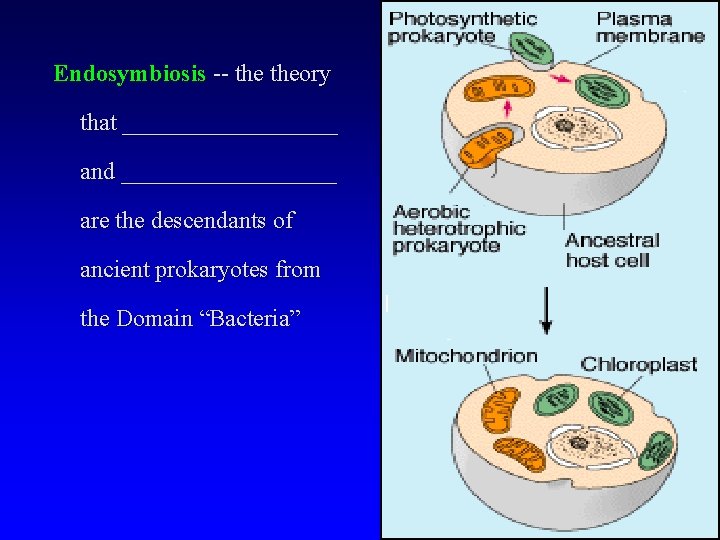
Endosymbiosis -- theory that _________ and _________ are the descendants of ancient prokaryotes from the Domain “Bacteria”
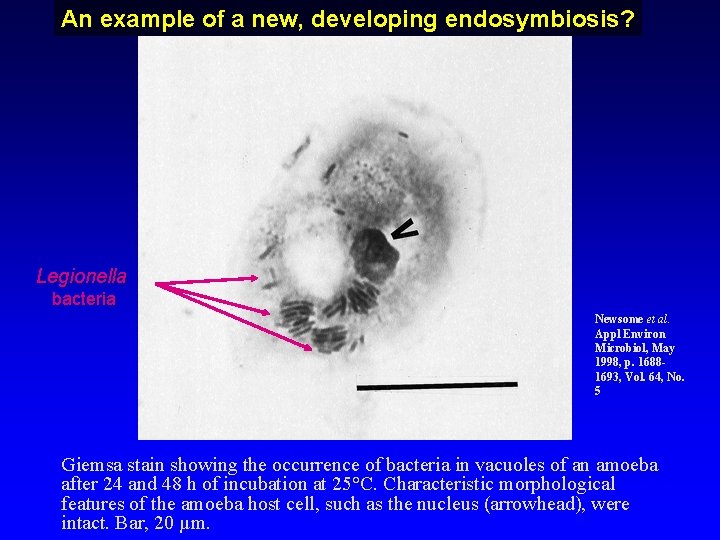
An example of a new, developing endosymbiosis? Legionella bacteria Newsome et al. Appl Environ Microbiol, May 1998, p. 16881693, Vol. 64, No. 5 Giemsa stain showing the occurrence of bacteria in vacuoles of an amoeba after 24 and 48 h of incubation at 25°C. Characteristic morphological features of the amoeba host cell, such as the nucleus (arrowhead), were intact. Bar, 20 µm.
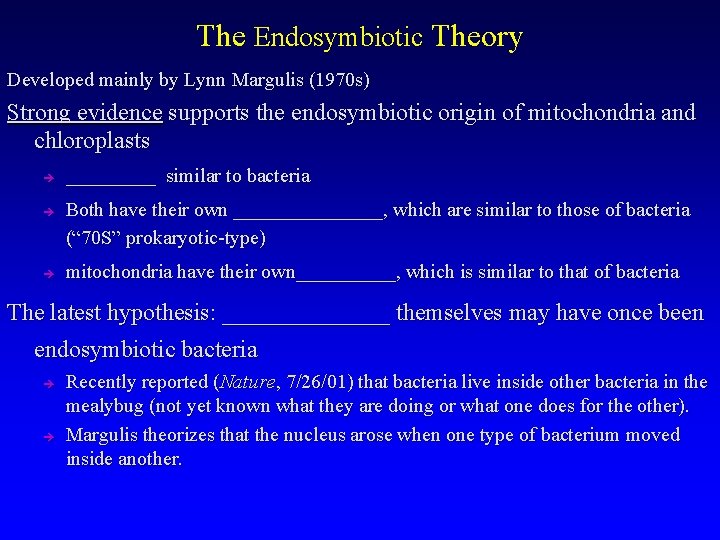
The Endosymbiotic Theory Developed mainly by Lynn Margulis (1970 s) Strong evidence supports the endosymbiotic origin of mitochondria and chloroplasts _____ similar to bacteria Both have their own ________, which are similar to those of bacteria (“ 70 S” prokaryotic-type) mitochondria have their own_____, which is similar to that of bacteria The latest hypothesis: _______ themselves may have once been endosymbiotic bacteria Recently reported (Nature, 7/26/01) that bacteria live inside other bacteria in the mealybug (not yet known what they are doing or what one does for the other). Margulis theorizes that the nucleus arose when one type of bacterium moved inside another.

Naming microorganisms Binomial nomenclature Homo sapiens Escherichia coli Pseudomonas aeruginosa
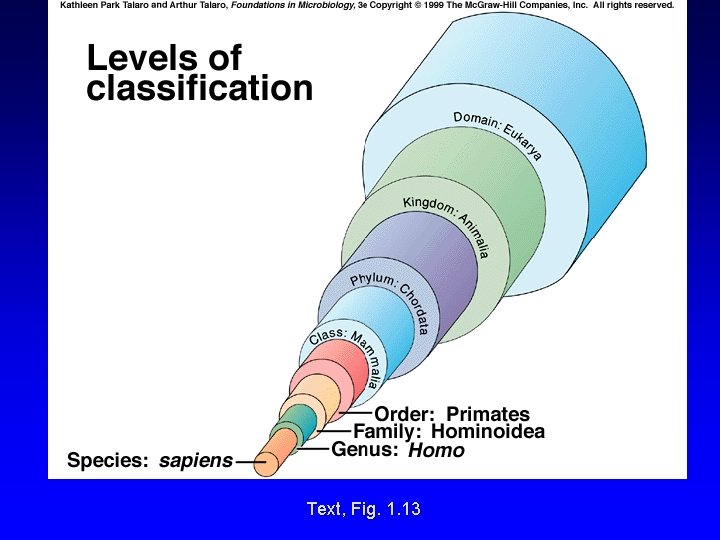
Text, Fig. 1. 13
Classifying and identifying microorganisms Taxonomy - study of the classification, organization, and naming of living things. One’s goal may be simply to organize and group by ___________ with no concern for natural evolutionary relationships. Often referred to (confusingly) as simply “taxonomy”. Alternatively, one’s goal may be to reconstruct natural, ________ relationships between organisms. Known as “phylogeny”.
Classification can be based on phenotypic or genotypic characteristics or both • phenotype -- observable ___________ of an organism: shape, size, metabolism, etc. • genotype -- the precise ________ constitution of an organism

Classification based on phenotype
Classification based on phenotype Examples of phenotypic characteristics used to differentiate prokaryotes: Gram reaction, fermentation of sugar, cell morphology, growth on a specific compound, etc. These characteristics tell us little or nothing about the true evolutionary relationships between organisms. They are used simply (and very usefully) as a method for __________ them. Identification methods are usually based on such characteristics

Example of methods to be used for identification of a newly isolated enteric bacterium Isolation of bacterium from intestine of warmblooded animal Obtain pure culture Gram Reaction Gram negative rod-shaped facultative aerobe ferments lactose, producing acids and gas Gram positive not rod-shaped obligately anaerobic does not ferment lactose confirmatory tests: (positive: indole, methyl red, etc. (negative: citrate, Voges-Proskaur, H 2 S Escherichia coli
Phylogenetics Phylogeny -- The ordering of species into higher ______ (classification categories) and the construction of evolutionary trees, all based on evolutionary (natural) relationships. http: //heg -school. awl. com/bc/companion/cmr 2 e/activity/AL/AL 09 b. htm http: //heg-school. awl. com/bc/companion/cmr 2 e/activity/AL/AL 09 b.
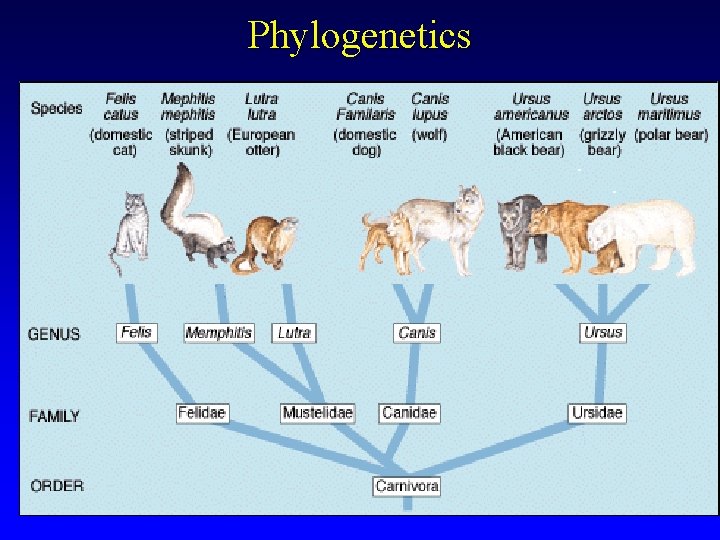
Phylogenetics
How similar are two organisms at the level of the DNA? 2 primary methods for determining this. In both, the same DNA__________ from two organisms is compared: DNA hybridization i. e. Put strand from one organism together with strand from another. How well do they ________ to each other? DNA sequencing
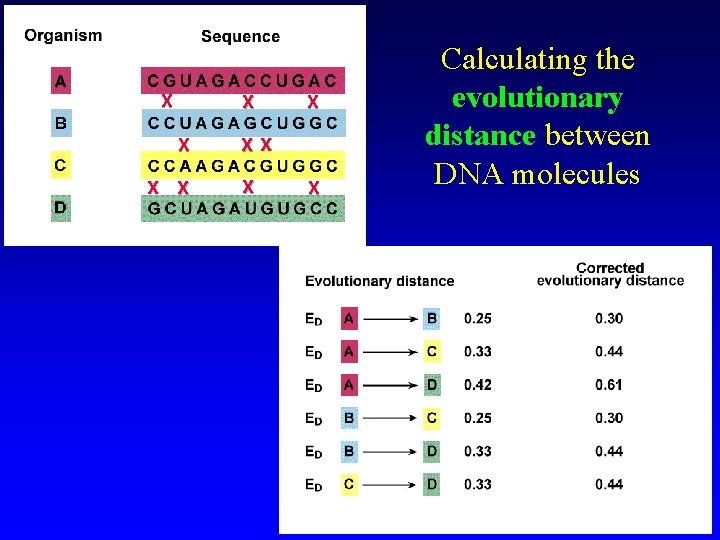
X X X X X Calculating the evolutionary distance between DNA molecules
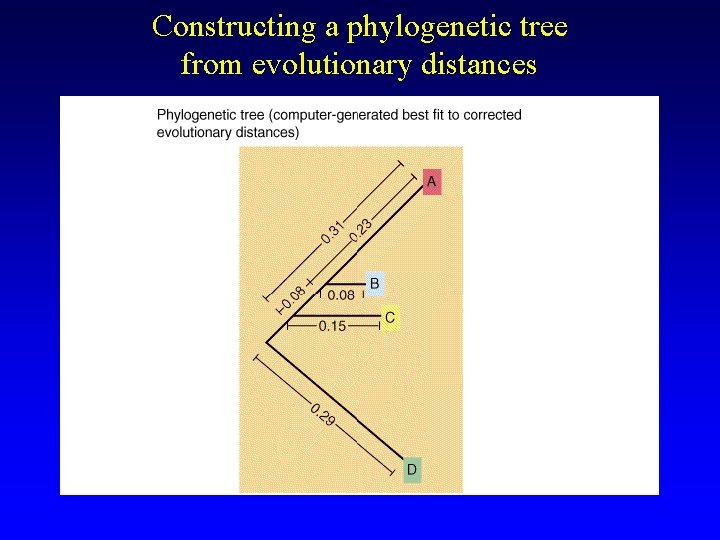
Constructing a phylogenetic tree from evolutionary distances
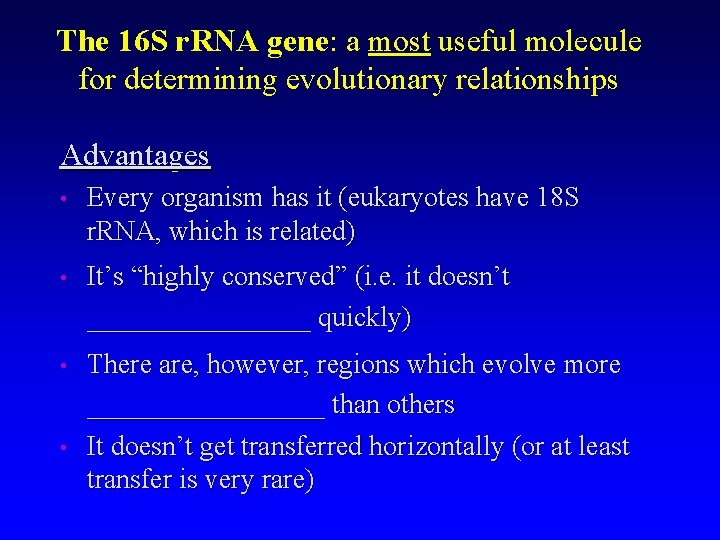
The 16 S r. RNA gene: a most useful molecule for determining evolutionary relationships Advantages • Every organism has it (eukaryotes have 18 S r. RNA, which is related) • It’s “highly conserved” (i. e. it doesn’t ________ quickly) • There are, however, regions which evolve more _________ than others It doesn’t get transferred horizontally (or at least transfer is very rare) •
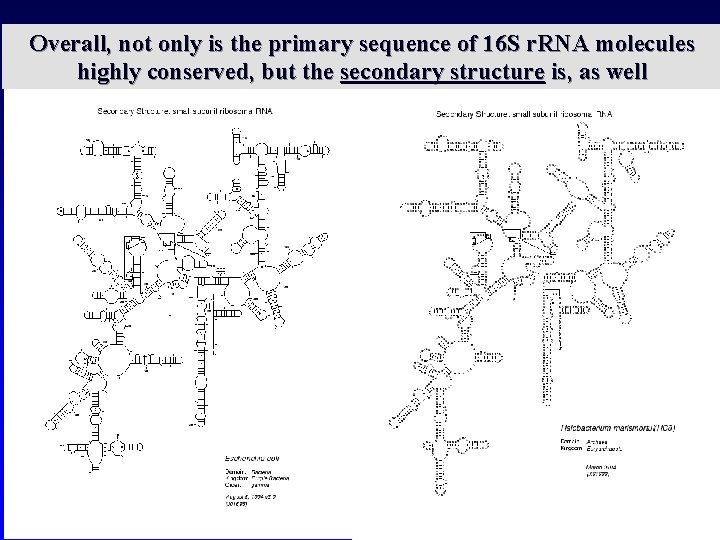
Overall, not only is the primary sequence of 16 S r. RNA molecules highly conserved, but the secondary structure is, as well
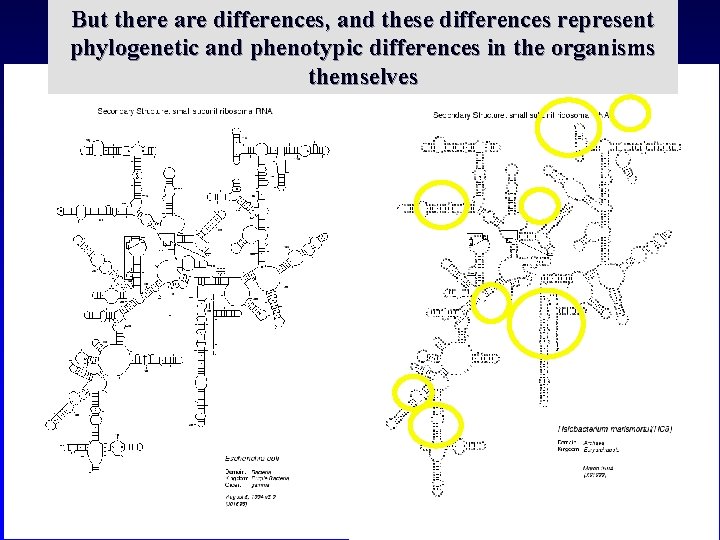
But there are differences, and these differences represent phylogenetic and phenotypic differences in the organisms themselves

Evolutionary relationships of representative bacteria based on the sequences of their 16 S r. RNA genes

Evolutionary relationships of representative Eukaryotes based on the sequences of their 16 S r. RNA genes

GJ 10 WDH 1
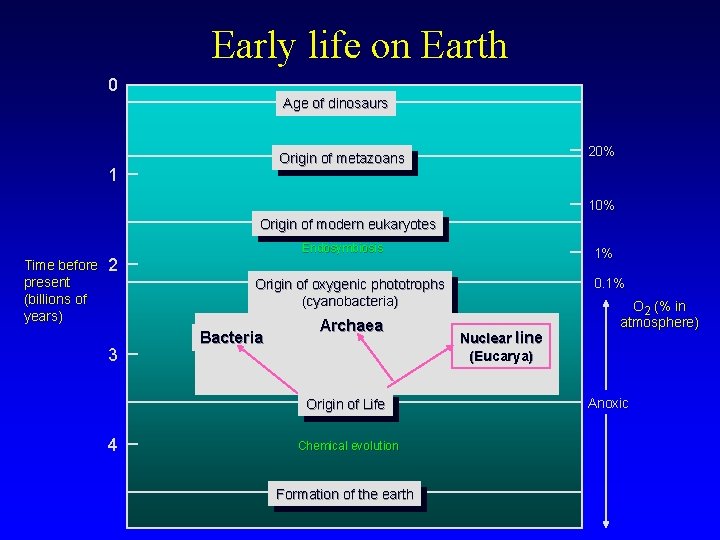
Early life on Earth 0 Age of dinosaurs 20% Origin of metazoans 1 10% Origin of modern eukaryotes Time before present (billions of years) Endosymbiosis 2 1% 0. 1% Origin of oxygenic phototrophs (cyanobacteria) 3 Bacteria Archaea ? Origin of Life 4 Chemical evolution Formation of the earth Nuclear line (Eucarya) O 2 (% in atmosphere) Anoxic
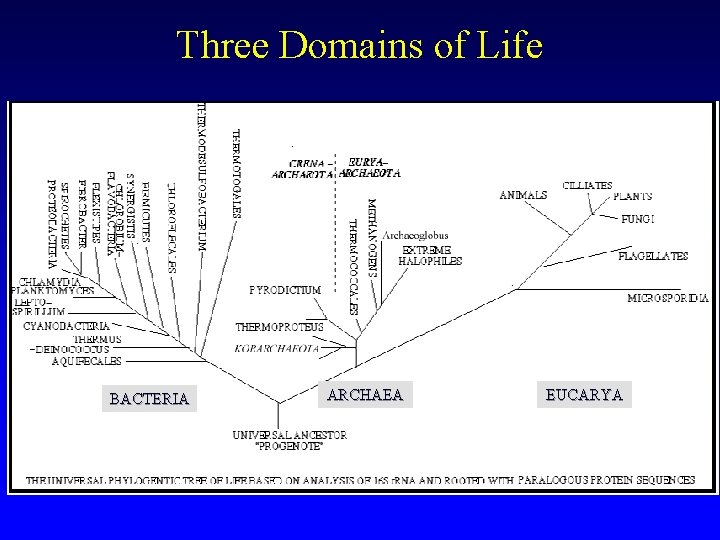
Three Domains of Life BACTERIA ARCHAEA EUCARYA
The Archaea January 24, 2001 New Group of Microorganisms Discovered in the Open Sea Archaea, one of three separate domains of life on our planet, were undiscovered until 1970. Since then, they had been found mostly in extreme environments such as hightemperature volcanic vents on the ocean floor, continental hot springs and fumeroles, and highly salty or acidic waters. Now, scientists funded by the National Science Foundation (NSF) have found unexpected, astounding numbers of archaea living in Earth's largest biome, the open sea. The researchers--David Karl and Markus Karner of the University of Hawaii, and Edward De. Long of the Monterey Bay Aquarium Research Institute--have published a paper in this week's issue of the journal Nature on their discovery: "Archaeal dominance in the mesopelagic zone of the Pacific Ocean. " The concentration of archaea in their study leads the scientists to conclude that archaea are "a large percentage of the biomass of the open ocean, " says Karl. "These organisms could make up 50 percent of life in the open sea. " The research is the first to note their numerical abundance.
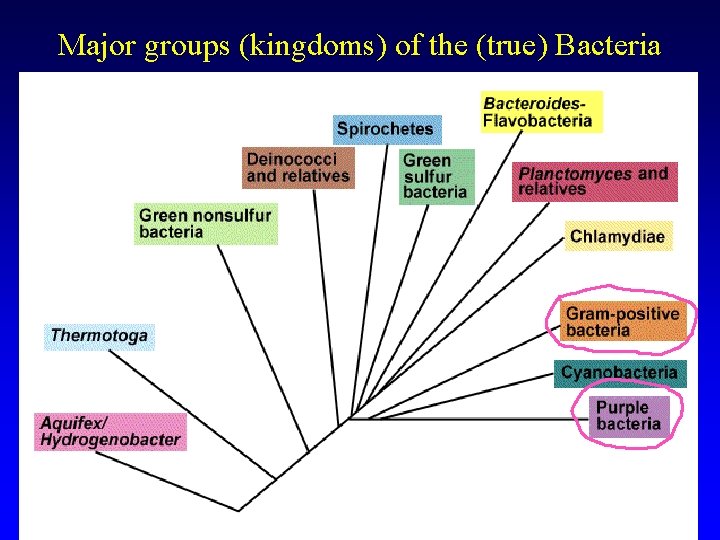
Major groups (kingdoms) of the (true) Bacteria
- Slides: 30