
Evolution Chapter 13 A change over time 100the
- Slides: 115
Evolution Chapter 13 “A change over time”
# 100(the making of a theory) #98(darwin in the galapagos) n http: //video. nationalgeographic. com/video/o ceans-narrated-by-sylvia-earle/oceansgalapagos? source=relatedvideo n ? ? If time n http: //www. hulu. com/watch/403434#detail s=expand n
The Theory of Evolution literally means to change over time. n A theory is a well supported, testable explanation that observes observations from the natural world n
Questions that evolution attempts to answer. How do species adapt to changes in the environment? n How do new species develop? n
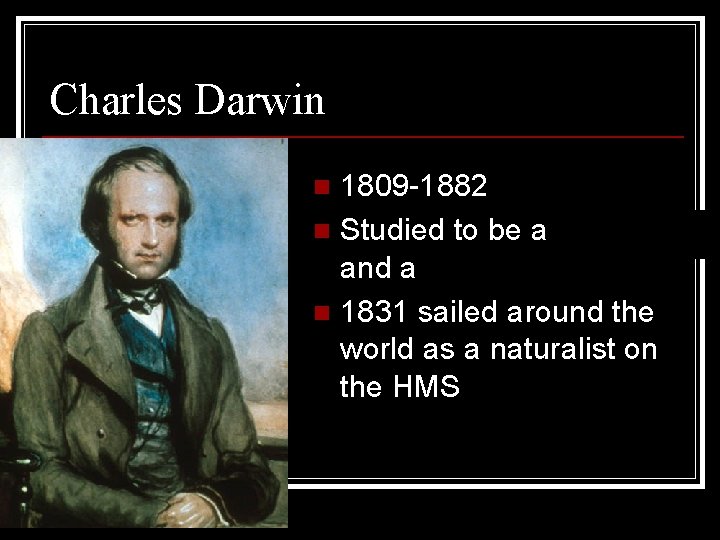
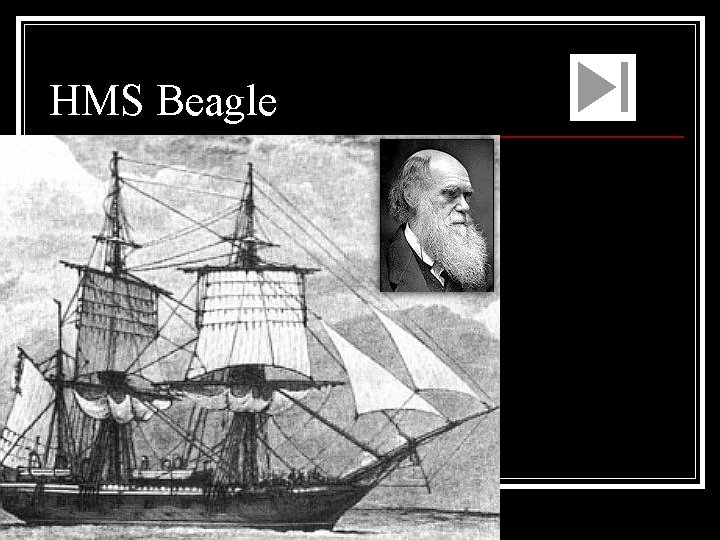
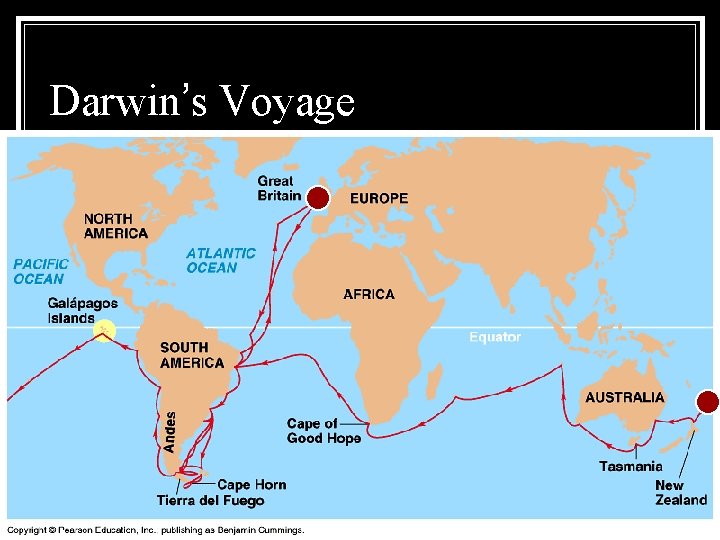
Charles Darwin 1809 -1882 n Studied to be a doctor and a minister n 1831 sailed around the world as a naturalist on the HMS Beagle n
HMS Beagle
Darwin’s Voyage
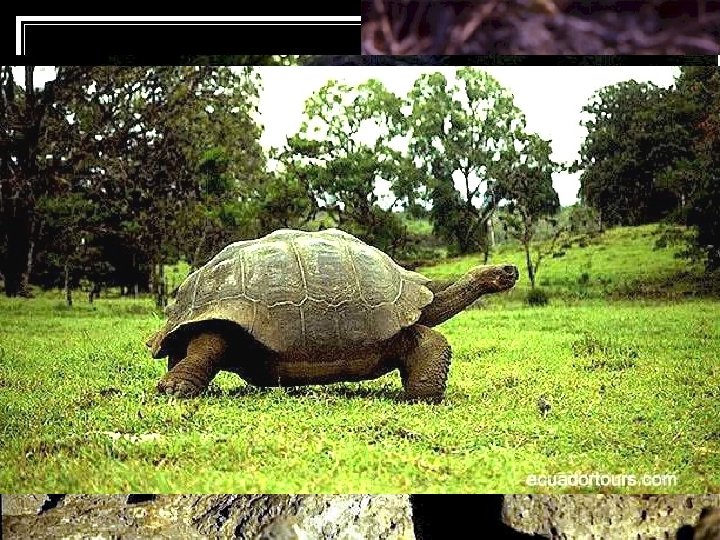
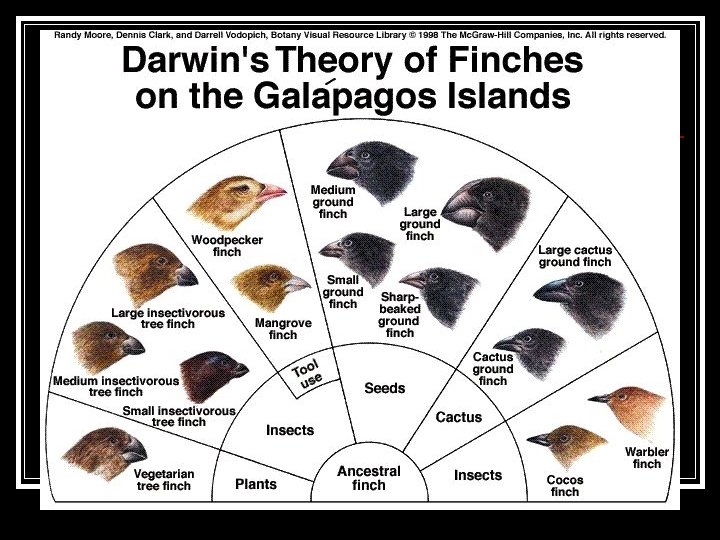
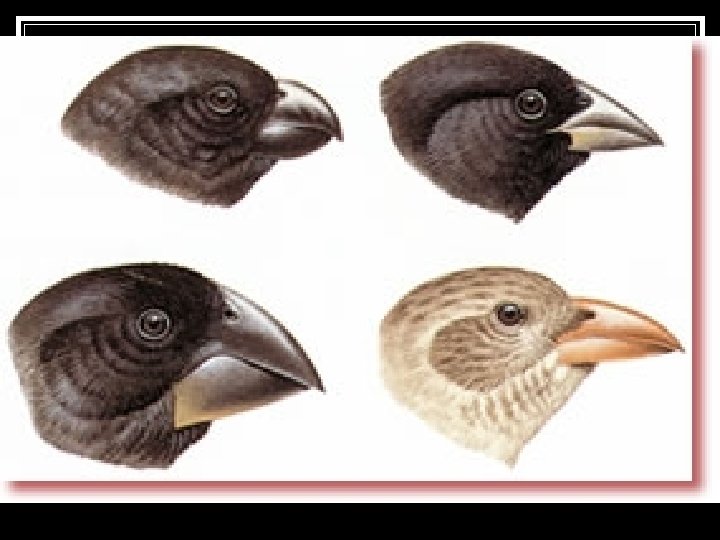
Galapagos Islands
Galapagos Islands
15 -2 Darwin’s Influences
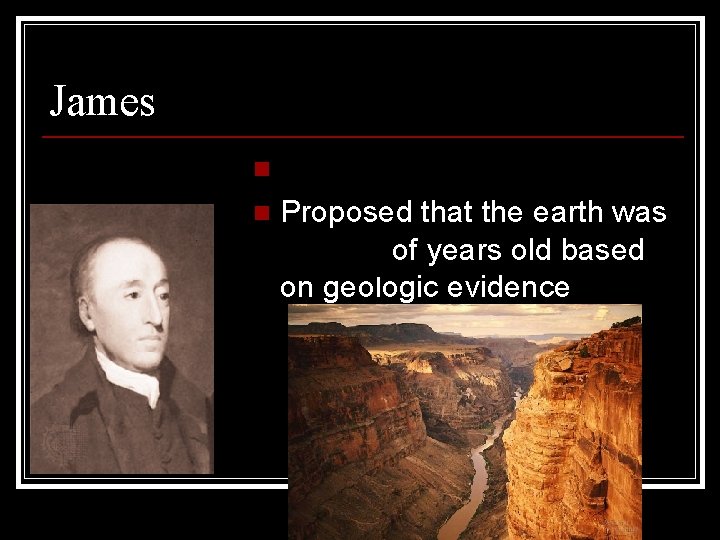
James Hutton Geologist n Proposed that the earth was millions of years old based on geologic evidence n
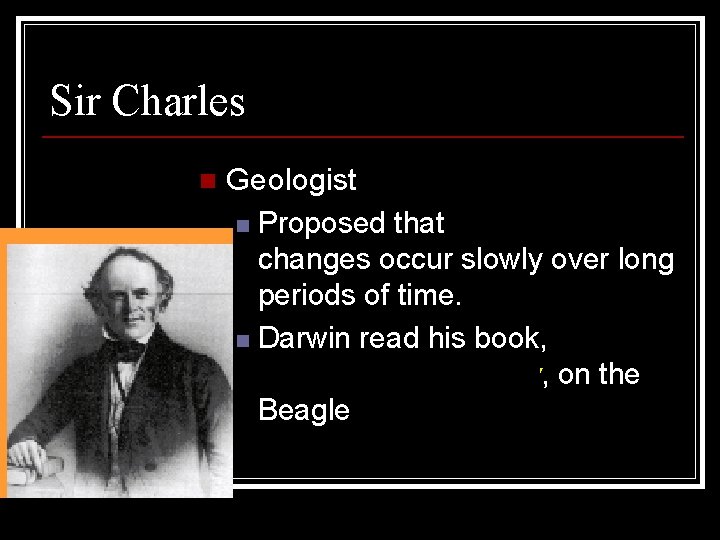
Sir Charles Lyell n Geologist n Proposed that geologic changes occur slowly over long periods of time. n Darwin read his book, Principles of Geology, on the Beagle
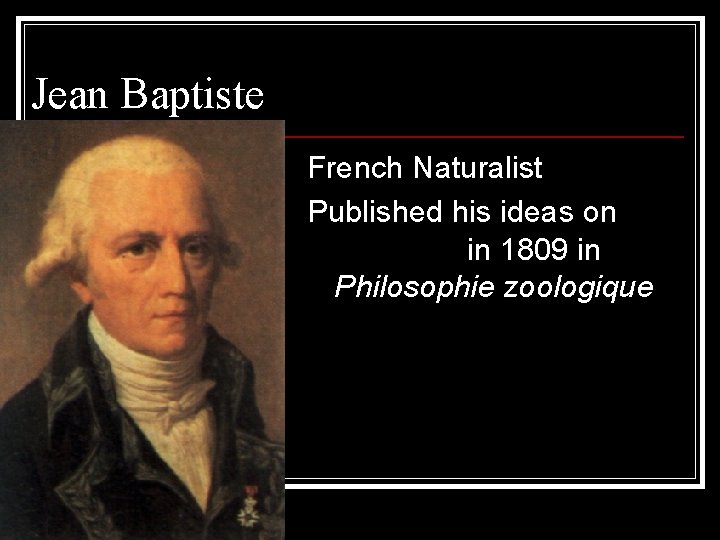
Jean Baptiste Lamarck French Naturalist Published his ideas on evolution in 1809 in Philosophie zoologique
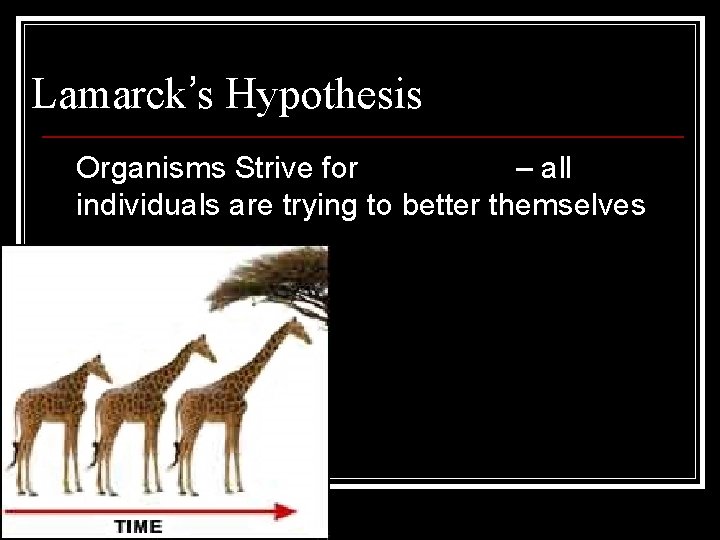
Lamarck’s Hypothesis Organisms Strive for Perfection – all individuals are trying to better themselves
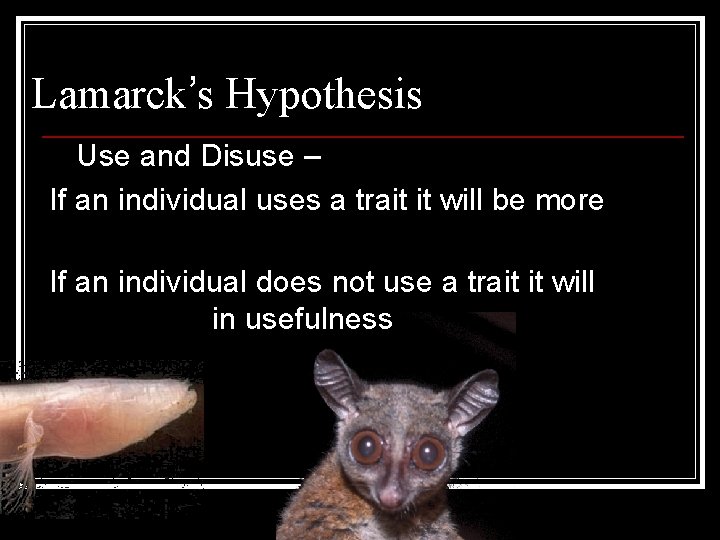
Lamarck’s Hypothesis Use and Disuse – If an individual uses a trait it will be more useful If an individual does not use a trait it will decrease in usefulness
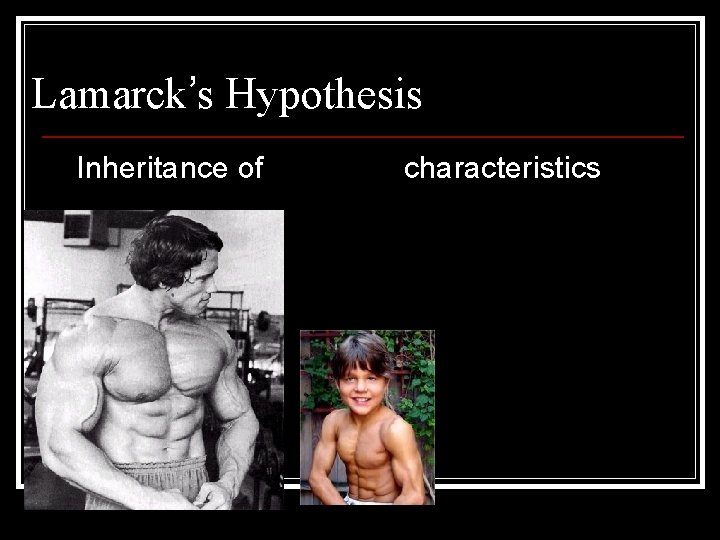
Lamarck’s Hypothesis Inheritance of Acquired characteristics
Analyzing Lamarck’s Hypothesis n There is no evidence to suggest that plants and animals are trying to improve themselves
Analyzing Lamarck’s Hypothesis n Use and disuse do not change all characteristics n n Stretching will not make you taller Reading will not make your eyesight better
Analyzing Lamarck’s Hypothesis n Acquired characteristics are not inherited n A mouse that loses its tail will still produce offspring with tails
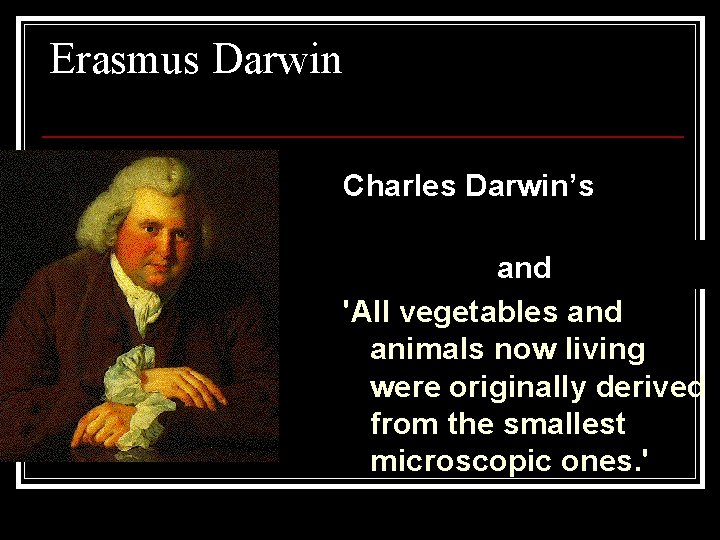
Erasmus Darwin Charles Darwin’s Grandfather Physician and Scientist 'All vegetables and animals now living were originally derived from the smallest microscopic ones. '
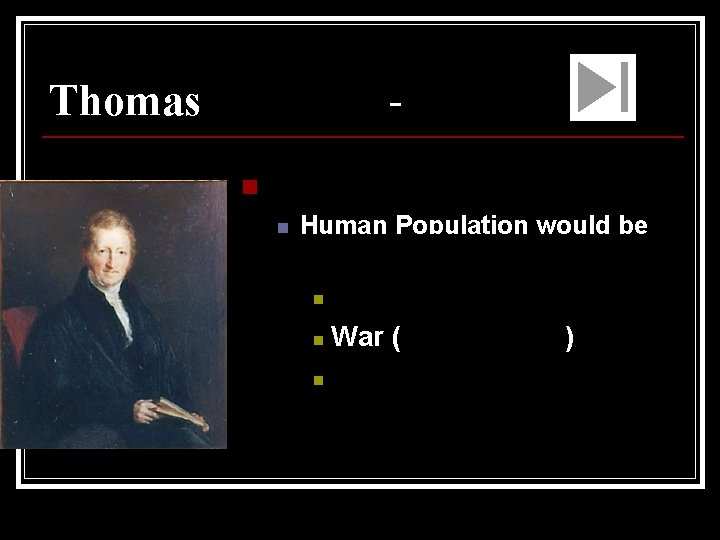
Thomas Malthus – n Economist n Human Population would be limited Starvation n War (Competition) n Disease n
15 -3 Darwin Presents His Case
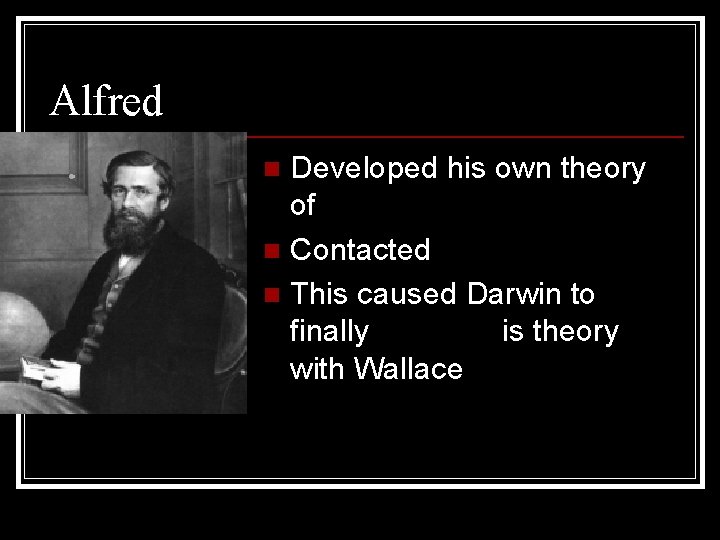
Alfred Wallace Developed his own theory of Natural Selection n Contacted Darwin n This caused Darwin to finally publish his theory with Wallace n
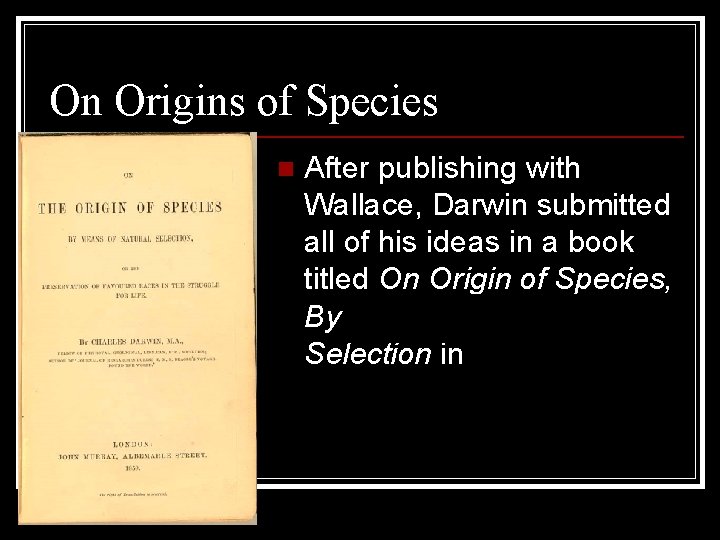
On Origins of Species n After publishing with Wallace, Darwin submitted all of his ideas in a book titled On Origin of Species, By Means of Natural Selection in 1858
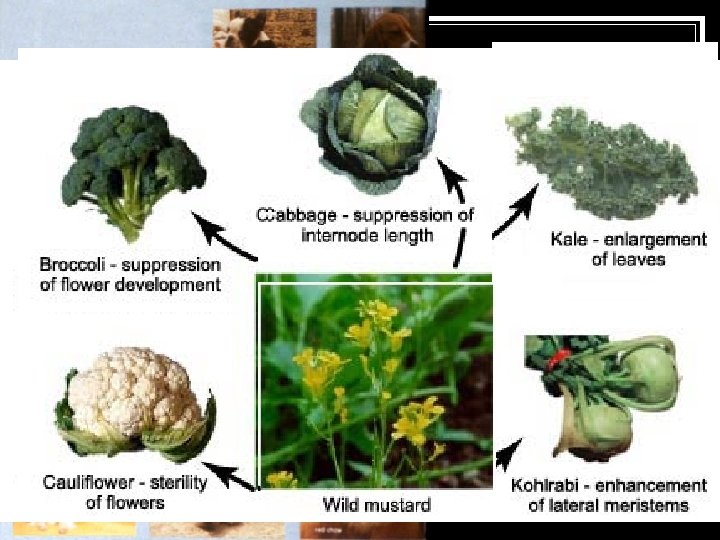
Artificial Selection n Darwin was influenced to believe change was possible because of the humans selecting for traits in plants and animals.
Darwin’s Theory n Evolution “Change” is driven by natural selection
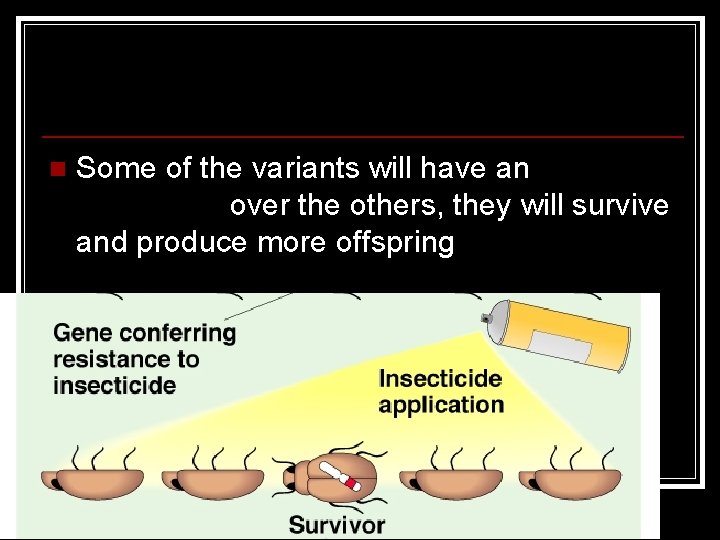
Summary of Darwin’s Theory Major components of natural selection 1. Variation 2. Competition for Resources 3. Survival (camo) 4. Fitness (resistance to pesticide) n
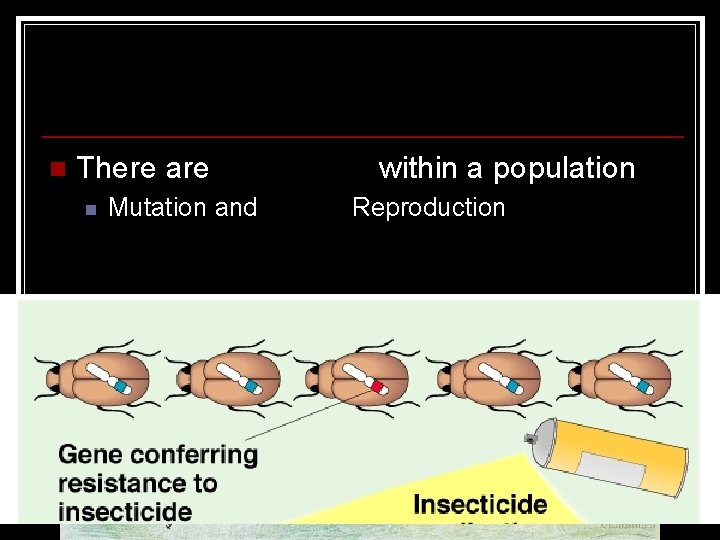
Variation n There are differences within a population n Mutation and Sexual Reproduction
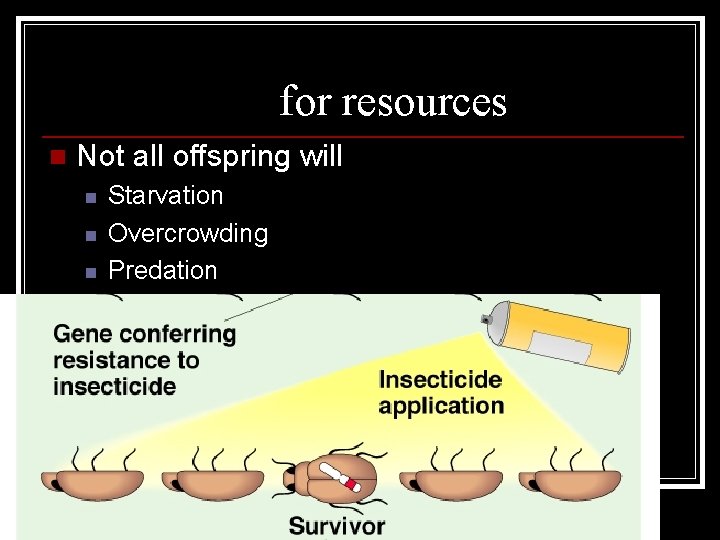
Competition for resources n Not all offspring will survive n n n Starvation Overcrowding Predation
Fitness n Some of the variants will have an advantage over the others, they will survive and produce more offspring
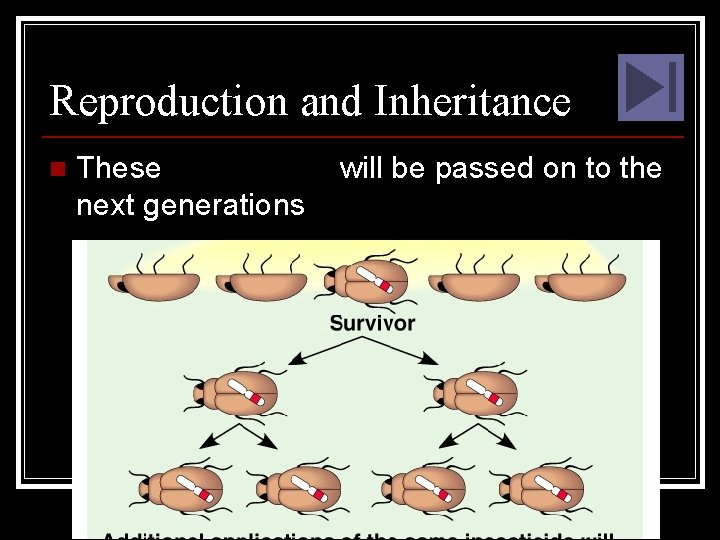
Reproduction and Inheritance n These advantages will be passed on to the next generations
Descent with Modification n Species alive today are descended with modification from ancestral species
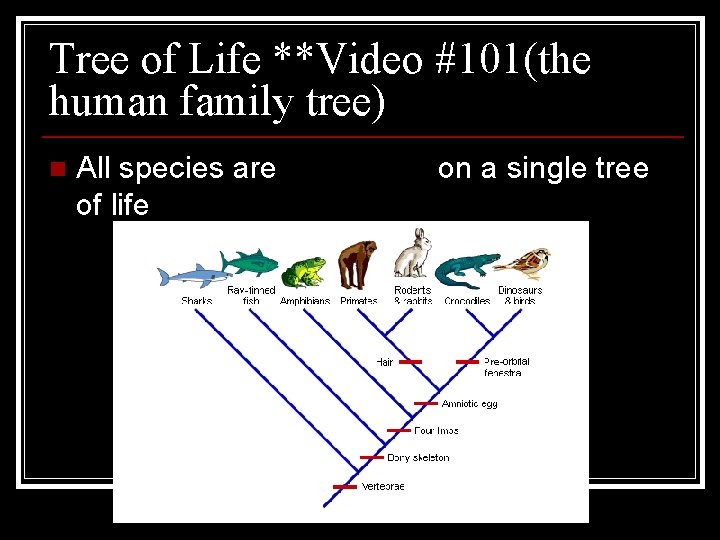
Tree of Life **Video #101(the human family tree) n All species are connected on a single tree of life
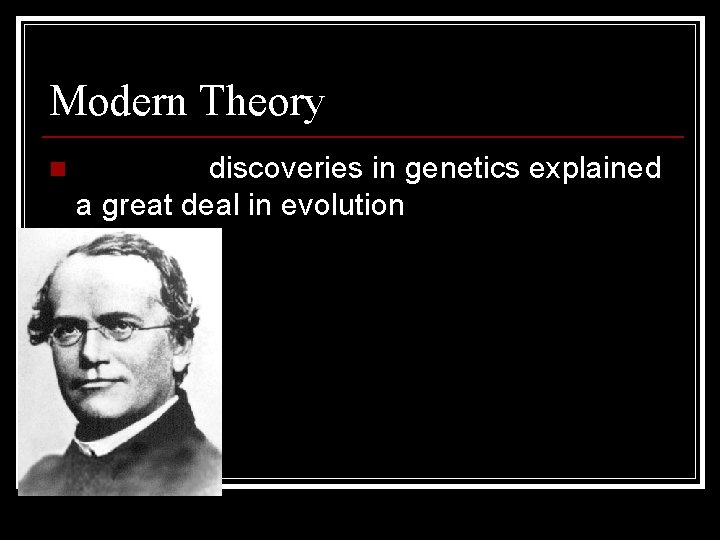
Modern Theory n Mendel’s discoveries in genetics explained a great deal in evolution
Evidence for Evolution Fossil Record n Anatomy n Development n Molecular Evidence n
Fossil Record Since most of the “ancestor” species are extinct, fossils are the only evidence that can be examined. n Intermediate “missing link” fossils are very informative n
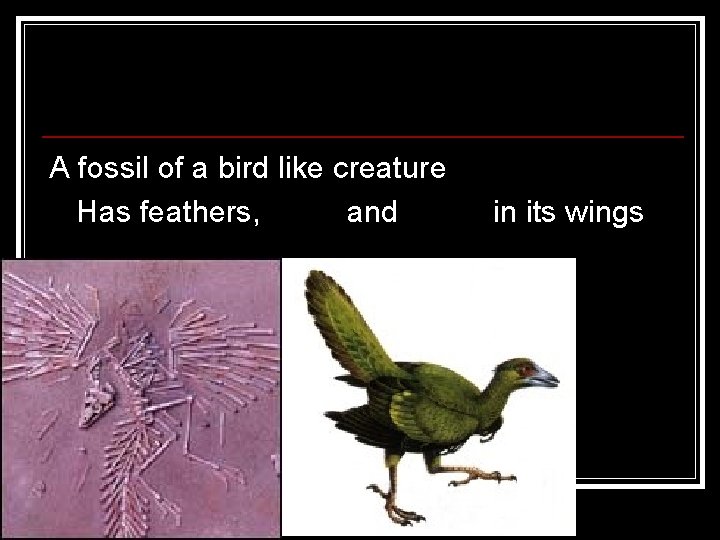
Archaeopterix A fossil of a bird like creature Has feathers, teeth and claws in its wings
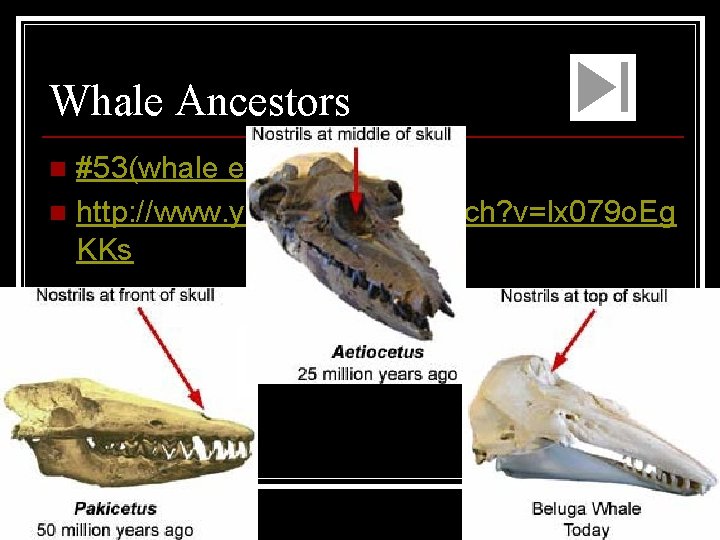
Whale Ancestors #53(whale evoulution) n http: //www. youtube. com/watch? v=lx 079 o. Eg KKs n
Anatomy Structures similarities in body structure indicates organisms are related
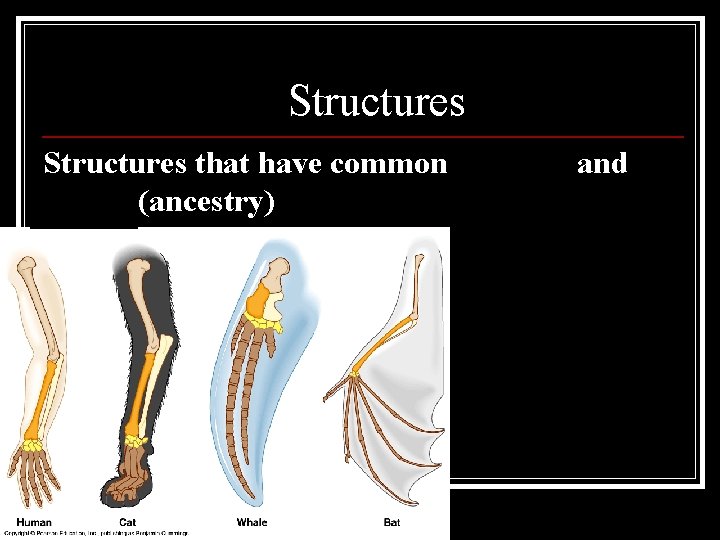
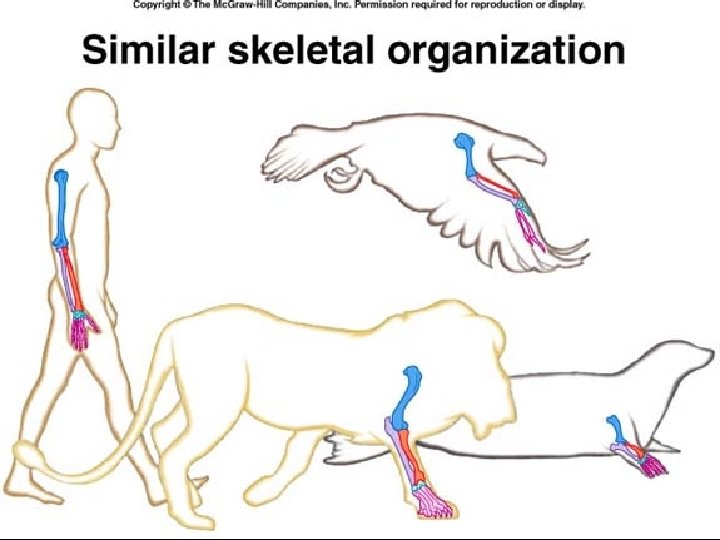
Homologous Structures that have common function and design (ancestry)
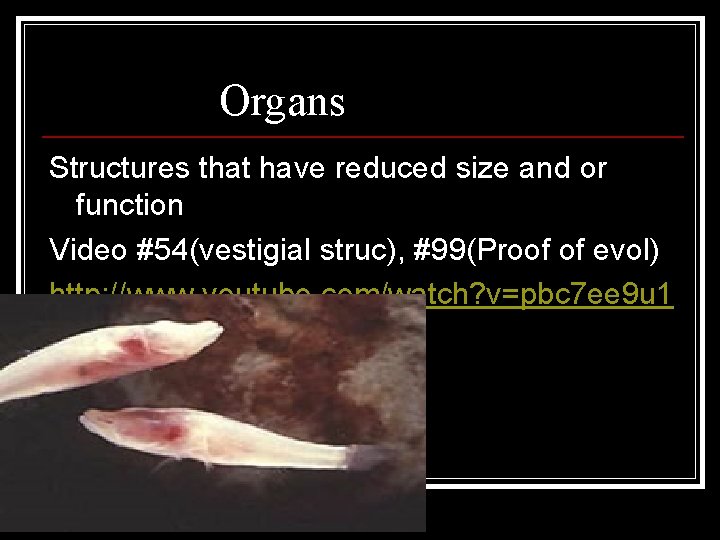
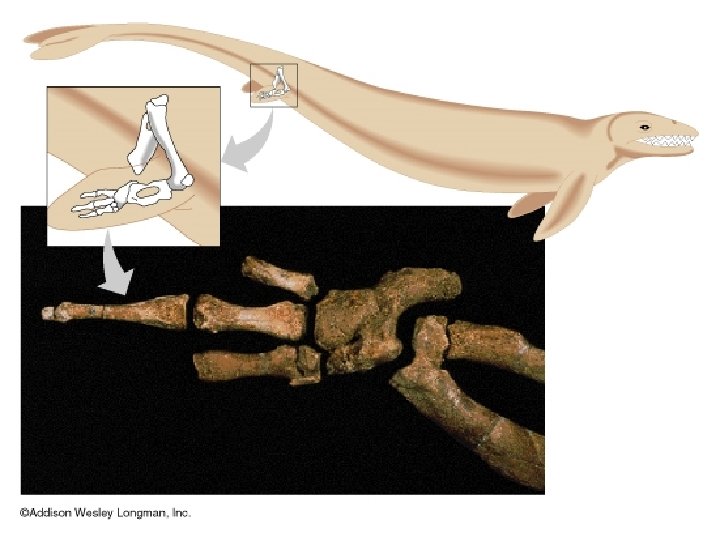
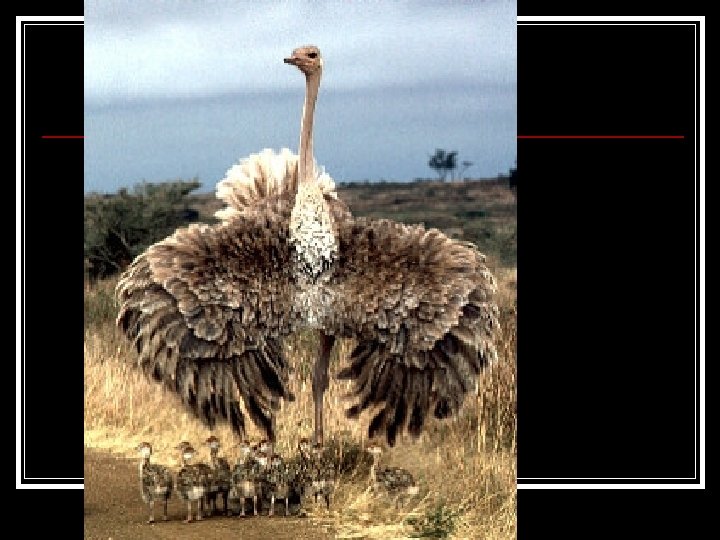
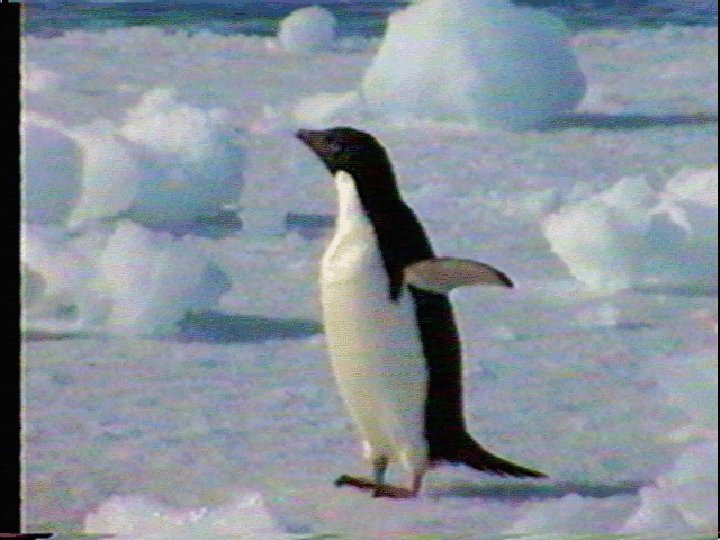
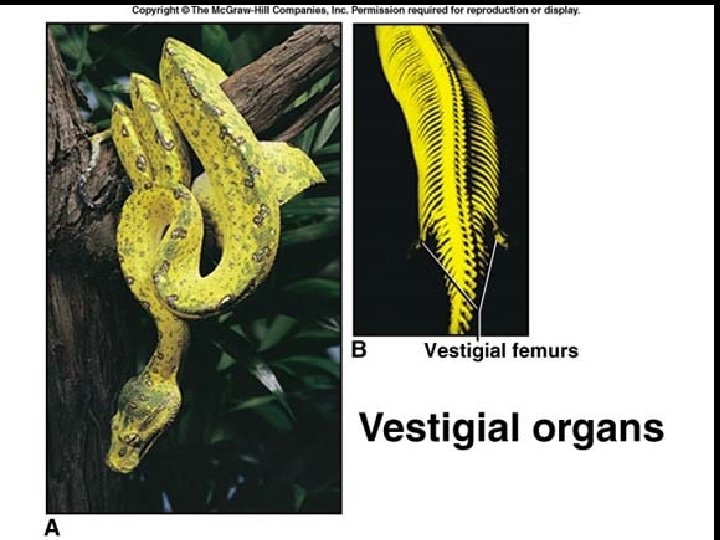
Vestigial Organs Structures that have reduced size and or function Video #54(vestigial struc), #99(Proof of evol) http: //www. youtube. com/watch? v=pbc 7 ee 9 u 1 JE
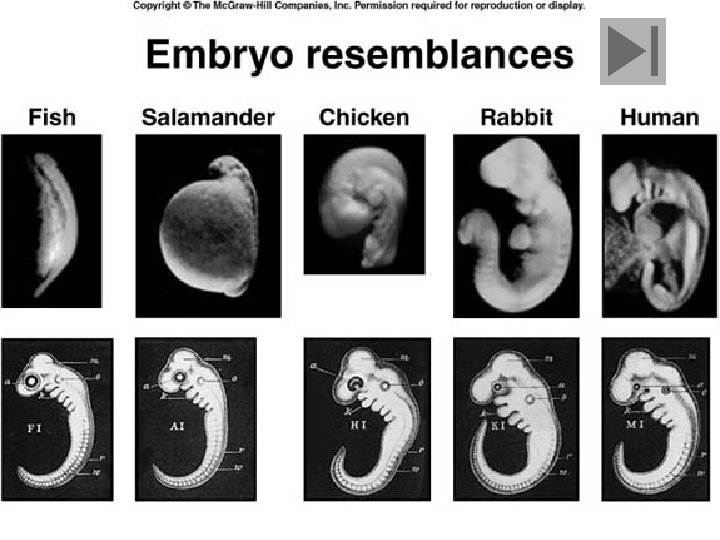
Developmental Evidence n Similarities in embryonic development are interpreted to mean closer relationships.
Developmental Evidence n Similarities in embryonic development are interpreted to mean closer relationships.
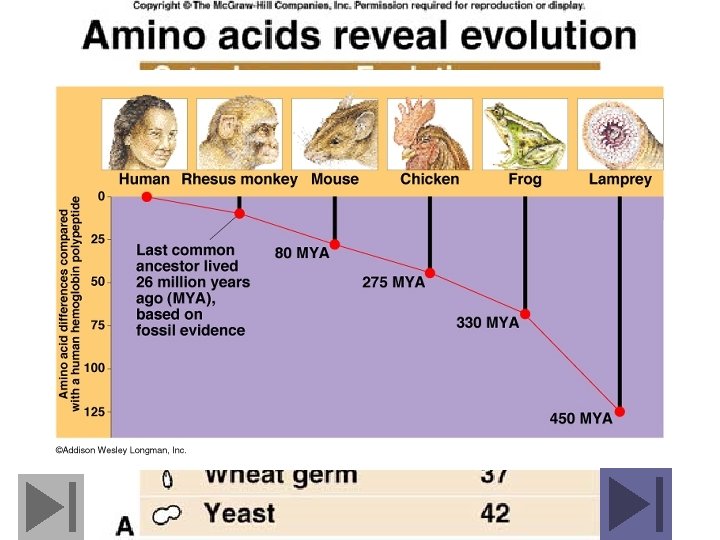
Molecular Evidence Organisms are considered to be more closely related if DNA sequences in genes are more similar Amino acid sequences in proteins is more similar
Molecular Evidence Organisms are considered to be more closely related if DNA sequences in genes are more similar Amino acid sequences in proteins is more similar
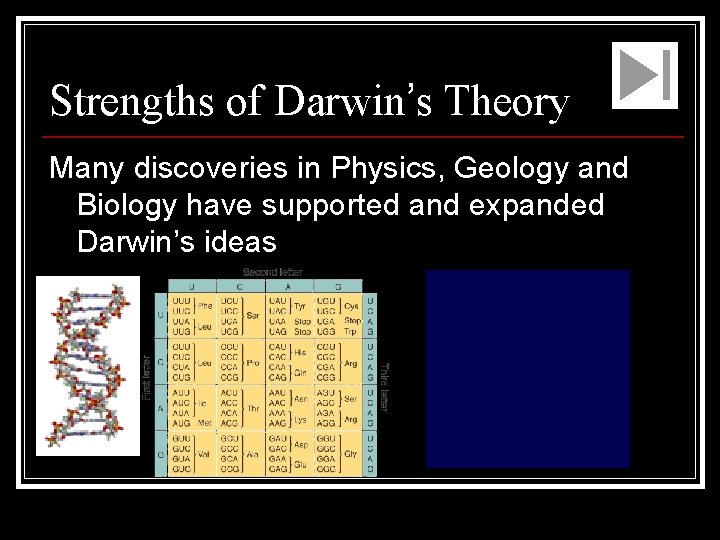
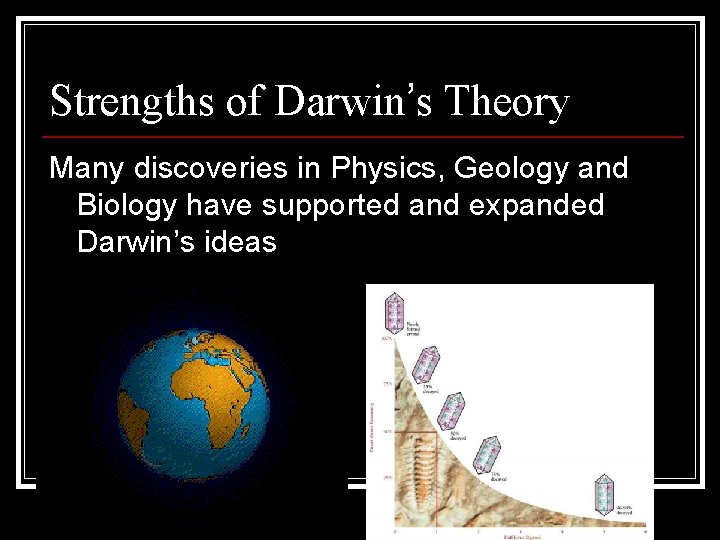
Strengths of Darwin’s Theory Many discoveries in Physics, Geology and Biology have supported and expanded Darwin’s ideas
Strengths of Darwin’s Theory Many discoveries in Physics, Geology and Biology have supported and expanded Darwin’s ideas
Weaknesses of Darwin’s Theory Researchers still debate how new species arise and how they become extinct. n The origin of life is still very uncertain n
Evolution of Populations Chapter 14
Video #95(are athletes really getting faster) n https: //www. youtube. com/watch? v=8 COa. M Kb. Nr. X 0
Genes and Variation – differences between individuals of a species n Produced by two processes n n n Mutation – random changes in DNA Sexual Reproduction- combining genes from two gametes
Single Gene Traits n Several traits are controlled by a single gene and are either dominant or recessive.
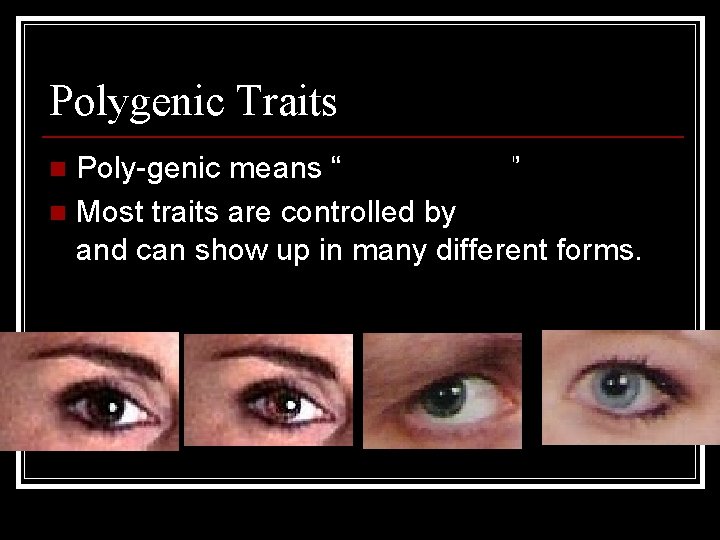
Polygenic Traits Poly-genic means “many genes” n Most traits are controlled by several genes and can show up in many different forms. n
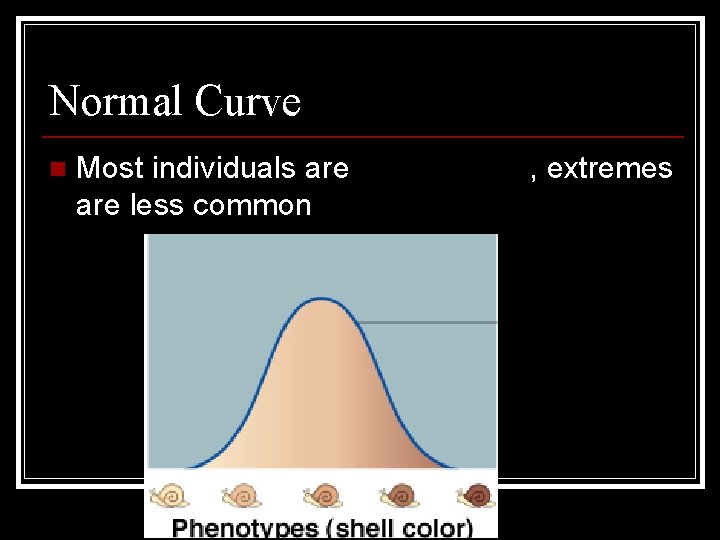
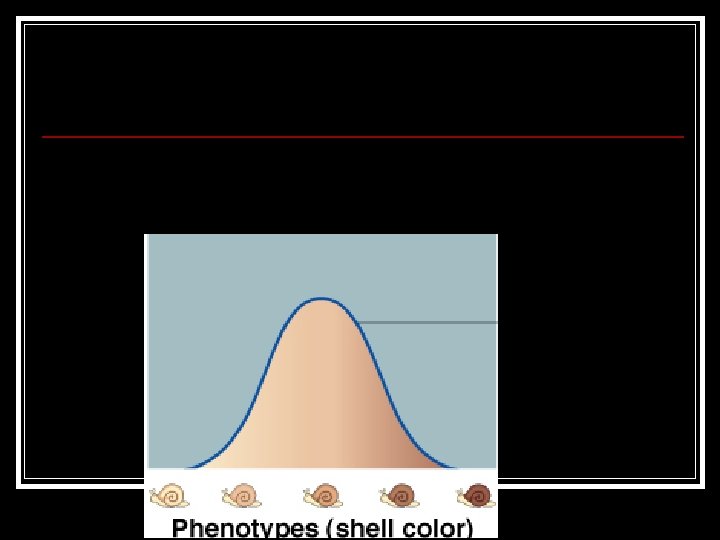
Normal Curve n Most individuals are intermediate, extremes are less common
Microevolution Micro – small n Microevolution is change within a species n Gene Pool – all of the genes in a population n Allele Frequency – how many times a certain allele shows up in the population n
Microevolution Any change in Allele frequency in a population is considered microevolution
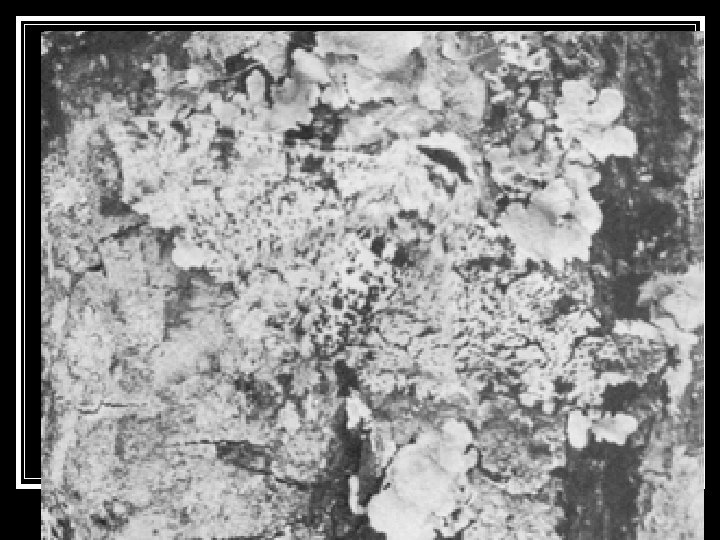
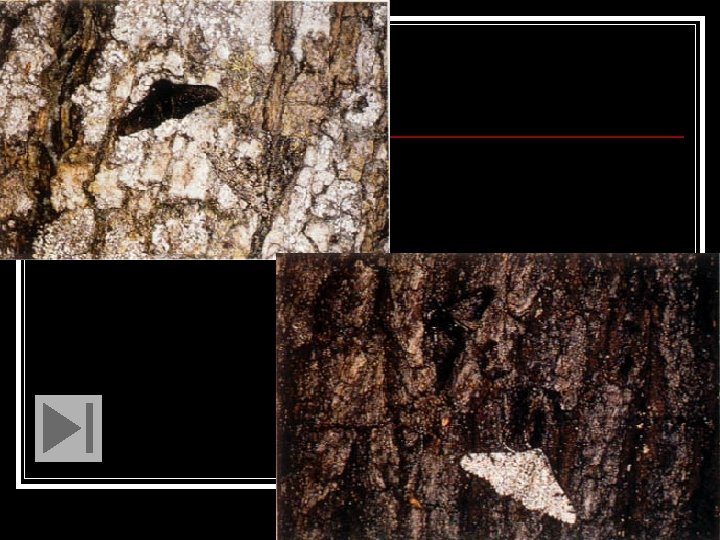
English Peppered Moth The moth was usually white with dark spots During the Industrial Revolution (1850’s) soot covered many of the white barked trees More and more dark colored moths appeared at the same time Kettlewell’s experiments suggested this was due to natural selection
English Peppered Moth The moth was usually white with dark spots During the Industrial Revolution (1850’s) soot covered many of the white barked trees More and more dark colored moths appeared at the same time Kettlewell’s experiments suggested this was due to natural selection
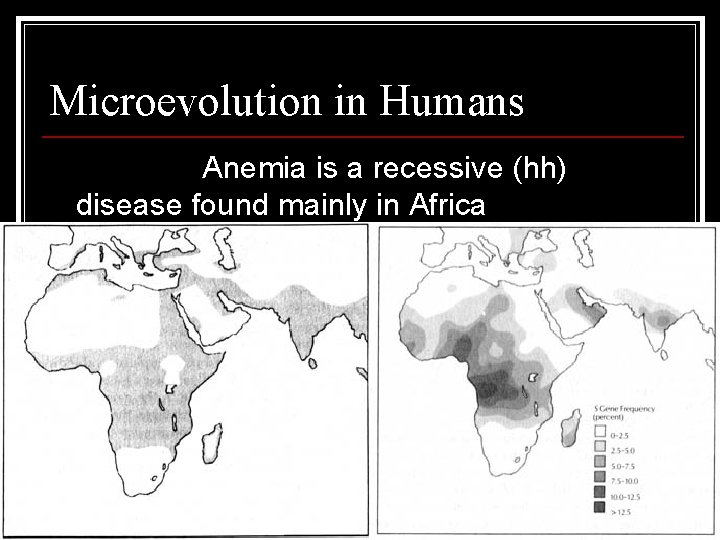
Microevolution in Humans Sickle Cell Anemia is a recessive (hh) disease found mainly in Africa A carrier (Hh) for the disease has resistance to malaria
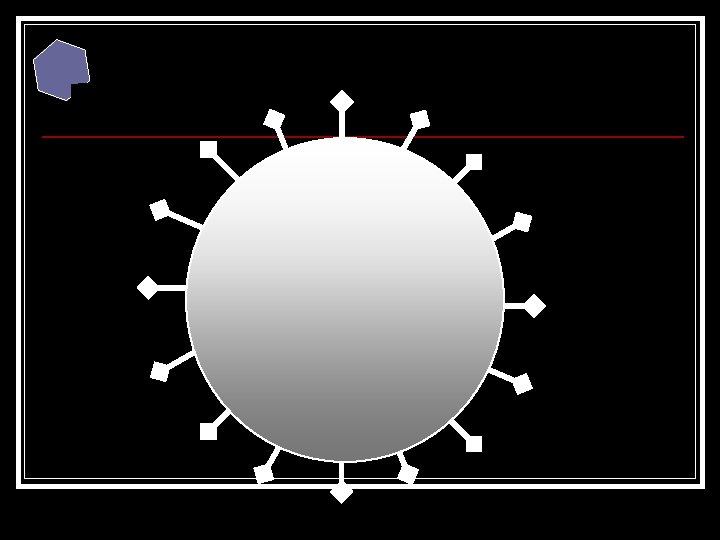
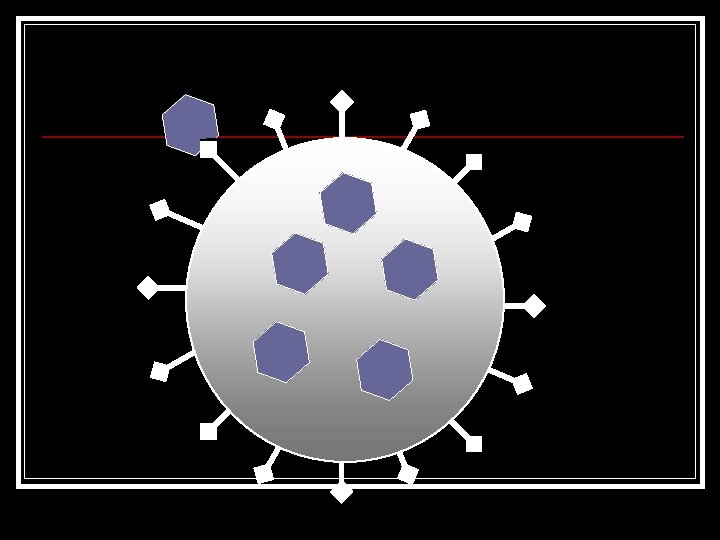
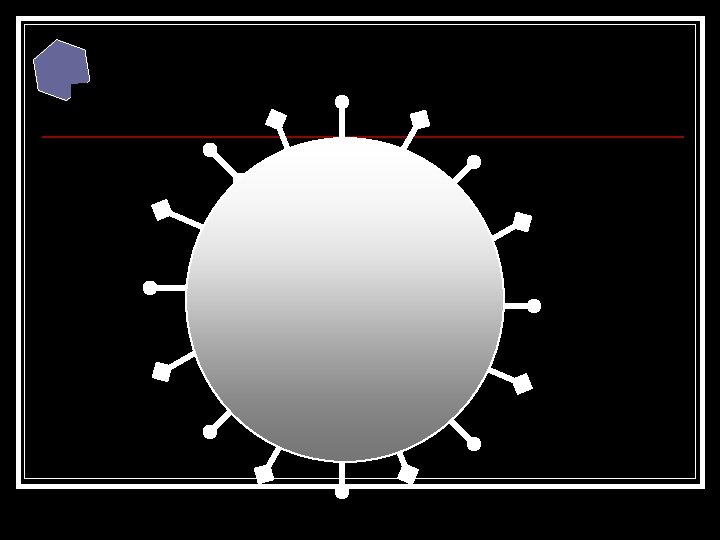
Delta 32 Mutation Delta 32 mutation occurs in 10 -15% of whites of European descent n This mutation gave resistance to the plague n Most of the people without this allele died of the plague causing the allele frequency to rise n The mutation also gives resistance to HIV infection n
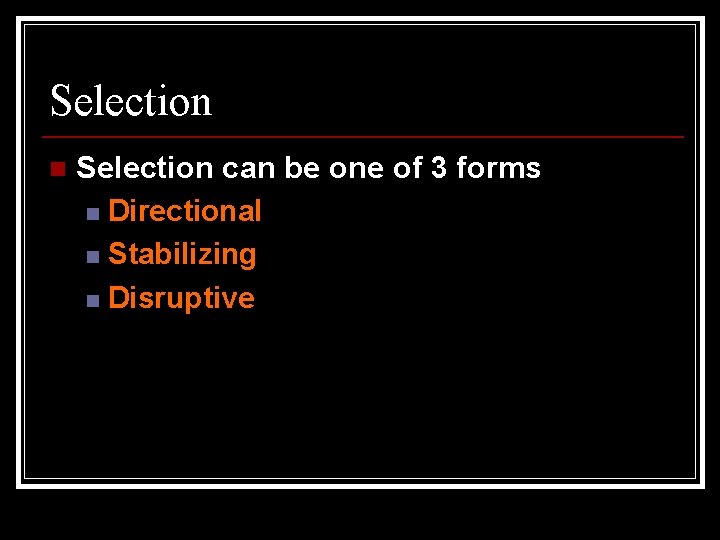
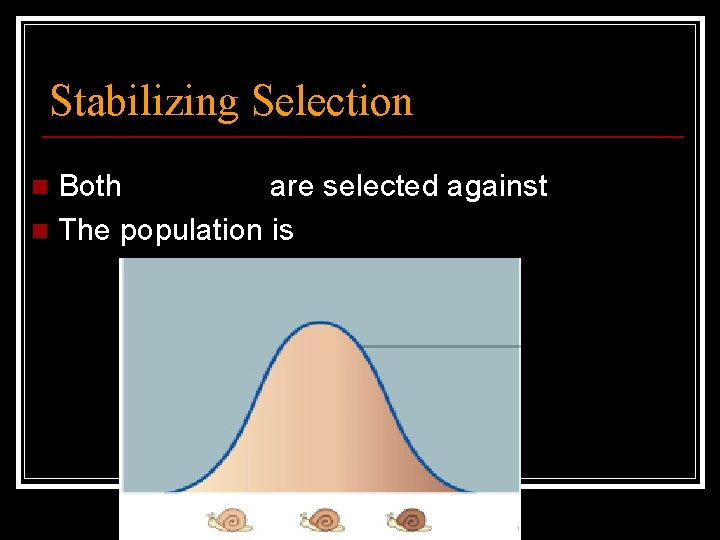
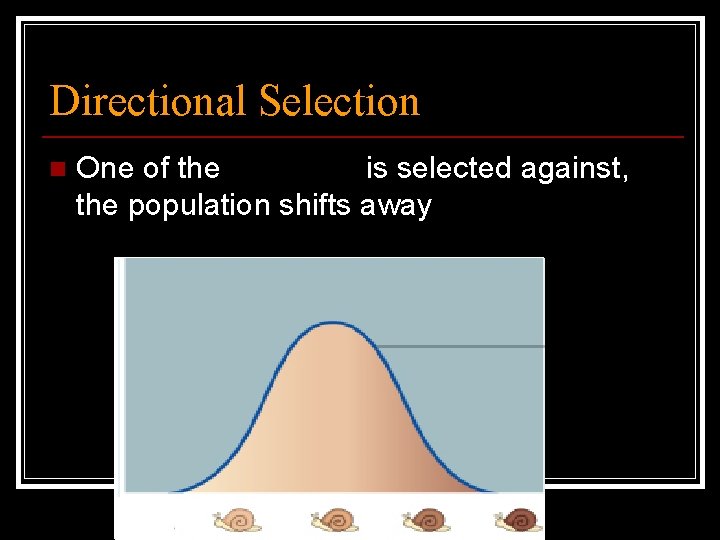
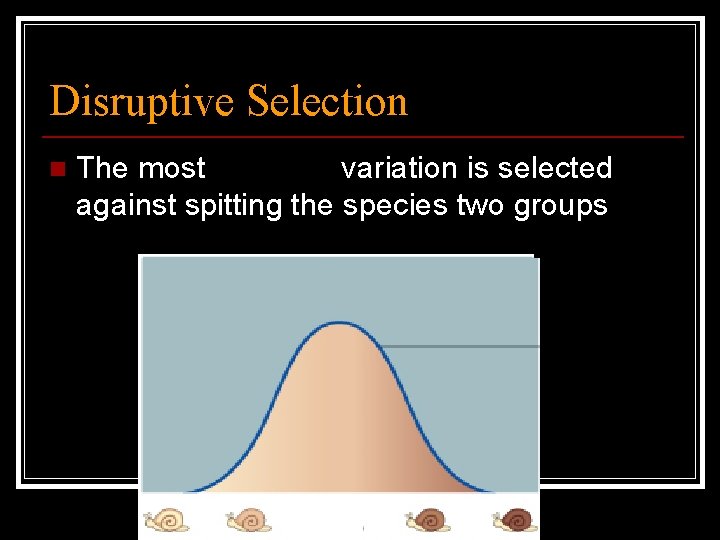
Selection n Selection can be one of 3 forms n Directional n Stabilizing n Disruptive
Stabilizing Selection Both Extremes are selected against n The population is stabilized n
Directional Selection n One of the extremes is selected against, the population shifts away
Disruptive Selection n The most common variation is selected against spitting the species two groups
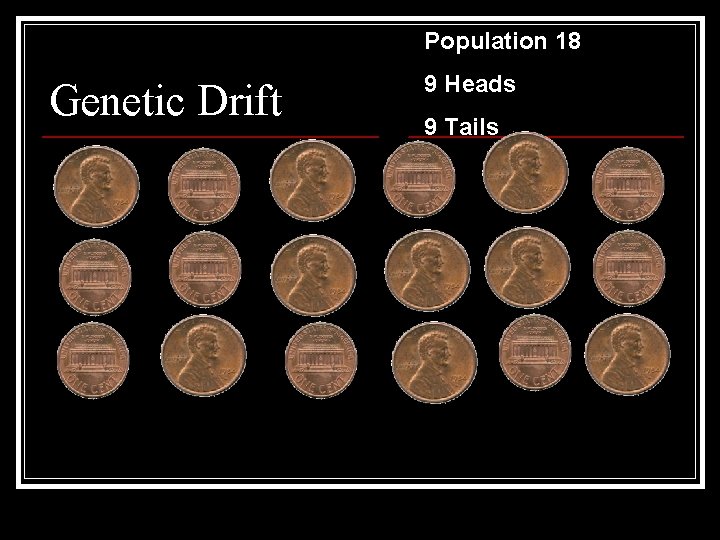
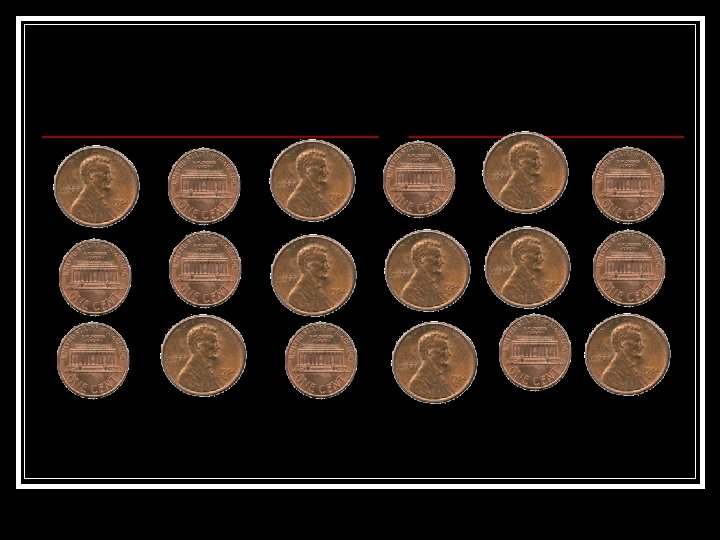
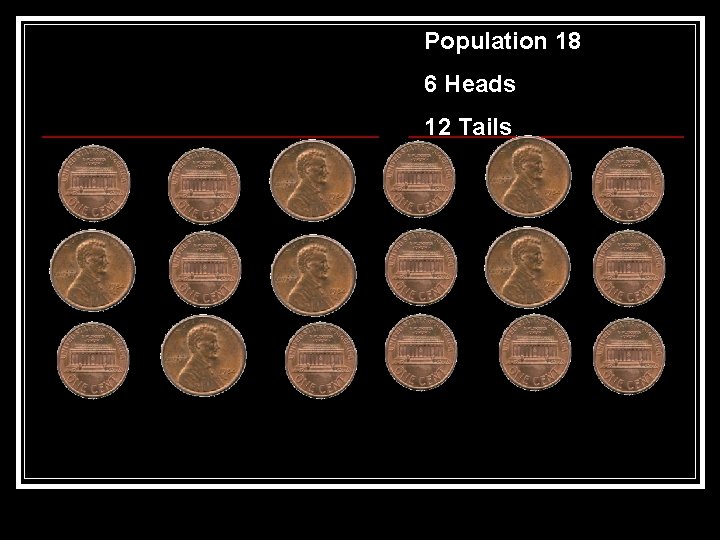
Genetic Drift In small population individuals may pass on more genes by chance. This is called genetic drift. n Large populations are not affected by genetic drift n
Population 18 Genetic Drift 9 Heads 9 Tails
Population 18 6 Heads 12 Tails
Can a species stop evolving? Hardy Weinberg equilibruim in order for evolution of a species not to occur (all allele frequencies stay the same) 5 evolutionary forces must not act
Hardy-Weinberg Equilibrium Populations do not evolve if there is Random Mating no movement into or out of the population no genetic drift, large population no natural selection no mutation
Evolution will NOT occur in a population if 1. mutation is not occurring 2. natural selection is not occurring 3. the population is infinitely large (no genetic drift) 4. 5. all mating is totally random there is no migration in or out of the population
16 -3 The Process of Speciation –the production of a new species n Species – a group of individuals that reproduce in nature and produce fertile offspring n Isolation – the factor that prevents the new species from reproducing with the ancestral species n
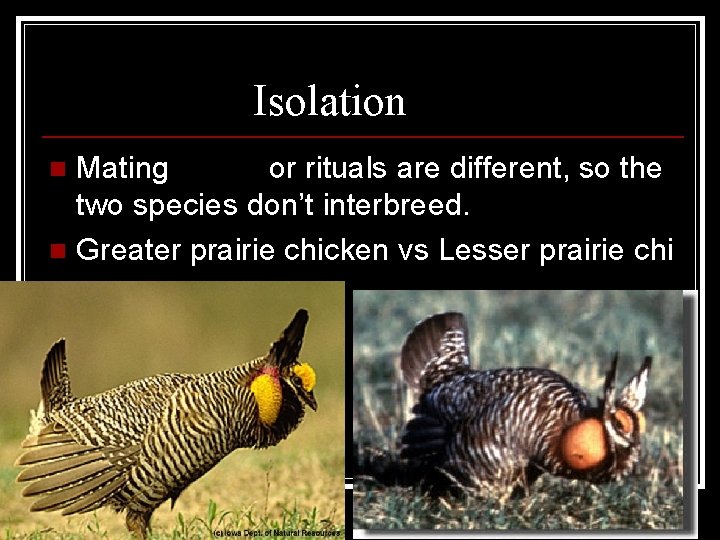
Behavioral Isolation Mating songs or rituals are different, so the two species don’t interbreed. n Greater prairie chicken vs Lesser prairie chi n
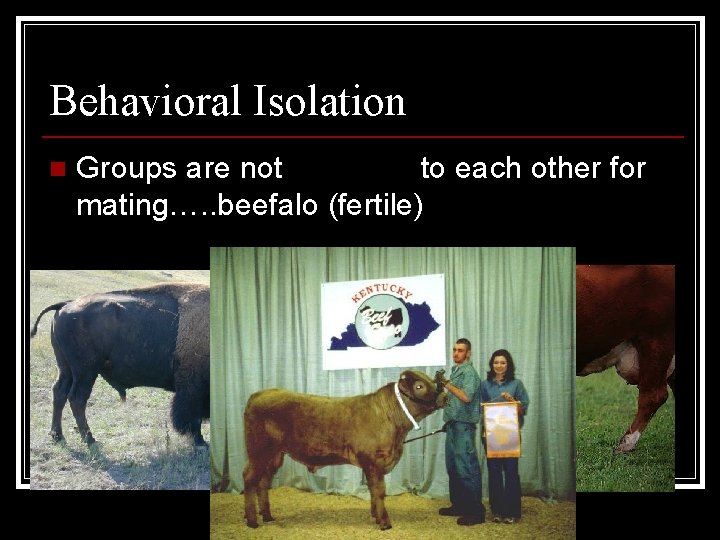
Behavioral Isolation n Groups are not attracted to each other for mating…. . beefalo (fertile)
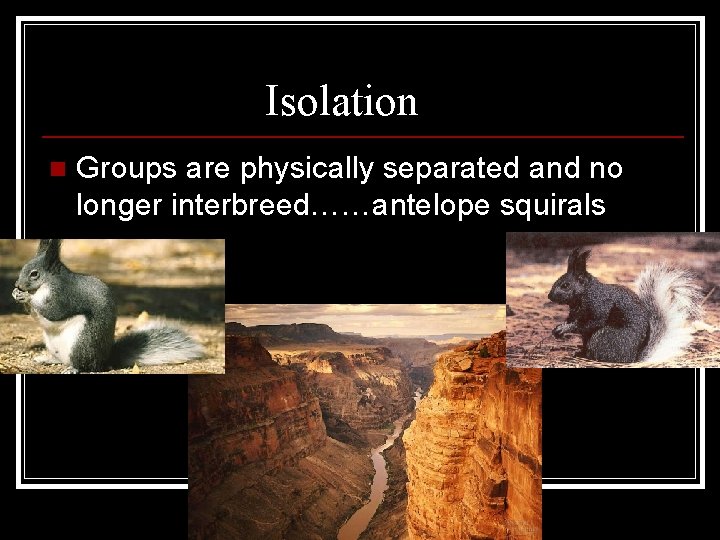
Geographic Isolation n Groups are physically separated and no longer interbreed……antelope squirals
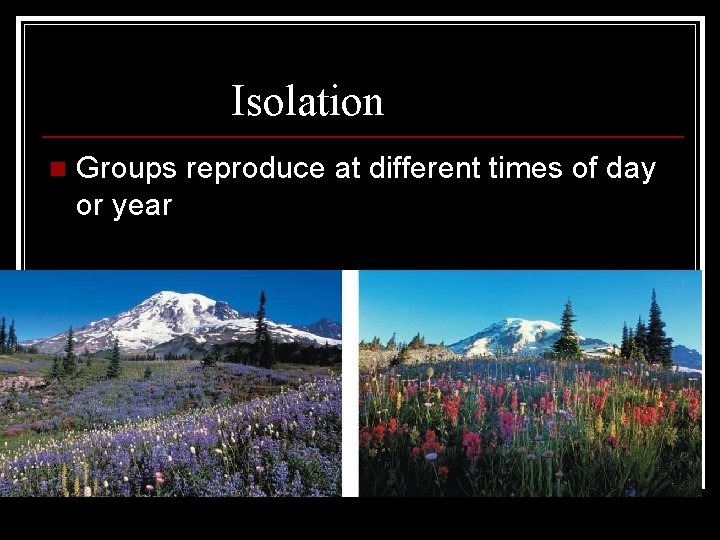
Temporal Isolation n Groups reproduce at different times of day or year
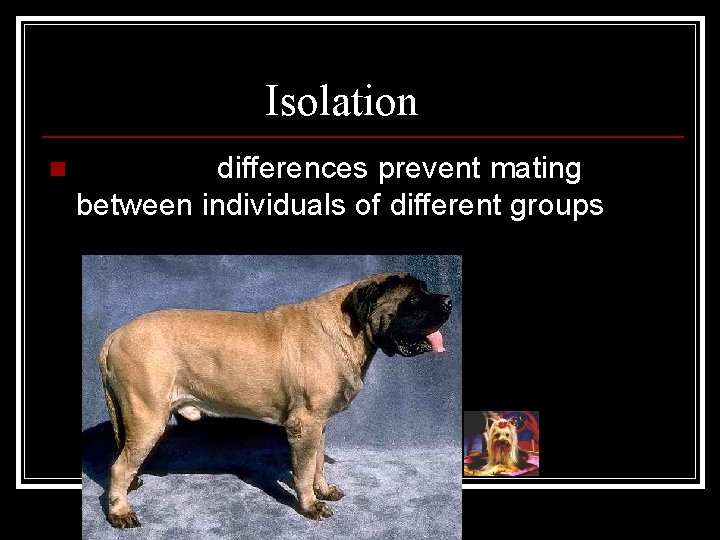
Mechanical Isolation n Structural differences prevent mating between individuals of different groups
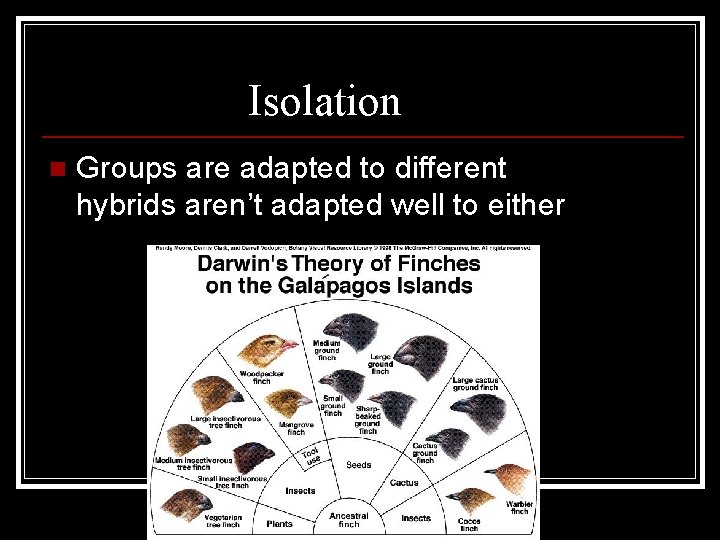
Ecological Isolation n Groups are adapted to different habitats, hybrids aren’t adapted well to either
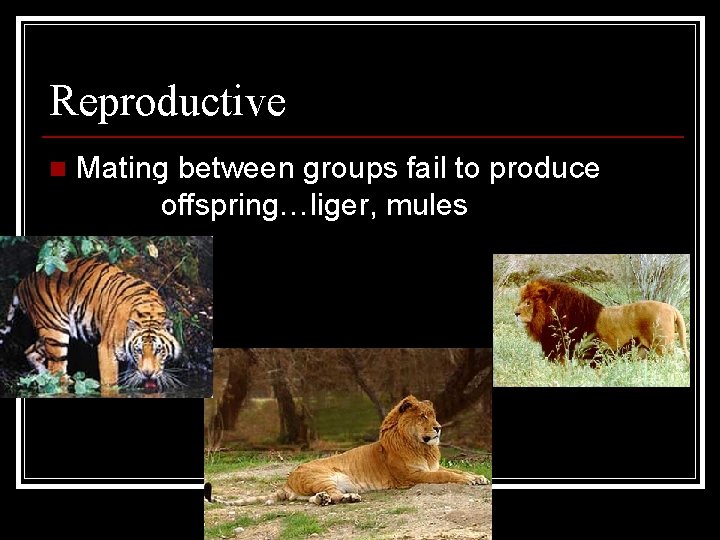
Reproductive Failure n Mating between groups fail to produce fertile offspring…liger, mules
Hybrids n http: //en. wikipedia. org/wiki/Tigon
Speciation Continued Once populations are isolated, different pressures select different traits n When the populations will no longer interbreed, new species have been formed n
Natural Selection - 2 forms Ecological Selection – better suited to survive in the environment n Sexual Selection – n n n Males compete for access to females Females select males with “good gene” markers
Sexual selection: see video #55(why sexy is sexy) n Video #102(weird things your body does) n
Sexual Dimorphism n Dimorphism di-morph-ism n n n Two forms Males are usually larger Males would have ornaments (antlers, manes, colors)
Patterns of Evolution
Macro Evolution Macro – Large Idea that species can split to form new species All life forms are related through a common ancestor
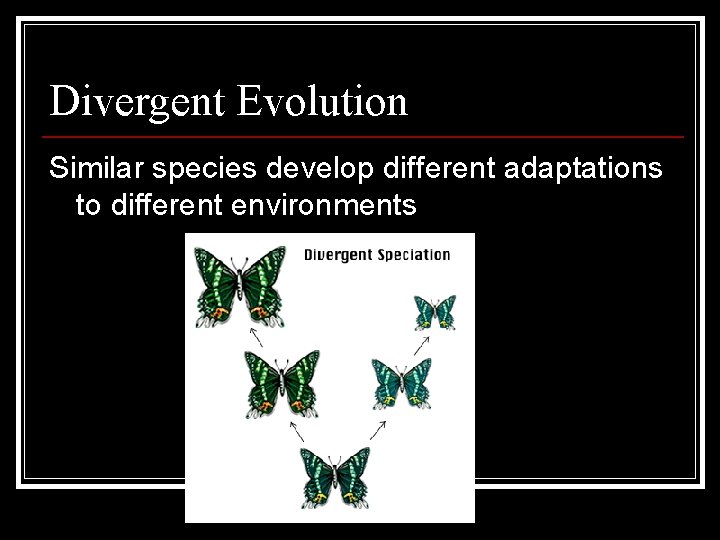
Divergent Evolution Similar species develop different adaptations to different environments
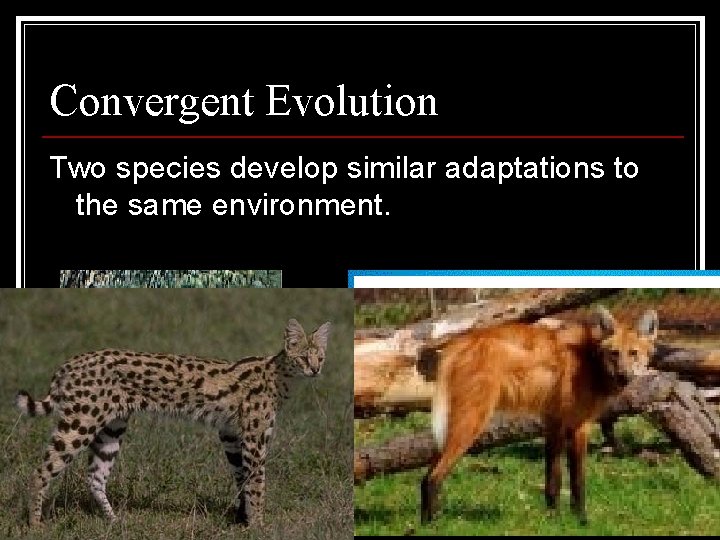
Convergent Evolution Two species develop similar adaptations to the same environment.
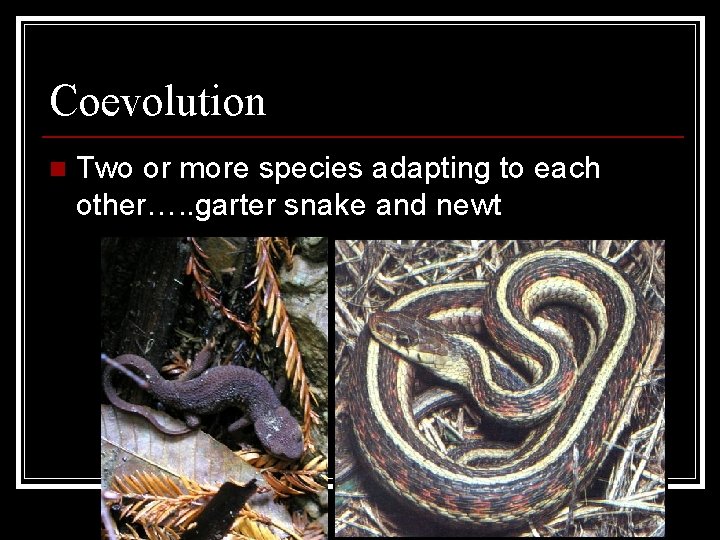
Coevolution n Two or more species adapting to each other…. . garter snake and newt
n In each of these populations, the snakes exhibit resistance to the toxin and successfully prey upon the newts. Successful predation of the rough-skinned newt by the common garter snake is made possible by the ability of individuals in a common garter snake population to gauge whether the newt's level of toxin is too high to feed on.
n T. sirtalis assays toxin levels of the roughskinned newt and decides whether or not the levels are manageable by partially swallowing the newt, and either swallowing or releasing the newt. [9]Toxin-resistant garter snakes are the only known animals today that can eat a rough-skinned newt and survive.
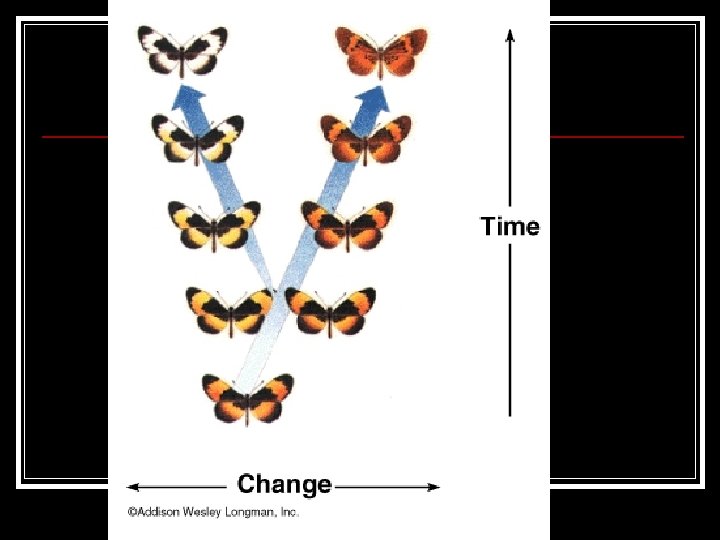
Rate of Evolution Slow and Steady or in Spurts? Gradualism – the idea that small changes build up slowly over time to produce large changes. Expectations – many intermediate “missing link” fossils
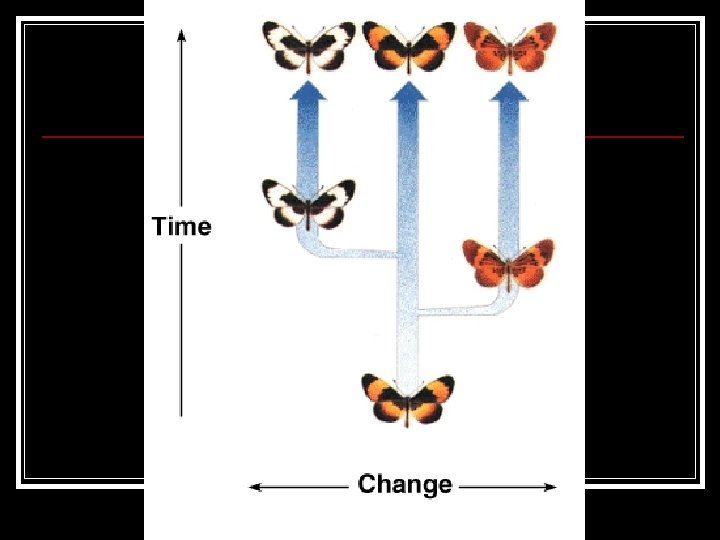
Punctuated Equilibrium The idea that populations go through periods of stability followed by short periods of rapid change. Expectations – fewer intermediate fossils
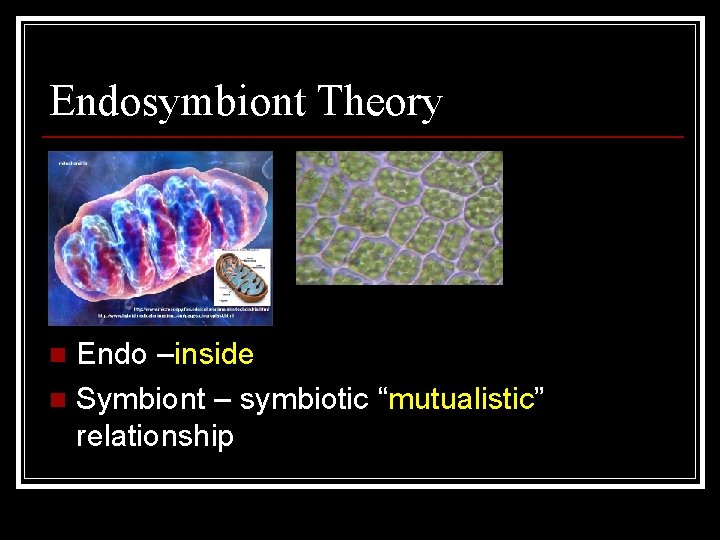
Endosymbiont Theory Endo –inside n Symbiont – symbiotic “mutualistic” relationship n
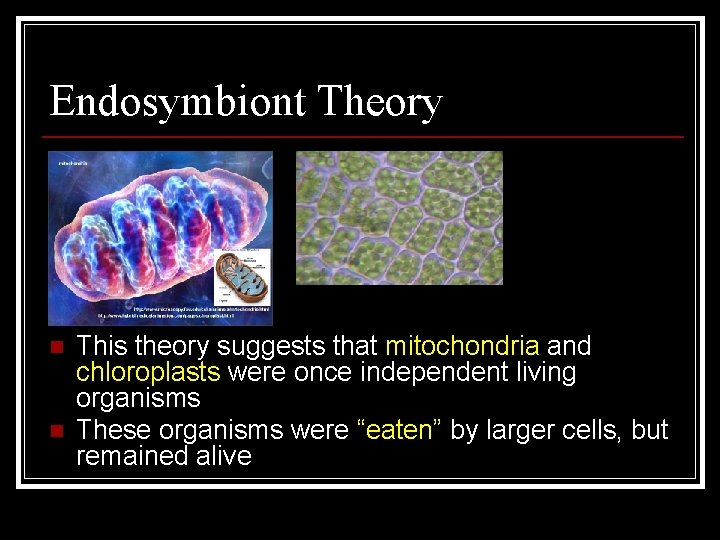
Endosymbiont Theory n n This theory suggests that mitochondria and chloroplasts were once independent living organisms These organisms were “eaten” by larger cells, but remained alive
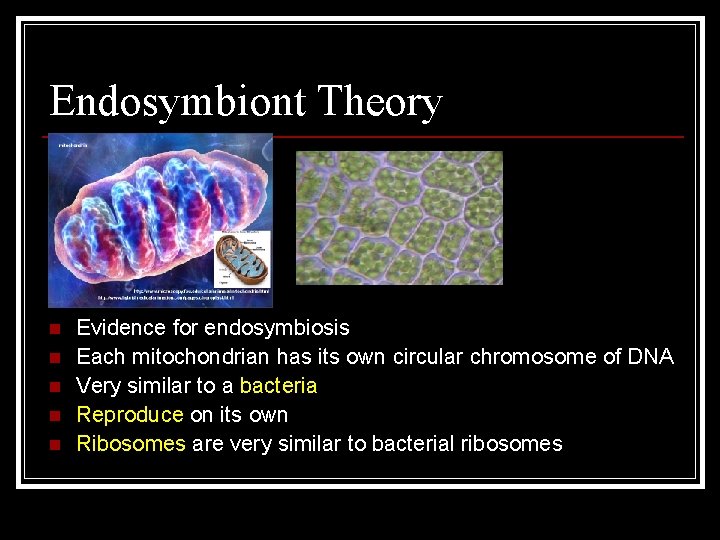
Endosymbiont Theory n n n Evidence for endosymbiosis Each mitochondrian has its own circular chromosome of DNA Very similar to a bacteria Reproduce on its own Ribosomes are very similar to bacterial ribosomes