
Evolution change over time What is science What
- Slides: 31
Evolution change over time
What is science? • What kind of questions can be answered by science? • What cannot be answered by science? There are different ways of knowing the world and making sense of your surroundings.
The Theory of Evolution • What is a theory? – A well supported, testable explanation of phenomena of the natural world What is the Theory of Evolution?
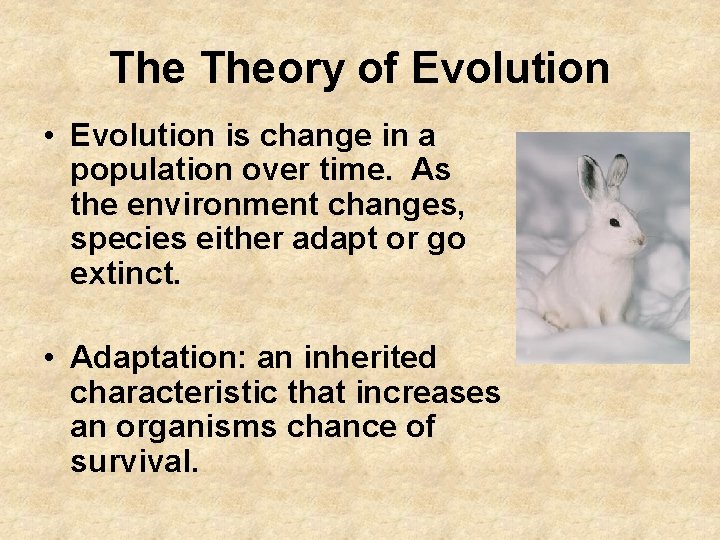
The Theory of Evolution • Evolution is change in a population over time. As the environment changes, species either adapt or go extinct. • Adaptation: an inherited characteristic that increases an organisms chance of survival.
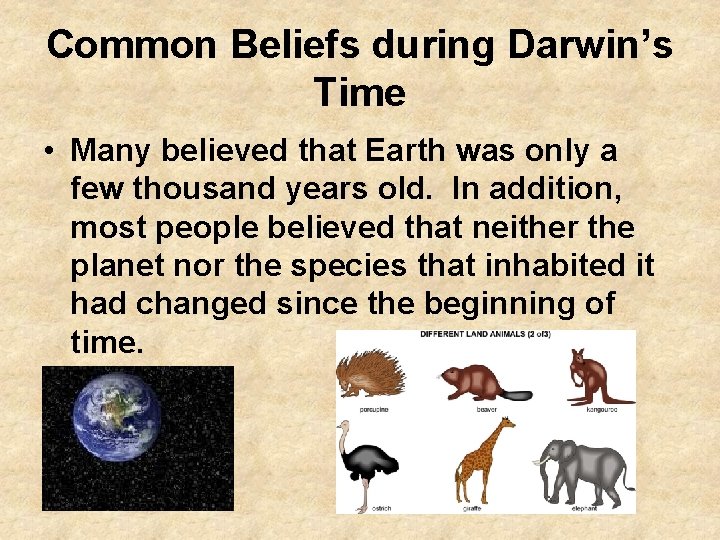
Common Beliefs during Darwin’s Time • Many believed that Earth was only a few thousand years old. In addition, most people believed that neither the planet nor the species that inhabited it had changed since the beginning of time.
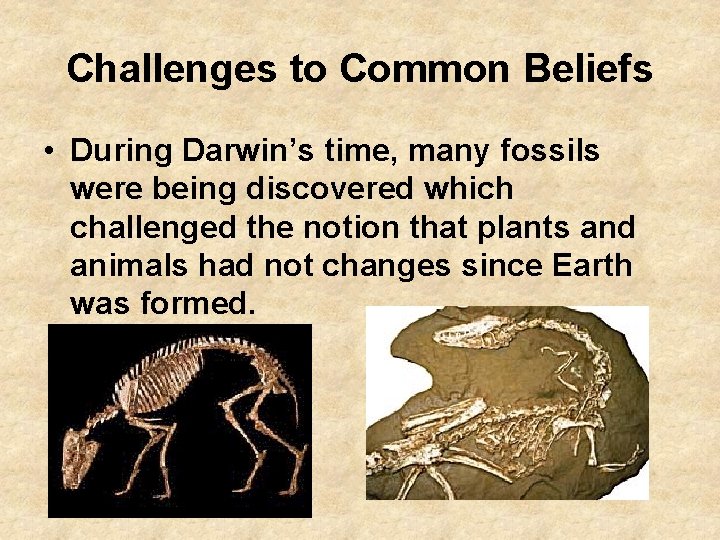
Challenges to Common Beliefs • During Darwin’s time, many fossils were being discovered which challenged the notion that plants and animals had not changes since Earth was formed.
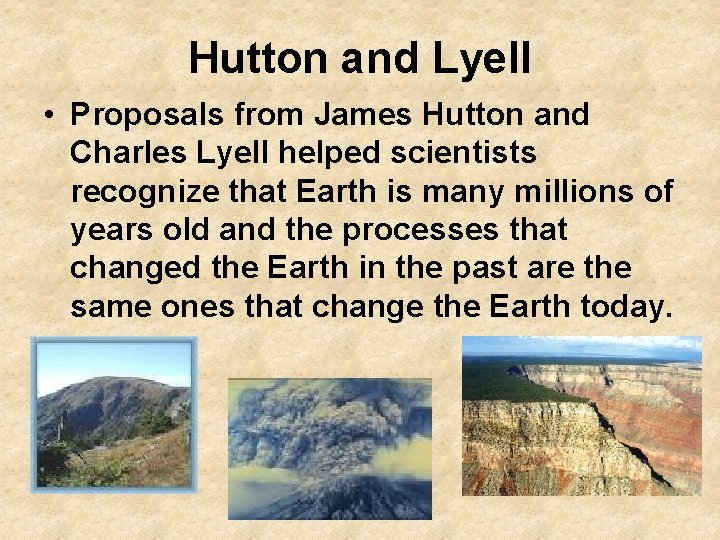
Hutton and Lyell • Proposals from James Hutton and Charles Lyell helped scientists recognize that Earth is many millions of years old and the processes that changed the Earth in the past are the same ones that change the Earth today.
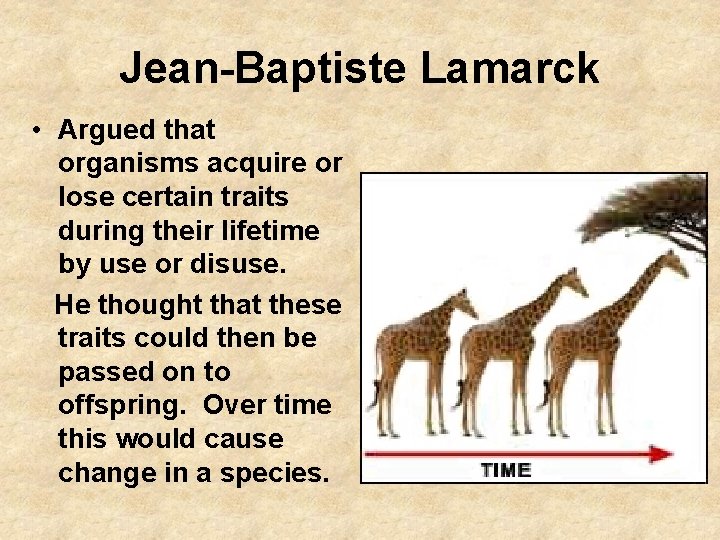
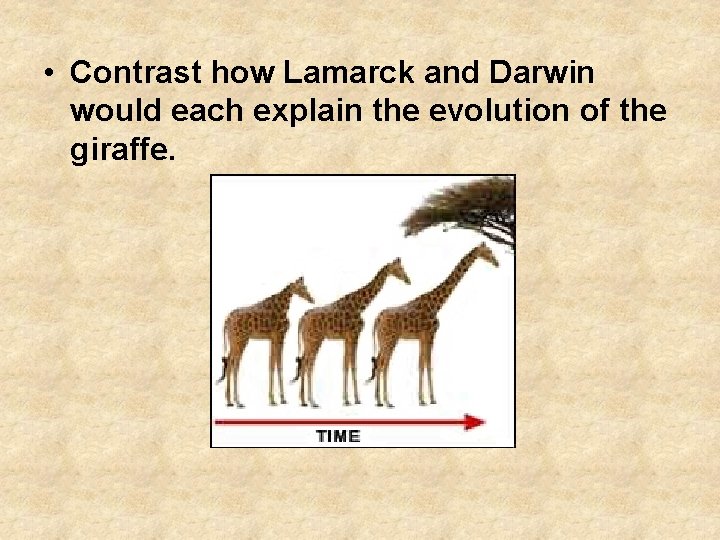
Jean-Baptiste Lamarck • Argued that organisms acquire or lose certain traits during their lifetime by use or disuse. He thought that these traits could then be passed on to offspring. Over time this would cause change in a species.
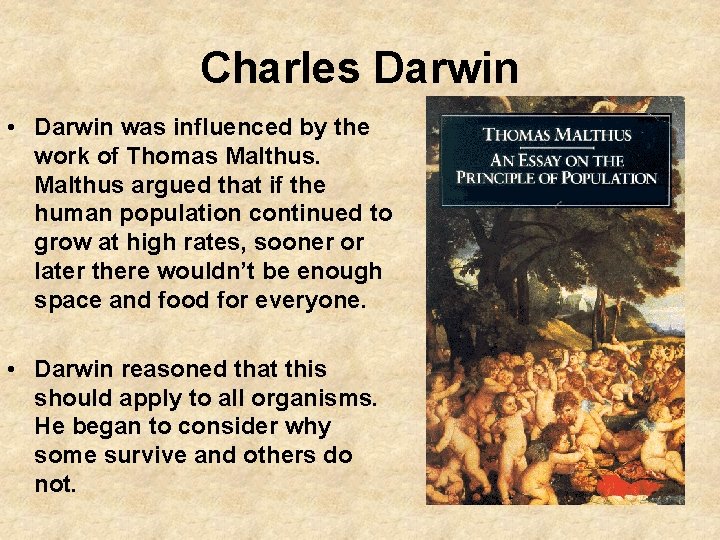
Charles Darwin • Darwin was influenced by the work of Thomas Malthus argued that if the human population continued to grow at high rates, sooner or later there wouldn’t be enough space and food for everyone. • Darwin reasoned that this should apply to all organisms. He began to consider why some survive and others do not.
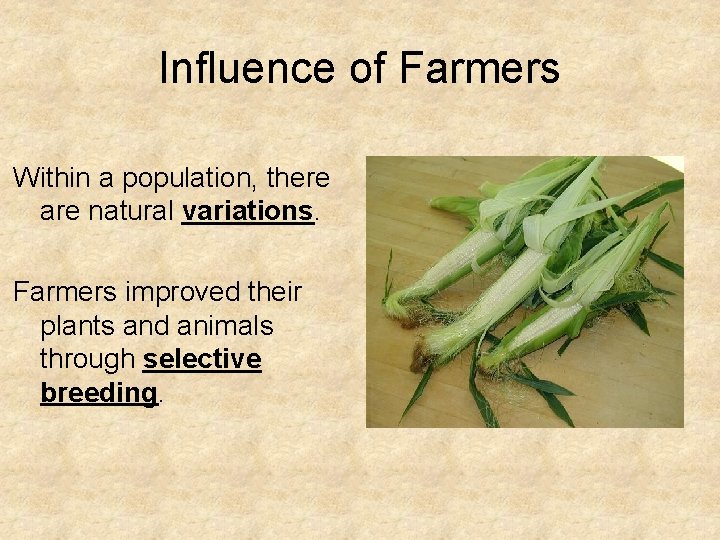
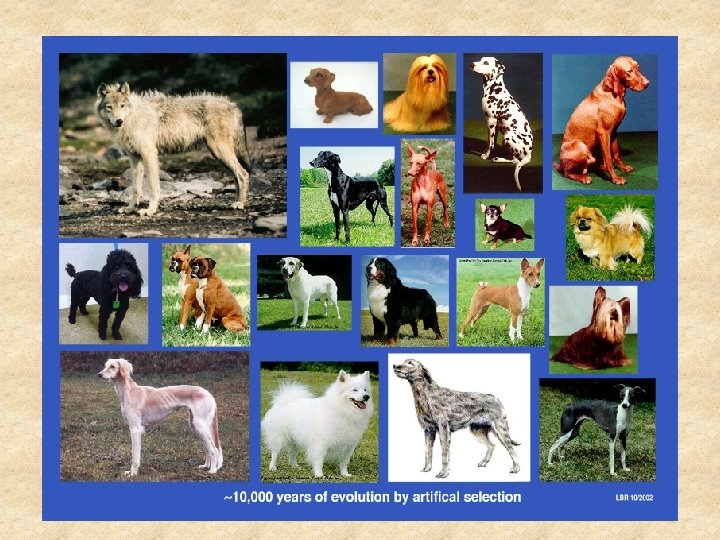
Influence of Farmers Within a population, there are natural variations. Farmers improved their plants and animals through selective breeding.
Influence of Farmers bred the plants or animals with most desired traits. This process of humans picking the most desirable organisms to reproduce is called artificial selection, (selective breeding. )
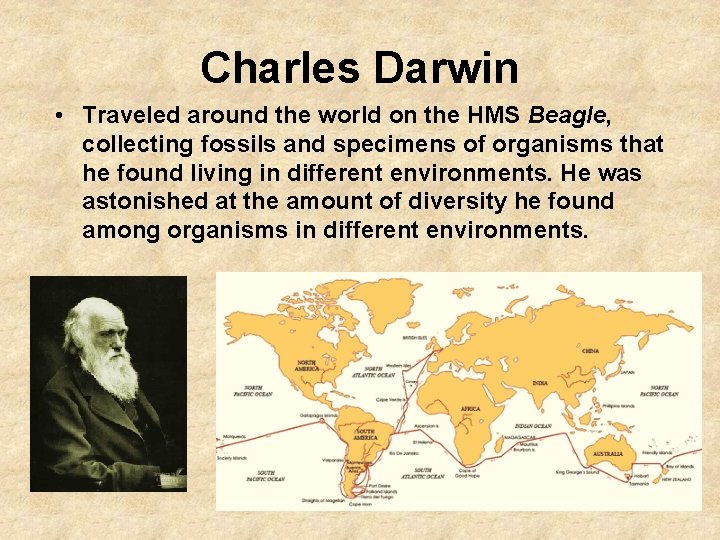
Charles Darwin • Traveled around the world on the HMS Beagle, collecting fossils and specimens of organisms that he found living in different environments. He was astonished at the amount of diversity he found among organisms in different environments.
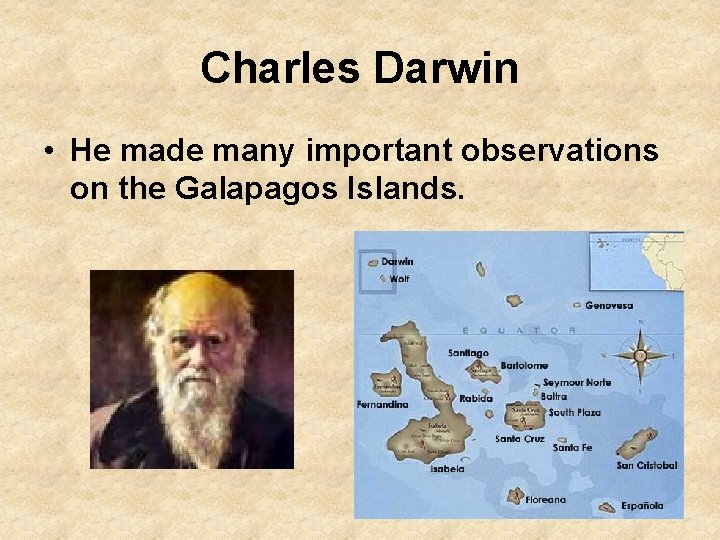
Charles Darwin • He made many important observations on the Galapagos Islands.
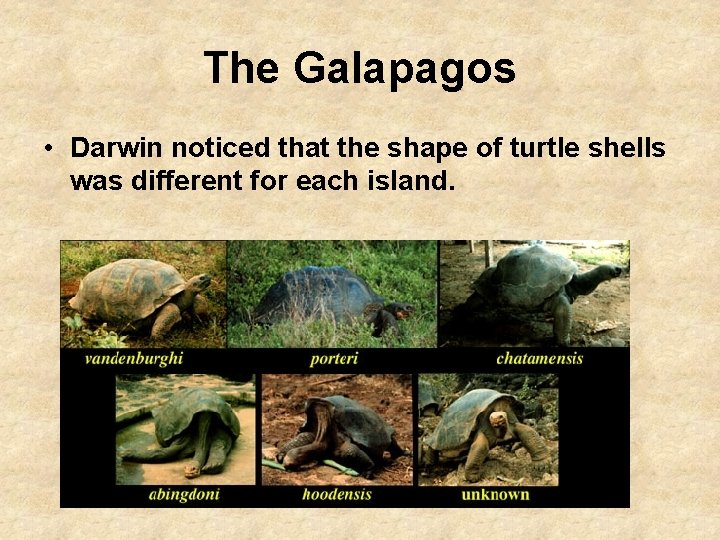
The Galapagos • Darwin noticed that the shape of turtle shells was different for each island.
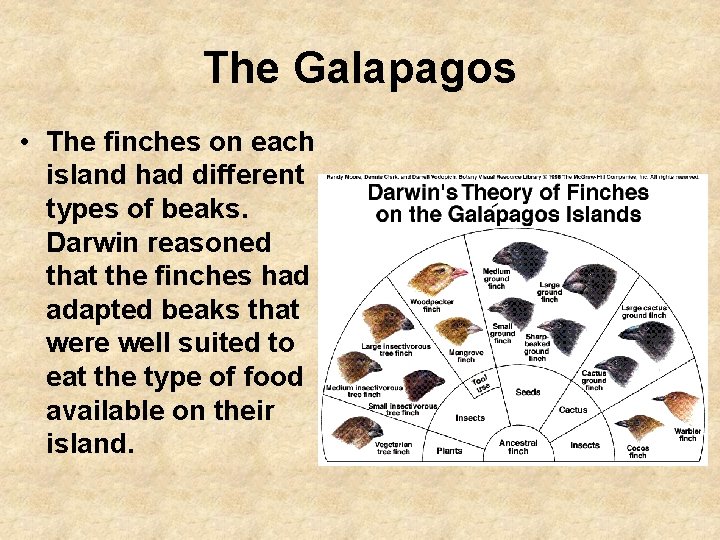
The Galapagos • The finches on each island had different types of beaks. Darwin reasoned that the finches had adapted beaks that were well suited to eat the type of food available on their island.
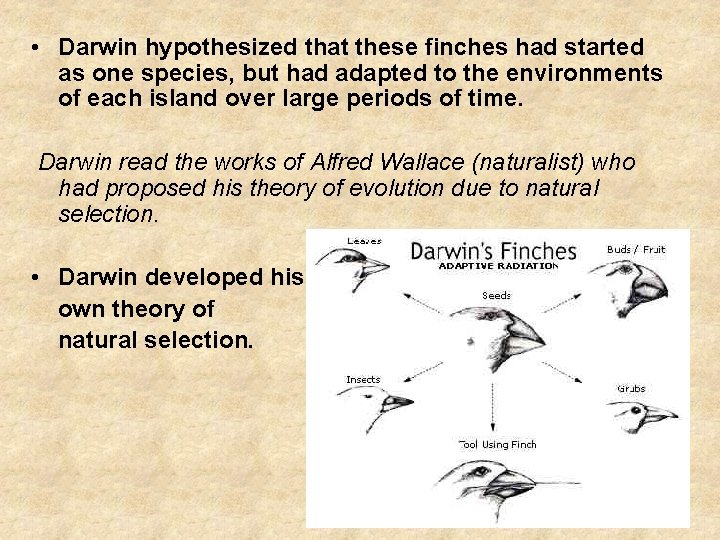
• Darwin hypothesized that these finches had started as one species, but had adapted to the environments of each island over large periods of time. Darwin read the works of Alfred Wallace (naturalist) who had proposed his theory of evolution due to natural selection. • Darwin developed his own theory of natural selection.
Natural Selection • Species change over time because of changes in the environment (selection pressures) • Natural Selection: Those adapted to the environment are more likely to survive and pass their genes to the next generation, while those not well suited do not survive or leave fewer offspring.
Natural Selection • Struggle for existence: members of a species compete for food, space, and other necessities • Survival of the Fittest: adaptations that make an organism better suited for its environment help them survive and reproduce.
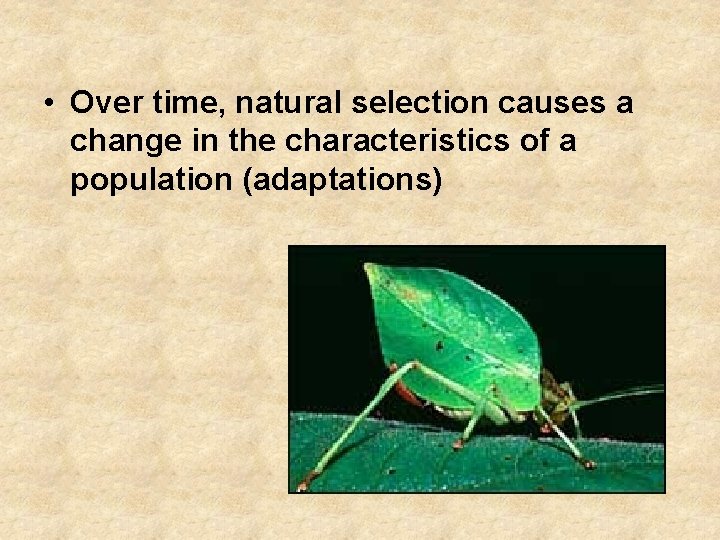
• Over time, natural selection causes a change in the characteristics of a population (adaptations)
Populations Evolve, Individuals Do Not!!!!
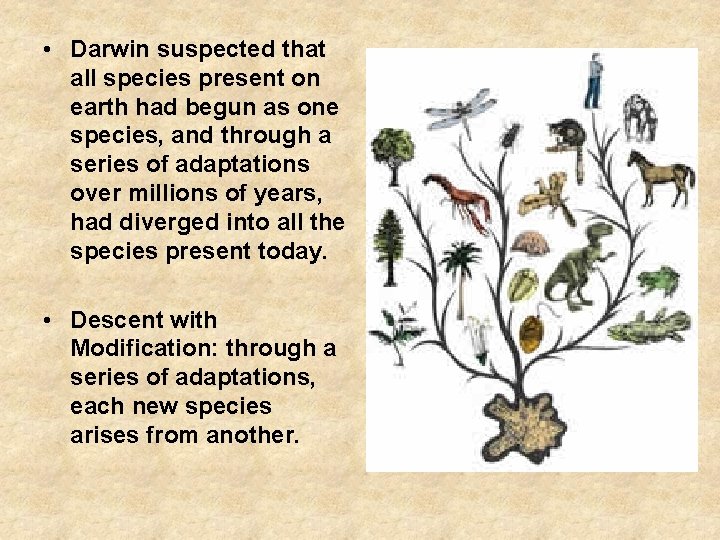
• Darwin suspected that all species present on earth had begun as one species, and through a series of adaptations over millions of years, had diverged into all the species present today. • Descent with Modification: through a series of adaptations, each new species arises from another.
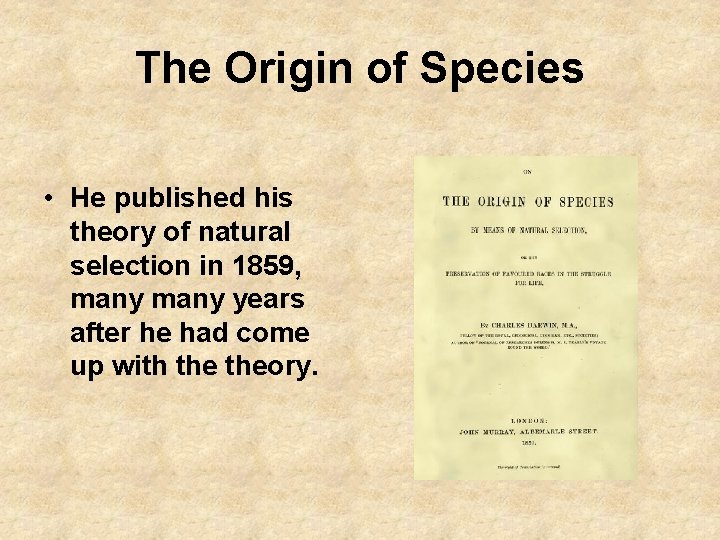
The Origin of Species • He published his theory of natural selection in 1859, many years after he had come up with theory.
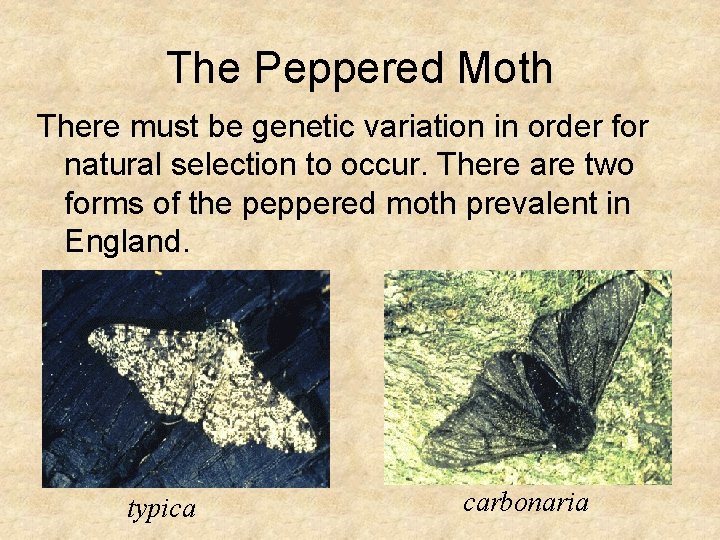
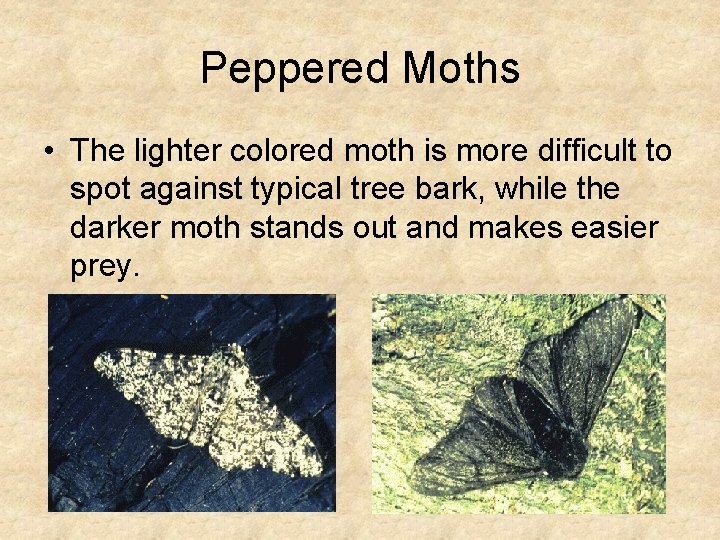
The Peppered Moth There must be genetic variation in order for natural selection to occur. There are two forms of the peppered moth prevalent in England. typica carbonaria
Peppered Moths • The lighter colored moth is more difficult to spot against typical tree bark, while the darker moth stands out and makes easier prey.
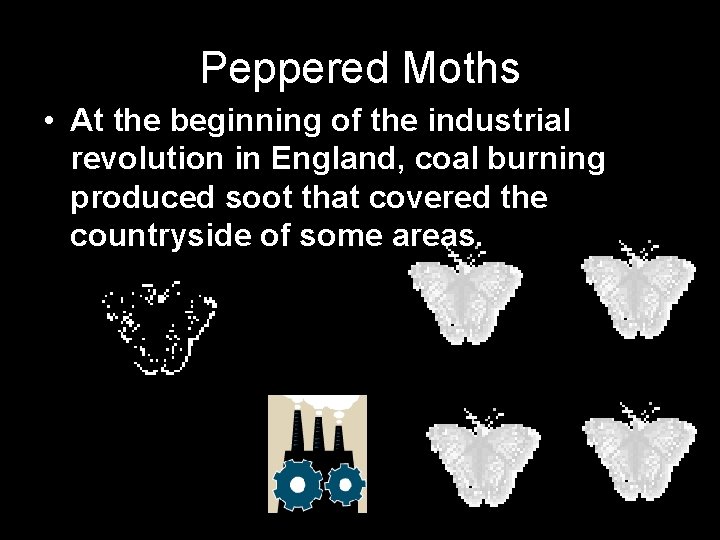
Peppered Moths • At the beginning of the industrial revolution in England, coal burning produced soot that covered the countryside of some areas.
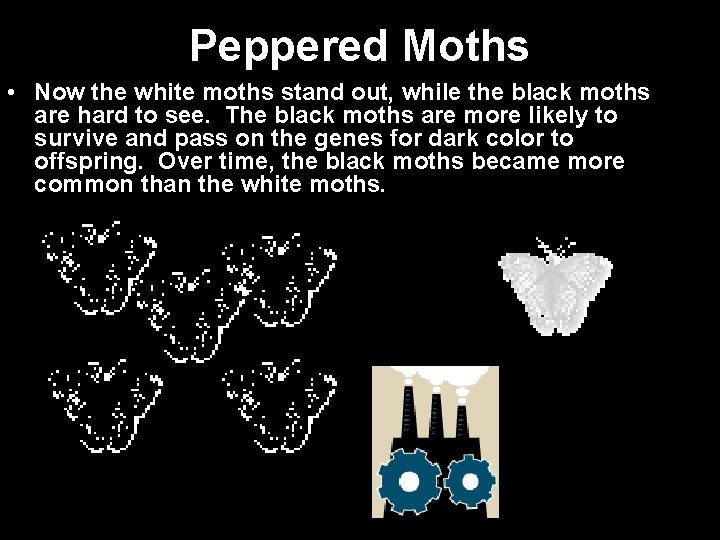
Peppered Moths • Now the white moths stand out, while the black moths are hard to see. The black moths are more likely to survive and pass on the genes for dark color to offspring. Over time, the black moths became more common than the white moths.
Populations Evolve, Individuals Do Not!!!!
• Contrast how Lamarck and Darwin would each explain the evolution of the giraffe.
A summary of Darwin’s Theory • 1. Individual organisms have many differences that can be inherited. • 2. Organisms produce more offspring than can survive in an environment. • 3 Because more organisms are produced than survive, they compete for resources.
A summary of Darwin’s Theory • 4. The organisms that are best suited to their environment survive and reproduce to become the “dominant” species type. • 5. Species alive today are descended with modifications from ancestral species that lived in the past.