
Evolution change over time http www pbs orgwgbhevolutionlibrary11
Evolution = change over time http: //www. pbs. org/wgbh/evolution/library/11/ 2/quicktime/e_s_1. html

Evolution Individuals do NOT evolve! Populations evolve. n Evolution occurs at conception. When new combinations of DNA are made. n n The only role you have left in evolution will be when you have children.
Jean-Baptiste Lamarck (17441829) 3 ideas of Lamarck: 1. 2. 3. Organisms desired to change and better themselves. The law of use and disuse. The inheritance of acquired traits.
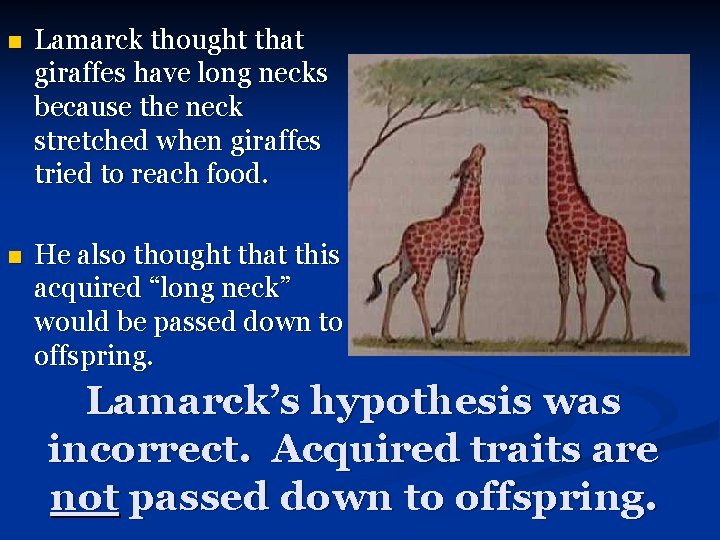
n Lamarck thought that giraffes have long necks because the neck stretched when giraffes tried to reach food. n He also thought that this acquired “long neck” would be passed down to offspring. Lamarck’s hypothesis was incorrect. Acquired traits are not passed down to offspring.
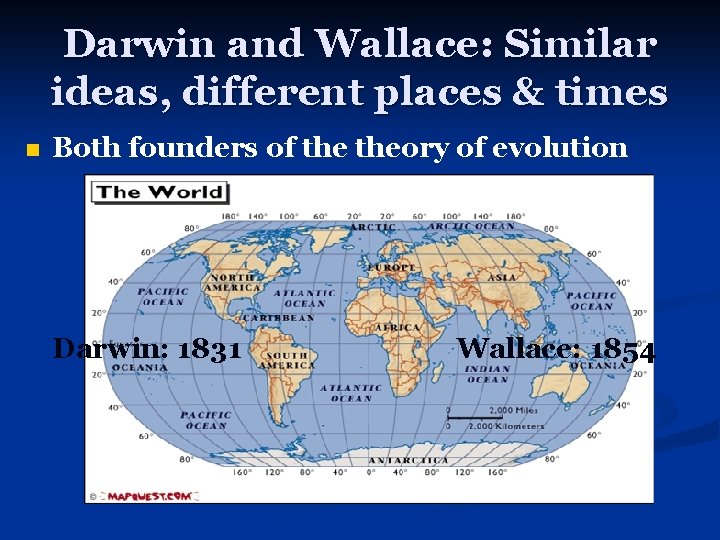
Darwin and Wallace: Similar ideas, different places & times n Both founders of theory of evolution Darwin: 1831 Wallace: 1854
Who is Charles Darwin? n http: //www. pbs. org/wgbh/evolution/libra ry/11/2/quicktime/e_s_2. html
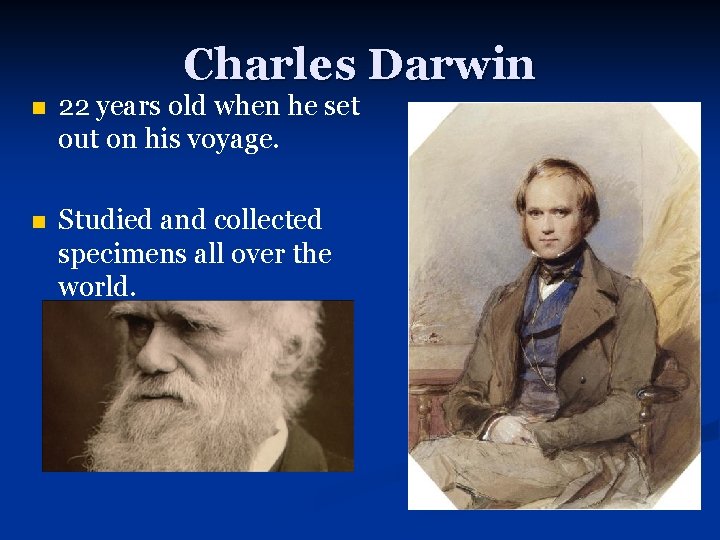
Charles Darwin n 22 years old when he set out on his voyage. n Studied and collected specimens all over the world.
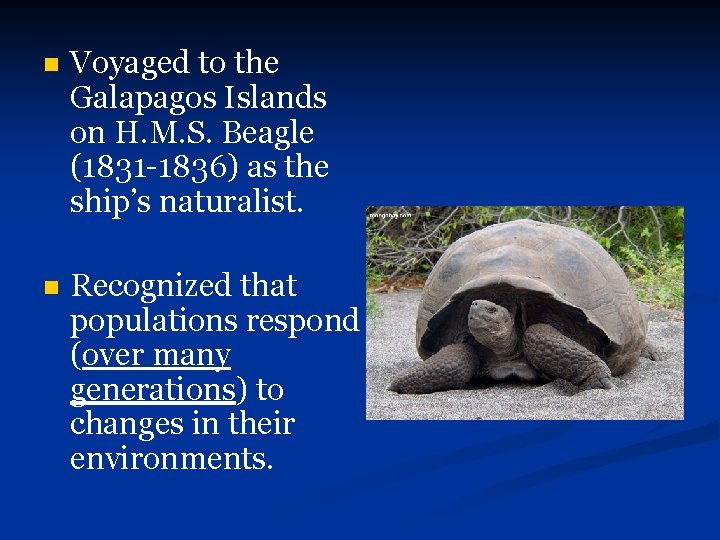
n Voyaged to the Galapagos Islands on H. M. S. Beagle (1831 -1836) as the ship’s naturalist. n Recognized that populations respond (over many generations) to changes in their environments.
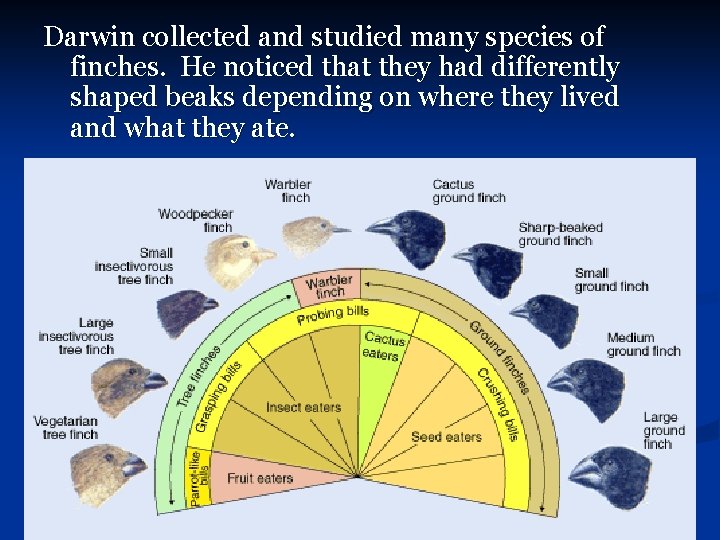
Darwin collected and studied many species of finches. He noticed that they had differently shaped beaks depending on where they lived and what they ate.
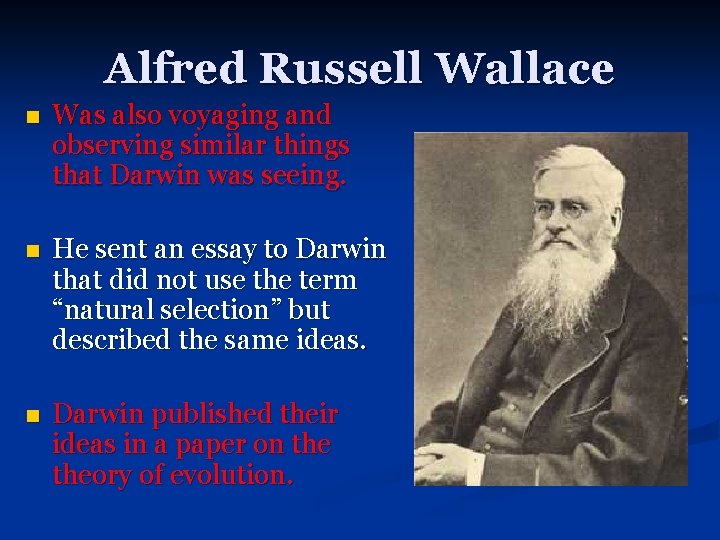
Alfred Russell Wallace n Was also voyaging and observing similar things that Darwin was seeing. n He sent an essay to Darwin that did not use the term “natural selection” but described the same ideas. n Darwin published their ideas in a paper on theory of evolution.
Darwin’s Ideas n Darwin proposed evolution occurred through the process of Natural Selection. n “Survival of the Fittest” n The principles of Natural Selection:
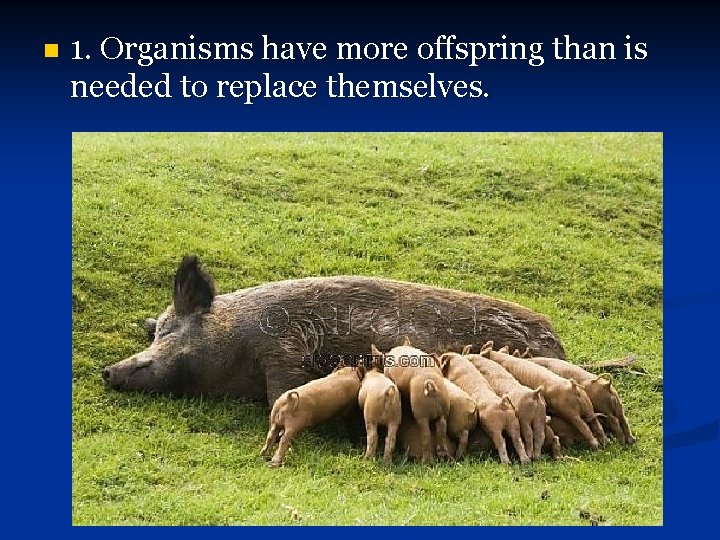
n 1. Organisms have more offspring than is needed to replace themselves.
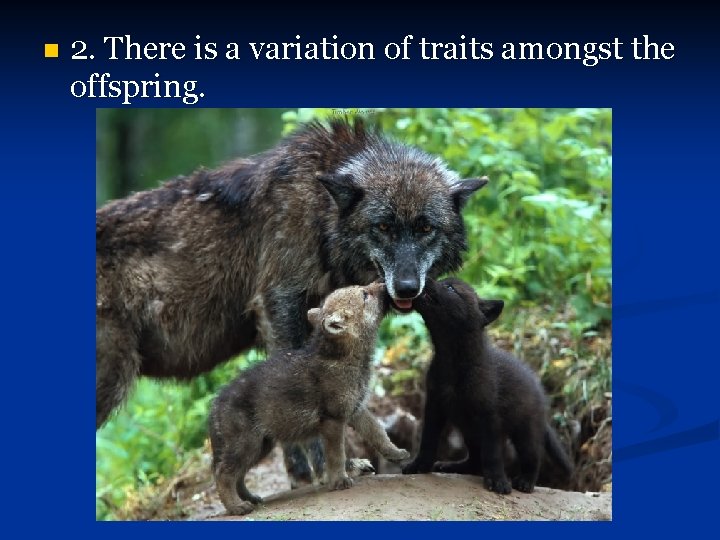
n 2. There is a variation of traits amongst the offspring.
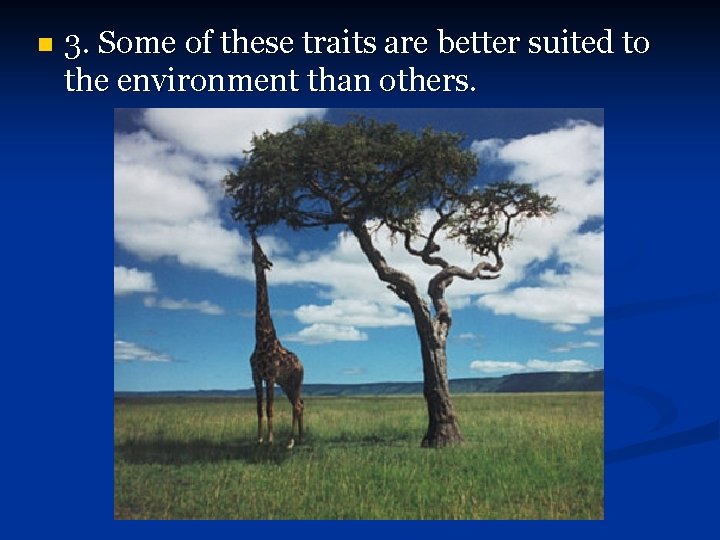
n 3. Some of these traits are better suited to the environment than others.
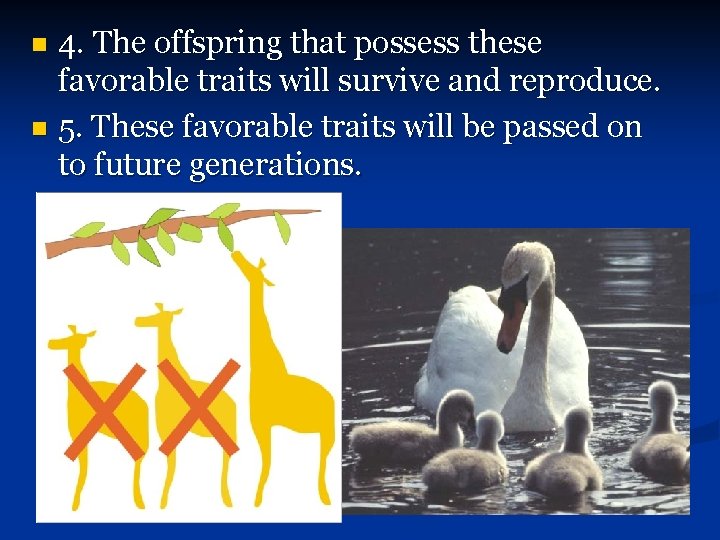
4. The offspring that possess these favorable traits will survive and reproduce. n 5. These favorable traits will be passed on to future generations. n
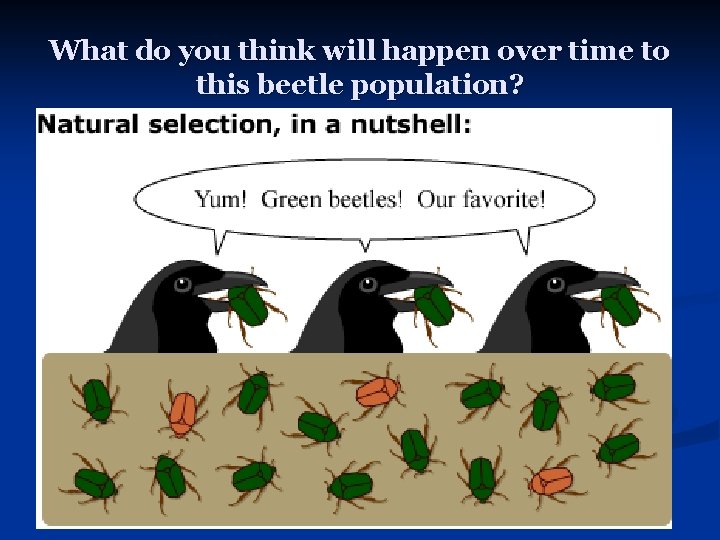
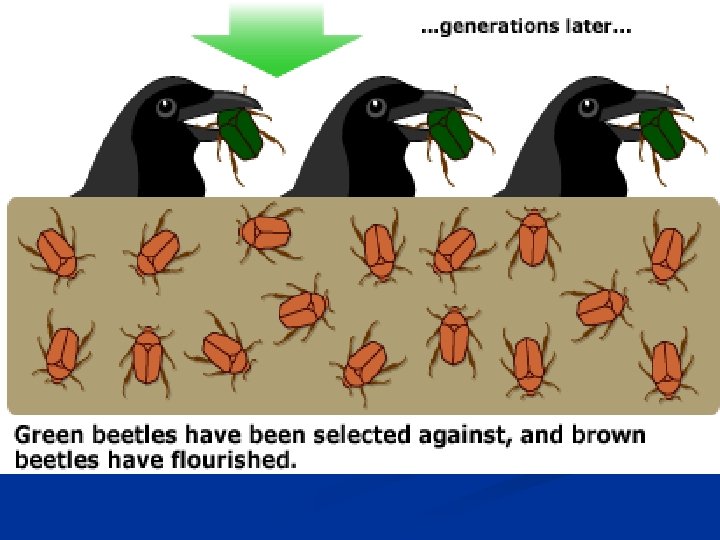
What do you think will happen over time to this beetle population?
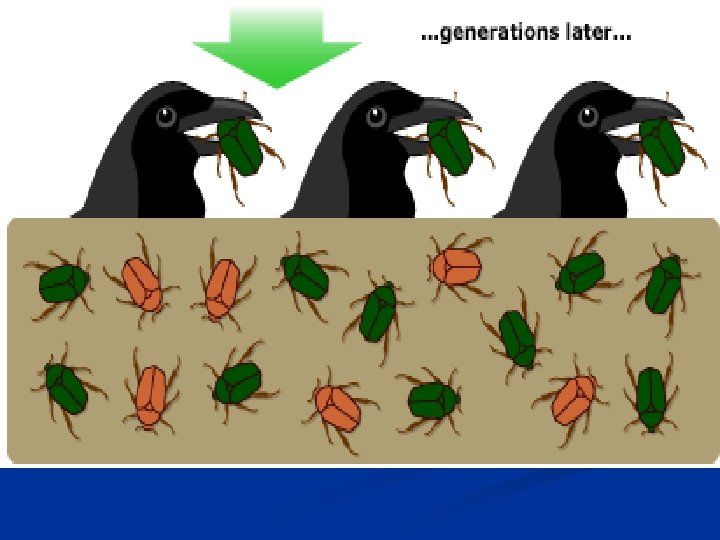
Adaptations n A favorable trait that makes an organism more likely or “fit” to survive. n **Traits are controlled by genes.
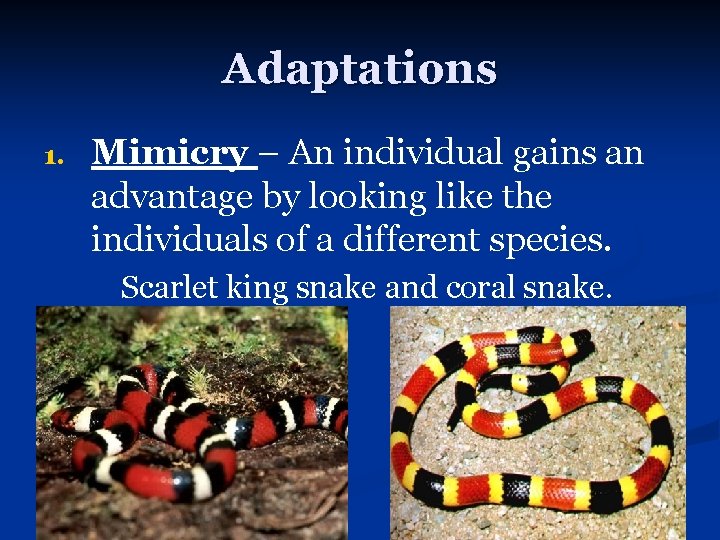
Adaptations 1. Mimicry – An individual gains an advantage by looking like the individuals of a different species. Scarlet king snake and coral snake.
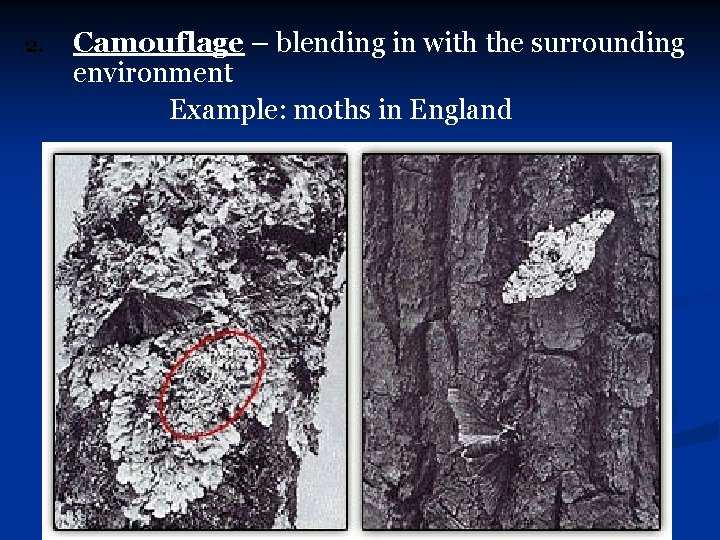
2. Camouflage – blending in with the surrounding environment Example: moths in England
Evidence for Evolution 1. 2. 3. 4. 5. Fossil record Anatomical Embryological DNA Artificial Selection
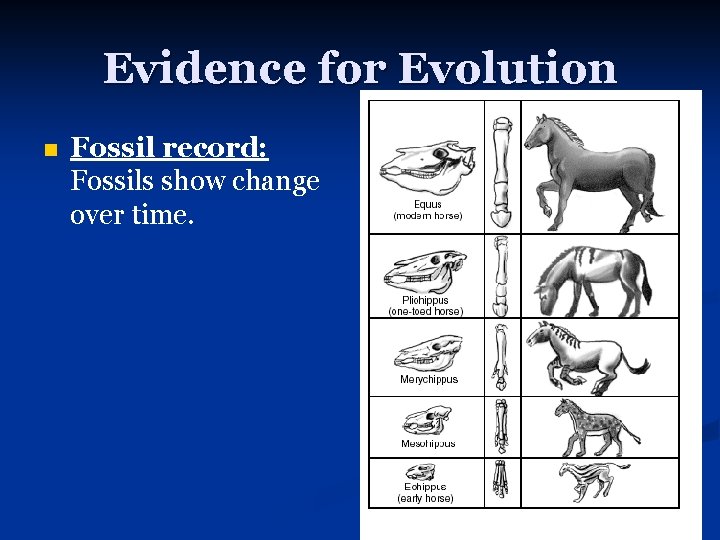
Evidence for Evolution n Fossil record: Fossils show change over time.
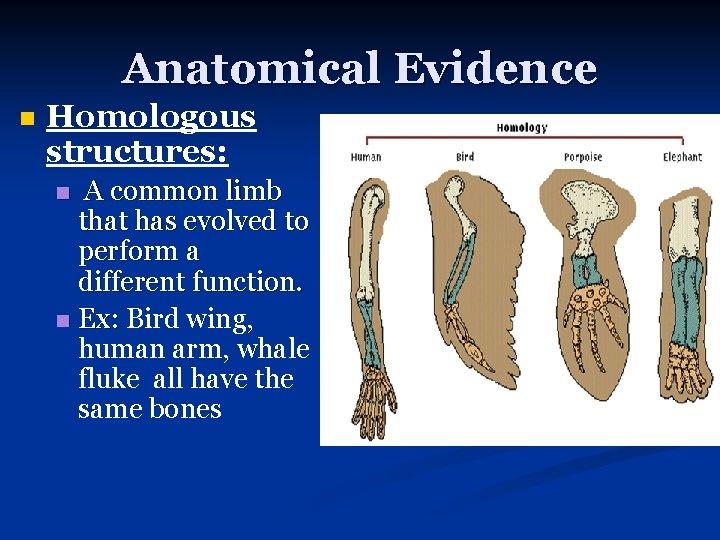
Anatomical Evidence n Homologous structures: A common limb that has evolved to perform a different function. n Ex: Bird wing, human arm, whale fluke all have the same bones n
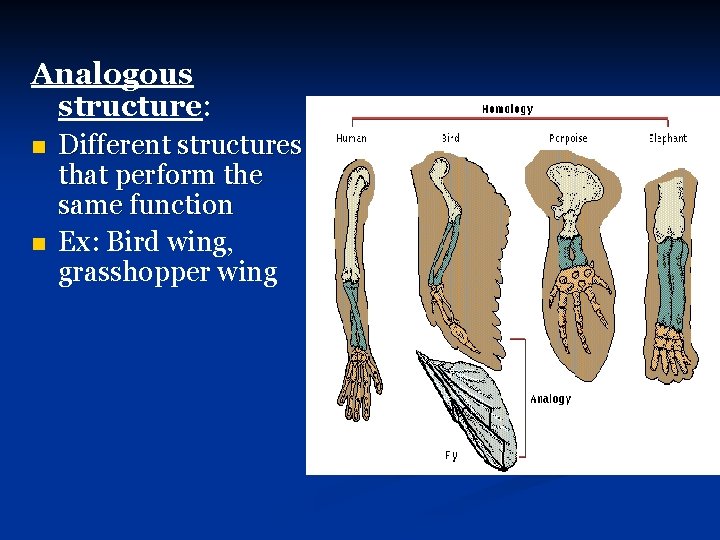
Analogous structure: n n Different structures that perform the same function Ex: Bird wing, grasshopper wing
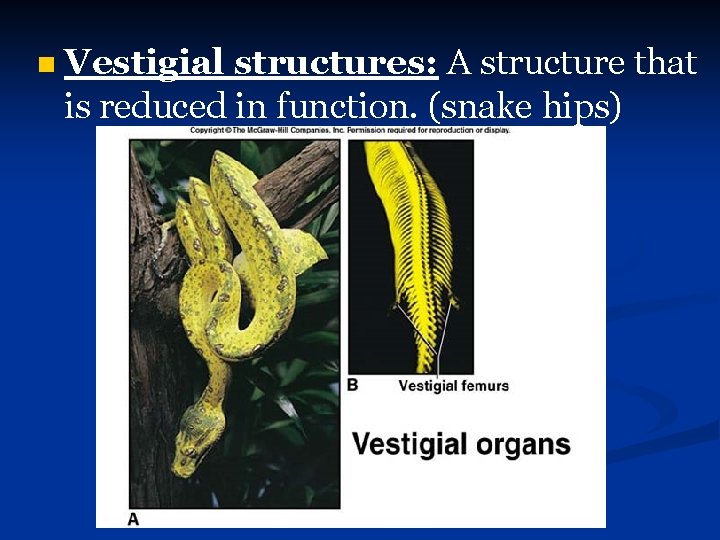
n Vestigial structures: A structure that is reduced in function. (snake hips)
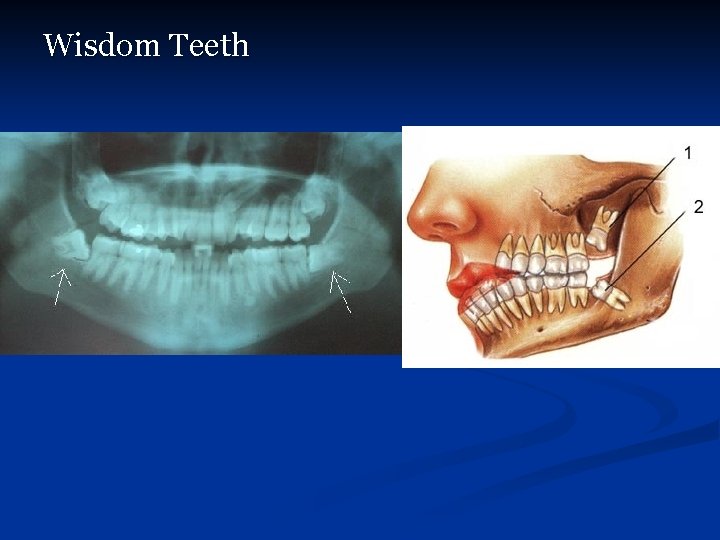
Wisdom Teeth
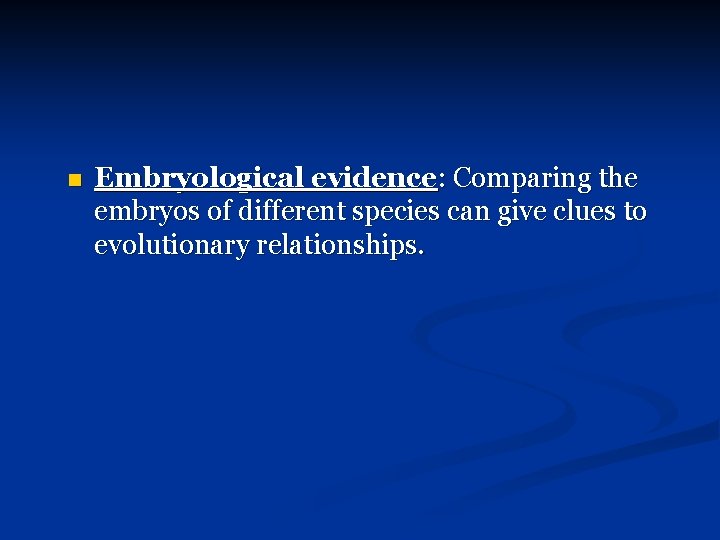
n Embryological evidence: Comparing the embryos of different species can give clues to evolutionary relationships.
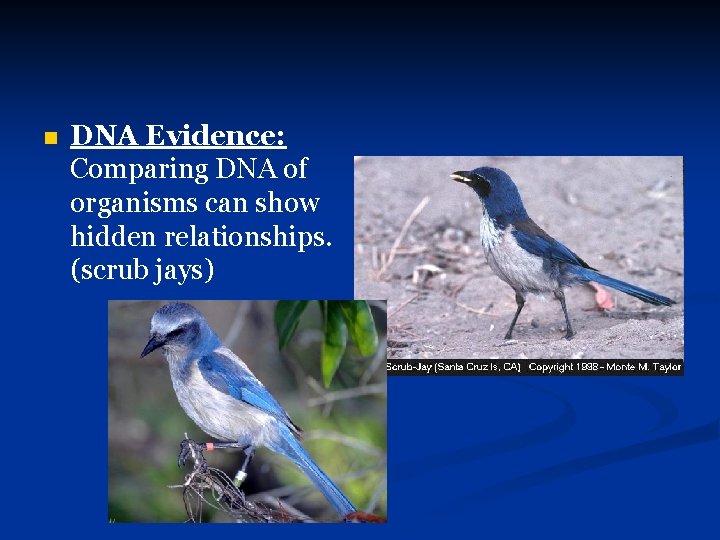
n DNA Evidence: Comparing DNA of organisms can show hidden relationships. (scrub jays)
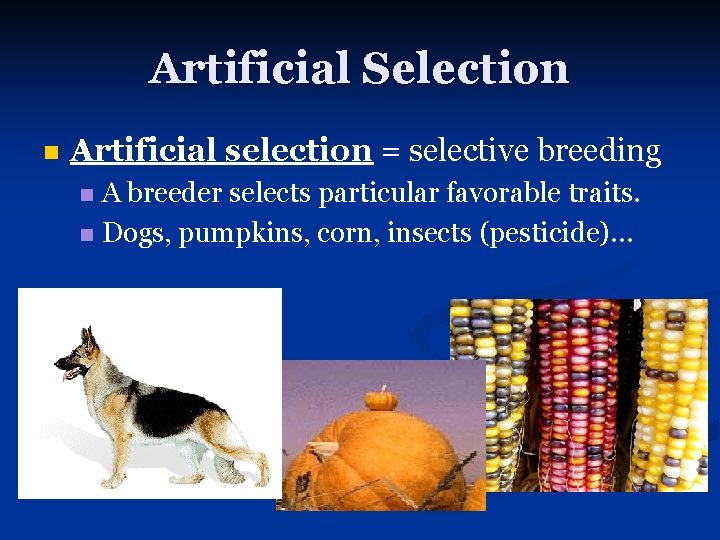
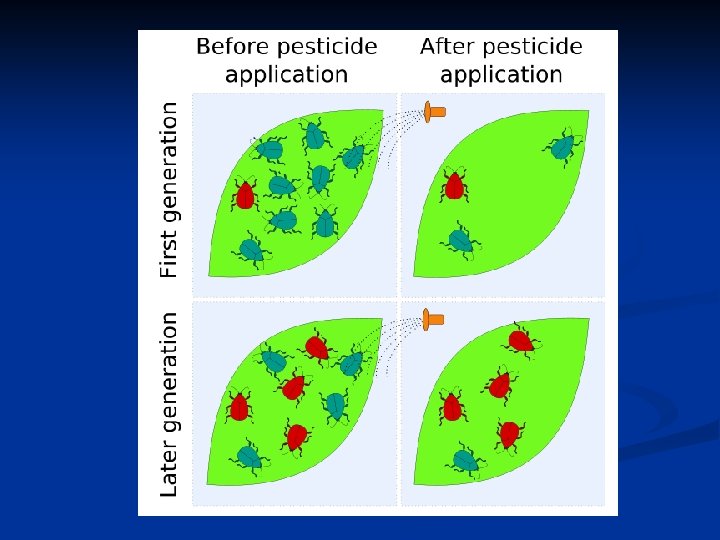
Artificial Selection n Artificial selection = selective breeding A breeder selects particular favorable traits. n Dogs, pumpkins, corn, insects (pesticide)… n
Mechanisms of Evolution: n Evolution occurs when the genes in a population change. *Populations evolve, individuals don’t! n Basic mechanisms of evolutionary change. 1. 2. 3. 4. Natural Selection Mutations Genetic Drift Gene Flow
Mechanisms of Evolution: 1. Mutations: Changes in DNA sequences that result from environmental factors (ex: radiation or chemicals) or just by chance.
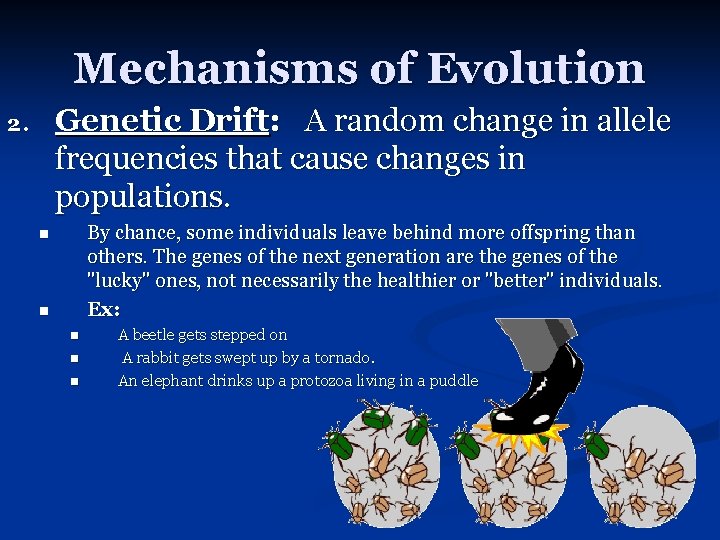
Mechanisms of Evolution Genetic Drift: A random change in allele frequencies that cause changes in populations. 2. By chance, some individuals leave behind more offspring than others. The genes of the next generation are the genes of the "lucky" ones, not necessarily the healthier or "better" individuals. Ex: n n n A beetle gets stepped on A rabbit gets swept up by a tornado. An elephant drinks up a protozoa living in a puddle
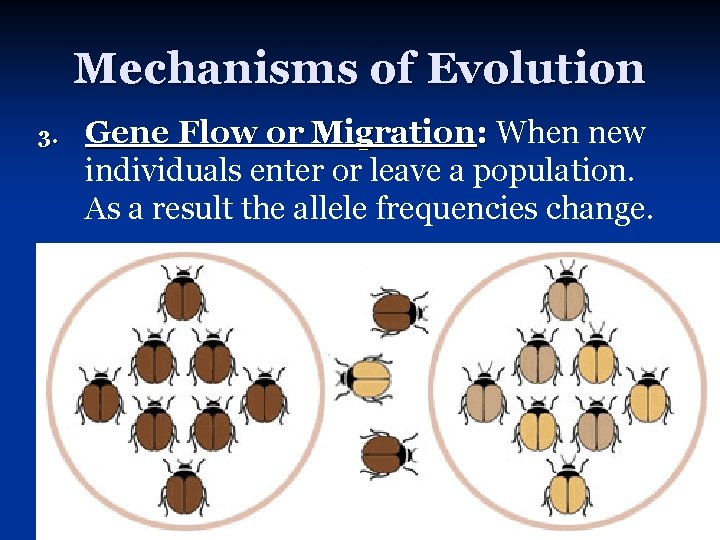
Mechanisms of Evolution 3. Gene Flow or Migration: When new individuals enter or leave a population. As a result the allele frequencies change.
Speciation: a new species is created. n Species- A group of organisms that breed with one another and produce fertile offspring.
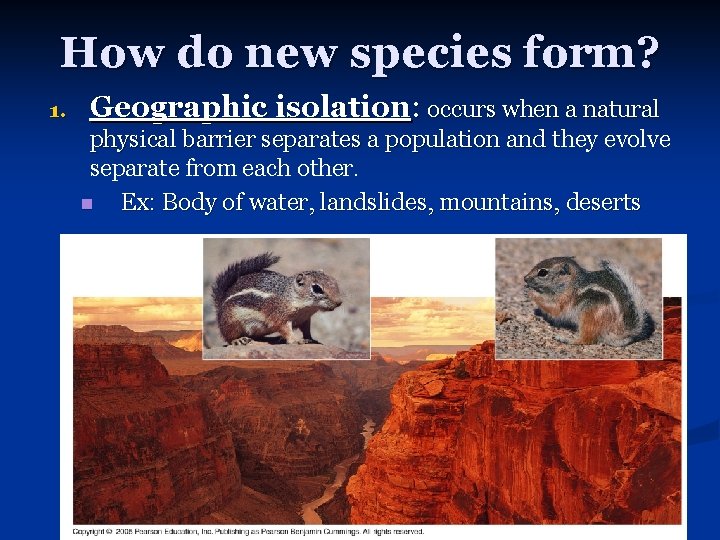
How do new species form? 1. Geographic isolation: occurs when a natural physical barrier separates a population and they evolve t separate from each other. n Ex: Body of water, landslides, mountains, deserts
How do new species form? 2. Reproductive Isolation occurs when formerly interbreeding population can no longer breed and produce fertile offspring. n Geographic isolation can lead to reproductive isolation.
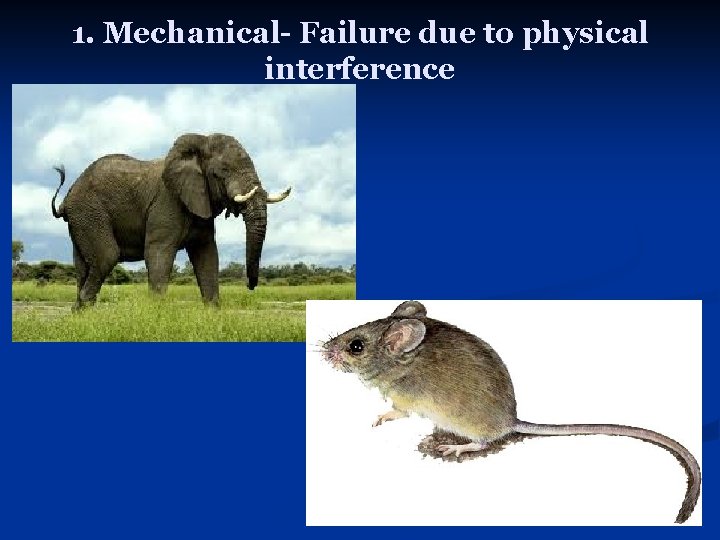
1. Mechanical- Failure due to physical interference
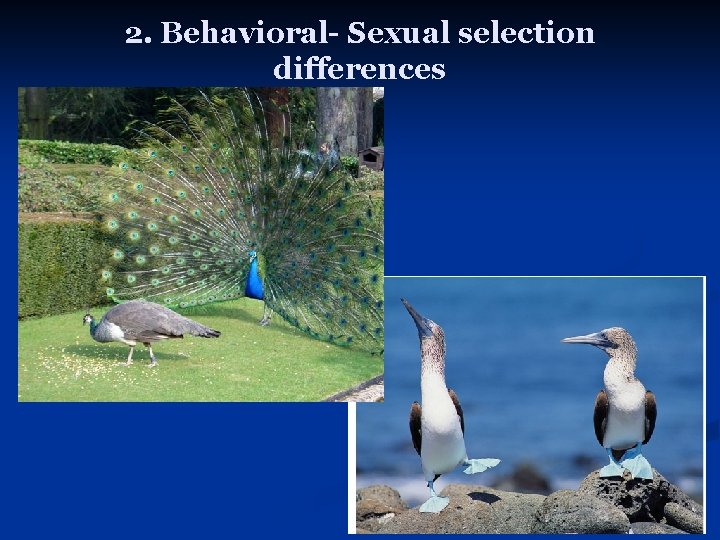
2. Behavioral- Sexual selection differences
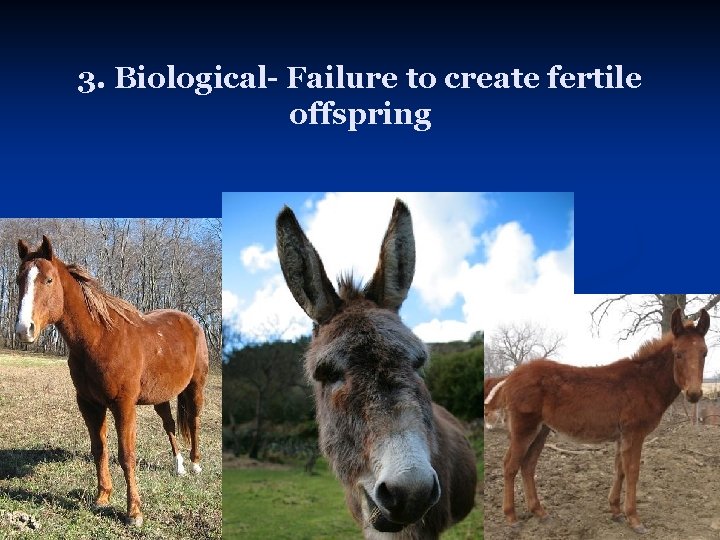
3. Biological- Failure to create fertile offspring
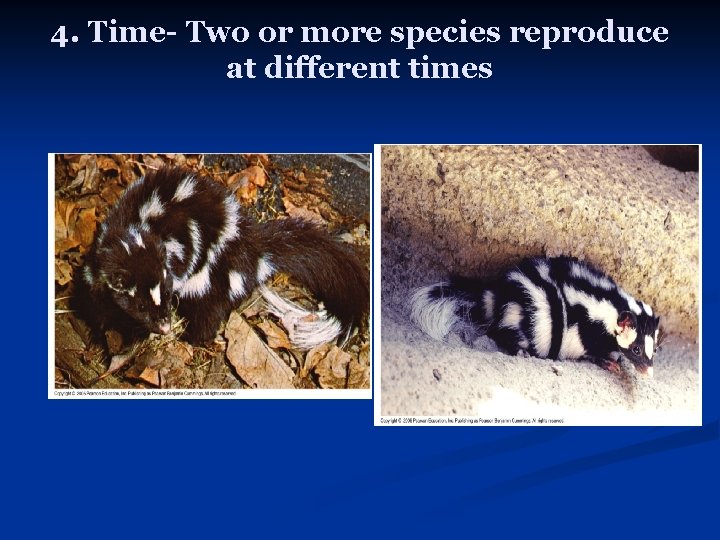
4. Time- Two or more species reproduce at different times
Patterns of Evolution n Divergent Evolution: When animals evolve away from their common ancestors to become more successful in their niches. n Ex. Galapagos Finches, and Hawaiian Honeycreepers
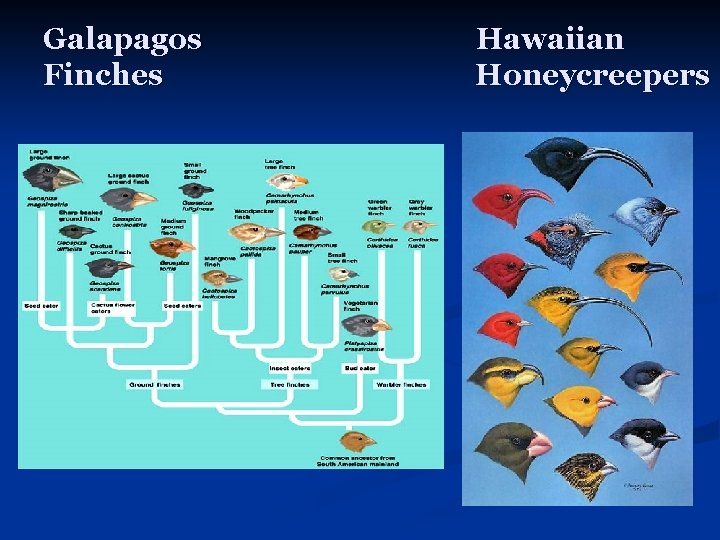
Galapagos Finches Hawaiian Honeycreepers
Patterns of Evolution n Convergent Evolution: When two or more distantly related organisms evolve similar characteristics because they occupy the same niches.
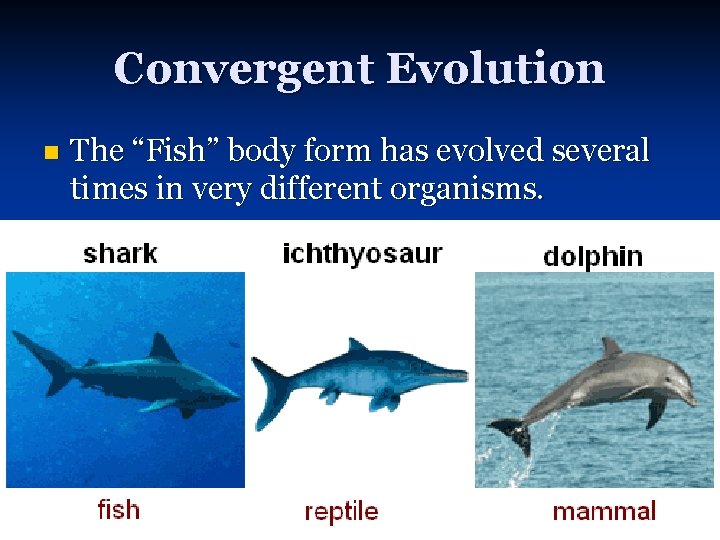
Convergent Evolution n The “Fish” body form has evolved several times in very different organisms.
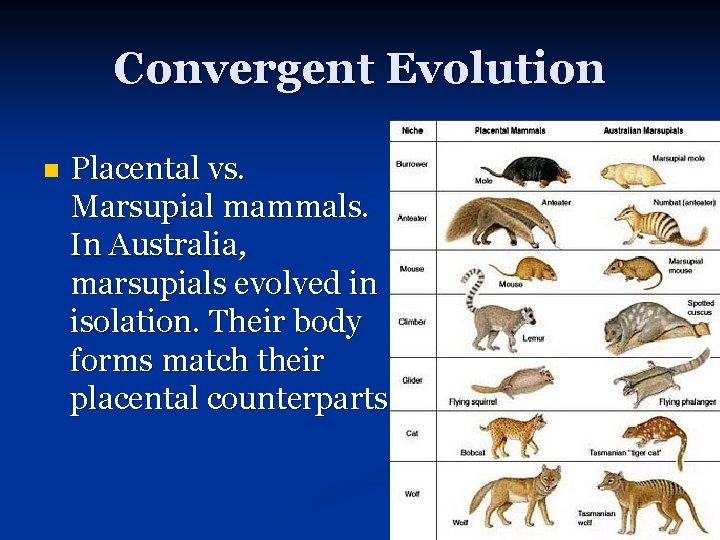
Convergent Evolution n Placental vs. Marsupial mammals. In Australia, marsupials evolved in isolation. Their body forms match their placental counterparts.
- Slides: 48