
Evolution as Genetic Change What is Evolution REVIEW
- Slides: 13
Evolution as Genetic Change
What is Evolution REVIEW!!!!!!! • Any change over time in the relative frequencies of alleles in a population – It is populations not individual organisms that can evolve over time
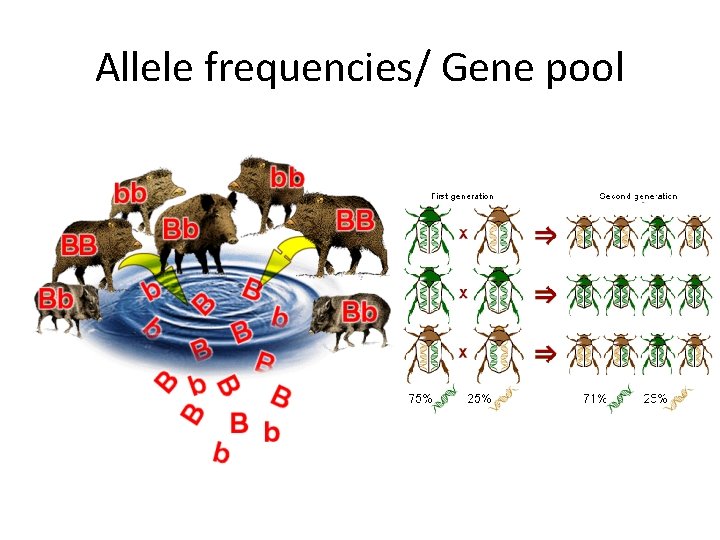
Allele frequencies/ Gene pool
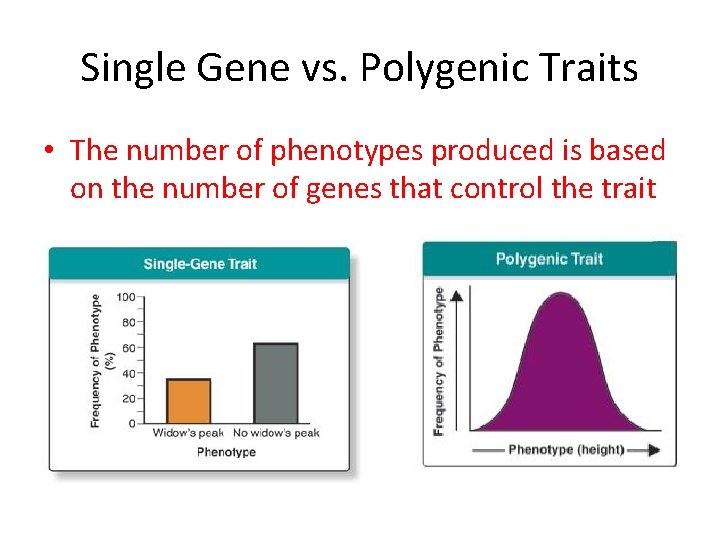
Single Gene vs. Polygenic Traits • The number of phenotypes produced is based on the number of genes that control the trait
Single Gene Trait • Most single gene traits have only 2 alleles – Example widows peak • Allele frequencies do not always match Mendelian ratios – Why? • Examples of single-gene traits widows peak, tongue rolling, attached ear lobes, hitch-hikers thumb
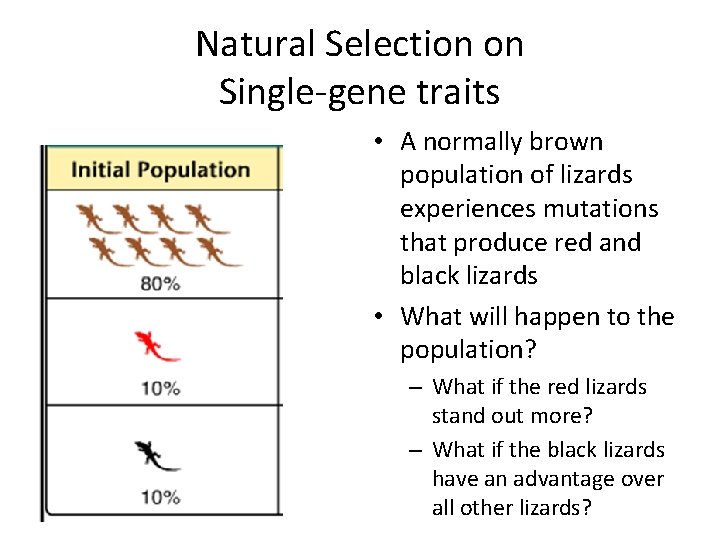
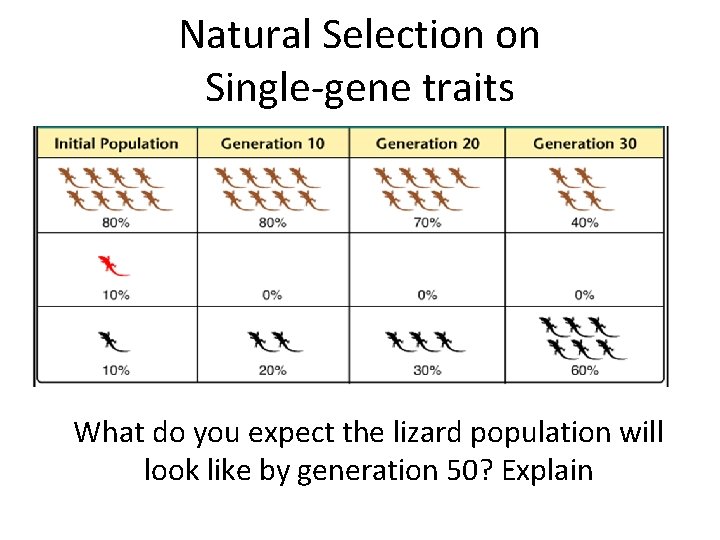
Natural Selection on Single-gene traits • A normally brown population of lizards experiences mutations that produce red and black lizards • What will happen to the population? – What if the red lizards stand out more? – What if the black lizards have an advantage over all other lizards?
Natural Selection on Single-gene traits What do you expect the lizard population will look like by generation 50? Explain
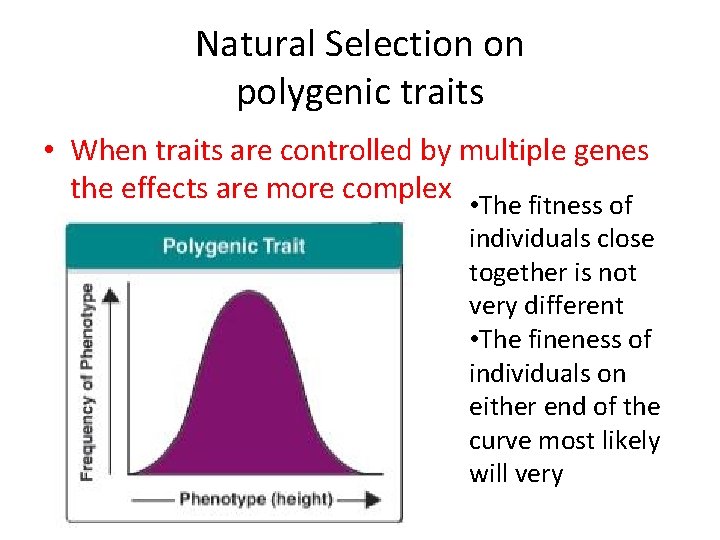
Polygenic traits • Traits that are controlled by 2 or more genes – 2 or more alleles for each trait • There are many possible genotypes and phenotypes for the polygenic trait – Produces a range of phenotypes • Examples of polygenic traits height, eye color, hair color
Natural Selection on polygenic traits • When traits are controlled by multiple genes the effects are more complex • The fitness of individuals close together is not very different • The fineness of individuals on either end of the curve most likely will very
Natural Selection on polygenic traits • When fitness varies natural selection can act Three different ways that natural selection can affect the distribution of phenotypes • Directional Selection • Stabilizing Selection • Disruptive Selection
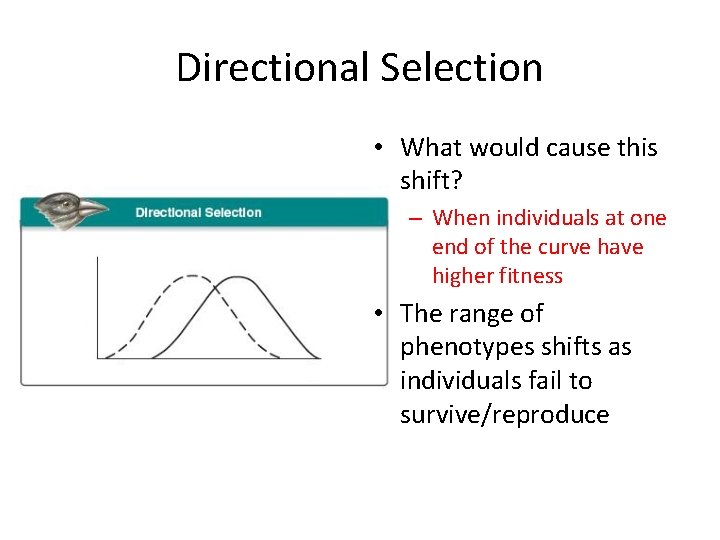
Directional Selection • What would cause this shift? – When individuals at one end of the curve have higher fitness • The range of phenotypes shifts as individuals fail to survive/reproduce
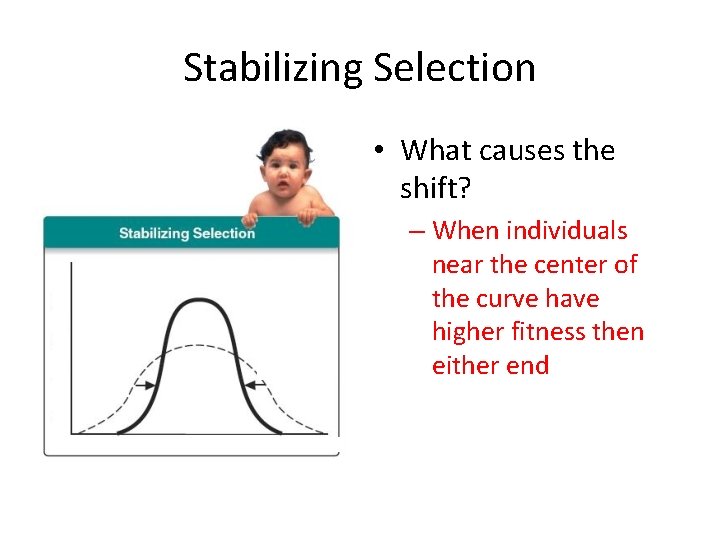
Stabilizing Selection • What causes the shift? – When individuals near the center of the curve have higher fitness then either end
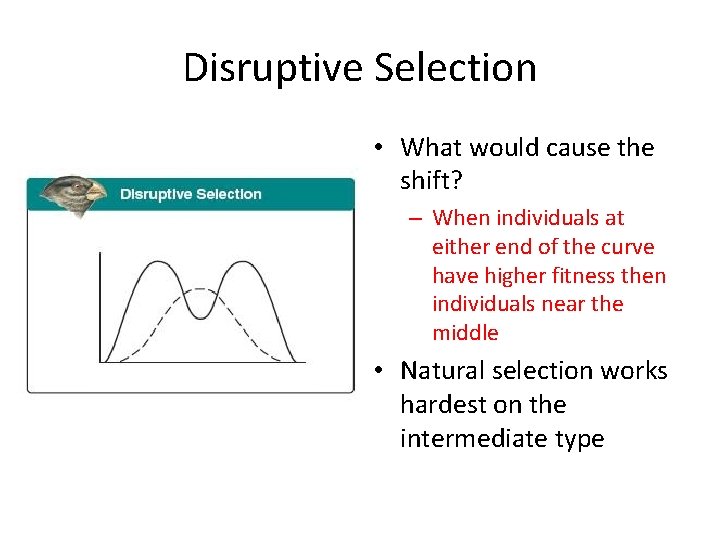
Disruptive Selection • What would cause the shift? – When individuals at either end of the curve have higher fitness then individuals near the middle • Natural selection works hardest on the intermediate type