
Evolution as Genetic Change 16 2 Evolution as
- Slides: 29
Evolution as Genetic Change
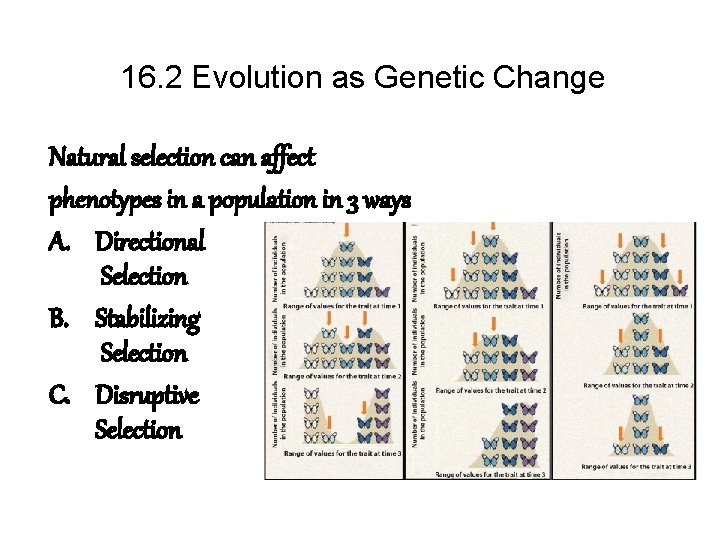
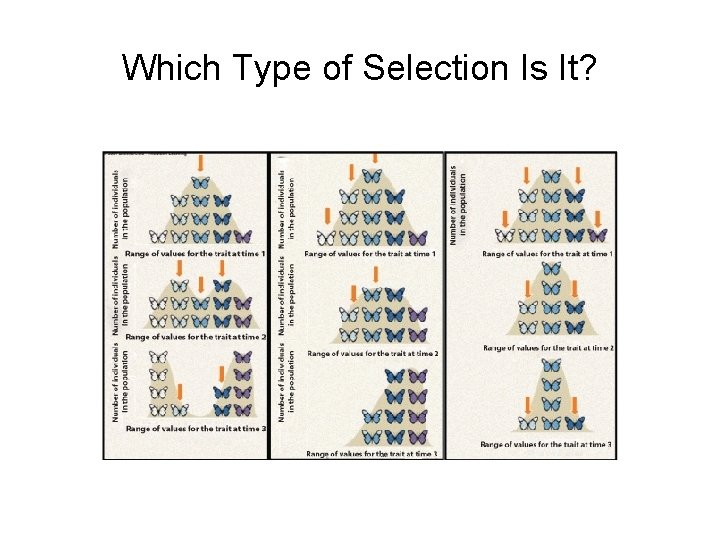
16. 2 Evolution as Genetic Change Natural selection can affect phenotypes in a population in 3 ways A. Directional Selection B. Stabilizing Selection C. Disruptive Selection
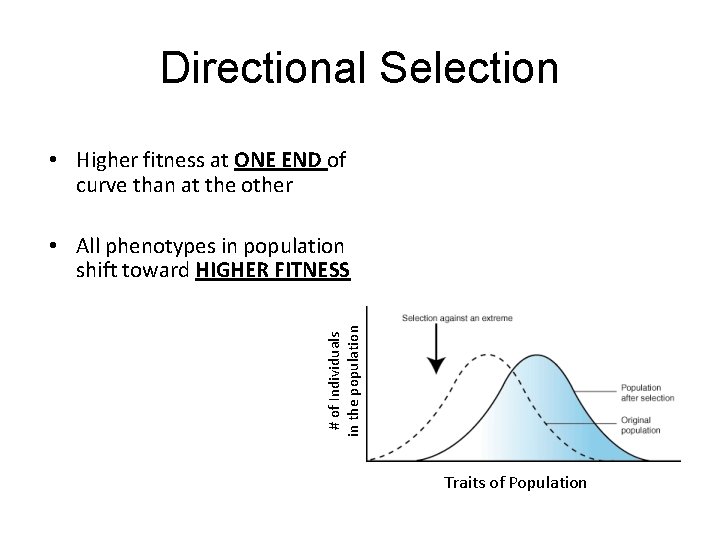
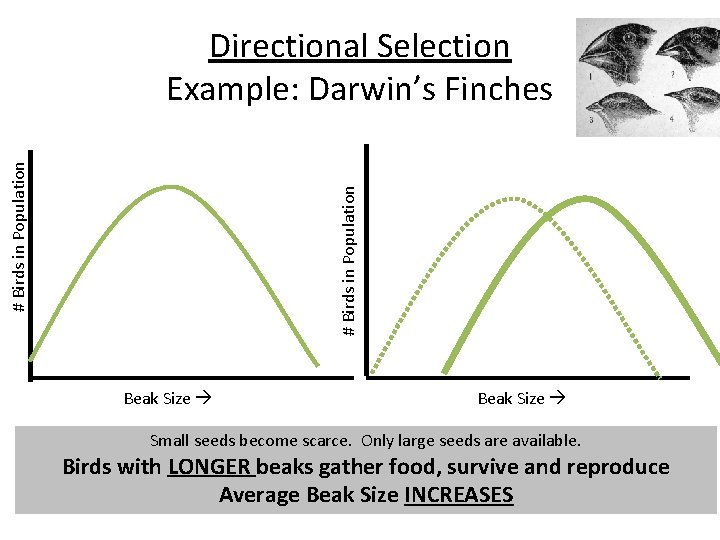
Directional Selection • Higher fitness at ONE END of curve than at the other # of Individuals in the population • All phenotypes in population shift toward HIGHER FITNESS Traits of Population
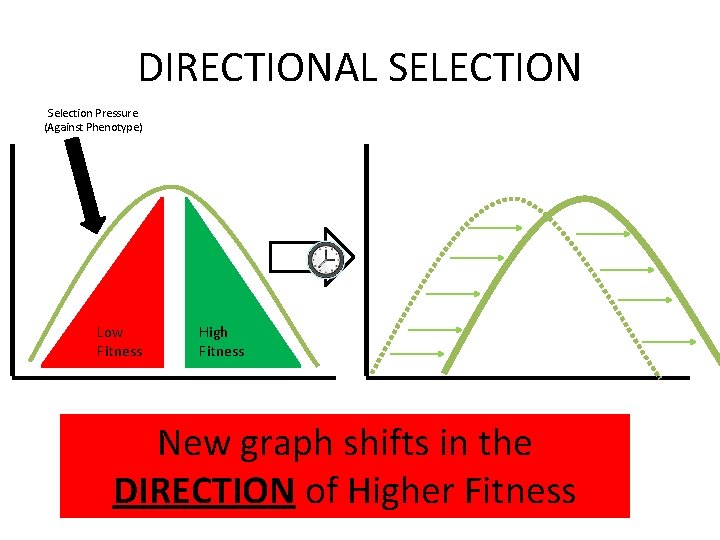
DIRECTIONAL SELECTION Selection Pressure (Against Phenotype) Low Fitness High Fitness New graph shifts in the DIRECTION of Higher Fitness
# Birds in Population Directional Selection Example: Darwin’s Finches Beak Size Small seeds become scarce. Only large seeds are available. Birds with LONGER beaks gather food, survive and reproduce Average Beak Size INCREASES
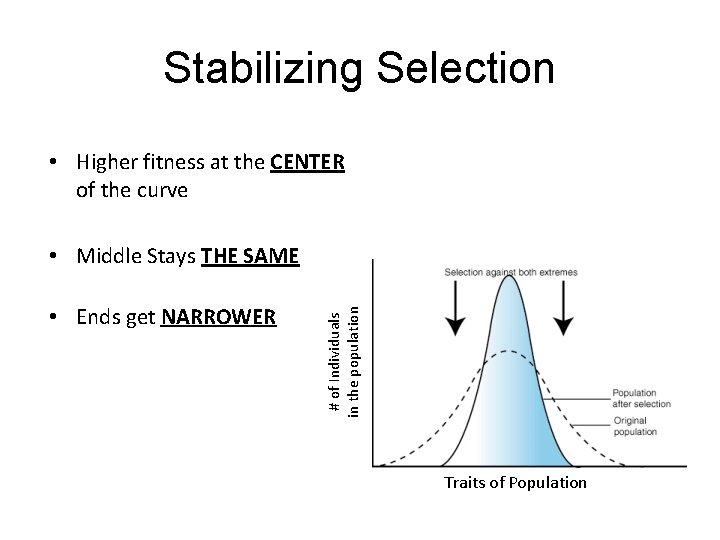
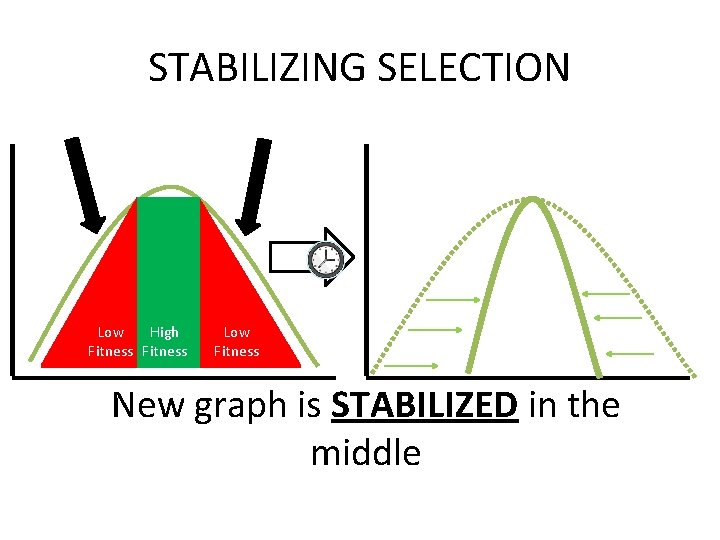
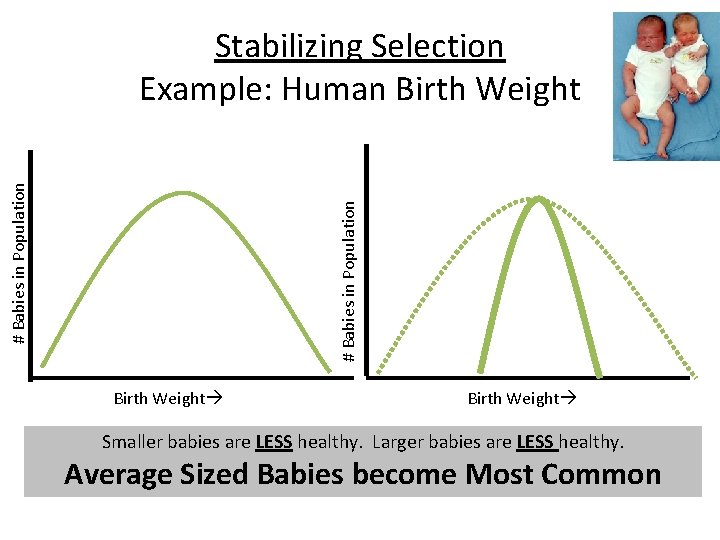
Stabilizing Selection • Higher fitness at the CENTER of the curve • Ends get NARROWER # of Individuals in the population • Middle Stays THE SAME EXAMPLE- birth weight of human babies • Smaller than average babies = less likely to be healthy • Larger than average babies = less likely to be healthy Traits of Population
STABILIZING SELECTION Selection Pressure (Against Phenotype) Low High Fitness Low Fitness New graph is STABILIZED in the middle
# Babies in Population Stabilizing Selection Example: Human Birth Weight Smaller babies are LESS healthy. Larger babies are LESS healthy. Average Sized Babies become Most Common
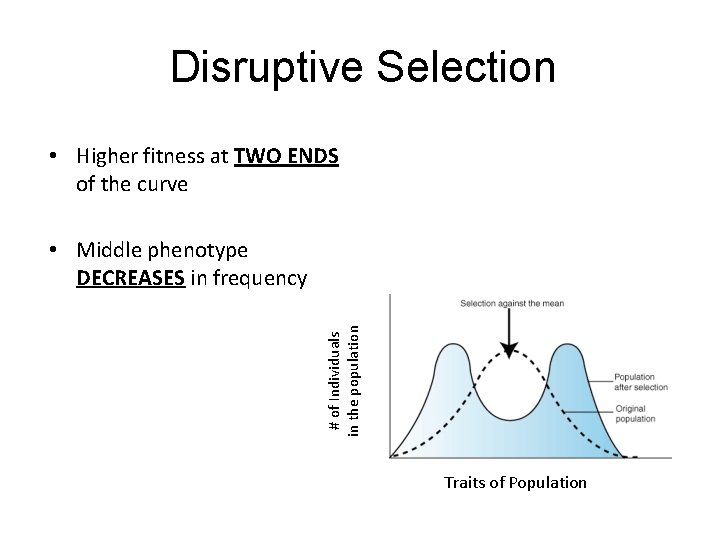
Disruptive Selection • Higher fitness at TWO ENDS of the curve • Middle phenotype DECREASES in frequency # of Individuals in the population EXAMPLE- large seeds and small seeds become more common and there are few medium seeds • Both birds with small beaks and large beaks are best adapted to eat those seeds • Can result in 2 subgroups Traits of Population
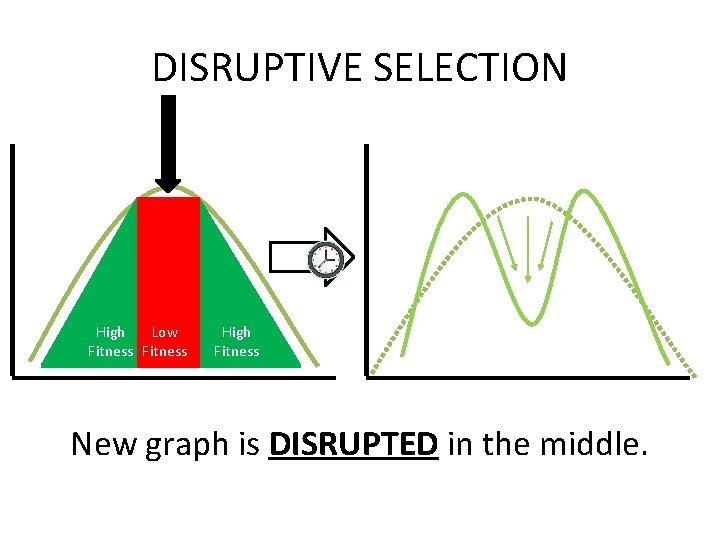
DISRUPTIVE SELECTION Selection Pressure (Against Phenotype) High Low Fitness High Fitness New graph is DISRUPTED in the middle.
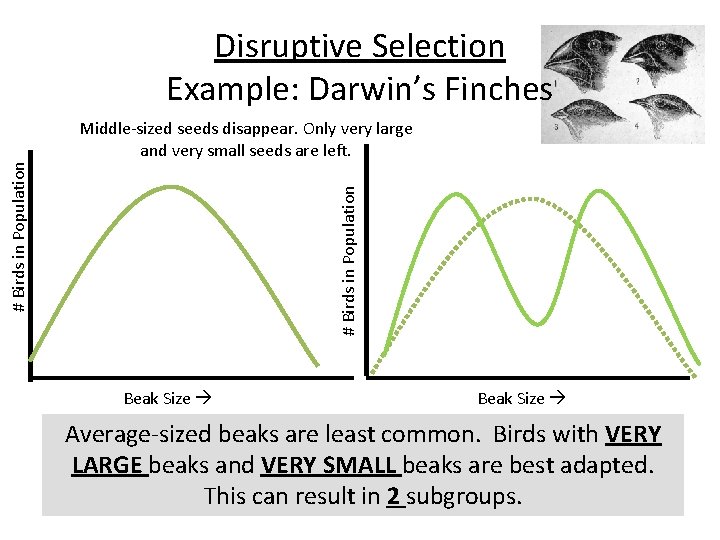
Disruptive Selection Example: Darwin’s Finches # Birds in Population Middle-sized seeds disappear. Only very large and very small seeds are left. Beak Size Average-sized beaks are least common. Birds with VERY LARGE beaks and VERY SMALL beaks are best adapted. This can result in 2 subgroups.
Types Of Selection With Bird Beaks http: //player. discoveryeducation. com/index. cfm? guid. Asset. Id=7016 E 4 B 0 -0335 -42 A 9 -BF 3 E-BB 21 D 2 A 4 D 9 C 8
Which Type of Selection Is It?
Genetic Drift • RANDOM change in allele frequency Happens by CHANCE EVENTS Happens in SMALL POPULATIONS NOT NATURAL SELECTION (Not related to fitness) • Coin Flip – 1, 000 times • How many Heads? – 10 times • How many Heads?
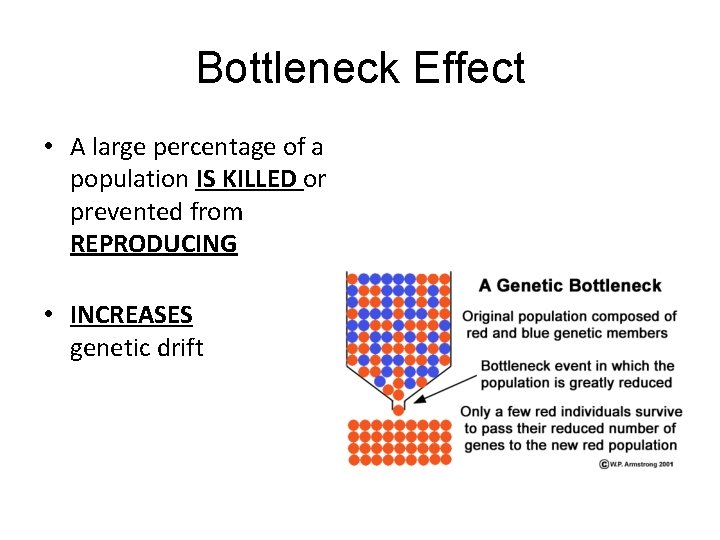
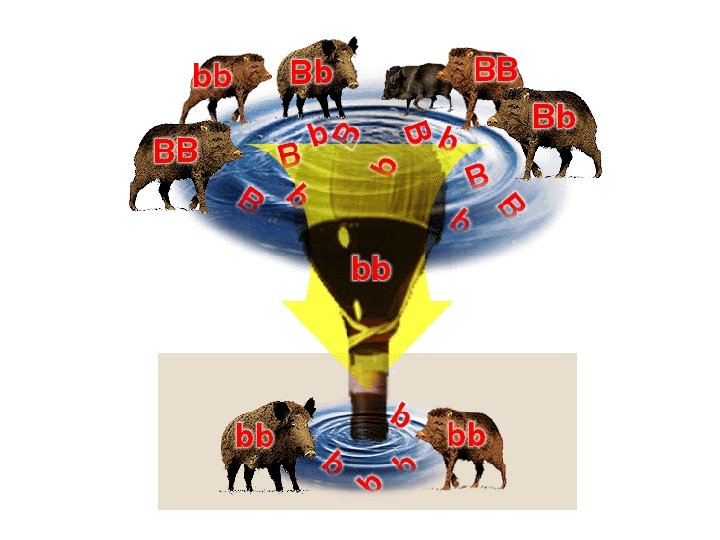
Bottleneck Effect • A large percentage of a population IS KILLED or prevented from REPRODUCING • INCREASES genetic drift
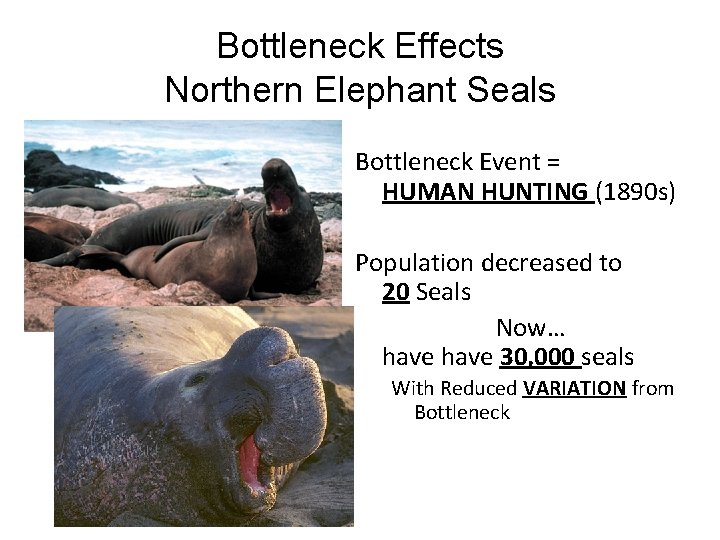
Bottleneck Effects Northern Elephant Seals Bottleneck Event = HUMAN HUNTING (1890 s) Population decreased to 20 Seals Now… have 30, 000 seals With Reduced VARIATION from Bottleneck
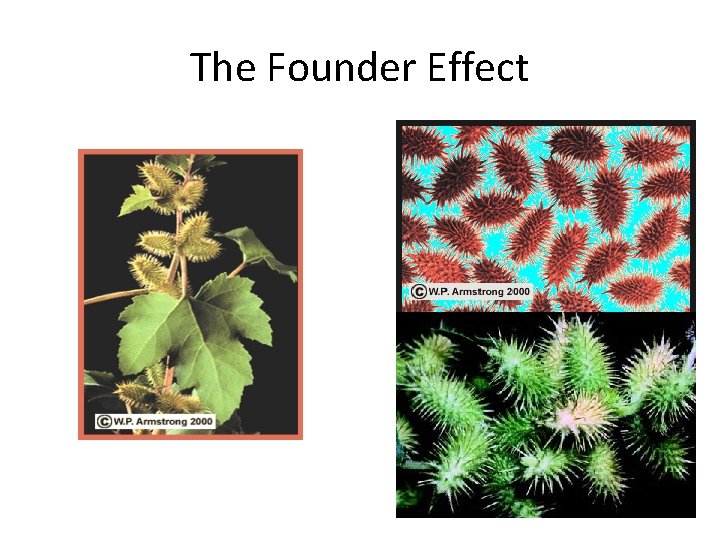
The Founder Effect
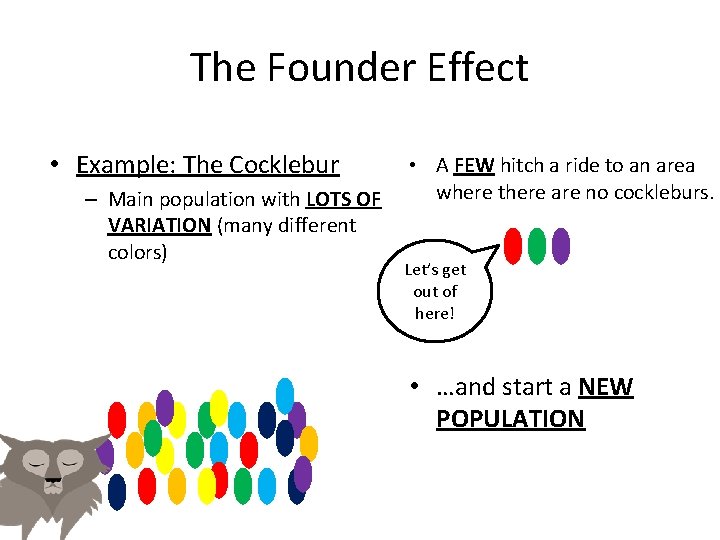
The Founder Effect • Example: The Cocklebur – Main population with LOTS OF VARIATION (many different colors) • A FEW hitch a ride to an area where there are no cockleburs. Let’s get out of here! • …and start a NEW POPULATION
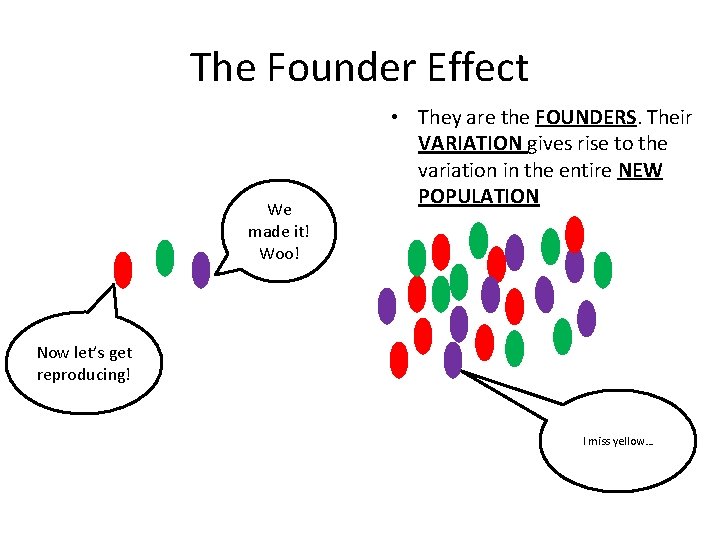
The Founder Effect We made it! Woo! • They are the FOUNDERS. Their VARIATION gives rise to the variation in the entire NEW POPULATION Now let’s get reproducing! I miss yellow…
Founder Effect • A type of Genetic Drift after a SUBGROUP breaks away to form a new population • From Your Articles: Amish Communities in Pennsylvania – Ellis-van Creveld syndrome • EXTRA fingers + toes • Abnormal TEETH + nails • A hole in the HEART
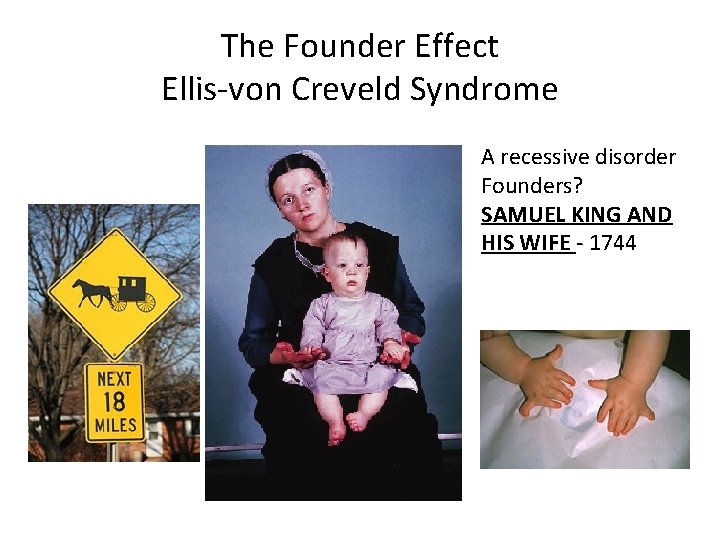
The Founder Effect Ellis-von Creveld Syndrome A recessive disorder Founders? SAMUEL KING AND HIS WIFE - 1744
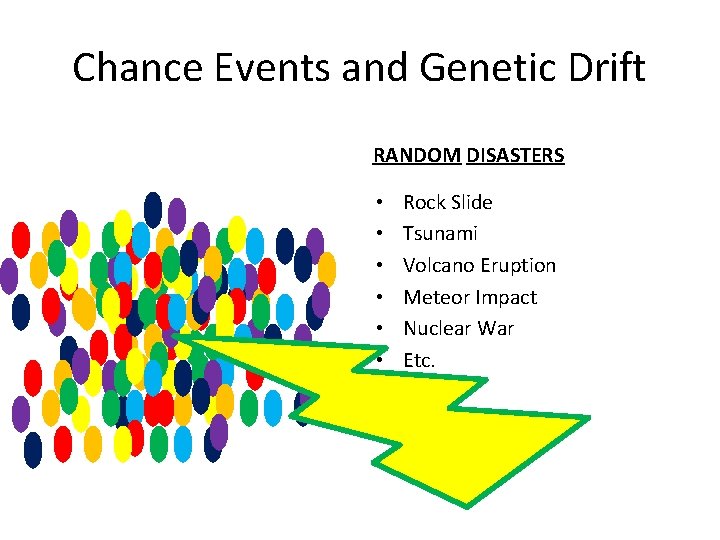
Chance Events and Genetic Drift RANDOM DISASTERS • • • Rock Slide Tsunami Volcano Eruption Meteor Impact Nuclear War Etc.
GENETIC EQUILIBRIUM DEFINITION: Hardy-Weinberg Principle When allele frequencies in a population DON’T CHANGE States that allele frequencies in a population will remain CONSTANT as long as 5 things are true… NO EVOLUTION HAPPENS
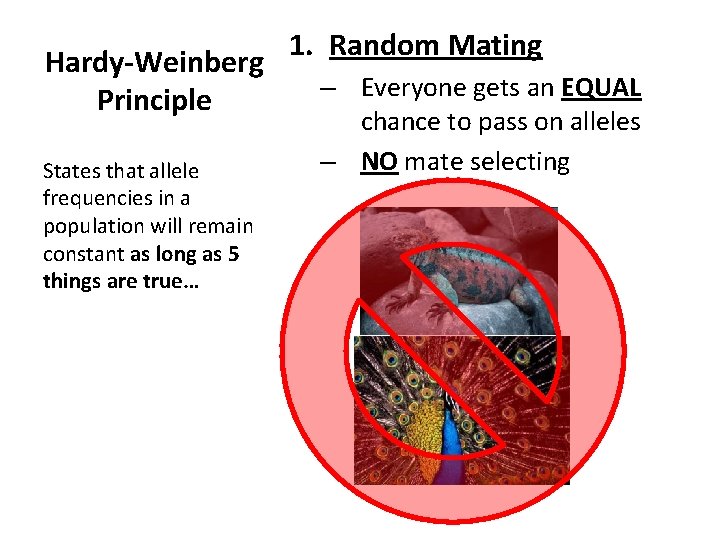
Hardy-Weinberg Principle States that allele frequencies in a population will remain constant as long as 5 things are true… 1. Random Mating – Everyone gets an EQUAL chance to pass on alleles – NO mate selecting
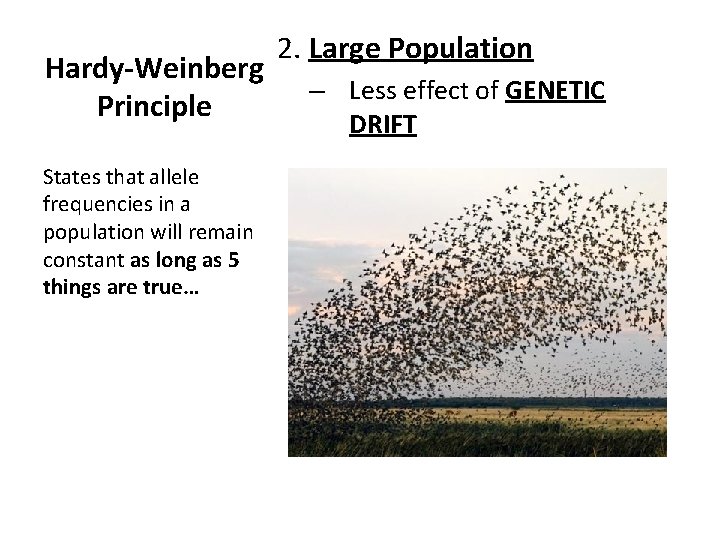
Hardy-Weinberg Principle States that allele frequencies in a population will remain constant as long as 5 things are true… 2. Large Population – Less effect of GENETIC DRIFT
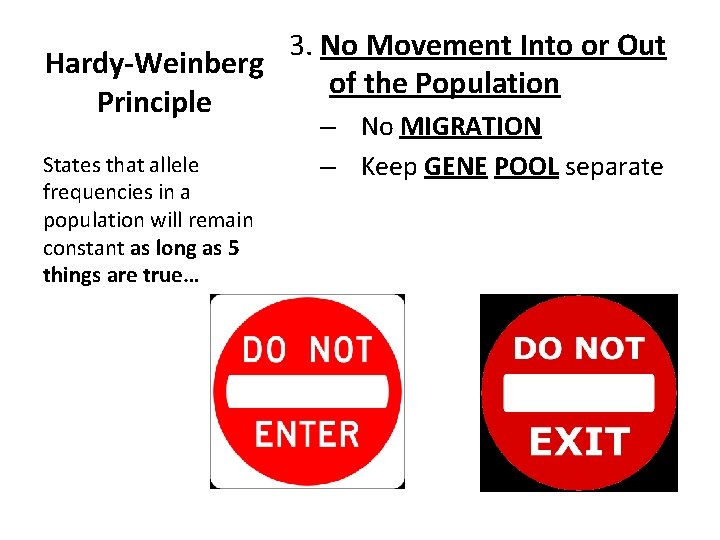
3. No Movement Into or Out Hardy-Weinberg of the Population Principle States that allele frequencies in a population will remain constant as long as 5 things are true… – No MIGRATION – Keep GENE POOL separate
Hardy-Weinberg Principle States that allele frequencies in a population will remain constant as long as 5 things are true… 4. No Mutations – No NEW alleles in the population
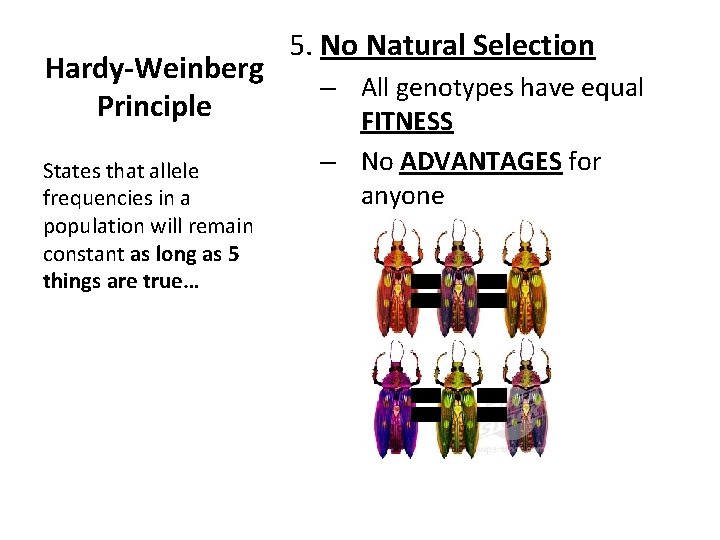
Hardy-Weinberg Principle States that allele frequencies in a population will remain constant as long as 5 things are true… 5. No Natural Selection – All genotypes have equal FITNESS – No ADVANTAGES for anyone