
Evolution and Natural Selection 5 4 How does
- Slides: 12
Evolution and Natural Selection 5 -4
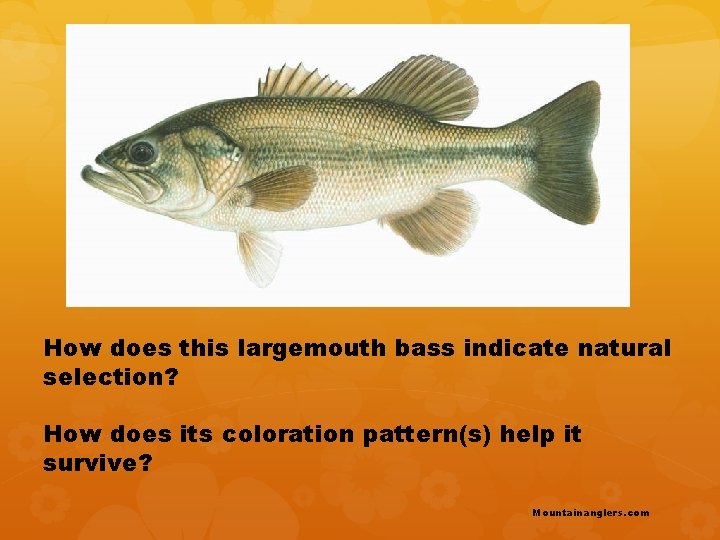
How does this largemouth bass indicate natural selection? How does its coloration pattern(s) help it survive? Mountainanglers. com
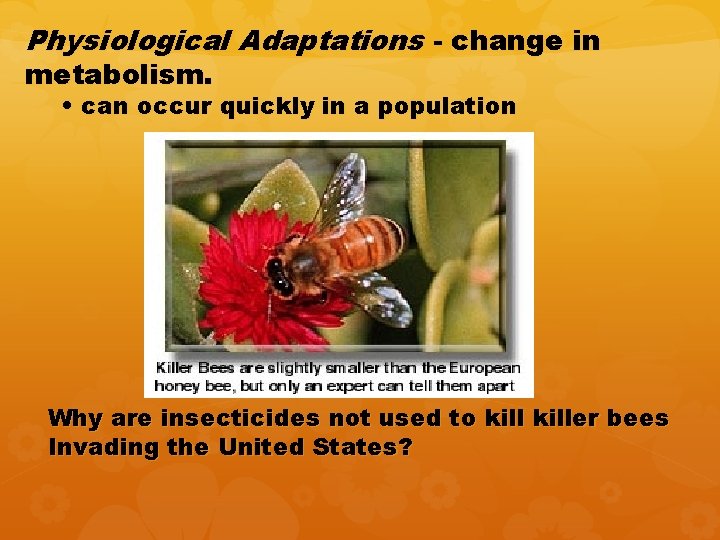
Physiological Adaptations - change in metabolism. • can occur quickly in a population Why are insecticides not used to killer bees Invading the United States?
Review of Evidence Fossil record Homologous structures - common origin (similar structure, diff. function) Analogous structures – similar in function, diff. structure, no common origin Vestigial structures – no function now, only in past Biochemistry
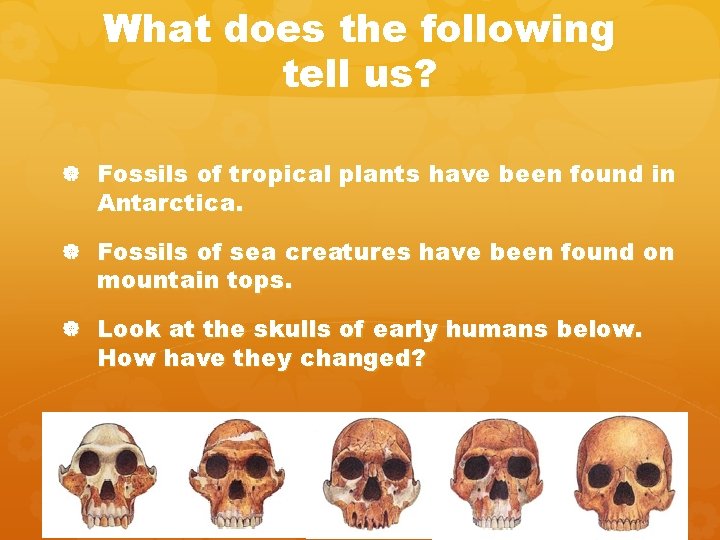
What does the following tell us? Fossils of tropical plants have been found in Antarctica. Fossils of sea creatures have been found on mountain tops. Look at the skulls of early humans below. How have they changed?
Evolution Time Frame Gradualism – evolutionary change occurs slowly, continuously. Punctuated Equilibrium – species have long periods of stability (millions of years) followed by brief periods of major changes
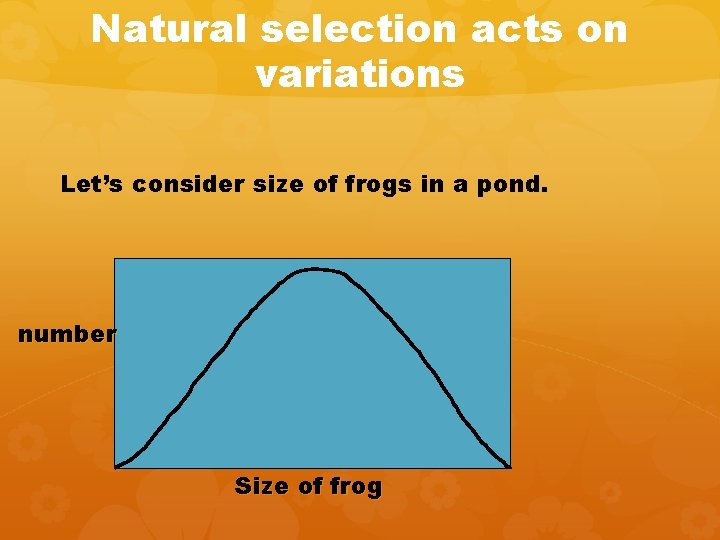
Natural selection acts on variations Let’s consider size of frogs in a pond. number Size of frog
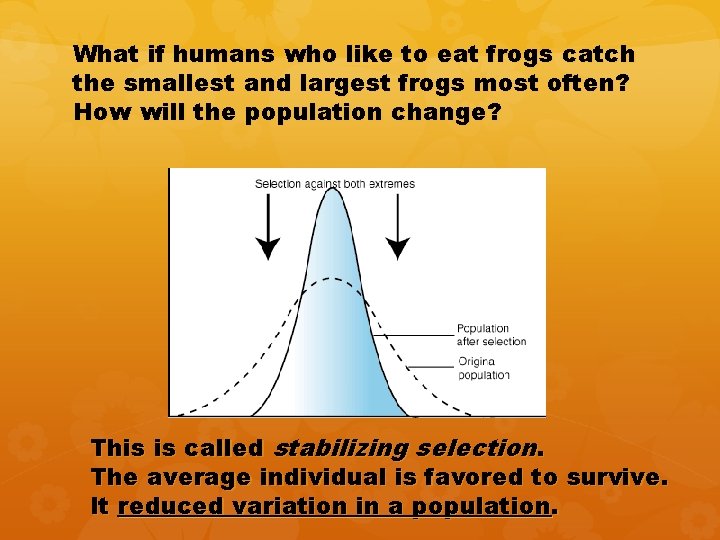
What if humans who like to eat frogs catch the smallest and largest frogs most often? How will the population change? This is called stabilizing selection. The average individual is favored to survive. It reduced variation in a population.
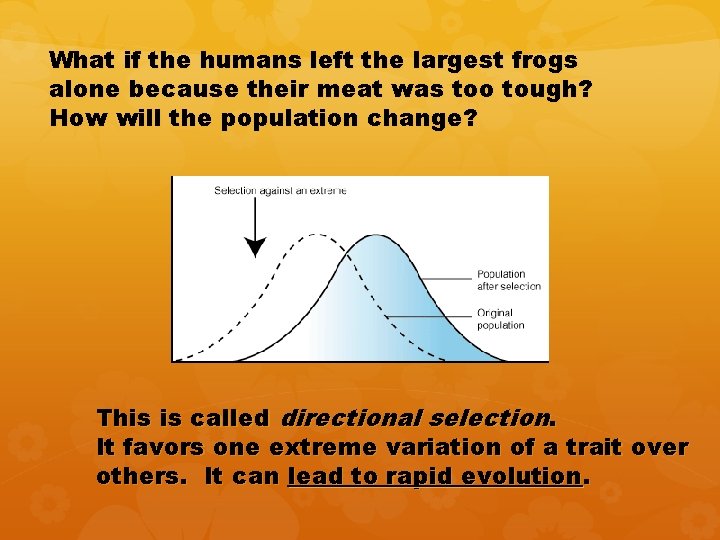
What if the humans left the largest frogs alone because their meat was too tough? How will the population change? This is called directional selection. It favors one extreme variation of a trait over others. It can lead to rapid evolution.
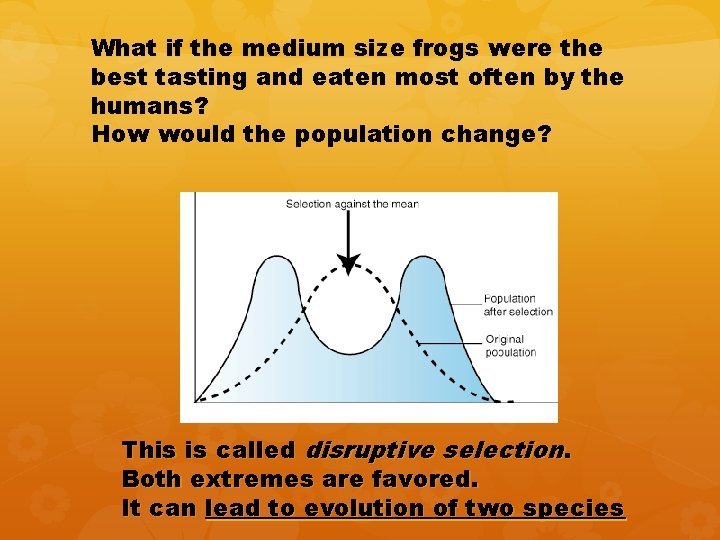
What if the medium size frogs were the best tasting and eaten most often by the humans? How would the population change? This is called disruptive selection. Both extremes are favored. It can lead to evolution of two species
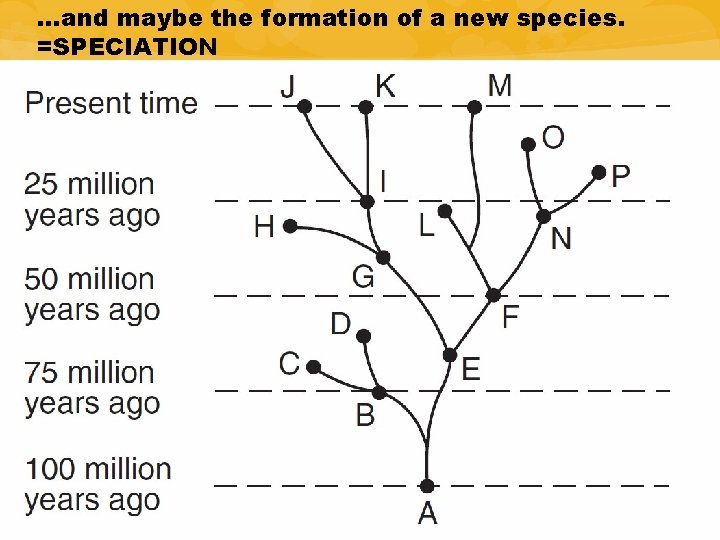
…and maybe the formation of a new species. =SPECIATION
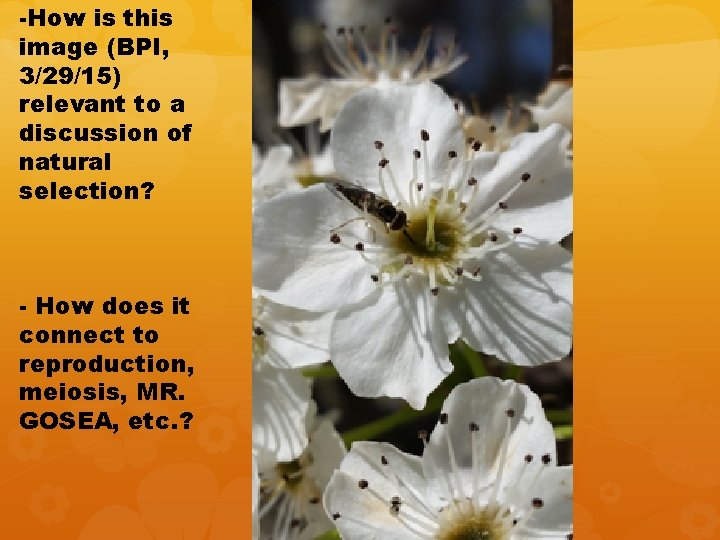
-How is this image (BPI, 3/29/15) relevant to a discussion of natural selection? - How does it connect to reproduction, meiosis, MR. GOSEA, etc. ?