
Evolution and Ecology TODAY Species and speciation Evolution
- Slides: 17
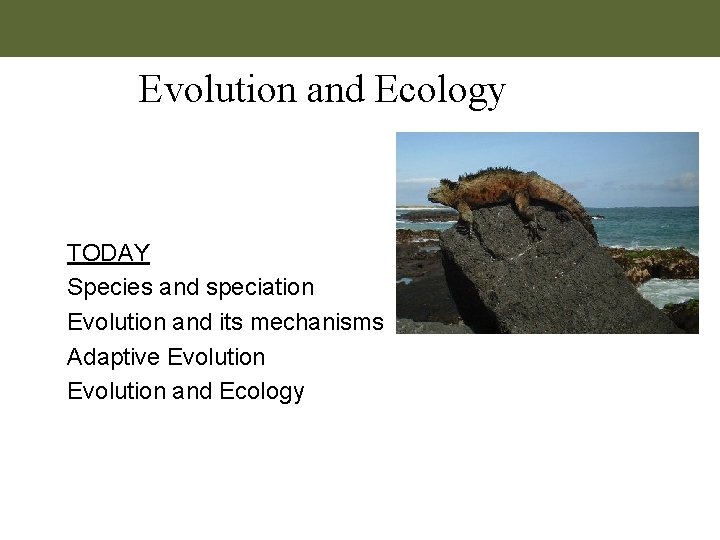
Evolution and Ecology TODAY Species and speciation Evolution and its mechanisms Adaptive Evolution and Ecology
Evolution: 1. Change in genetic characteristics of a population over time. 2. Descent with modification—organisms gradually accumulate differences from their ancestors. 3. Biological evolution is change in populations over time.
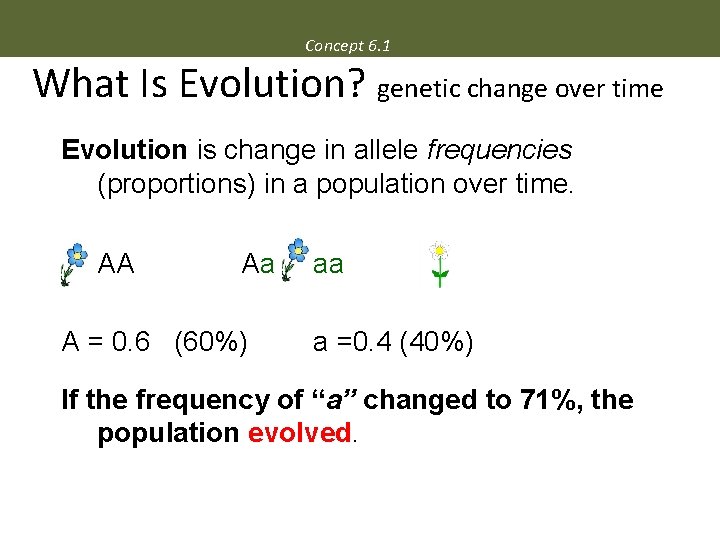
Concept 6. 1 What Is Evolution? genetic change over time Evolution is change in allele frequencies (proportions) in a population over time. AA Aa A = 0. 6 (60%) aa a =0. 4 (40%) If the frequency of “a” changed to 71%, the population evolved.
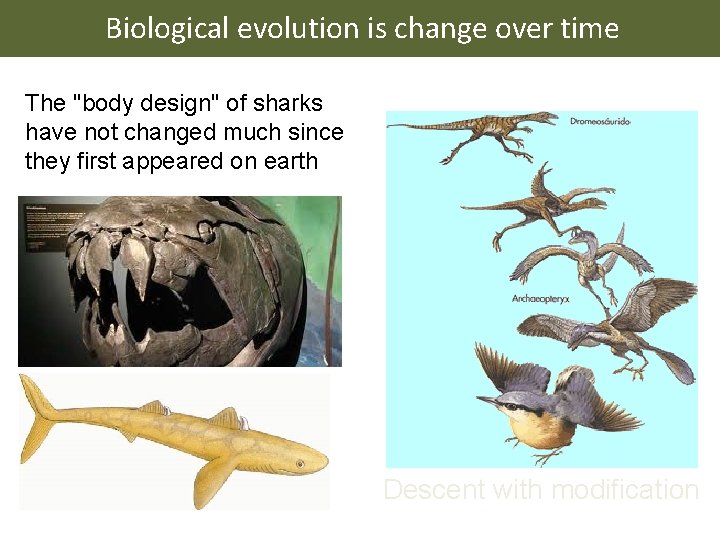
Biological evolution is change over time The "body design" of sharks have not changed much since they first appeared on earth Descent with modification
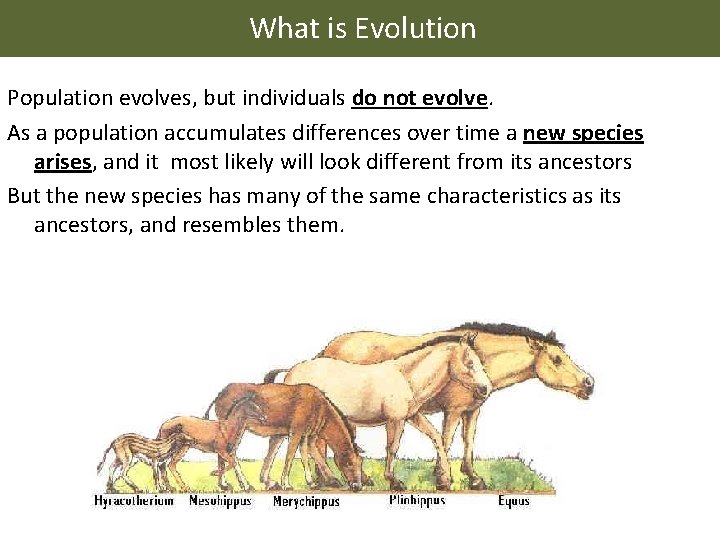
What is Evolution Population evolves, but individuals do not evolve. As a population accumulates differences over time a new species arises, and it most likely will look different from its ancestors But the new species has many of the same characteristics as its ancestors, and resembles them.
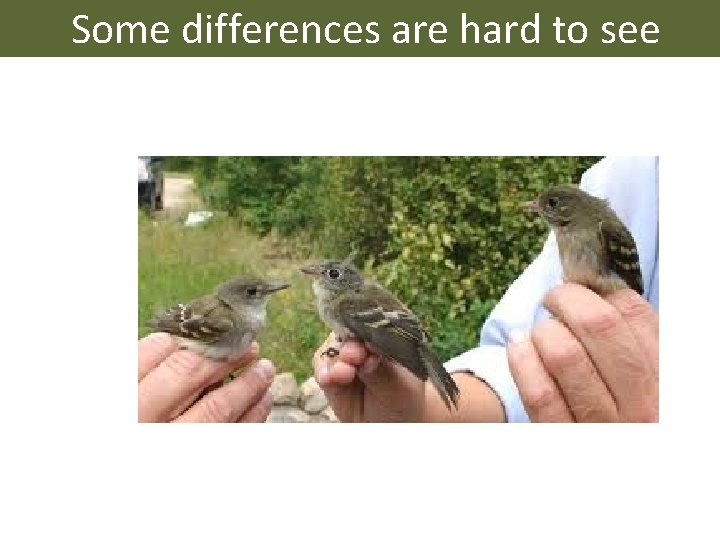
Some differences are hard to see
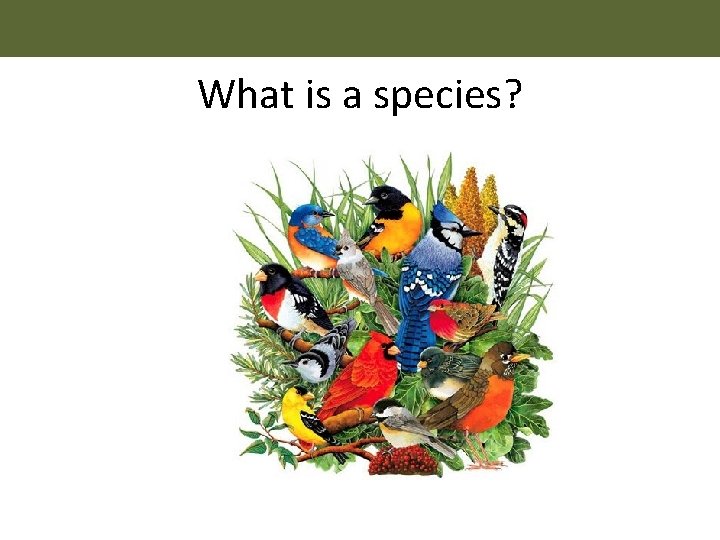
What is a species?
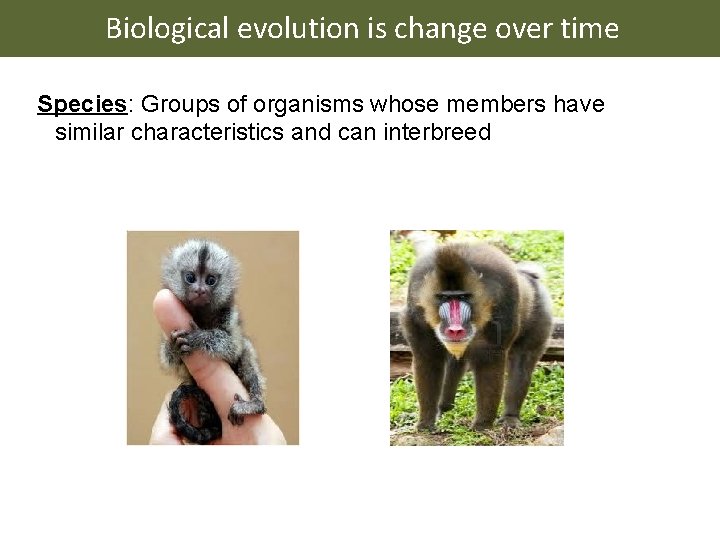
Biological evolution is change over time Species: Groups of organisms whose members have similar characteristics and can interbreed
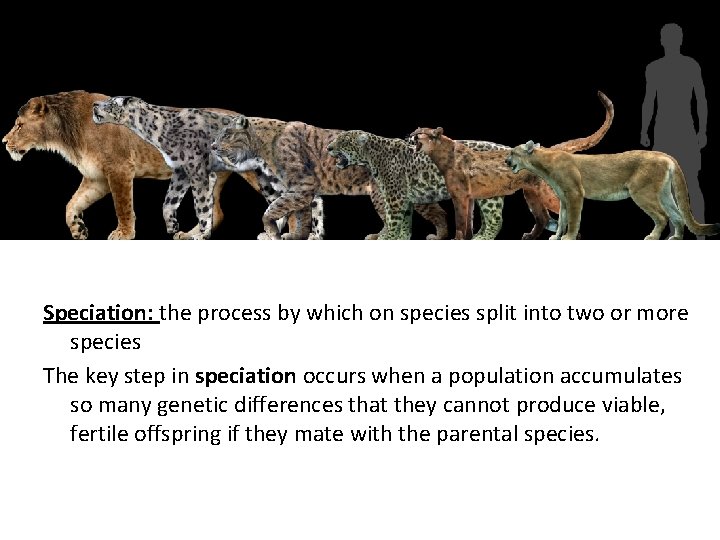
Speciation: the process by which on species split into two or more species The key step in speciation occurs when a population accumulates so many genetic differences that they cannot produce viable, fertile offspring if they mate with the parental species.
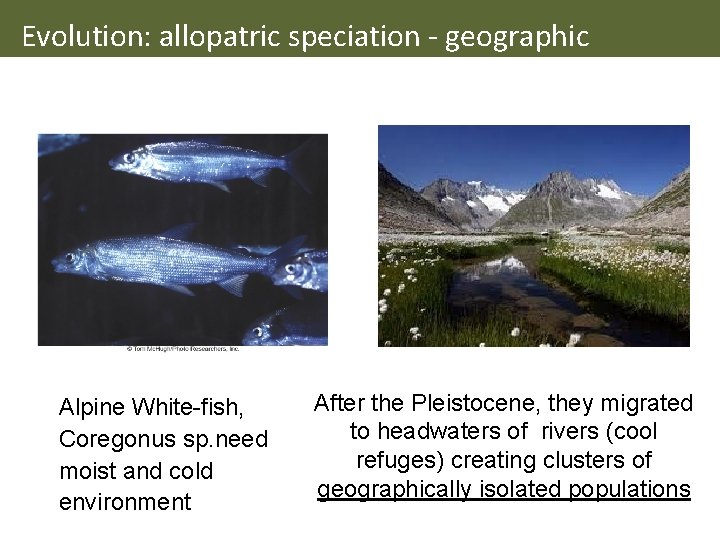
Evolution: allopatric speciation - geographic barriers Alpine White-fish, Coregonus sp. need moist and cold environment After the Pleistocene, they migrated to headwaters of rivers (cool refuges) creating clusters of geographically isolated populations
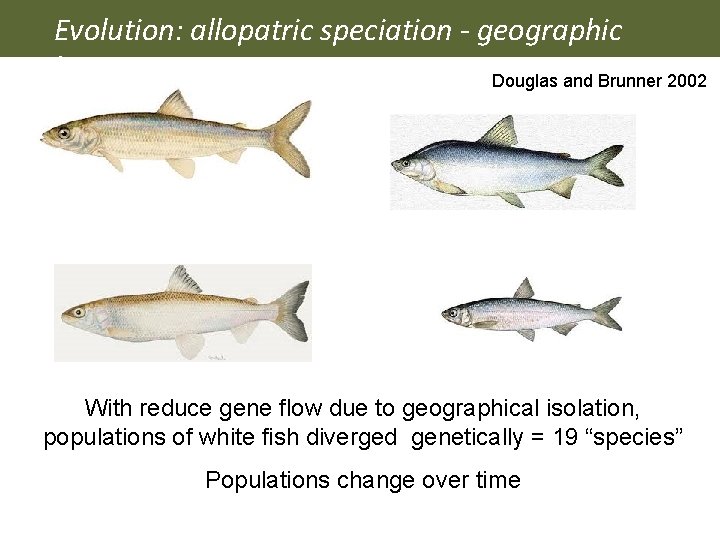
Evolution: allopatric speciation - geographic barriers Douglas and Brunner 2002 With reduce gene flow due to geographical isolation, populations of white fish diverged genetically = 19 “species” Populations change over time
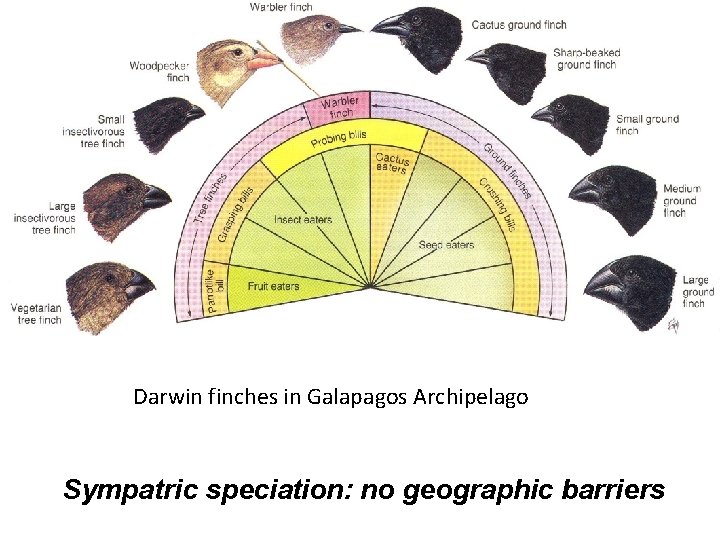
Darwin finches in Galapagos Archipelago Sympatric speciation: no geographic barriers
Mechanisms of Evolution 1. Natural selection (3 types) 2. Genetic drift 3. Gene flow 4. Mutation: source of the new alleles in which all evolution depends The first three can cause allele frequencies in a population to change over time
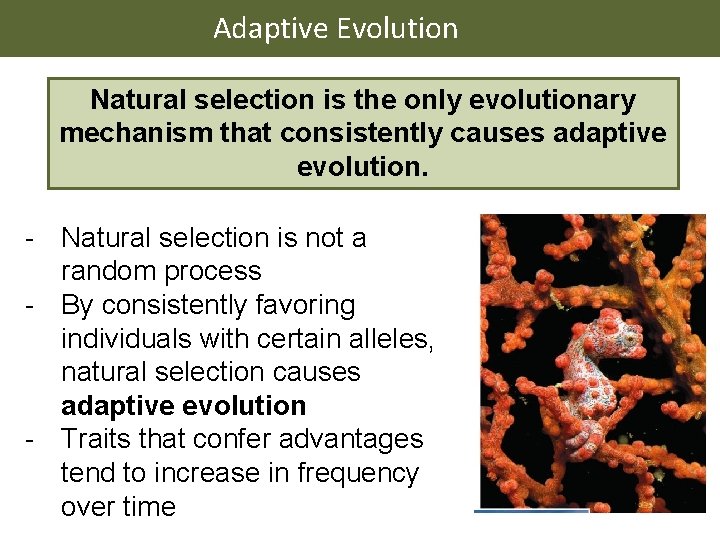
Adaptive Evolution Natural selection is the only evolutionary mechanism that consistently causes adaptive evolution. - Natural selection is not a random process - By consistently favoring individuals with certain alleles, natural selection causes adaptive evolution - Traits that confer advantages tend to increase in frequency over time
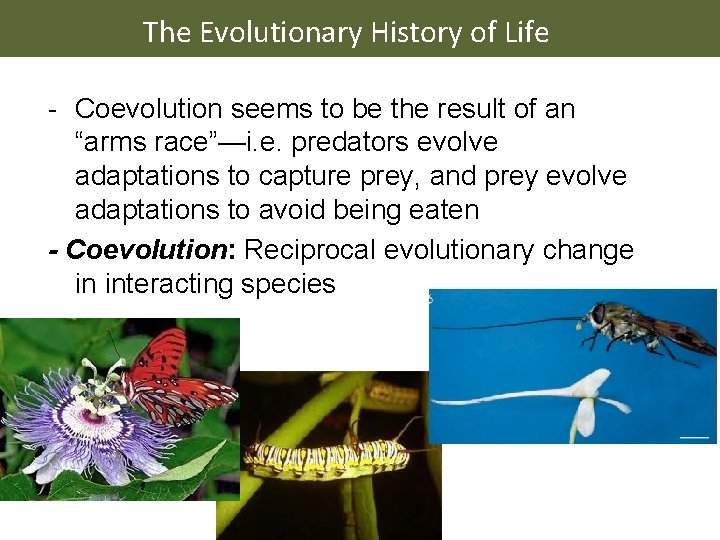
The Evolutionary History of Life - Coevolution seems to be the result of an “arms race”—i. e. predators evolve adaptations to capture prey, and prey evolve adaptations to avoid being eaten - Coevolution: Reciprocal evolutionary change in interacting species
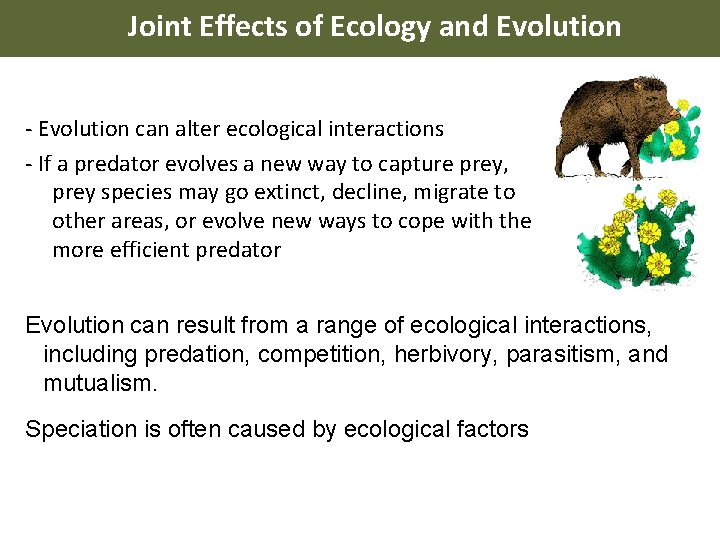
Joint Effects of Ecology and Evolution - Evolution can alter ecological interactions - If a predator evolves a new way to capture prey, prey species may go extinct, decline, migrate to other areas, or evolve new ways to cope with the more efficient predator Evolution can result from a range of ecological interactions, including predation, competition, herbivory, parasitism, and mutualism. Speciation is often caused by ecological factors
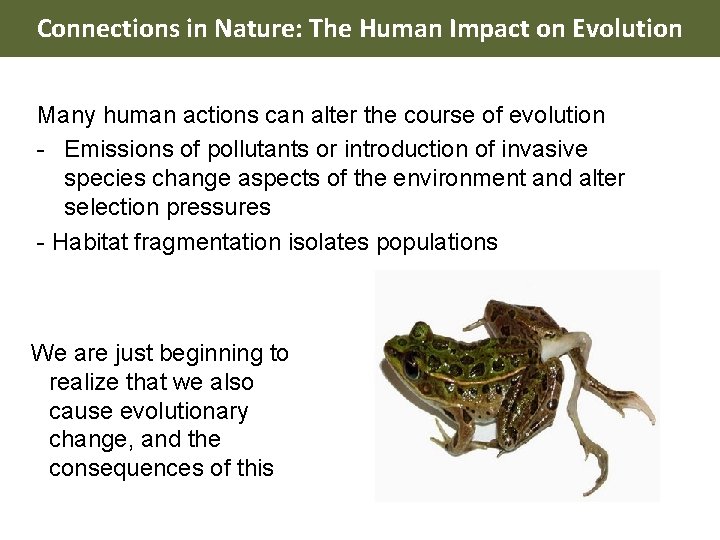
Connections in Nature: The Human Impact on Evolution Many human actions can alter the course of evolution - Emissions of pollutants or introduction of invasive species change aspects of the environment and alter selection pressures - Habitat fragmentation isolates populations We are just beginning to realize that we also cause evolutionary change, and the consequences of this