
Evolution and Biodiversity Origins Niches and Adaptation G
Evolution and Biodiversity: Origins, Niches, and Adaptation G. Tyler Miller, Jr. ’s Environmental Science 10 th Edition Chapter 5

Key Concepts Ø Origins of life Ø Evolution and Evolutionary processes Ø Ecological niches Ø Species formation Ø Species extinction
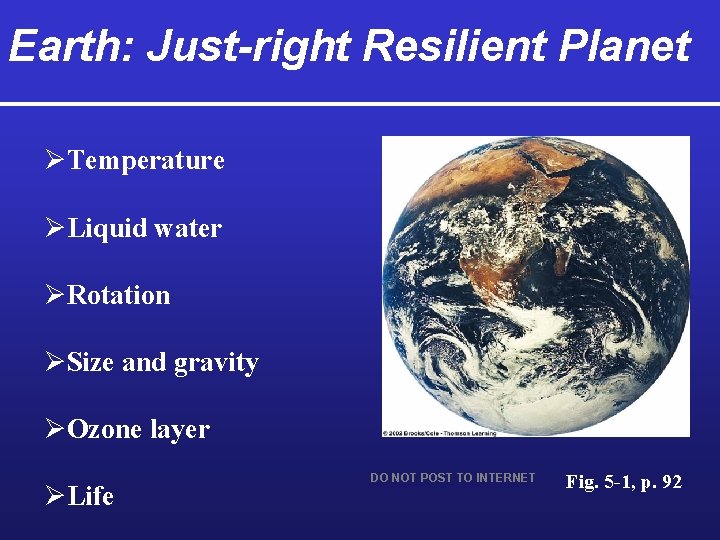
Earth: Just-right Resilient Planet ØTemperature ØLiquid water ØRotation ØSize and gravity ØOzone layer ØLife DO NOT POST TO INTERNET Fig. 5 -1, p. 92
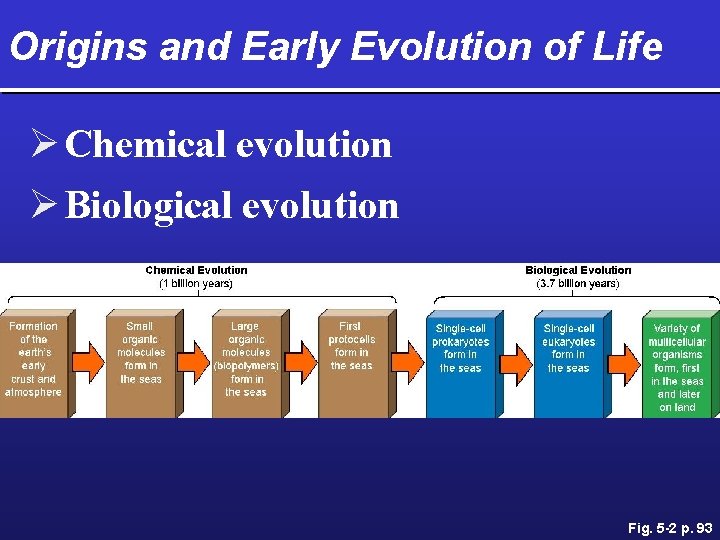
Origins and Early Evolution of Life Ø Chemical evolution Ø Biological evolution Fig. 5 -2 p. 93

Modern humans (Homo sapiens) appear about 2 seconds before midnight Biological Evolution Over Geologic Time Age of reptiles Insects and amphibians invade the land Age of mammals midnight Origin of life (3. 6– 3. 8 billion years ago) Plants invade the land First fossil record of animals Plants begin invading land noon Evolution and expansion of life Fig. 5 -3, p. 94 Recorded human history begins 1/4 second before midnight

Biological Evolution Ø Theory of Evolution Ø Microevolution Ø Macroevolution
Microevolution Ø Gene pool Ø Alleles Ø Mutations Ø Natural selection
Natural Selection Ø Differential reproduction Ø Adaptive trait (adaptation) Ø Artificial selection Ø Coevolution
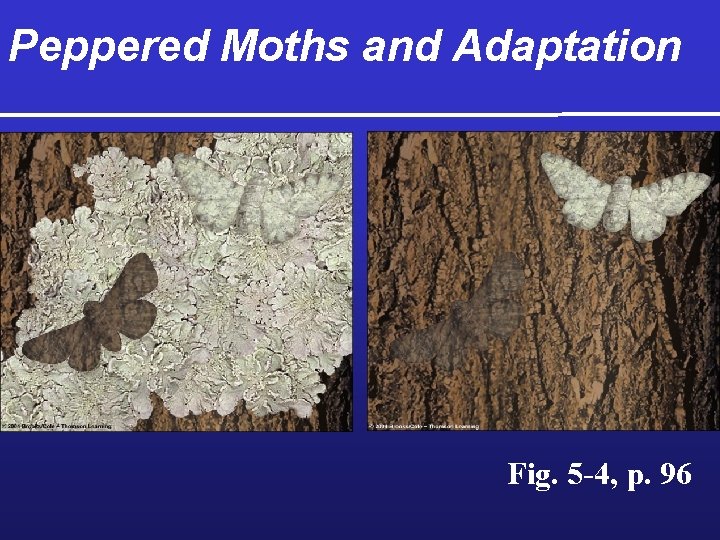
Peppered Moths and Adaptation Fig. 5 -4, p. 96
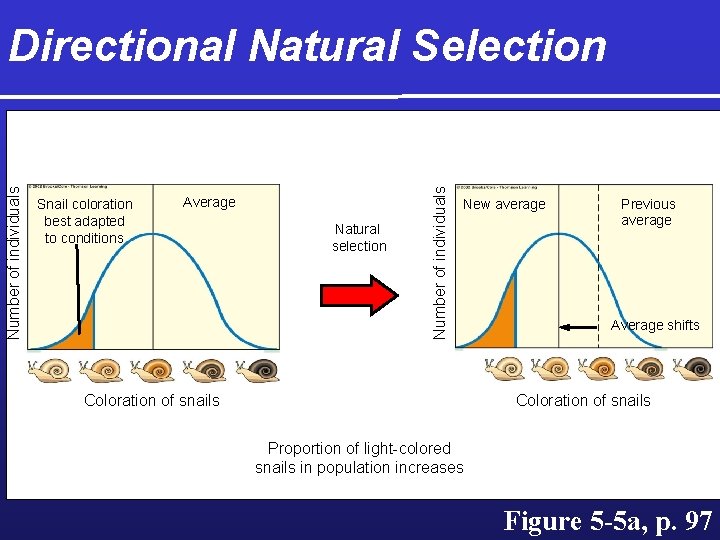
Snail coloration best adapted to conditions Average Natural selection Number of individuals Directional Natural Selection New average Coloration of snails Previous average Average shifts Coloration of snails Proportion of light-colored snails in population increases Figure 5 -5 a, p. 97
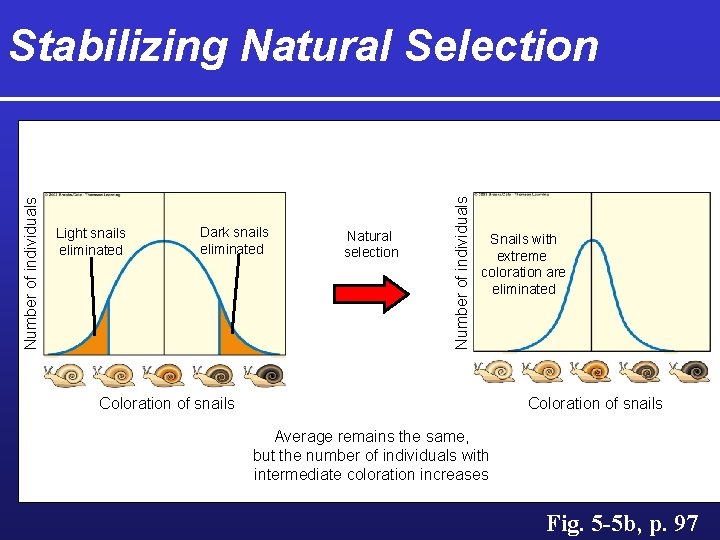
Light snails eliminated Dark snails eliminated Natural selection Number of individuals Stabilizing Natural Selection Snails with extreme coloration are eliminated Coloration of snails Average remains the same, but the number of individuals with intermediate coloration increases Fig. 5 -5 b, p. 97
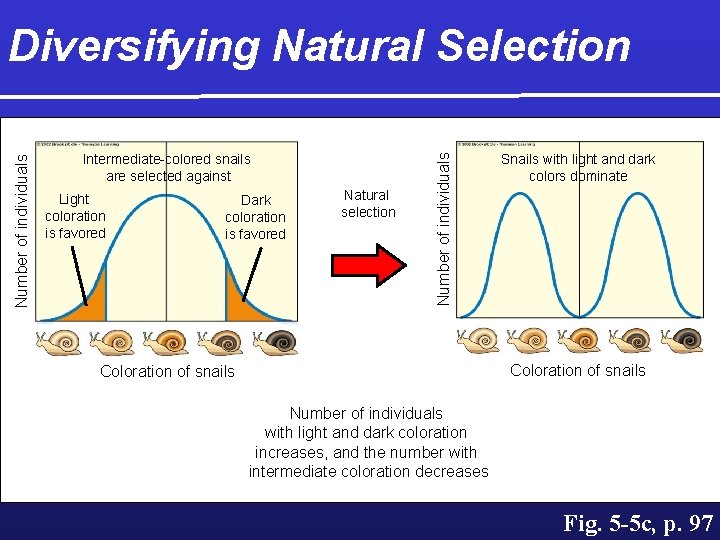
Intermediate-colored snails are selected against Light coloration is favored Dark coloration is favored Natural selection Number of individuals Diversifying Natural Selection Snails with light and dark colors dominate Coloration of snails Number of individuals with light and dark coloration increases, and the number with intermediate coloration decreases Fig. 5 -5 c, p. 97
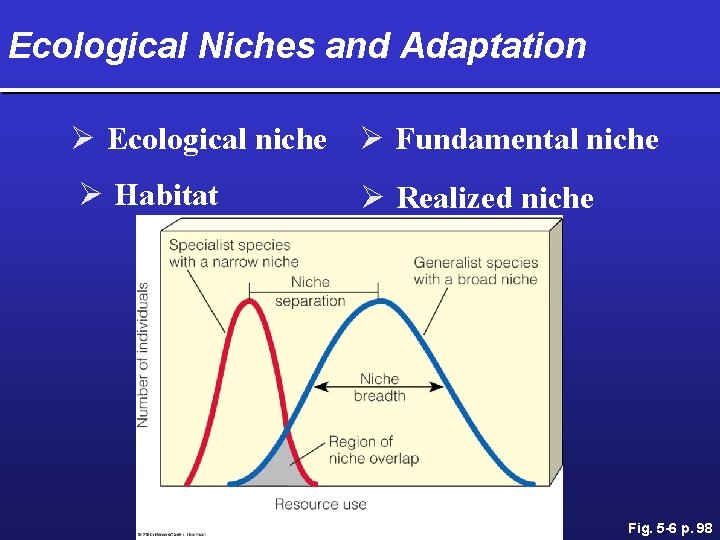
Ecological Niches and Adaptation Ø Ecological niche Ø Fundamental niche Ø Habitat Ø Realized niche Fig. 5 -6 p. 98
Broad and Narrow Niches and the Limits of Adaptation Ø Generalist species Ø Specialist species Ø Limits of Adaptation Refer to Spotlight p. 99
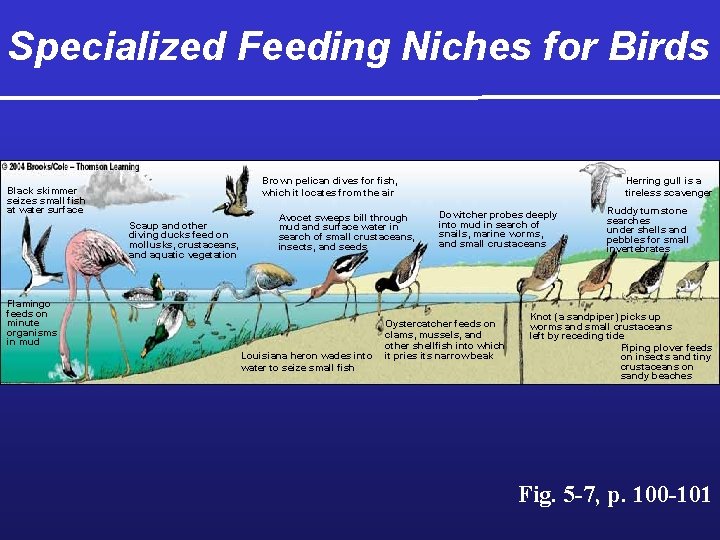
Specialized Feeding Niches for Birds Herring gull is a tireless scavenger Brown pelican dives for fish, which it locates from the air Black skimmer seizes small fish at water surface Scaup and other diving ducks feed on mollusks, crustaceans, and aquatic vegetation Avocet sweeps bill through mud and surface water in search of small crustaceans, insects, and seeds Flamingo feeds on minute organisms in mud Louisiana heron wades into water to seize small fish Dowitcher probes deeply into mud in search of snails, marine worms, and small crustaceans Oystercatcher feeds on clams, mussels, and other shellfish into which it pries its narrow beak Ruddy turnstone searches under shells and pebbles for small invertebrates Knot (a sandpiper) picks up worms and small crustaceans left by receding tide Piping plover feeds on insects and tiny crustaceans on sandy beaches Fig. 5 -7, p. 100 -101
Misconceptions about Evolution Ø “Survival of the fittest” Ø “Progress to perfection”
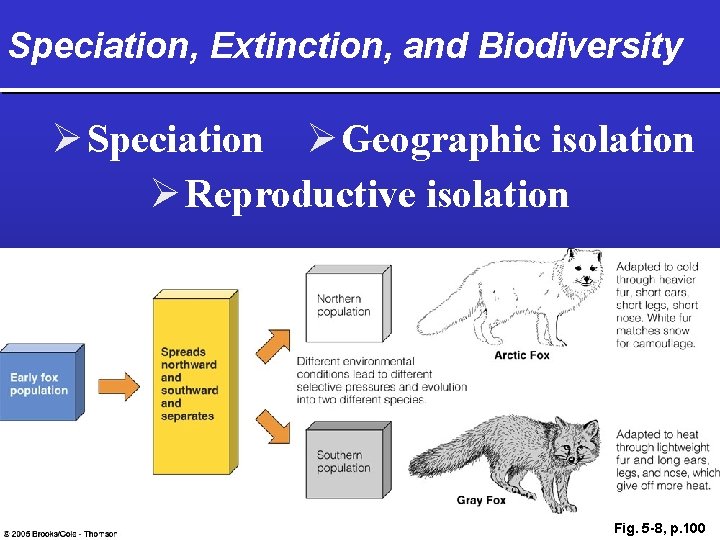
Speciation, Extinction, and Biodiversity Ø Speciation Ø Geographic isolation Ø Reproductive isolation Fig. 5 -8, p. 100
Factors Affecting Speciation and Extinction Ø Plate tectonics Ø Climate changes over time Ø Natural catastrophes Ø Human Impacts
Extinction and Recovery Ø Background extinction Ø Mass depletion Ø Adaptive radiation Ø Human Impacts
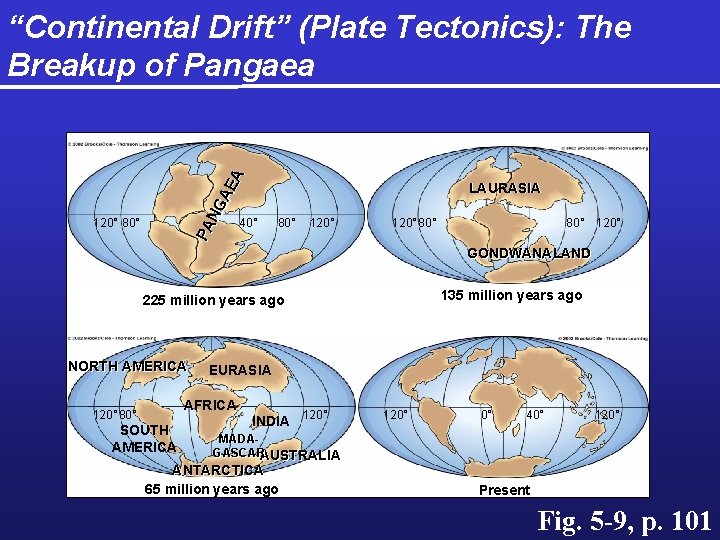
PA NG AE A “Continental Drift” (Plate Tectonics): The Breakup of Pangaea 120° 80° LAURASIA 40° 80° 120° GONDWANALAND 135 million years ago 225 million years ago NORTH AMERICA EURASIA AFRICA 120° 80° SOUTH AMERICA INDIA 120° 0° 40° 120° MADAGASCARAUSTRALIA ANTARCTICA 65 million years ago Present Fig. 5 -9, p. 101
Impact of Speciation and Extinction on Biodiversity Ø “Biodiversity = Speciation – Extinction” Ø Human impacts on extinction and biodiversity Ø Recovery of biodiversity Ø Genetic engineering
- Slides: 21