
EVOLUTION 1 2 3 Objectives Explain how natural
EVOLUTION 1. 2. 3. Objectives: Explain how natural selection works. What observations helped Darwin develop theory of evolution? What does adaptation mean? Give an example of an organism adapting to its environment.
Early theories (pre-1700’s) Ø Before Darwin, nature was seen as not changing (i. e. , immutable) but as having originated through spontaneous generation.

1700’s Ø An understanding of the age of the Earth develops through geology. Ø The Earth has been and is still gradually changing. Ø Inheritance of acquired traits (use and disuse). e. g. , baby giraffes are born with long necks because their parents stretched their necks to reach leaves (Jean-Baptiste Lamarck, 1801)
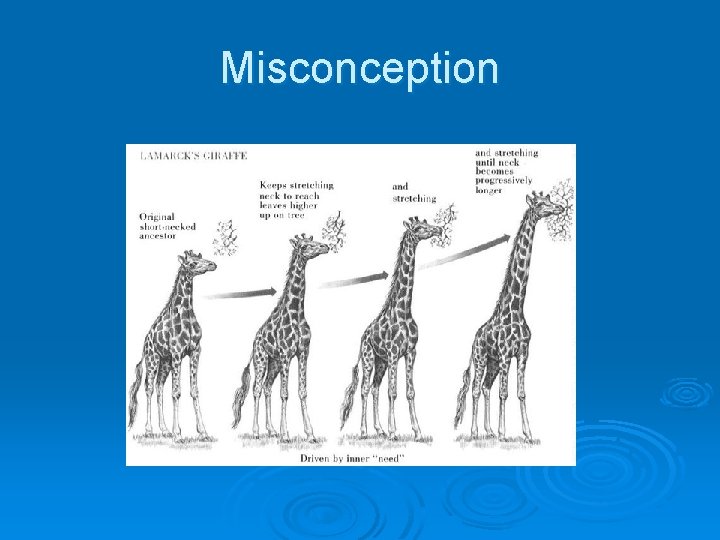
Misconception

Genetics and the Passing on of Traits Ø Living organisms pass on their traits to their offspring. Ø Today’s species came about through gradual change. Ø What drove that change? SURVIVAL/SEX/!!!!
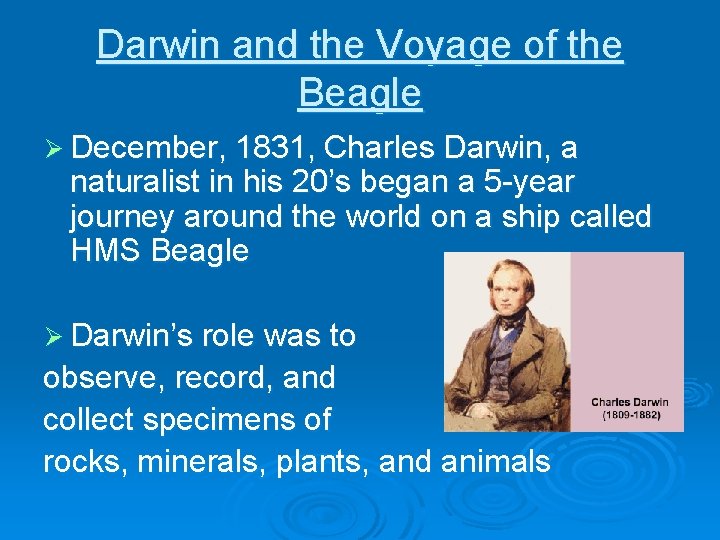
Darwin and the Voyage of the Beagle Ø December, 1831, Charles Darwin, a naturalist in his 20’s began a 5 -year journey around the world on a ship called HMS Beagle Ø Darwin’s role was to observe, record, and collect specimens of rocks, minerals, plants, and animals
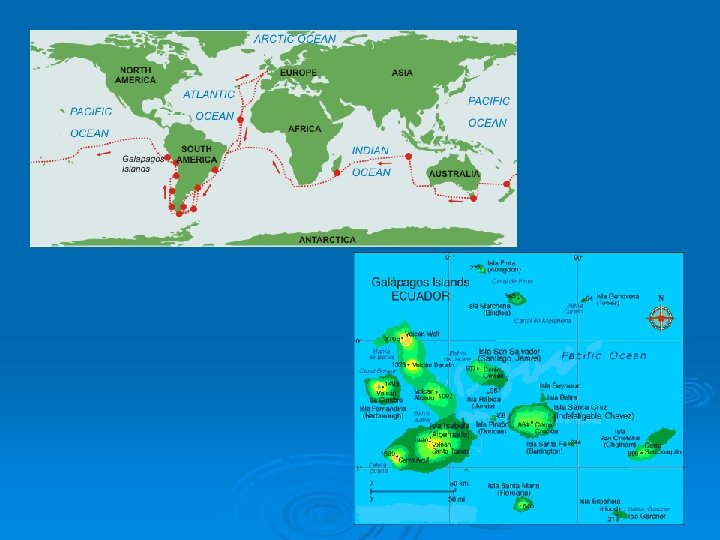
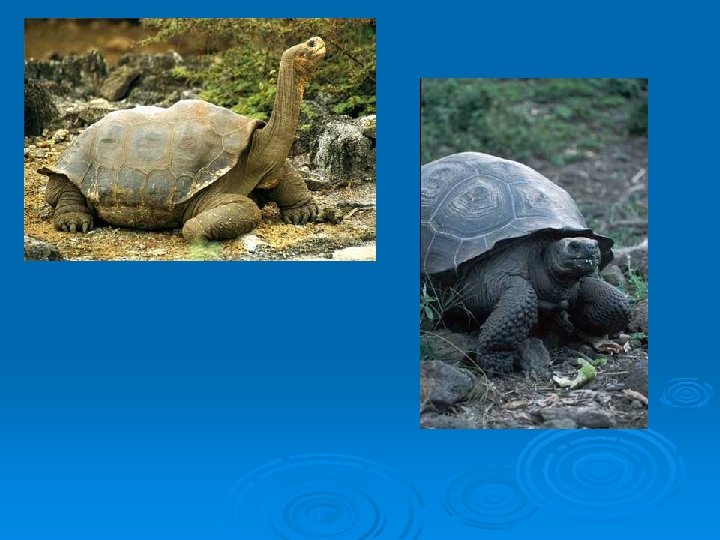
Ø Darwin collected 1000’s of specimens and shipped them to England, mainly from South America and a chain of volcanic islands called Galapagos Ø He did not realize what he was seeing until years later (e. g. , didn’t catalogue the finches very well, ate turtles that would later support his theories, etc. ) Ø Darwin spent the next 20 years analyzing his findings in light of artificial selection (e. g. , breeding of pigeons, breeding of dogs, etc. )
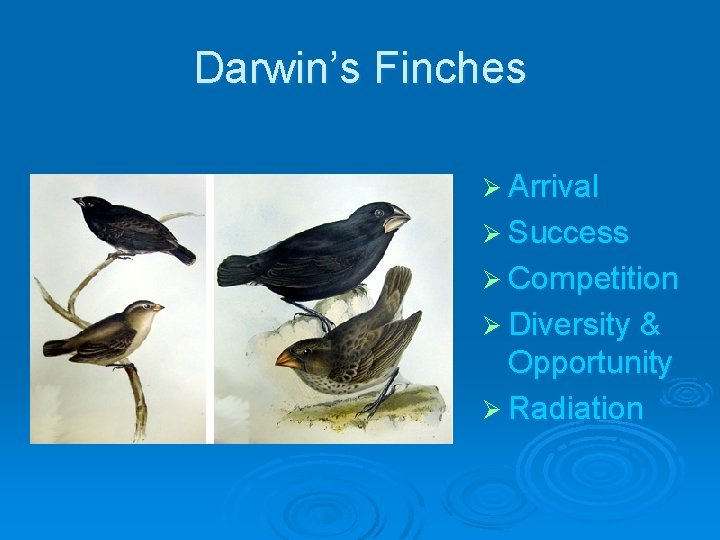
Darwin’s Finches Ø Arrival Ø Success Ø Competition Ø Diversity & Opportunity Ø Radiation
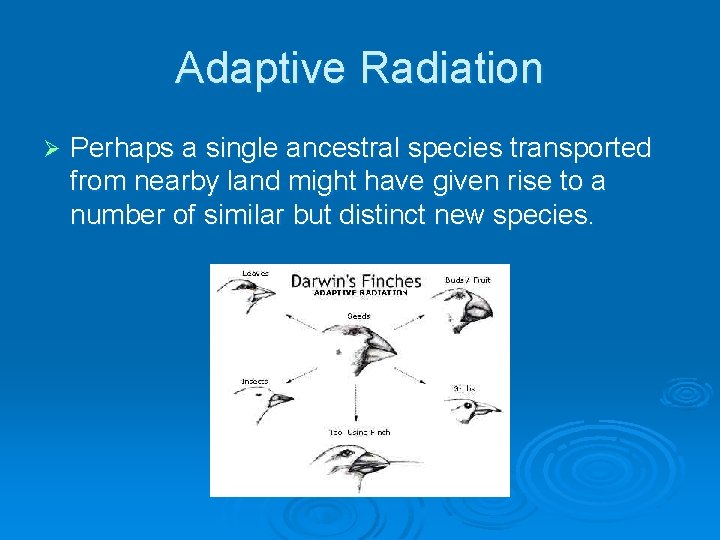
Adaptive Radiation Ø Perhaps a single ancestral species transported from nearby land might have given rise to a number of similar but distinct new species.
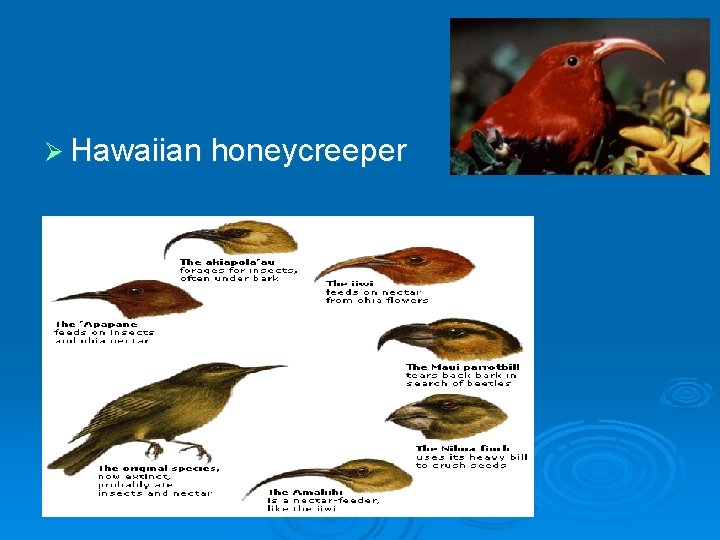
Ø Hawaiian honeycreeper
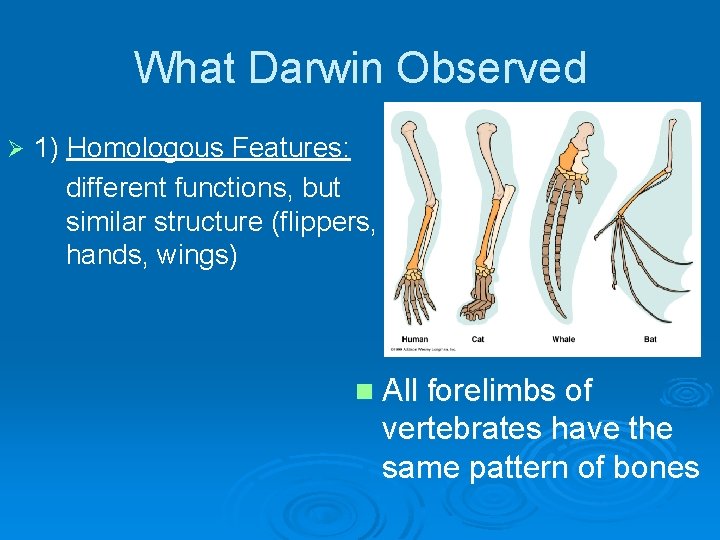
What Darwin Observed Ø 1) Homologous Features: different functions, but similar structure (flippers, hands, wings) n All forelimbs of vertebrates have the same pattern of bones
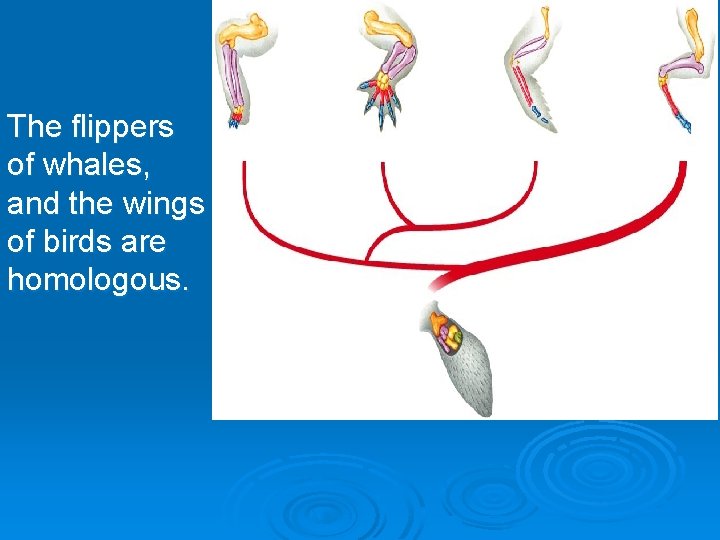
The flippers of whales, and the wings of birds are homologous.
Ø 2) Analogous features: similar functions, but different structure (wings of birds and bees) Ø Darwin’s conclusion: organisms with homologous features likely shared a more recent ancestor, while those with analogous features do not!
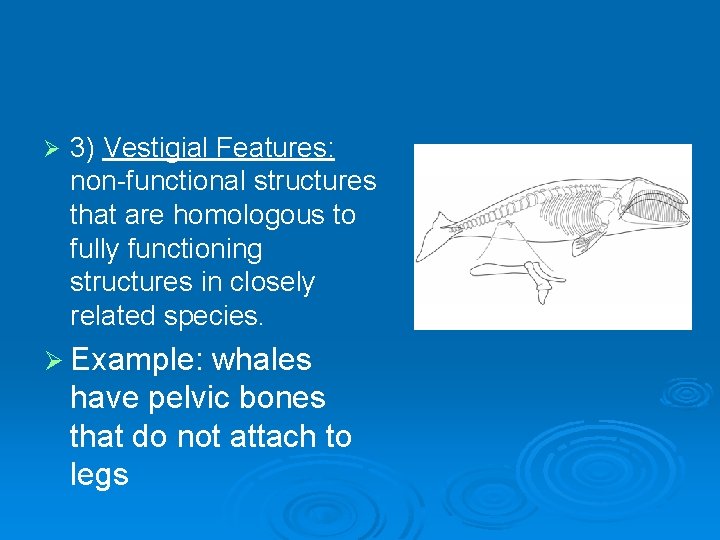
Ø 3) Vestigial Features: non-functional structures that are homologous to fully functioning structures in closely related species. Ø Example: whales have pelvic bones that do not attach to legs
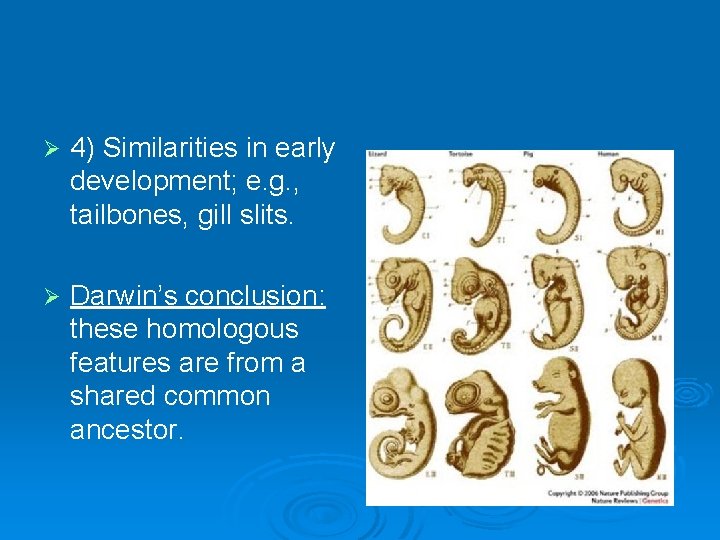
Ø 4) Similarities in early development; e. g. , tailbones, gill slits. Ø Darwin’s conclusion: these homologous features are from a shared common ancestor.
Other Evidence for Evolution… Ø Stuff that we have seen in our time…
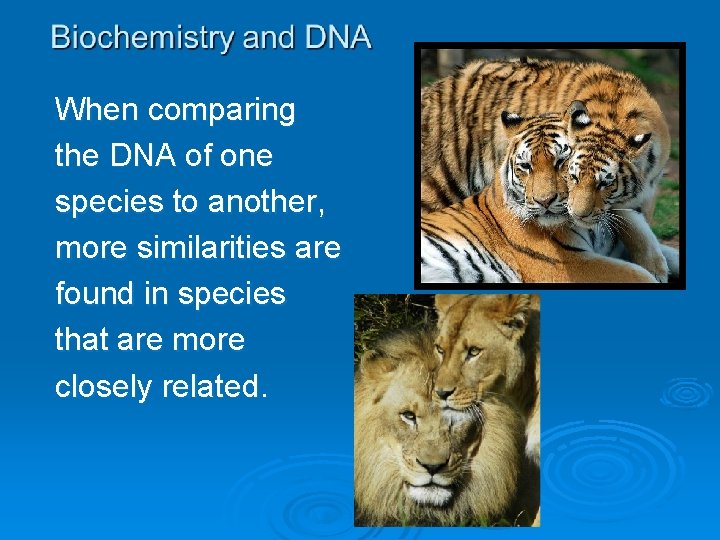
When comparing the DNA of one species to another, more similarities are found in species that are more closely related.
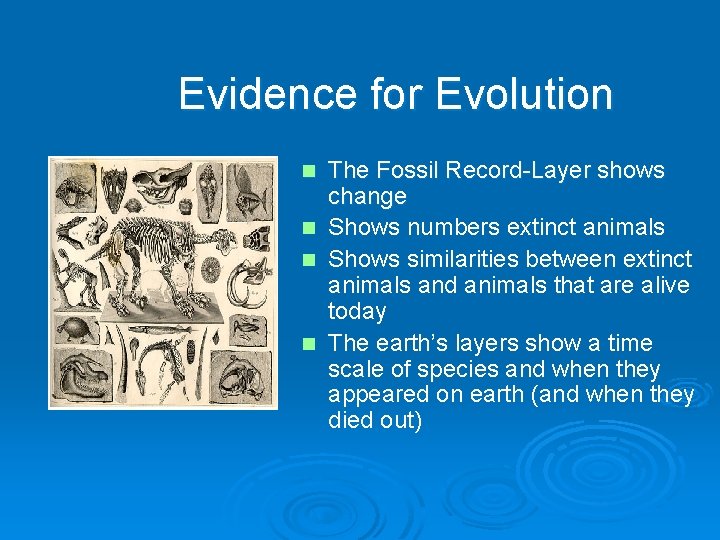
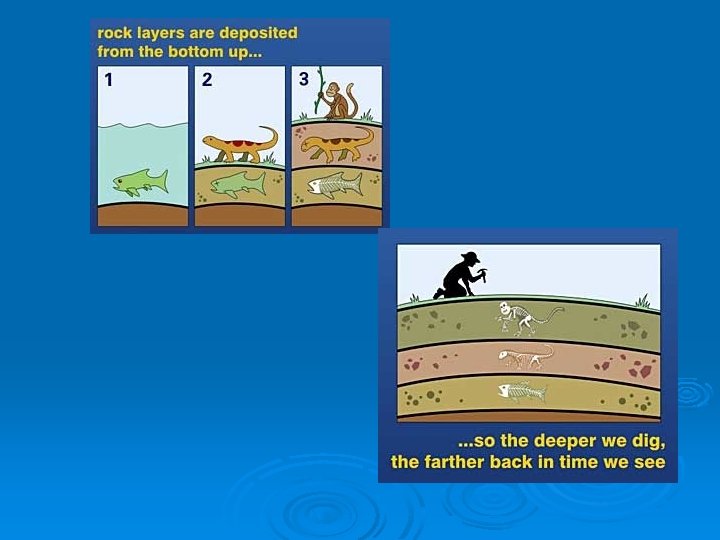
Evidence for Evolution The Fossil Record-Layer shows change n Shows numbers extinct animals n Shows similarities between extinct animals and animals that are alive today n The earth’s layers show a time scale of species and when they appeared on earth (and when they died out) n
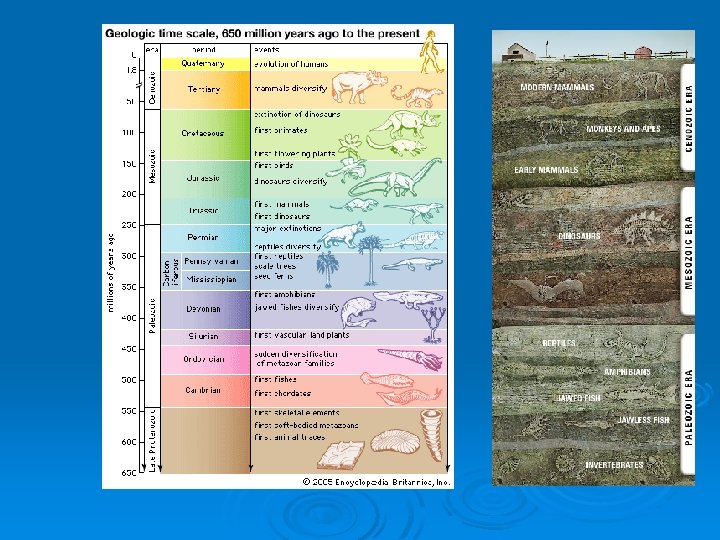
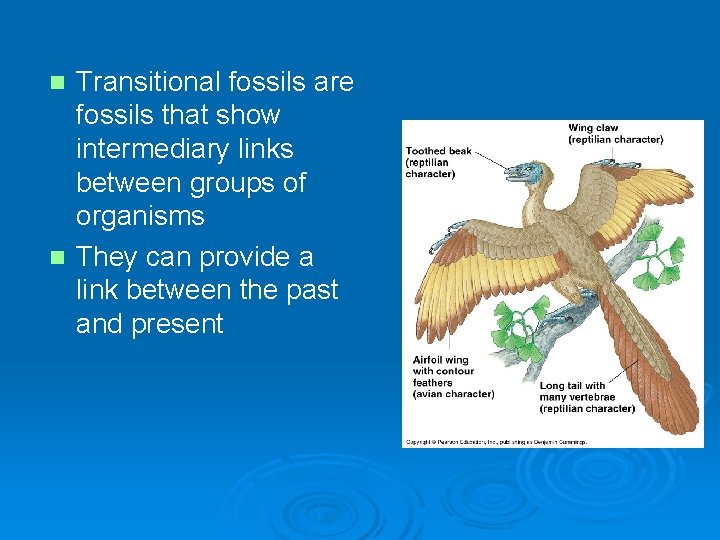
Transitional fossils are fossils that show intermediary links between groups of organisms n They can provide a link between the past and present n
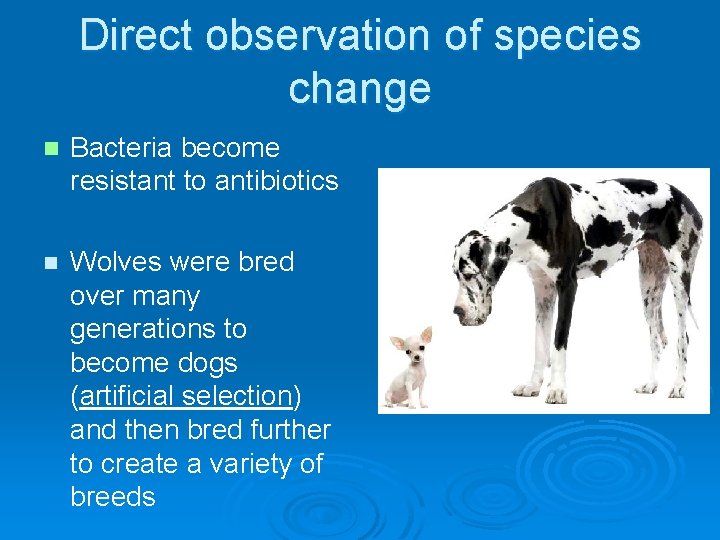
Direct observation of species change n Bacteria become resistant to antibiotics n Wolves were bred over many generations to become dogs (artificial selection) and then bred further to create a variety of breeds
What did Darwin think drove Evolution? ? ? l l Artificial Selection Selecting offspring with desirable traits as breeding stock for succeeding generations Example: corn with higher oil content Darwin’s conclusion: if people could alter the appearance and behaviour of species through artificial selection, then the environment could have a similar selective effect on wild species!
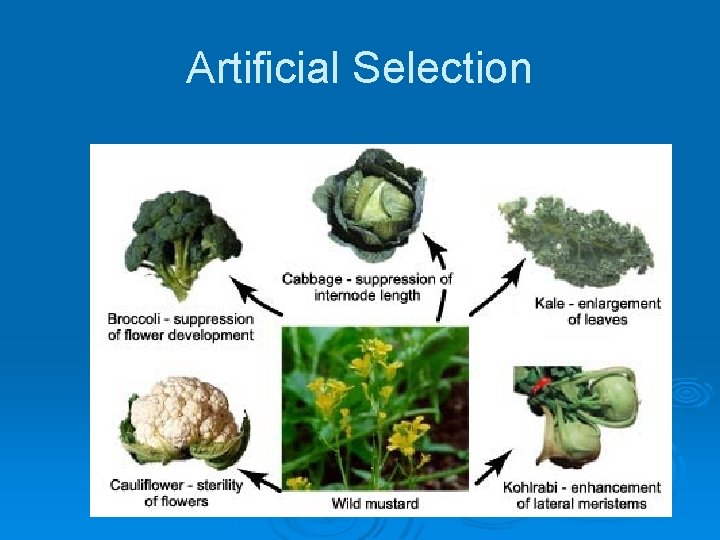
Artificial Selection
But how does evolution really work? ? ? Ø How does evolution really work? http: //www. pbs. org/wgbh/evolution/educat ors/teachstuds/svideos. html
Natural Selection as the Cause of Evolution - called “natural selection” because it happens on its own 1. Genetic Variation - there are many varieties of alleles - caused by random mutations - can be passed onto offspring (inherited variation) 2. Overproduction of Offspring - organisms produce too many offspring
3. Struggle for existence - competition for limited resources 4. Differential survival and reproduction - only organisms that have certain characteristics will survive to reproduce - non-random, caused by the environment: amount of food, competition (e. g. , Darwin’s finches)
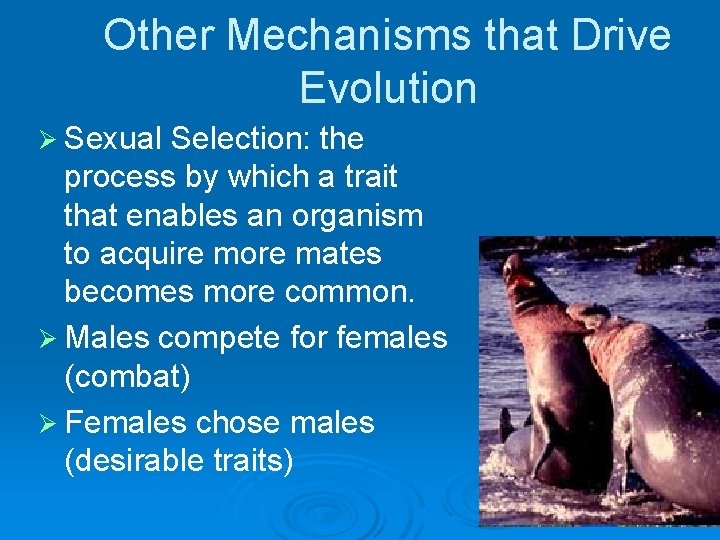
Other Mechanisms that Drive Evolution Ø Sexual Selection: the process by which a trait that enables an organism to acquire more mates becomes more common. Ø Males compete for females (combat) Ø Females chose males (desirable traits)

Your Task
- Slides: 32