
EVM Compass Assessing Increasing EVM Maturity within Projects

- Slides: 11
EVM Compass: Assessing & Increasing EVM Maturity within Projects Association for Project Management (APM) - Earned Value Management (EVM) Specific Interest Group (SIG) November 2009
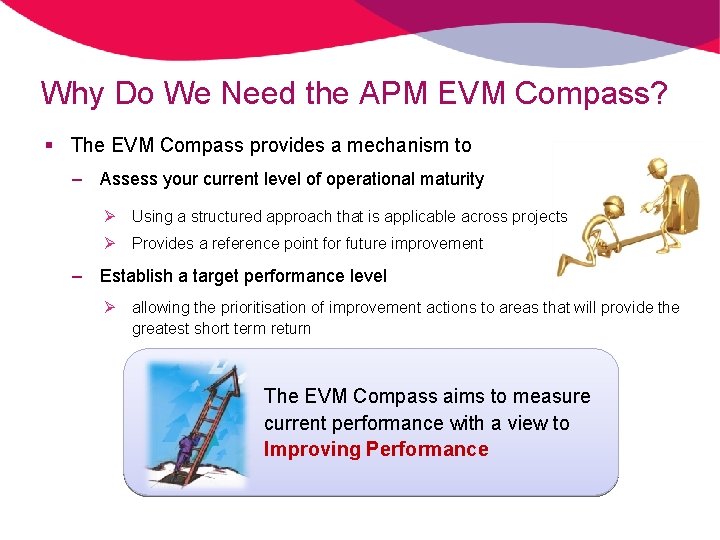
Why Do We Need the APM EVM Compass? § The EVM Compass provides a mechanism to – Assess your current level of operational maturity Ø Using a structured approach that is applicable across projects Ø Provides a reference point for future improvement – Establish a target performance level Ø allowing the prioritisation of improvement actions to areas that will provide the greatest short term return The EVM Compass aims to measure current performance with a view to Improving Performance
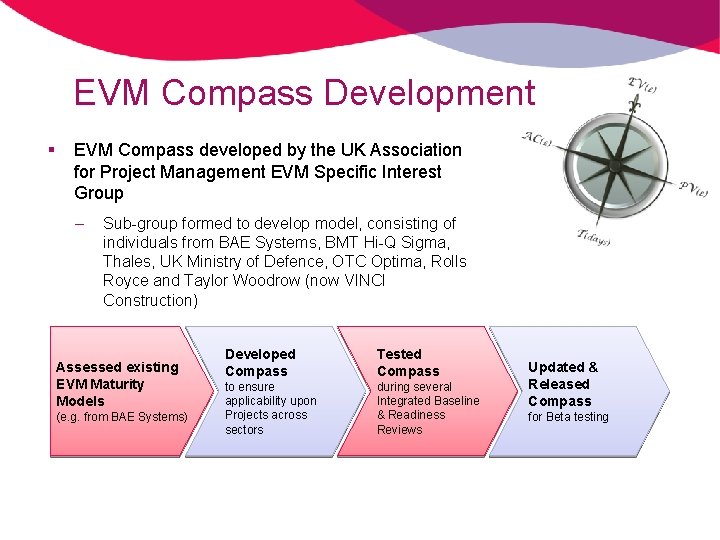
EVM Compass Development § EVM Compass developed by the UK Association for Project Management EVM Specific Interest Group – Sub-group formed to develop model, consisting of individuals from BAE Systems, BMT Hi-Q Sigma, Thales, UK Ministry of Defence, OTC Optima, Rolls Royce and Taylor Woodrow (now VINCI Construction) Assessed existing EVM Maturity Models (e. g. from BAE Systems) Developed Compass Tested Compass to ensure applicability upon Projects across sectors during several Integrated Baseline & Readiness Reviews Updated & Released Compass for Beta testing
Fundamental Concepts • The EVM Compass should – Provide a comprehensive and systematic review of a Projects EVM maturity – Use a common framework that supports either the assessment of a single project or allows organisations to benchmark and compare the relative strengths of their various projects – Provide a defined means to support projects in establishing and improving project control capability – Allow projects to reference the ‘as is’ EVM condition with the `to be` condition – Give EVM System reviewers a consistent method of assessing Projects – Allow organisations to establish their own target performance level (rather than define it for them)
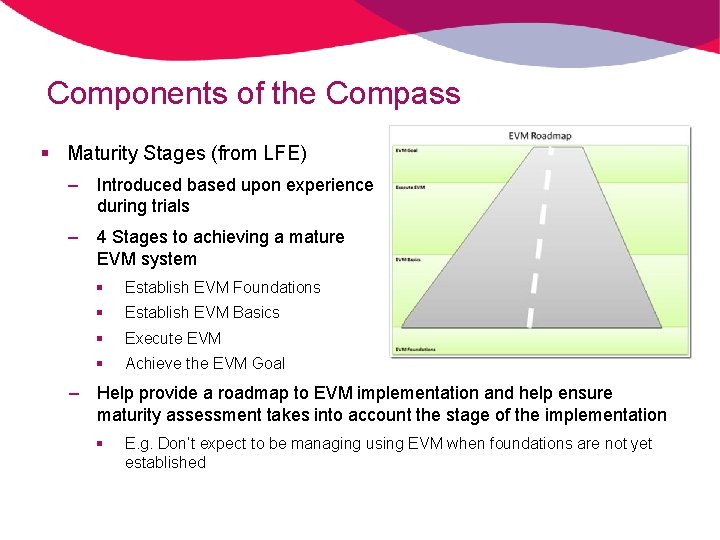
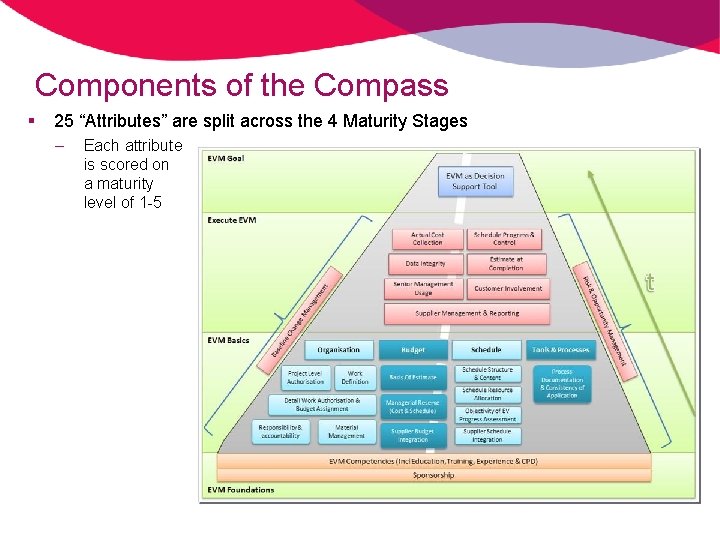
Components of the Compass § Maturity Stages (from LFE) – Introduced based upon experience during trials – 4 Stages to achieving a mature EVM system § Establish EVM Foundations § Establish EVM Basics § Execute EVM § Achieve the EVM Goal – Help provide a roadmap to EVM implementation and help ensure maturity assessment takes into account the stage of the implementation § E. g. Don’t expect to be managing using EVM when foundations are not yet established
Components of the Compass § 25 “Attributes” are split across the 4 Maturity Stages – Each attribute is scored on a maturity level of 1 -5
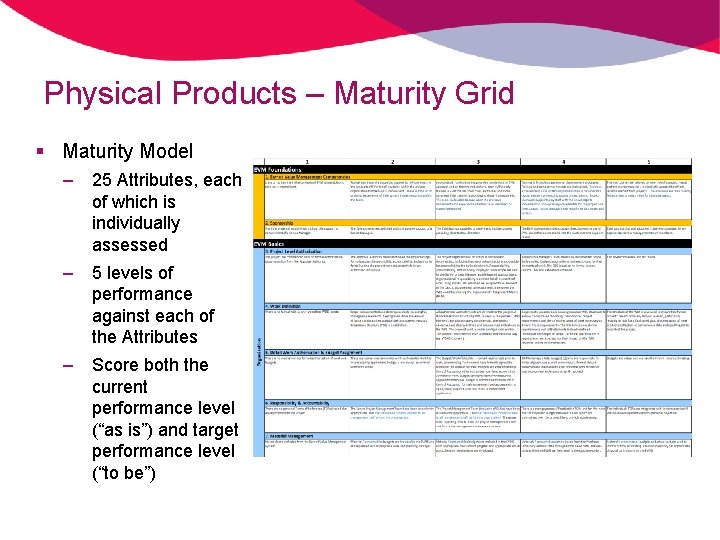
Physical Products – Maturity Grid § Maturity Model – 25 Attributes, each of which is individually assessed – 5 levels of performance against each of the Attributes – Score both the current performance level (“as is”) and target performance level (“to be”)
Physical Products – Explanatory Text § Explanatory Text – Guidance on the use of the Maturity Grid – Overview of the Maturity Stages – Explanations for each of the 25 Articles § The Aim – the objective of the attribute § The Reason – why the attribute is important § Guidance Information – additional information to assist users who are less familiar with the implementation and utilisation of Earned Value Management Systems
The EVM Compass – Summary of Benefits § Using the EVM Compass Maturity Framework for assessment should deliver a range of benefits, including: – Identify your organisation’s strengths and areas for improvement. – Provide a highly structured, fact-based approach to identifying and assessing your project and measuring progress periodically. – Create a common language and conceptual framework for the way you manage and improve EVM on your project and, if applicable, projects within organisation. – Educate people in your project on the fundamental elements of EVM and how they relate to their roles and responsibilities. – Involve people at all levels in process improvement. – Rank EVM project maturity within an organisation or across the supply chain.
The EVM Compass – Summary of Benefits § Using the EVM Compass Maturity Framework for assessment should deliver a range of benefits, including: – Identify and allow the sharing of best practice across projects within an organisation. – Use it to assess and present the findings from a variety of EVM reviews in a format that is easy to understand. – Facilitate comparisons with other projects. – Support the development of your business plan and strategy. – It can be used to supplement (though not replace) other EVM reviews such as the Integrated Baseline Review
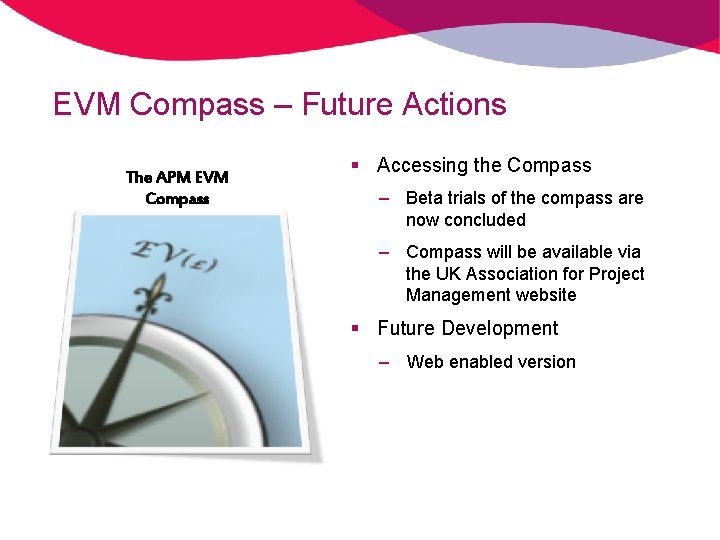
EVM Compass – Future Actions The APM EVM Compass § Accessing the Compass – Beta trials of the compass are now concluded – Compass will be available via the UK Association for Project Management website § Future Development – Web enabled version