
Evidences of Evolution Presented By Mr Godinez Evolution
Evidences of Evolution Presented By: Mr. Godinez

Evolution is • Genetic change in a population through time
Evidence of Evolution • Evidence for evolution are grouped into four main catagories: • Biochemical • Fossil Record • Comparative Anatomy • Observable Events

OBSERVABLE EVENTS • Some changes in species have been observed and studied: • Observable events show that evolution is an ongoing process Peter & Rosemary H. Kettlewell’s Study Grant’s Study of Beak of Peppered Moth Size Shift in Darwin’s Color Shifts Finches
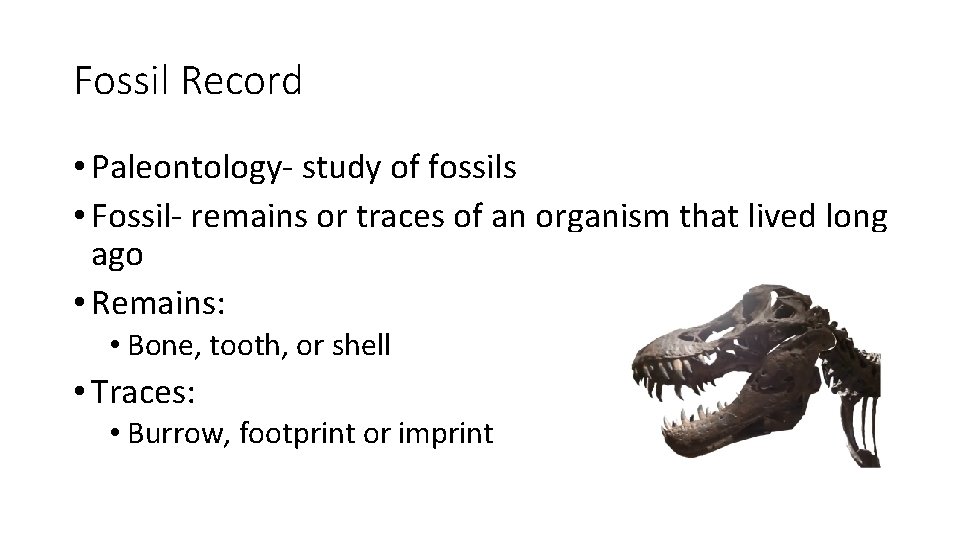
Fossil Record • Paleontology- study of fossils • Fossil- remains or traces of an organism that lived long ago • Remains: • Bone, tooth, or shell • Traces: • Burrow, footprint or imprint
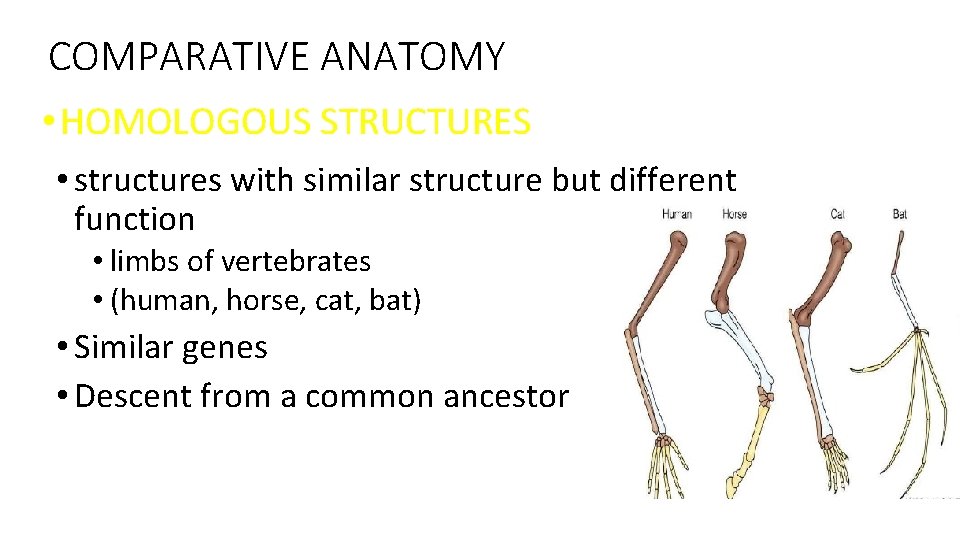
COMPARATIVE ANATOMY • HOMOLOGOUS STRUCTURES • structures with similar structure but different function • limbs of vertebrates • (human, horse, cat, bat) • Similar genes • Descent from a common ancestor
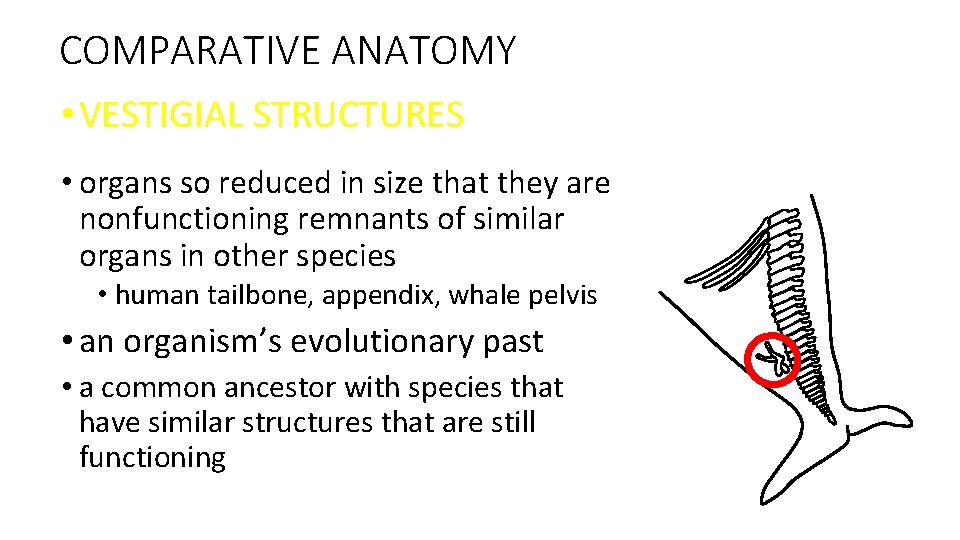
COMPARATIVE ANATOMY • VESTIGIAL STRUCTURES • organs so reduced in size that they are nonfunctioning remnants of similar organs in other species • human tailbone, appendix, whale pelvis • an organism’s evolutionary past • a common ancestor with species that have similar structures that are still functioning
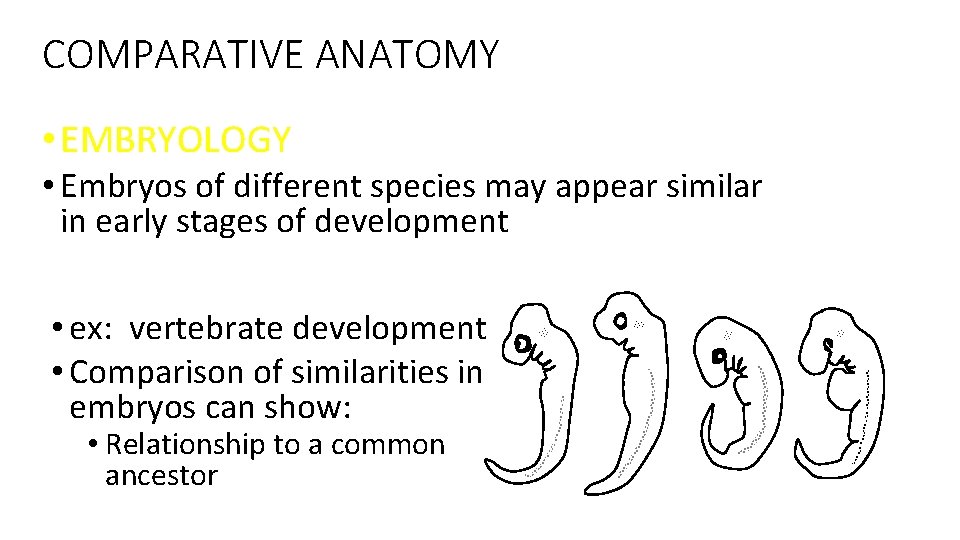
COMPARATIVE ANATOMY • EMBRYOLOGY • Embryos of different species may appear similar in early stages of development • ex: vertebrate development • Comparison of similarities in embryos can show: • Relationship to a common ancestor
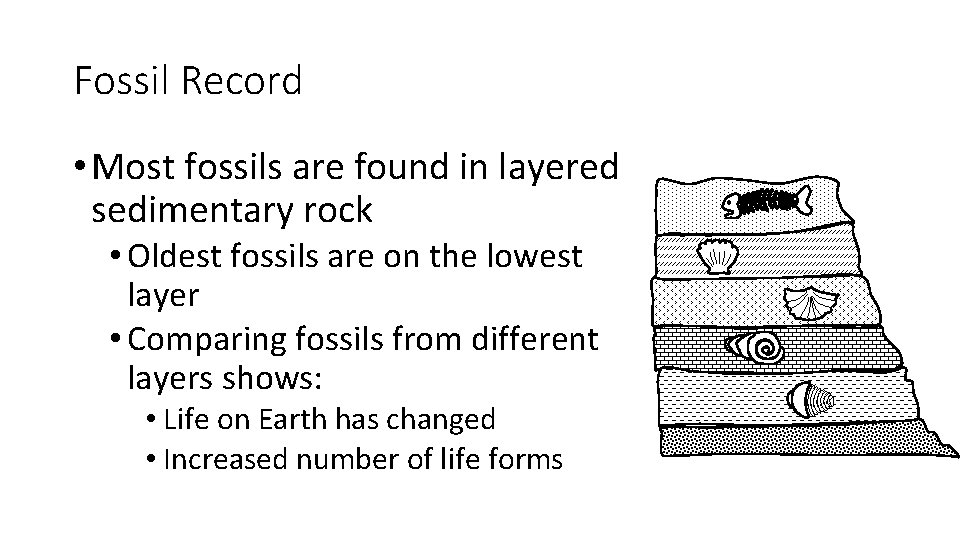
Fossil Record • Most fossils are found in layered sedimentary rock • Oldest fossils are on the lowest layer • Comparing fossils from different layers shows: • Life on Earth has changed • Increased number of life forms

Biochemical • The Genetic Code • Triplets of DNA nucleotides sequences that code for specific amino acids • a. a. triplet is the same in almost all organisms • Demonstrates there is a probable common ancestor for all life on Earth
Biochemical • “Universal” Genetic Code • Similar genes • Overt he ages, the genetic code has passed unchanged (mostly) from parent to offspring.
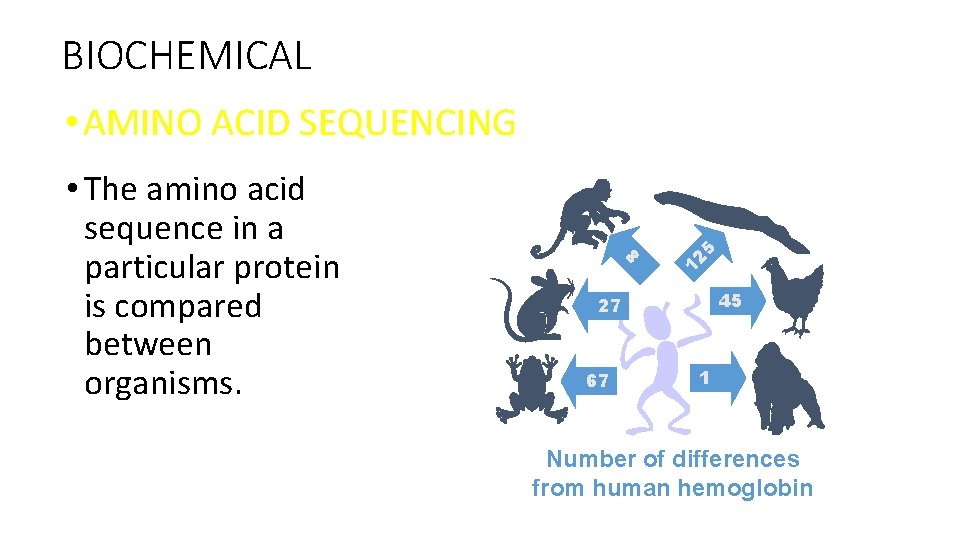
BIOCHEMICAL 12 8 • The amino acid sequence in a particular protein is compared between organisms. 5 • AMINO ACID SEQUENCING 45 27 67 1 Number of differences from human hemoglobin
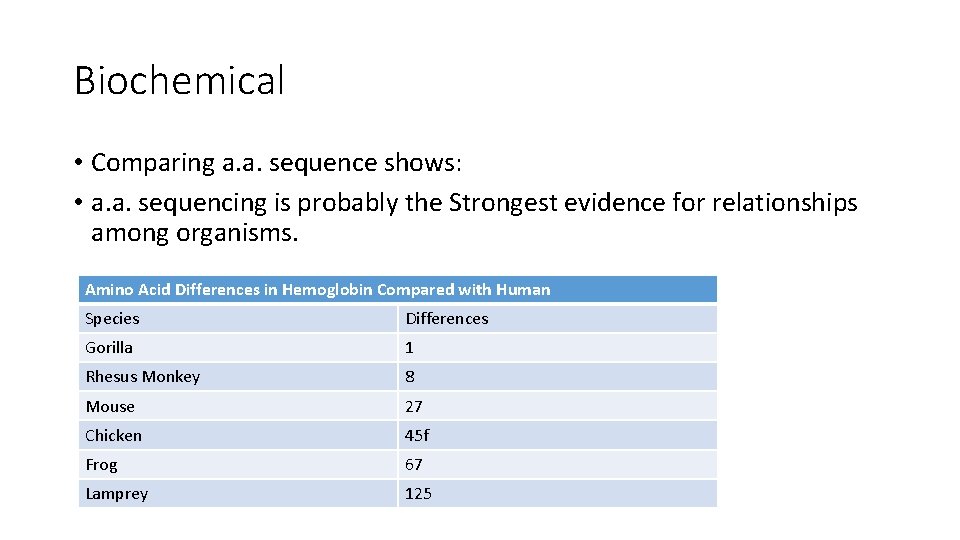
Biochemical • Comparing a. a. sequence shows: • a. a. sequencing is probably the Strongest evidence for relationships among organisms. Amino Acid Differences in Hemoglobin Compared with Human Species Differences Gorilla 1 Rhesus Monkey 8 Mouse 27 Chicken 45 f Frog 67 Lamprey 125
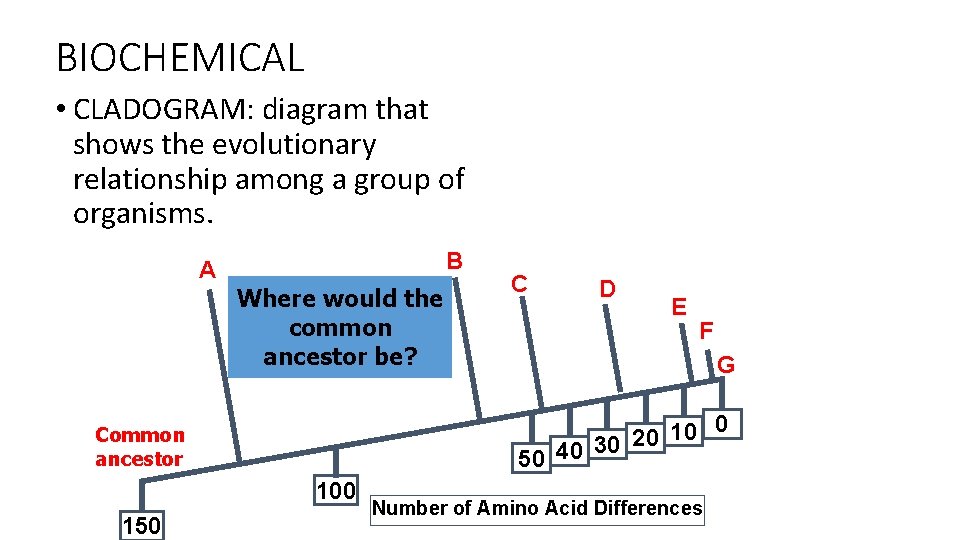
BIOCHEMICAL • CLADOGRAM: diagram that shows the evolutionary relationship among a group of organisms. B A Where would the What organism common belongs at each ancestor be? branch? D E F G 10 0 20 30 50 40 Common ancestor 100 150 C Number of Amino Acid Differences
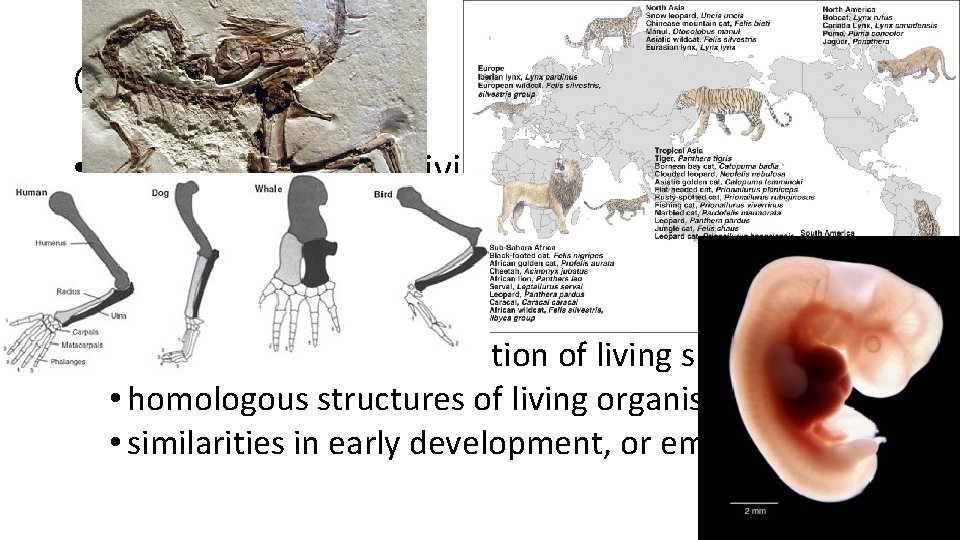
Conclusion • Darwin argued that living things have been evolving on Earth for millions of years. • Evidence for this process could be found in: • the fossil record • the geographical distribution of living species • homologous structures of living organisms • similarities in early development, or embryology.
Works Cited • “Geographic Distribution of Organisms” photo: Miller, Kenneth and Levine, Joseph. (2004). Biology. Prentice Hall.
- Slides: 16