
Evidencebased Medicine and Academic Detailing st in the
Evidence-based Medicine and Academic Detailing st in the 21 Century MICHAEL A. FISCHER, M. D. , M. S. Director, National Resource Center for Academic Detailing Division of Pharmacoepidemiology and Pharmacoeconomics Brigham and Women’s Hospital Harvard Medical School
Sources of Support �Na. RCAD is supported by a grant from the Agency for Healthcare Research and Quality (AHRQ) �My current research projects are funded by AHRQ, PCORI, and non-profit foundations. �I consult for the Alosa Foundation, a non-profit that supports academic detailing programs. I do not accept personal compensation of any kind from any pharmaceutical companies, health insurers, or device manufacturers. �Do. PE accepts occasional unrestricted research grants from drug companies or health insurance companies to study specific drug safety and utilization questions.
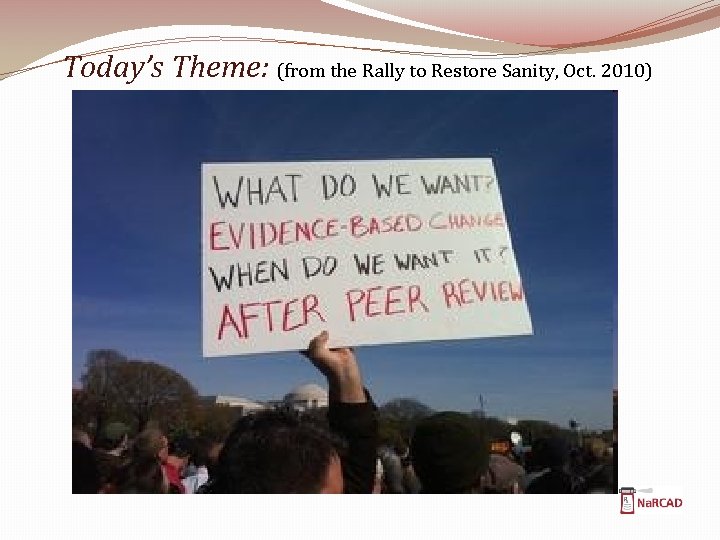
Today’s Theme: (from the Rally to Restore Sanity, Oct. 2010)
The Lay of the Land �Medical care should be effective, safe, and as affordable as possible. �But: �We know that medical care is not optimal �Effective therapies underused �Adverse events and errors common �Patients struggle to pay medical bills � and programs have trouble with rising expenses…
Potential of Modern Medicine �Tremendous reductions in morbidity and mortality �Cardiovascular disease �HIV infection �Gastrointestinal disease �and many other areas
Potential Not Achieved �Underuse of beneficial treatments �Beta-blockers/statins post-MI �Insulin for diabetes �Treatment of depression �Screening for colorectal cancer �Just publishing research is not enough �ALLHAT and treatment of hypertension
Causing Bad Outcomes �Use in different populations �Spironolactone and the RALES trials �Side effects not previously recognized �Implantable defibrillators �Rosiglitazone (Avandia) �Rofecoxib (Vioxx) �Ineffective for important endpoints �Ezetimibe (Zetia) � Opportunity cost of ineffective care
Making Expensive Choices �Coronary artery disease �Persistent use of stents for stable angina �Hypertension �<10% of patients prescribed thiazides (Fischer and Avorn, 2004) �Clopidogrel � 50% of use not indicated (Choudhry, 2008) �More costly prescriptions decrease adherence �Both for new prescriptions (Fischer 2011) and renewals (Shrank, 2006)
How Do We Move Forward? What is needed to improve the effectiveness, safety, and cost of medical care? § Clear evidence about what works § More effective translation into practice
Evidence-based Medicine �Definition: �“Evidence-based medicine de-emphasizes intuition, unsystematic clinical experience, and pathophysiologic rationale as sufficient grounds for clinical decision making and stresses the examination of evidence from clinical research” � JAMA, 1992, Evidence-based medicine working group

Evidence-based Medicine �Definition: �“Evidence-based medicine de-emphasizes intuition, unsystematic clinical experience, and pathophysiologic rationale as sufficient grounds for clinical decision making and stresses the examination of evidence from clinical research” � JAMA, 1992, Evidence-based medicine working group
Why do we need evidence-based medicine? �Problems with intuition and pathophysiologic rationale: �Leeches �Bleeding �Trepanning �An era when most medical care did not work �“Primum non nocere”
But we cannot laugh at history: �Pathophysiologic rationale may still drive therapeutic choices �Flecainide �Post-menopausal hormone replacement �Ezetimibe �MRI for back pain
EBM in the Modern Era �Increasingly effective treatments �Better understanding of risks/harms �Mandate for health care system: Identify effective and safe treatments Increase their use Avoid causing harm
Arguments against EBM: �“Cookie-cutter” medicine �Loss of physician autonomy �Limitations of the evidence �De-personalization of medicine �Just about cutting costs �Creates new obligations or standards �Core issue: seen as a burden, not a service
What EBM is really about: �Clarifying when treatments work �Identifying gaps in knowledge �Arming clinicians to: Use their judgment Ask the right questions Apply the evidence
What does practicing EBM mean? �Clinical experience and instincts important �Pathophysiology must be understood And then: �Use these tools to frame clinical questions �Identify the treatments that will work
Bringing EBM to Physicians �To see the value of EBM, physicians must: �Be able to learn the material �Understand where it fits with current practice �Have tools to help with implementation � Easy to use � Fit with workflow �Additional information and data is coming �If we are not ready to make the most of the new data, it will be a missed opportunity
Getting the Data to Clinicians �Give clinicians what they need: �High quality data �Relevant to clinical practice �Practical, easy-to-use format �Customized to clinical setting �Focused on real-world decisions Academic detailing can meet these needs.
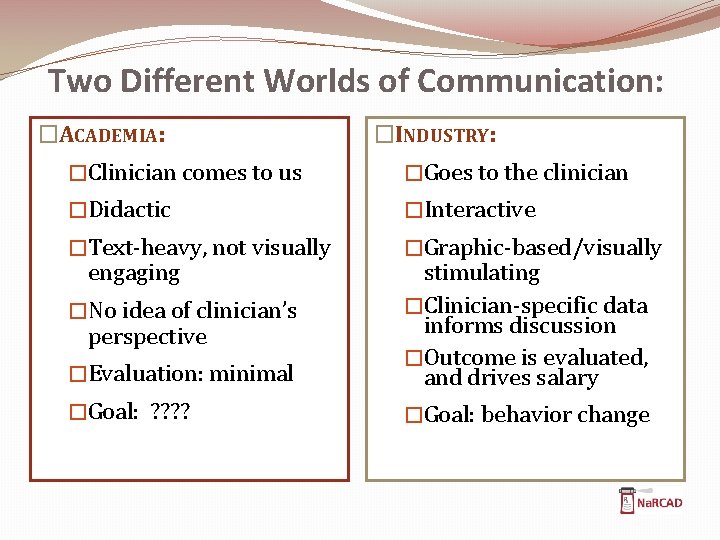
Two Different Worlds of Communication: �ACADEMIA: �INDUSTRY: �Clinician comes to us �Goes to the clinician �Didactic �Interactive �Text-heavy, not visually �Graphic-based/visually engaging �Evaluation: minimal stimulating �Clinician-specific data informs discussion �Outcome is evaluated, and drives salary �Goal: ? ? �Goal: behavior change �No idea of clinician’s perspective
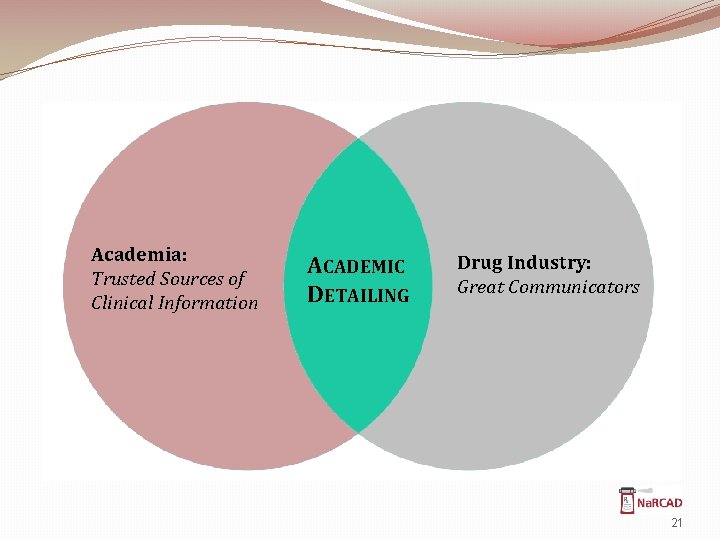
Academia: Trusted Sources of Clinical Information ACADEMIC DETAILING Drug Industry: Great Communicators 21
What We Need: Evidence-based, non-product-driven research & communication about real-world clinical decisions.
The Logic of Academic Detailing: �Medical (and pharmacy) school faculty have a solid grasp of the evidence about drug benefits and risks… �but we’re often terrible communicators. �Industry reps are superb communicators… �but their primary goal is to increase sales. �Can the content of the former be communicated to clinicians through a ‘delivery system’ based on the latter?
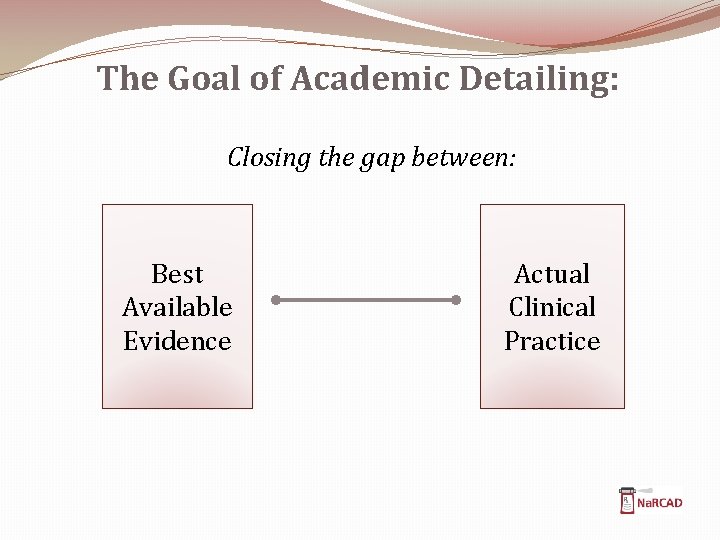
The Goal of Academic Detailing: Closing the gap between: Best Available Evidence Actual Clinical Practice
…So that clinical decisions are based only on the most current and accurate evidence about: Efficacy Cost-effectiveness Safety
Na. RCAD History & Impact • Created with a grant from AHRQ in 2010, renewed in 2014 • Helped establish and/or supported 34+ programs in 16+ states • We’ve trained 150+ Academic Detailers • We host the Annual International Academic Detailing Conference; this fall’s 2015 Conference will be our 3 rd annual. 26
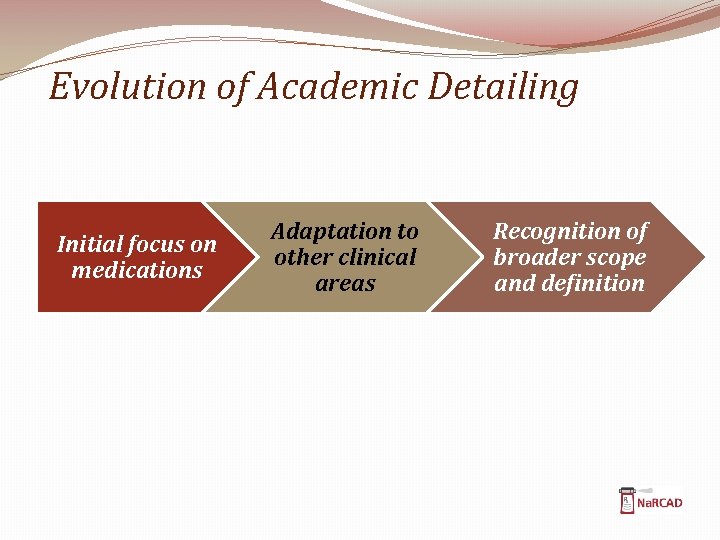
Evolution of Academic Detailing Initial focus on medications Adaptation to other clinical areas Recognition of broader scope and definition
The Content of Academic Detailing �Well-trained clinicians (Pharm, RN, MD) visit clinicians in their offices and offer a service that provides non-commercial, evidence-based information about the comparative benefit, risk, and cost-effectiveness of treatments and tests used for common clinical problems.
The Method of Academic Detailing � It’s educational outreach. � Generally in the frontline clinician’s own office � Information is provided interactively, so the educator can: � Understand where the MD is coming from in terms of knowledge, attitudes, behavior � Modify the presentation appropriately � Keep the practitioner engaged � The visit ends with specific practice-change recommendations. � Over time, the relationship is strengthened, based on trust and usefulness.
What Academic Detailing is Not: �Memos or brochures (“the truth”) sent through the mail �Lectures delivered in the doctor’s office �About formulary compliance �About cost reduction, primarily �Merely an attempt to un-do industry marketing (that’s why it’s not ‘counter-detailing’!)
Differing Scales of Academic Detailing Programs • Temporary Programs: o Specific issue over smaller timeframe o Redeployment of current resources • Longer Term Programs: (Limited Scale) o Redistribution of current resources o Multiple issues across multiple disease areas • Longer Term Programs: (Large Scale) o Dedicated resources on broad range of medical areas
Flexible Uses of Academic Detailing: • Improving Knowledge • Changing Treatment • Advancing Patient Education • Increasing Diagnosis & Screening • Expanding Use of Complementary Resources
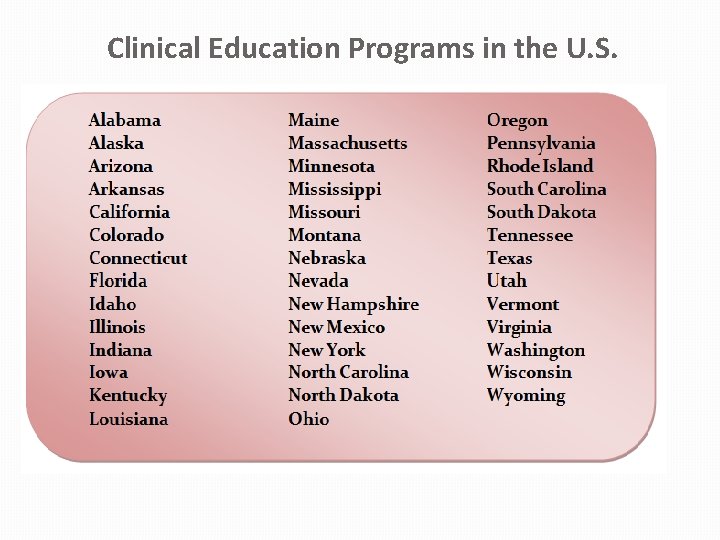
Clinical Education Programs in the U. S.
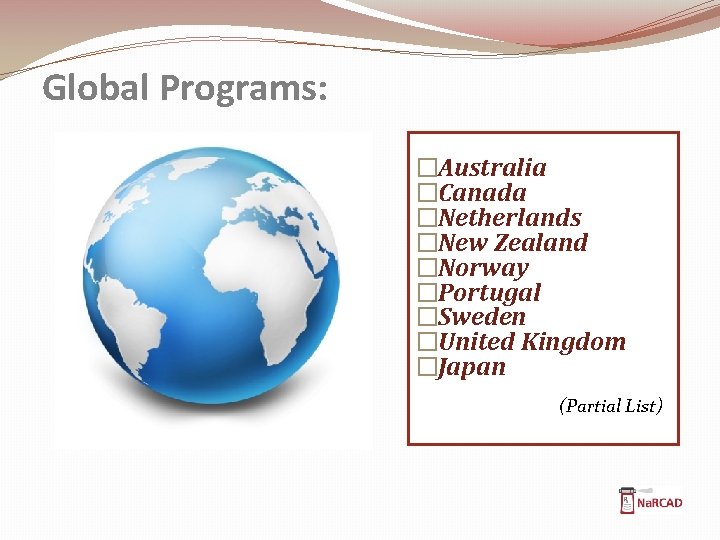
Global Programs: �Australia �Canada �Netherlands �New Zealand �Norway �Portugal �Sweden �United Kingdom �Japan (Partial List)
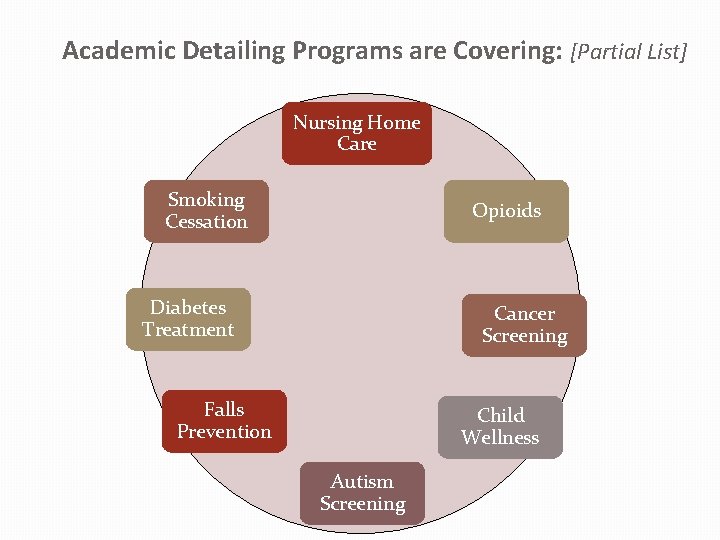
Academic Detailing Programs are Covering: [Partial List] Nursing Home Care Smoking Cessation Opioids Diabetes Treatment Cancer Screening Falls Prevention Child Wellness Autism Screening
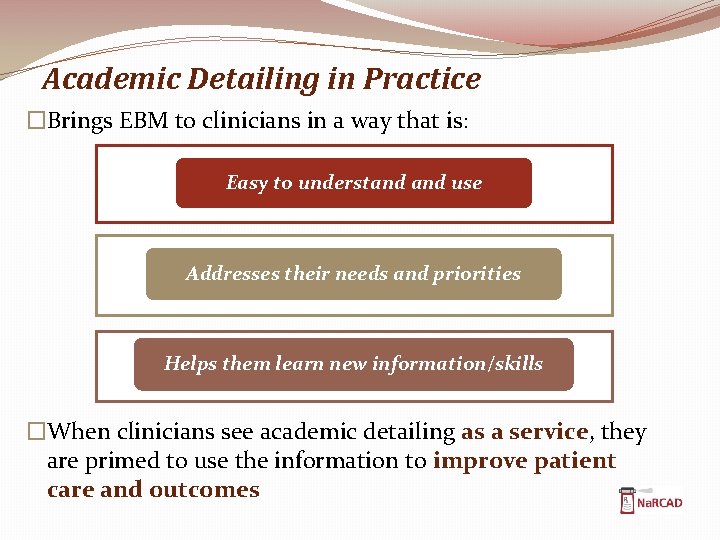
Academic Detailing in Practice �Brings EBM to clinicians in a way that is: Easy to understand use Addresses their needs and priorities Helps them learn new information/skills �When clinicians see academic detailing as a service, they are primed to use the information to improve patient care and outcomes
CONTACT INFORMATION: Na. RCAD Division of Pharmacoepidemiology & Pharmacoeconomics Brigham and Women’s Hospital & Harvard Medical School 419 Boylston Street, Floor 6 | Boston, MA 02116 857. 307. 3801 | narcad@partners. org www. narcad. org Connect with us on social media:
- Slides: 37