
EvidenceBase Medicine Supervisor Intern 991223 Patient Profile Chart
Evidence-Base Medicine Supervisor 施相宏 醫師 Intern 朱能生 李涵蓉 郭欣慧 99/12/23
Patient Profile • • • Chart No. : 00042534 Name: 黃o崴 Age: 13 y/o Gender: male Admission date: 99. 11. 16
Chief Complaint l Fever up to 38。C this morning and skin rashes over face, extremities and trunk with itching sensation (since 11/16)
Present illness-1 l This 12 -year-6 -month old boy has suffered from folliculitis for almost a month. l Because of the folliculitis, he went to the local clinics and has taken some medicine for almost a month.
Present illness-2 l Three weeks ago, he suffered from fever without any other symptoms. l Last week, he suffered from fever again accompanied by skin rashes over extremities and abdomen. l 11/15 - He vomited without other symptoms
Present illness-3 l 11/16 - He suffered from fever at the third time with skin rashes over face, extremities and trunk, so he was brought to our emergency department for help. l There were no cough, no rhinorrhea, no vomiting, no diarrhea and no tea color urine.
Past history l Systemic disease: denied l Heart/liver disease(-), asthma(-) l Hospitalization hx: 88 -05 -21 to 88 -05 -25 for hand-foot-mouth disease 89 -10 -4 to 89 -10 -9 for herpangina l Vaccination: as scheduled l Operation history: denied l Full-term, delivered by : C-section
Personal History l Occupation: nil l Travel history: nil l Contact history: nil l Allergy: denied drug or food allergy
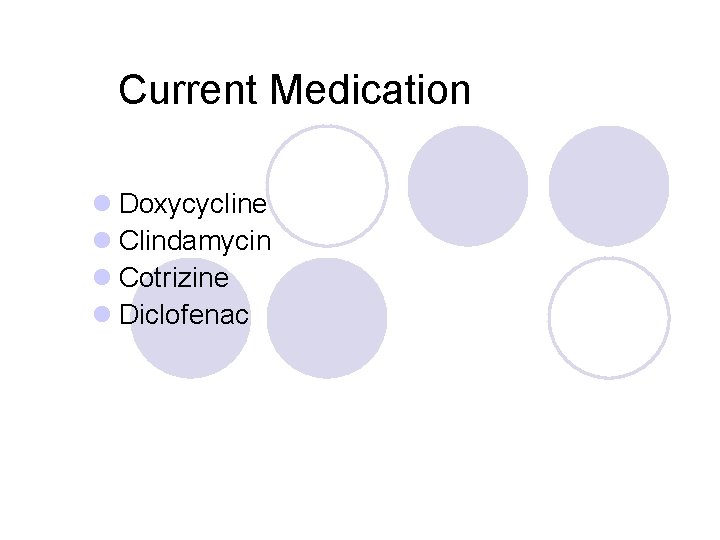
Current Medication l Doxycycline l Clindamycin l Cotrizine l Diclofenac
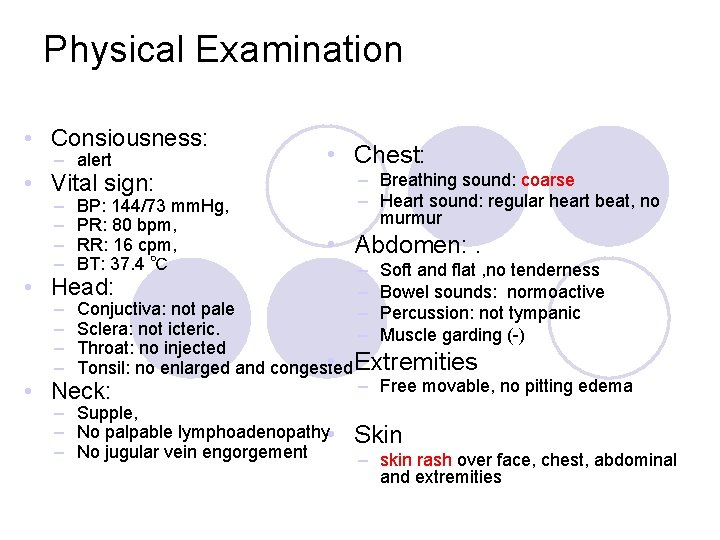
Physical Examination • Consiousness: – alert • Vital sign: – – BP: 144/73 mm. Hg, PR: 80 bpm, RR: 16 cpm, BT: 37. 4 ℃ • Head: • – – • Chest: – Breathing sound: coarse – Heart sound: regular heart beat, no murmur • Abdomen: . – – Soft and flat , no tenderness Bowel sounds: normoactive Percussion: not tympanic Muscle garding (-) Conjuctiva: not pale Sclera: not icteric. Throat: no injected • Extremities Tonsil: no enlarged and congested – Free movable, no pitting edema Neck: – Supple, – No palpable lymphoadenopathy • Skin – No jugular vein engorgement – skin rash over face, chest, abdominal and extremities
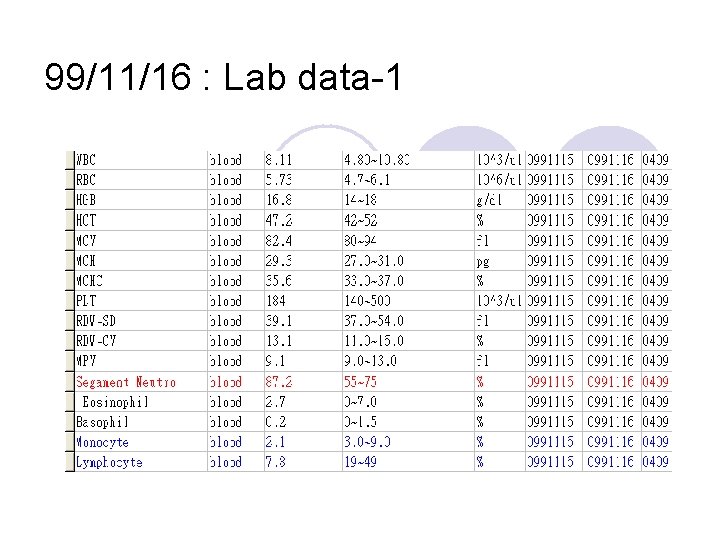
99/11/16 : Lab data-1
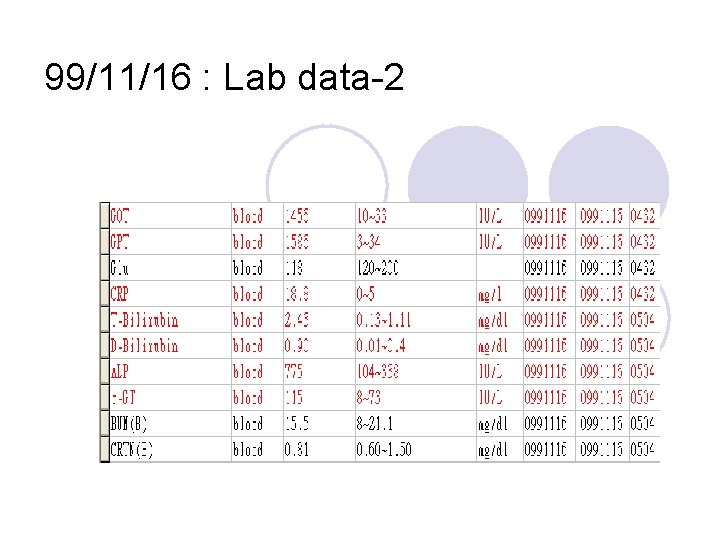
99/11/16 : Lab data-2
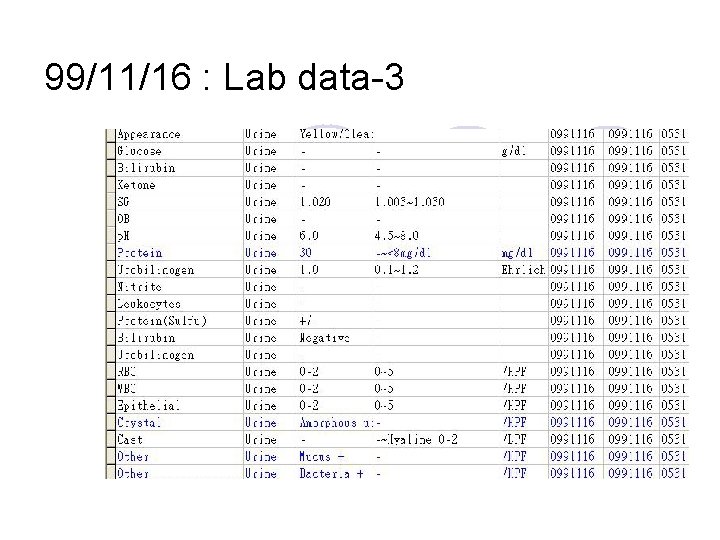
99/11/16 : Lab data-3
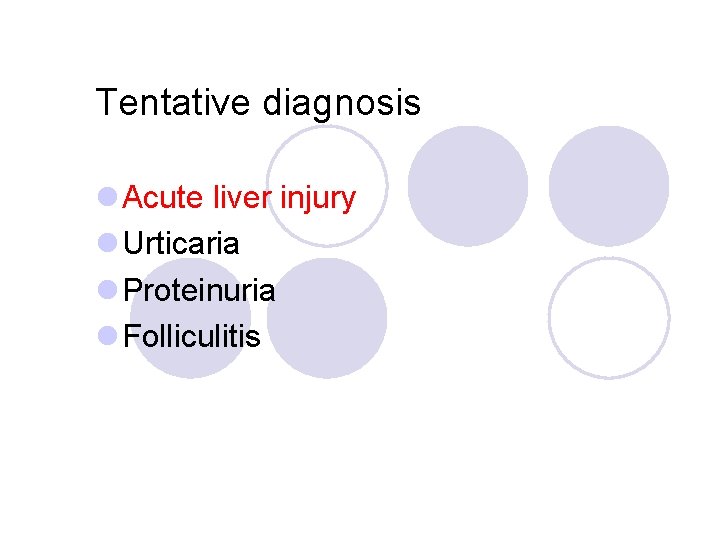
Tentative diagnosis l Acute liver injury l Urticaria l Proteinuria l Folliculitis
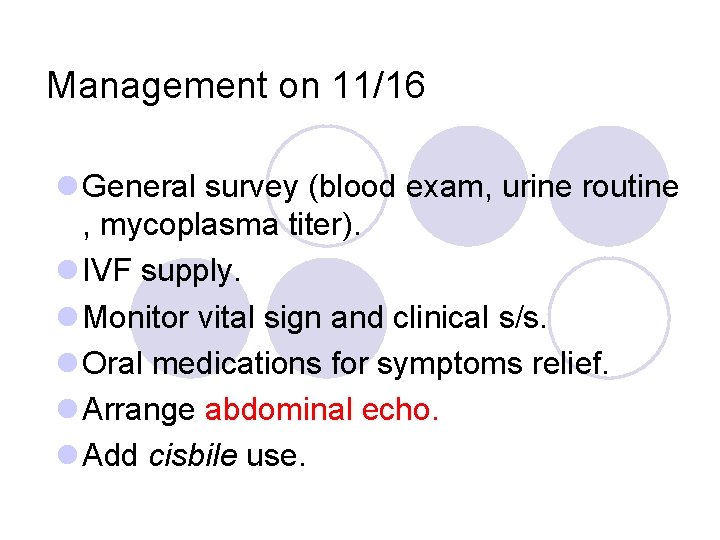
Management on 11/16 l General survey (blood exam, urine routine , mycoplasma titer). l IVF supply. l Monitor vital sign and clinical s/s. l Oral medications for symptoms relief. l Arrange abdominal echo. l Add cisbile use.
After admission
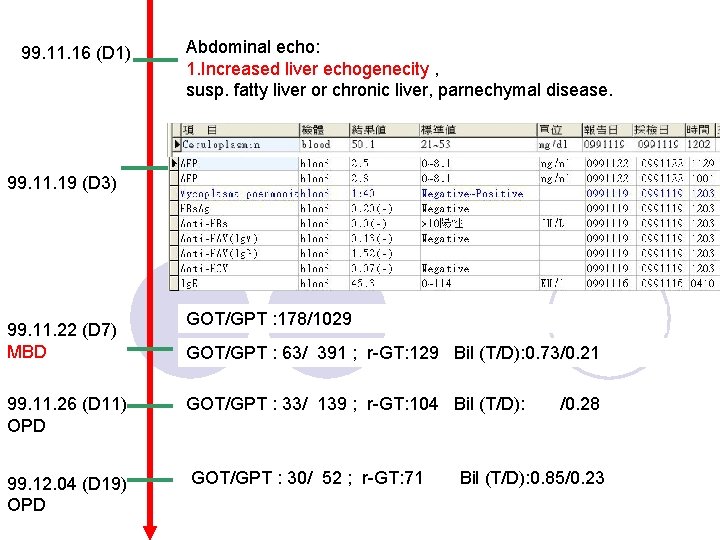
99. 11. 16 (D 1) Abdominal echo: 1. Increased liver echogenecity , susp. fatty liver or chronic liver, parnechymal disease. 99. 11. 19 (D 3) 99. 11. 22 (D 7) MBD 99. 11. 26 (D 11) OPD 99. 12. 04 (D 19) OPD GOT/GPT : 178/1029 GOT/GPT : 63/ 391 ; r-GT: 129 Bil (T/D): 0. 73/0. 21 GOT/GPT : 33/ 139 ; r-GT: 104 Bil (T/D): GOT/GPT : 30/ 52 ; r-GT: 71 /0. 28 Bil (T/D): 0. 85/0. 23
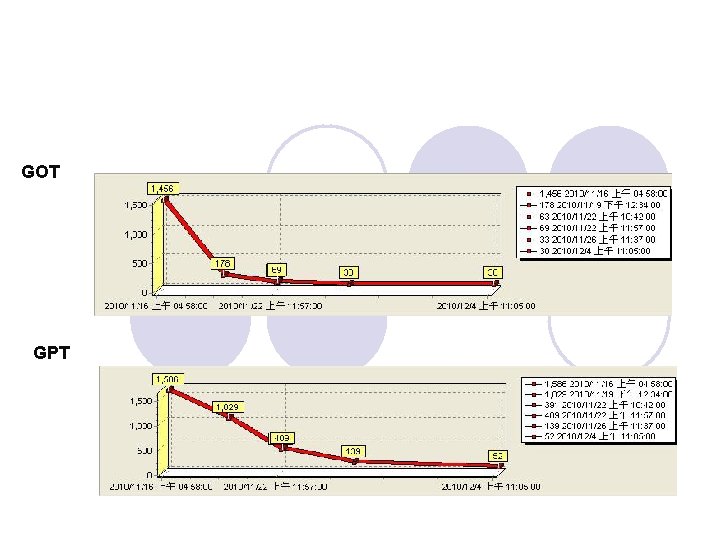
GOT GPT
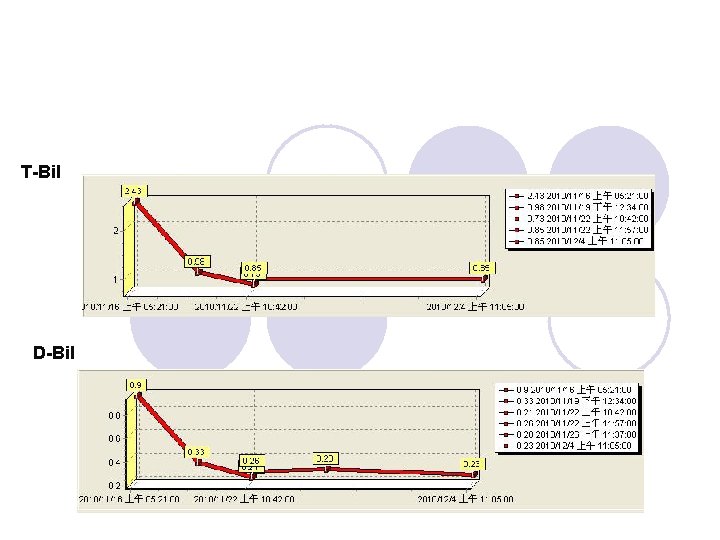
T-Bil D-Bil
Background question l Question 1: How to approach the patient with suspected drug induced liver injury(DILI)? l Question 2: How to treat DILI?
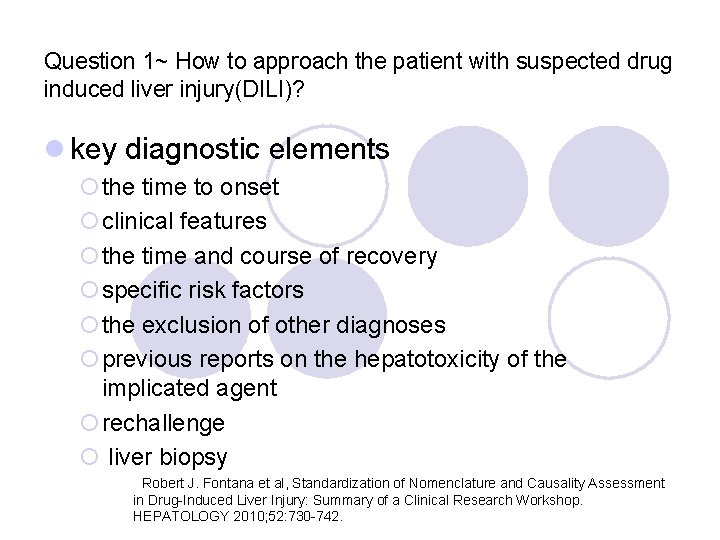
Question 1~ How to approach the patient with suspected drug induced liver injury(DILI)? l key diagnostic elements ¡the time to onset ¡clinical features ¡the time and course of recovery ¡specific risk factors ¡the exclusion of other diagnoses ¡previous reports on the hepatotoxicity of the implicated agent ¡rechallenge ¡ liver biopsy Robert J. Fontana et al, Standardization of Nomenclature and Causality Assessment in Drug-Induced Liver Injury: Summary of a Clinical Research Workshop. HEPATOLOGY 2010; 52: 730 -742.
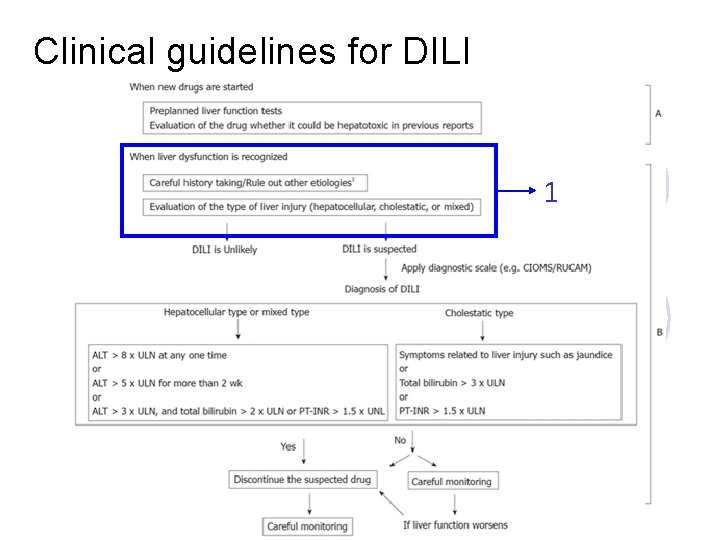
Clinical guidelines for DILI 1
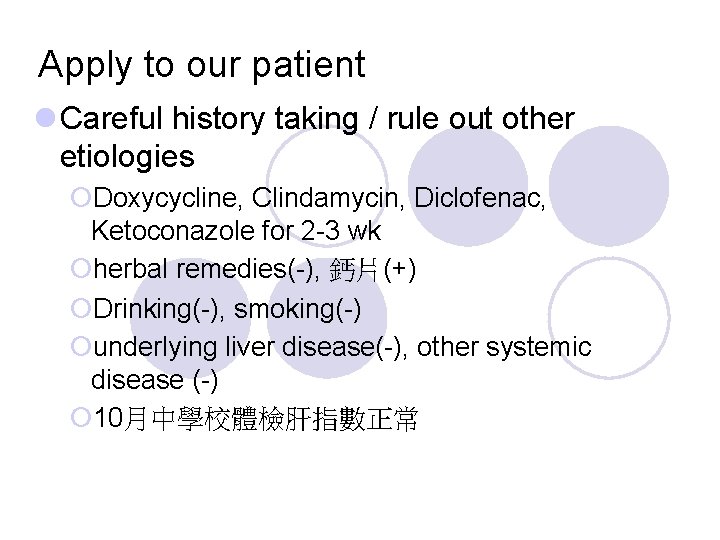
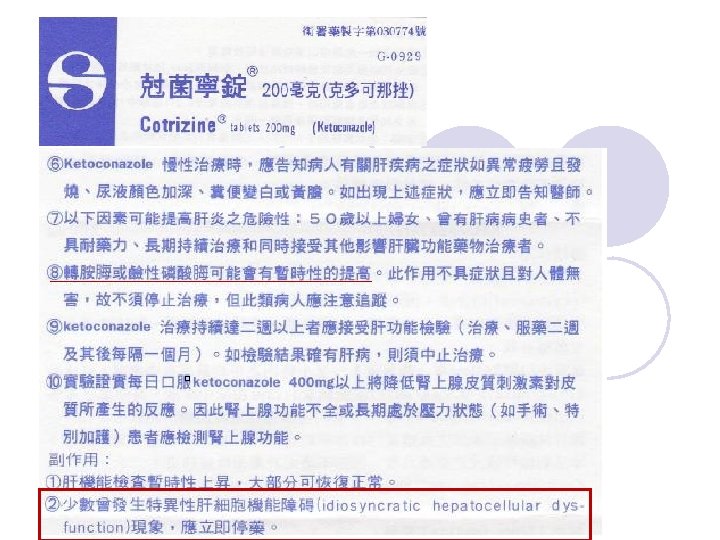
Apply to our patient l Careful history taking / rule out other etiologies ¡Doxycycline, Clindamycin, Diclofenac, Ketoconazole for 2 -3 wk ¡herbal remedies(-), 鈣片(+) ¡Drinking(-), smoking(-) ¡underlying liver disease(-), other systemic disease (-) ¡ 10月中學校體檢肝指數正常
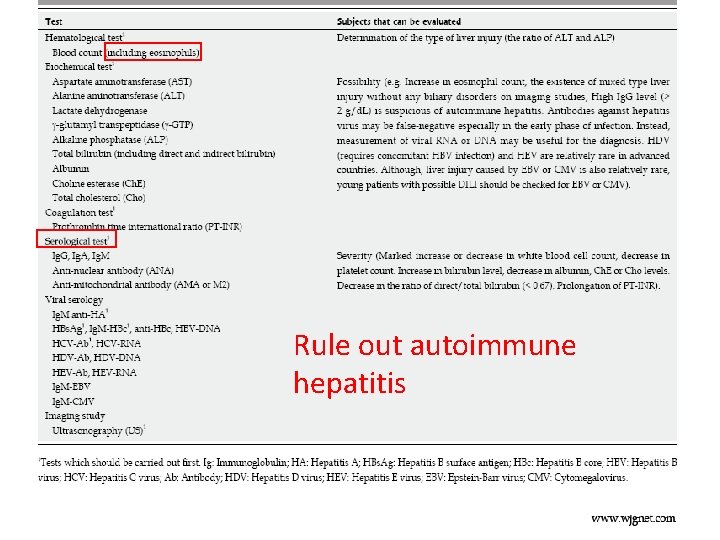
Rule out autoimmune hepatitis
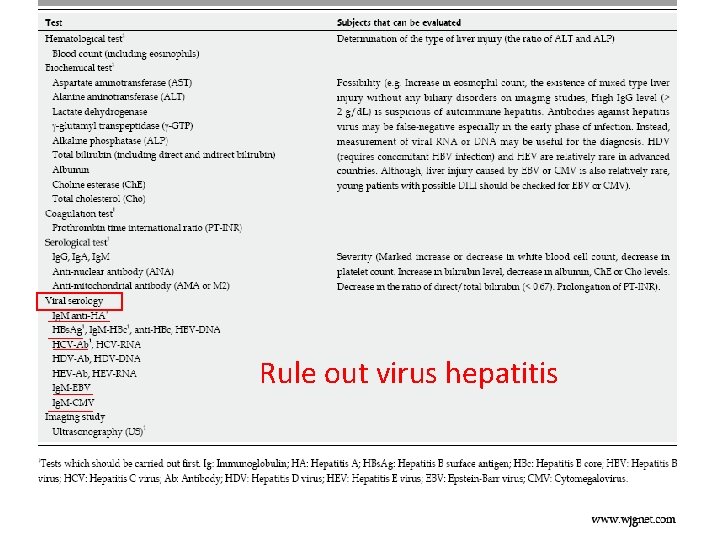
Rule out virus hepatitis
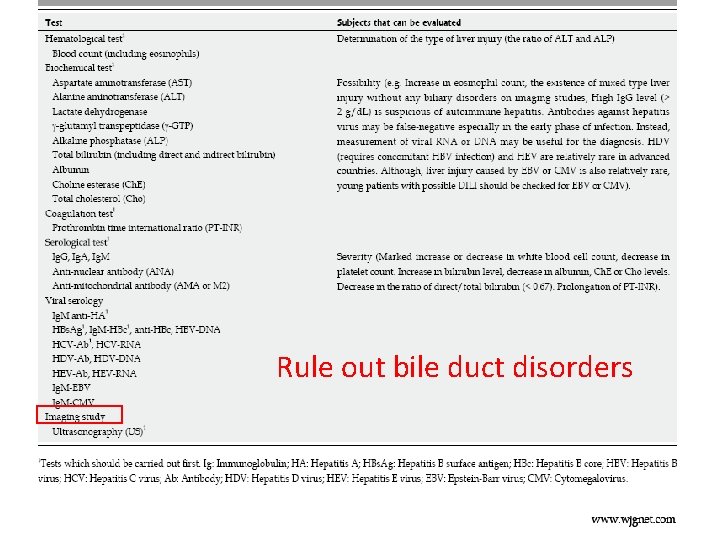
Rule out bile duct disorders
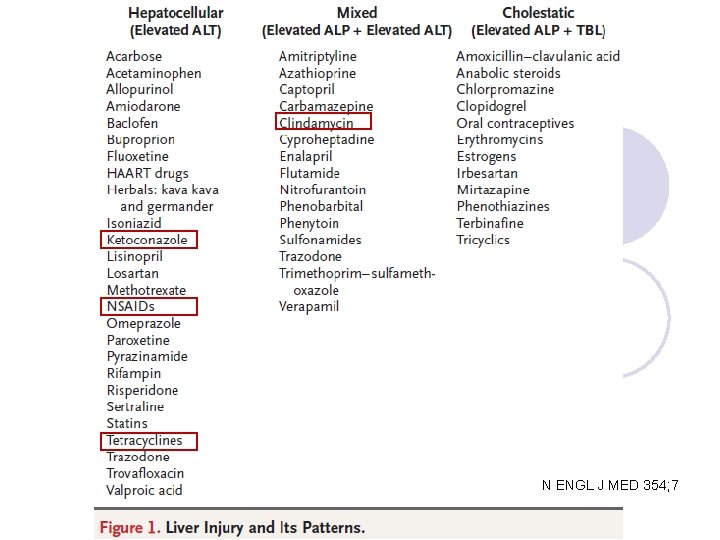
N ENGL J MED 354; 7

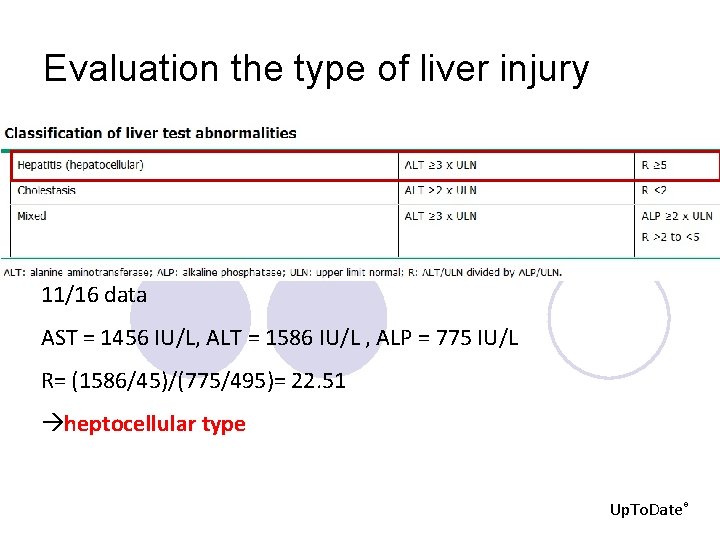
Evaluation the type of liver injury 11/16 data AST = 1456 IU/L, ALT = 1586 IU/L , ALP = 775 IU/L R= (1586/45)/(775/495)= 22. 51 heptocellular type Up. To. Date®
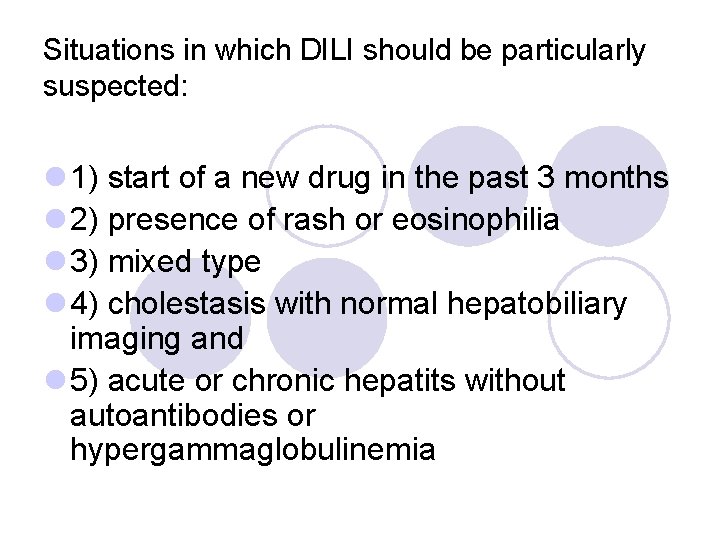
Situations in which DILI should be particularly suspected: l 1) start of a new drug in the past 3 months l 2) presence of rash or eosinophilia l 3) mixed type l 4) cholestasis with normal hepatobiliary imaging and l 5) acute or chronic hepatits without autoantibodies or hypergammaglobulinemia
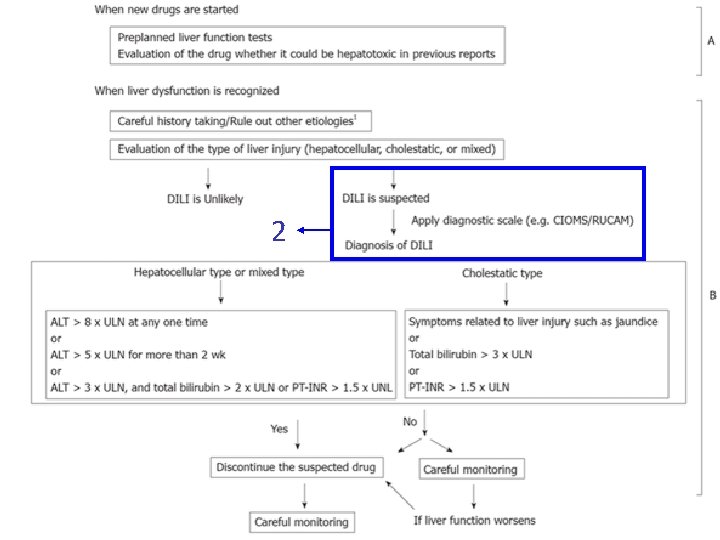
2
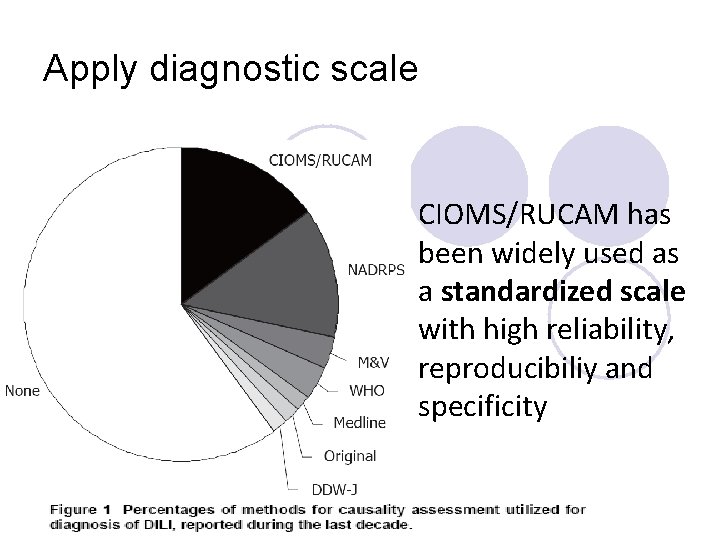
Apply diagnostic scale CIOMS/RUCAM has been widely used as a standardized scale with high reliability, reproducibiliy and specificity
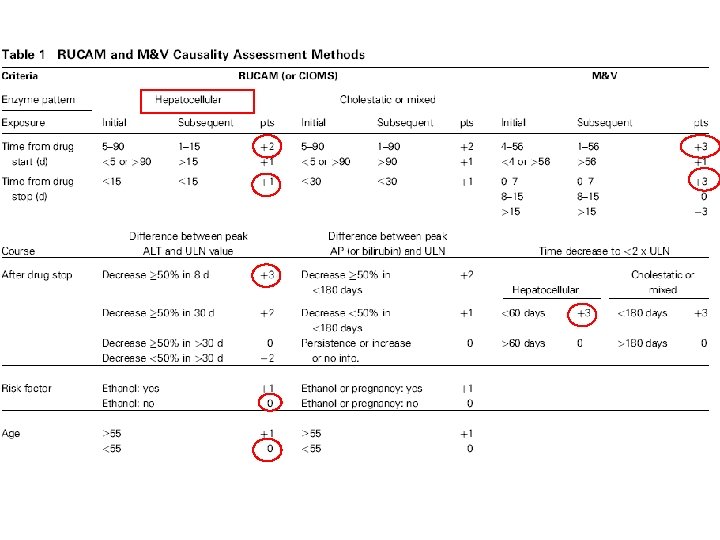
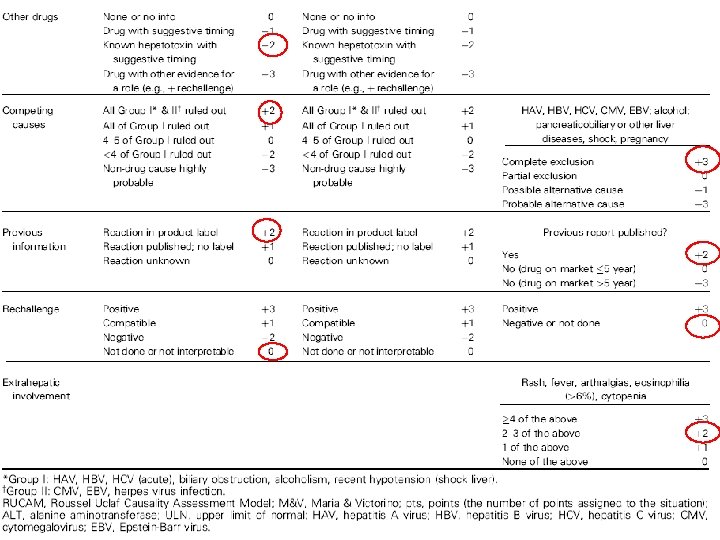
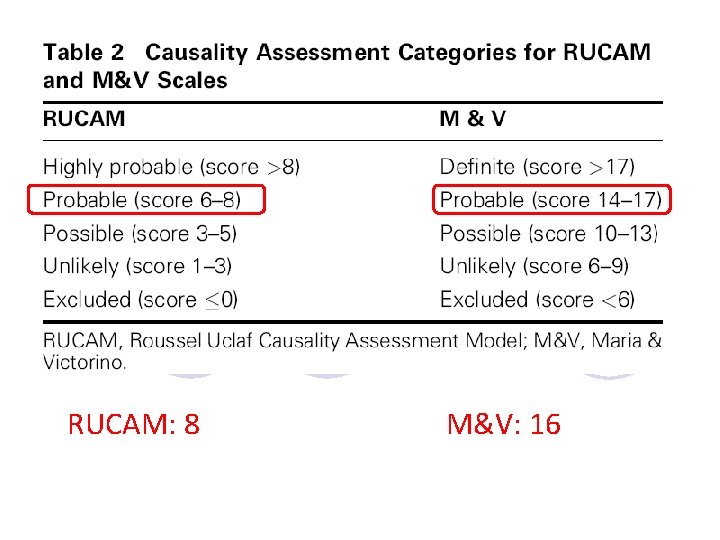
RUCAM: 8 M&V: 16
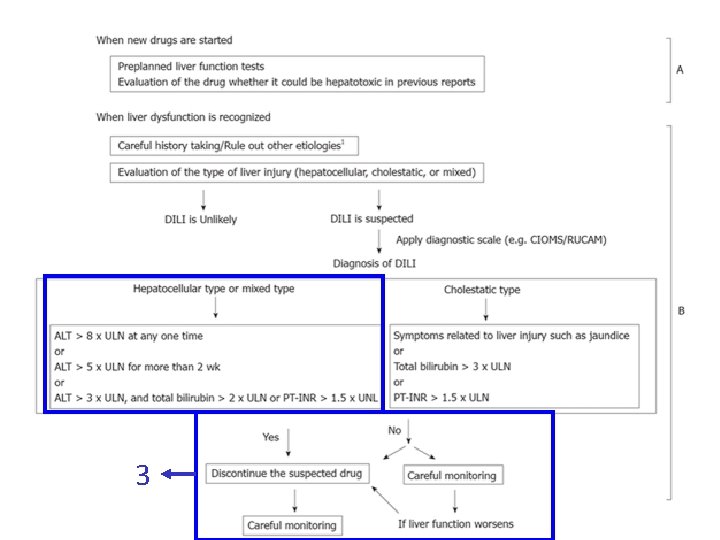
3
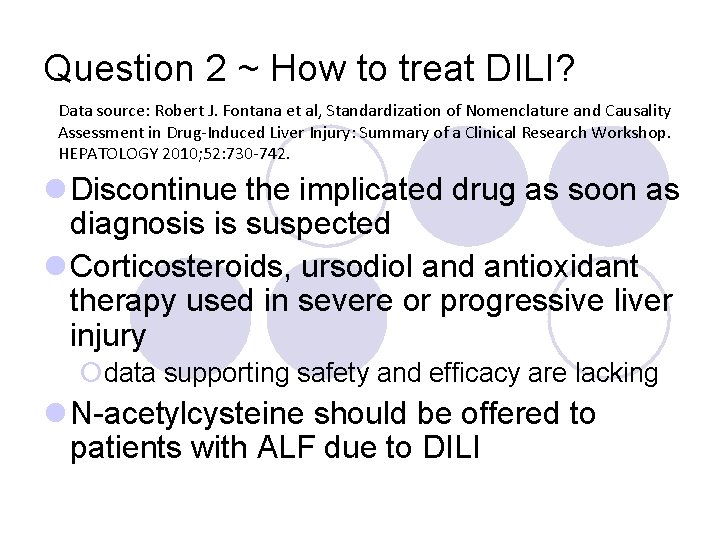
Question 2 ~ How to treat DILI? Data source: Robert J. Fontana et al, Standardization of Nomenclature and Causality Assessment in Drug-Induced Liver Injury: Summary of a Clinical Research Workshop. HEPATOLOGY 2010; 52: 730 -742. l Discontinue the implicated drug as soon as diagnosis is suspected l Corticosteroids, ursodiol and antioxidant therapy used in severe or progressive liver injury ¡data supporting safety and efficacy are lacking l N-acetylcysteine should be offered to patients with ALF due to DILI
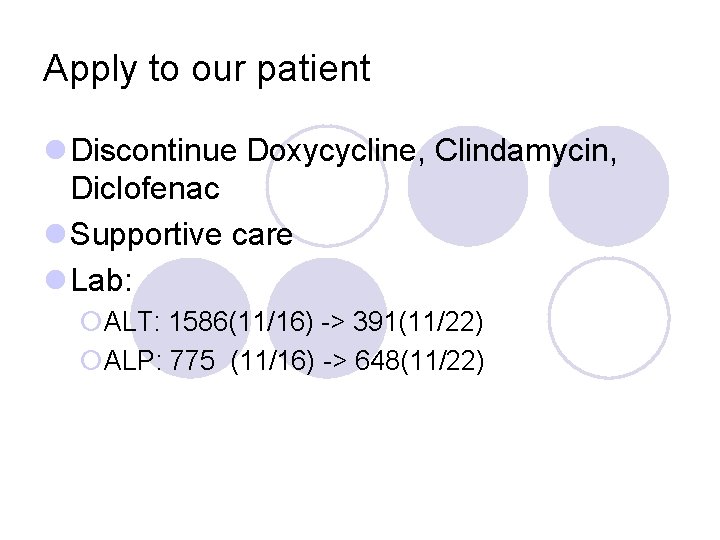
Apply to our patient l Discontinue Doxycycline, Clindamycin, Diclofenac l Supportive care l Lab: ¡ALT: 1586(11/16) -> 391(11/22) ¡ALP: 775 (11/16) -> 648(11/22)
提出Foreground questions
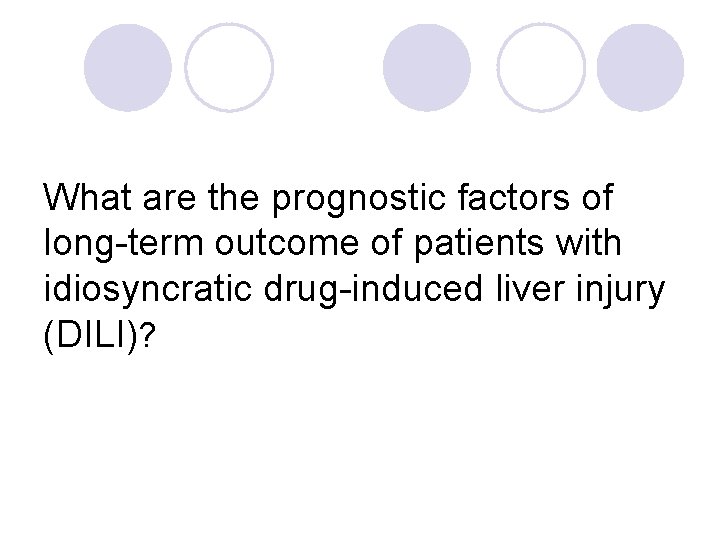
What are the prognostic factors of long-term outcome of patients with idiosyncratic drug-induced liver injury (DILI)?
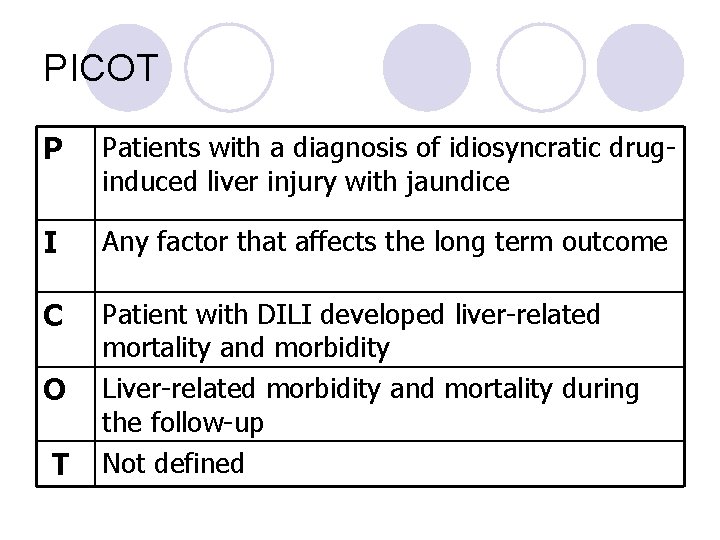
PICOT P Patients with a diagnosis of idiosyncratic druginduced liver injury with jaundice I Any factor that affects the long term outcome C Patient with DILI developed liver-related mortality and morbidity Liver-related morbidity and mortality during the follow-up Not defined O T
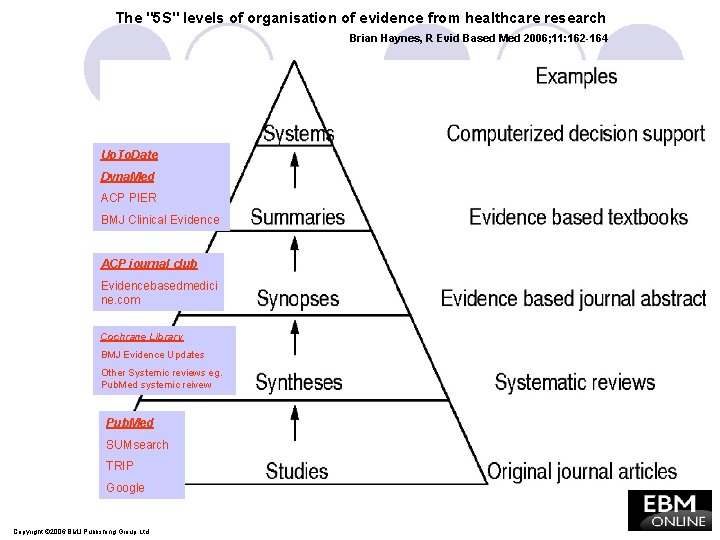
The "5 S" levels of organisation of evidence from healthcare research Brian Haynes, R Evid Based Med 2006; 11: 162 -164 Up. To. Date Dyna. Med ACP PIER BMJ Clinical Evidence ACP journal club Evidencebasedmedici ne. com Cochrane Library BMJ Evidence Updates Other Systemic reviews eg. Pub. Med systemic reivew Pub. Med SUMsearch TRIP Google Copyright © 2006 BMJ Publishing Group Ltd.
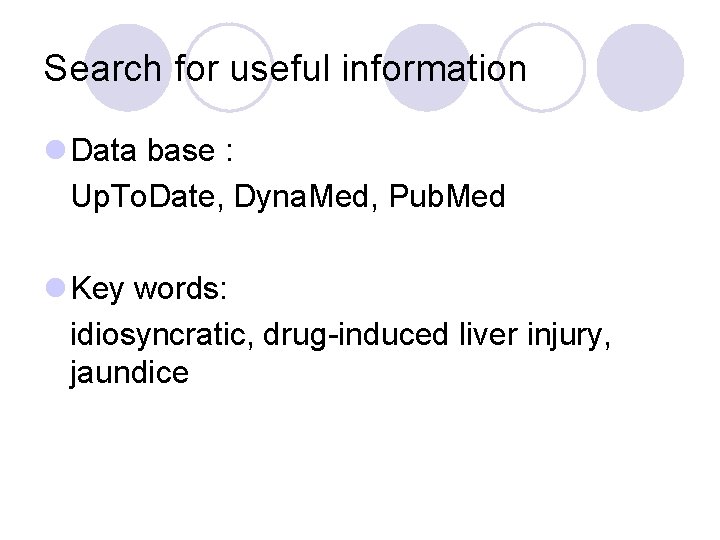
Search for useful information l Data base : Up. To. Date, Dyna. Med, Pub. Med l Key words: idiosyncratic, drug-induced liver injury, jaundice
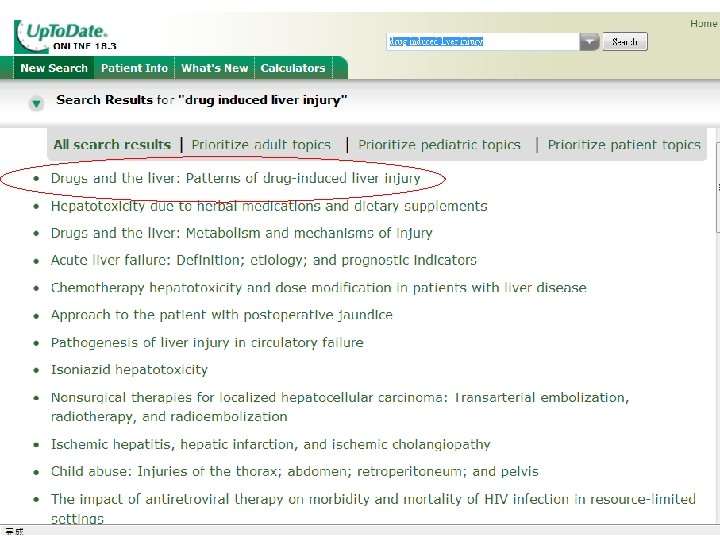
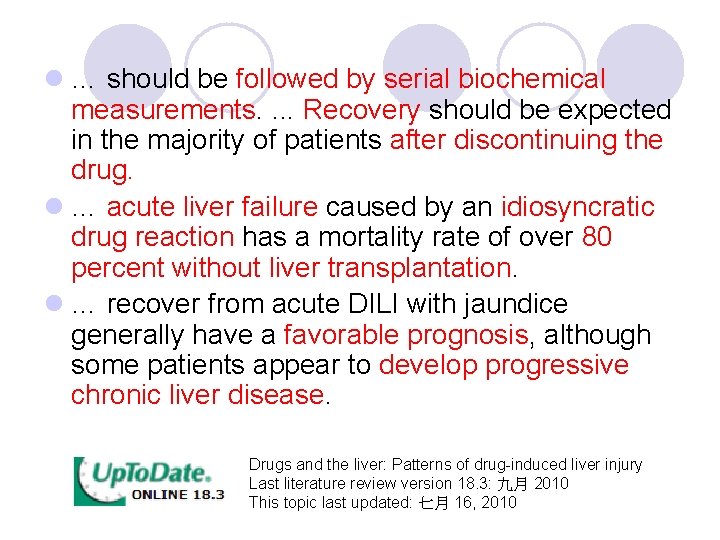
l … should be followed by serial biochemical measurements. . Recovery should be expected in the majority of patients after discontinuing the drug. l … acute liver failure caused by an idiosyncratic drug reaction has a mortality rate of over 80 percent without liver transplantation. l … recover from acute DILI with jaundice generally have a favorable prognosis, although some patients appear to develop progressive chronic liver disease. Drugs and the liver: Patterns of drug-induced liver injury Last literature review version 18. 3: 九月 2010 This topic last updated: 七月 16, 2010
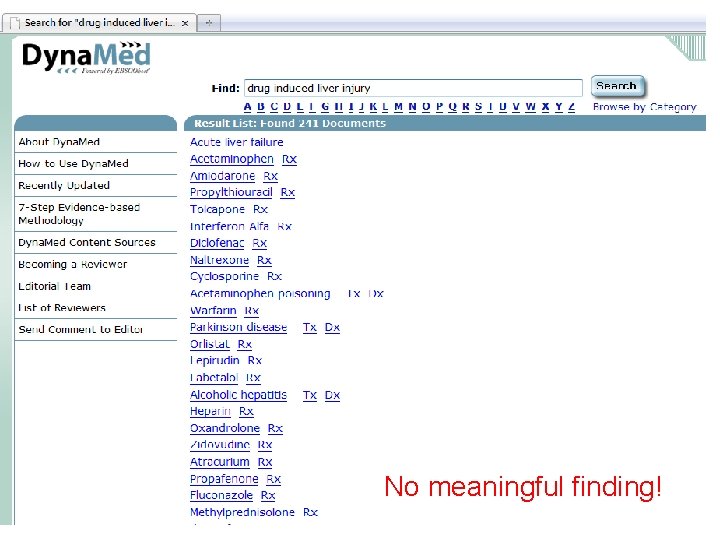
No meaningful finding!
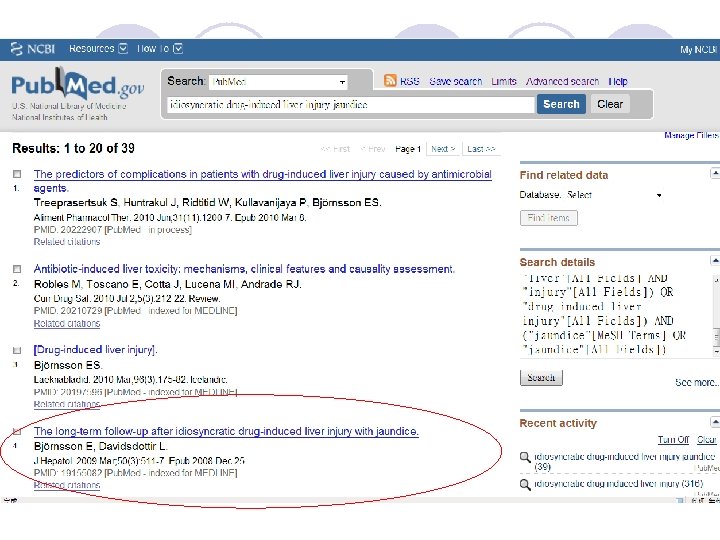
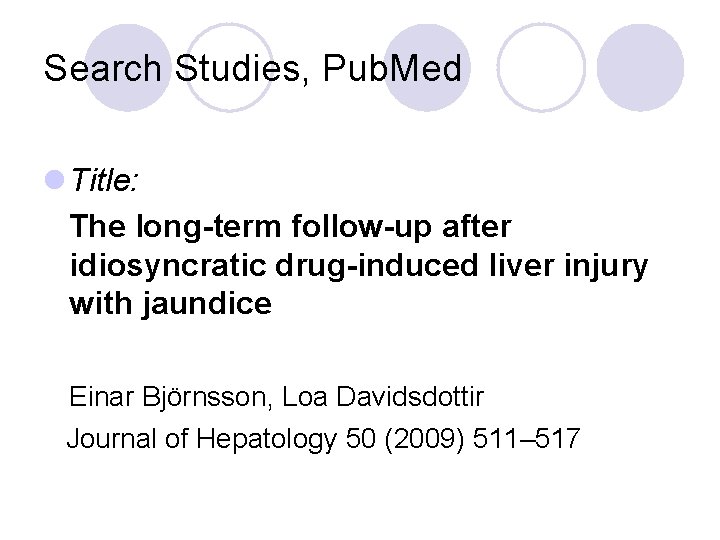
Search Studies, Pub. Med l Title: The long-term follow-up after idiosyncratic drug-induced liver injury with jaundice Einar Björnsson, Loa Davidsdottir Journal of Hepatology 50 (2009) 511– 517
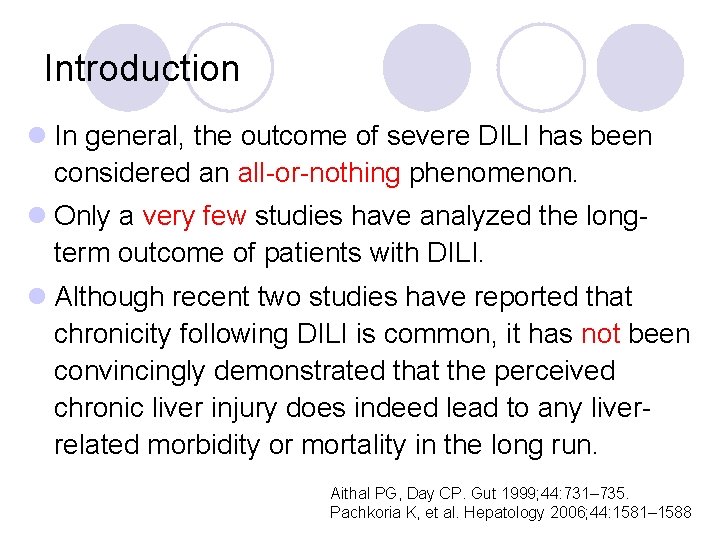
Introduction l In general, the outcome of severe DILI has been considered an all-or-nothing phenomenon. l Only a very few studies have analyzed the longterm outcome of patients with DILI. l Although recent two studies have reported that chronicity following DILI is common, it has not been convincingly demonstrated that the perceived chronic liver injury does indeed lead to any liverrelated morbidity or mortality in the long run. Aithal PG, Day CP. Gut 1999; 44: 731– 735. Pachkoria K, et al. Hepatology 2006; 44: 1581– 1588
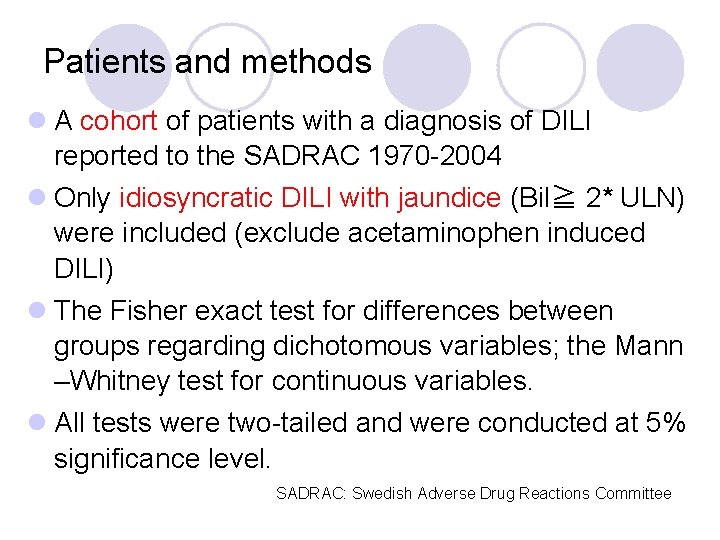
Patients and methods l A cohort of patients with a diagnosis of DILI reported to the SADRAC 1970 -2004 l Only idiosyncratic DILI with jaundice (Bil≧ 2* ULN) were included (exclude acetaminophen induced DILI) l The Fisher exact test for differences between groups regarding dichotomous variables; the Mann –Whitney test for continuous variables. l All tests were two-tailed and were conducted at 5% significance level. SADRAC: Swedish Adverse Drug Reactions Committee
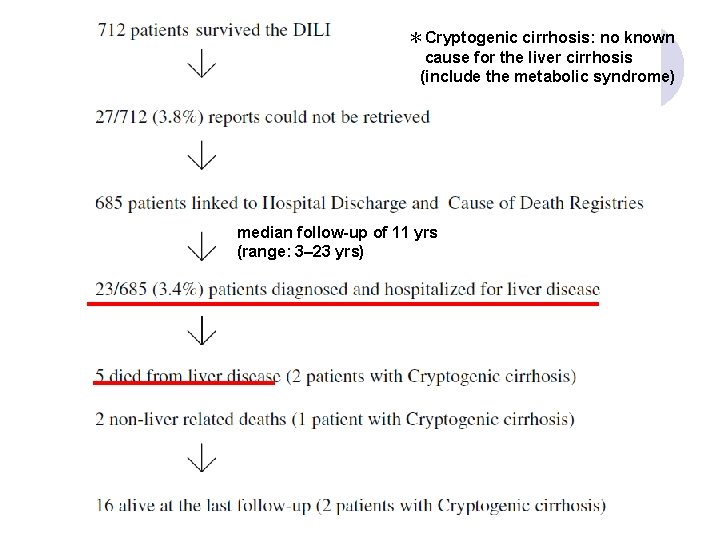
*Cryptogenic cirrhosis: no known cause for the liver cirrhosis (include the metabolic syndrome) median follow-up of 11 yrs (range: 3– 23 yrs)
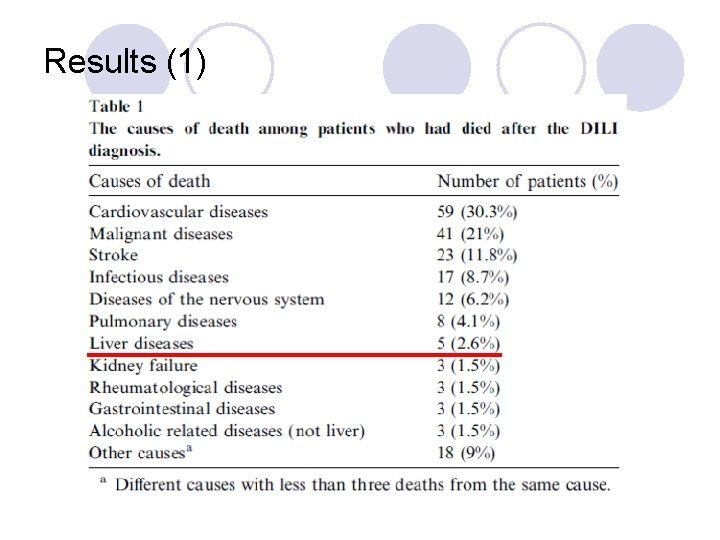
Results (1)
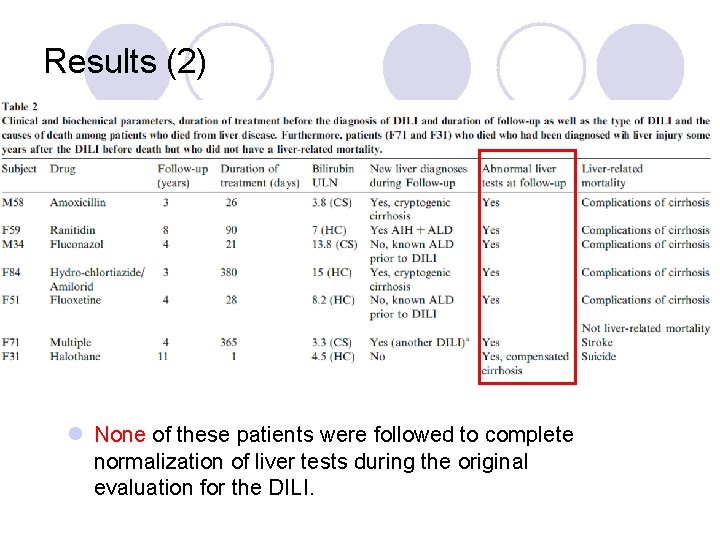
Results (2) l None of these patients were followed to complete normalization of liver tests during the original evaluation for the DILI.
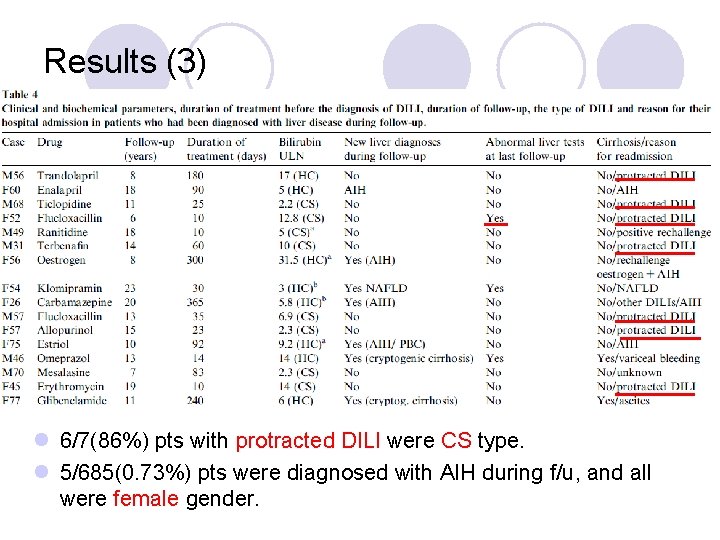
Results (3) l 6/7(86%) pts with protracted DILI were CS type. l 5/685(0. 73%) pts were diagnosed with AIH during f/u, and all were female gender.
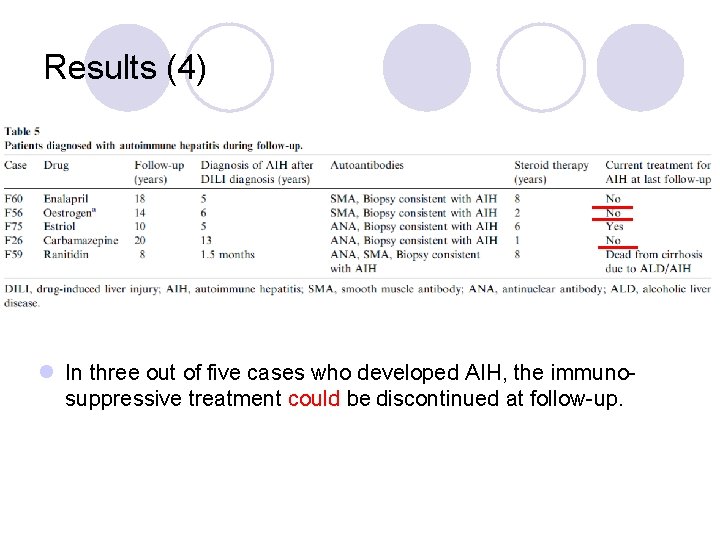
Results (4) l In three out of five cases who developed AIH, the immunosuppressive treatment could be discontinued at follow-up.
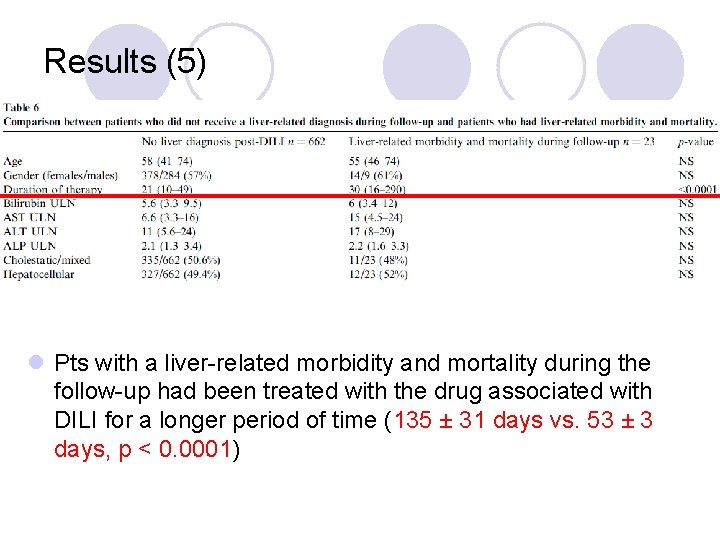
Results (5) l Pts with a liver-related morbidity and mortality during the follow-up had been treated with the drug associated with DILI for a longer period of time (135 ± 31 days vs. 53 ± 3 days, p < 0. 0001)
Discussion (1) l Development of clinically important liver disease is rare (23/685, 3. 4%) when a patient has survived a severe DILI. l Protracted DILI was mostly seen in patients with cholestatic/mixed type (6/7, 86%) of DILI in whom liver tests in the vast majority of cases normalized during follow-up. l Autoimmune hepatitis (5/23, 22%) developed in a substantial number of patients with a seemingly good prognosis. Ortiz N, et al. J Hepatol 2008; 48: A 896. Yamamoto S. J Gastroenterol 2002; 37: 1345– 1346
Discussion (2) l Duration of drug therapy before diagnosis of DILI was found to be significantly longer in those who experienced liver-related morbidity/mortality during follow-up. l Decompensated ‘‘cryptogenic” cirrhosis developed in some patients in which DILI might have played a role in this development.
Appraisal
AAMPICOT l Answer: Does this paper answer your question? Yes. l Author: ¡Is the author an expert of the field? lyes ¡Is there any conflict of interest? l. Not mentioned
Method
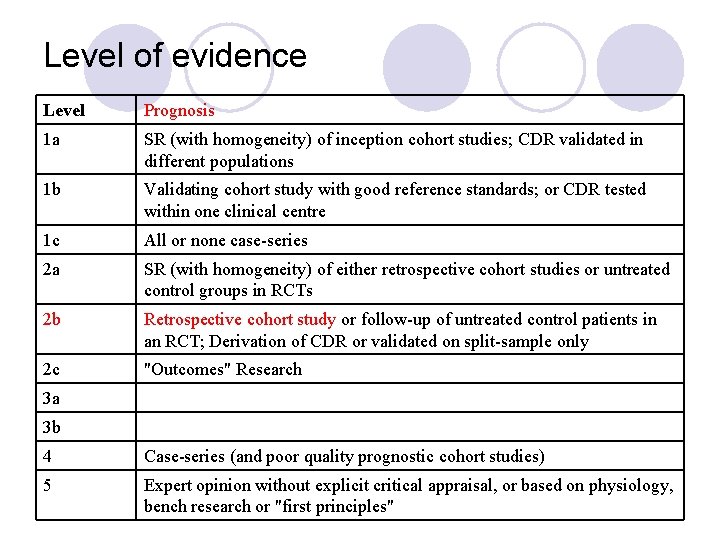
Level of evidence Level Prognosis 1 a SR (with homogeneity) of inception cohort studies; CDR validated in different populations 1 b Validating cohort study with good reference standards; or CDR tested within one clinical centre 1 c All or none case-series 2 a SR (with homogeneity) of either retrospective cohort studies or untreated control groups in RCTs 2 b Retrospective cohort study or follow-up of untreated control patients in an RCT; Derivation of CDR or validated on split-sample only 2 c "Outcomes" Research 3 a 3 b 4 Case-series (and poor quality prognostic cohort studies) 5 Expert opinion without explicit critical appraisal, or based on physiology, bench research or "first principles"
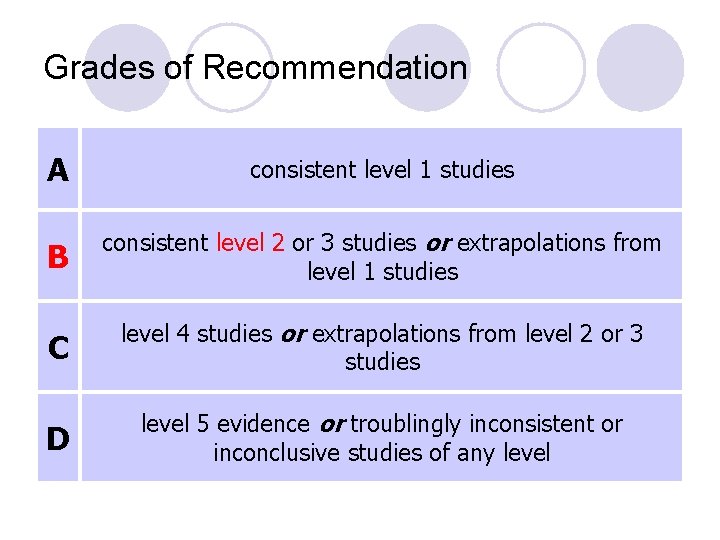
Grades of Recommendation A consistent level 1 studies B consistent level 2 or 3 studies or extrapolations from level 1 studies C level 4 studies or extrapolations from level 2 or 3 studies D level 5 evidence or troublingly inconsistent or inconclusive studies of any level
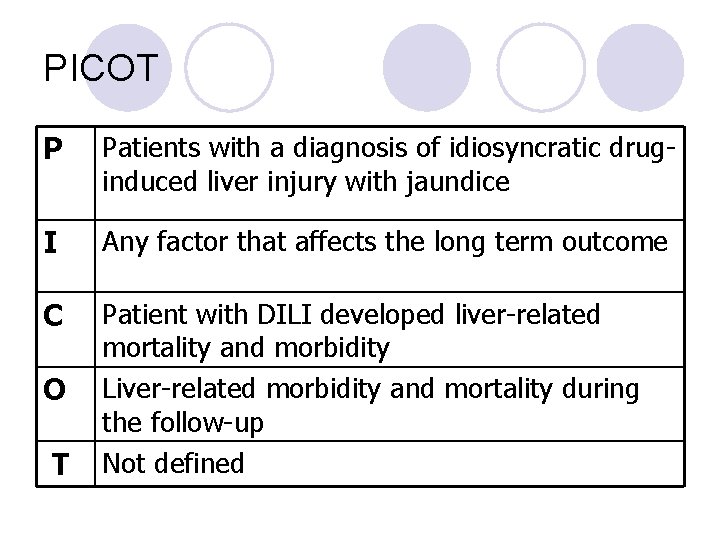
PICOT P Patients with a diagnosis of idiosyncratic druginduced liver injury with jaundice I Any factor that affects the long term outcome C Patient with DILI developed liver-related mortality and morbidity Liver-related morbidity and mortality during the follow-up Not defined O T
PROGNOSIS WORKSHEET (VIP rule)
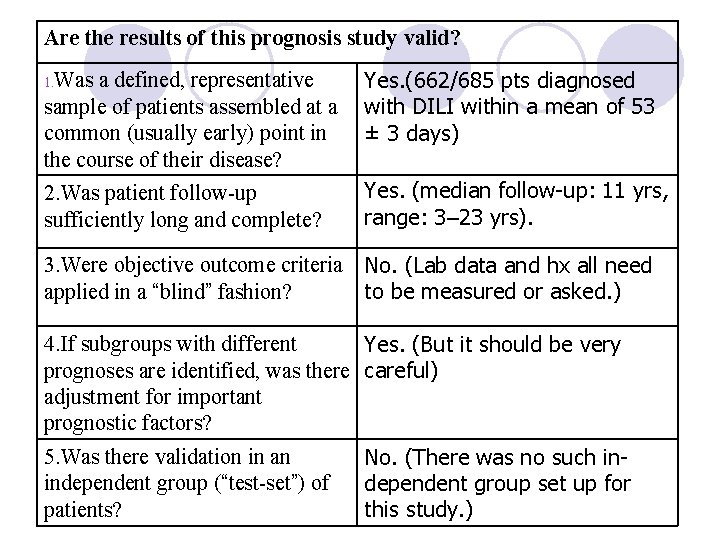
Are the results of this prognosis study valid? Was a defined, representative sample of patients assembled at a common (usually early) point in the course of their disease? Yes. (662/685 pts diagnosed with DILI within a mean of 53 ± 3 days) 2. Was patient follow-up sufficiently long and complete? Yes. (median follow-up: 11 yrs, range: 3– 23 yrs). 1. 3. Were objective outcome criteria No. (Lab data and hx all need applied in a “blind” fashion? to be measured or asked. ) 4. If subgroups with different Yes. (But it should be very prognoses are identified, was there careful) adjustment for important prognostic factors? 5. Was there validation in an independent group (“test-set”) of patients? No. (There was no such independent group set up for this study. )
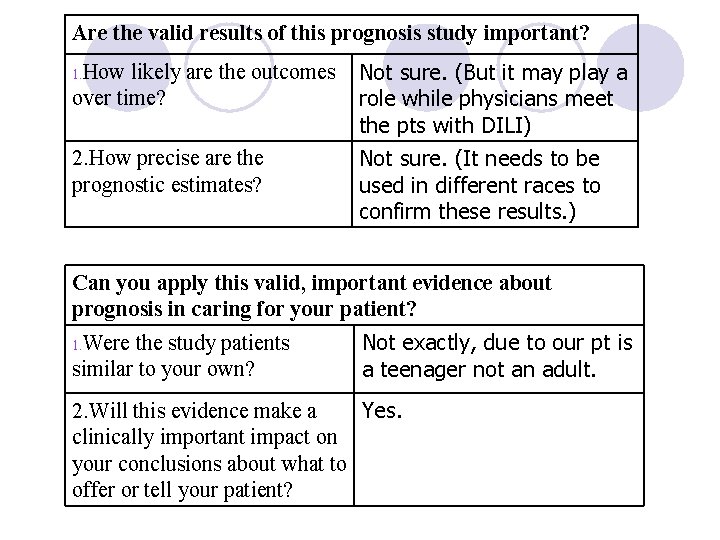
Are the valid results of this prognosis study important? How likely are the outcomes over time? Not sure. (But it may play a role while physicians meet the pts with DILI) 2. How precise are the prognostic estimates? Not sure. (It needs to be used in different races to confirm these results. ) 1. Can you apply this valid, important evidence about prognosis in caring for your patient? Were the study patients similar to your own? 1. Not exactly, due to our pt is a teenager not an adult. 2. Will this evidence make a Yes. clinically important impact on your conclusions about what to offer or tell your patient?

Apply
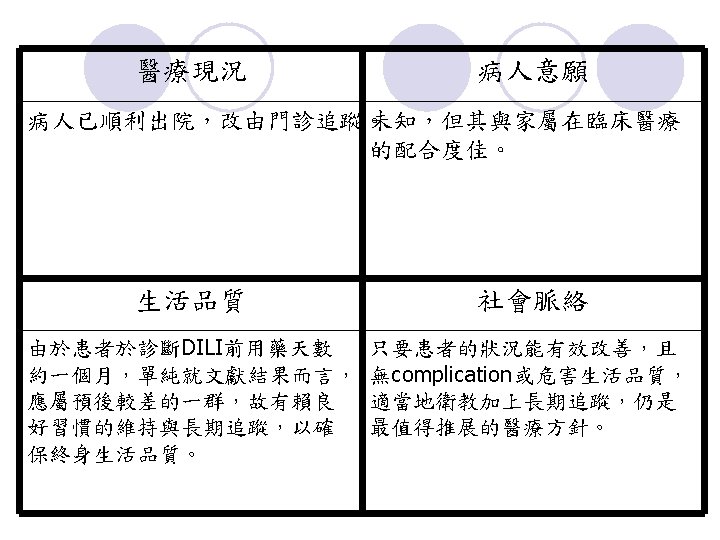

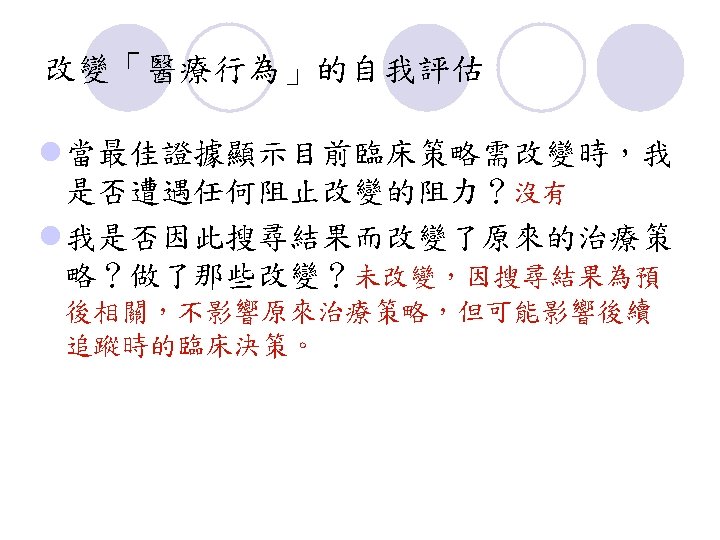
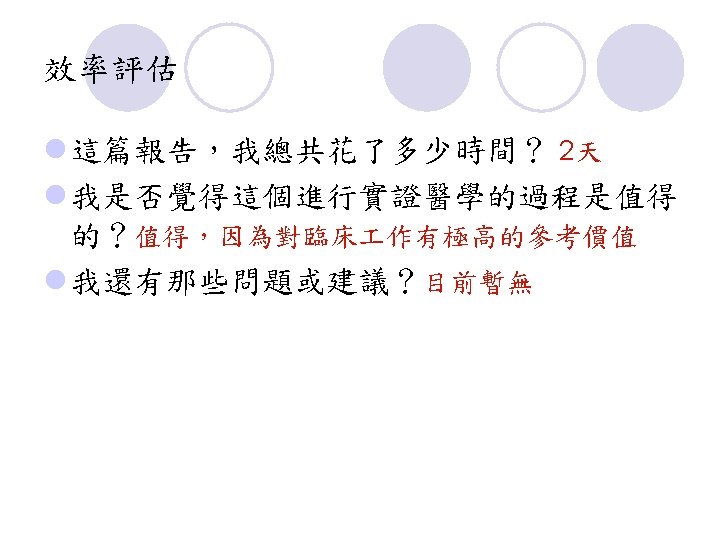
Audit

Thanks for your attention!
- Slides: 78