
Evidence Supporting Evolution 1 Comparative Anatomy n The

- Slides: 17
Evidence Supporting Evolution
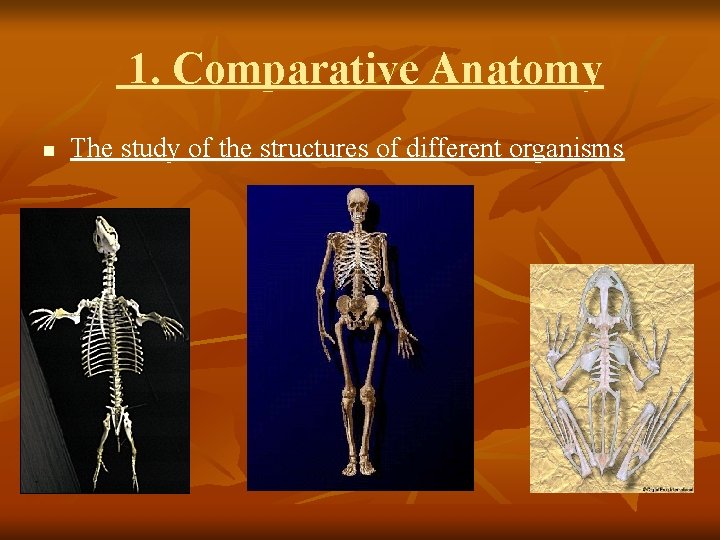
1. Comparative Anatomy n The study of the structures of different organisms
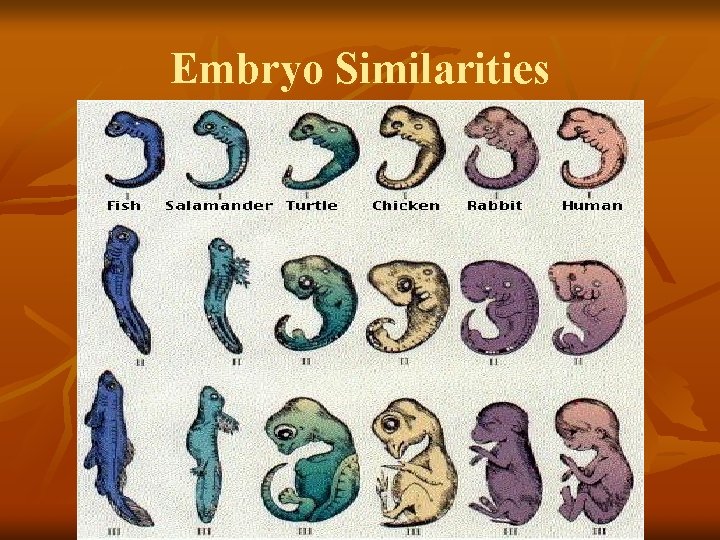
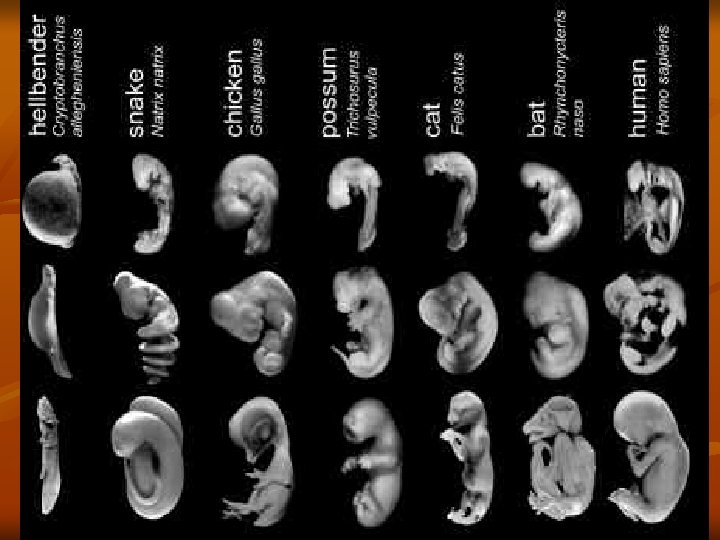
Embryo Similarites n n n The same groups of cells develop in the same order and in similar patterns in all vertebrates. The more alike the embryo stages are, the more closely related the organisms are thought to be. Examples: Turtles, chickens, rabbits, and humans all appear similar as embryos!
Embryo Similarities
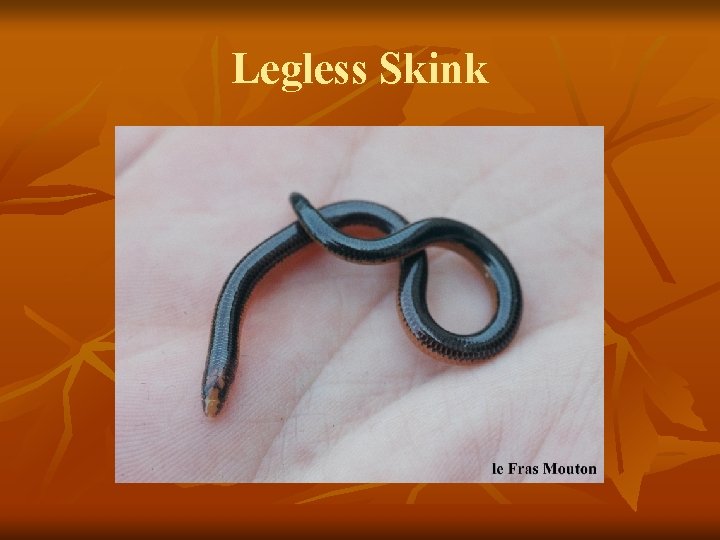
Vestigial Structures n n Structures in organisms left over from ancestors that have no known functions. Examples: n n n Leg bones in skinks Appendix in humans Tailbone in humans
Legless Skink
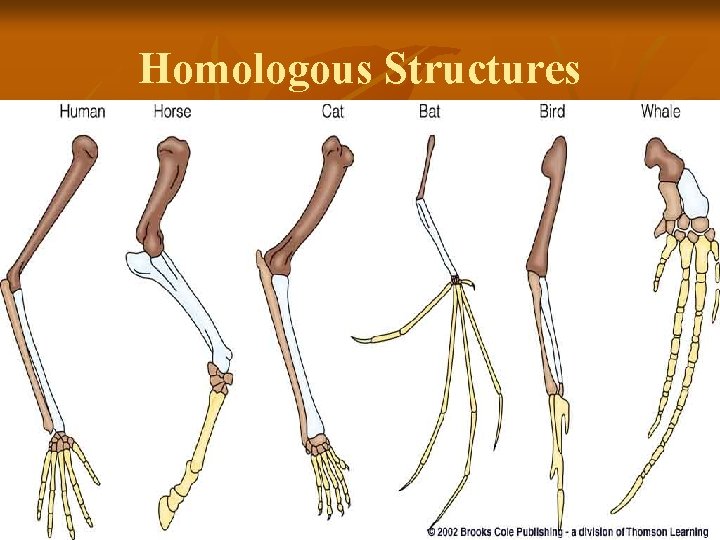
Homologous Structures n n Anatomy that is similar in structure and origin Not always similar in function This shows an evolutionary relationship Examples: Fore-limbs of whales, birds, cats, and humans have similar bone structures
Homologous Structures
Analogous Structures n n n Structures that perform the same function but have different anatomy This shows NO EVOLUTIONARY RELATIONSHIP Example: The wings of birds and butterflies
Analogous Structures
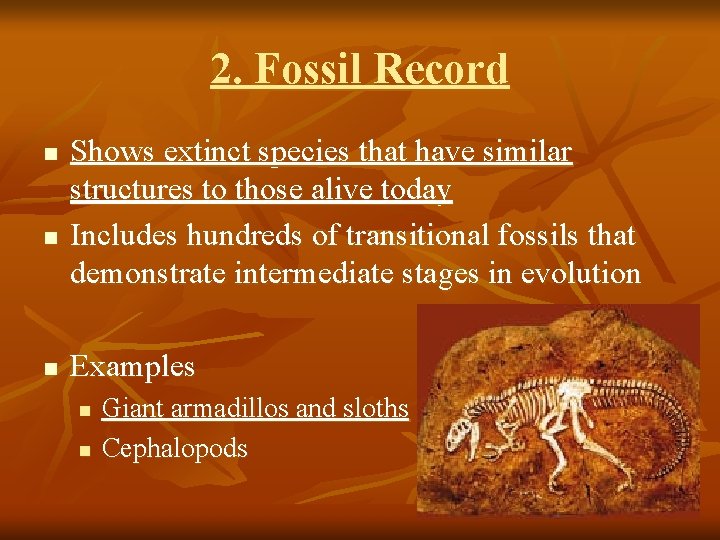
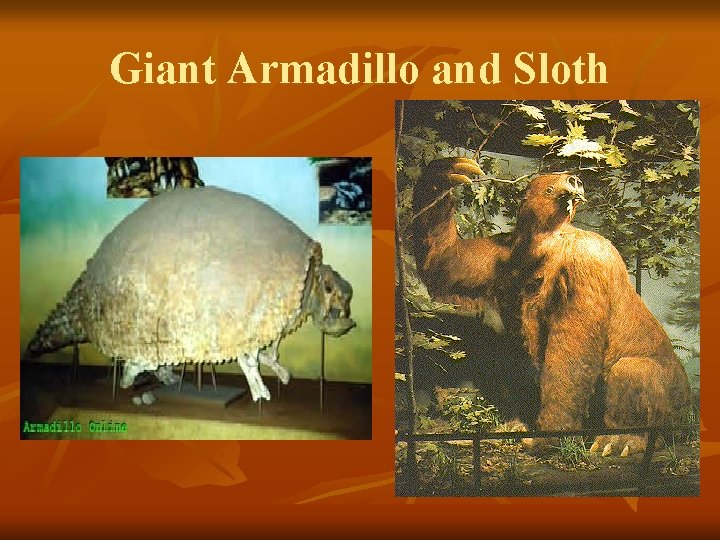
2. Fossil Record n n n Shows extinct species that have similar structures to those alive today Includes hundreds of transitional fossils that demonstrate intermediate stages in evolution Examples n n Giant armadillos and sloths Cephalopods
Giant Armadillo and Sloth
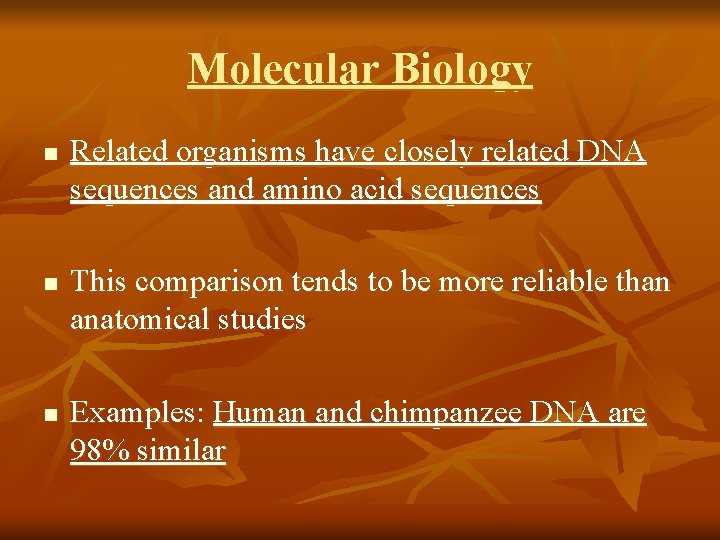
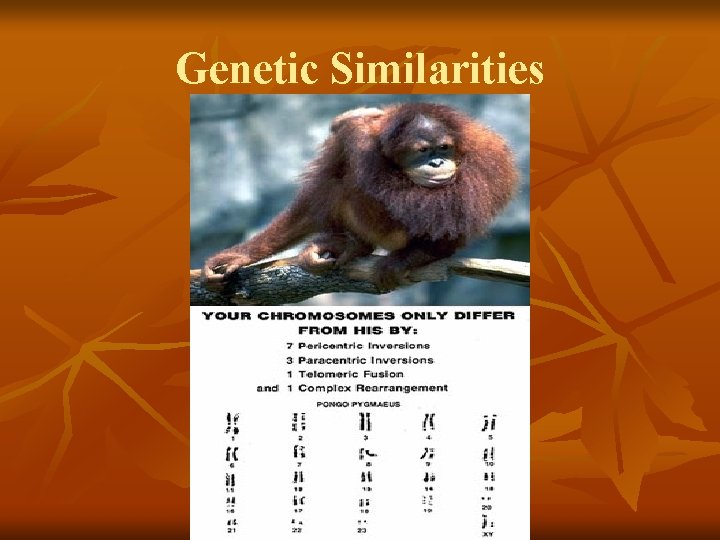
Molecular Biology n n n Related organisms have closely related DNA sequences and amino acid sequences This comparison tends to be more reliable than anatomical studies Examples: Human and chimpanzee DNA are 98% similar
Genetic Similarities
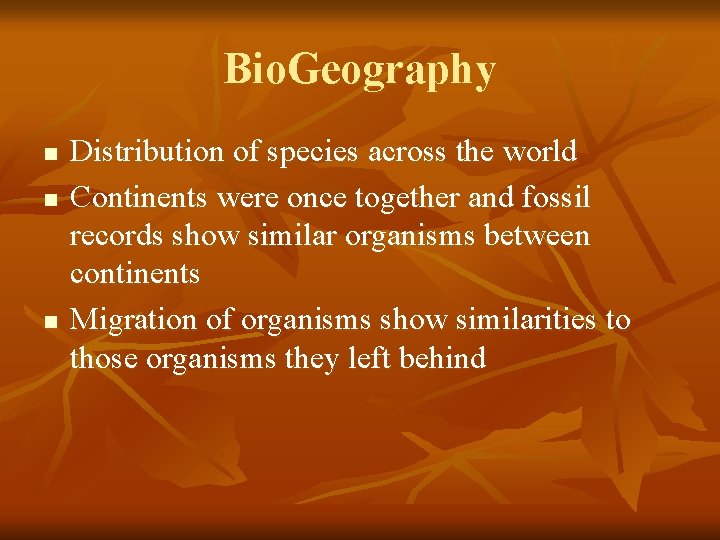
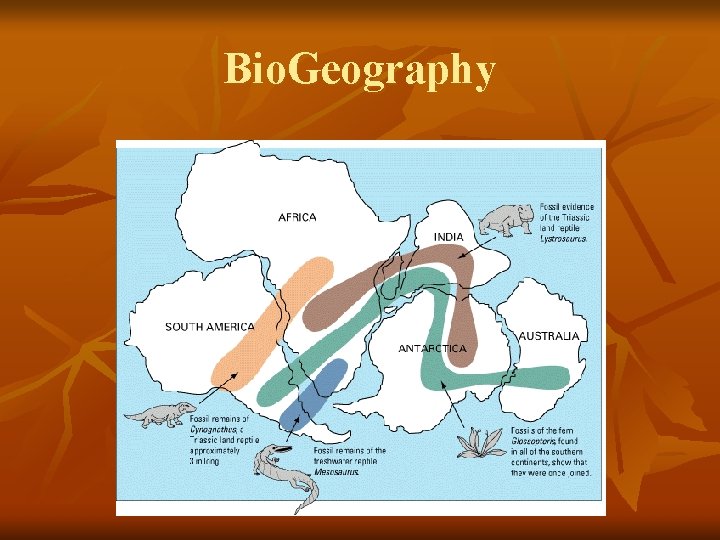
Bio. Geography n n n Distribution of species across the world Continents were once together and fossil records show similar organisms between continents Migration of organisms show similarities to those organisms they left behind
Bio. Geography