
Evidence of Plate Tectonics PPT MODIFIED BY MR
Evidence of Plate Tectonics PPT MODIFIED BY MR. WILSON
Evidence for Plate Tectonics Shape of Continents Rock Types Fossils Climate Mountain Chains Earthquakes Mid-ocean Ridges/Seafloor Spreading Ocean Trenches/Subduction
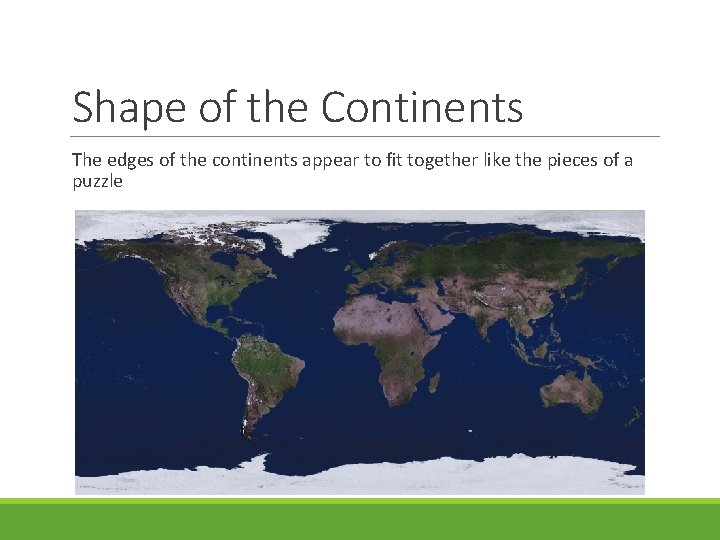
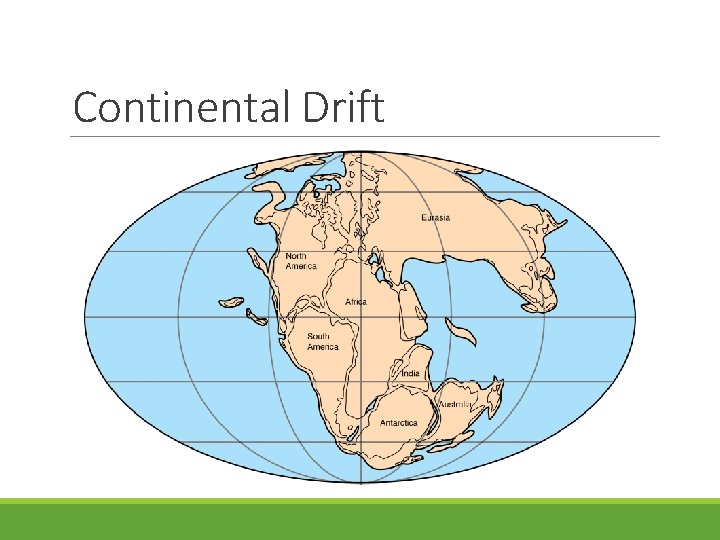
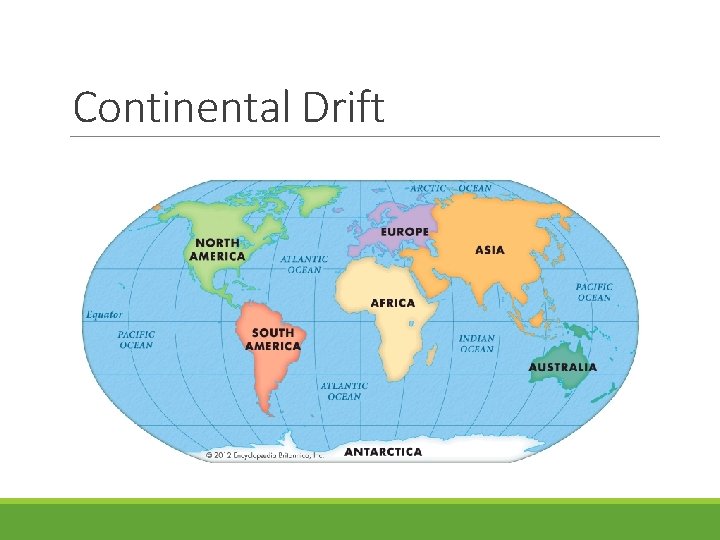
Shape of the Continents The edges of the continents appear to fit together like the pieces of a puzzle
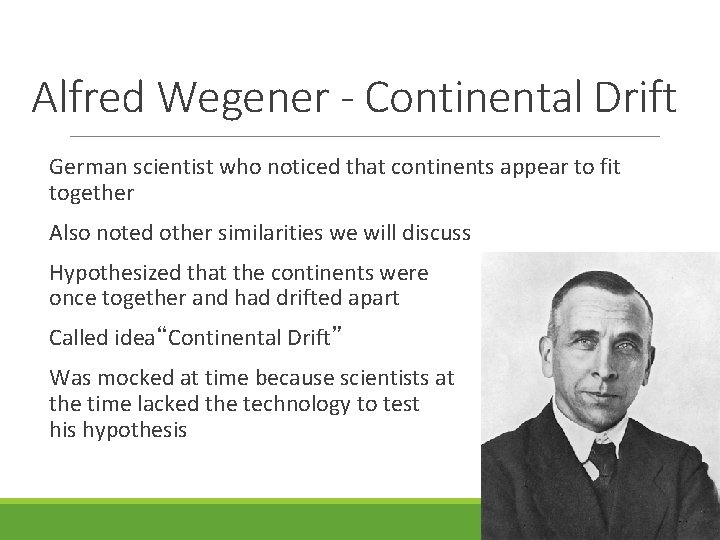
Alfred Wegener - Continental Drift German scientist who noticed that continents appear to fit together Also noted other similarities we will discuss Hypothesized that the continents were once together and had drifted apart Called idea“Continental Drift” Was mocked at time because scientists at the time lacked the technology to test his hypothesis
Continental Drift
Continental Drift
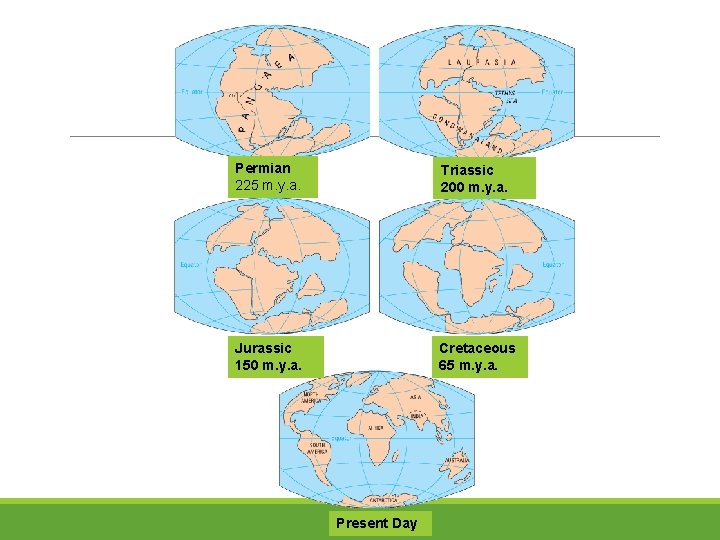
Permian 225 m. y. a. Triassic 200 m. y. a. Jurassic 150 m. y. a. Cretaceous 65 m. y. a. Present Day
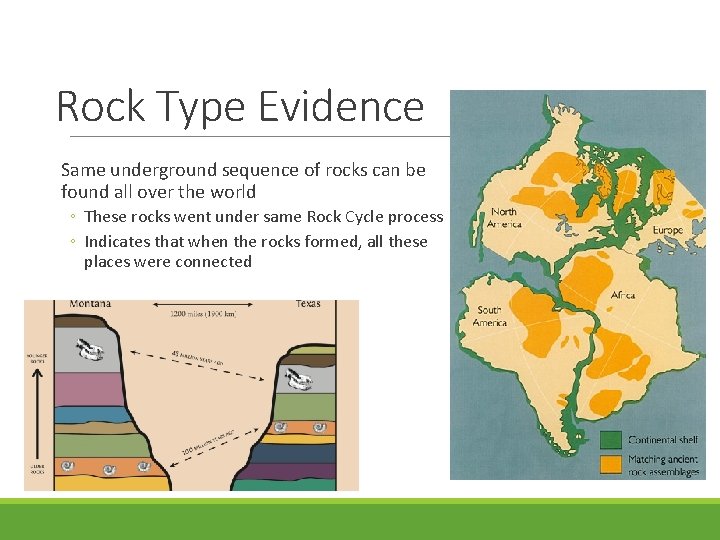
Rock Type Evidence Same underground sequence of rocks can be found all over the world ◦ These rocks went under same Rock Cycle process ◦ Indicates that when the rocks formed, all these places were connected
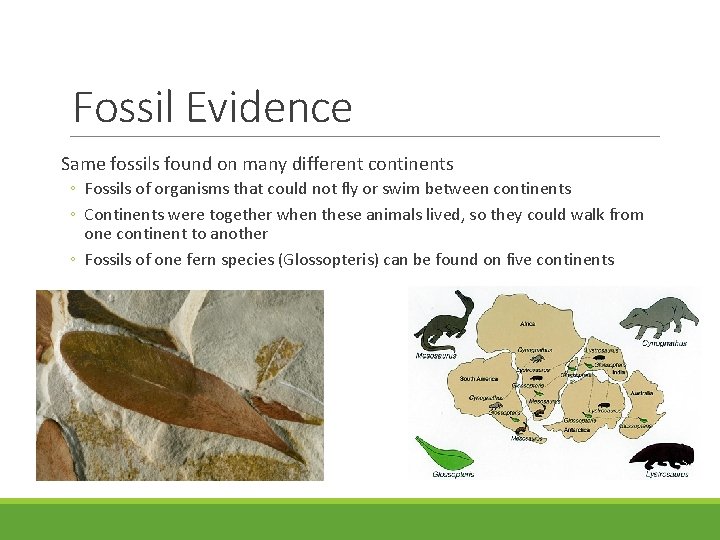
Fossil Evidence Same fossils found on many different continents ◦ Fossils of organisms that could not fly or swim between continents ◦ Continents were together when these animals lived, so they could walk from one continent to another ◦ Fossils of one fern species (Glossopteris) can be found on five continents
Think, Pair, Share You wonder what the climate in Florida used to be like when Pangaea was around. You can’t go back in time to check the weather, but you go to a local museum and look at some fossils. What can the fossils tell you about how Florida’s climate used to be?
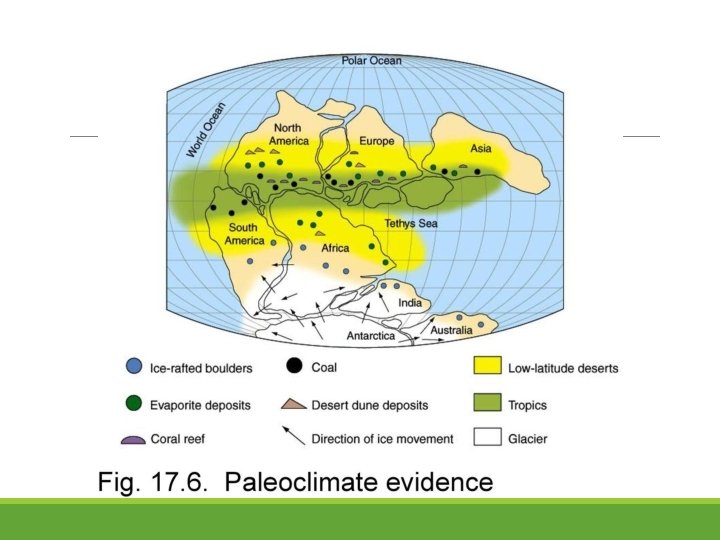
Climate Evidence Plants and animals have features that suit their environment/climate ◦ Example: Fish have gills, we have lungs, and plants have chlorophyll ◦ Therefore, by looking at an organism’s features, scientists can learn about its environment The same is true for fossils: scientists can analyze them to determine what kind of climate organisms existed in ◦ Again, the pattern holds. Places that were close together during the time of Pangaea have fossils that point to similar climates
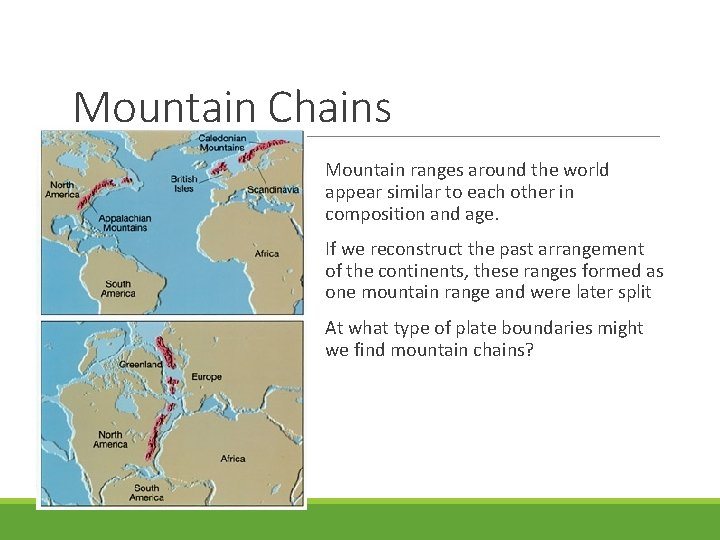
Mountain Chains Mountain ranges around the world appear similar to each other in composition and age. If we reconstruct the past arrangement of the continents, these ranges formed as one mountain range and were later split At what type of plate boundaries might we find mountain chains?
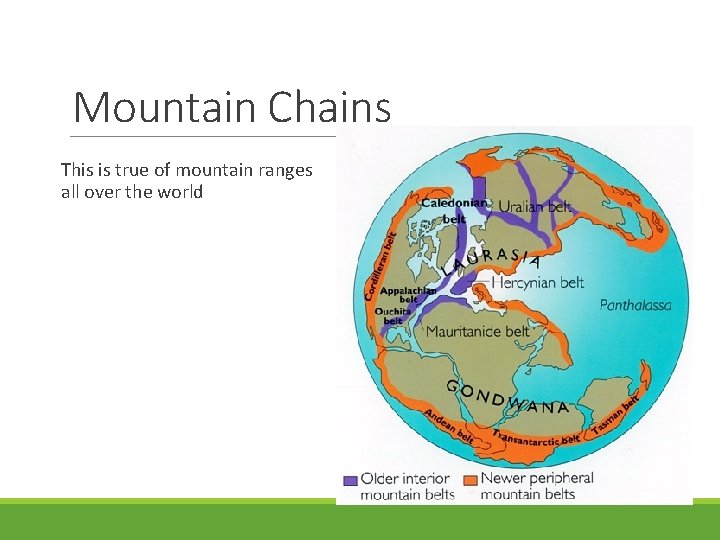
Mountain Chains This is true of mountain ranges all over the world
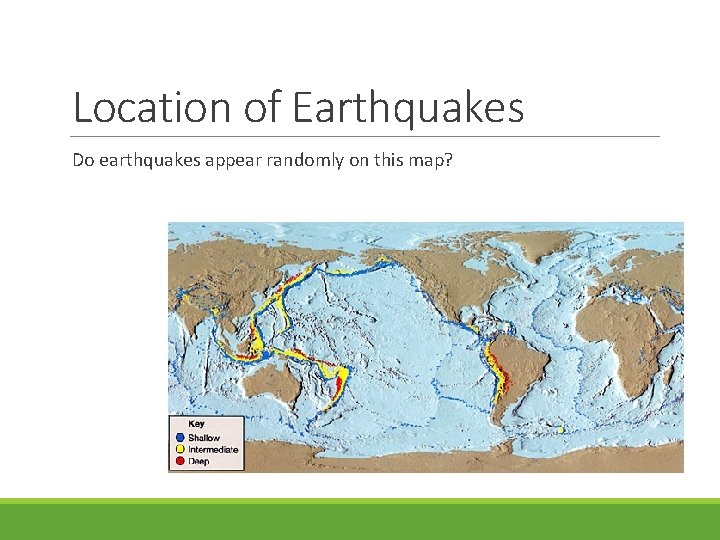
Location of Earthquakes Do earthquakes appear randomly on this map?
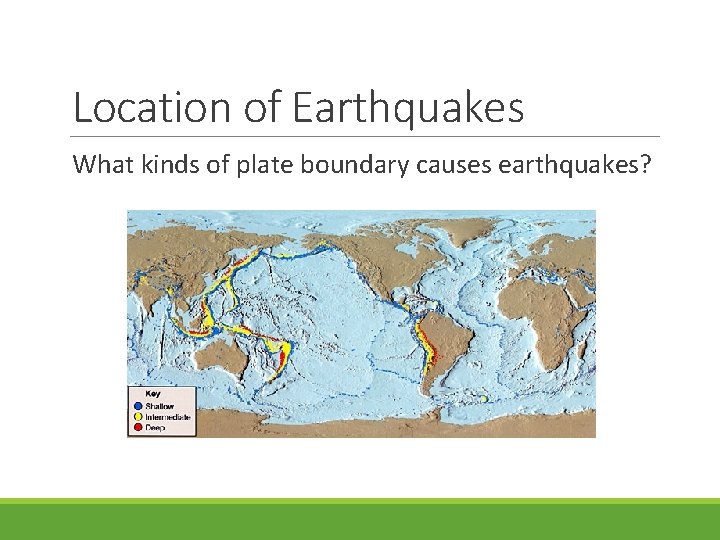
Location of Earthquakes What kinds of plate boundary causes earthquakes?
Ring of Fire The Pacific Plate interacts with multiple other plates, causing a lot of activity There are many earthquakes and most of the world’s volcanoes around the Ring of Fire
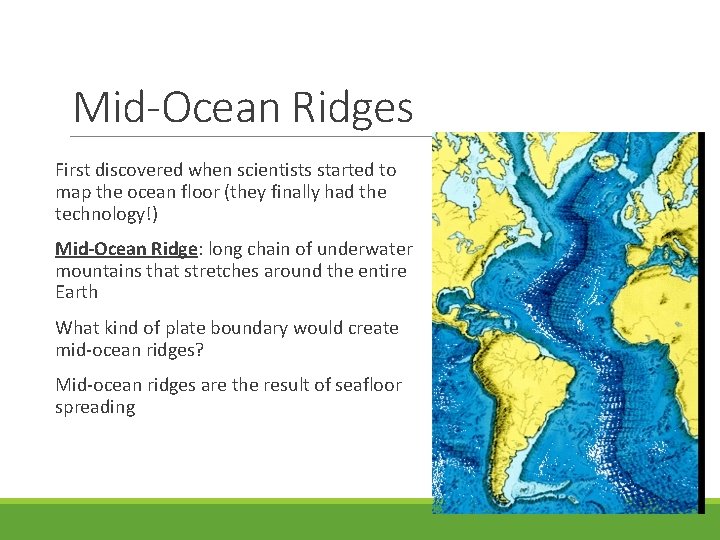
Mid-Ocean Ridges First discovered when scientists started to map the ocean floor (they finally had the technology!) Mid-Ocean Ridge: long chain of underwater mountains that stretches around the entire Earth What kind of plate boundary would create mid-ocean ridges? Mid-ocean ridges are the result of seafloor spreading
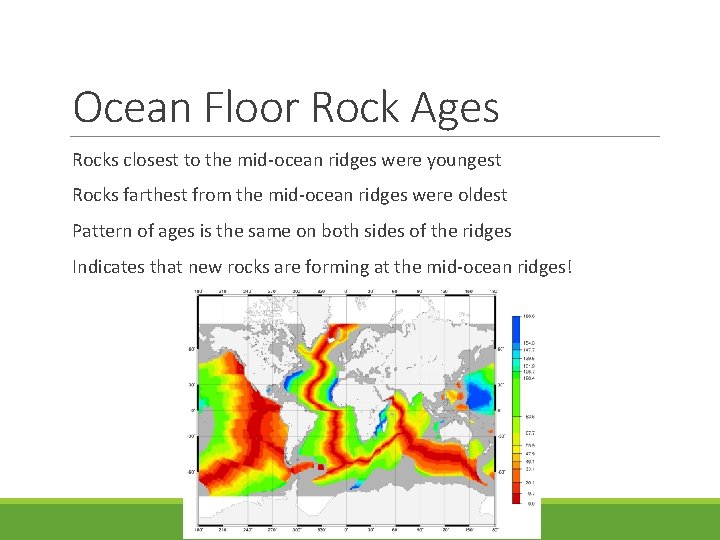
Ocean Floor Rock Ages Rocks closest to the mid-ocean ridges were youngest Rocks farthest from the mid-ocean ridges were oldest Pattern of ages is the same on both sides of the ridges Indicates that new rocks are forming at the mid-ocean ridges!
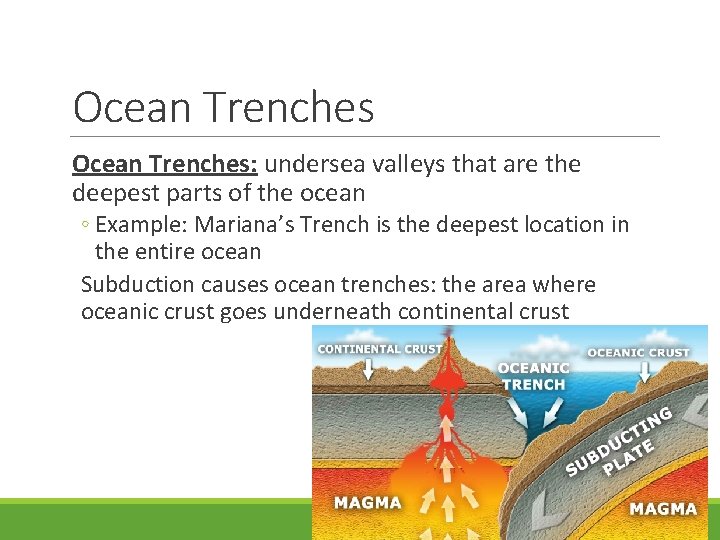
Ocean Trenches: undersea valleys that are the deepest parts of the ocean ◦ Example: Mariana’s Trench is the deepest location in the entire ocean Subduction causes ocean trenches: the area where oceanic crust goes underneath continental crust
Vocabulary Mid-Ocean Ridge: long chain of underwater mountains that stretches around the entire Earth Ocean Trenches: undersea valleys that are the deepest parts of the ocean
- Slides: 21