
Evidence of Evolution There is evidence of evolution
- Slides: 9
Evidence of Evolution There is evidence of evolution in 5 major fields of science: 1. Paleontology: the study of prehistoric life 2. Biogeography: where living things are located 3. Embryology: the study of the embryonic development of organisms 4. Anatomy: the study of the structures of organisms 5. Biochemistry: the study of the chemical processes in organisms
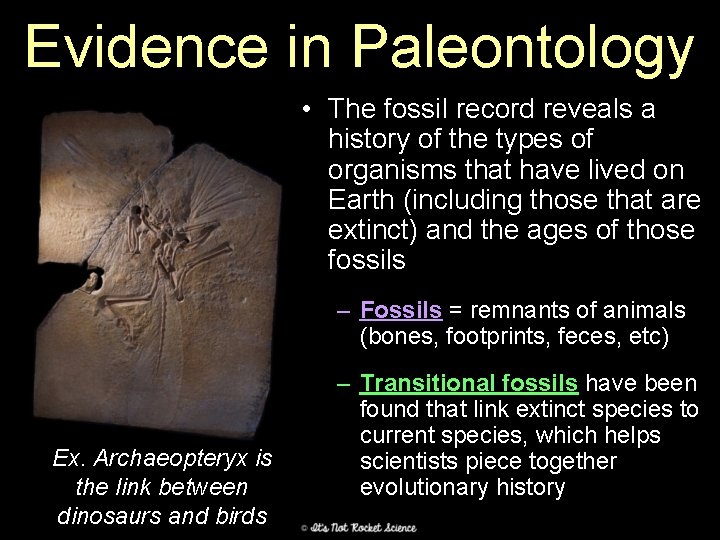
Evidence in Paleontology • The fossil record reveals a history of the types of organisms that have lived on Earth (including those that are extinct) and the ages of those fossils – Fossils = remnants of animals (bones, footprints, feces, etc) Ex. Archaeopteryx is the link between dinosaurs and birds – Transitional fossils have been found that link extinct species to current species, which helps scientists piece together evolutionary history
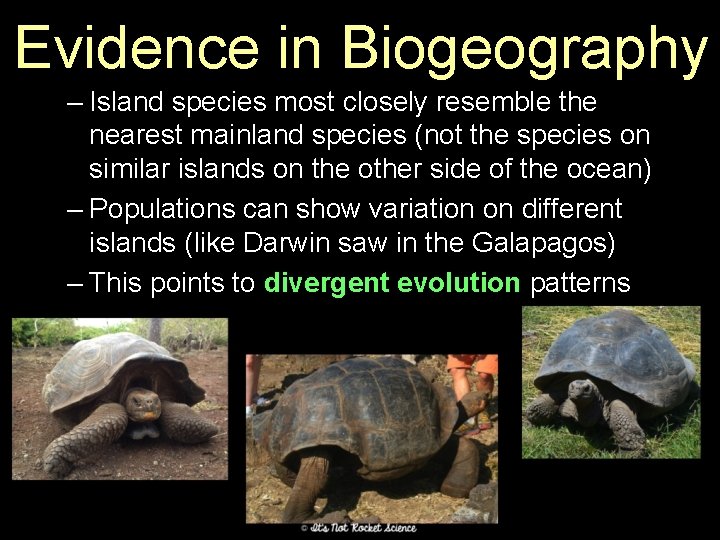
Evidence in Biogeography – Island species most closely resemble the nearest mainland species (not the species on similar islands on the other side of the ocean) – Populations can show variation on different islands (like Darwin saw in the Galapagos) – This points to divergent evolution patterns
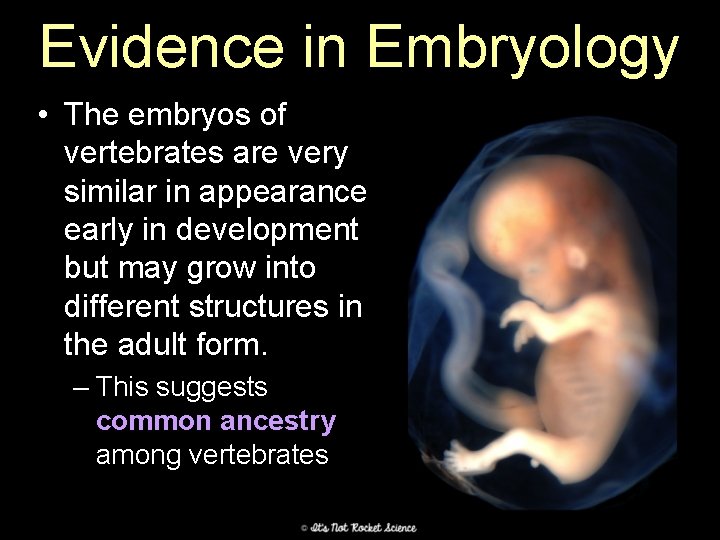
Evidence in Embryology • The embryos of vertebrates are very similar in appearance early in development but may grow into different structures in the adult form. – This suggests common ancestry among vertebrates
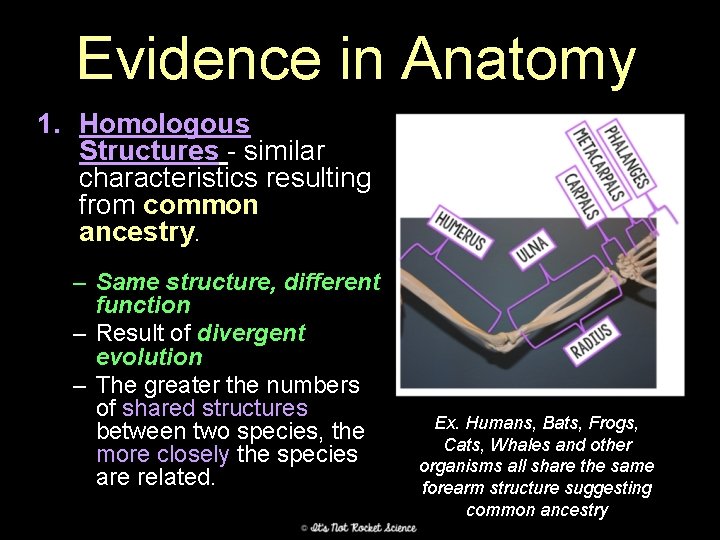
Evidence in Anatomy 1. Homologous Structures - similar characteristics resulting from common ancestry. – Same structure, different function – Result of divergent evolution – The greater the numbers of shared structures between two species, the more closely the species are related. Ex. Humans, Bats, Frogs, Cats, Whales and other organisms all share the same forearm structure suggesting common ancestry
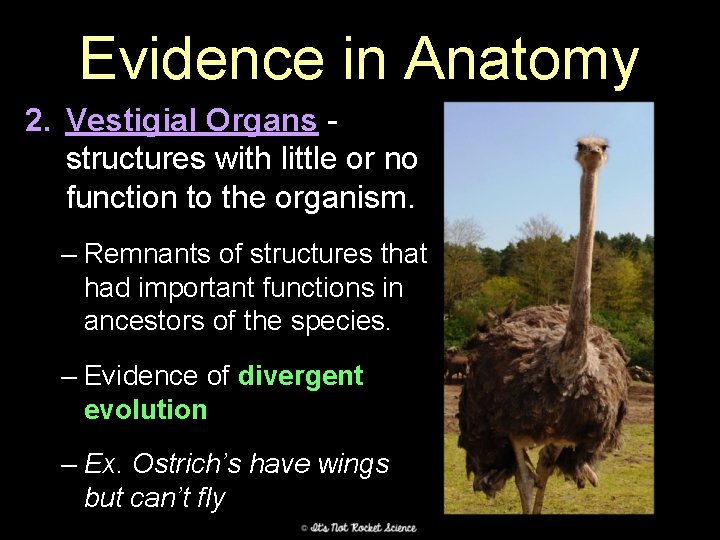
Evidence in Anatomy 2. Vestigial Organs structures with little or no function to the organism. – Remnants of structures that had important functions in ancestors of the species. – Evidence of divergent evolution – Ex. Ostrich’s have wings but can’t fly
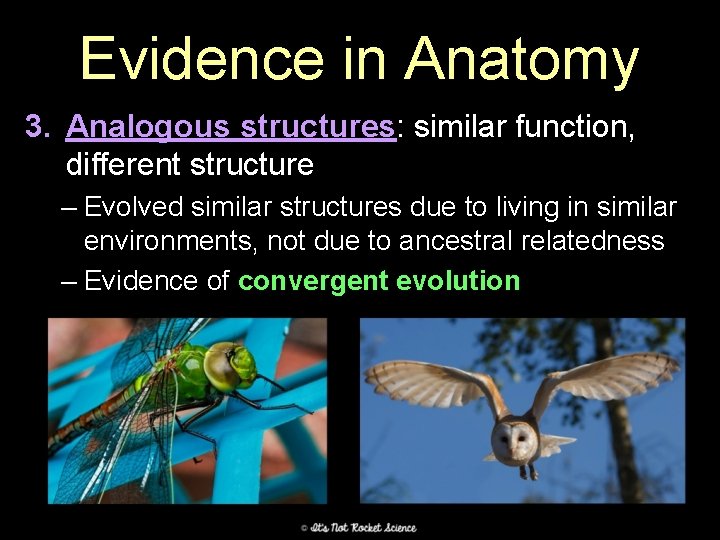
Evidence in Anatomy 3. Analogous structures: similar function, different structure – Evolved similar structures due to living in similar environments, not due to ancestral relatedness – Evidence of convergent evolution
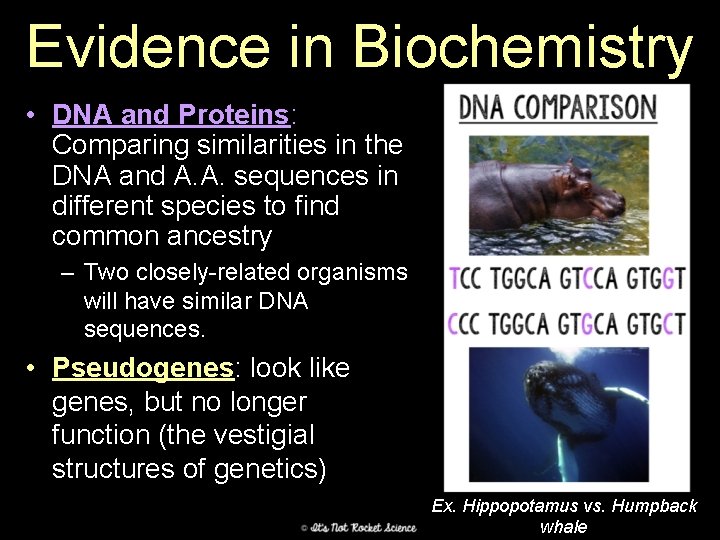
Evidence in Biochemistry • DNA and Proteins: Comparing similarities in the DNA and A. A. sequences in different species to find common ancestry – Two closely-related organisms will have similar DNA sequences. • Pseudogenes: look like genes, but no longer function (the vestigial structures of genetics) Ex. Hippopotamus vs. Humpback whale