
Evidence of Evolution n This Power Point was
- Slides: 25
Evidence of Evolution n This Power. Point was revised Jan 1, 2010 for Unique
EVOLUTION IS GENETIC CHANGE IN A POPULATION THROUGH TIME.
EVIDENCES OF EVOLUTION
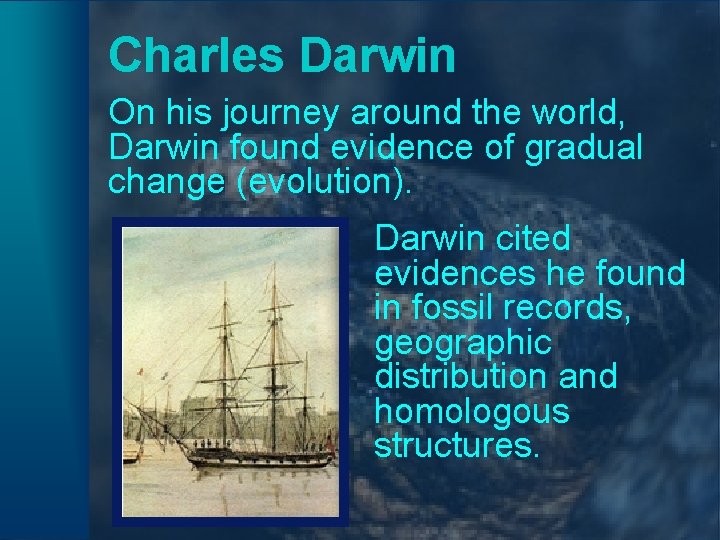
Charles Darwin On his journey around the world, Darwin found evidence of gradual change (evolution). Darwin cited evidences he found in fossil records, geographic distribution and homologous structures.
Evidences of Evolution Today most evidences for evolution are grouped into five main categories: n Biochemical n Fossil Record n Comparative Anatomy n Biogeography n Observable Events
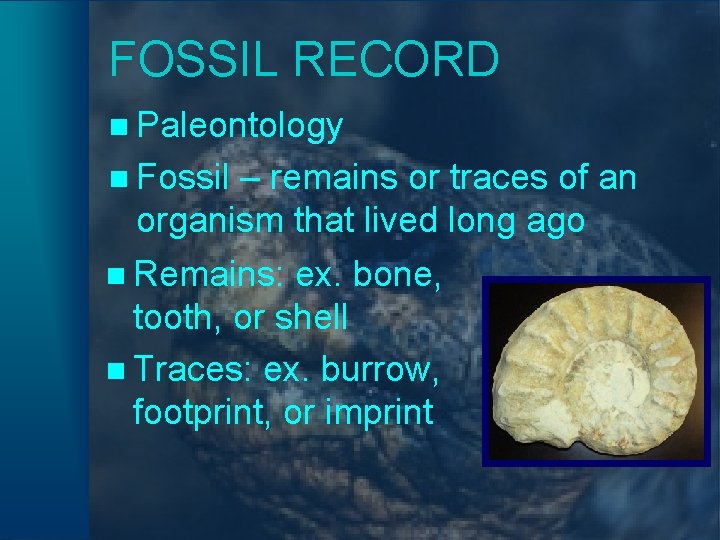
FOSSIL RECORD n Paleontology n Fossil – remains or traces of an organism that lived long ago n Remains: ex. bone, tooth, or shell n Traces: ex. burrow, footprint, or imprint
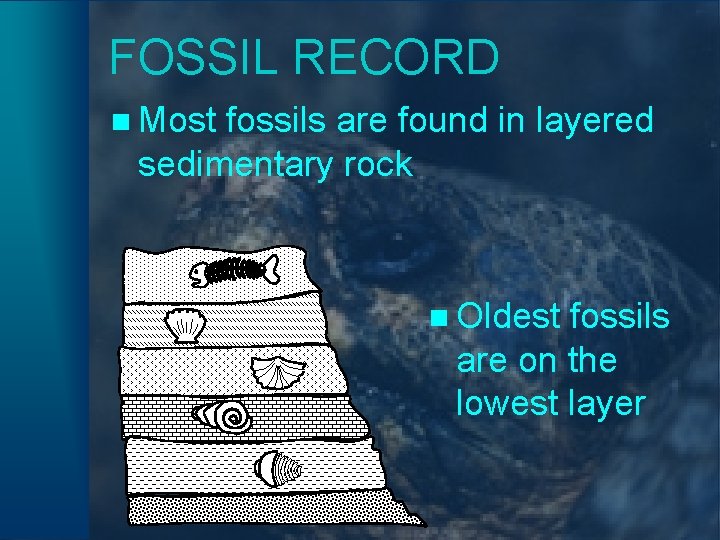
FOSSIL RECORD n Most fossils are found in layered sedimentary rock n Oldest fossils are on the lowest layer
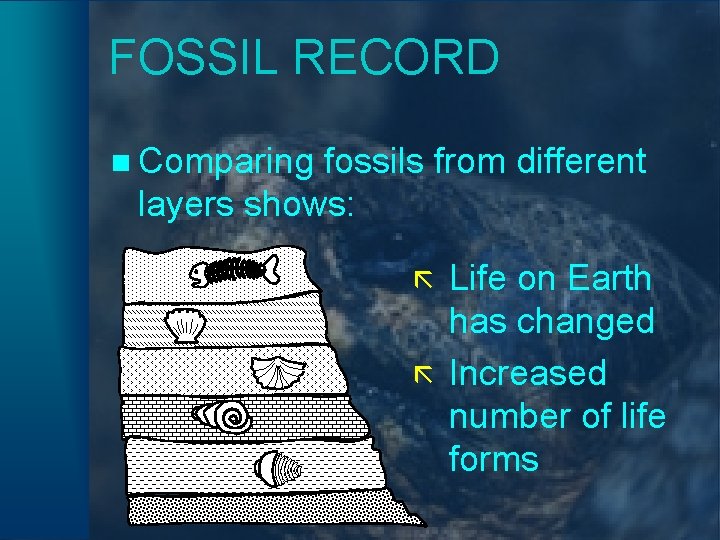
FOSSIL RECORD n Comparing fossils from different layers shows: ã ã Life on Earth has changed Increased number of life forms
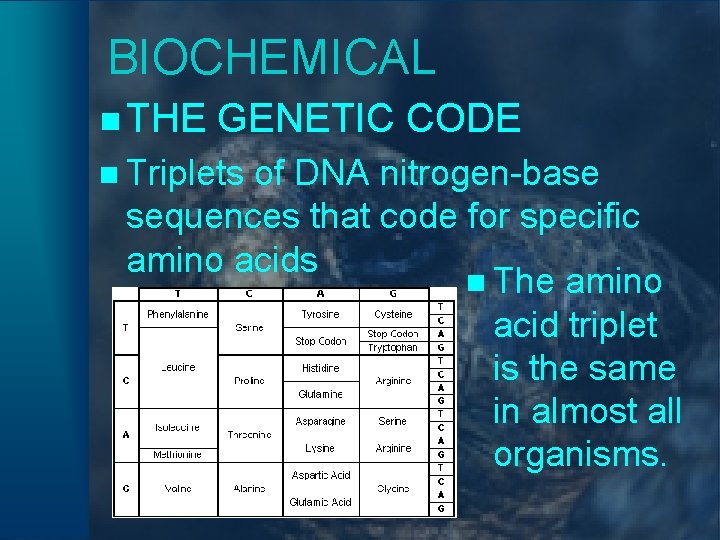
BIOCHEMICAL n THE GENETIC CODE n Triplets of DNA nitrogen-base sequences that code for specific amino acids n The amino acid triplet is the same in almost all organisms.
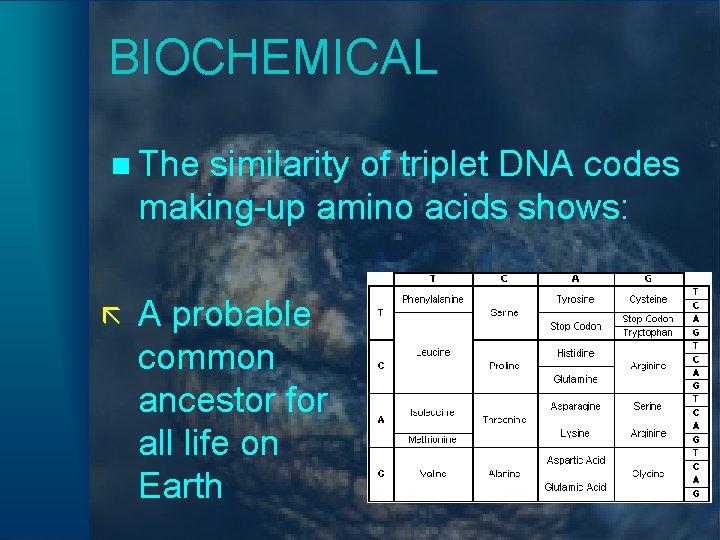
BIOCHEMICAL n The similarity of triplet DNA codes making-up amino acids shows: ã A probable common ancestor for all life on Earth
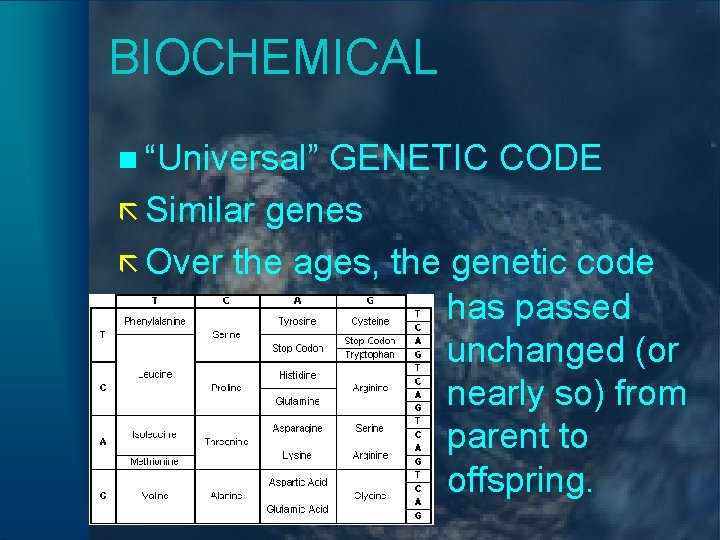
BIOCHEMICAL n “Universal” GENETIC CODE ã Similar genes ã Over the ages, the genetic code has passed unchanged (or nearly so) from parent to offspring.
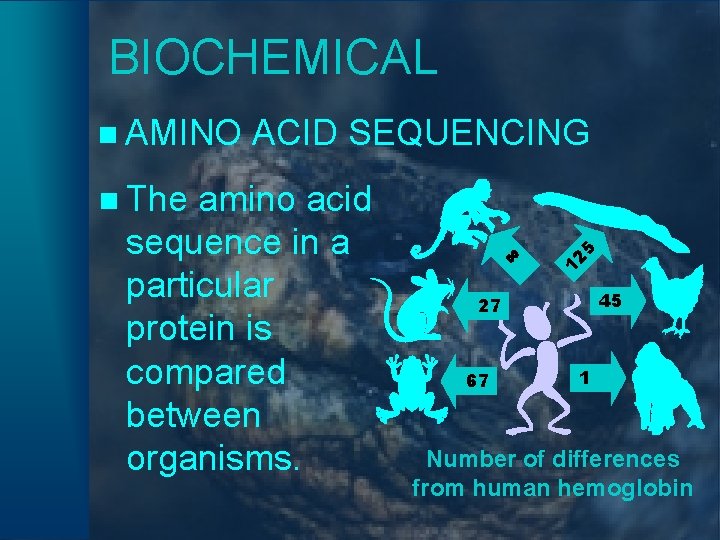
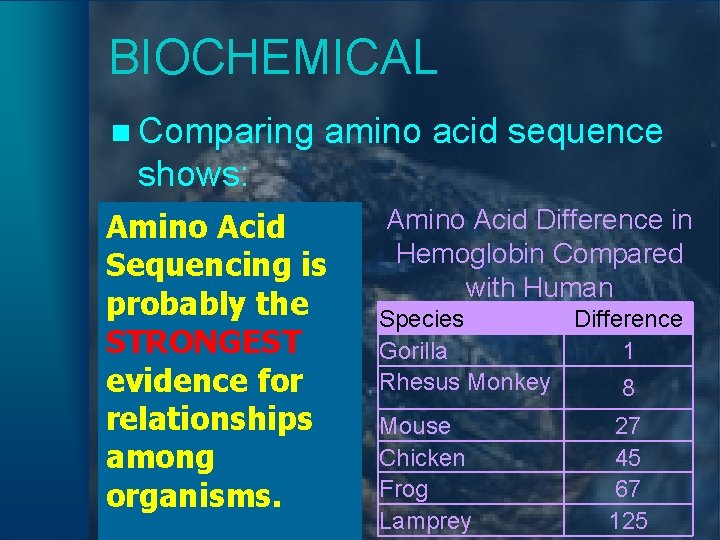
BIOCHEMICAL n AMINO ACID SEQUENCING 12 8 amino acid sequence in a particular protein is compared between organisms. 5 n The 45 27 67 1 Number of differences from human hemoglobin
BIOCHEMICAL n Comparing amino acid sequence shows: Acid of ãAmino Closeness Sequencing relationshipis probably the ã A probable STRONGEST commonfor evidence ancestor relationships among Human hemoglobin organisms. has 146 amino acids Amino Acid Difference in Hemoglobin Compared with Human Species Difference Gorilla 1 Rhesus Monkey 8 Mouse Chicken Frog Lamprey 27 45 67 125
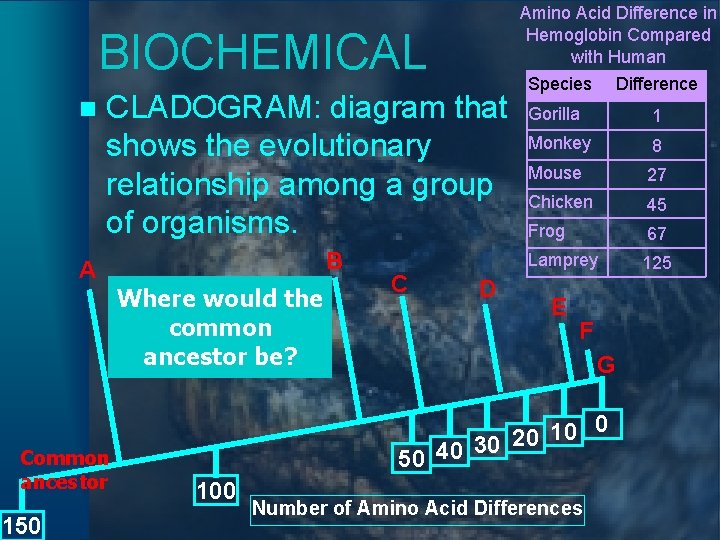
Amino Acid Difference in Hemoglobin Compared with Human BIOCHEMICAL n CLADOGRAM: diagram that shows the evolutionary relationship among a group of organisms. B A Where would the What organism common belongs at each ancestor be? branch? Common ancestor 150 C D Species Difference Gorilla 1 Monkey 8 Mouse 27 Chicken 45 Frog 67 Lamprey 125 E F G 10 0 20 30 50 40 100 Number of Amino Acid Differences
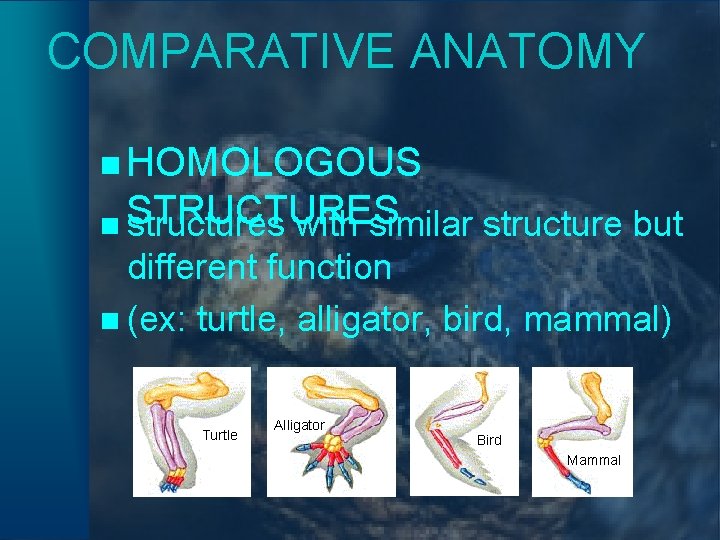
COMPARATIVE ANATOMY n HOMOLOGOUS n STRUCTURES structures with similar structure but different function n (ex: turtle, alligator, bird, mammal) Turtle Alligator Bird Mammal
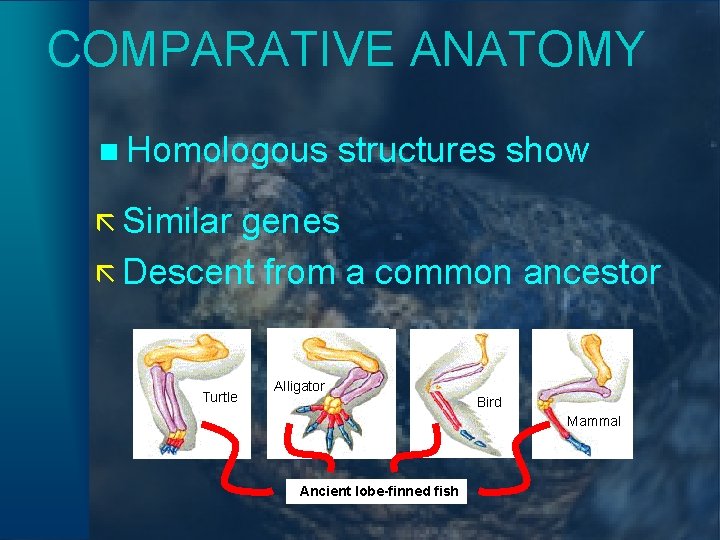
COMPARATIVE ANATOMY n Homologous structures show ã Similar genes ã Descent from a common ancestor Turtle Alligator Bird Mammal Ancient lobe-finned fish
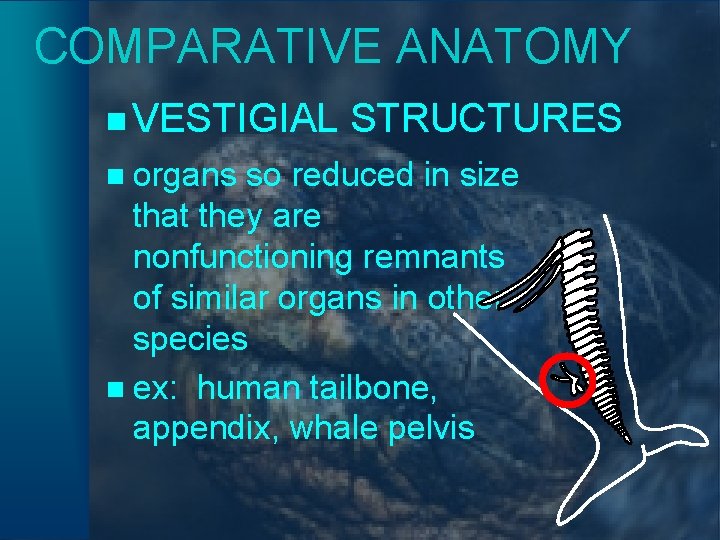
COMPARATIVE ANATOMY n VESTIGIAL n organs STRUCTURES so reduced in size that they are nonfunctioning remnants of similar organs in other species n ex: human tailbone, appendix, whale pelvis
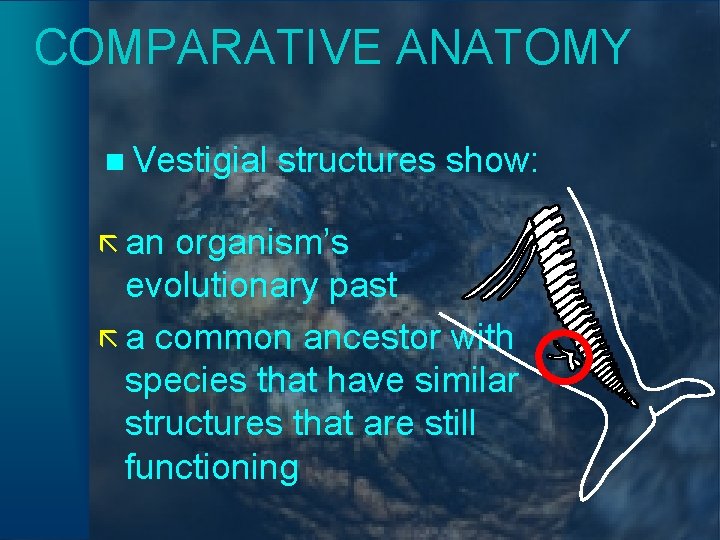
COMPARATIVE ANATOMY n Vestigial ã an structures show: organism’s evolutionary past ã a common ancestor with species that have similar structures that are still functioning
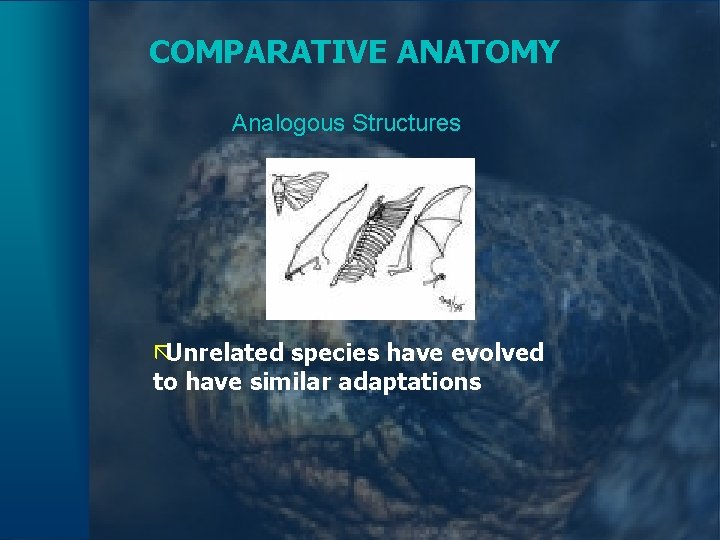
COMPARATIVE ANATOMY Analogous Structures ãUnrelated species have evolved to have similar adaptations
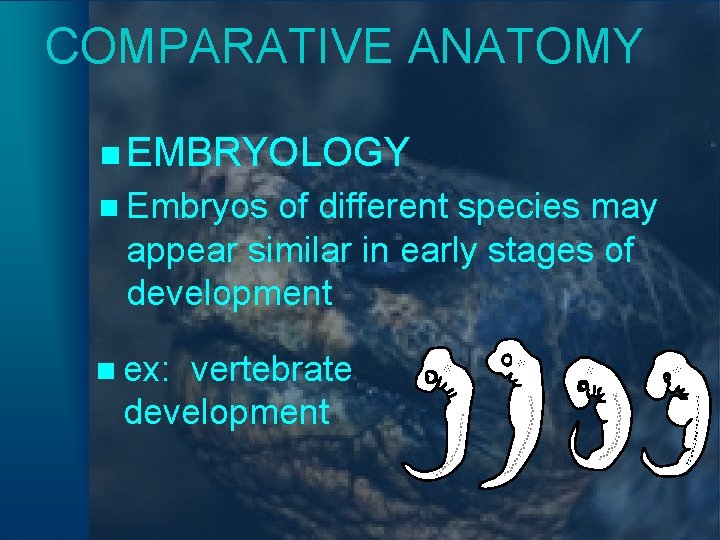
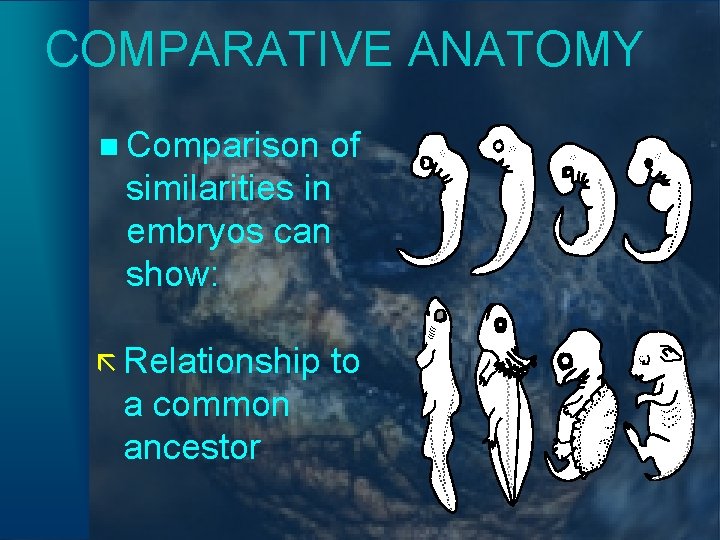
COMPARATIVE ANATOMY n EMBRYOLOGY n Embryos of different species may appear similar in early stages of development n ex: vertebrate development
COMPARATIVE ANATOMY n Comparison of similarities in embryos can show: ã Relationship a common ancestor to
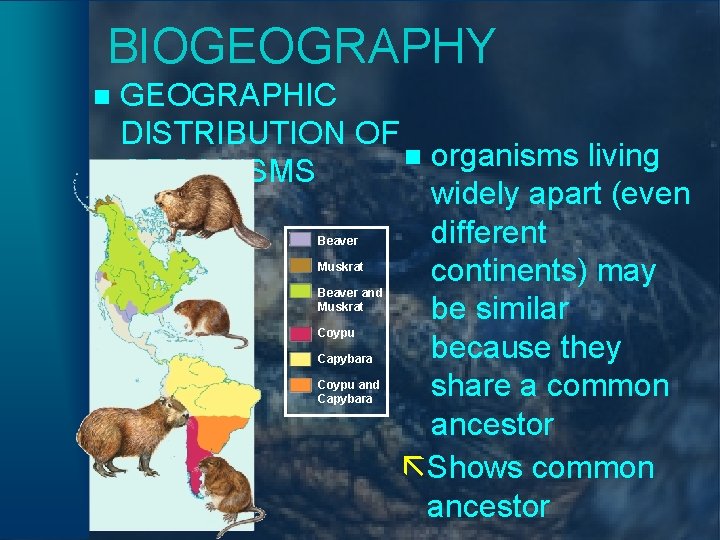
BIOGEOGRAPHY n GEOGRAPHIC DISTRIBUTION OF n organisms living ORGANISMS widely apart (even different continents) may be similar because they share a common ancestor ãShows common ancestor Beaver Muskrat Beaver and Muskrat Coypu Capybara Coypu and Capybara
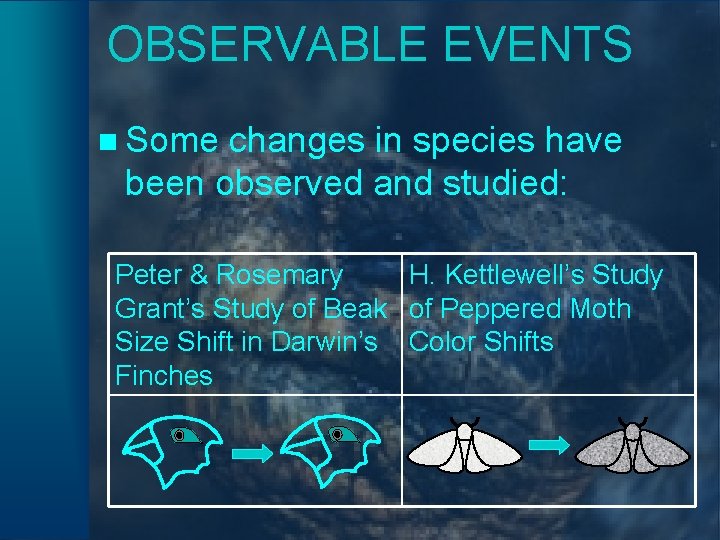
OBSERVABLE EVENTS n Some changes in species have been observed and studied: Peter & Rosemary H. Kettlewell’s Study Grant’s Study of Beak of Peppered Moth Size Shift in Darwin’s Color Shifts Finches
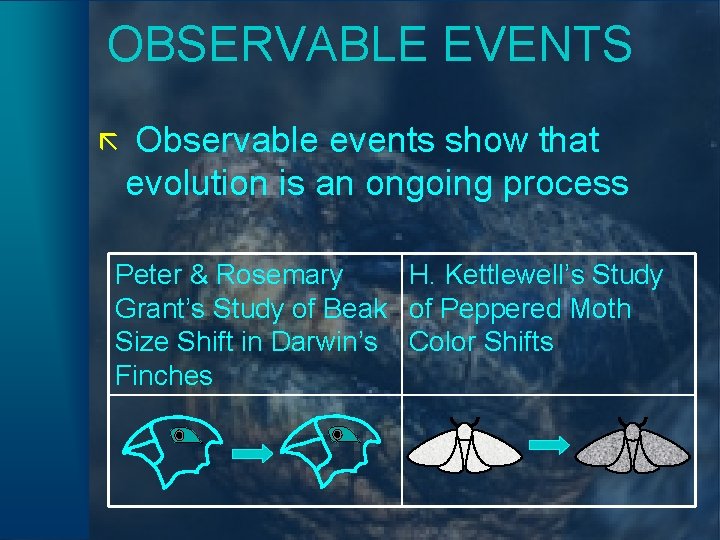
OBSERVABLE EVENTS ã Observable events show that evolution is an ongoing process Peter & Rosemary H. Kettlewell’s Study Grant’s Study of Beak of Peppered Moth Size Shift in Darwin’s Color Shifts Finches
Works Cited n Miller, Kenneth and Levine, Joseph. (2004). Biology. Prentice Hall.