
Evidence of Evolution Main Types of Evidence of

- Slides: 21
Evidence of Evolution
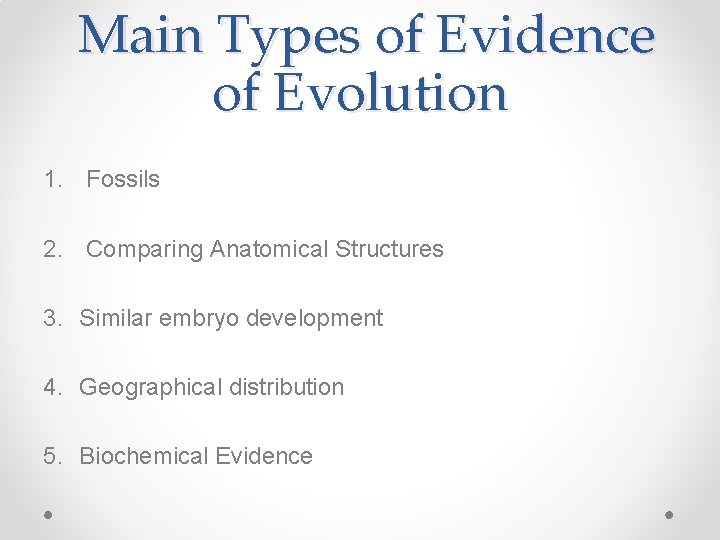
Main Types of Evidence of Evolution 1. Fossils 2. Comparing Anatomical Structures 3. Similar embryo development 4. Geographical distribution 5. Biochemical Evidence
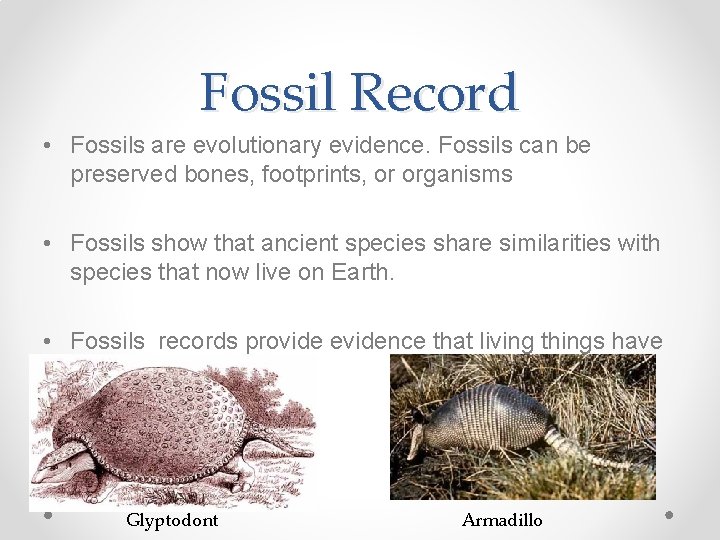
Fossil Record • Fossils are evolutionary evidence. Fossils can be preserved bones, footprints, or organisms • Fossils show that ancient species share similarities with species that now live on Earth. • Fossils records provide evidence that living things have changed over time. Glyptodont Armadillo
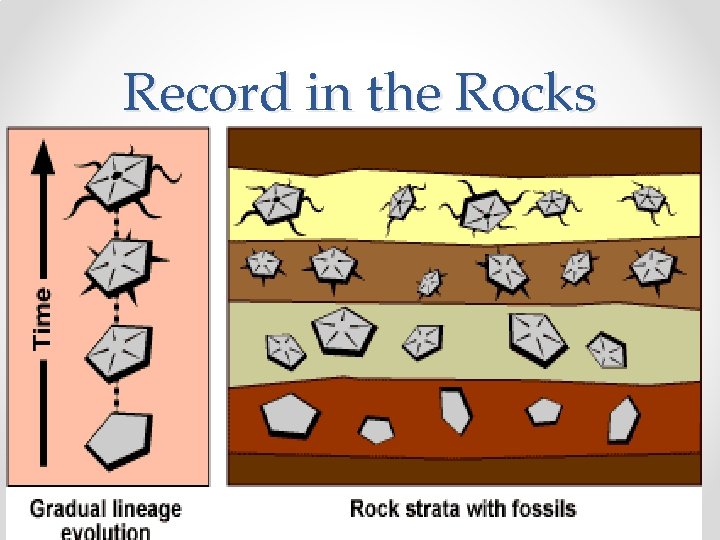
Record in the Rocks
Carbon Dating • A technique used to measure the age of fossils and other artifacts that can then be linked to how a particular set of organisms changed over time • http: //science. howstuffworks. com/environmental/earth/ge ology/carbon-14. htm
Comparing Anatomy • Homologous structures • Analogous structures • Vestigial structures
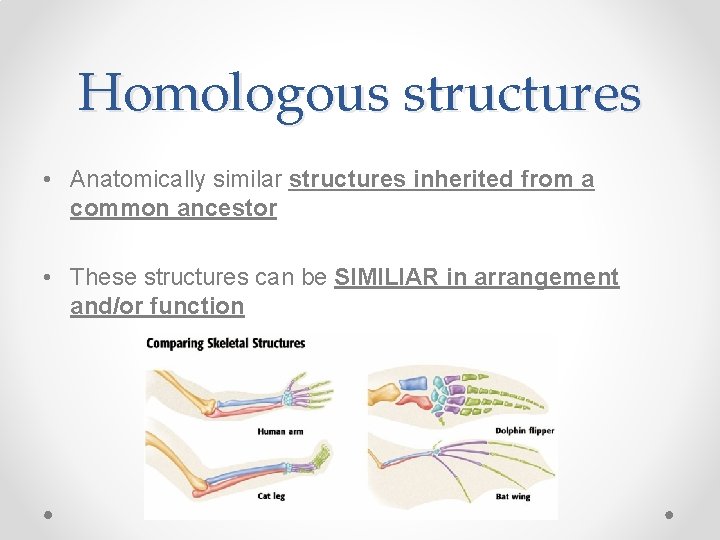
Homologous structures • Anatomically similar structures inherited from a common ancestor • These structures can be SIMILIAR in arrangement and/or function
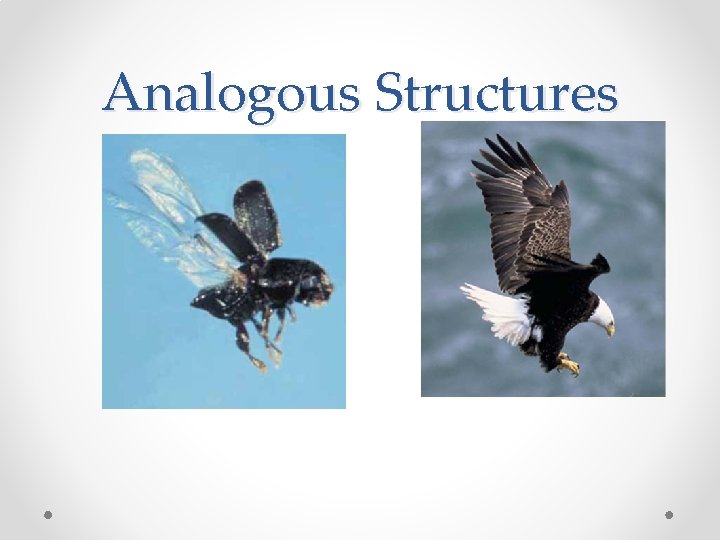
Analogous Structures • Structures that do not have a common evolutionary origin but are NOT similar in structure, but similar in FUNCTION. • Shows that functionally similar features can evolve independently of each other • Ex: wing of an insect and wing of bird
Analogous Structures
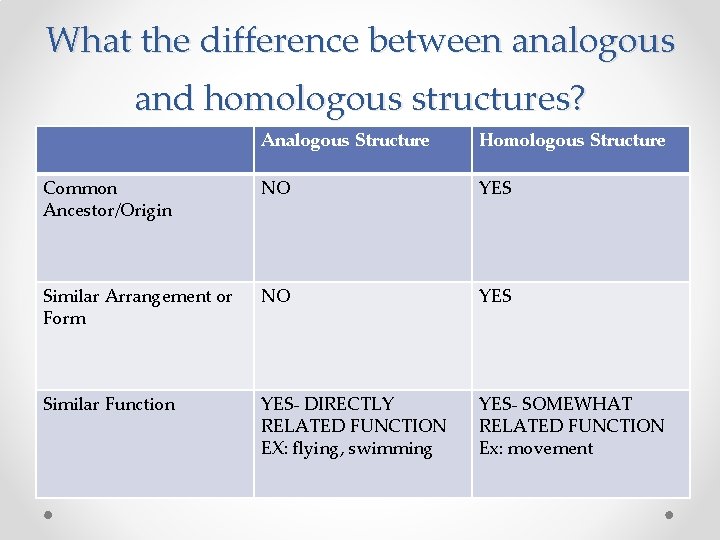
What the difference between analogous and homologous structures? Analogous Structure Homologous Structure Common Ancestor/Origin NO YES Similar Arrangement or Form NO YES Similar Function YES- DIRECTLY RELATED FUNCTION EX: flying, swimming YES- SOMEWHAT RELATED FUNCTION Ex: movement
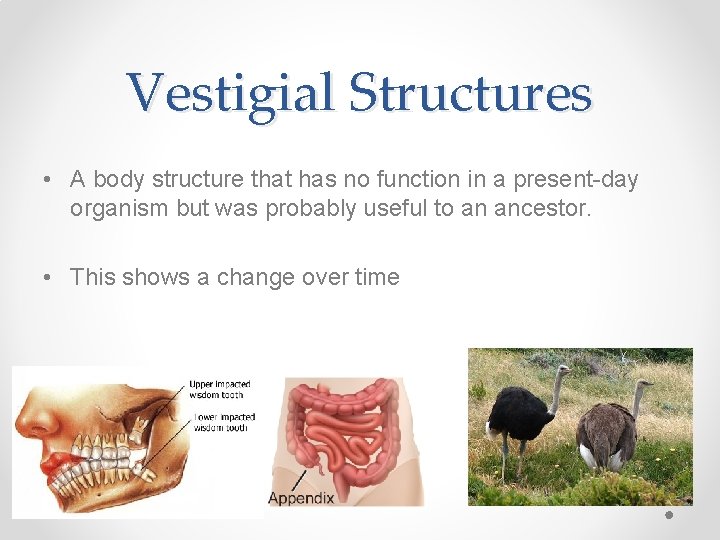
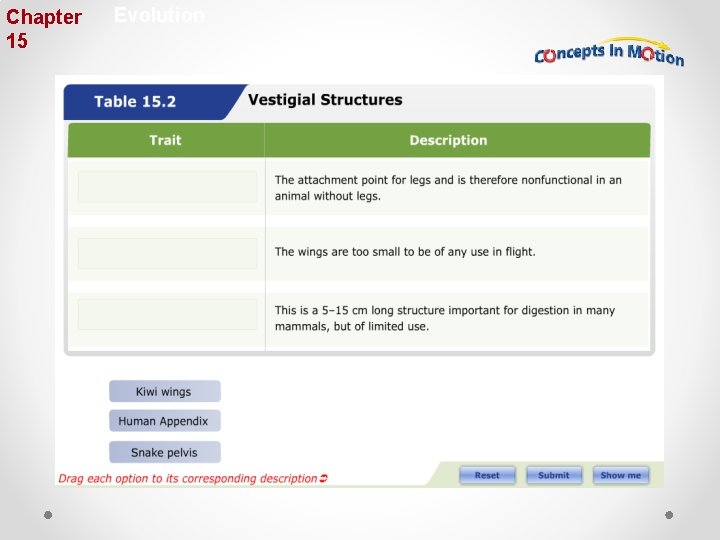
Vestigial Structures • A body structure that has no function in a present-day organism but was probably useful to an ancestor. • This shows a change over time
Chapter 15 Evolution
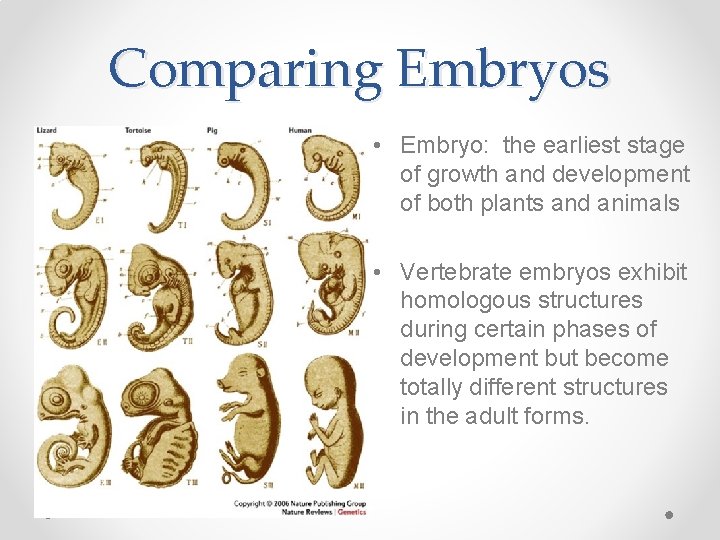
Comparing Embryos • Embryo: the earliest stage of growth and development of both plants and animals • Vertebrate embryos exhibit homologous structures during certain phases of development but become totally different structures in the adult forms.
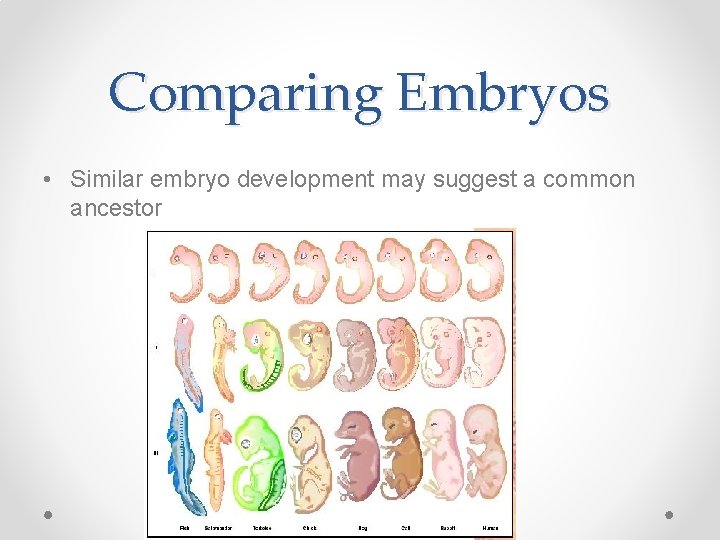
Comparing Embryos • Similar embryo development may suggest a common ancestor
Biochemical Evidence • Common ancestry can be seen in the complex metabolic molecules that many different organisms share. • Comparison of the DNA or RNA of different species produce biochemical evidence for evolution
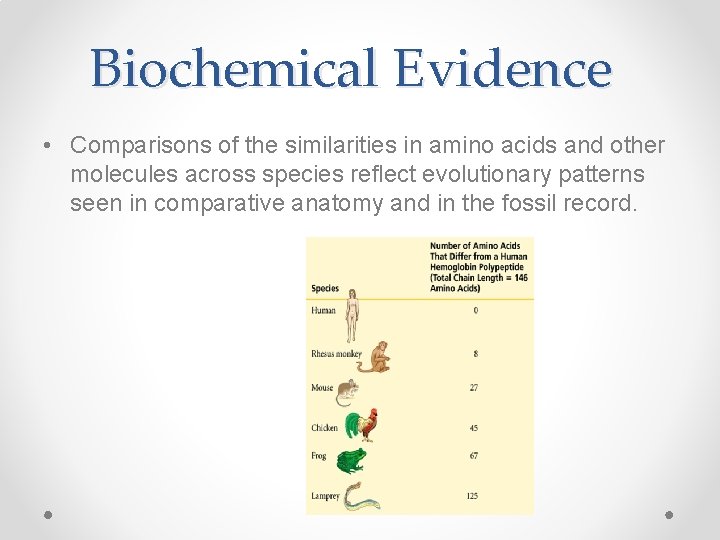
Biochemical Evidence • Comparisons of the similarities in amino acids and other molecules across species reflect evolutionary patterns seen in comparative anatomy and in the fossil record.
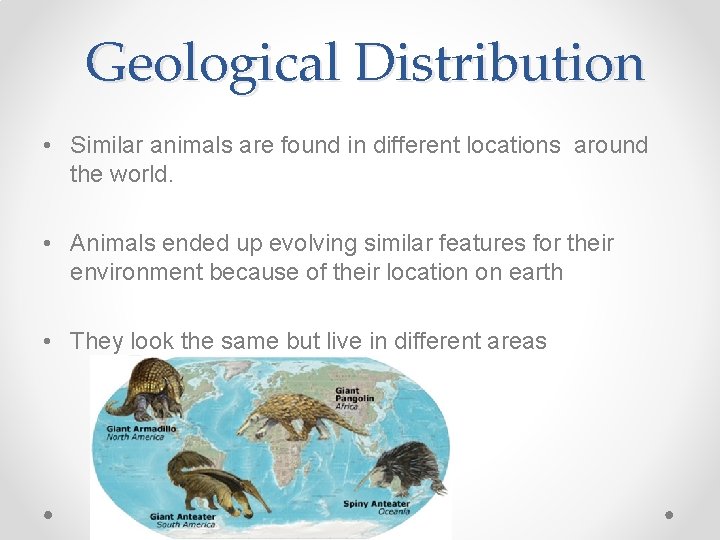
Geological Distribution • Similar animals are found in different locations around the world. • Animals ended up evolving similar features for their environment because of their location on earth • They look the same but live in different areas
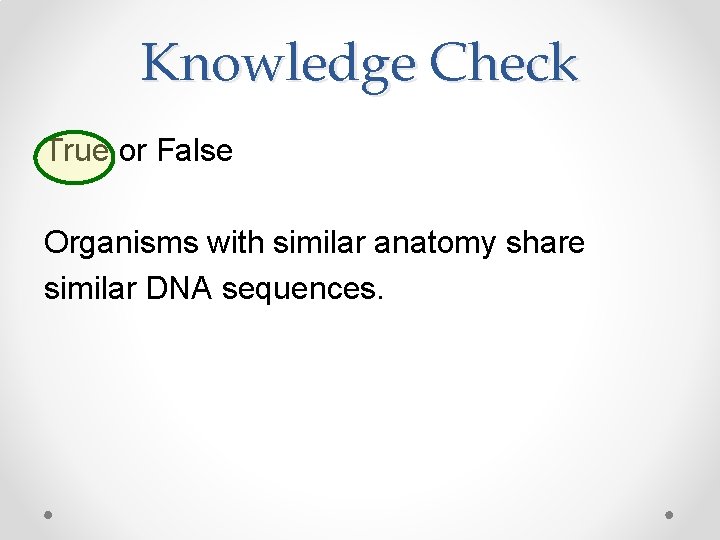
Knowledge Check True or False Organisms with similar anatomy share similar DNA sequences.
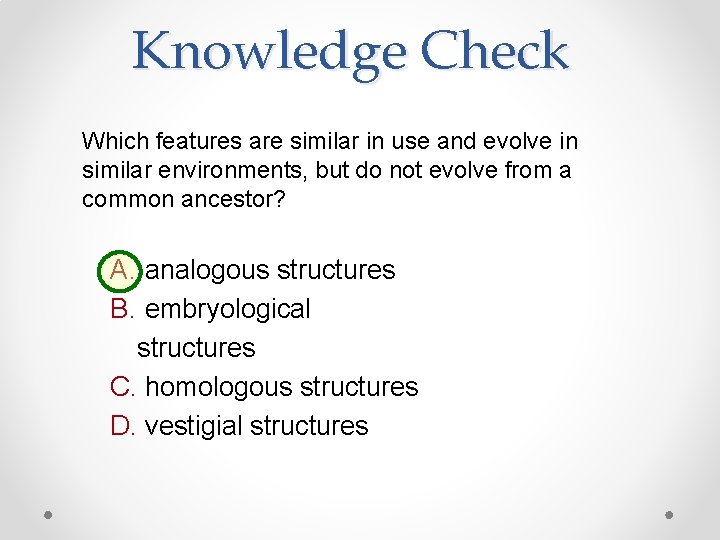
Knowledge Check Which features are similar in use and evolve in similar environments, but do not evolve from a common ancestor? A. analogous structures B. embryological structures C. homologous structures D. vestigial structures
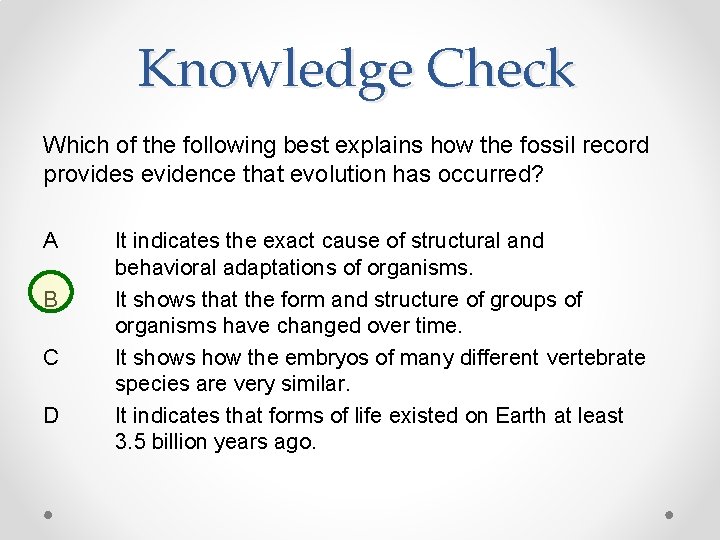
Knowledge Check Which of the following best explains how the fossil record provides evidence that evolution has occurred? A B C D It indicates the exact cause of structural and behavioral adaptations of organisms. It shows that the form and structure of groups of organisms have changed over time. It shows how the embryos of many different vertebrate species are very similar. It indicates that forms of life existed on Earth at least 3. 5 billion years ago.
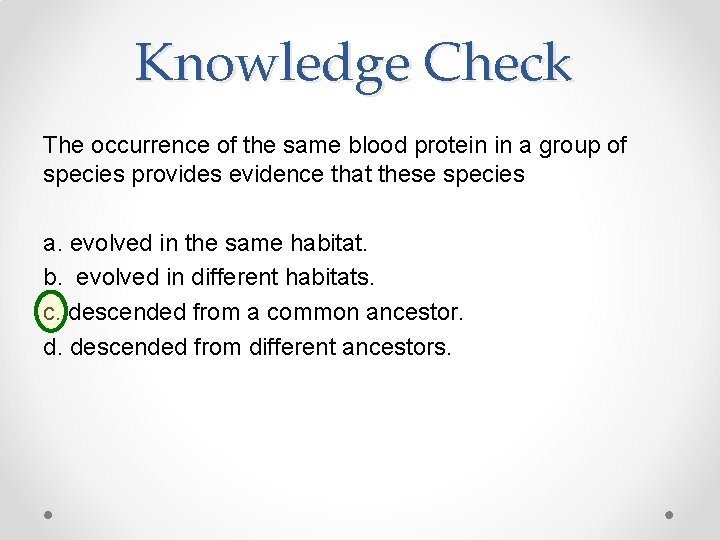
Knowledge Check The occurrence of the same blood protein in a group of species provides evidence that these species a. evolved in the same habitat. b. evolved in different habitats. c. descended from a common ancestor. d. descended from different ancestors.