
Evidence of Evolution Main Idea Multiple lines of
- Slides: 19
Evidence of Evolution Main Idea: Multiple lines of evidence support theory of evolution https: //www. youtube. com/watch? v=l. IEo. O 5 Kd. Pvg
Five Main Types of Evidence 1. Fossil Record 2. Comparative Anatomy 3. Comparative Embryology 4. Comparative Biochemistry 5. Biogeography
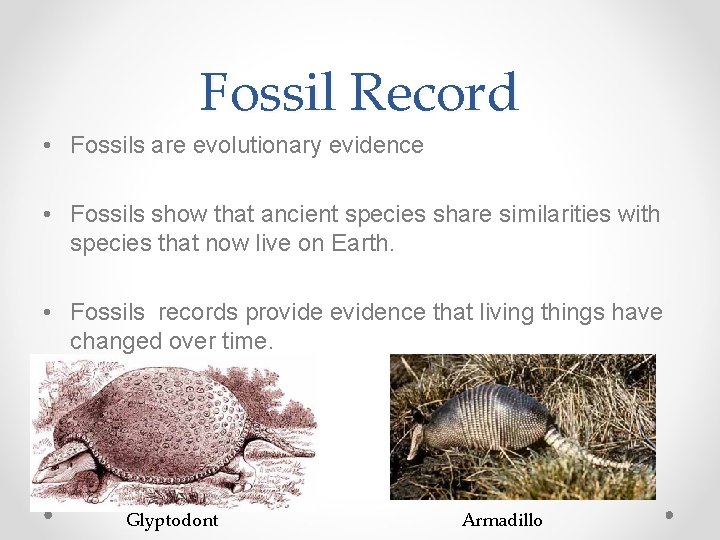
Fossil Record • Fossils are evolutionary evidence • Fossils show that ancient species share similarities with species that now live on Earth. • Fossils records provide evidence that living things have changed over time. Glyptodont Armadillo
Traits • Derived traits newly evolved features, such as feathers, that do not appear in the fossils of common ancestors. • Ancestral traits primitive features, such as teeth and do appear in ancestral forms. tails, that
Comparative Anatomy • Homologous structures • Analogous structures • Vestigial structures
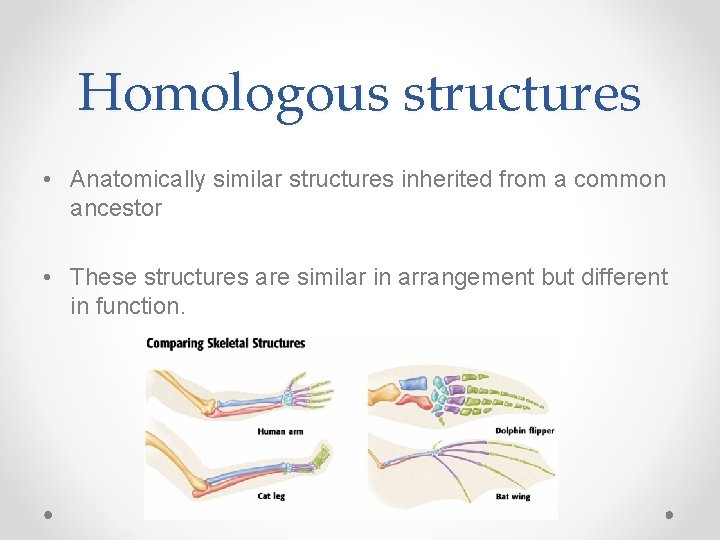
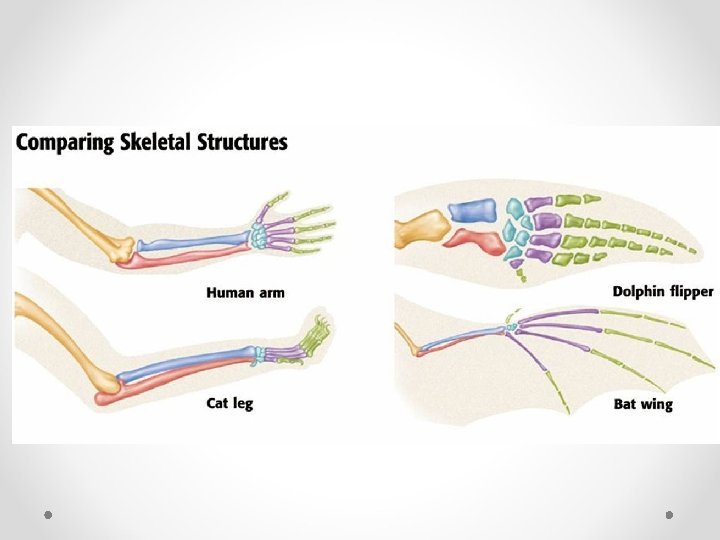
Homologous structures • Anatomically similar structures inherited from a common ancestor • These structures are similar in arrangement but different in function.
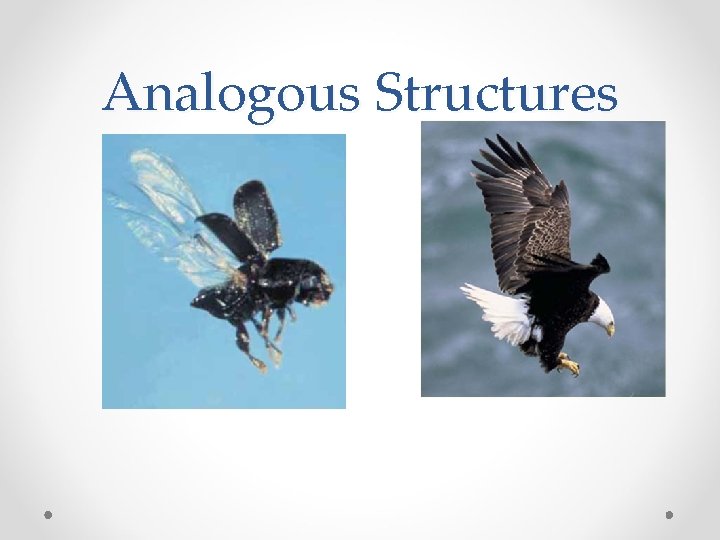
Analogous Structures • Structures that do not have a common evolutionary origin but are similar in function. • Shows that functionally similar features can evolve independently of each other • Ex: wing of an insect and wing of bird
Analogous Structures
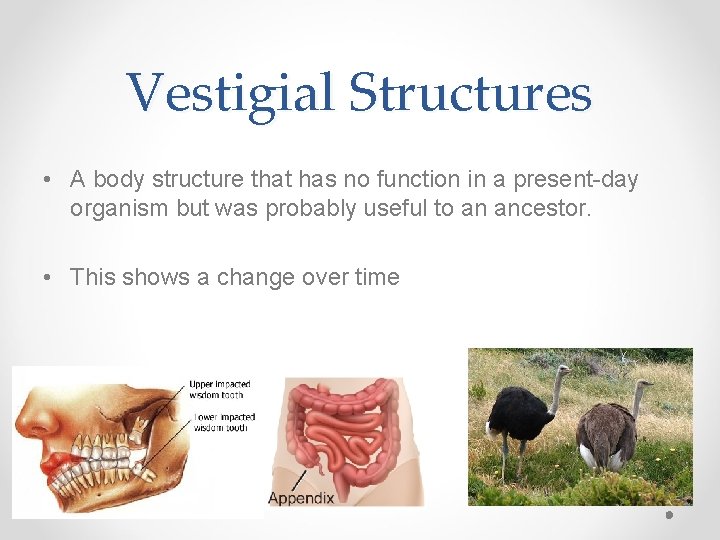
Vestigial Structures • A body structure that has no function in a present-day organism but was probably useful to an ancestor. • This shows a change over time
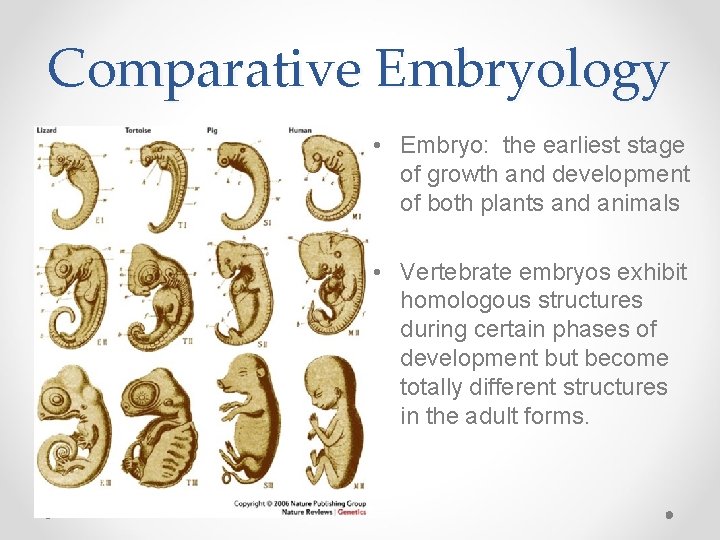
Comparative Embryology • Embryo: the earliest stage of growth and development of both plants and animals • Vertebrate embryos exhibit homologous structures during certain phases of development but become totally different structures in the adult forms.
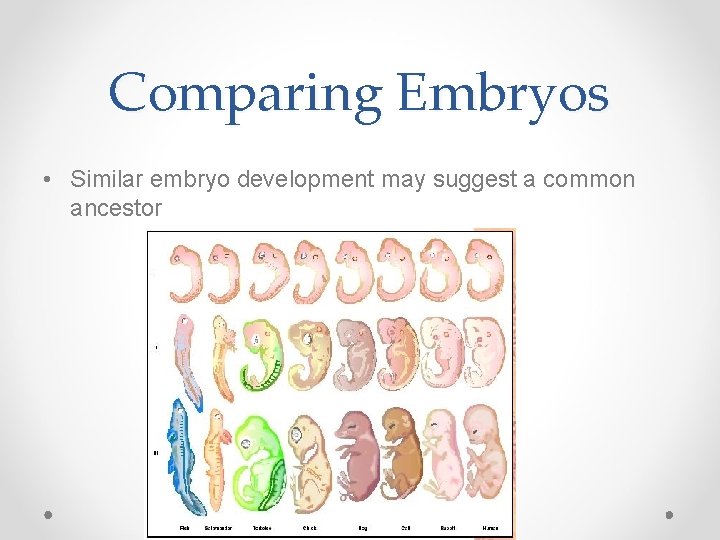
Comparing Embryos • Similar embryo development may suggest a common ancestor
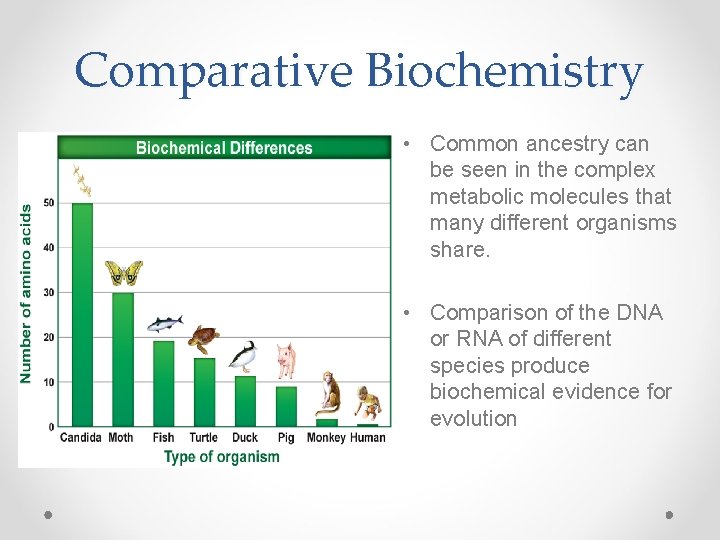
Comparative Biochemistry • Common ancestry can be seen in the complex metabolic molecules that many different organisms share. • Comparison of the DNA or RNA of different species produce biochemical evidence for evolution
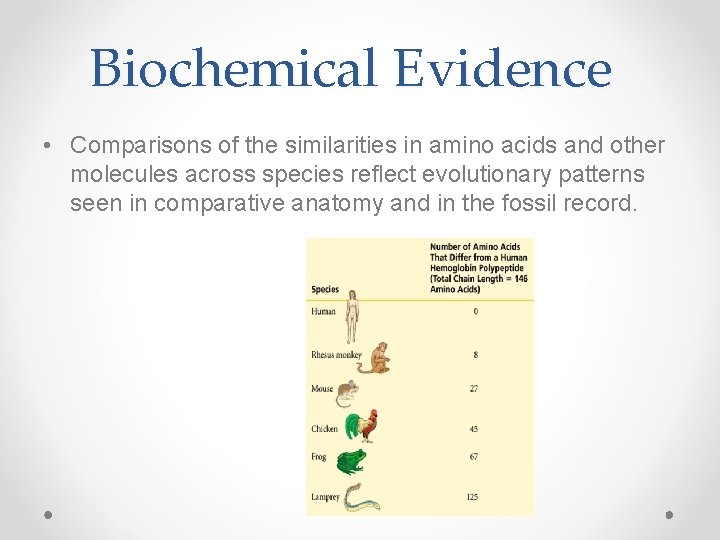
Biochemical Evidence • Comparisons of the similarities in amino acids and other molecules across species reflect evolutionary patterns seen in comparative anatomy and in the fossil record.
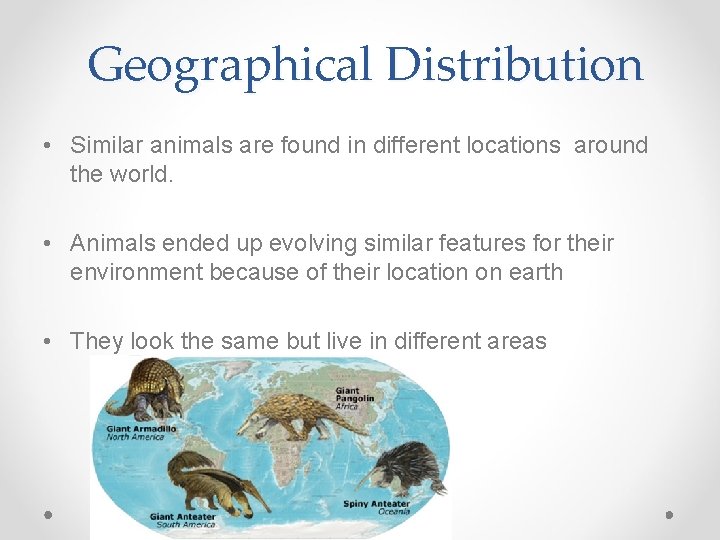
Geographical Distribution • Similar animals are found in different locations around the world. • Animals ended up evolving similar features for their environment because of their location on earth • They look the same but live in different areas
Types of Adaptations • Camouflage • Mimicry • Antimicrobial resistance
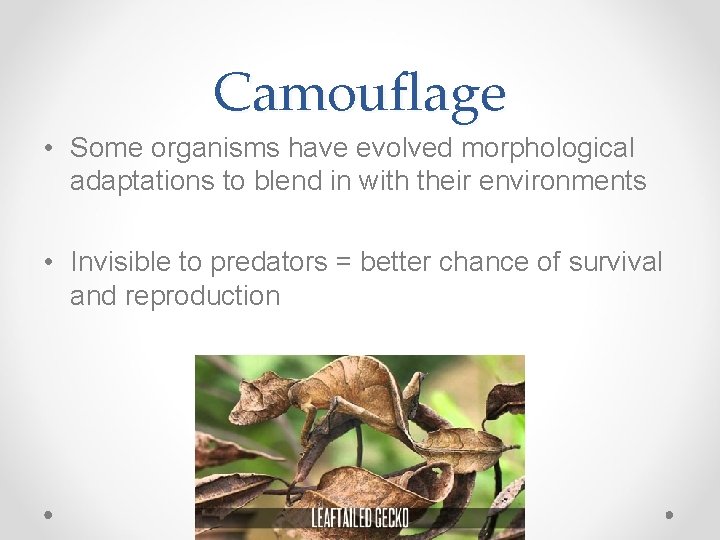
Camouflage • Some organisms have evolved morphological adaptations to blend in with their environments • Invisible to predators = better chance of survival and reproduction
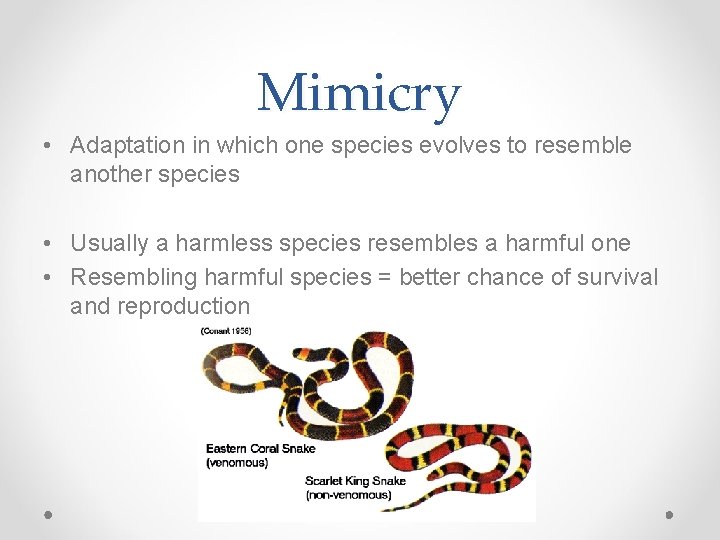
Mimicry • Adaptation in which one species evolves to resemble another species • Usually a harmless species resembles a harmful one • Resembling harmful species = better chance of survival and reproduction
Antimicrobial Resistance • Species of bacteria originally killed by antibiotics like penicillin have developed resistance • MRSA • Scary Example: https: //www. youtube. com/watch? v=pl. Vk 4 NVIUh 8