
Evidence of Evolution Learning Objectives Explain how geologic
Evidence of Evolution
Learning Objectives § Explain how geologic distribution of species relates to their evolutionary history. § Explain how fossils and the fossil record document the descent of modern species from ancient ancestors. § Describe what homologous structures and embryology suggest about the process of evolutionary change. § Explain how molecular evidence can be used to trace the process of evolution. § Explain the results of the Grants’ investigation of adaptation in Galápagos finches.
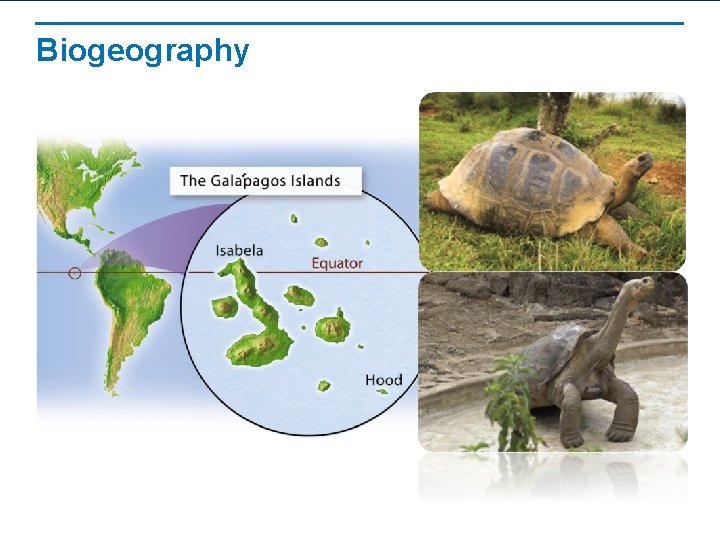
Biogeography
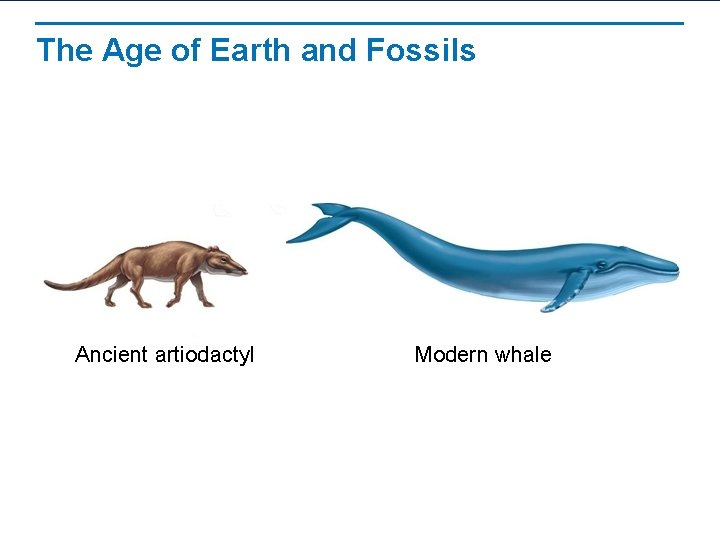
The Age of Earth and Fossils Ancient artiodactyl Modern whale

Evidence From Fossils Ambulocetus could both swim in shallow water and walk on land. Ancient artiodactyl Pakicetus Rodhocetus probably spent most of its time in water. Ambulocetus Rodhocetus

Evidence of Whale Evolution Modern whales have ancient structures Odontocetes Basilosaurus only swims. Mysticetes Modern whales Dorudon Basilosaurus
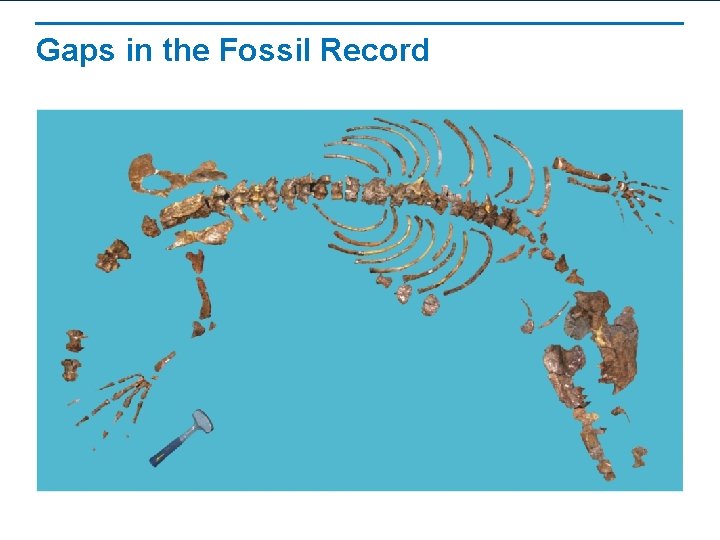
Gaps in the Fossil Record
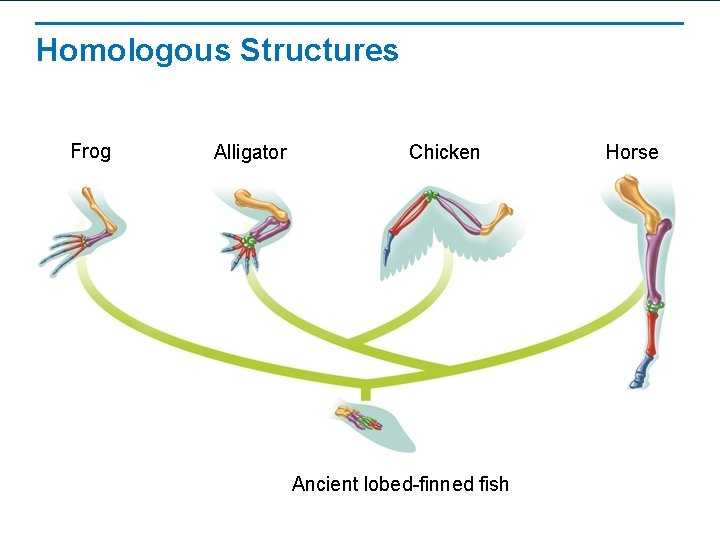
Homologous Structures Frog Alligator Chicken Ancient lobed-finned fish Horse
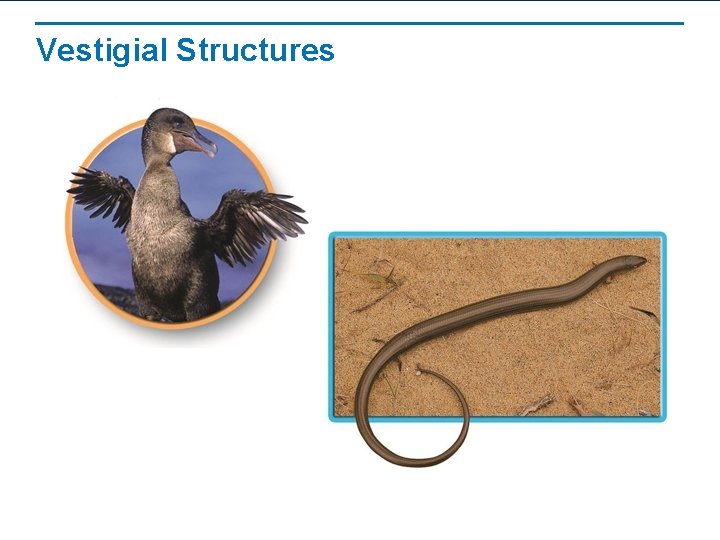
Vestigial Structures
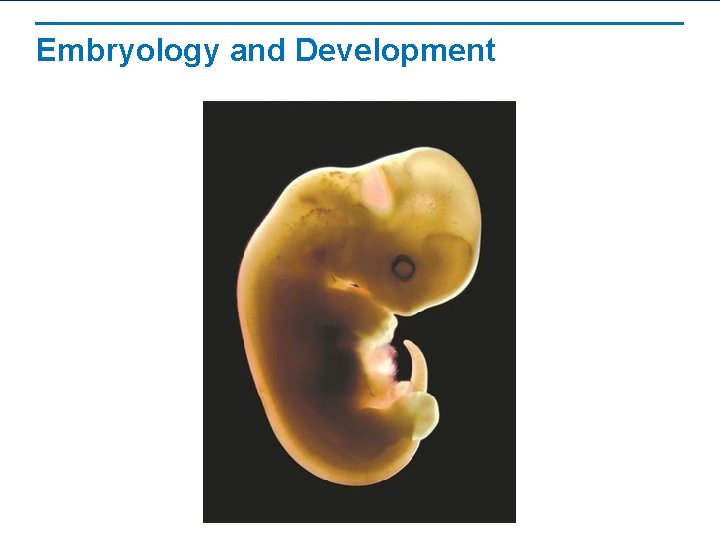
Embryology and Development
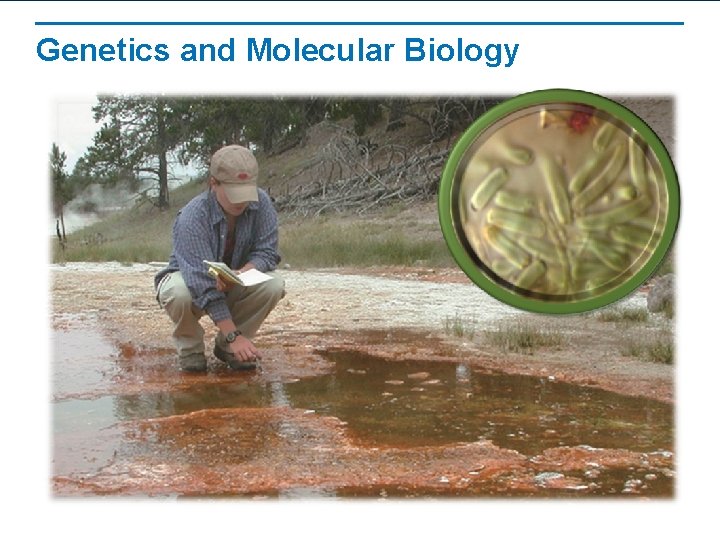
Genetics and Molecular Biology
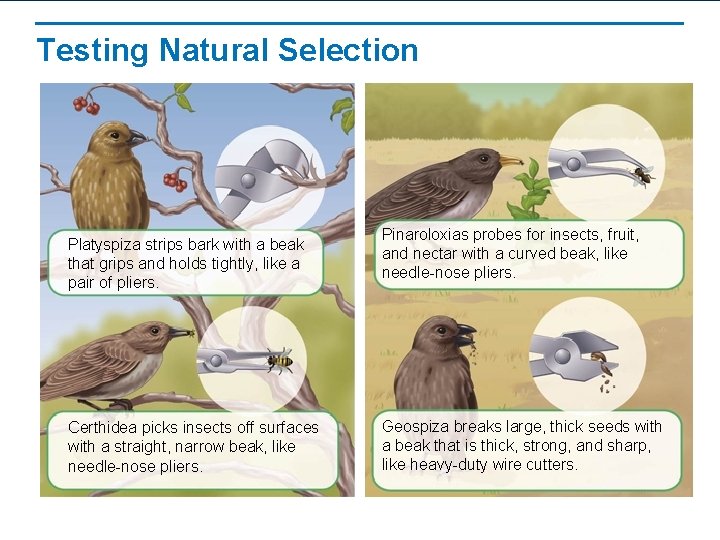
Testing Natural Selection Platyspiza strips bark with a beak that grips and holds tightly, like a pair of pliers. Certhidea picks insects off surfaces with a straight, narrow beak, like needle-nose pliers. Pinaroloxias probes for insects, fruit, and nectar with a curved beak, like needle-nose pliers. Geospiza breaks large, thick seeds with a beak that is thick, strong, and sharp, like heavy-duty wire cutters.
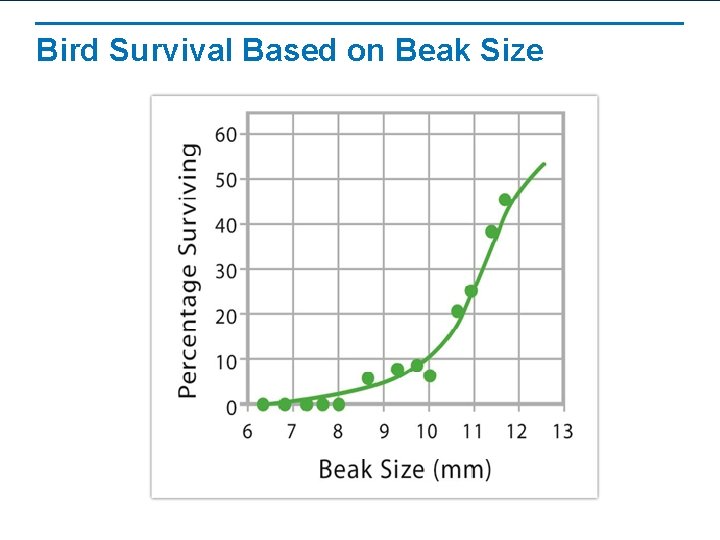
Bird Survival Based on Beak Size
- Slides: 13