
EVIDENCE OF EVOLUTION Evidence of Evolution Scientist who
- Slides: 9
EVIDENCE OF EVOLUTION
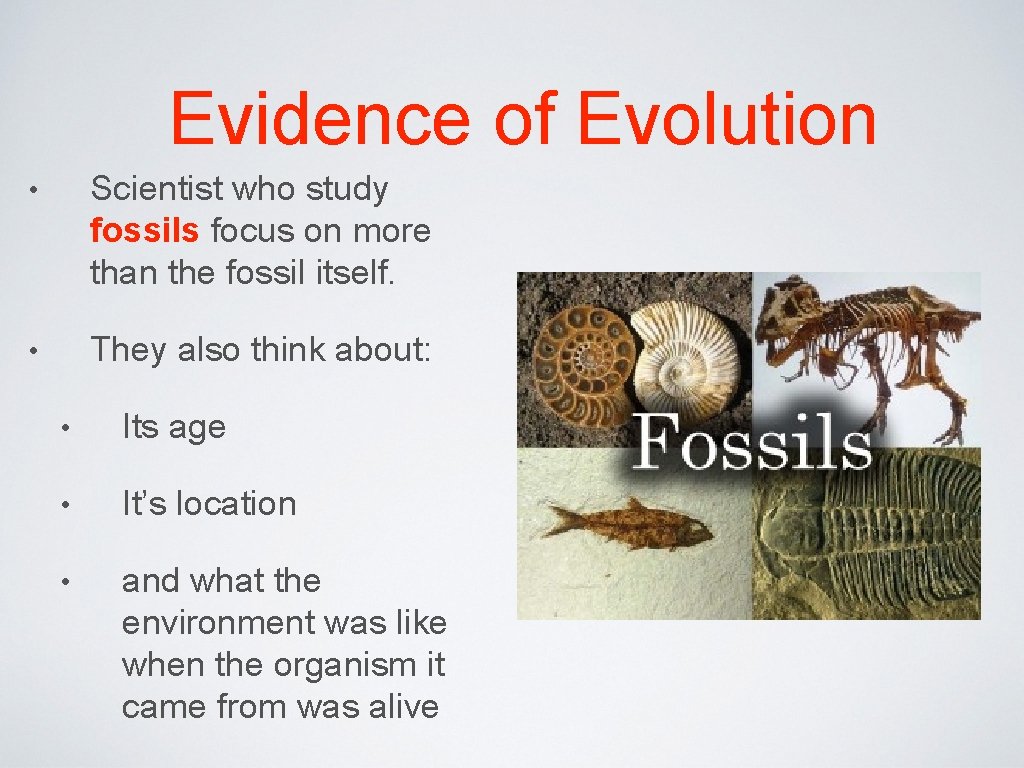
Evidence of Evolution • Scientist who study fossils focus on more than the fossil itself. • They also think about: • Its age • It’s location • and what the environment was like when the organism it came from was alive
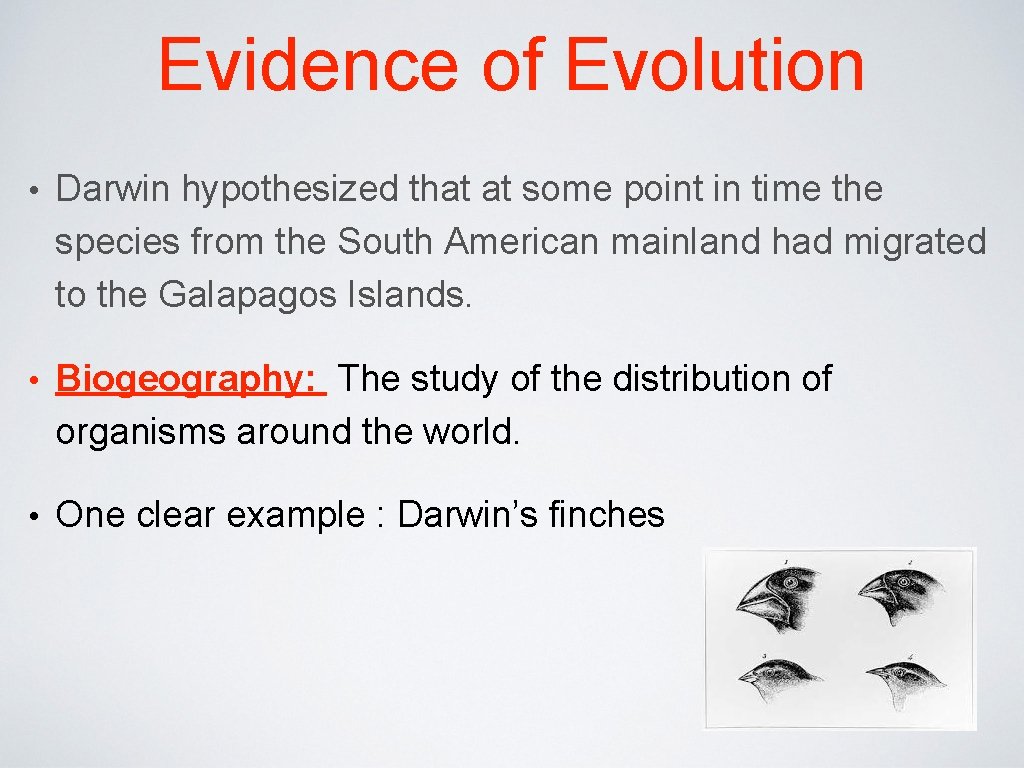
Evidence of Evolution • Darwin hypothesized that at some point in time the species from the South American mainland had migrated to the Galapagos Islands. • Biogeography: The study of the distribution of organisms around the world. • One clear example : Darwin’s finches
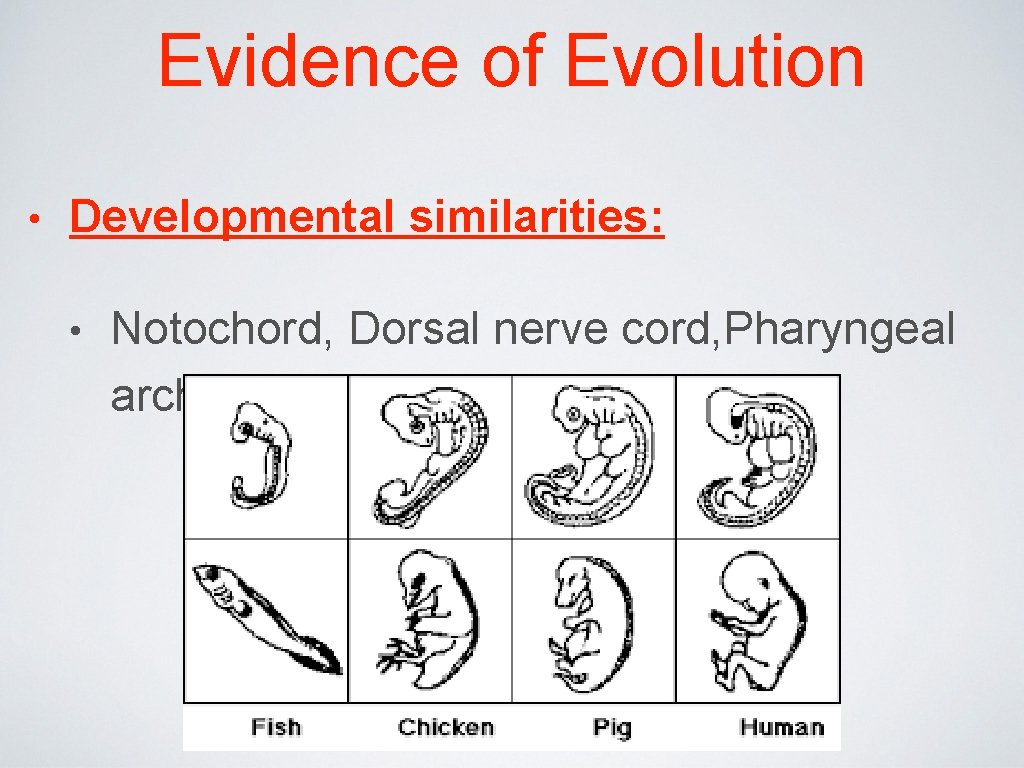
Evidence of Evolution • Developmental similarities: • Notochord, Dorsal nerve cord, Pharyngeal arches
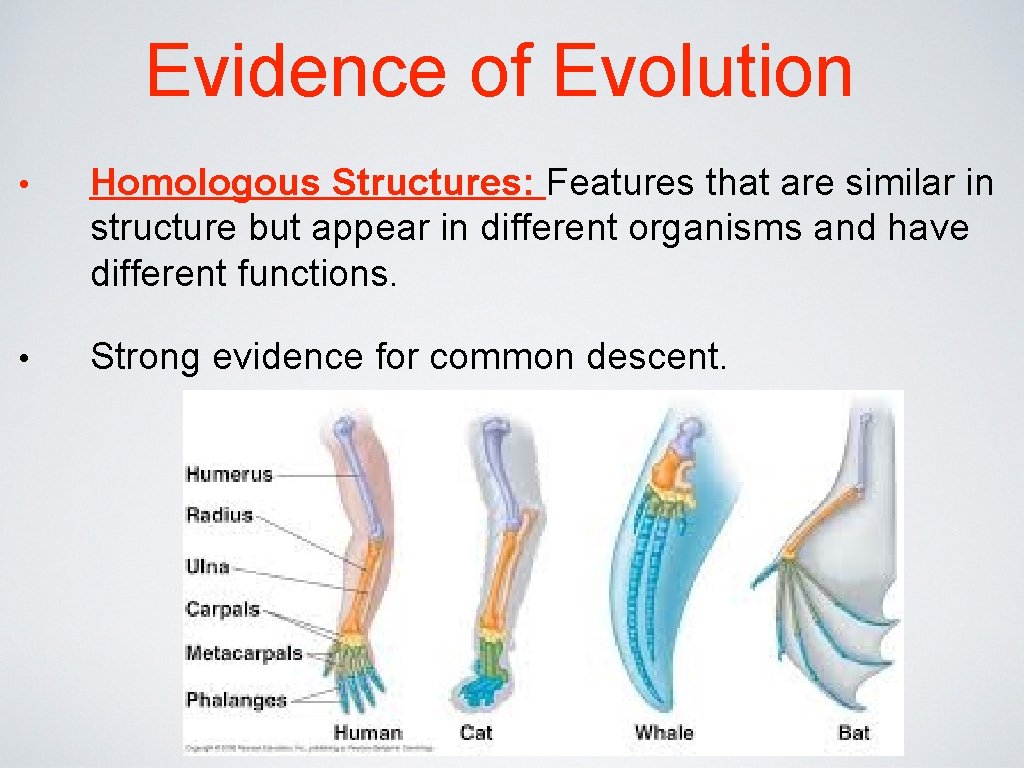
Evidence of Evolution • Homologous Structures: Features that are similar in structure but appear in different organisms and have different functions. • Strong evidence for common descent.
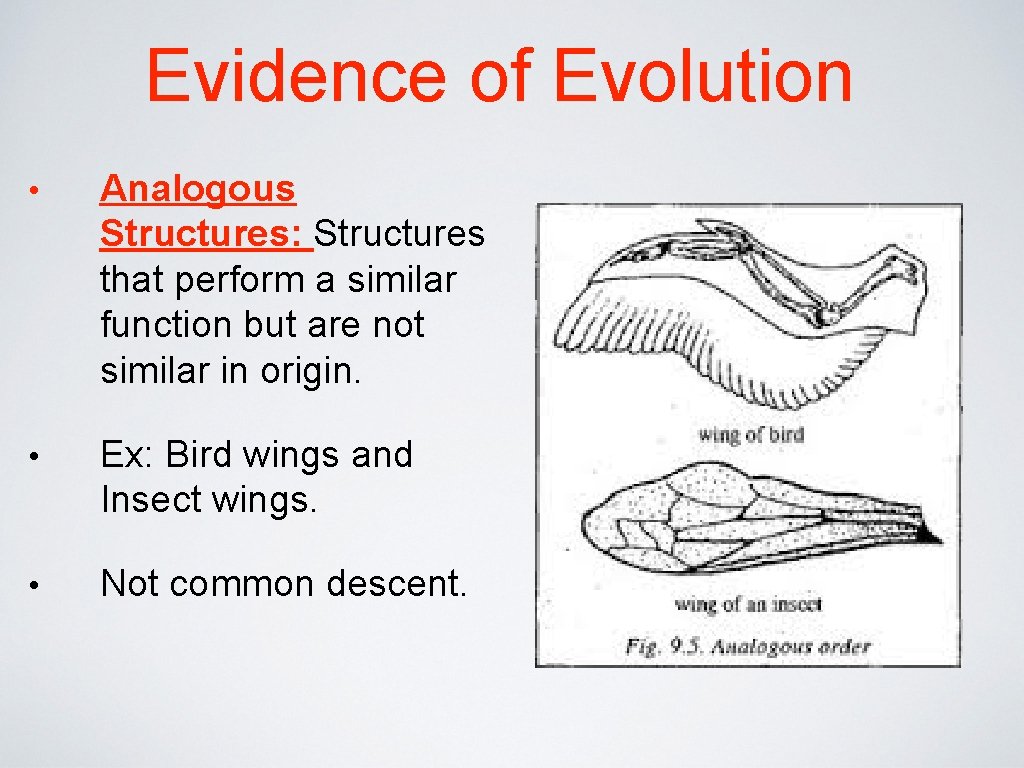
Evidence of Evolution • Analogous Structures: Structures that perform a similar function but are not similar in origin. • Ex: Bird wings and Insect wings. • Not common descent.
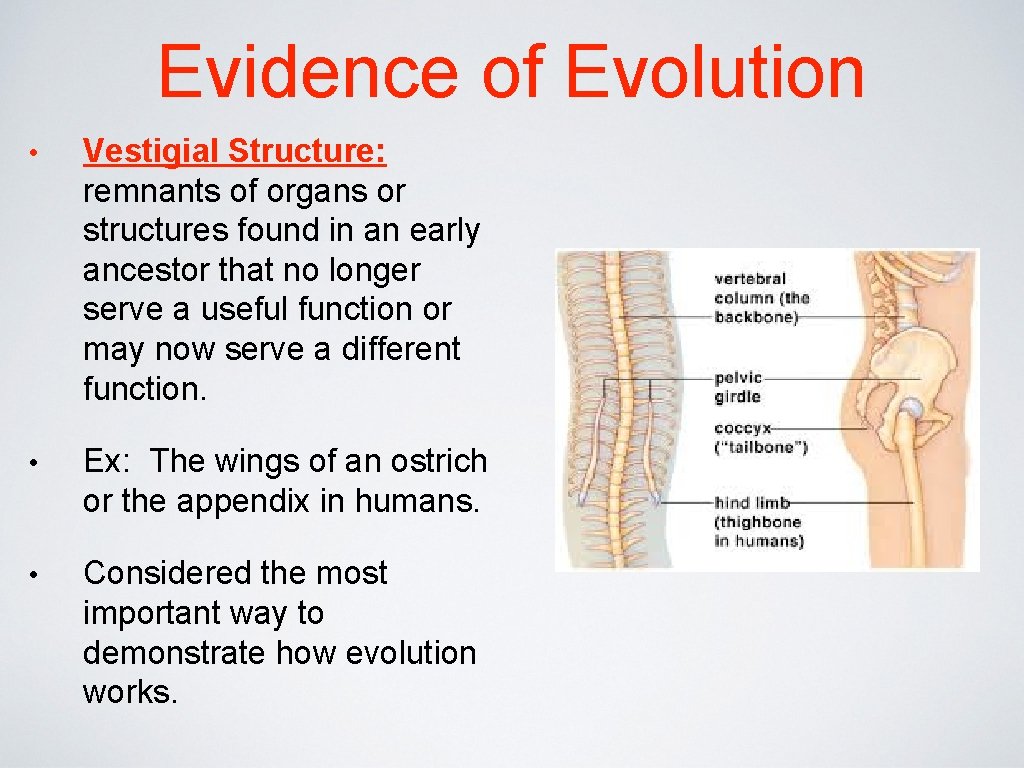
Evidence of Evolution • Vestigial Structure: remnants of organs or structures found in an early ancestor that no longer serve a useful function or may now serve a different function. • Ex: The wings of an ostrich or the appendix in humans. • Considered the most important way to demonstrate how evolution works.
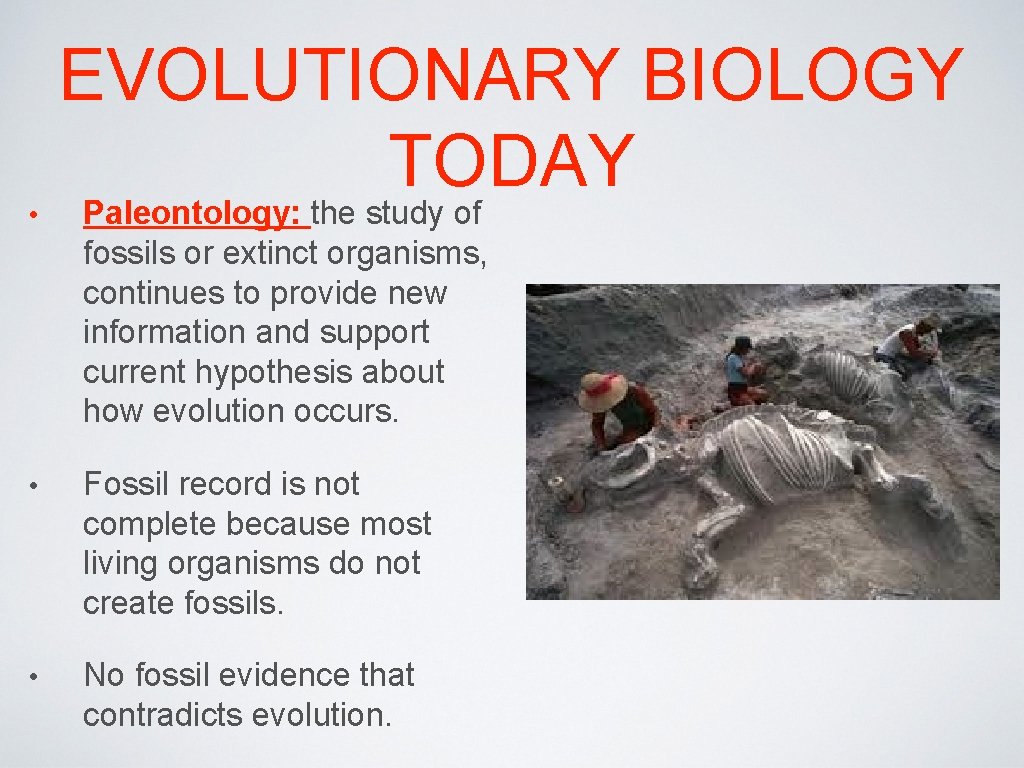
• EVOLUTIONARY BIOLOGY TODAY Paleontology: the study of fossils or extinct organisms, continues to provide new information and support current hypothesis about how evolution occurs. • Fossil record is not complete because most living organisms do not create fossils. • No fossil evidence that contradicts evolution.
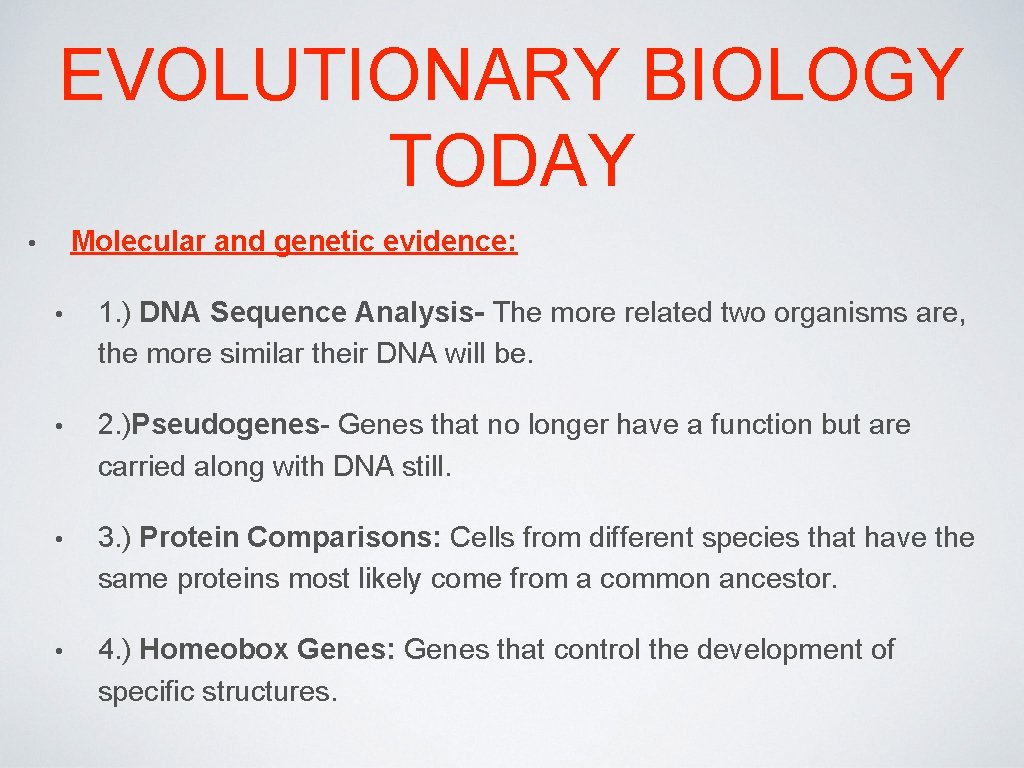
EVOLUTIONARY BIOLOGY TODAY Molecular and genetic evidence: • • 1. ) DNA Sequence Analysis- The more related two organisms are, the more similar their DNA will be. • 2. )Pseudogenes- Genes that no longer have a function but are carried along with DNA still. • 3. ) Protein Comparisons: Cells from different species that have the same proteins most likely come from a common ancestor. • 4. ) Homeobox Genes: Genes that control the development of specific structures.