
Evidence of Evolution Bluefooted booby Evidence of evolution
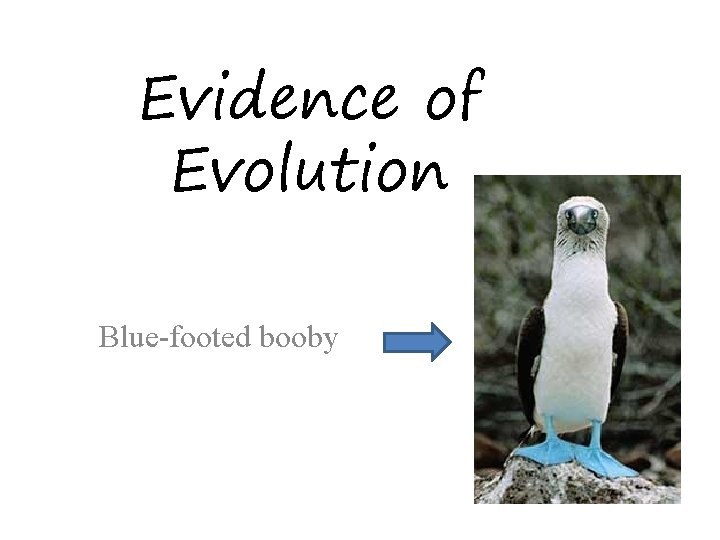
Evidence of Evolution Blue-footed booby
Evidence of evolution • • Fossil Record Anatomy Embryology Biochemistry • Evidence in microevolution
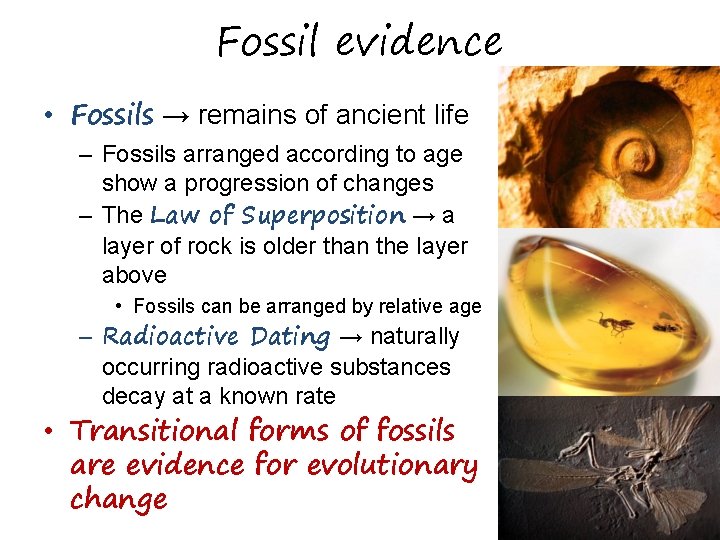
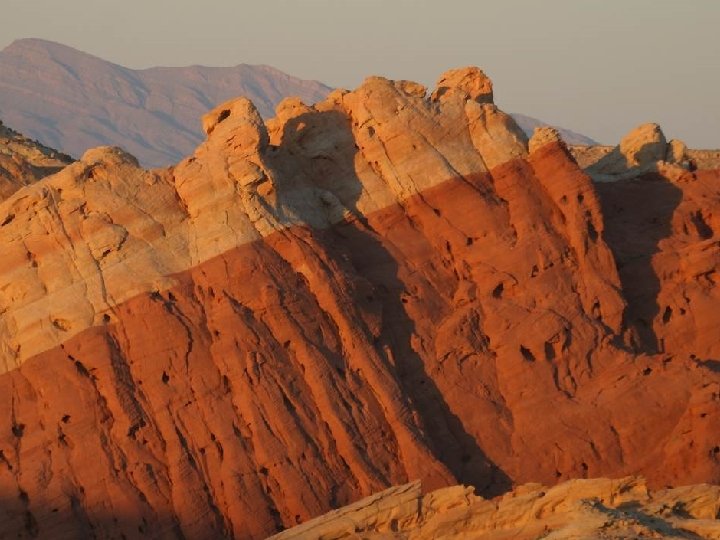
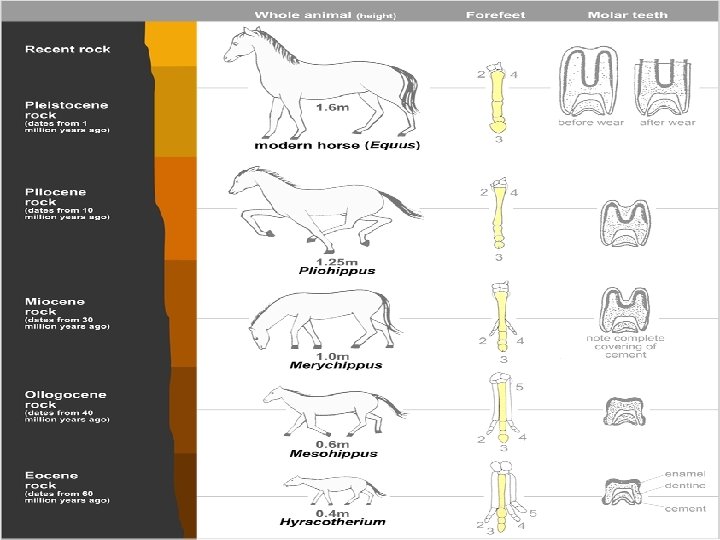
Fossil evidence • Fossils → remains of ancient life – Fossils arranged according to age show a progression of changes – The Law of Superposition → a layer of rock is older than the layer above Mold Fossil • Fossils can be arranged by relative age – Radioactive Dating → naturally occurring radioactive substances decay at a known rate • Transitional forms of fossils are evidence for evolutionary change Preservation (insect in amber)
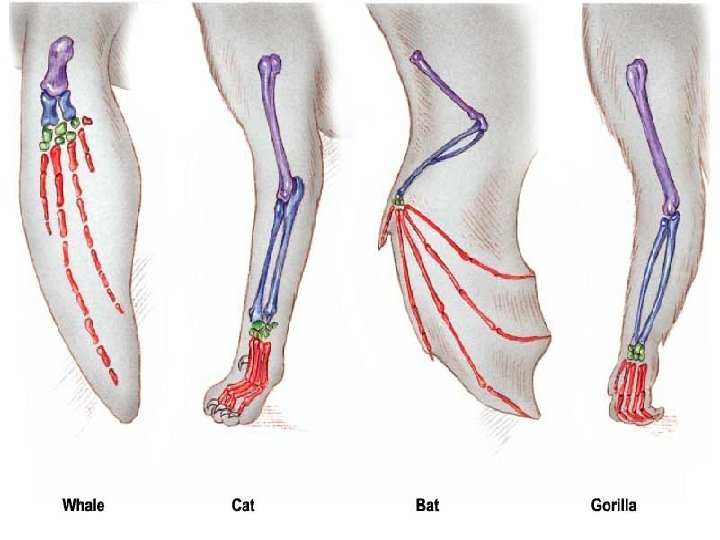
Anatomy evidence • Evolution works primarily by modifying preexisting structures • Homologous structures: parts came from the same origins, but now may have different function – e. g. , forelimbs of all mammals contain the same pattern of bones, although the bones now carry out a variety of functions • horse leg, bat wing, human arm, whale flipper
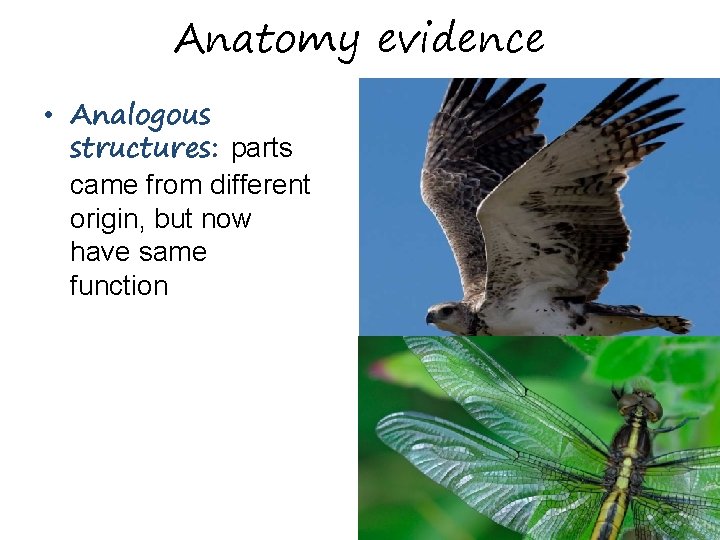
Anatomy evidence • Analogous structures: parts came from different origin, but now have same function
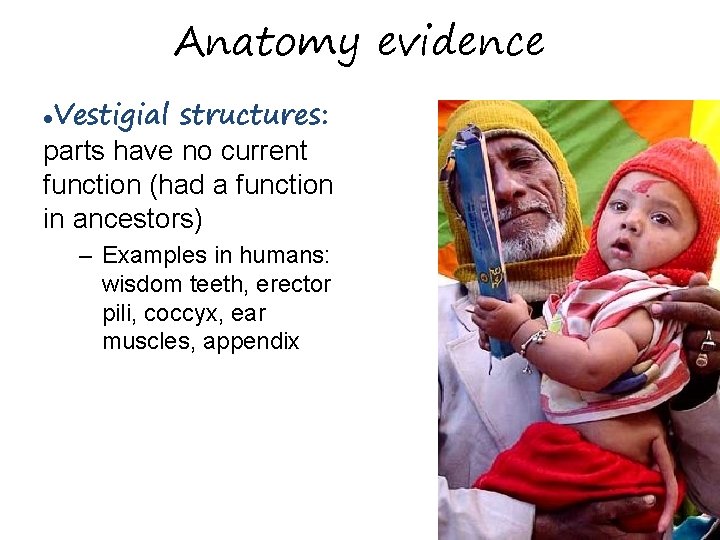
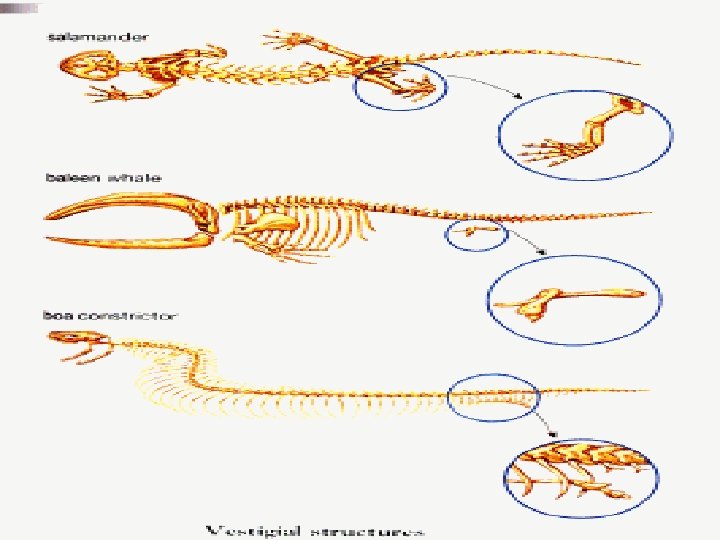
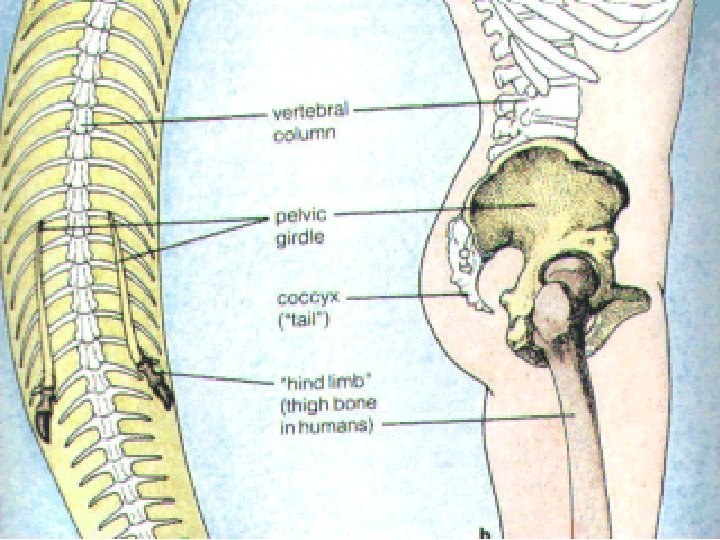
Anatomy evidence Vestigial structures: parts have no current function (had a function in ancestors) – Examples in humans: wisdom teeth, erector pili, coccyx, ear muscles, appendix
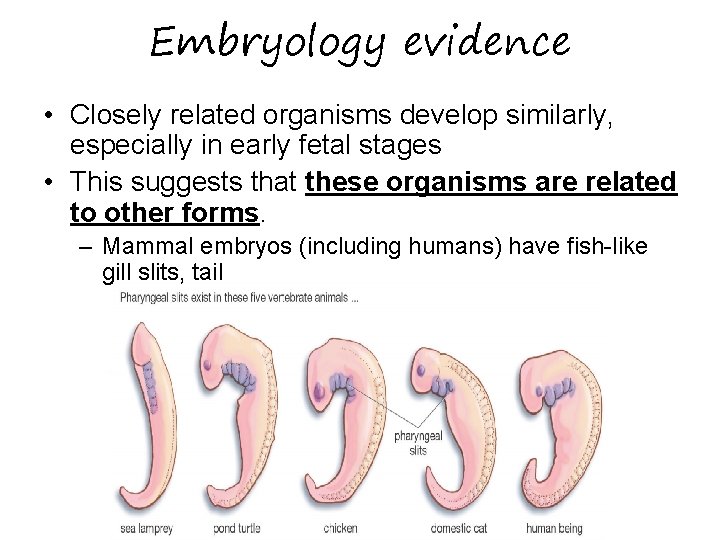
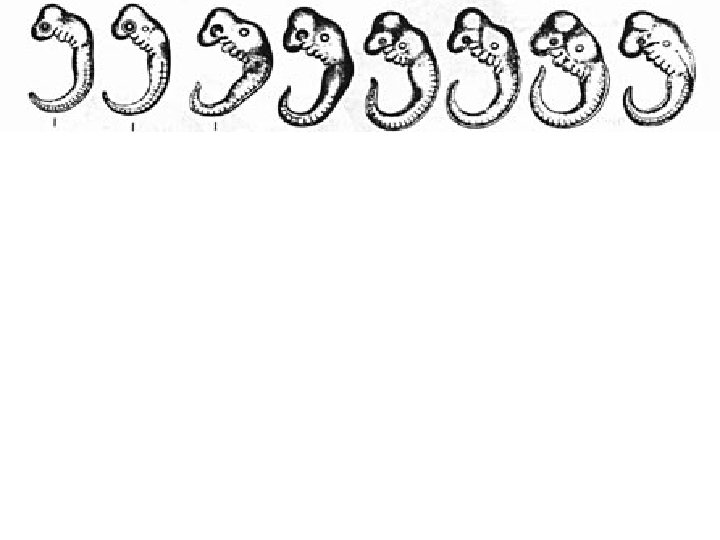
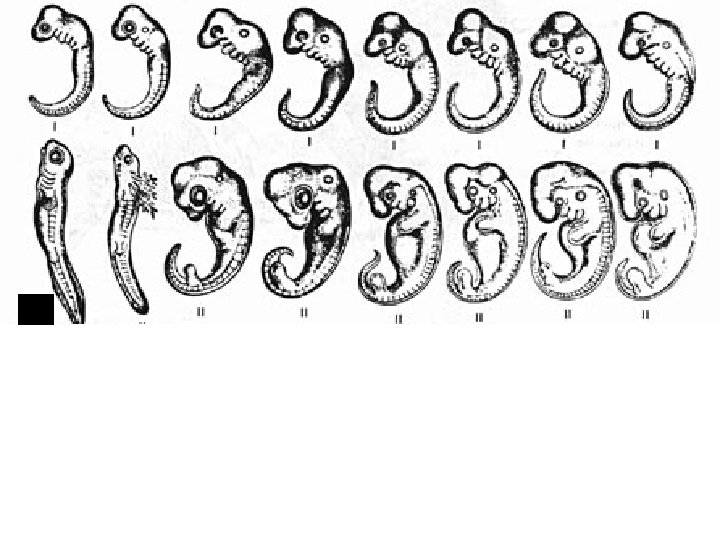
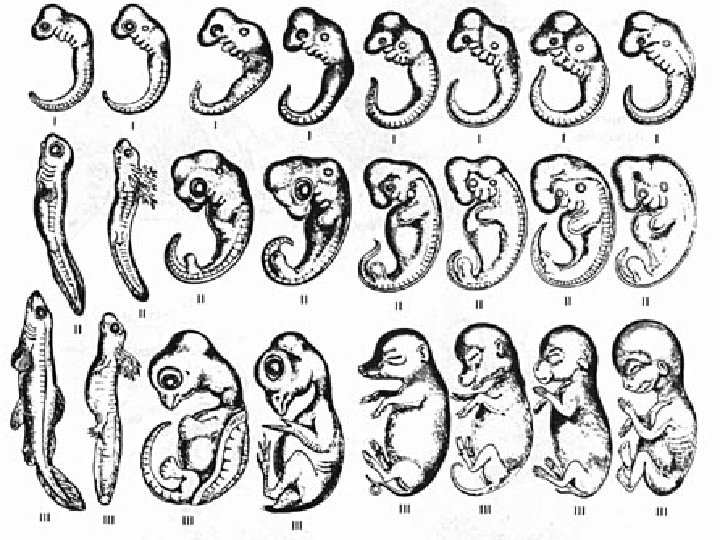
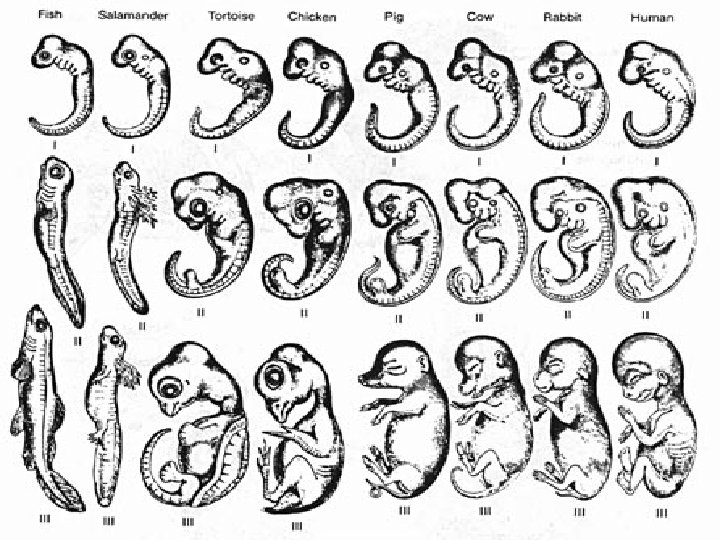
Embryology evidence • Closely related organisms develop similarly, especially in early fetal stages • This suggests that these organisms are related to other forms. – Mammal embryos (including humans) have fish-like gill slits, tail
Biochemistry evidence • All organisms share certain biochemistry – Genetic code for building amino acids – All organisms use ATP for energy – Plasma membranes of all organisms consist of a phospholipid bi-layer
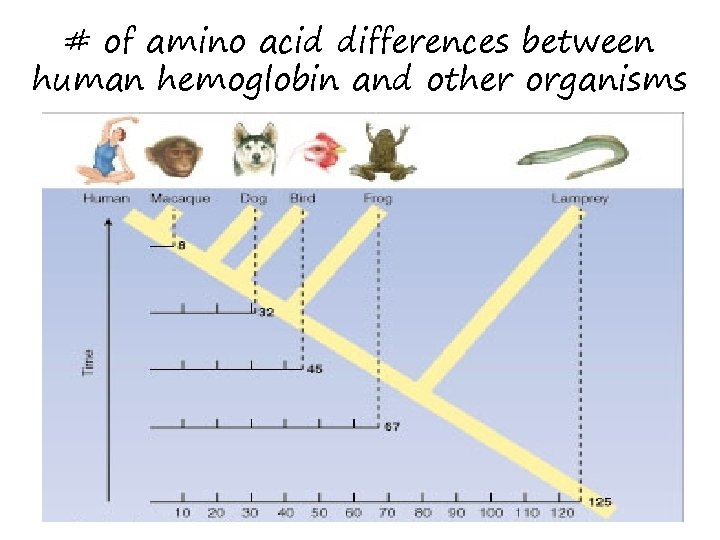
# of amino acid differences between human hemoglobin and other organisms
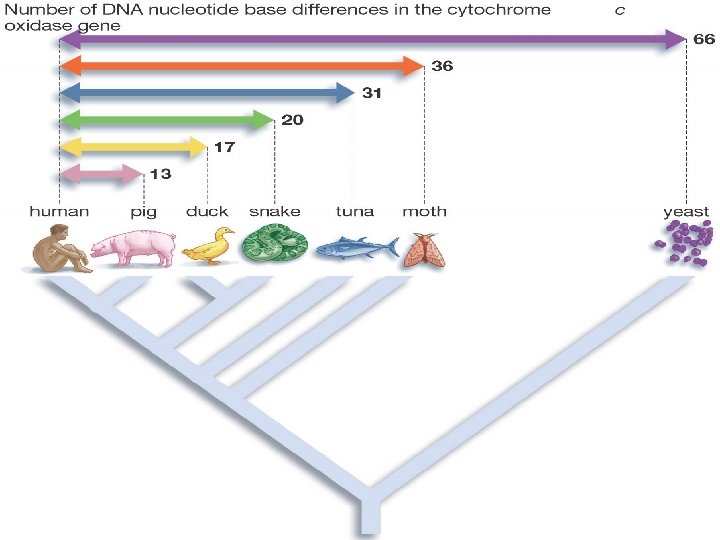
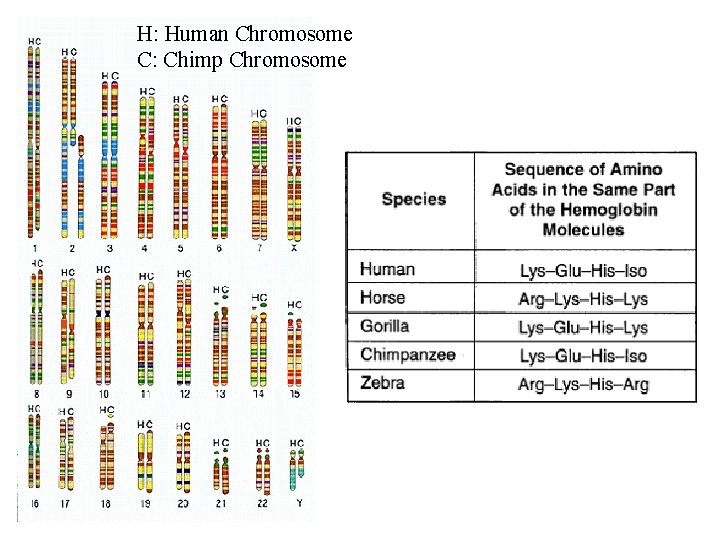
H: Human Chromosome C: Chimp Chromosome
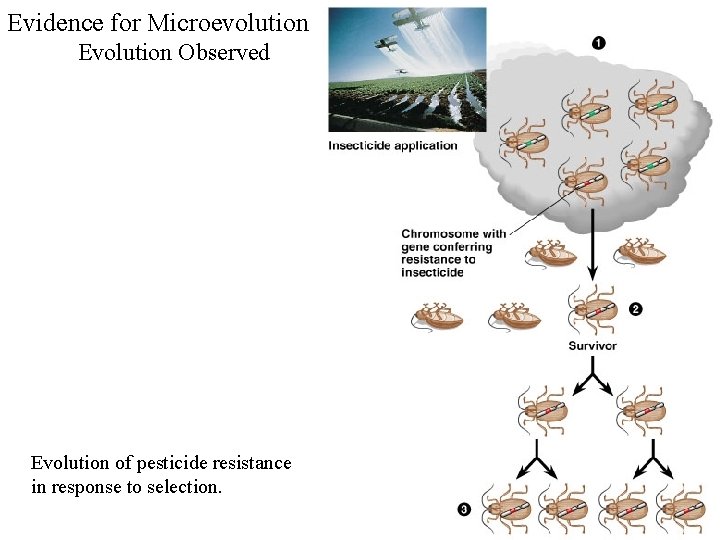
Evidence for Microevolution Evolution Observed Evolution of pesticide resistance in response to selection.
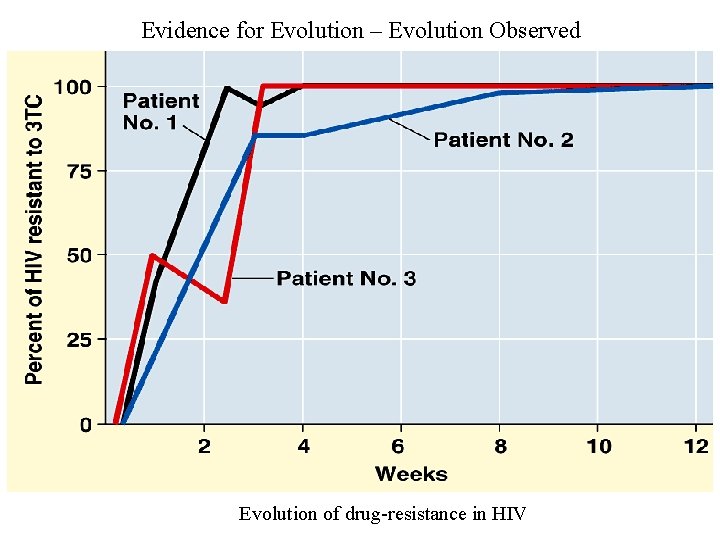
Evidence for Evolution – Evolution Observed Evolution of drug-resistance in HIV
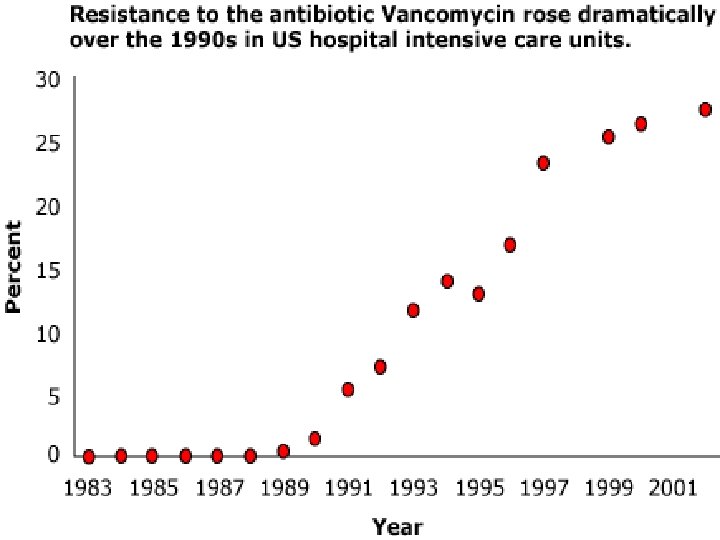
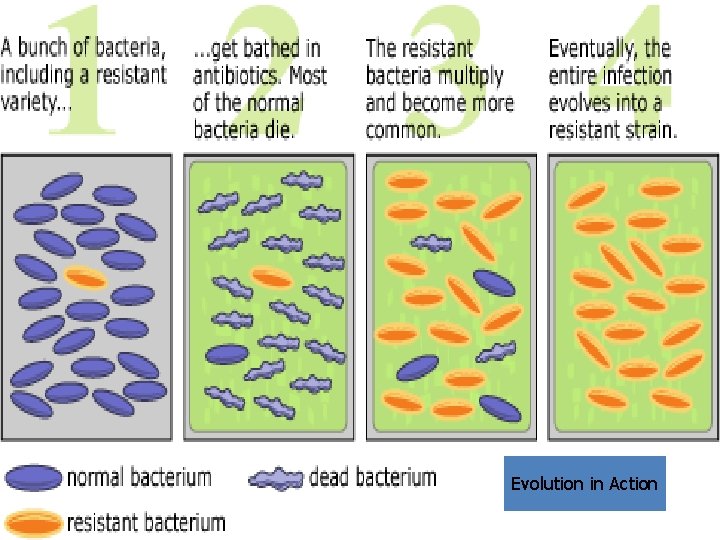
Evolution in Action
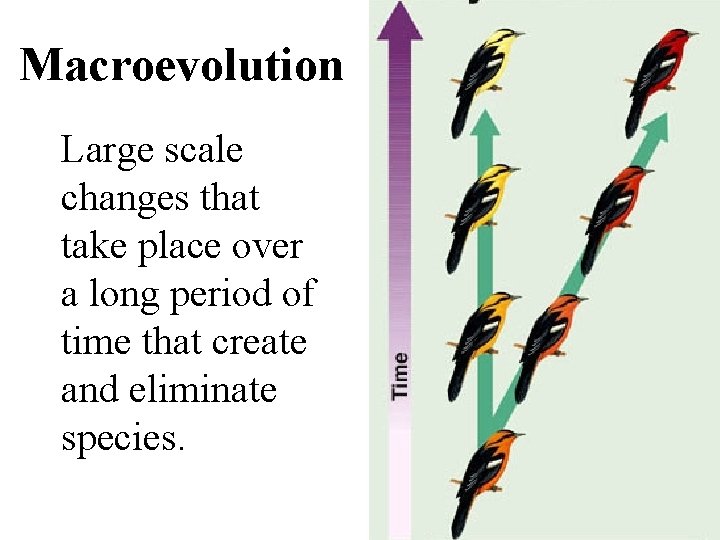
Macroevolution Large scale changes that take place over a long period of time that create and eliminate species.
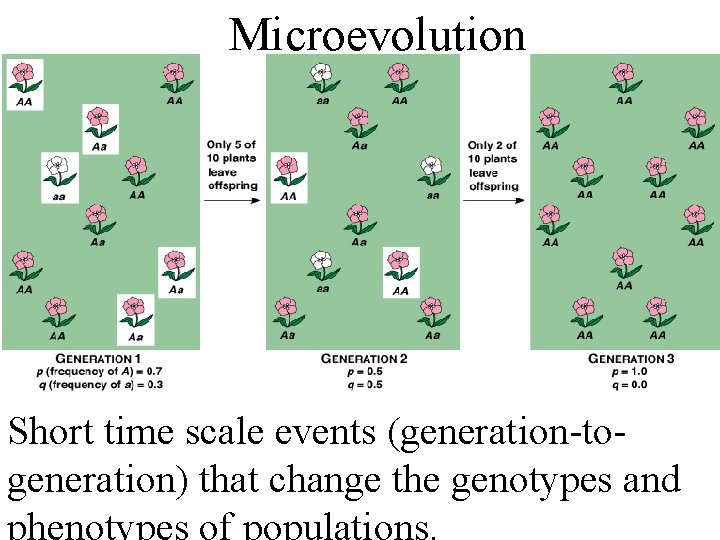
Microevolution Short time scale events (generation-togeneration) that change the genotypes and
- Slides: 26