
Evidence of Ancestry Comparative Morphology comparing the anatomy
- Slides: 19
Evidence of Ancestry • Comparative Morphology – comparing the anatomy of organisms – Embryology – studying the development of embryos – Similarities in embryological development suggests common ancestry. Small mutations that affect steps in early development can lead to large differences between organisms. – Morphological divergence – change from the form of a common ancestor • Evolution tends to follow the line of least resistance.
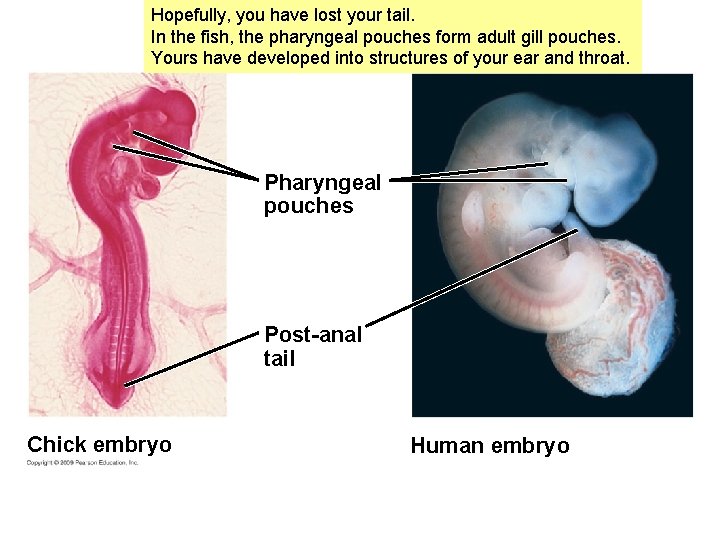
Hopefully, you have lost your tail. In the fish, the pharyngeal pouches form adult gill pouches. Yours have developed into structures of your ear and throat. Pharyngeal pouches Post-anal tail Chick embryo Human embryo
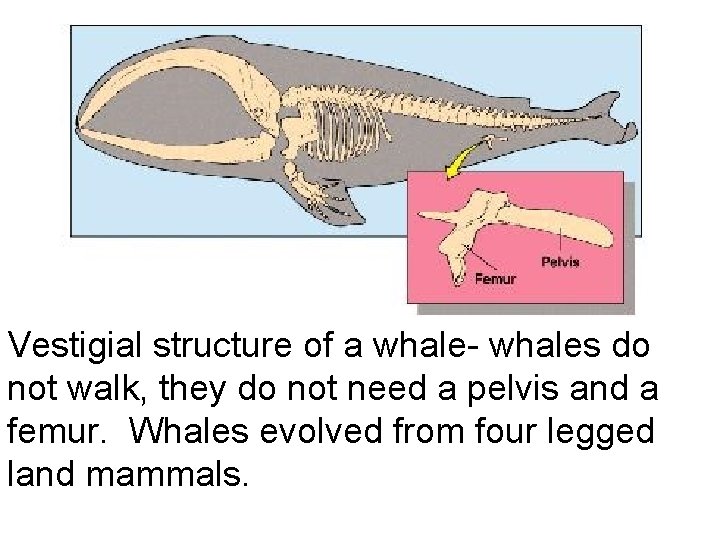
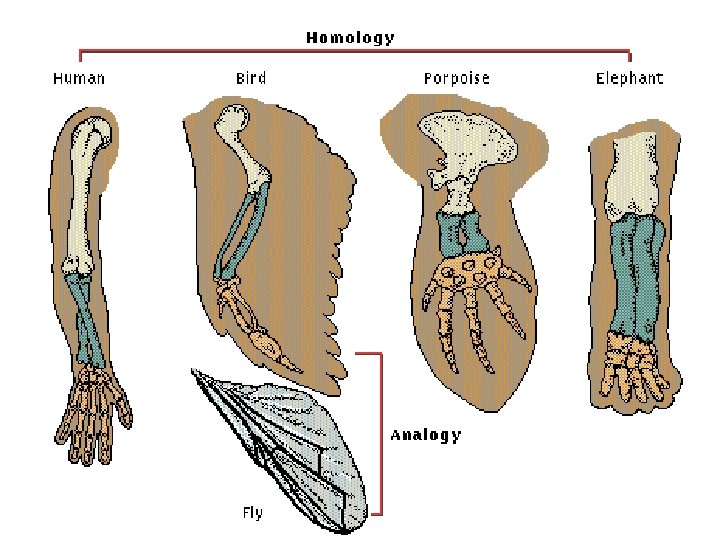
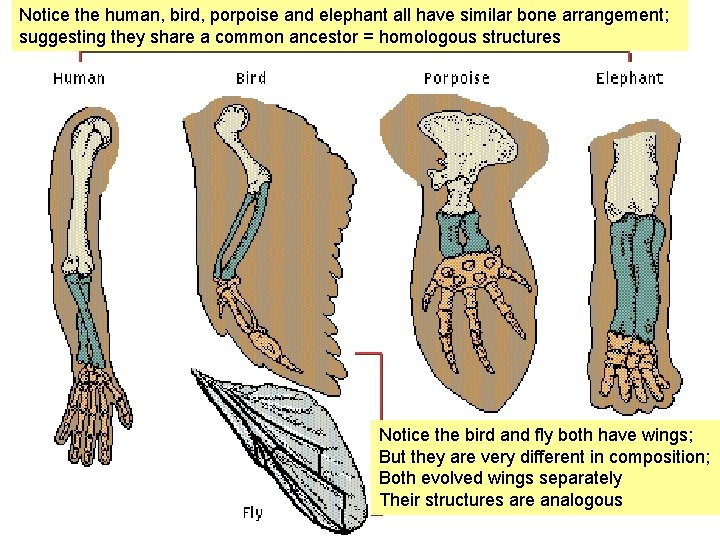
Evidence of Ancestry • Homologous Structures- (homology) structures that are similar in organisms that share a common ancestry; organisms have diverged from a common ancestor • Vestigial Structures – structures that an organism has, but are of no use to the organism anymore; show ancestry • Analogous structures- (analogy) structures that are similar in function but did not come from common ancestry (ex. wings of insects and the wings of birds); • Convergent evolution - two organisms evolve to have similarities due to common environmental pressures (not common ancestry) • Divergent evolution – one species evolves into two species due to different environmental pressures
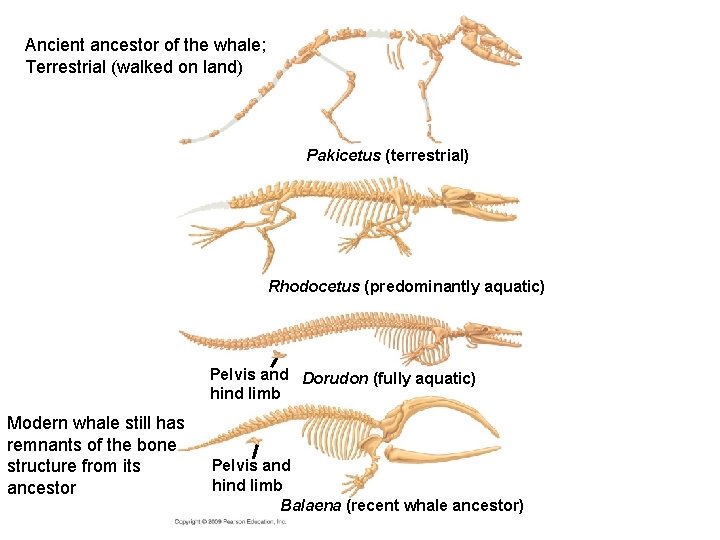
Ancient ancestor of the whale; Terrestrial (walked on land) Pakicetus (terrestrial) Rhodocetus (predominantly aquatic) Pelvis and Dorudon (fully aquatic) hind limb Modern whale still has remnants of the bone structure from its ancestor Pelvis and hind limb Balaena (recent whale ancestor)
Vestigial structure of a whale- whales do not walk, they do not need a pelvis and a femur. Whales evolved from four legged land mammals.
Notice the human, bird, porpoise and elephant all have similar bone arrangement; suggesting they share a common ancestor = homologous structures Notice the bird and fly both have wings; But they are very different in composition; Both evolved wings separately Their structures are analogous
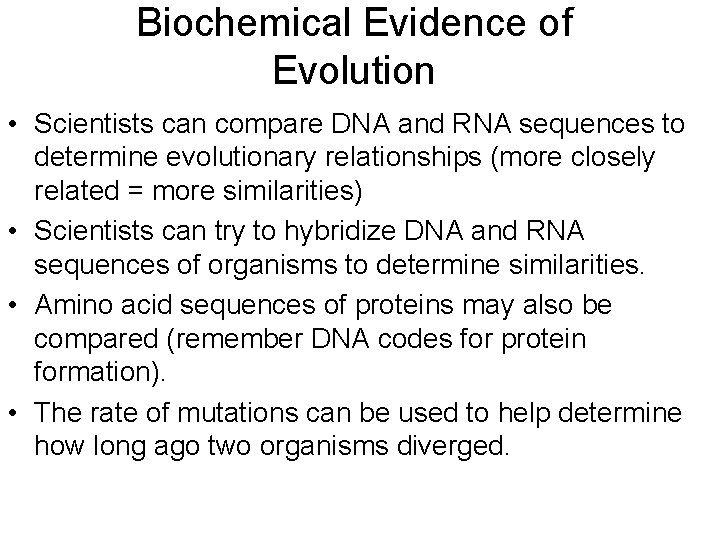
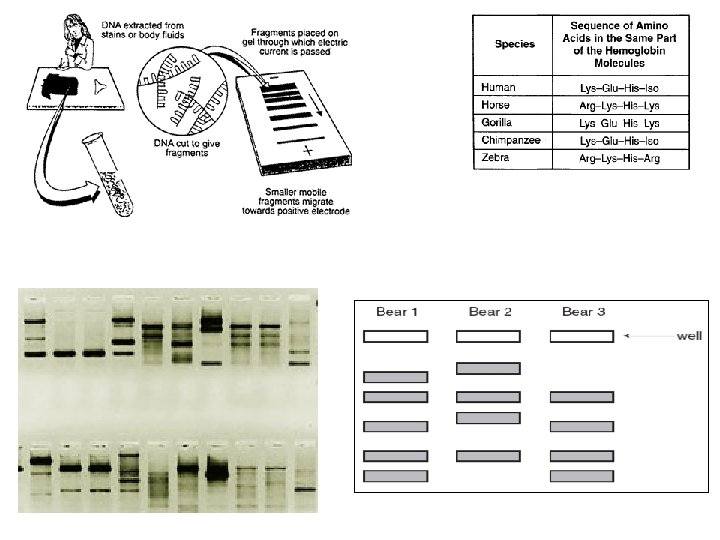
Biochemical Evidence of Evolution • Scientists can compare DNA and RNA sequences to determine evolutionary relationships (more closely related = more similarities) • Scientists can try to hybridize DNA and RNA sequences of organisms to determine similarities. • Amino acid sequences of proteins may also be compared (remember DNA codes for protein formation). • The rate of mutations can be used to help determine how long ago two organisms diverged.
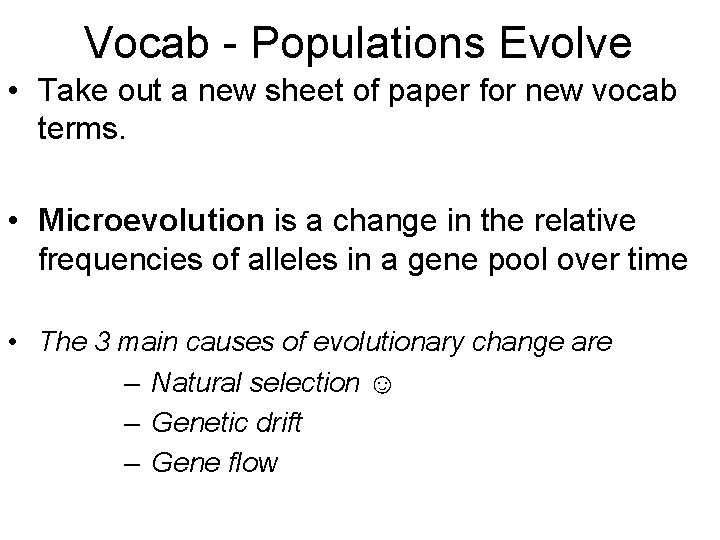
Vocab - Populations Evolve • Take out a new sheet of paper for new vocab terms. • Microevolution is a change in the relative frequencies of alleles in a gene pool over time • The 3 main causes of evolutionary change are – Natural selection ☺ – Genetic drift – Gene flow
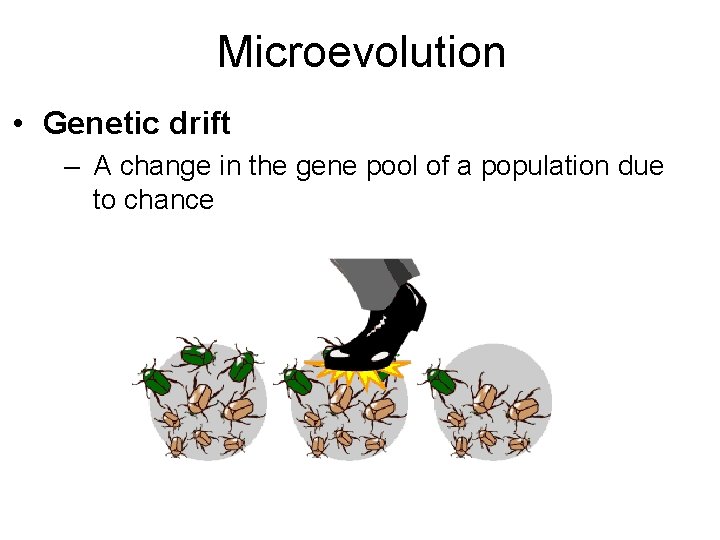
Microevolution • Genetic drift – A change in the gene pool of a population due to chance
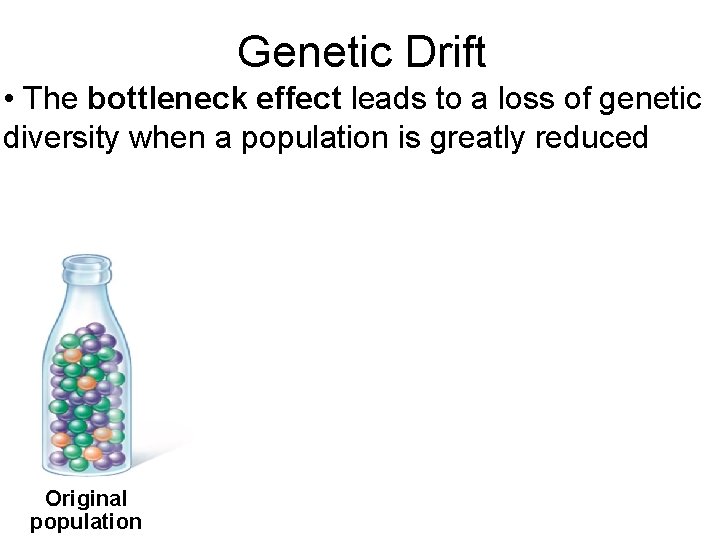
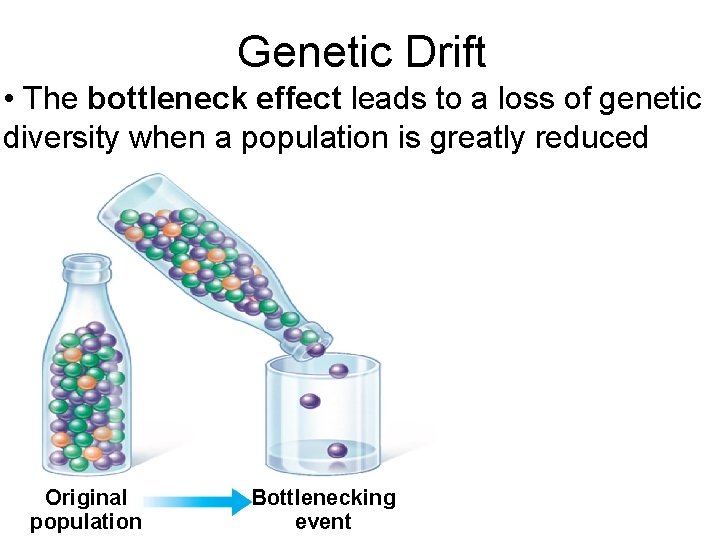
Genetic Drift • The bottleneck effect leads to a loss of genetic diversity when a population is greatly reduced Original population
Genetic Drift • The bottleneck effect leads to a loss of genetic diversity when a population is greatly reduced Original population Bottlenecking event
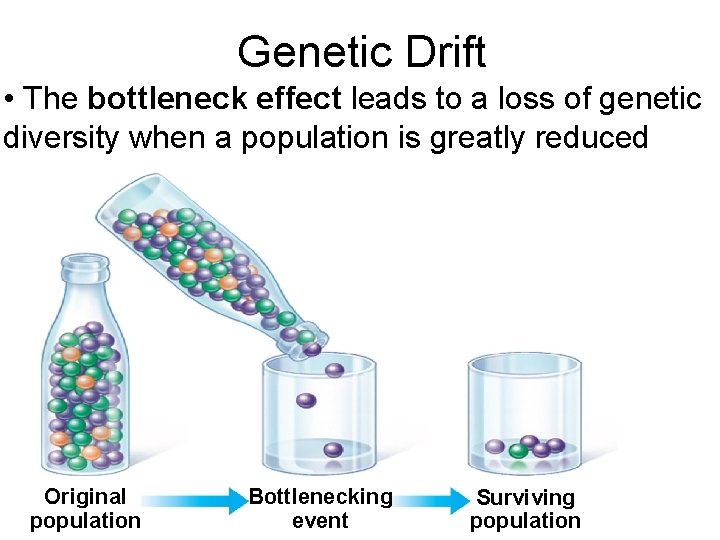
Genetic Drift • The bottleneck effect leads to a loss of genetic diversity when a population is greatly reduced Original population Bottlenecking event Surviving population
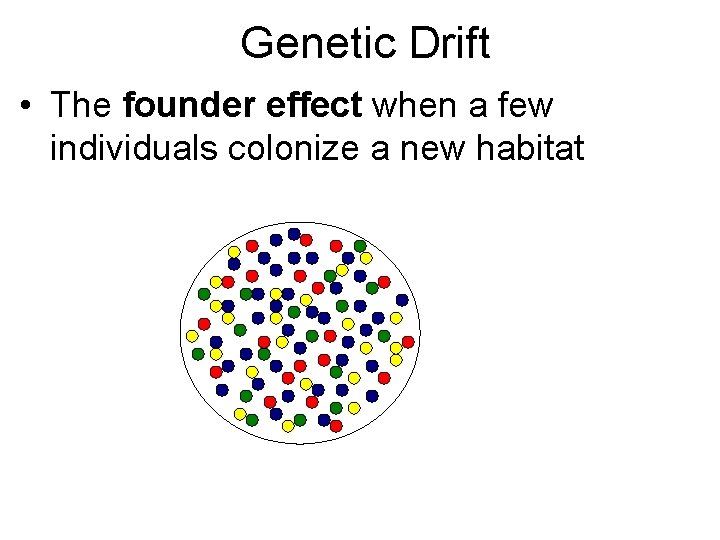
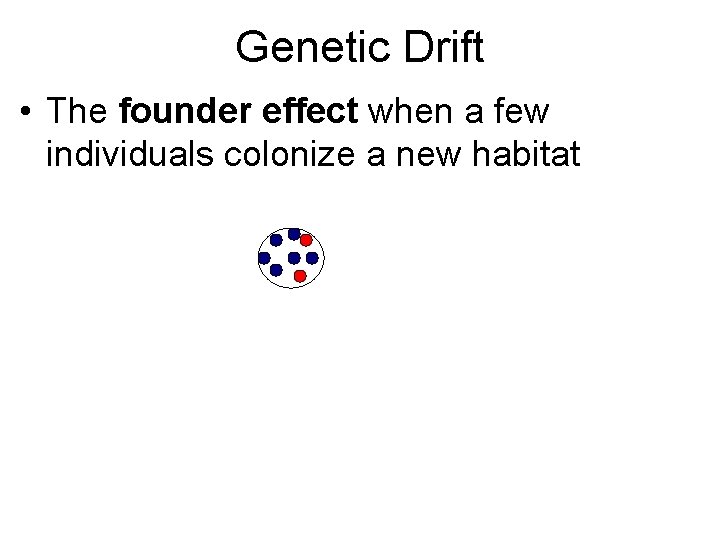
Genetic Drift • The founder effect when a few individuals colonize a new habitat
Genetic Drift • The founder effect when a few individuals colonize a new habitat
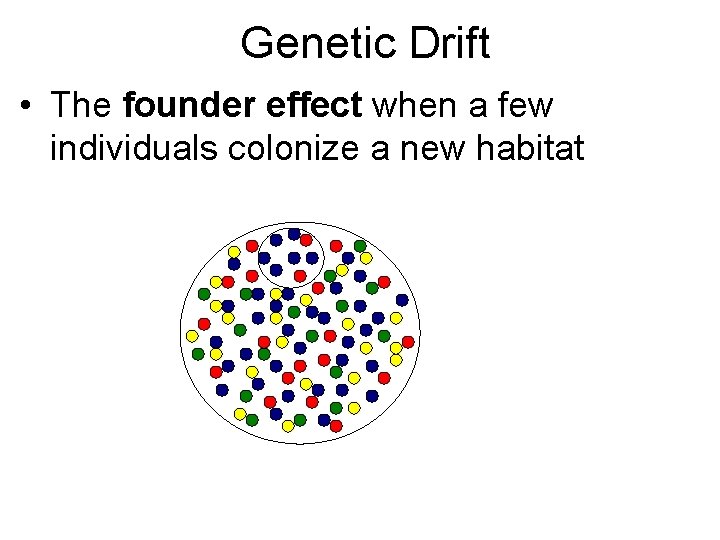
Genetic Drift • The founder effect when a few individuals colonize a new habitat
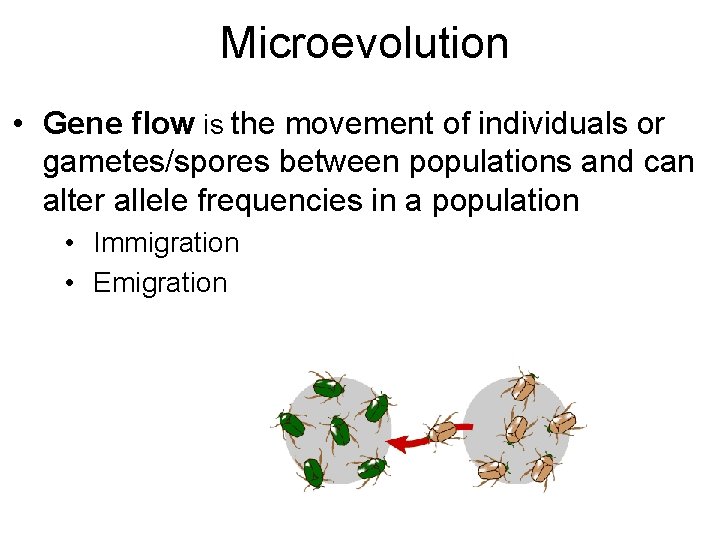
Microevolution • Gene flow is the movement of individuals or gametes/spores between populations and can alter allele frequencies in a population • Immigration • Emigration
Evo-Devo Video Clip • View the following clip (6 minutes) and answer the questions on your own paper. – http: //www. nytimes. com/video/science/1194817104756/thescience-of-evolution. html 1. What is Dr. Carroll’s definition of evo-devo? 2. Genes in fruit flies have counterparts in ______. 3. What is the “most remarkable thing about icefish” according to the video clip? 4. What do the genes that code for spots on butterflies code for in other organisms?