
Evidence from Rock and Fossils Construct and explanation





- Slides: 51
Evidence from Rock and Fossils Construct and explanation based on evidence from rock strata how the geologic time scale is used to organize Earth’s 4. 6 billion year old history. Geologic Time Scale: A measure of of Earth’s history.
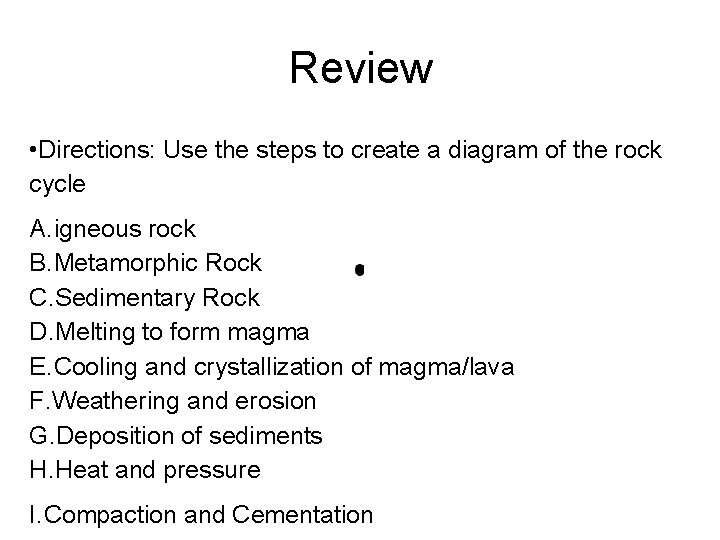
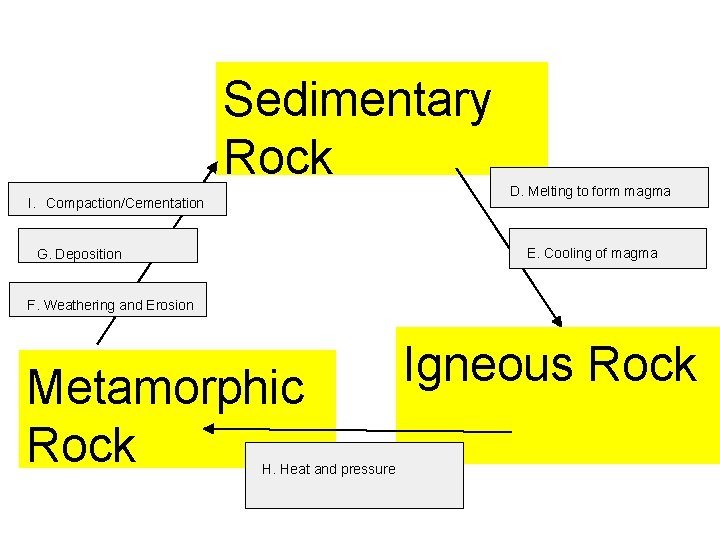
Review • Directions: Use the steps to create a diagram of the rock cycle A. igneous rock B. Metamorphic Rock C. Sedimentary Rock D. Melting to form magma E. Cooling and crystallization of magma/lava F. Weathering and erosion G. Deposition of sediments H. Heat and pressure I. Compaction and Cementation
Sedimentary Rock I. Compaction/Cementation D. Melting to form magma E. Cooling of magma G. Deposition F. Weathering and Erosion Metamorphic Rock H. Heat and pressure Igneous Rock
How Old is Earth? • http: //www. youtube. com/watch? feature=pl ayer_embedded&v=tkx. Wmh-t. FGs
Geologic Time Scale • The Geologic Time Scale is a record of the life forms and geologic events in Earth’s history. • Why do we not talk in terms of calendars when we talk about the Earth’s geologic history?
Relative vs. Absolute age • What is the difference between these two statements: – I am older than my brother. – I am 21 years old. • Geologists use both of these ways to express the age of a rock and any fossil found in it.
Relative and Absolute Ages ○ Relative Age The age of a rock compared to the ages of rock layers. ○ Absolute Age The age of a rock given as the number of years since the rock formed.
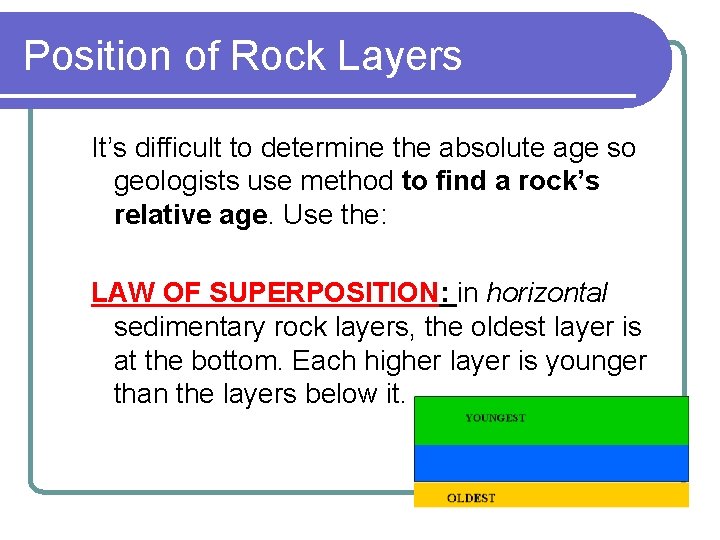
Position of Rock Layers It’s difficult to determine the absolute age so geologists use method to find a rock’s relative age. Use the: LAW OF SUPERPOSITION: in horizontal sedimentary rock layers, the oldest layer is at the bottom. Each higher layer is younger than the layers below it.
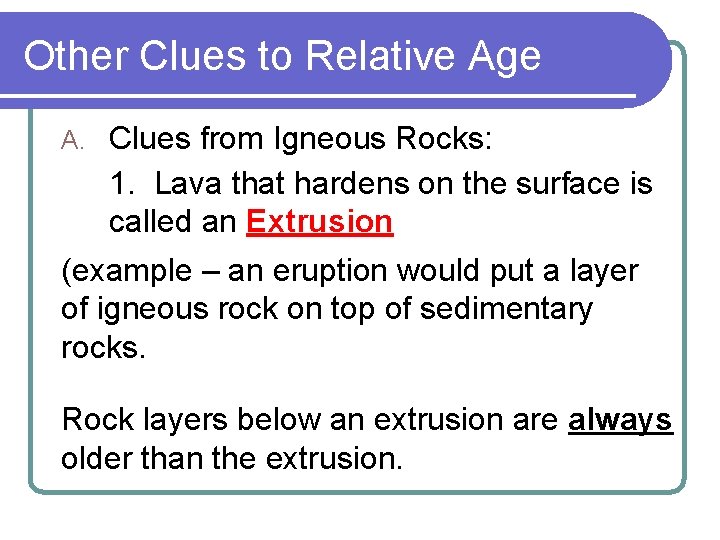
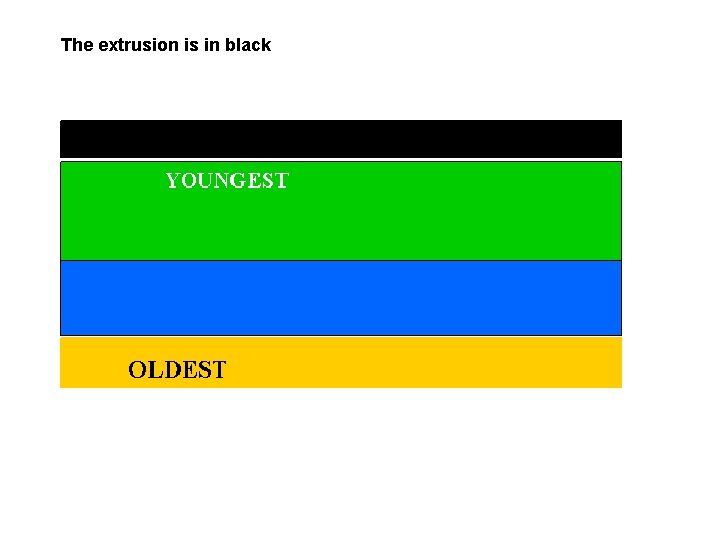
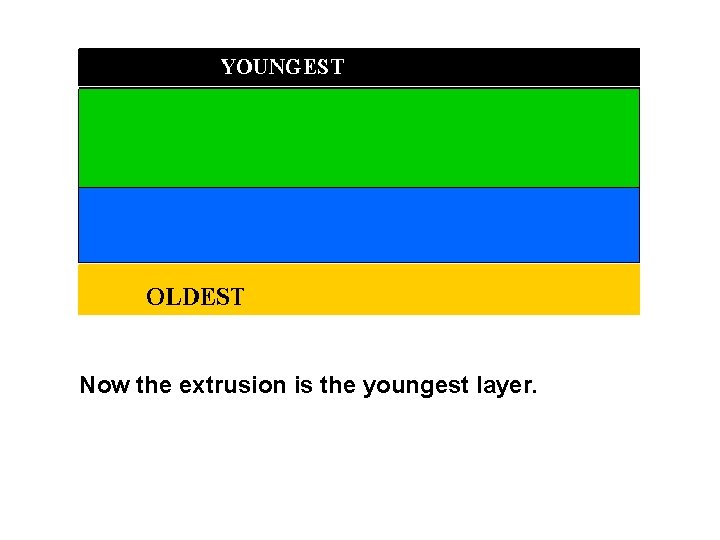
Other Clues to Relative Age A. Clues from Igneous Rocks: 1. Lava that hardens on the surface is called an Extrusion (example – an eruption would put a layer of igneous rock on top of sedimentary rocks. Rock layers below an extrusion are always older than the extrusion.
The extrusion is in black
Now the extrusion is the youngest layer.
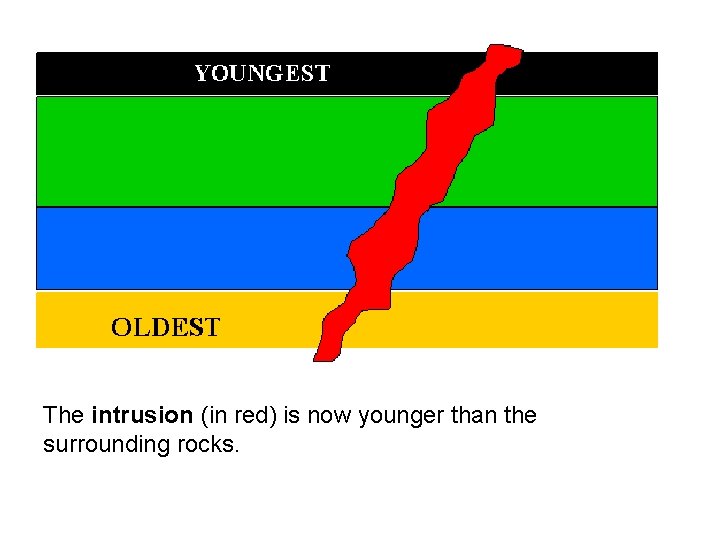
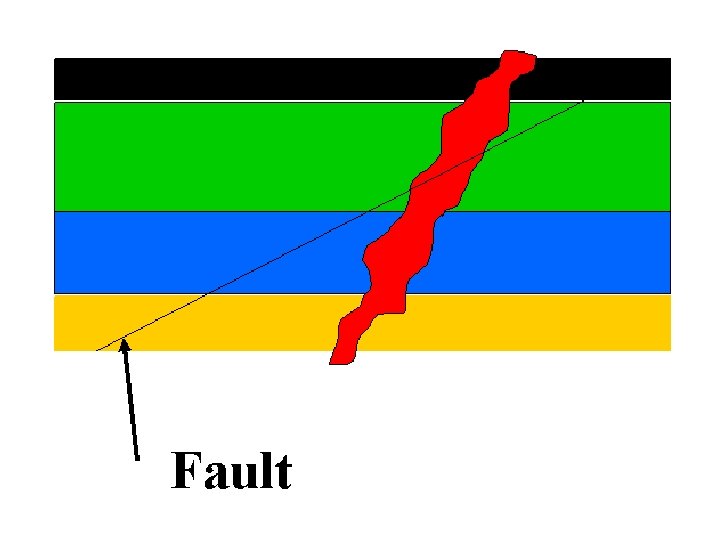
Law of Crosscutting Relationships law of cross-cutting relationships An igneous rock intrusion, fault, or other geologic feature must be younger than any rock across which it cuts.
A. Clues from Igneous Rocks: 2. Magma that cools and pushes into bodies of rock and hardens is called an Intrusion An intrusion is always younger than the rock layers around and beneath it.
Determining Relative Age • There are other clues besides the position of rock layers. Principle of cross-cutting relationships: When something cuts across a body of rock, that “something” is younger than the rock it cuts across.
The intrusion (in red) is now younger than the surrounding rocks.
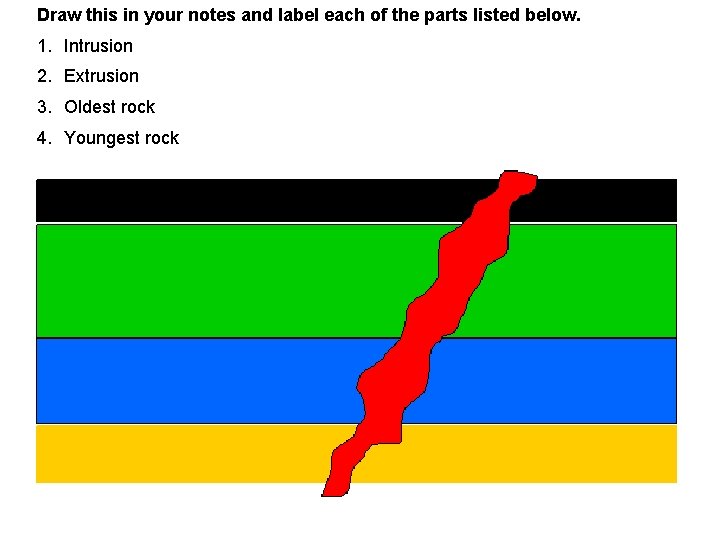
Draw this in your notes and label each of the parts listed below. 1. Intrusion 2. Extrusion 3. Oldest rock 4. Youngest rock
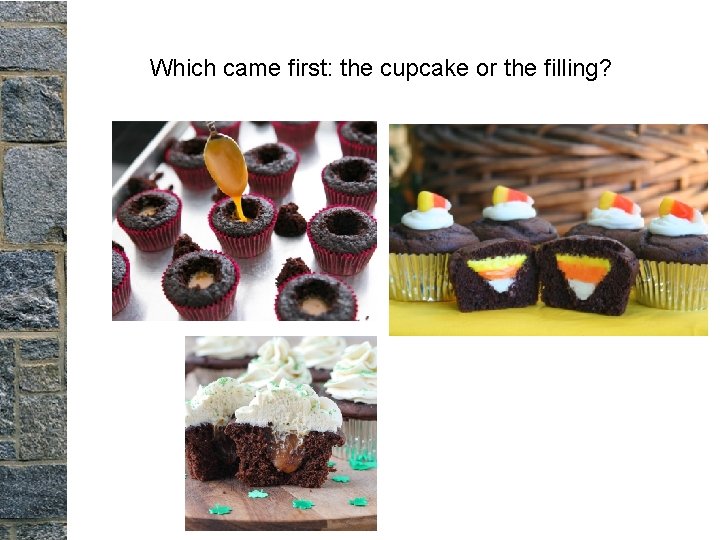
Which came first: the cupcake or the filling?
B. Clues from Faults: Fault: is a break in the Earth’s crust. • Forces inside the Earth cause movement of the rock on opposite sides of a fault. • Fault is always younger than the rock it cuts through.
GAPS IN THE GEOLOGIC RECORD - Record of sedimentary rock layers is not always complete - Deposition slowly builds layers upon layer of sedimentary rock, BUT some of these layers may erode away, exposing an older rock surface. Unconformity – is a gap in the geologic record. An unconformity shows where some rock layers have been lost because of erosion.
http: //www. classzone. com/books/earth_science/terc/co ntent/visualizations/es 2902 page 01. cfm
REVIEW Geologists use the Relative and Absolute Age of rocks to determine age. ■ ■ Using the Law of Superposition ■ Other clues are from Igneous rocks – Extrusion – Intrusion ■ Clues from Faults
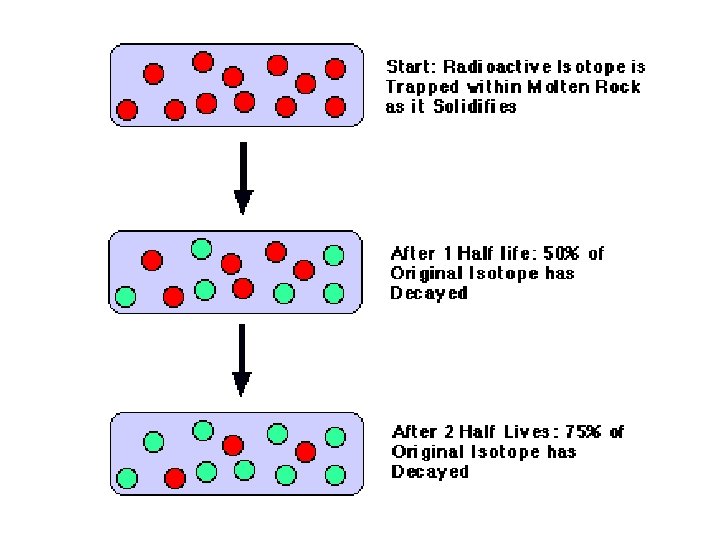
How to find absolute age of rock? • Radioactive Decay: The breakdown of a radioactive element, releasing particles and energy at a constant rate. • Half-life: The time is takes for half of the atoms of a radioactive element to decay. (constant rate) • Atom: the smallest particle of an element.
Radioactive Dating • Geologists use radioactive dating to determine the absolute ages of rocks • In radioactive dating, scientists first determine the amount of a radioactive element in a rock. • Then, they compare the amount with the amount of the stable element into which the radioactive element decays into. • They are able to tell the age based on this ratio
• http: //www. youtube. com/watch? v=ph. Ze. E 7 Att_s
FOSSILS
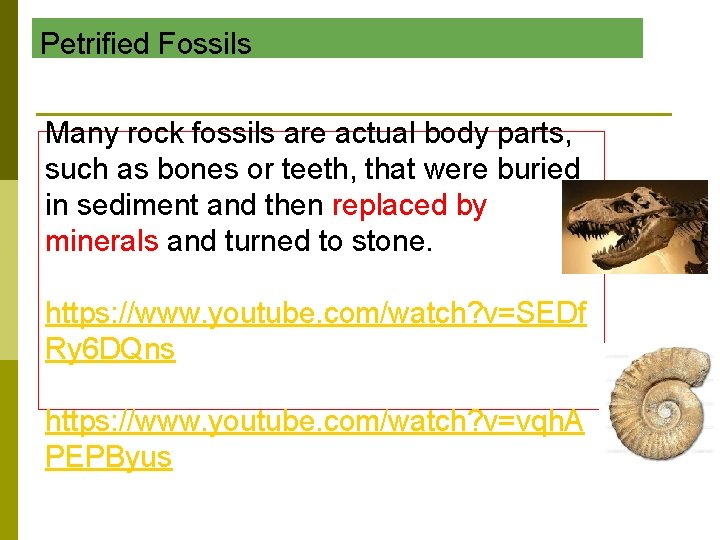
Petrified Fossils Many rock fossils are actual body parts, such as bones or teeth, that were buried in sediment and then replaced by minerals and turned to stone. https: //www. youtube. com/watch? v=SEDf Ry 6 DQns https: //www. youtube. com/watch? v=vqh. A PEPByus
Petrified Fossils • The term petrified means “turned into stone” • Petrified fossils are fossils in which minerals replace all or part of an organism. Over time minerals seep into spaces in the organisms cells and harden. Some of the original organism remains, but the minerals have hardened and preserved it. • Permineralization takes place when ground water carrying dissolved minerals infiltrates the microscopic pores and cavities in bone, wood or shell. The minerals being deposited produce stony fossils that still contain a good deal of their original solid material. Bones, teeth and many marine organisms are preserved in this way.
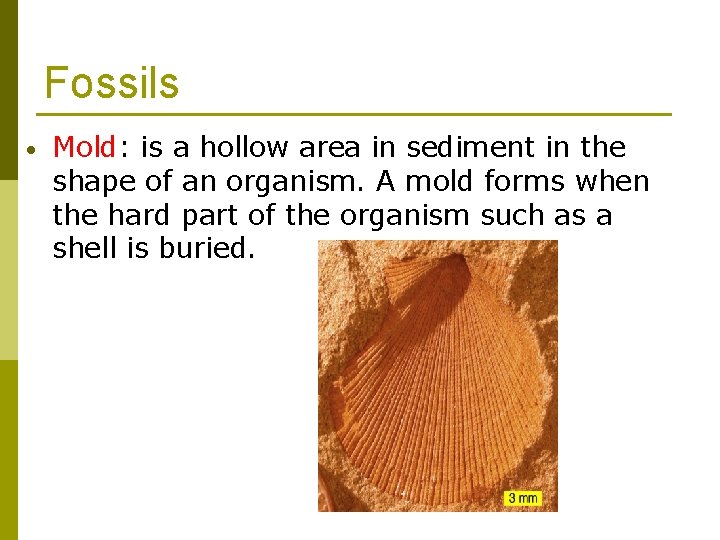
Fossils • Mold: is a hollow area in sediment in the shape of an organism. A mold forms when the hard part of the organism such as a shell is buried.
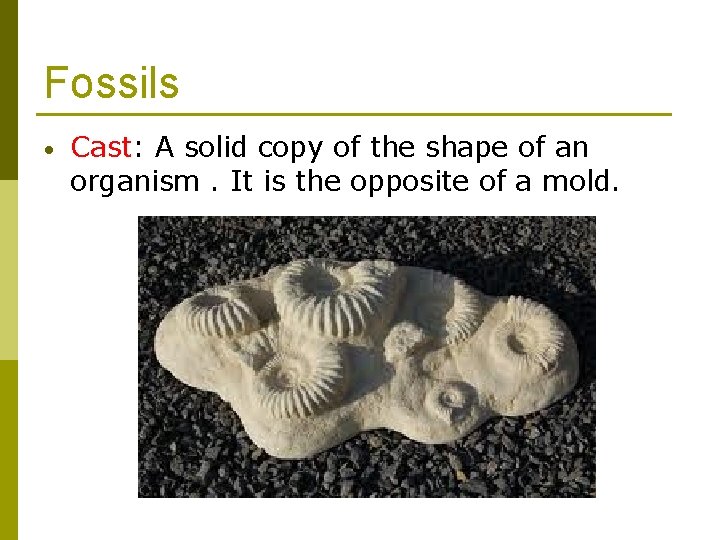
Fossils • Cast: A solid copy of the shape of an organism. It is the opposite of a mold.
Original Preserved Fossils that are the actual bodies or body parts of organisms are called original remains. Usually, soft parts of dead animals and plants decay and disappear. But soft parts can become fossil evidence if they are sealed in a substance that keeps out air and tiny organisms, such as ice, tar, and amber
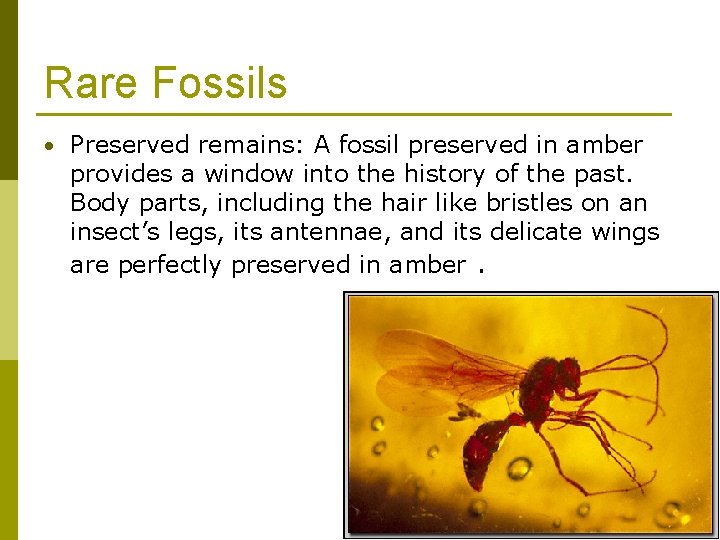
Rare Fossils • Preserved remains: A fossil preserved in amber provides a window into the history of the past. Body parts, including the hair like bristles on an insect’s legs, its antennae, and its delicate wings are perfectly preserved in amber.
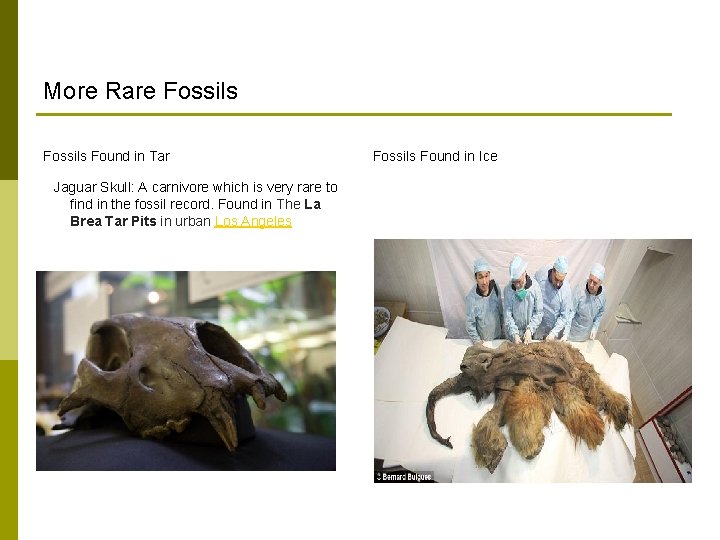
More Rare Fossils Found in Tar Jaguar Skull: A carnivore which is very rare to find in the fossil record. Found in The La Brea Tar Pits in urban Los Angeles Fossils Found in Ice
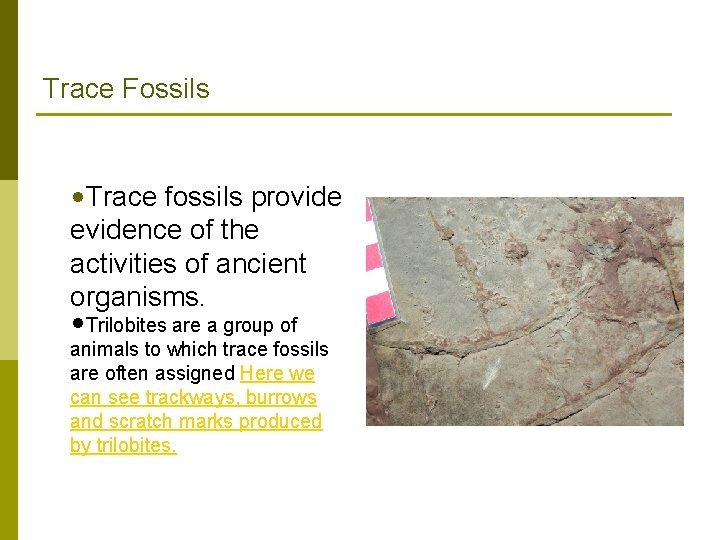
Trace Fossils • Trace fossils provide evidence of the activities of ancient organisms. • Trilobites are a group of animals to which trace fossils are often assigned Here we can see trackways, burrows and scratch marks produced by trilobites.
USING FOSSILS TO DATE ROCKS To date rock layers, geologists first give a relative age to a layer of rock at one location. THEN they can give the same age to matching layers of rock at other locations. Certain fossils, called Index Fossils help geologist match rock layers. INDEX FOSSILS – Fossils of widely distributed organisms that lived during only one short period.
A good index fossil is one with four characteristics: It is. . . 1. distinctive 2. widespread 3. abundant 4. limited in geologic time
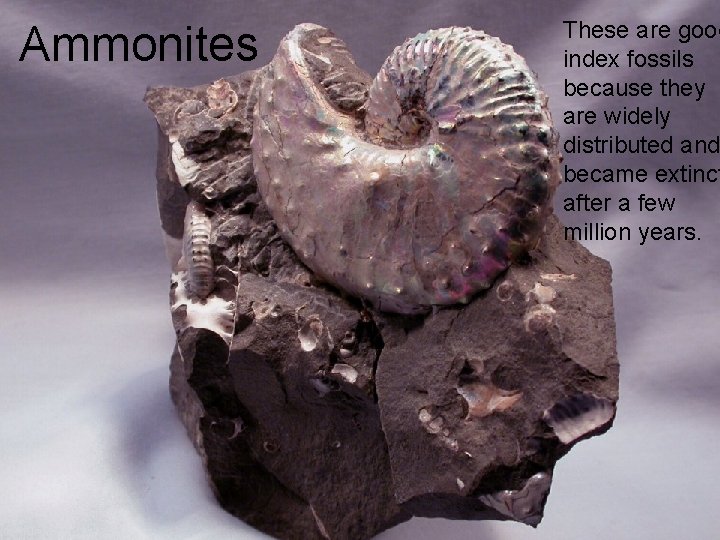
Ammonites These are good index fossils because they are widely distributed and became extinct after a few million years.
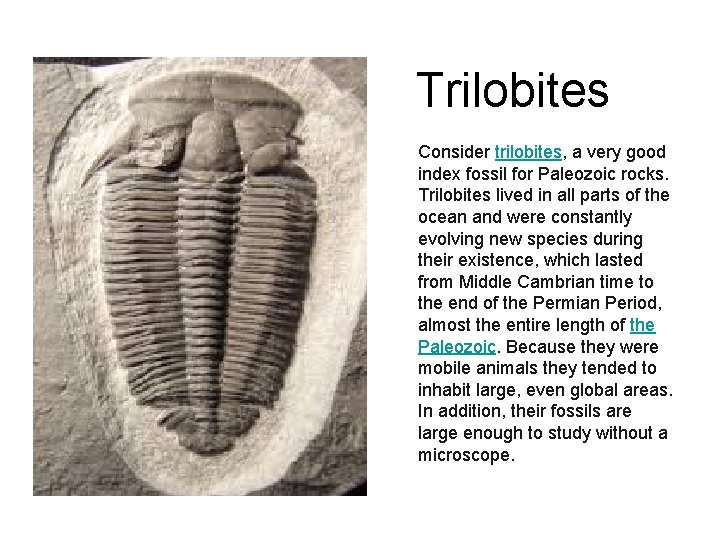
Trilobites Consider trilobites, a very good index fossil for Paleozoic rocks. Trilobites lived in all parts of the ocean and were constantly evolving new species during their existence, which lasted from Middle Cambrian time to the end of the Permian Period, almost the entire length of the Paleozoic. Because they were mobile animals they tended to inhabit large, even global areas. In addition, their fossils are large enough to study without a microscope.
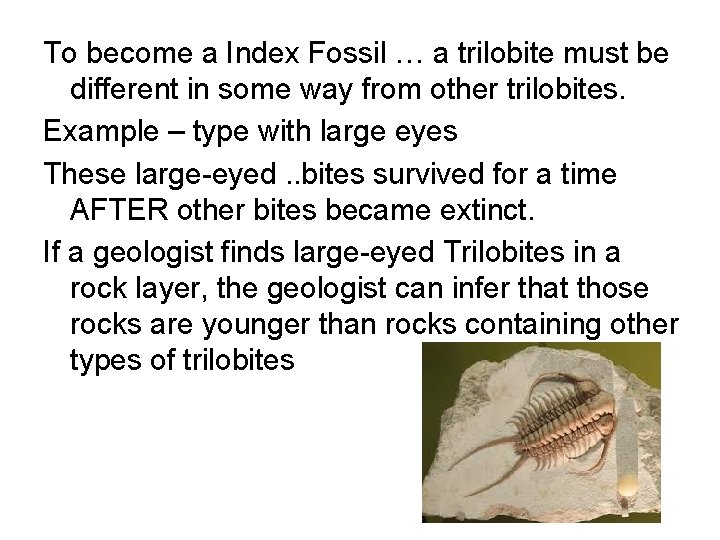
To become a Index Fossil … a trilobite must be different in some way from other trilobites. Example – type with large eyes These large-eyed. . bites survived for a time AFTER other bites became extinct. If a geologist finds large-eyed Trilobites in a rock layer, the geologist can infer that those rocks are younger than rocks containing other types of trilobites
Example using Silly Bandz • • Points of agreement: Silly Bandz were popular between July-Oct 2010. Silly Bandz could be bought anywhere during that time. By Dec 2010, it had become very difficult to get Silly Bandz. Using most people’s standards, by December 2010 it had become “silly” to wear Silly Bandz.
• Now let’s assume that I open my brother’s dresser today and find a pile of Silly Bandz. When can I assume that he put them there? * • Let’s travel 3 years into the future. My brother is finally cleaning out his dresser. He finds a couple of Silly Bandz sandwiched between a red shirt (bottom) and a blue shirt (top). – What is the relative age of the red shirt? How do you know? * • Finally, let’s imagine that Brendan finds an undated letter from John with a brand new packet of Silly Bandz. Can he accurately estimate its date? Why or why not. *
• Back to geology, index fossils (Silly Bandz) help geologists match rock layers, and helping to determine the relative ages of the rocks in which they occur. • To be useful as an index fossil, a fossil must be widely distributed and represent a type of organism that existed only briefly. Why? *
Relative Dating Activity Procedure Set A: 1) Spread the cards with the nonsense syllables on the table and determine the correct sequence of the eight cards by comparing letters that are common to individual cards and, therefore, overlap. The first card in the sequence has "Card 1, Set A" in the lower left-hand corner and represents the bottom of the sequence. If the letters "T" and "C" represent fossils in the oldest rock layer, they are the oldest fossils, or the first fossils formed in the past for this sequence of rock layers. 2. Now, look for a card that has either a "T" or "C" written on it. Since this card has a common letter with the first card, it must go on top of the "TC" card. The fossils represented by the letters on this card are "younger" than the "T" or "C" fossils on the "TC" card which represents fossils in the oldest rock layer. Sequence the remaining cards by using the same process. When you finish, you should have a vertical stack of cards with the top card representing the youngest fossils of this rock sequence and the "TC" card at the bottom of the stack representing the oldest fossils.
Relative Dating Activity 2 Procedure Set B: 1) Carefully examine the second set of cards which have sketches of fossils on them. Each card represents a particular rock layer with a collection of fossils that are found in that particular rock stratum. All of the fossils represented would be found in sedimentary rocks of marine origin. Figure 2 -A gives some background information on the individual fossils. 2) The oldest rock layer is marked with the letter "M" in the lower left-hand corner. The letters on the other cards have no significance to the sequencing procedure and should be ignored at this time. Find a rock layer that has at least one of the fossils you found in the oldest rock layer. This rock layer would be younger as indicated by the appearance of new fossils in the rock stratum. Keep in mind that extinction is forever. Once an organism disappears from the sequence it cannot reappear later. Use this information to sequence the cards in a vertical stack of fossils in rock strata. Arrange them from oldest to youngest with the oldest layer on the bottom and the youngest on top.
Where do we find fossils? • Among the three major types of rock, fossils are most commonly found in sedimentary rock. Unlike most igneous and metamorphic rocks, sedimentary rocks form at temperatures and pressures that do not destroy fossil remnants. • Most fossils form when living things die and are buried by sediments. The sediment slowly hardens into rock and preserves the shapes of organisms
What do fossils provide evidence of? • The fossil record provides evidence about… • The history of life on Earth • The history of past environments on Earth • How groups of organisms have changed over time • The past climate of a region • How Earth’s surface has changed
Evidence Of Evolution Scientific Theory: Is a well-tested concept that explains a wide range of observations Evolution: The gradual change in living things over long periods of time due to natural selection The fossil record provides evidence of this. Younger rocks contain fossils of more complex organism and older rocks contain fossils of simpler organisms.