
Evidence for the Effectiveness of Individual Placement and
- Slides: 48
Evidence for the Effectiveness of Individual Placement and Support Model of Supported Employment Updated 4 -18 -18 by Gary Bond 1
Why Focus on Work? • Most clients want to work! • Most clients see work as a key part of recovery • Being productive = Basic human need • In most societies, typical adult role • Working can be a way out of poverty • Working may prevent entry into disability system 2
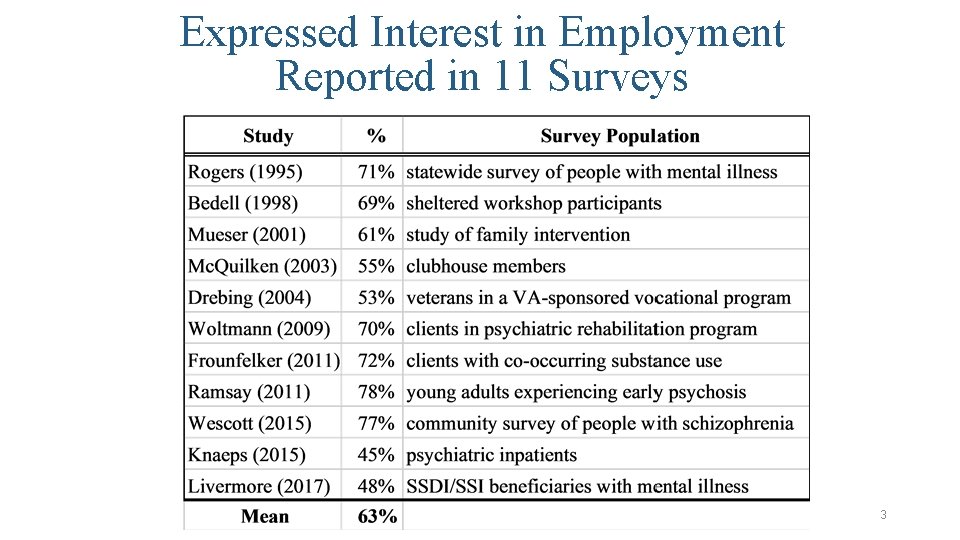
Expressed Interest in Employment Reported in 11 Surveys 3
Need for IPS • Over 60% clients with severe mental illness want to work, but less than 20% employed. • Only 2% of people who could benefit have access to effective employment services. 4
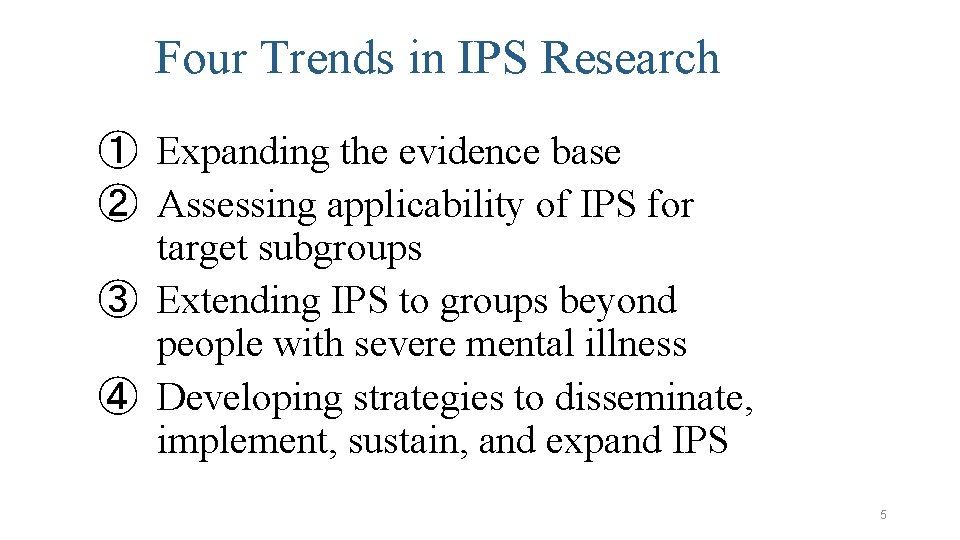
Four Trends in IPS Research ① Expanding the evidence base ② Assessing applicability of IPS for target subgroups ③ Extending IPS to groups beyond people with severe mental illness ④ Developing strategies to disseminate, implement, sustain, and expand IPS 5
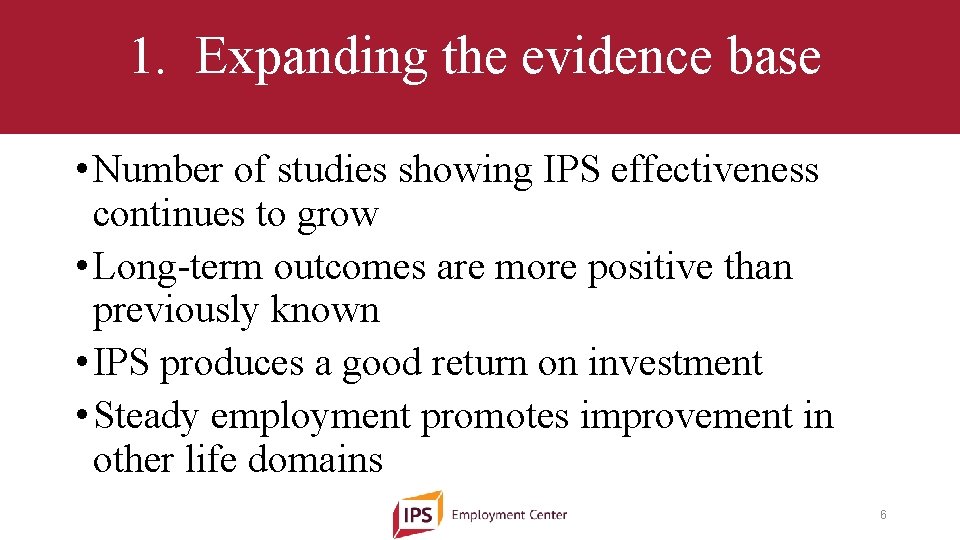
1. Expanding the evidence base • Number of studies showing IPS effectiveness continues to grow • Long-term outcomes are more positive than previously known • IPS produces a good return on investment • Steady employment promotes improvement in other life domains 6
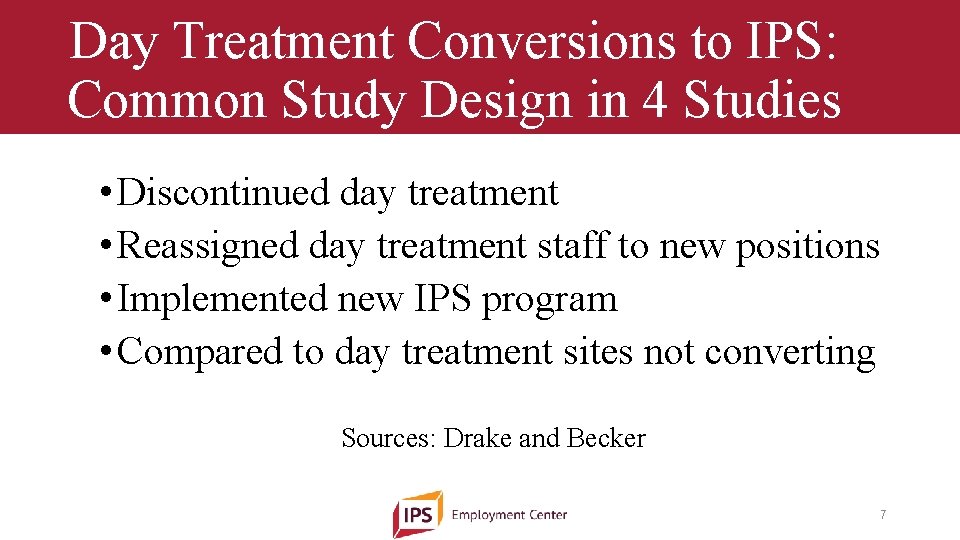
Day Treatment Conversions to IPS: Common Study Design in 4 Studies • Discontinued day treatment • Reassigned day treatment staff to new positions • Implemented new IPS program • Compared to day treatment sites not converting Sources: Drake and Becker 7
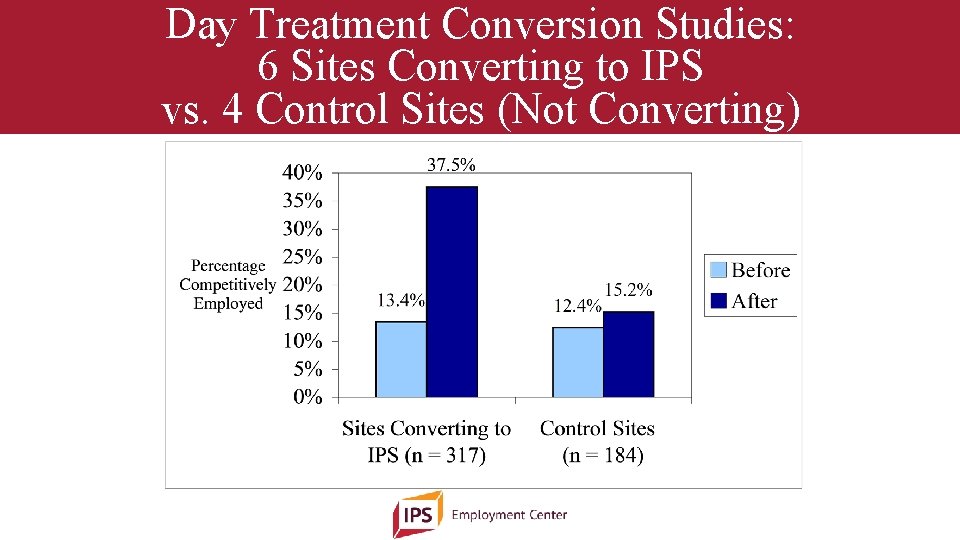
Day Treatment Conversion Studies: 6 Sites Converting to IPS vs. 4 Control Sites (Not Converting)
Similar Results in All Day Treatment Conversions • Large increase in employment rates • No negative outcomes (e. g. , relapses) • Clients, families, staff liked change • Most former day treatment clients spent more time in community, even those not working • Resulted in cost savings 9
25 Randomized Controlled Trials (RCTs) of Individual Placement and Support (IPS) • Best evidence available on effectiveness • RCTs are gold standard in medical research (Drake et al. , 2016) 10
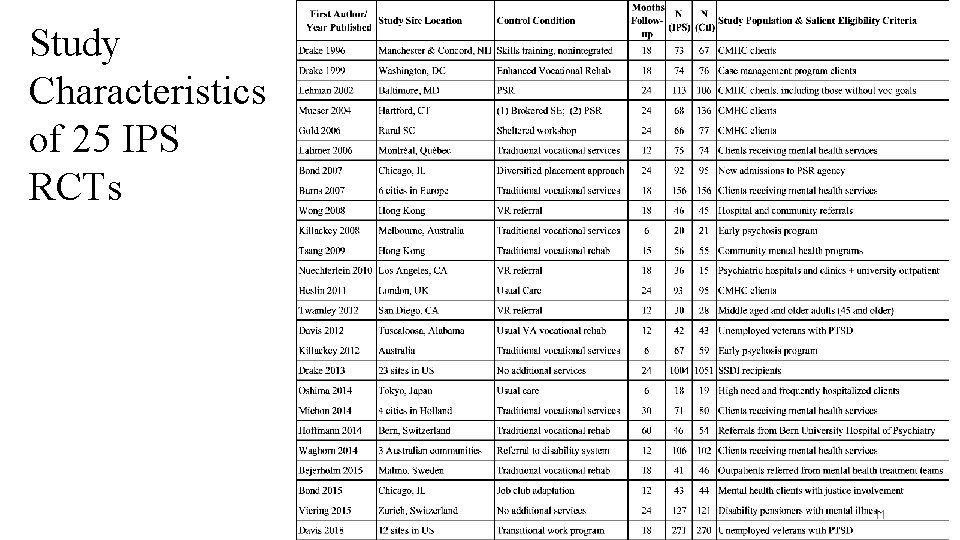
Study Characteristics of 25 IPS RCTs 11
Characteristics of RCTs of IPS • 12 U. S. studies and 13 outside U. S. • In most studies, participants were already enrolled in mental health services prior to entering study • In most studies the control group received services as usual (sometimes best practices) • 2/3 studies had at least 18 -month follow-up
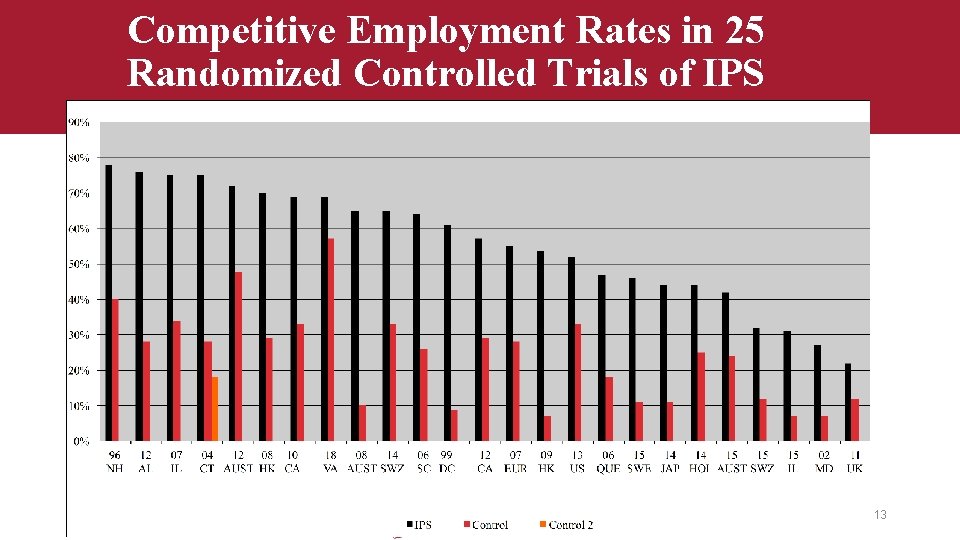
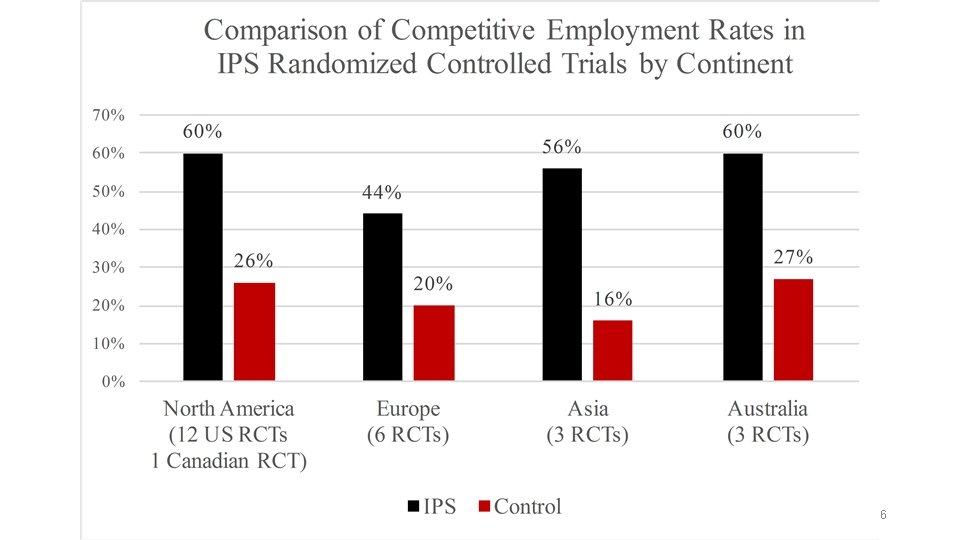
Competitive Employment Rates in 25 Randomized Controlled Trials of IPS 13
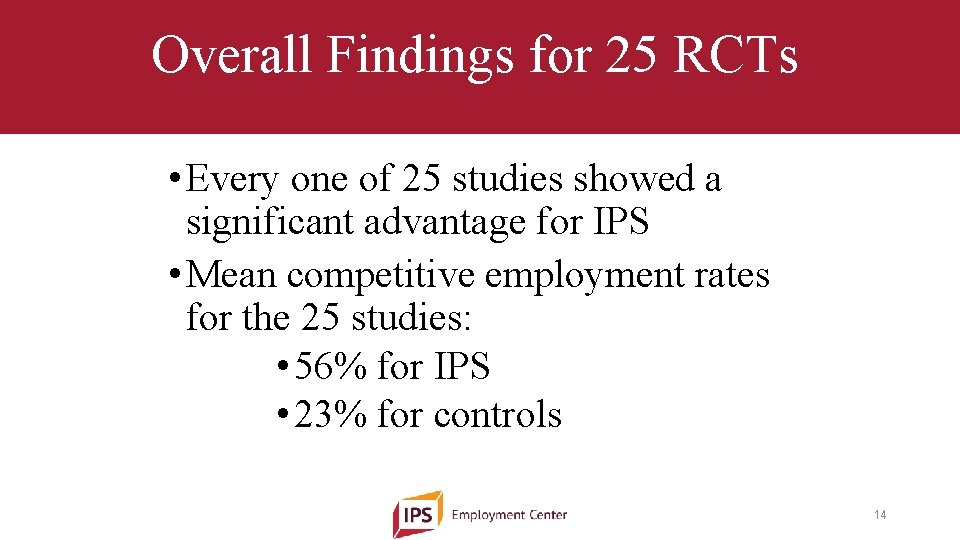
Overall Findings for 25 RCTs • Every one of 25 studies showed a significant advantage for IPS • Mean competitive employment rates for the 25 studies: • 56% for IPS • 23% for controls 14
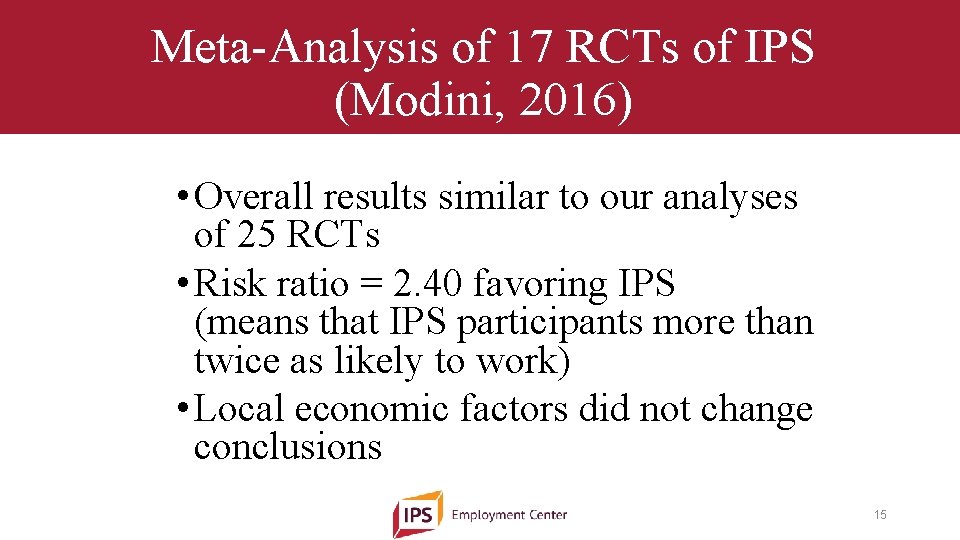
Meta-Analysis of 17 RCTs of IPS (Modini, 2016) • Overall results similar to our analyses of 25 RCTs • Risk ratio = 2. 40 favoring IPS (means that IPS participants more than twice as likely to work) • Local economic factors did not change conclusions 15
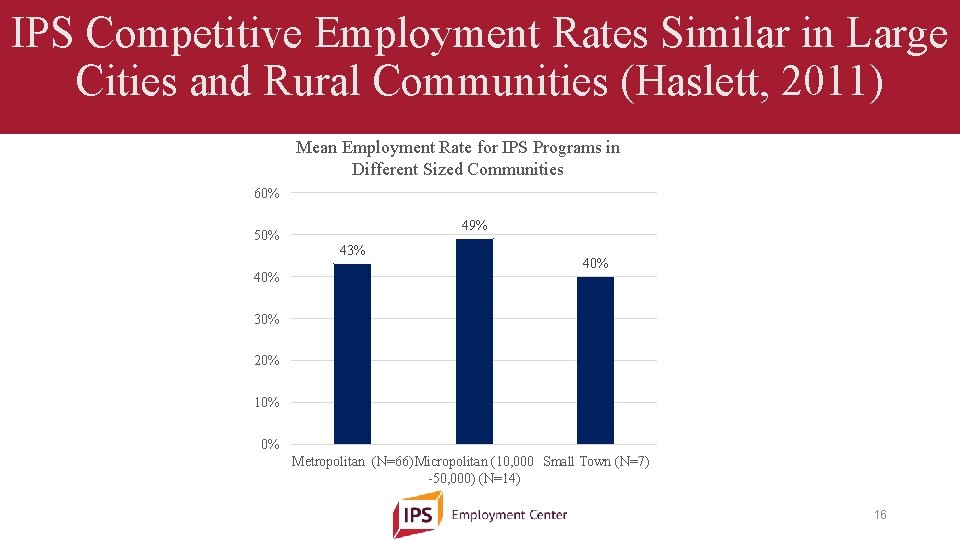
IPS Competitive Employment Rates Similar in Large Cities and Rural Communities (Haslett, 2011) Mean Employment Rate for IPS Programs in Different Sized Communities 60% 50% 49% 43% 40% 30% 20% 10% 0% Metropolitan (N=66)Micropolitan (10, 000 Small Town (N=7) -50, 000) (N=14) 16
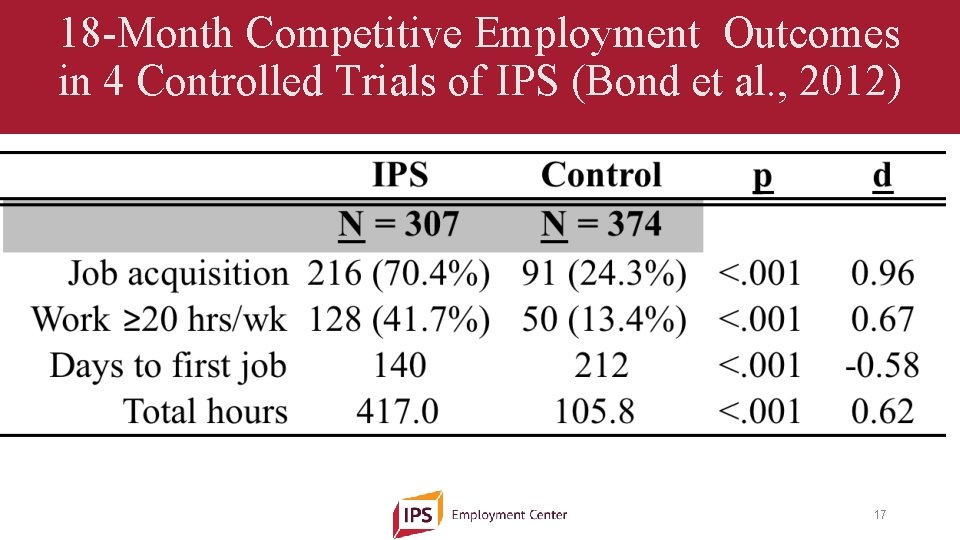
18 -Month Competitive Employment Outcomes in 4 Controlled Trials of IPS (Bond et al. , 2012) 17
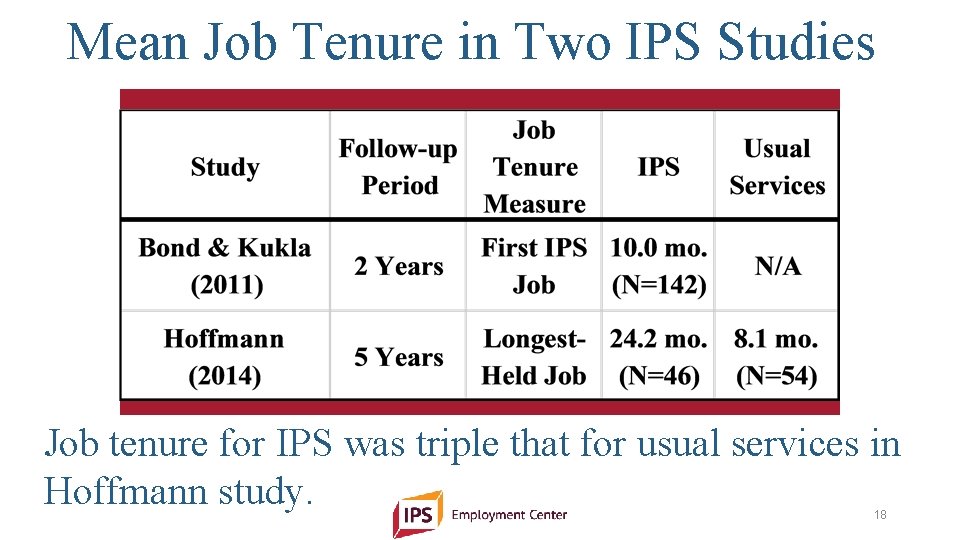
Mean Job Tenure in Two IPS Studies Job tenure for IPS was triple that for usual services in Hoffmann study. 18
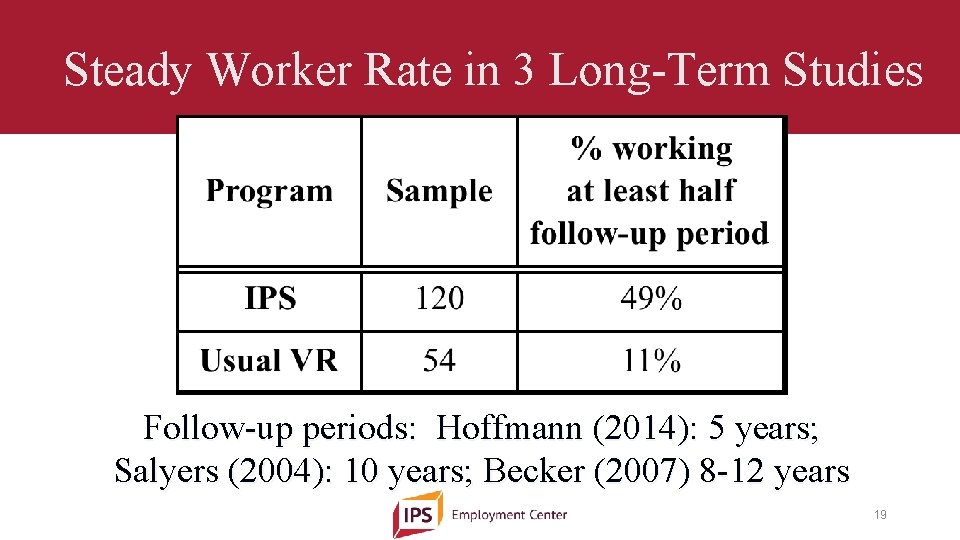
Steady Worker Rate in 3 Long-Term Studies Follow-up periods: Hoffmann (2014): 5 years; Salyers (2004): 10 years; Becker (2007) 8 -12 years 19
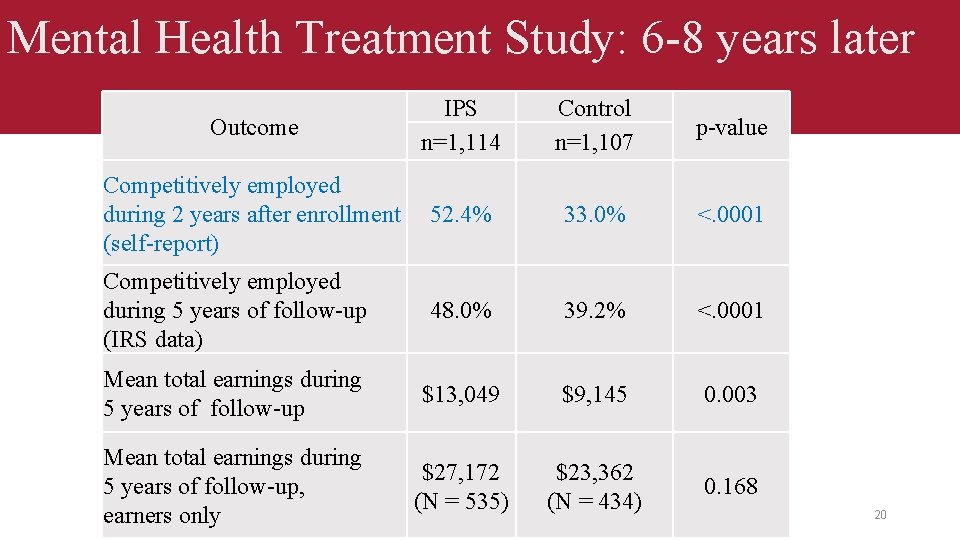
Mental Health Treatment Study: 6 -8 years later Control n=1, 107 p-value Competitively employed 52. 4% during 2 years after enrollment (self-report) 33. 0% <. 0001 Competitively employed 48. 0% during 5 years of follow-up (IRS data) 39. 2% <. 0001 Mean total earnings during $13, 049 5 years of follow-up $9, 145 0. 003 Outcome IPS n=1, 114 Mean total earnings during $27, 172 $23, 362 0. 168 5 years of follow-up, (N = 535) (N = 434) earners only 20
Long-Term Outcomes in MHTS: Significance of Findings (Baller, 2017) • Largest IPS study ever conducted • Long-term outcomes based on objective administrative data from IRS • Data set is 99% complete – virtually no missing data • Strong support that IPS effects are enduring after participants end IPS services 21
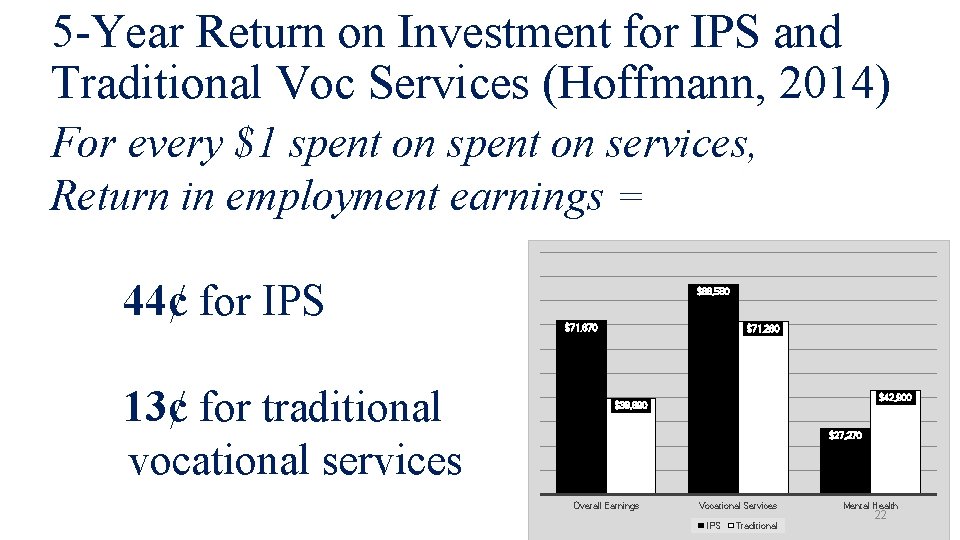
5 -Year Return on Investment for IPS and Traditional Voc Services (Hoffmann, 2014) For every $1 spent on services, Return in employment earnings = 44¢ for IPS 13¢ for traditional vocational services $86, 580 $71, 670 $71, 260 $42, 900 $39, 690 Overall Earnings Vocational Services IPS Traditional $27, 270 Mental Health 22
Impact of IPS on Mental Health and Well-Being • In most studies, IPS has little or no direct impact on mental health and well-being • One exception: In some studies, IPS clients have reduced use of mental health services, especially psychiatric hospitalizations (Kukla & Bond, 2013) 23
Impact of Competitive Employment on Mental Health and Well-Being In general population: • Work is beneficial for employee well-being, if: • good-quality supervision • positive workplace environment • Unemployment has consistently negative effects Modini et al. (2016) 24
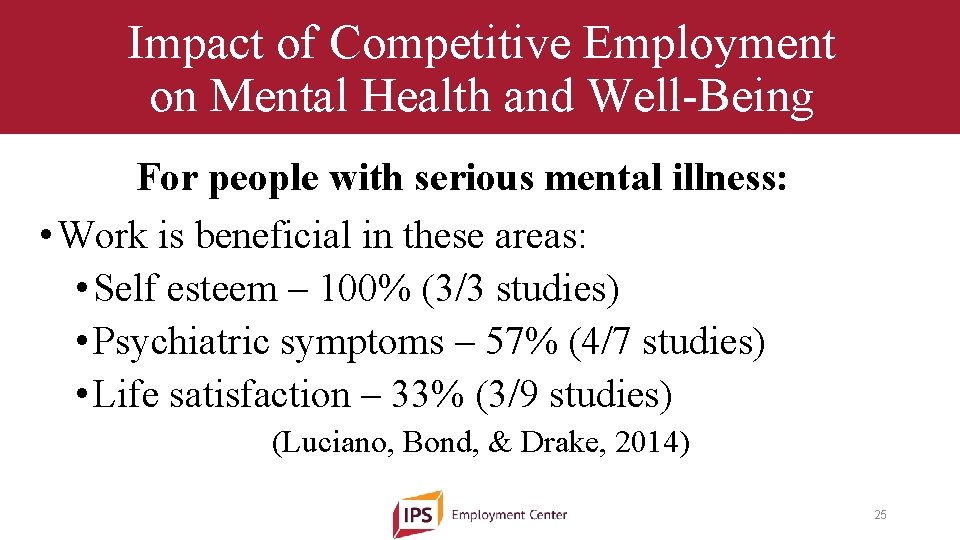
Impact of Competitive Employment on Mental Health and Well-Being For people with serious mental illness: • Work is beneficial in these areas: • Self esteem – 100% (3/3 studies) • Psychiatric symptoms – 57% (4/7 studies) • Life satisfaction – 33% (3/9 studies) (Luciano, Bond, & Drake, 2014) 25
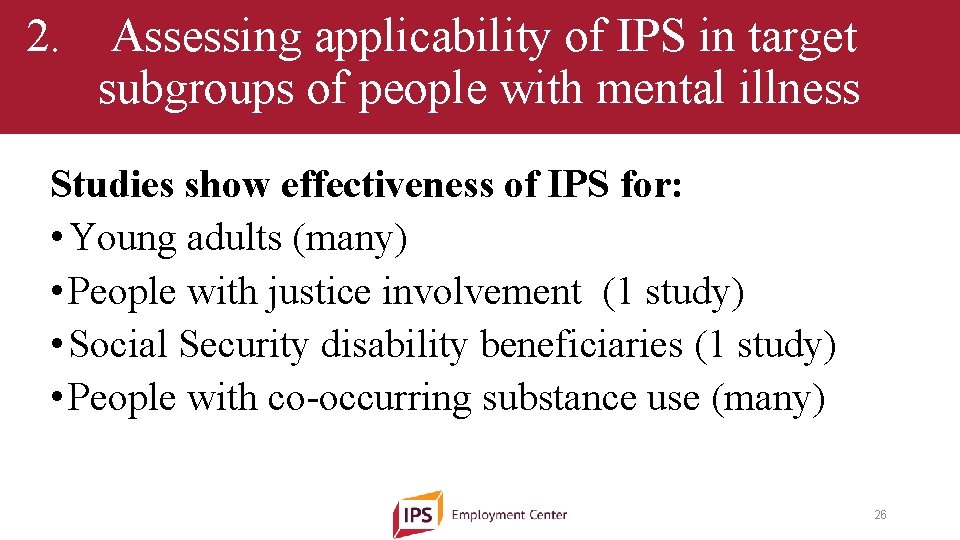
2. Assessing applicability of IPS in target subgroups of people with mental illness Studies show effectiveness of IPS for: • Young adults (many) • People with justice involvement (1 study) • Social Security disability beneficiaries (1 study) • People with co-occurring substance use (many) 26
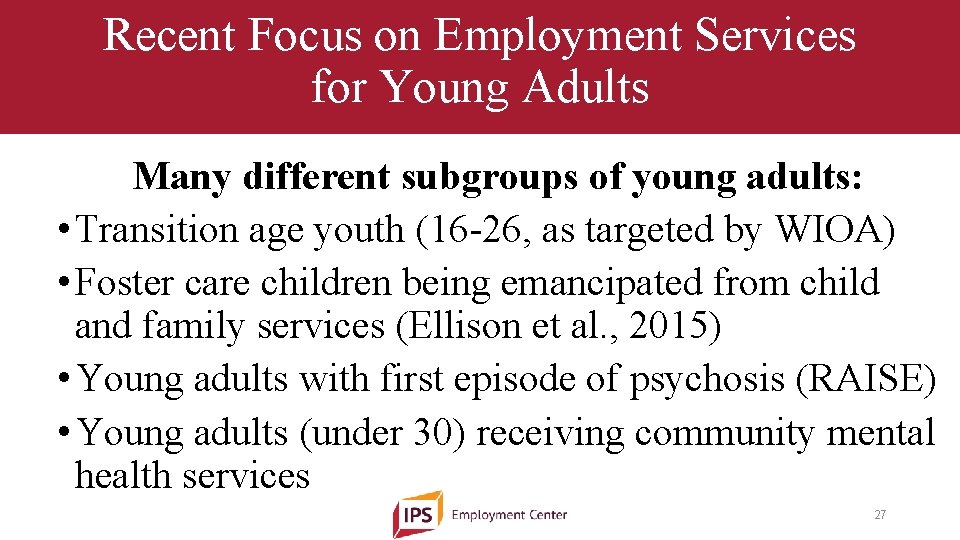
Recent Focus on Employment Services for Young Adults Many different subgroups of young adults: • Transition age youth (16 -26, as targeted by WIOA) • Foster care children being emancipated from child and family services (Ellison et al. , 2015) • Young adults with first episode of psychosis (RAISE) • Young adults (under 30) receiving community mental health services 27
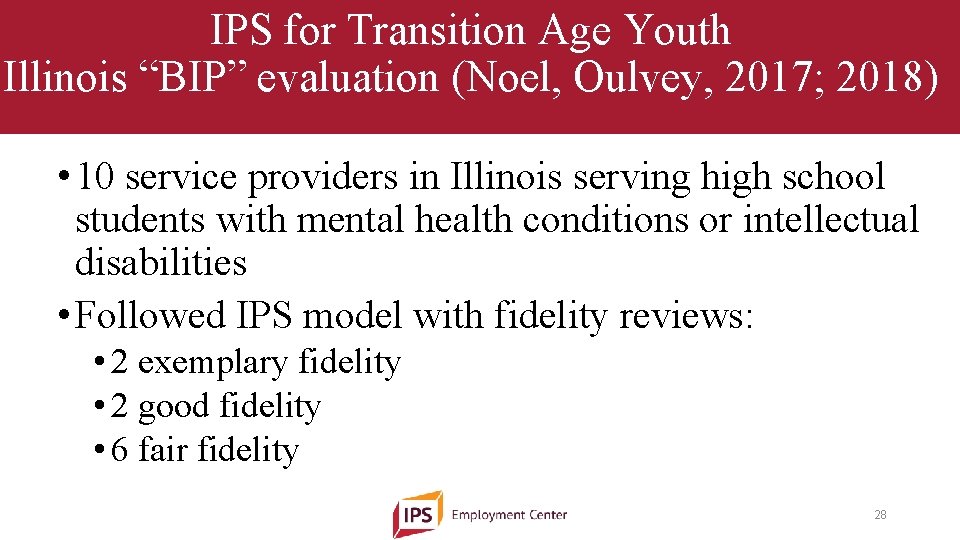
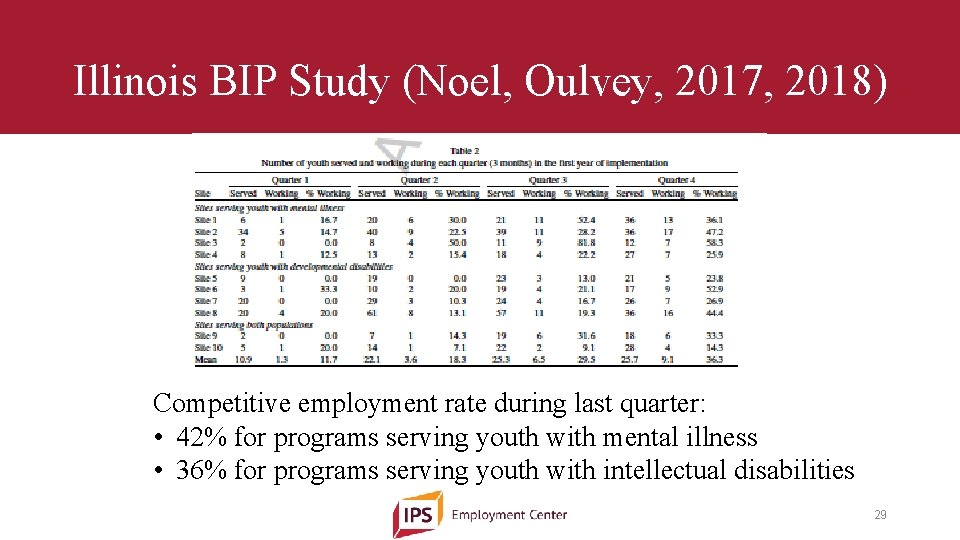
IPS for Transition Age Youth Illinois “BIP” evaluation (Noel, Oulvey, 2017; 2018) • 10 service providers in Illinois serving high school students with mental health conditions or intellectual disabilities • Followed IPS model with fidelity reviews: • 2 exemplary fidelity • 2 good fidelity • 6 fair fidelity 28
Illinois BIP Study (Noel, Oulvey, 2017, 2018) Competitive employment rate during last quarter: • 42% for programs serving youth with mental illness • 36% for programs serving youth with intellectual disabilities 29
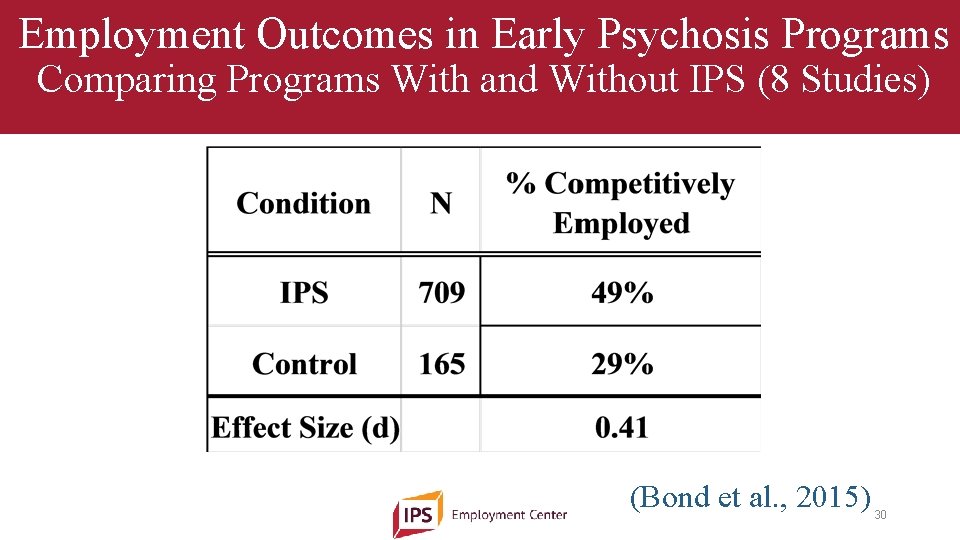
Employment Outcomes in Early Psychosis Programs Comparing Programs With and Without IPS (8 Studies) (Bond et al. , 2015) 30
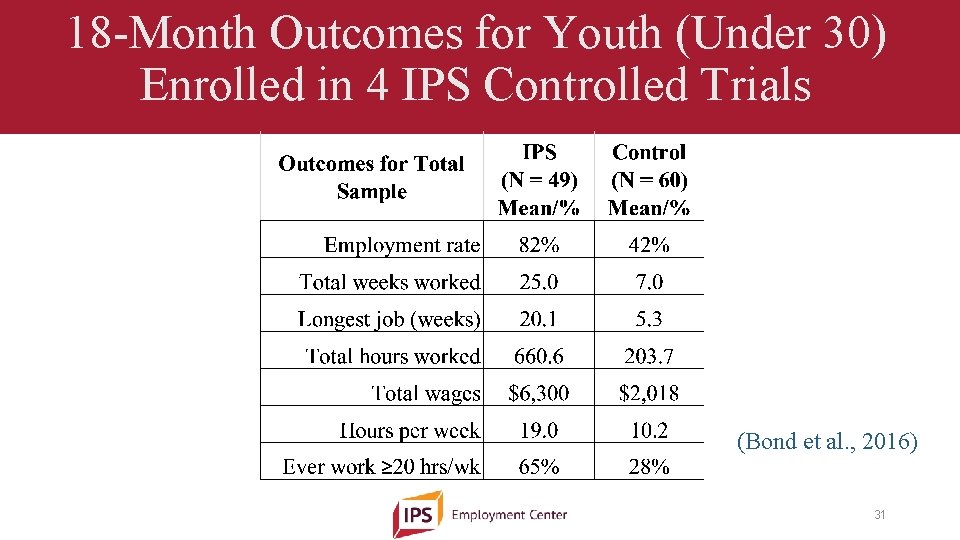
18 -Month Outcomes for Youth (Under 30) Enrolled in 4 IPS Controlled Trials (Bond et al. , 2016) 31
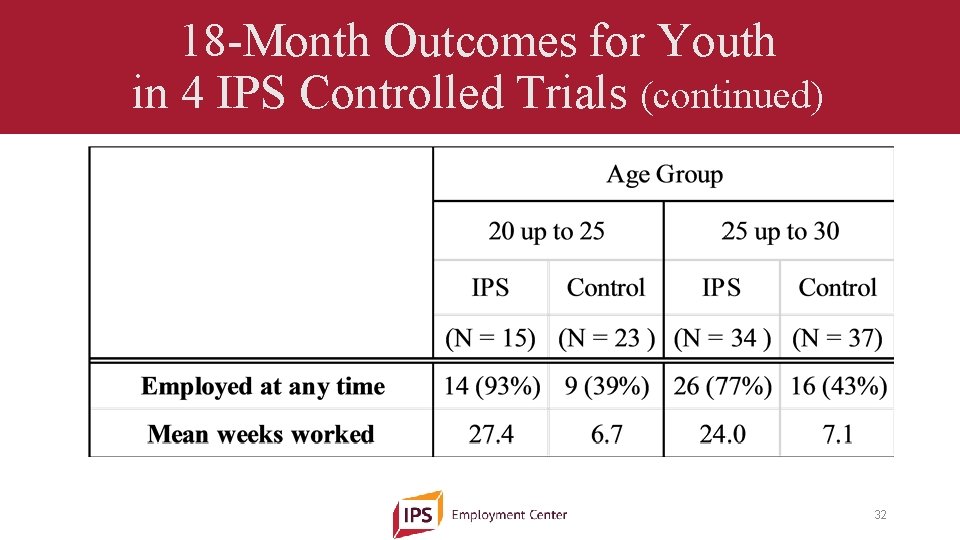
18 -Month Outcomes for Youth in 4 IPS Controlled Trials (continued) 32
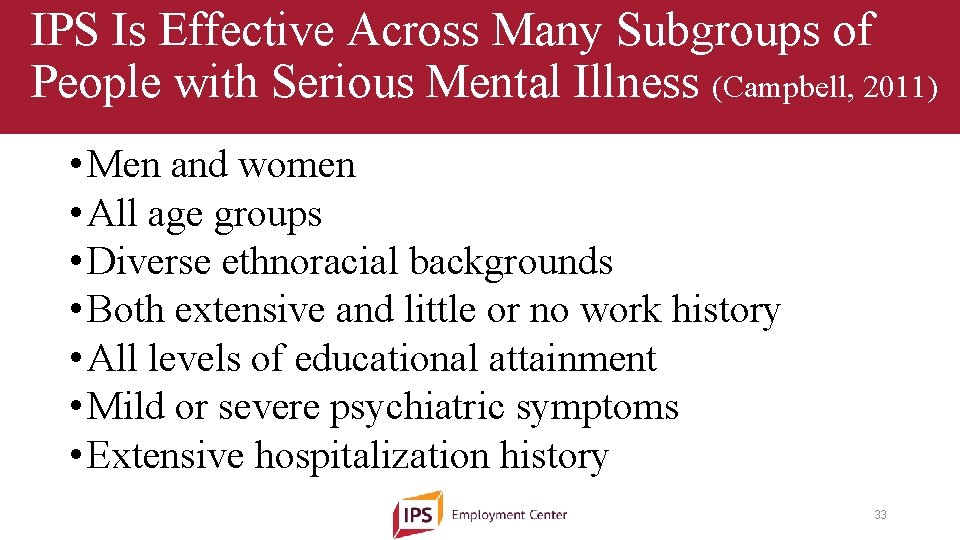
IPS Is Effective Across Many Subgroups of People with Serious Mental Illness (Campbell, 2011) • Men and women • All age groups • Diverse ethnoracial backgrounds • Both extensive and little or no work history • All levels of educational attainment • Mild or severe psychiatric symptoms • Extensive hospitalization history 33
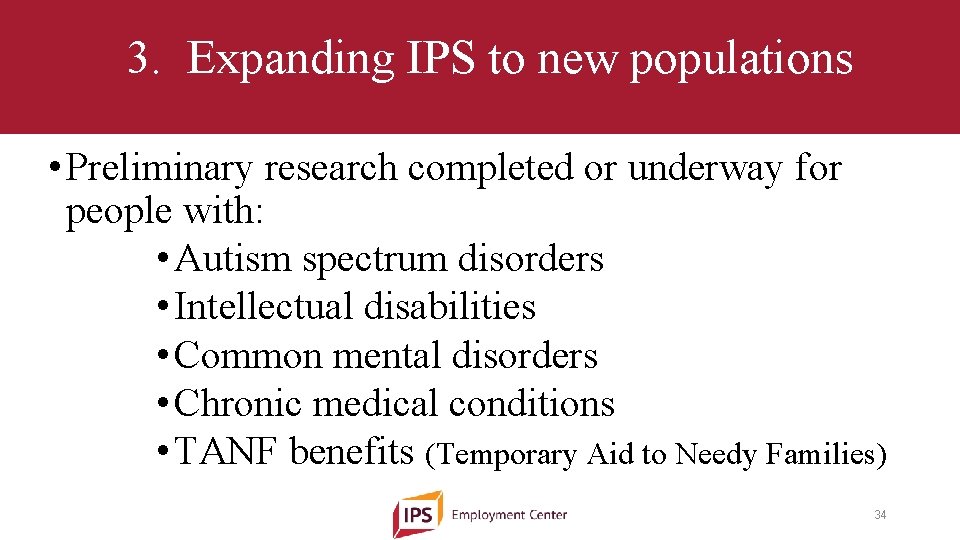
3. Expanding IPS to new populations • Preliminary research completed or underway for people with: • Autism spectrum disorders • Intellectual disabilities • Common mental disorders • Chronic medical conditions • TANF benefits (Temporary Aid to Needy Families) 34
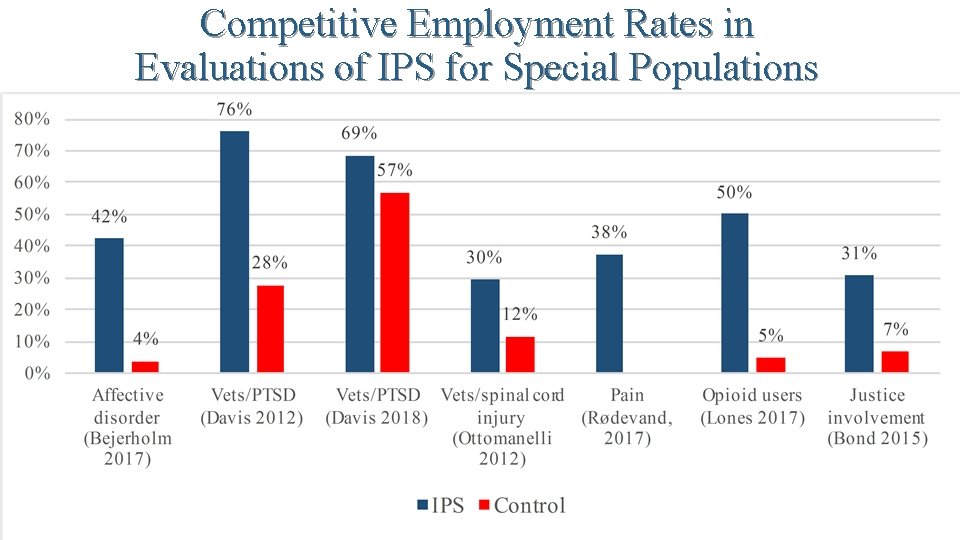
Competitive Employment Rates in Evaluations of IPS for Special Populations 35
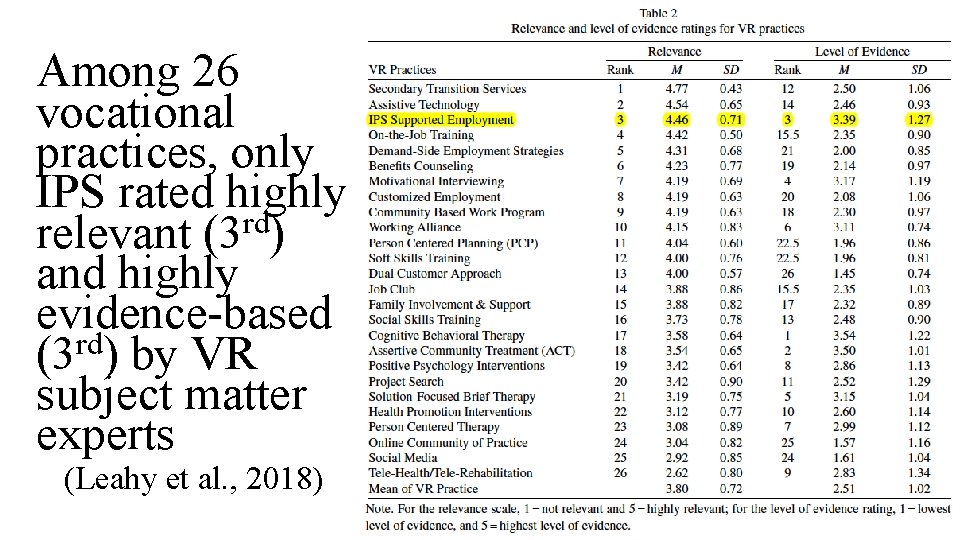
Among 26 vocational practices, only IPS rated highly relevant (3 rd) and highly evidence-based rd (3 ) by VR subject matter experts (Leahy et al. , 2018) 36
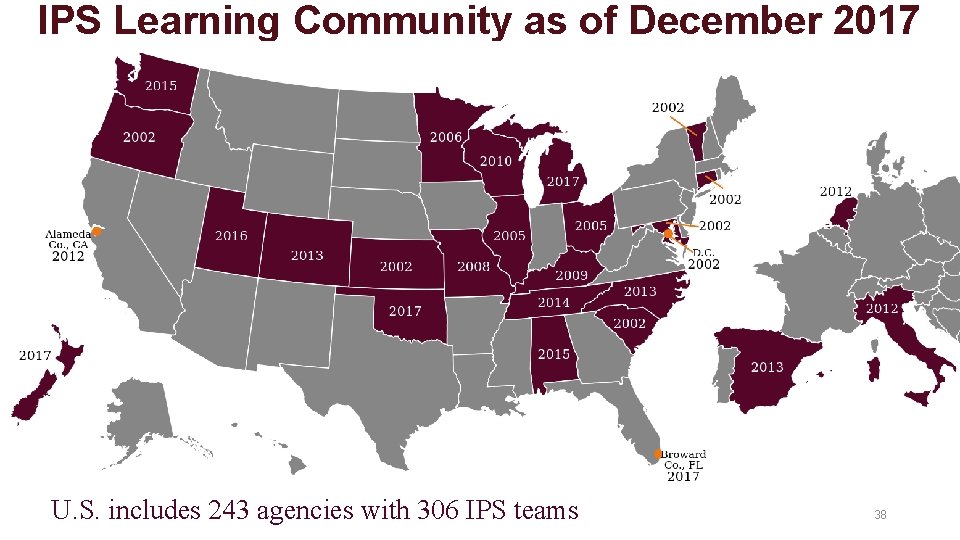
4. Developing strategies to disseminate, implement, sustain, and expand IPS International IPS Learning Community 23 states/regions in US 3 European countries and New Zealand 37
IPS Learning Community as of December 2017 U. S. includes 243 agencies with 306 IPS teams 38
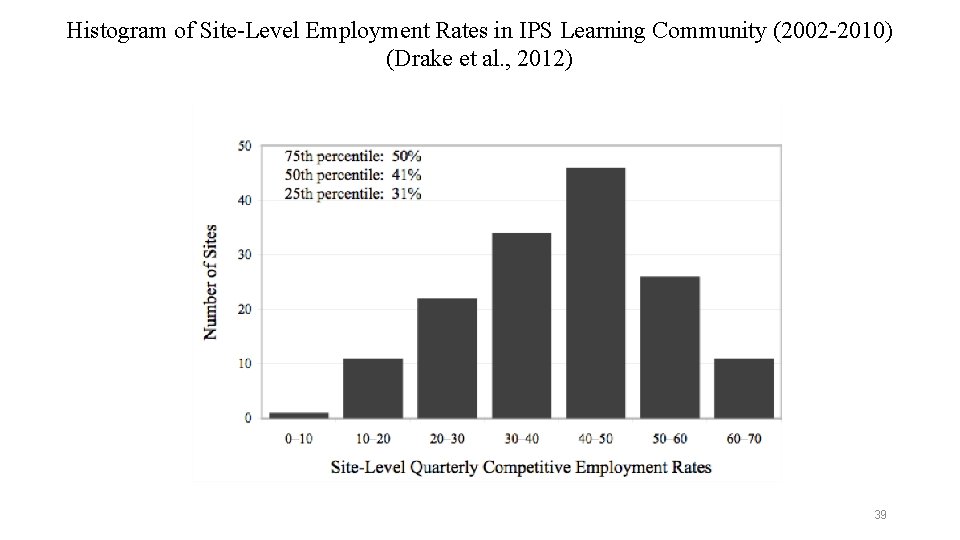
Histogram of Site-Level Employment Rates in IPS Learning Community (2002 -2010) (Drake et al. , 2012) 39
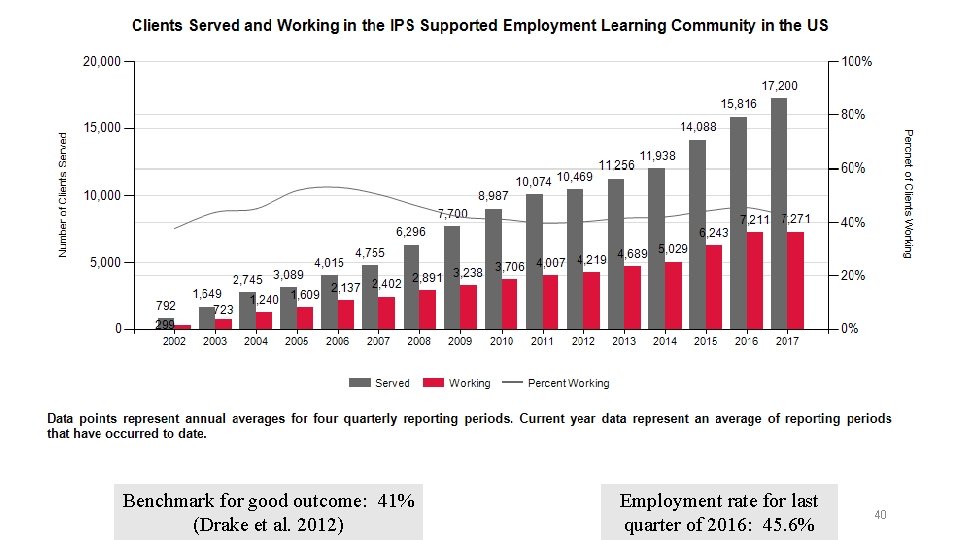
Employment rate for last quarter: 45. 6% Benchmark for good outcome: 41% (Drake et al. 2012) Employment rate for last quarter of 2016: 45. 6% 40
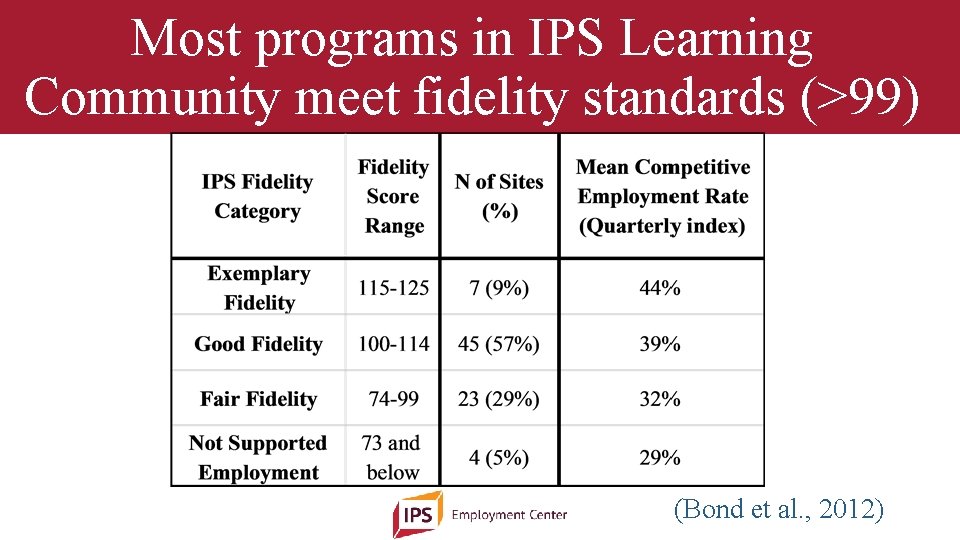
Most programs in IPS Learning Community meet fidelity standards (>99) (Bond et al. , 2012)
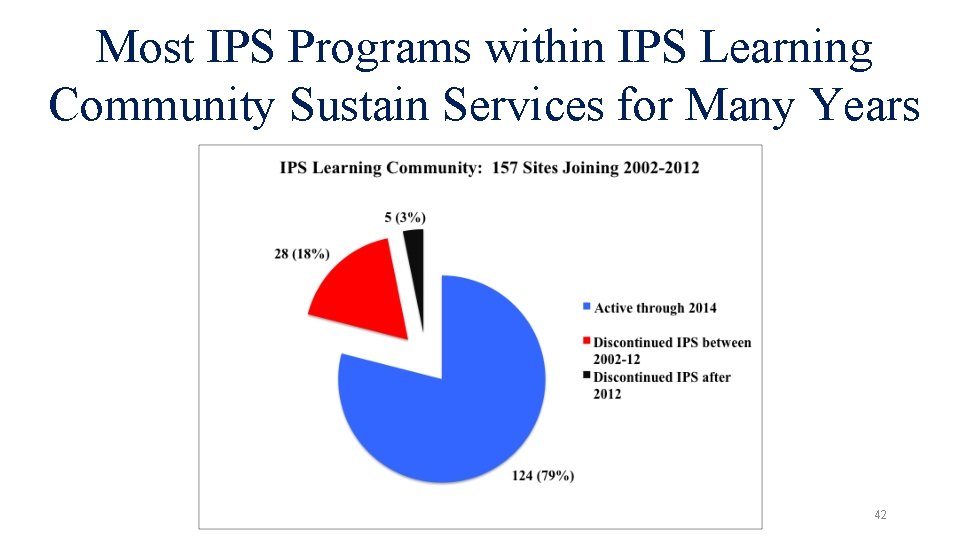
Most IPS Programs within IPS Learning Community Sustain Services for Many Years 42
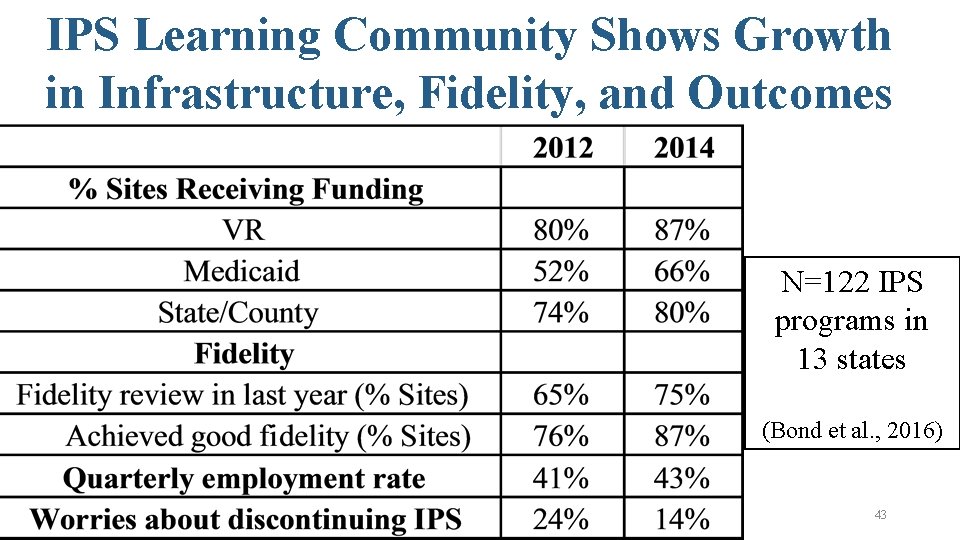
IPS Learning Community Shows Growth in Infrastructure, Fidelity, and Outcomes N=122 IPS programs in 13 states (Bond et al. , 2016) 43
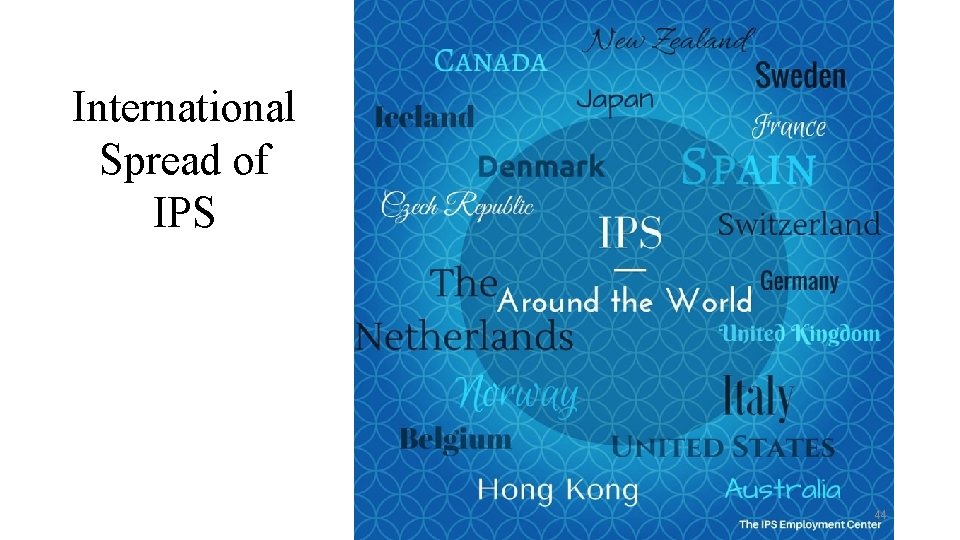
International Spread of IPS 44
Factors Promoting Spread of IPS Outside US (18 other countries) • International consensus • Local research studies • Rapid growth of long-term disability rolls • National guidelines 45
46
Factors Associated with Lower Employment Rates for IPS in Europe • Labor laws and unions protect workers who are employed, but make it harder for unskilled people to gain work • “Disability trap”: Disability policies may discourage return to work (Burns, 2007; Metcalfe et al. , 2018) 47
Current Trends in IPS: Overall Conclusions • Amazing growth and attention to IPS worldwide • IPS has “scaled up and out” in many directions – new countries, new populations, new IPS teams • Research has examined numerous dimensions of IPS • Because of extensive research, we know more about IPS than any other vocational intervention Work is the best treatment we have! 48