
Evidence for the Big Bang Evidence for Big

Evidence for the Big Bang
Evidence for Big Bang theory is supported by a number of key scientific discoveries, including: • the expansion of the Universe, • the abundance of hydrogen and helium in the Universe, and • cosmic microwave background radiation. 2 ‘An artist's concept of the first stars forming after the Big Bang’ by NASA, http: //science. nasa. gov/science-news/science-at-nasa/2008/22 oct_missinggrbs/
Discovery 1 The expansion of the Universe 3 ‘Andromeda galaxy’, NASA/JPL-Caltech/UCLA www. nasa. gov/mission_pages/WISE/multimedia/pia 12832 -c. html
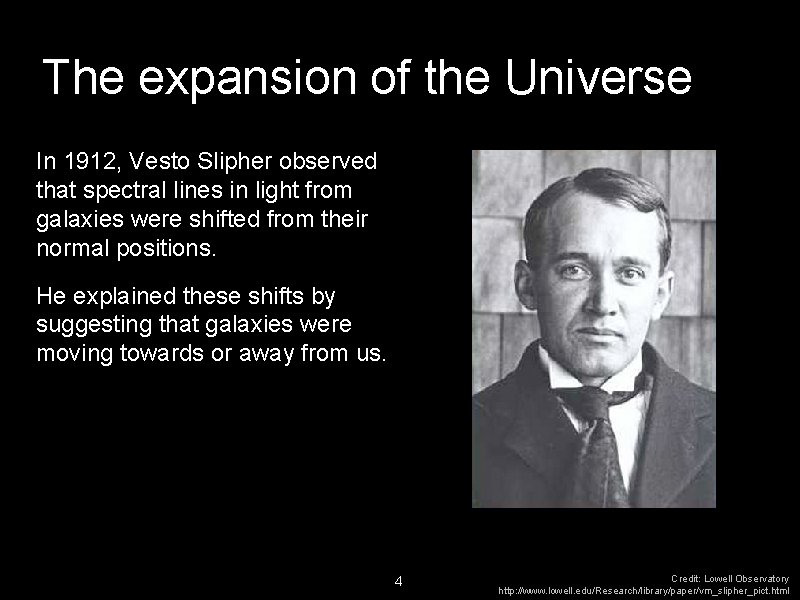
The expansion of the Universe In 1912, Vesto Slipher observed that spectral lines in light from galaxies were shifted from their normal positions. He explained these shifts by suggesting that galaxies were moving towards or away from us. 4 Credit: Lowell Observatory http: //www. lowell. edu/Research/library/paper/vm_slipher_pict. html
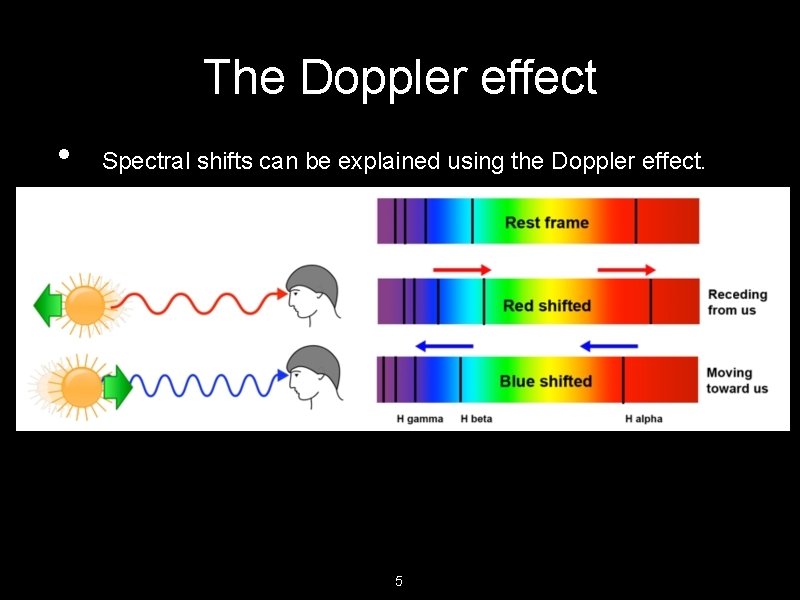
The Doppler effect • • • Spectral shifts can be explained using the Doppler effect. Light from an object moving away from us appears to have a longer wavelength (it is shifted toward the red end of the spectrum). Light from an object moving towards us appears to have a shorter wavelength (it is shifted towards the blue end of the spectrum). 5
Velocities of galaxies • • Slipher used measurements of spectral shifts to calculate velocities of galaxies. He discovered that a few galaxies were approaching Earth, but most were moving away. This information was later interpreted as evidence for the expansion of the Universe. We now know that some objects within our local group of galaxies are blueshifted (approaching us), but most are redshifted (moving away). This is due to the Doppler effect. 6
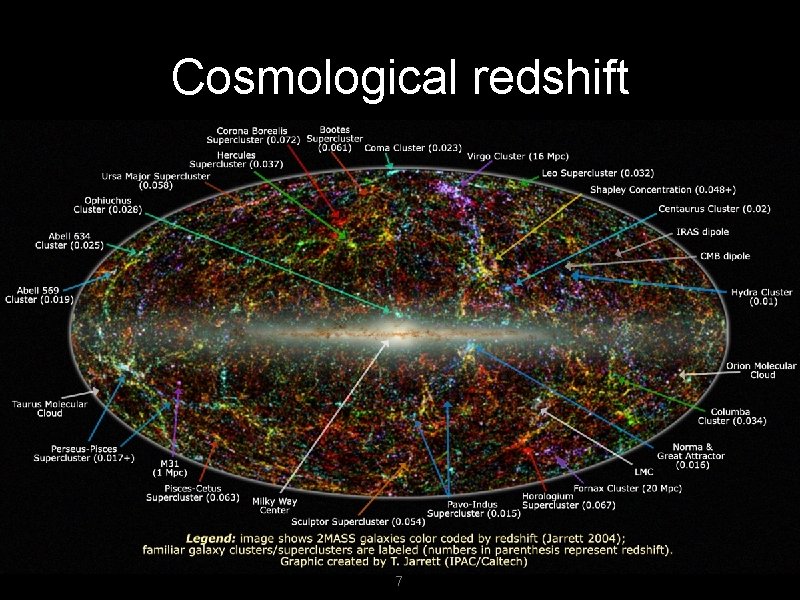
Cosmological redshift • • However, beyond our local group, all galaxies are redshifted and their velocities are higher than the Doppler effect can explain. These high velocities are due to cosmological redshift, which is caused by the expansion of the Universe itself. 7
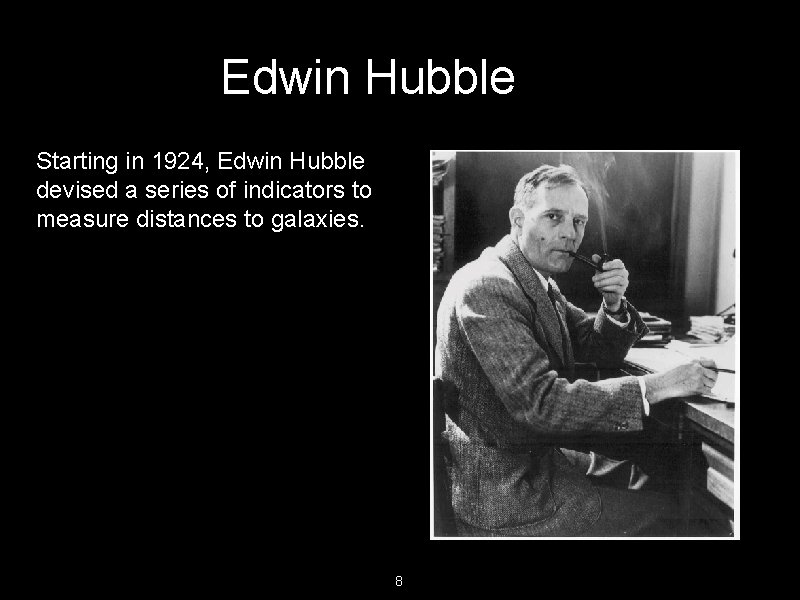
Edwin Hubble Starting in 1924, Edwin Hubble devised a series of indicators to measure distances to galaxies. 8
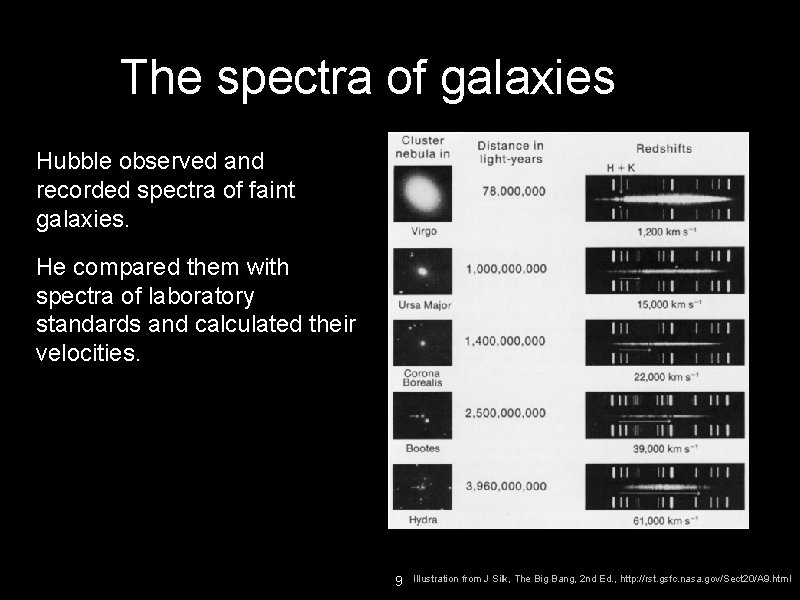
The spectra of galaxies Hubble observed and recorded spectra of faint galaxies. He compared them with spectra of laboratory standards and calculated their velocities. 9 Illustration from J Silk, The Big Bang, 2 nd Ed. , http: //rst. gsfc. nasa. gov/Sect 20/A 9. html
Hubble's law He plotted their distance against velocity and developed Hubble's Law, which states: The rate at which astronomical objects move apart from each other is proportional to their distance from each other. This is expressed as v = HσD, where Hσ is the Hubble constant, D is the distance to a galaxy and v is its velocity. 10
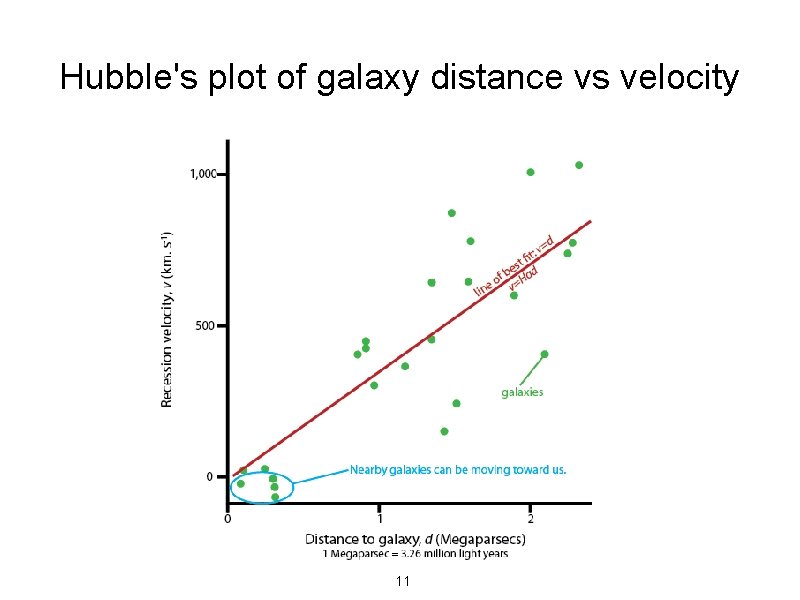
Hubble's plot of galaxy distance vs velocity 11
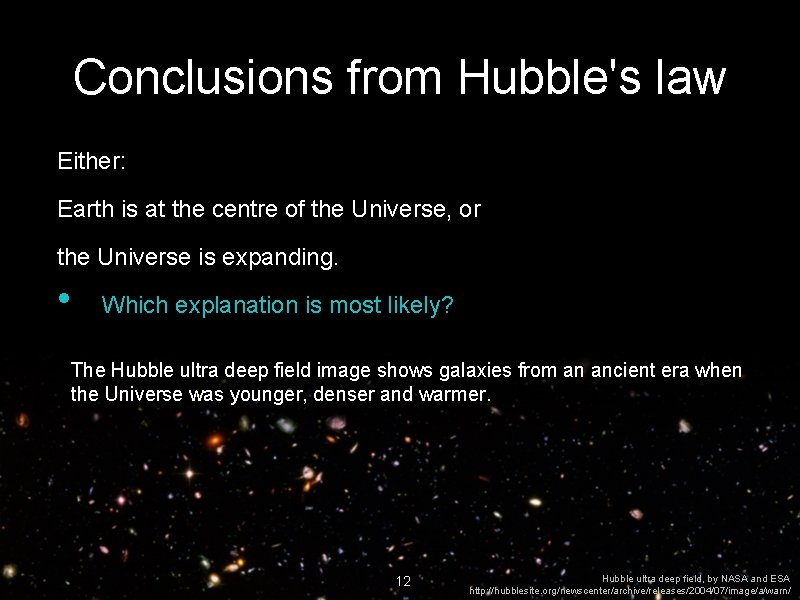
Conclusions from Hubble's law Either: Earth is at the centre of the Universe, or the Universe is expanding. • Which explanation is most likely? The Hubble ultra deep field image shows galaxies from an ancient era when the Universe was younger, denser and warmer. 12 Hubble ultra deep field, by NASA and ESA http: //hubblesite. org/newscenter/archive/releases/2004/07/image/a/warn/
Discovery 2 The abundance of hydrogen and helium in the Universe 13
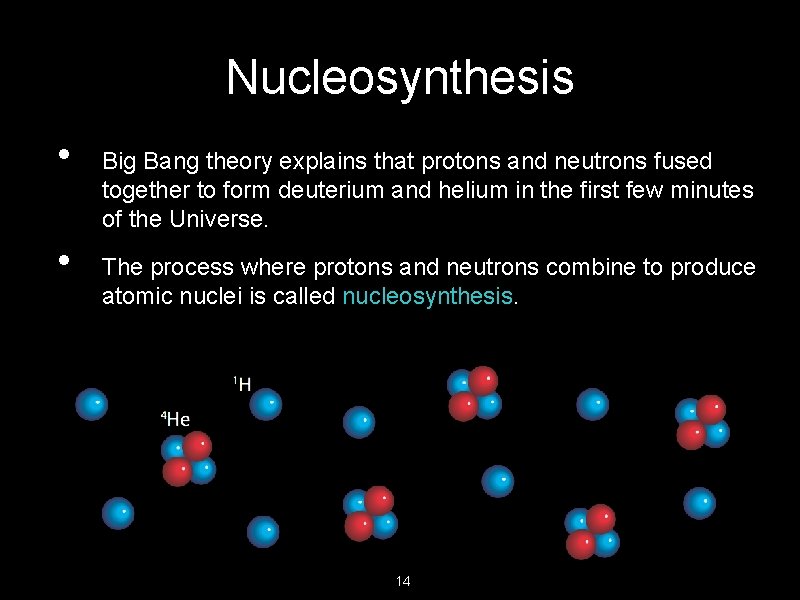
Nucleosynthesis • • Big Bang theory explains that protons and neutrons fused together to form deuterium and helium in the first few minutes of the Universe. The process where protons and neutrons combine to produce atomic nuclei is called nucleosynthesis. 14
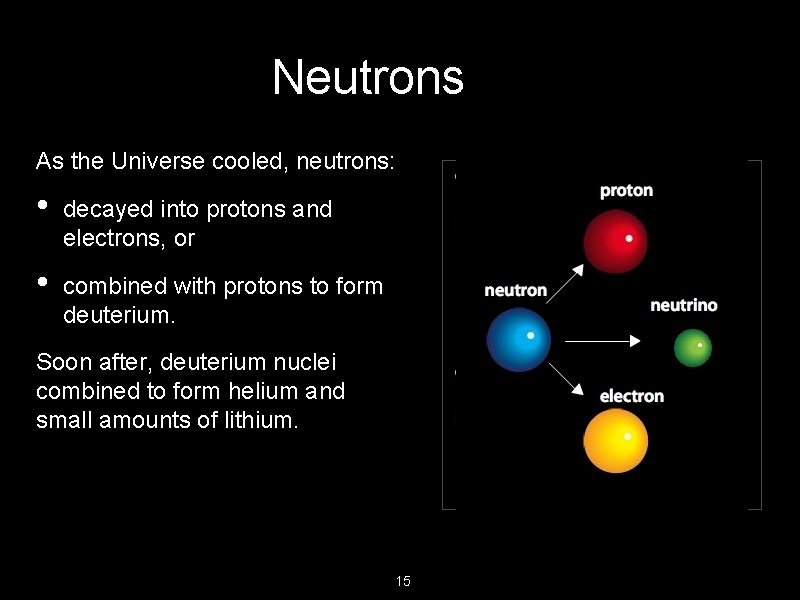
Neutrons As the Universe cooled, neutrons: • decayed into protons and electrons, or • combined with protons to form deuterium. Soon after, deuterium nuclei combined to form helium and small amounts of lithium. 15
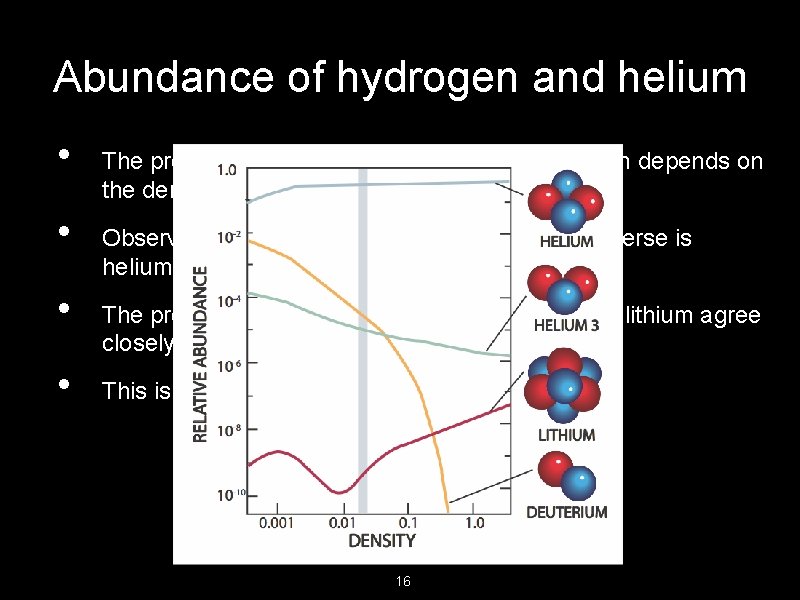
Abundance of hydrogen and helium • • The predicted abundance of hydrogen and helium depends on the density of the early Universe. Observations indicate that about 24% of the Universe is helium, produced shortly after the Big Bang. The predicted amounts of deuterium, helium and lithium agree closely with observed amounts. This is a major success for the Big Bang Theory. 16
Discovery 3 Cosmic microwave background radiation 17
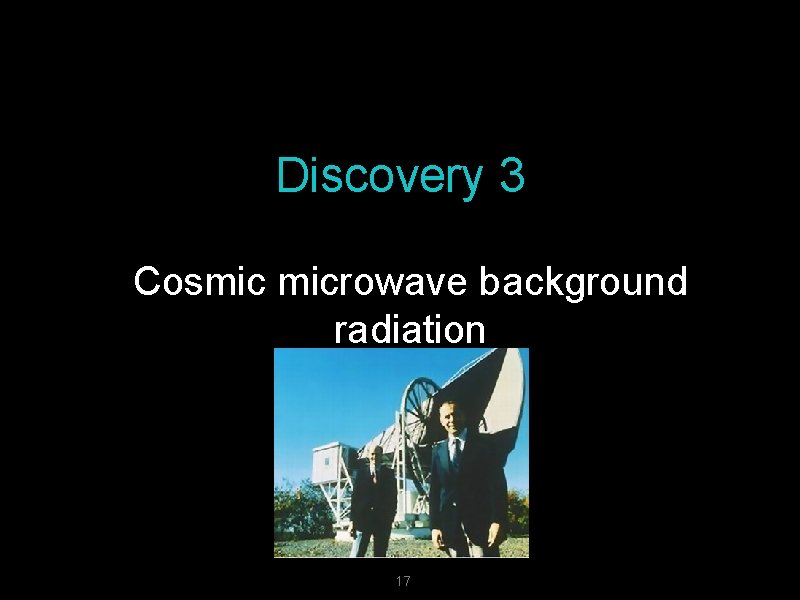
Cosmic microwave background radiation • • The Universe became transparent to radiation about 370 000 years after the Big Bang. Photons from this time still fill the Universe, but their wavelength has stretched as the Universe has expanded. In 1965, radioastronomers Penzias and Wilson discovered a 1. 9 mm microwave background radiation that evenly fills the observable Universe. Properties of this radiation match predictions from Big Bang theory. 18
The cosmological principle • • • Cosmic microwave background radiation is a good illustration of the cosmological principle. It tells us that matter in the Universe is homogeneous (uniform density) and isotropic (the same in all directions). It means that the Universe has no centre or edges - it is the same throughout. 19
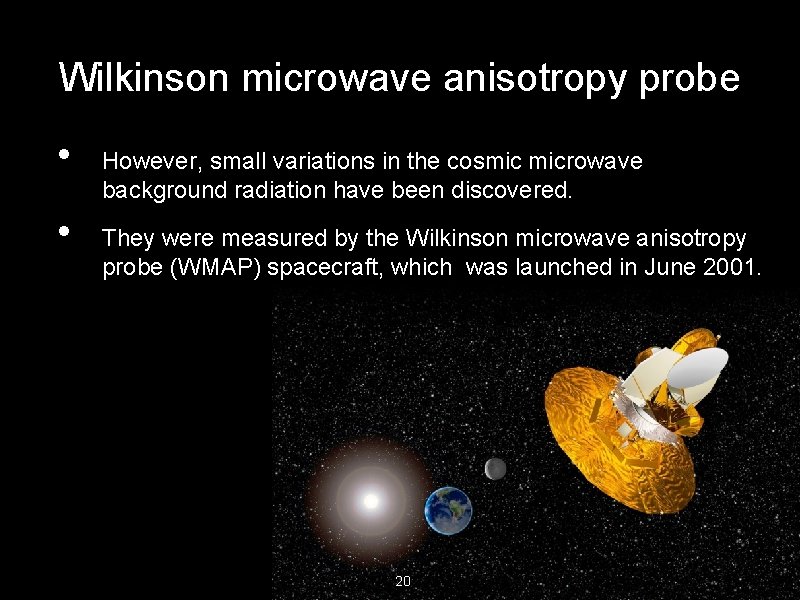
Wilkinson microwave anisotropy probe • • However, small variations in the cosmic microwave background radiation have been discovered. They were measured by the Wilkinson microwave anisotropy probe (WMAP) spacecraft, which was launched in June 2001. 20
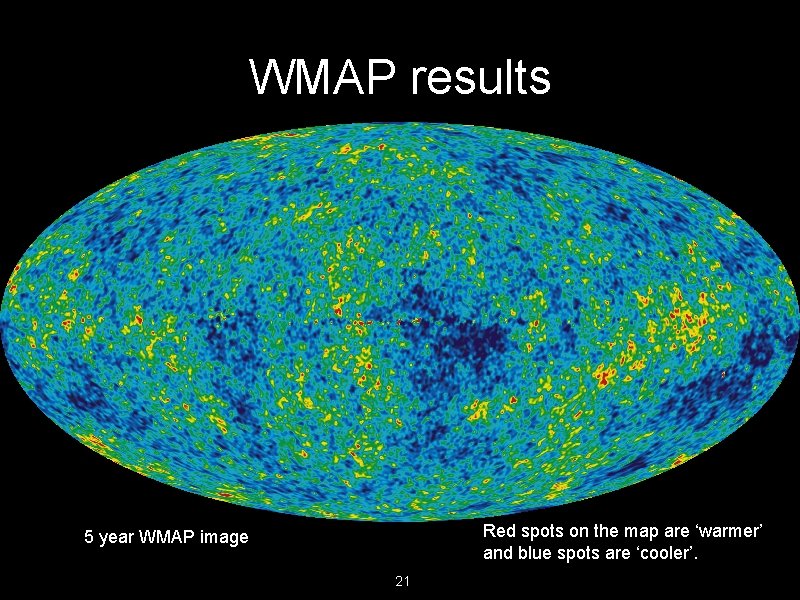
WMAP results • • • WMAP showed that CMBR is almost uniform (isotropic) in all directions. But at high resolution, there are small temperature variations (only a few thousandths of a Kelvin). CMBR shows a distribution similar to that expected if a red-hot gas was blown up to the size of the Universe. This evidence supports Big Bang theory. Red spots on the map are ‘warmer’ and blue spots are ‘cooler’. 5 year WMAP image 21
The search for further evidence Three major scientific projects are currently being planned or are in the early stages of the search for further evidence of the Big Bang. 22
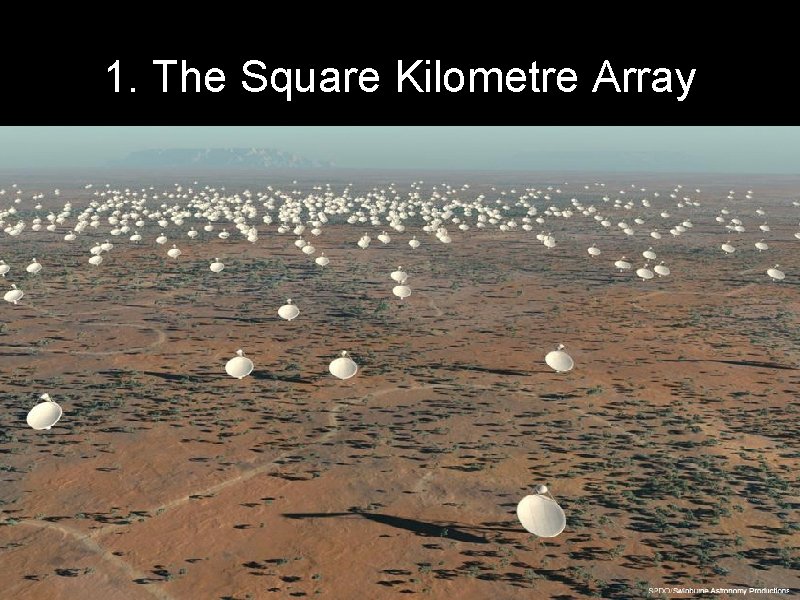
1. The Square Kilometre Array • • The SKA is a radio telescope with collecting area of one square kilometre. Its high resolution will allow astronomers to see further than any previous radio telescope. It will be used to research questions in physics, cosmology and astrobiology. The Murchison region of Western Australia is one of two possible locations for the SKA. 23
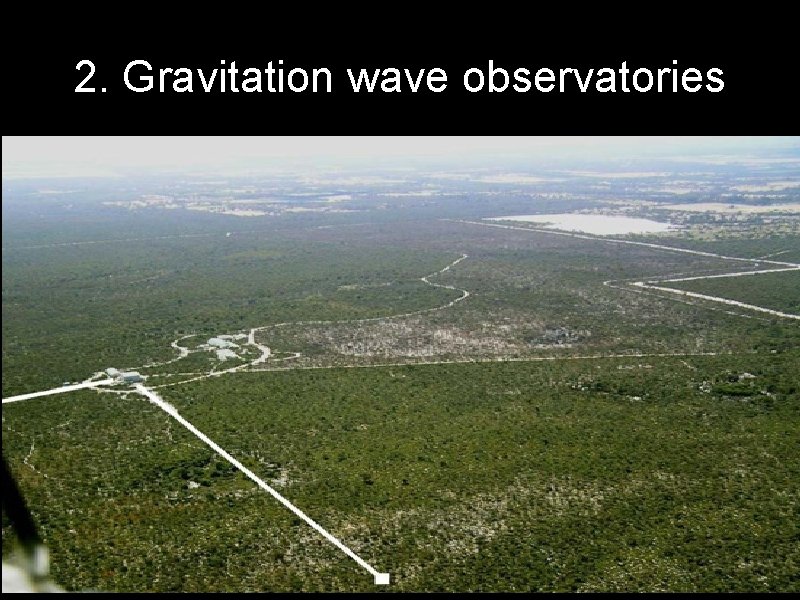
2. Gravitation wave observatories • • Gravitational waves are predicted by Einstein's general theory of relativity, but none have yet been detected. The Big Bang is believed to have created gravitational waves that still fill the Universe. Gravitational wave detectors are interferometers with arms several kilometres long. Gravitational wave observatories have been built in the USA (LIGO), Japan (TAMA) and Europe (VIRGO). Australia plans to build a full-scale detector (AIGO) at Gingin WA. 24
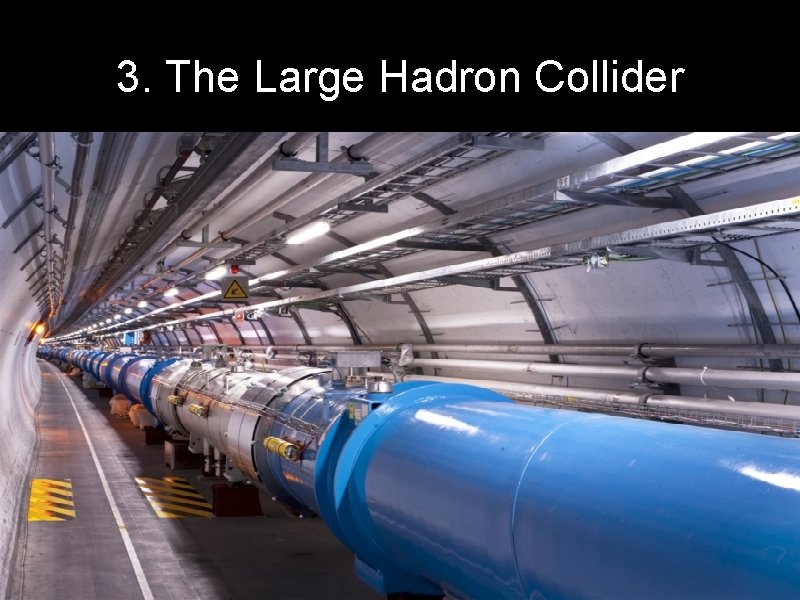
3. The Large Hadron Collider • • • The Large Hadron Collider is a gigantic particle accelerator, located near Geneva in Switzerland. It collides beams of particles together at almost the speed of light to research conditions similar to those that existed in the Big Bang. The results will provide information about the fundamental particles of matter and forces in nature. 25
Alternatives to Big Bang theory • • • The Big Bang theory is considered to be our most successful theory of cosmology because it explains most experimental observations. Refinements to theory are continually being made as observations are improved. Mathematical theories, including string theory and supersymmetry, may one day offer a deeper understanding of the origin of the Universe, but today’s evidence for the Big Bang is very strong. 26

© 2011 The University of Western Australia ast 0705, v 1. 0 for conditions of use see spice. wa. edu. au/usage
- Slides: 27