
Evidence for Evolution What is evolution Common Ancestry
- Slides: 42
Evidence for Evolution
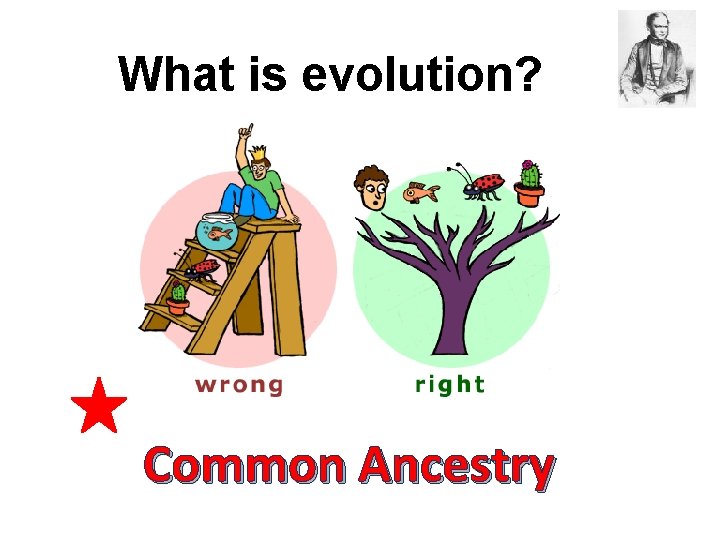
What is evolution? Common Ancestry
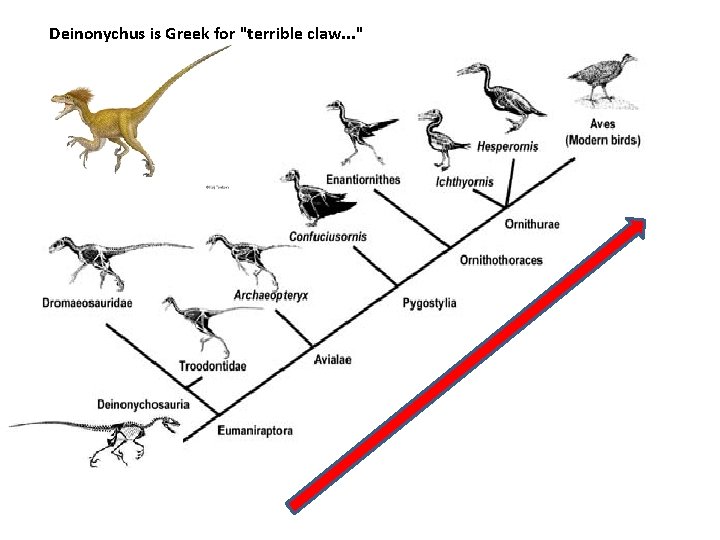
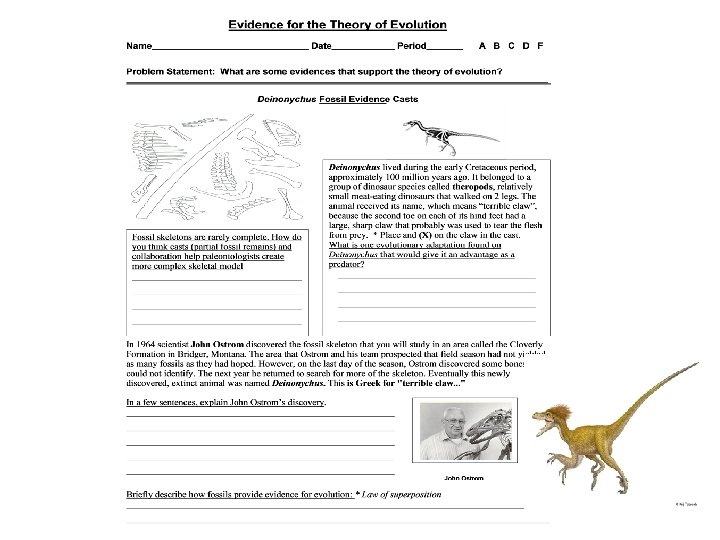
Deinonychus is Greek for "terrible claw. . . "
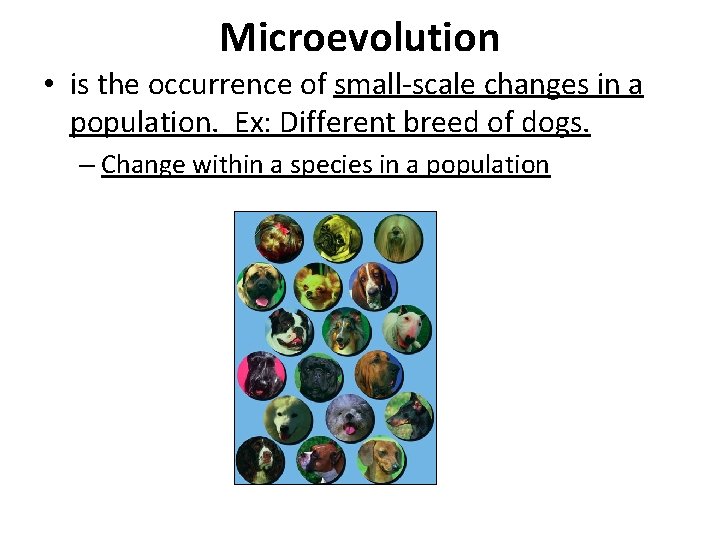
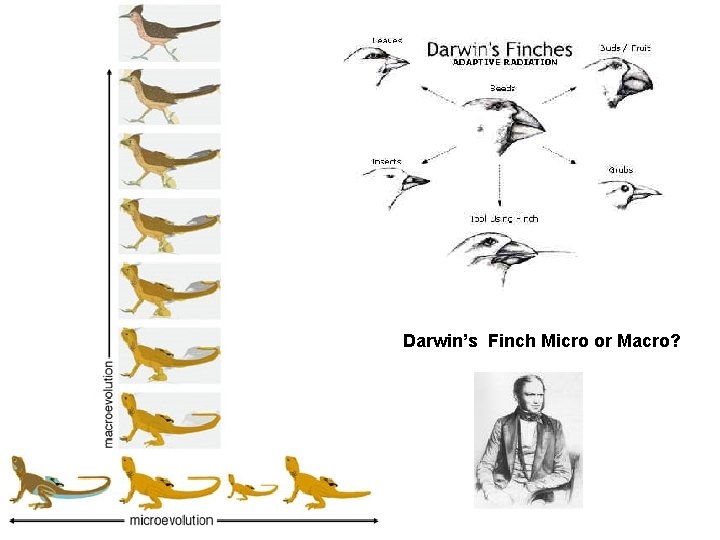
Microevolution • is the occurrence of small-scale changes in a population. Ex: Different breed of dogs. – Change within a species in a population
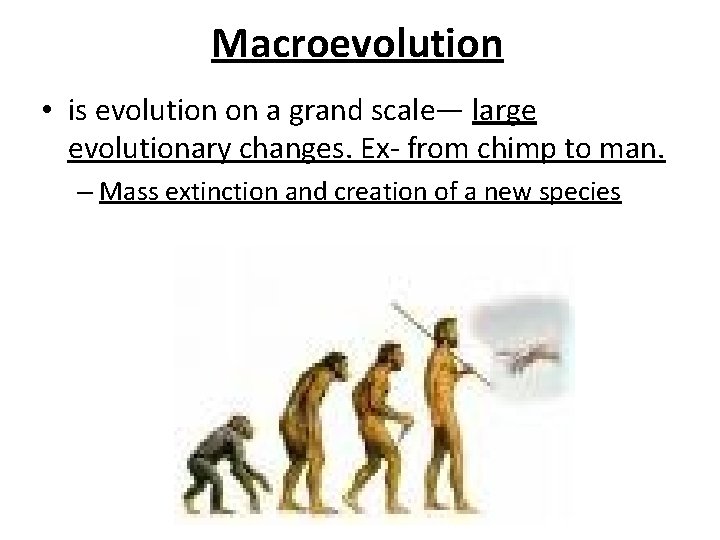
Macroevolution • is evolution on a grand scale— large evolutionary changes. Ex- from chimp to man. – Mass extinction and creation of a new species
Darwin’s Finch Micro or Macro?
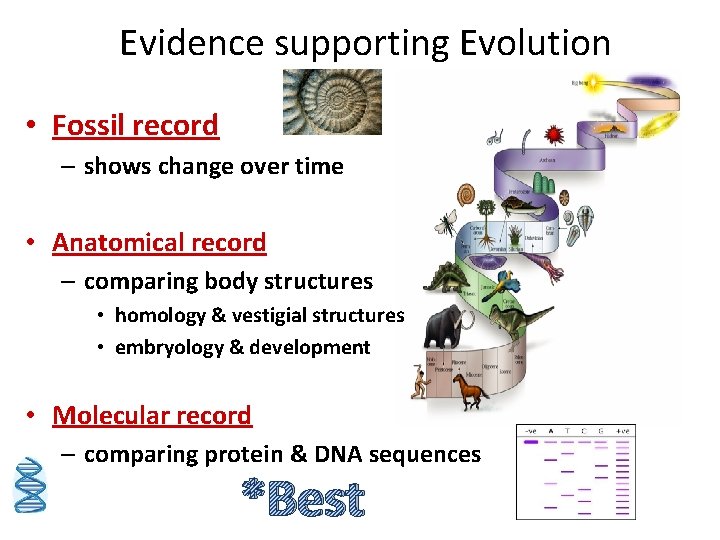
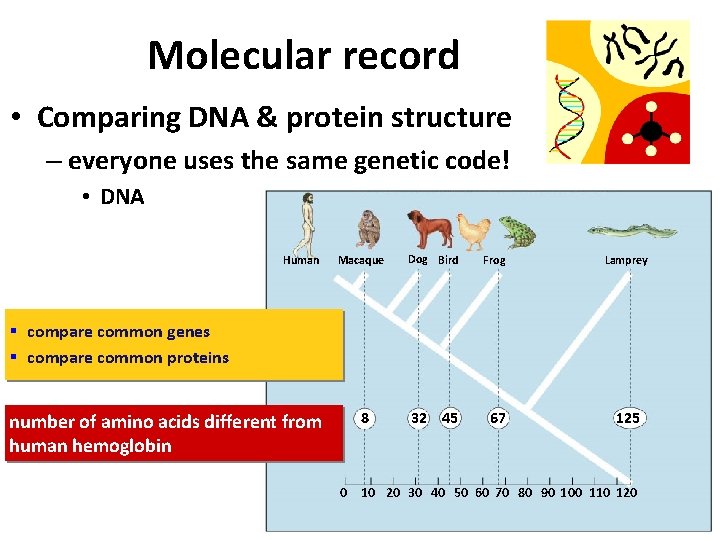
Evidence supporting Evolution • Fossil record – shows change over time • Anatomical record – comparing body structures • homology & vestigial structures • embryology & development • Molecular record – comparing protein & DNA sequences *Best
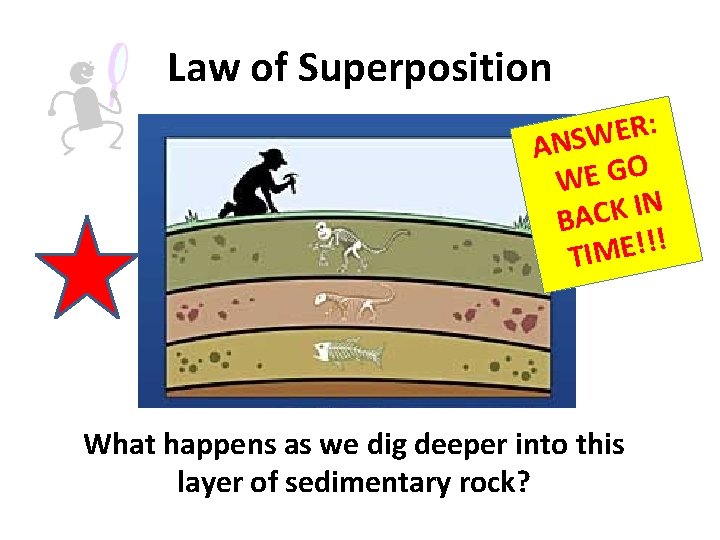
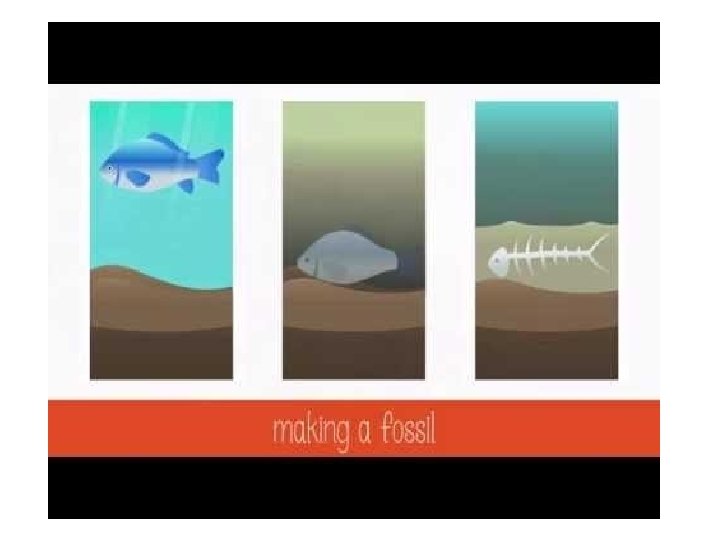
Fossil Evidence • Traces or remains of dead organisms that lived long ago • Sedimentary rocks contains the most fossils. It is formed from mud, sand, silt, and other particles • First the animal needs to die and be buried under the mud or silt so it can’t be broken down other animals. Over time the minerals in the mud and silt will replace the tissue of the animal and will create a mold or cast of the long dead organisms.
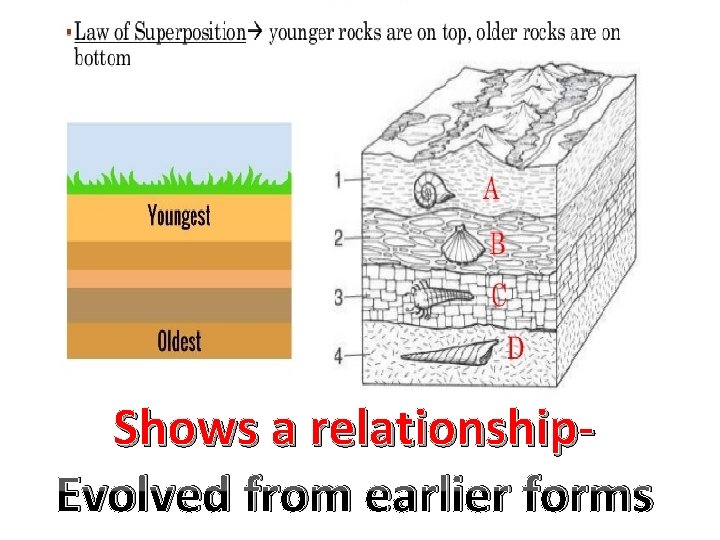
Law of Superposition : R E W ANS O G E W IN K C A B ! ! ! E M TI What happens as we dig deeper into this layer of sedimentary rock?
Shows a relationship. Evolved from earlier forms
Anatomical Record • Homologous Structures • Analogous Structures • Vestigial Structures • Embryology
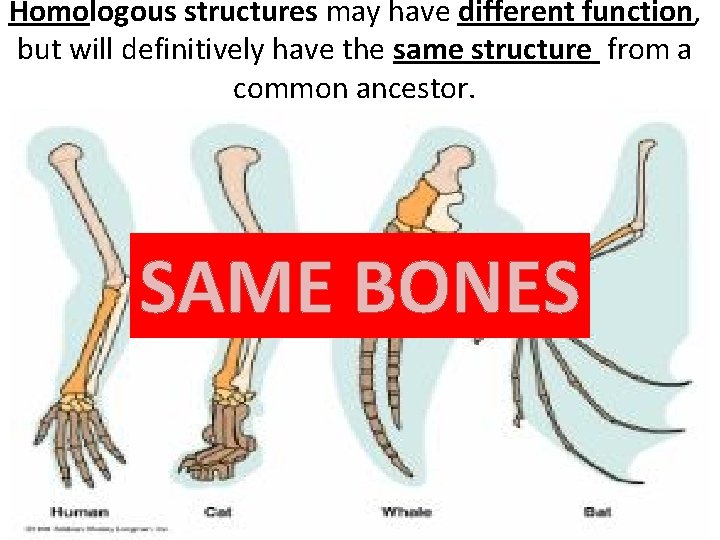
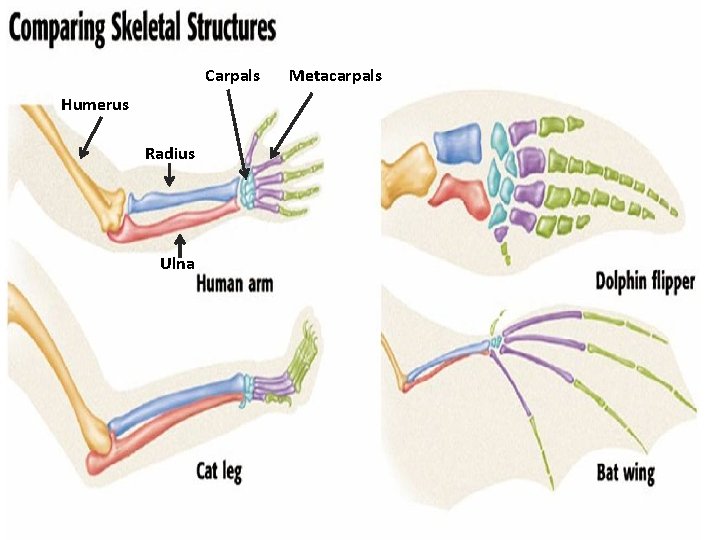
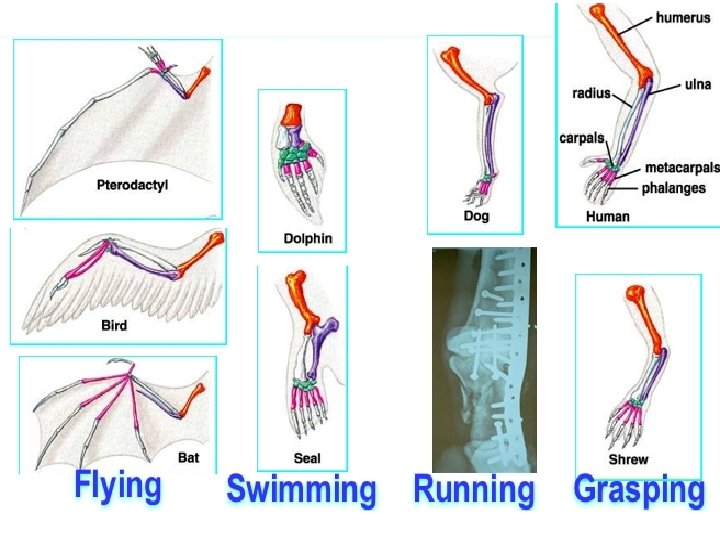
Homologous structures may have different function, but will definitively have the same structure from a common ancestor. SAME BONES
Carpals Humerus Radius Ulna Metacarpals
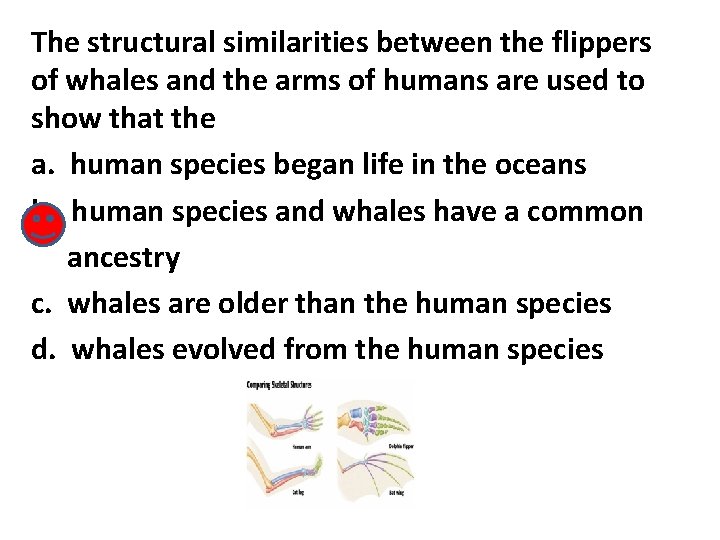
The structural similarities between the flippers of whales and the arms of humans are used to show that the a. human species began life in the oceans b. human species and whales have a common ancestry c. whales are older than the human species d. whales evolved from the human species
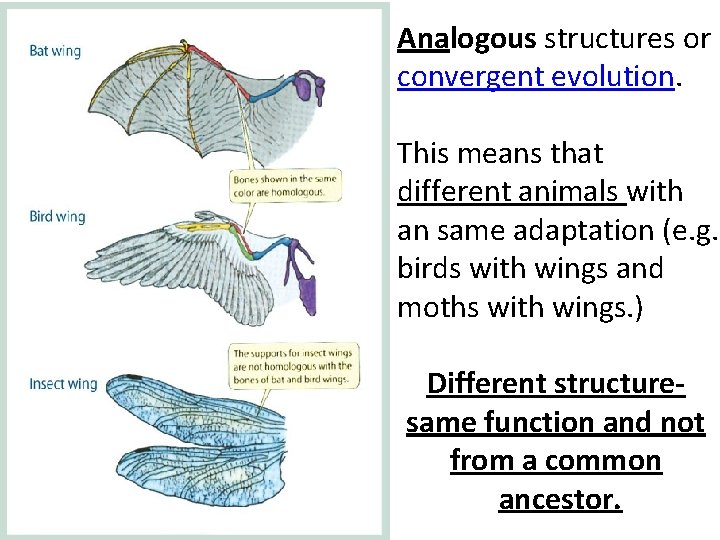
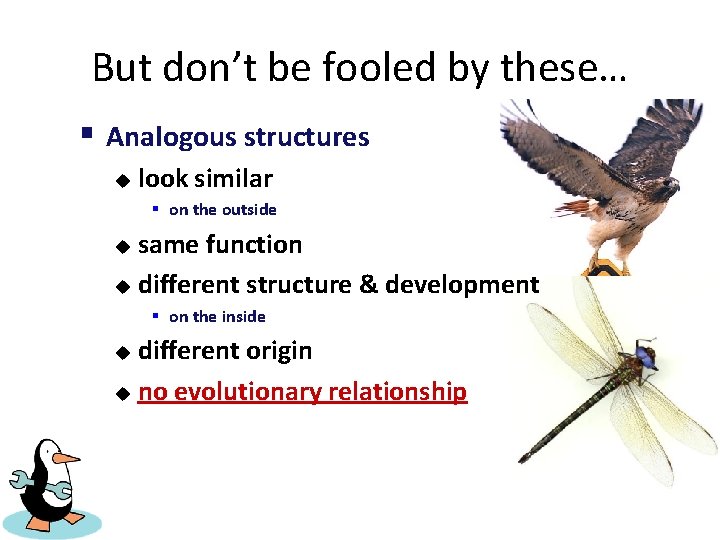
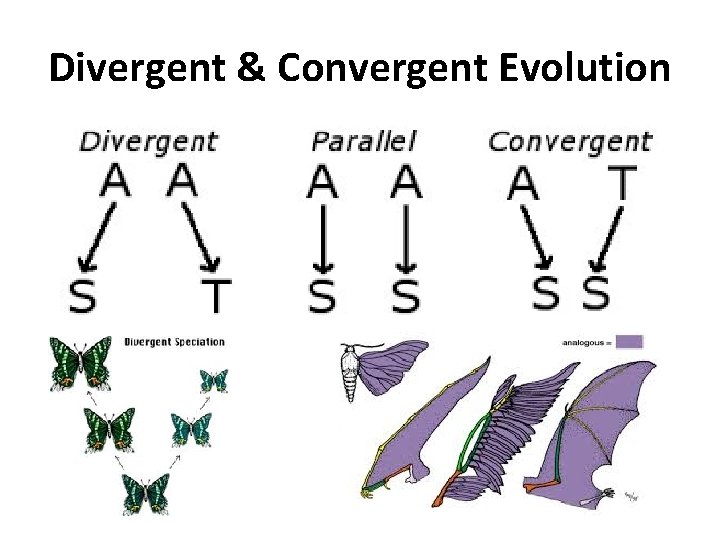
Analogous structures or convergent evolution. This means that different animals with an same adaptation (e. g. birds with wings and moths with wings. ) Different structuresame function and not from a common ancestor.
But don’t be fooled by these… § Analogous structures u look similar § on the outside same function u different structure & development u § on the inside different origin u no evolutionary relationship u
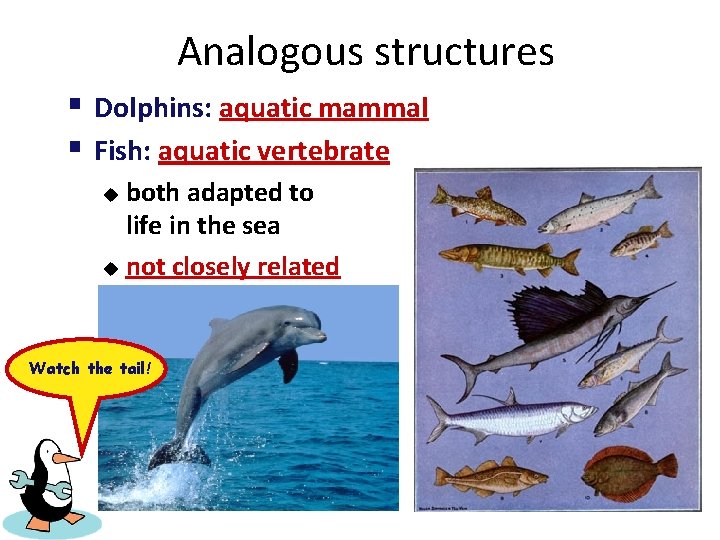
Analogous structures § Dolphins: aquatic mammal § Fish: aquatic vertebrate both adapted to life in the sea u not closely related u Watch the tail!
Divergent & Convergent Evolution
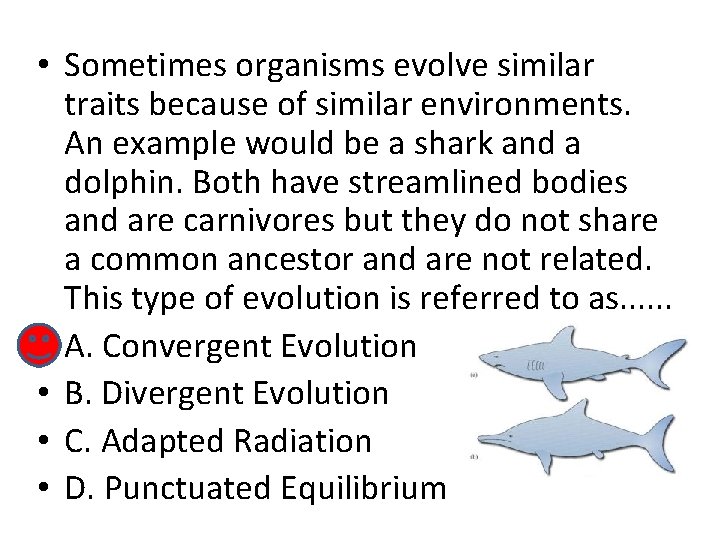
• Sometimes organisms evolve similar traits because of similar environments. An example would be a shark and a dolphin. Both have streamlined bodies and are carnivores but they do not share a common ancestor and are not related. This type of evolution is referred to as. . . • A. Convergent Evolution • B. Divergent Evolution • C. Adapted Radiation • D. Punctuated Equilibrium
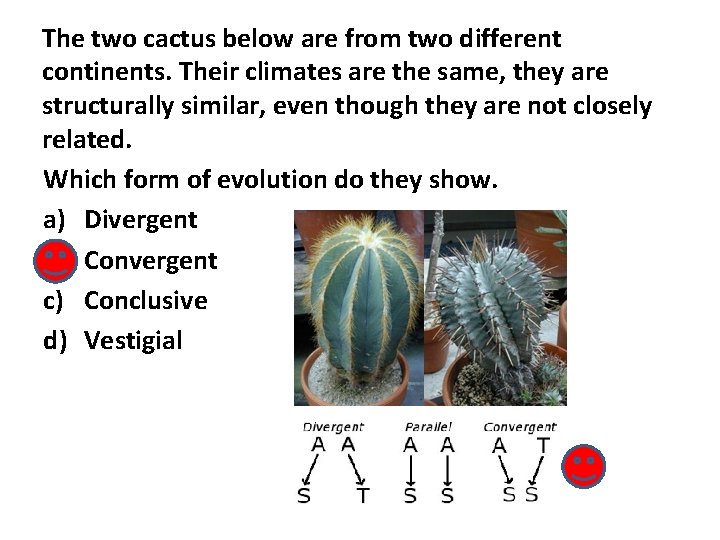
The two cactus below are from two different continents. Their climates are the same, they are structurally similar, even though they are not closely related. Which form of evolution do they show. a) Divergent b) Convergent c) Conclusive d) Vestigial
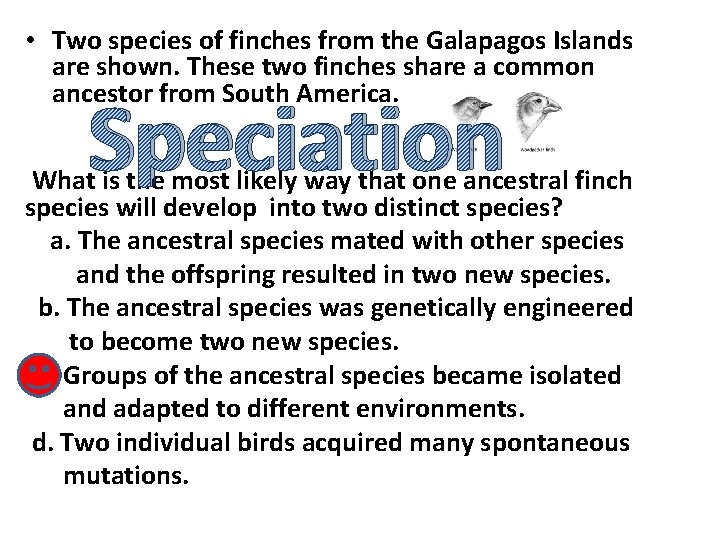
• Two species of finches from the Galapagos Islands are shown. These two finches share a common ancestor from South America. Speciation What is the most likely way that one ancestral finch species will develop into two distinct species? a. The ancestral species mated with other species and the offspring resulted in two new species. b. The ancestral species was genetically engineered to become two new species. c. Groups of the ancestral species became isolated and adapted to different environments. d. Two individual birds acquired many spontaneous mutations.
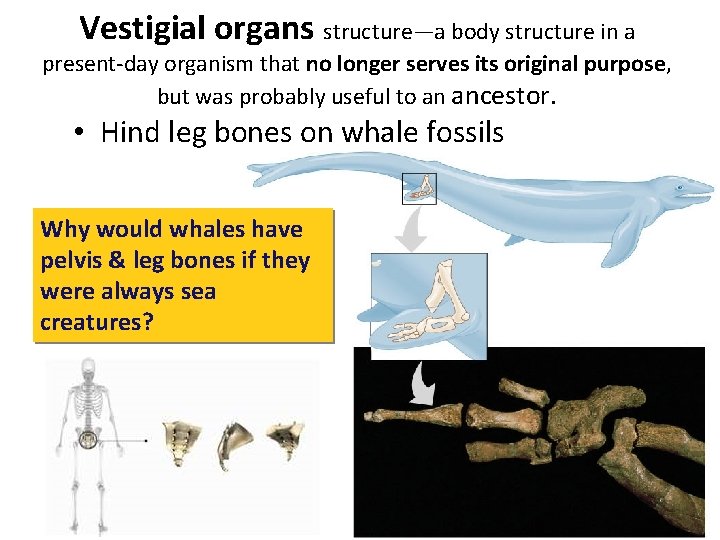
Vestigial organs structure—a body structure in a present-day organism that no longer serves its original purpose, but was probably useful to an ancestor. • Hind leg bones on whale fossils Why would whales have pelvis & leg bones if they were always sea creatures?
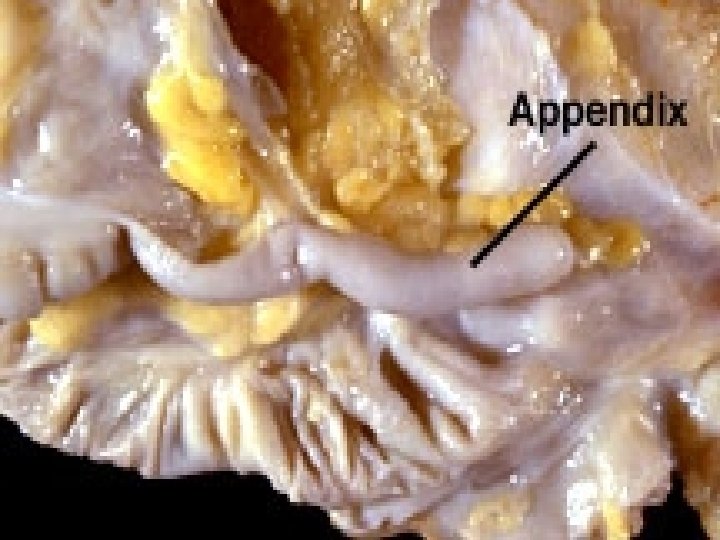
• The appendix a shrunken remain of the cecum that can be found in herbivore. • Refuted the idea the appendix is a housing complex that for mutualistic bacteria that aid in digestion for many species including humans.
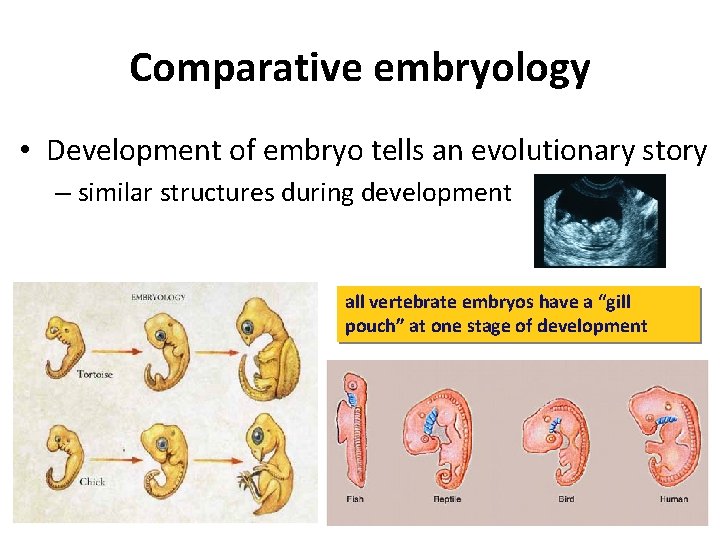
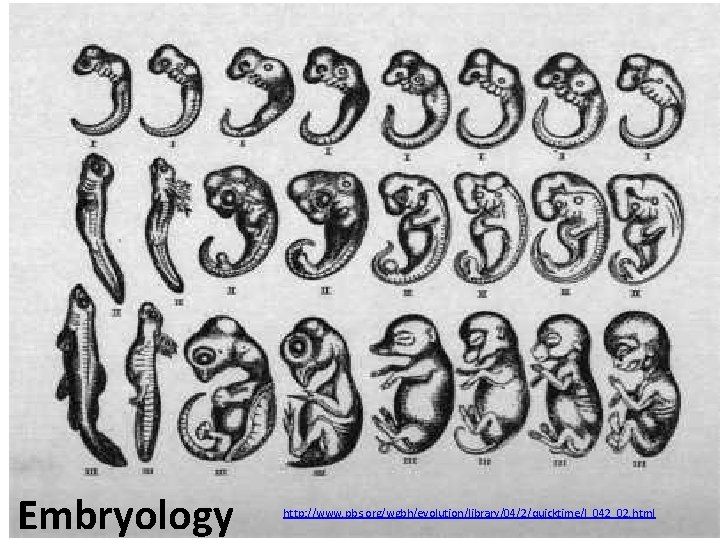
Comparative embryology • Development of embryo tells an evolutionary story – similar structures during development all vertebrate embryos have a “gill pouch” at one stage of development
Embryology http: //www. pbs. org/wgbh/evolution/library/04/2/quicktime/l_042_02. html
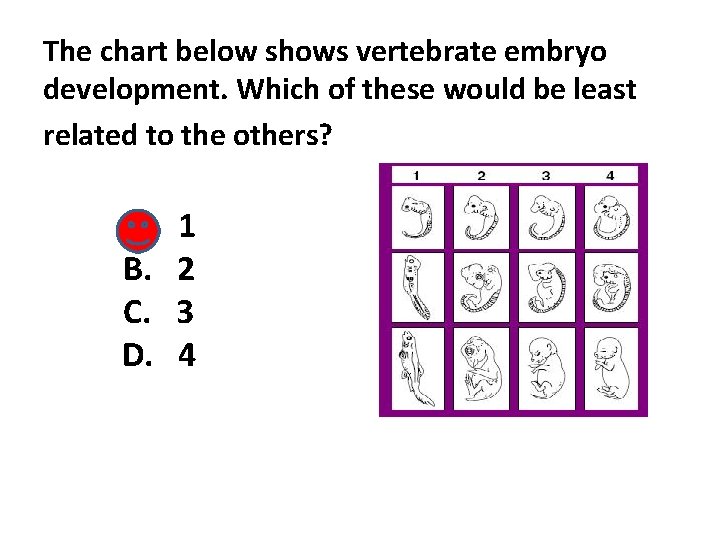
The chart below shows vertebrate embryo development. Which of these would be least related to the others? A. B. C. D. 1 2 3 4
Molecular record • Comparing DNA & protein structure – everyone uses the same genetic code! • DNA Human Macaque Dog Bird Frog 32 45 67 Lamprey § compare common genes § compare common proteins number of amino acids different from human hemoglobin 8 125 0 10 20 30 40 50 60 70 80 90 100 110 120
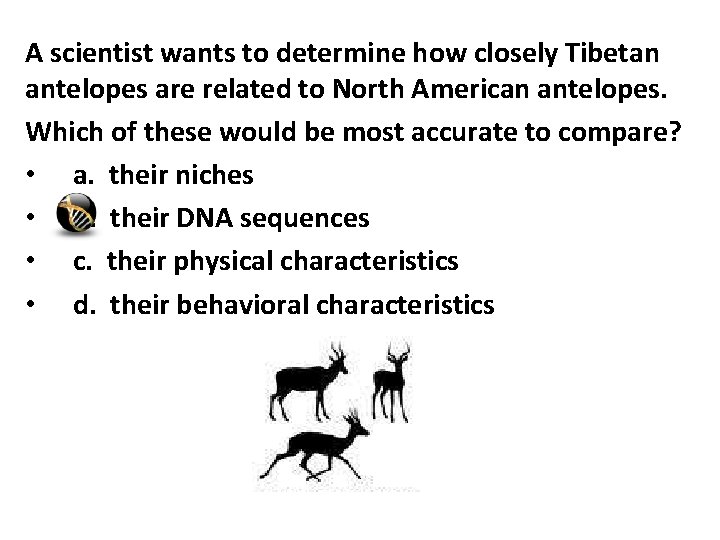
A scientist wants to determine how closely Tibetan antelopes are related to North American antelopes. Which of these would be most accurate to compare? • a. their niches • b. their DNA sequences • c. their physical characteristics • d. their behavioral characteristics
• Darwin’s theory of evolution was criticized fiercely during his time. Modern scientists now accept theory while they still debate many of its details. Though a theory cannot be “proven, ” significant evidence can be used to support it. What kind of evidence has led biologists to accept modern evolutionary theory? • A. comparing the sequence of DNA base pairs of different species • B. comparing different literary accounts of the origin of life on Earth • C. comparing the anatomies of purebred pets and other domesticated species • D. comparing Darwin’s knowledge with that of modern evolutionary scientists
• When Darwin first proposed his theory of evolution by natural selection, the field of genetics did not yet exist. In what way does genetic science now contribute to the study of evolution? • A. Scientists can create organisms that were extinct using DNA from fossils and better understand how they evolved. • B. Scientists can use genetic engineering to carry out the process of evolution over just months instead of millions of years. • C. Scientists can compare the DNA from fossils in rock to determine evolutionary relationships among extinct species. • D. Scientists can determine evolutionary relationships among living species by comparing amino acid sequences coded for by DNA.
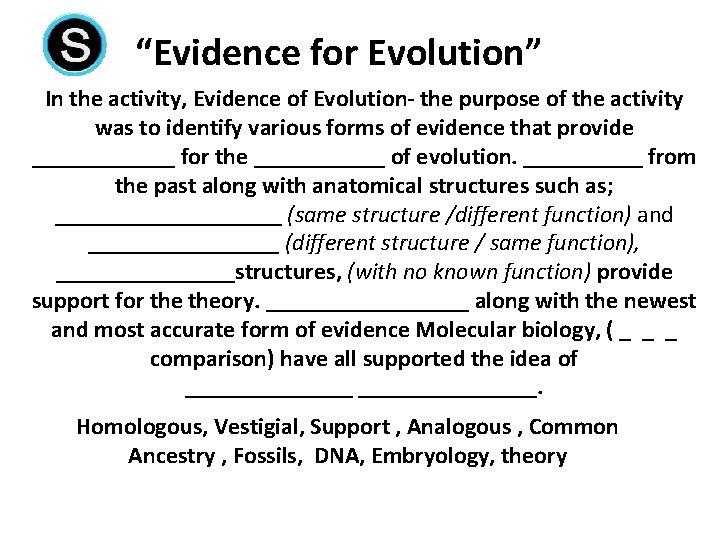
“Evidence for Evolution” In the activity, Evidence of Evolution- the purpose of the activity was to identify various forms of evidence that provide ______ for the ______ of evolution. _____ from the past along with anatomical structures such as; __________ (same structure /different function) and ________ (different structure / same function), ________structures, (with no known function) provide support for theory. _________ along with the newest and most accurate form of evidence Molecular biology, ( _ _ _ comparison) have all supported the idea of _______________. Homologous, Vestigial, Support , Analogous , Common Ancestry , Fossils, DNA, Embryology, theory
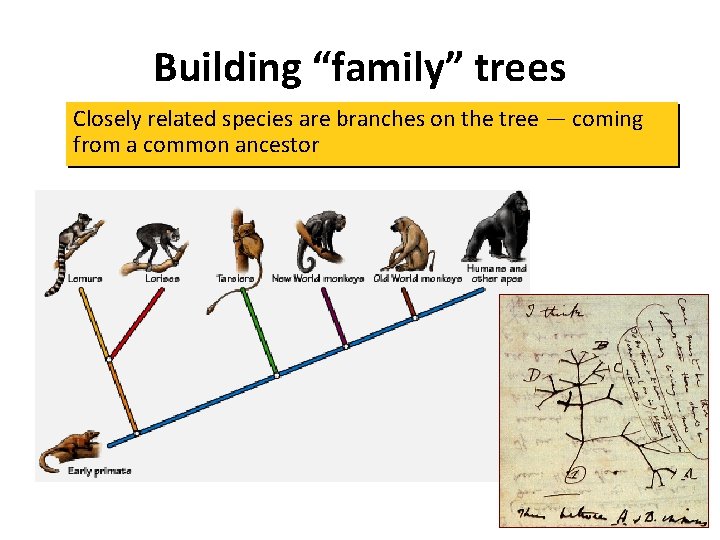
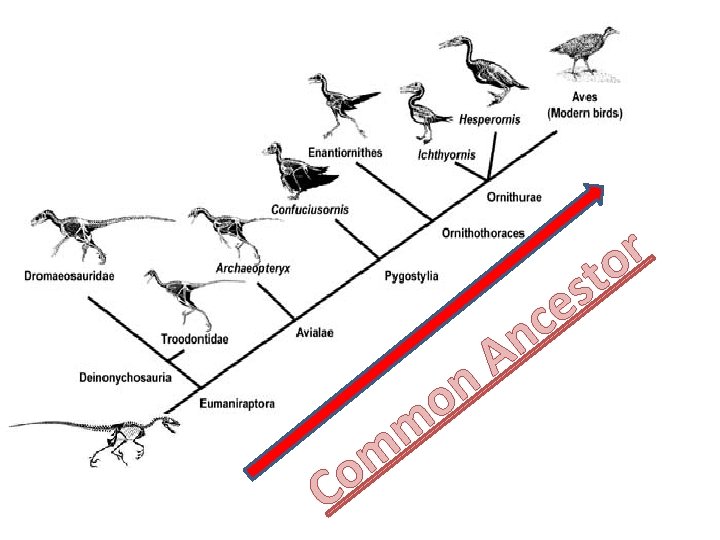
Building “family” trees Closely related species are branches on the tree — coming from a common ancestor
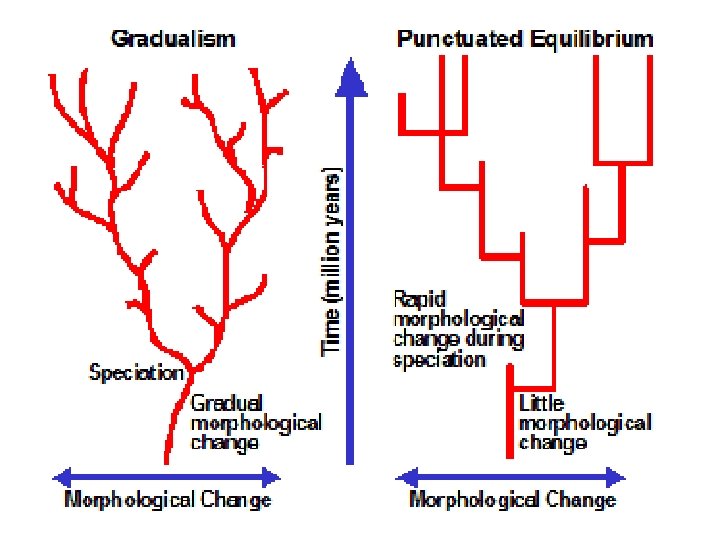
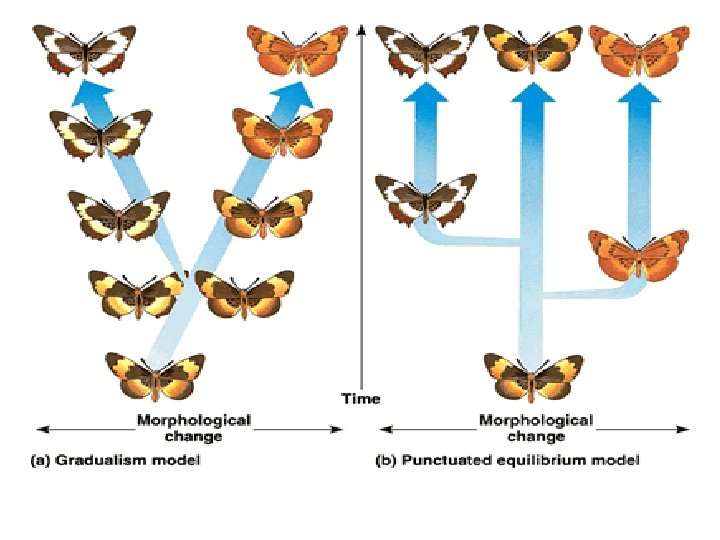
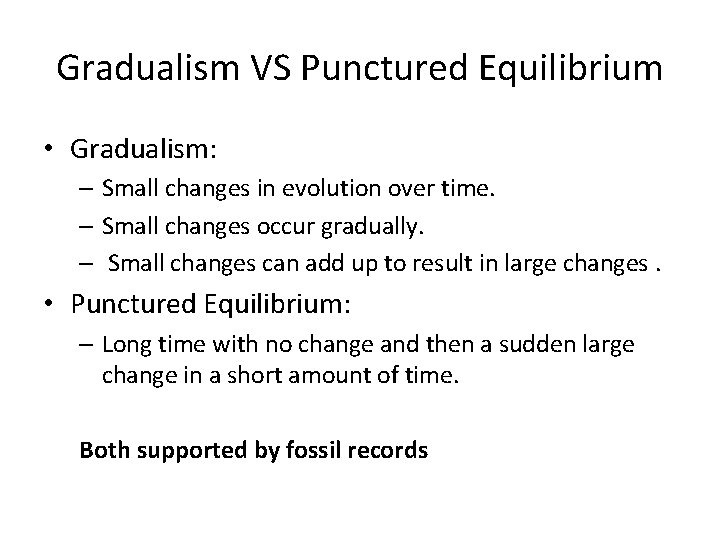
Gradualism VS Punctured Equilibrium • Gradualism: – Small changes in evolution over time. – Small changes occur gradually. – Small changes can add up to result in large changes. • Punctured Equilibrium: – Long time with no change and then a sudden large change in a short amount of time. Both supported by fossil records
A n c n m o C o m t s e r o
http: //www. youtube. com/watch? v= DVA 93 u. CEr. PE • Evolution of Dance Change Song http: //www. youtube. com/watch? v=Im 8 z. Yh. FB 0 JA http: //www. youtube. com/watch? v=pl 3 vx. Eudif 8
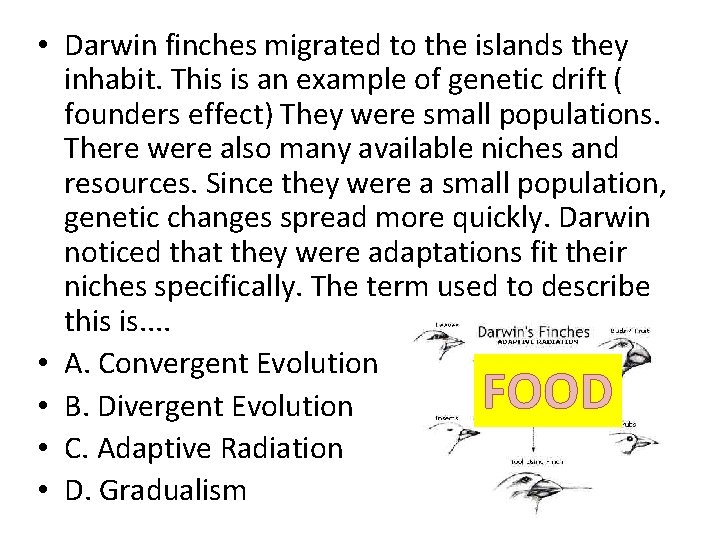
• Darwin finches migrated to the islands they inhabit. This is an example of genetic drift ( founders effect) They were small populations. There were also many available niches and resources. Since they were a small population, genetic changes spread more quickly. Darwin noticed that they were adaptations fit their niches specifically. The term used to describe this is. . • A. Convergent Evolution • B. Divergent Evolution • C. Adaptive Radiation • D. Gradualism FOOD