
EVIDENCE FOR EVOLUTION Charles Darwin n Charles Darwin
- Slides: 23
EVIDENCE FOR EVOLUTION
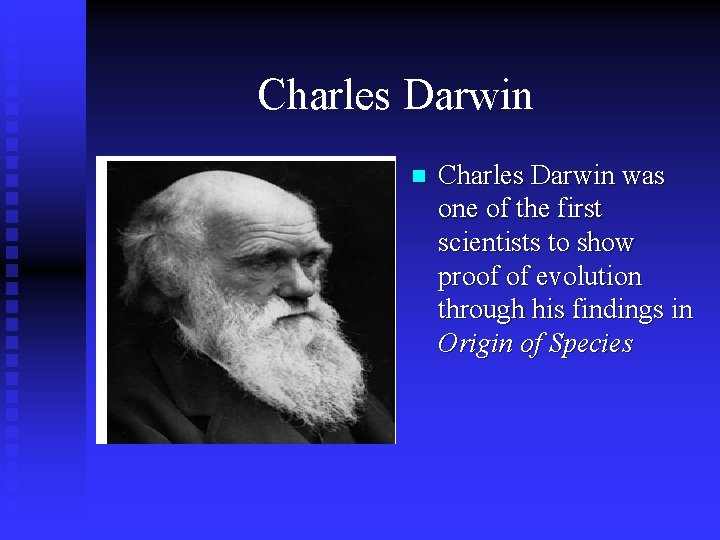
Charles Darwin n Charles Darwin was one of the first scientists to show proof of evolution through his findings in Origin of Species
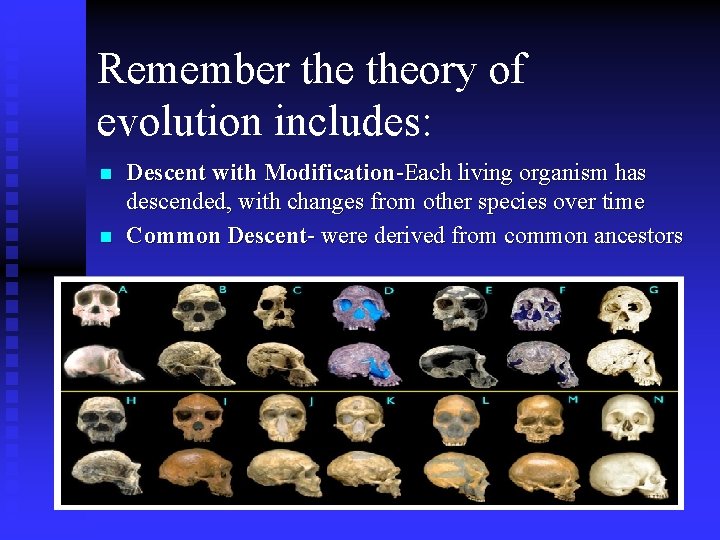
Remember theory of evolution includes: n n Descent with Modification-Each living organism has descended, with changes from other species over time Common Descent- were derived from common ancestors
Evidence of Evolution n The Fossil Record n Geographic Distribution of Living Things n Similarities in Body Structures n Similarities in Early Development and DNA Structures
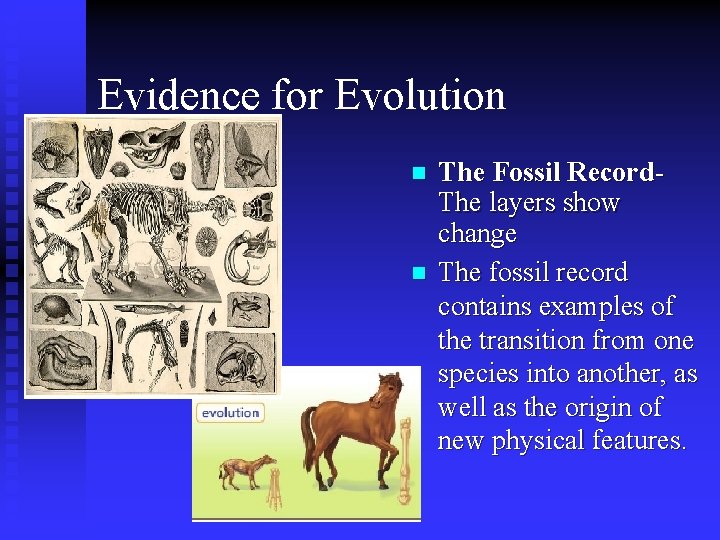
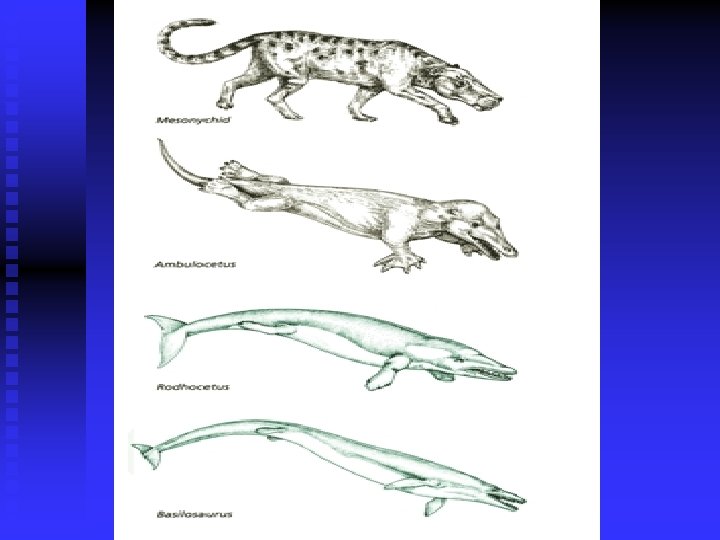
Evidence for Evolution n n The Fossil Record. The layers show change The fossil record contains examples of the transition from one species into another, as well as the origin of new physical features.
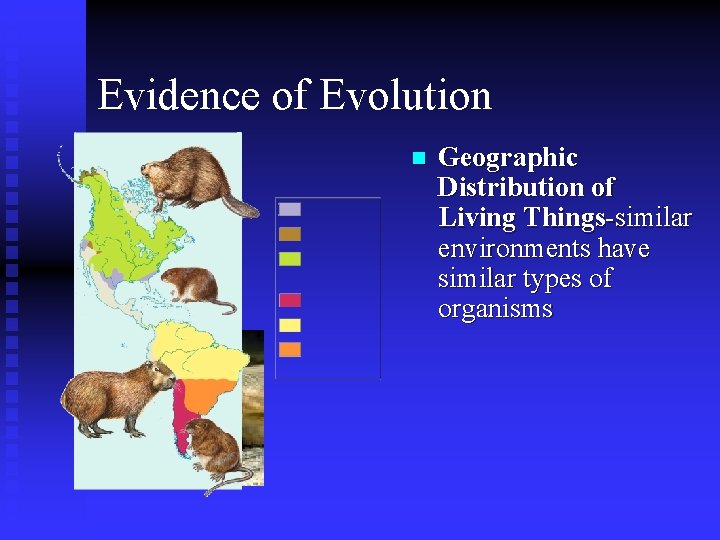
Evidence of Evolution n Geographic Distribution of Living Things-similar environments have similar types of organisms
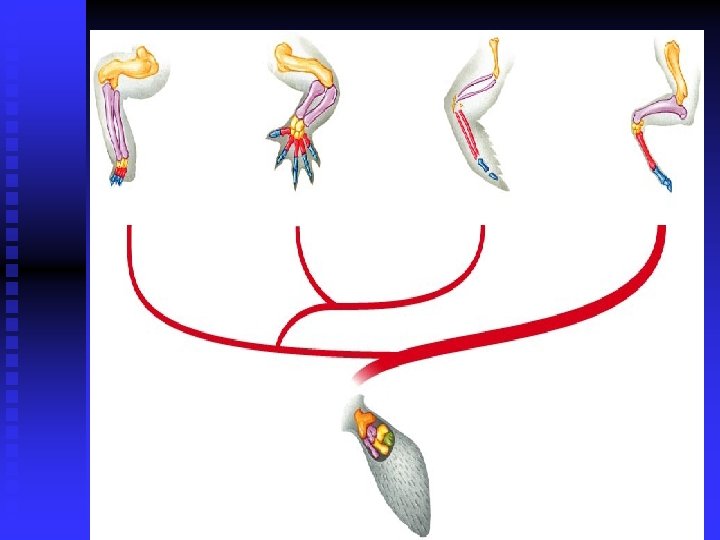
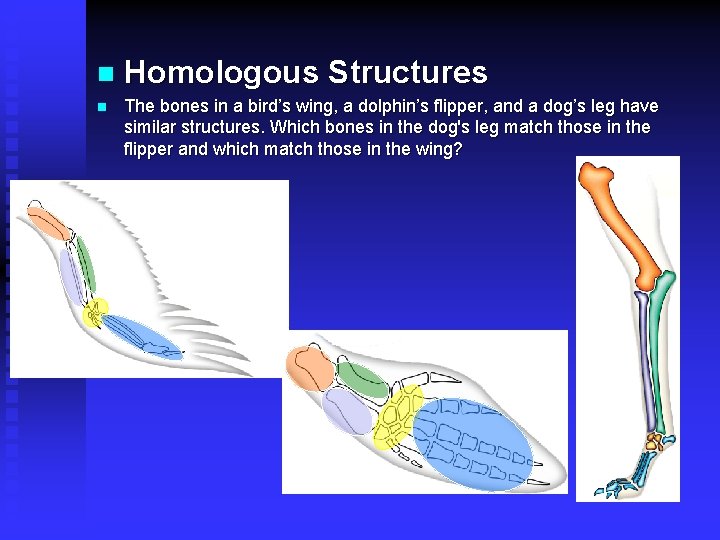
Similarities in Body Structures n Similarities in Body Structure: how the bones are arranged. Similarities provide evidence that these animals all evolved from a common ancestor. n Similar structures that related species have inherited from a common ancestor are known as homologous structures.
n Homologous Structures n The bones in a bird’s wing, a dolphin’s flipper, and a dog’s leg have similar structures. Which bones in the dog's leg match those in the flipper and which match those in the wing?
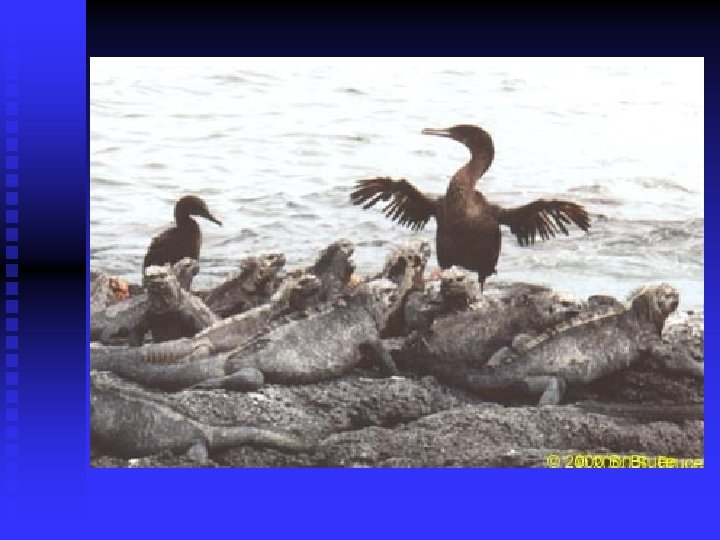
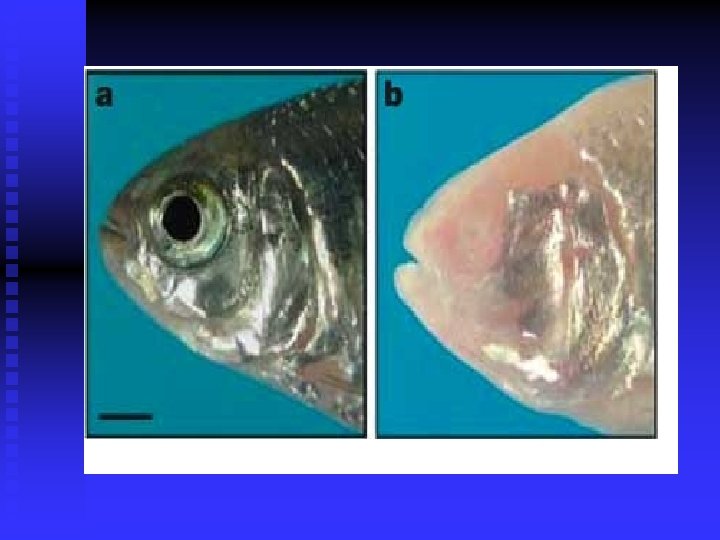
Evidence for Evolution n Vestigial organs-organs that serve no useful function in an organism n i. e. ) appendix, miniature legs, arms
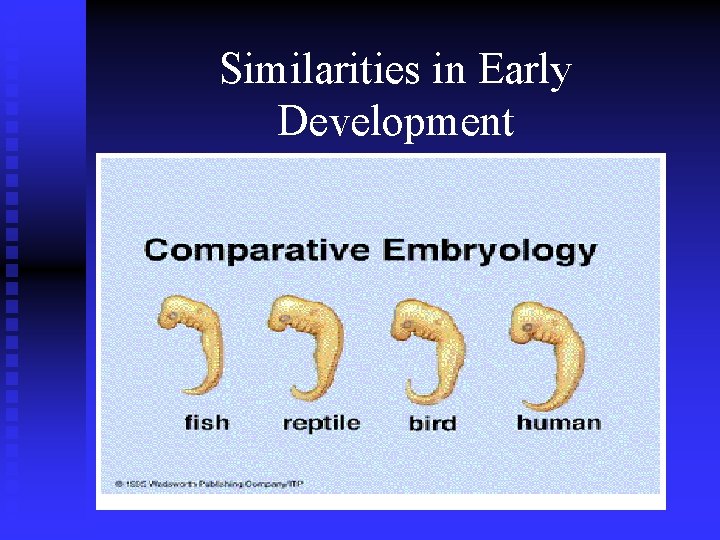
Similarities in Early Development
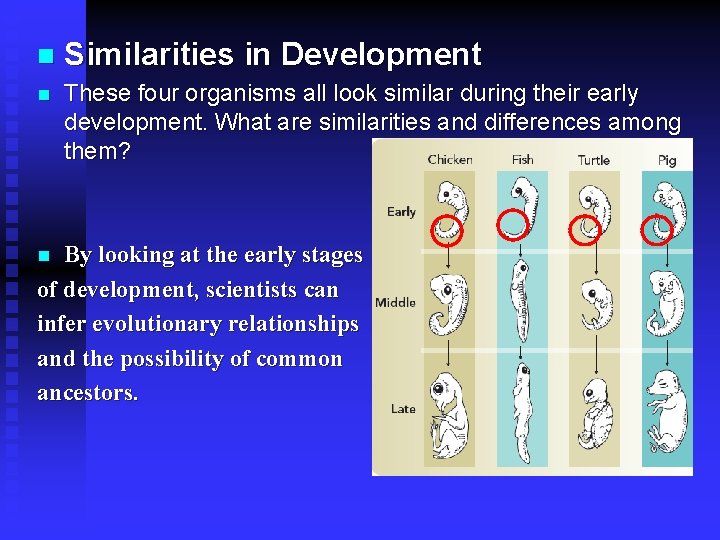
n Similarities in Development n These four organisms all look similar during their early development. What are similarities and differences among them? By looking at the early stages of development, scientists can infer evolutionary relationships and the possibility of common ancestors. n
Ancestors and Relatives n Scientists infer that the species inherited many of the same genes from a common ancestor. Scientists compare the sequence of nitrogen bases in the DNA of different species to infer how closely related the two species are. n The more similar the DNA sequences, the more closely related the species are.
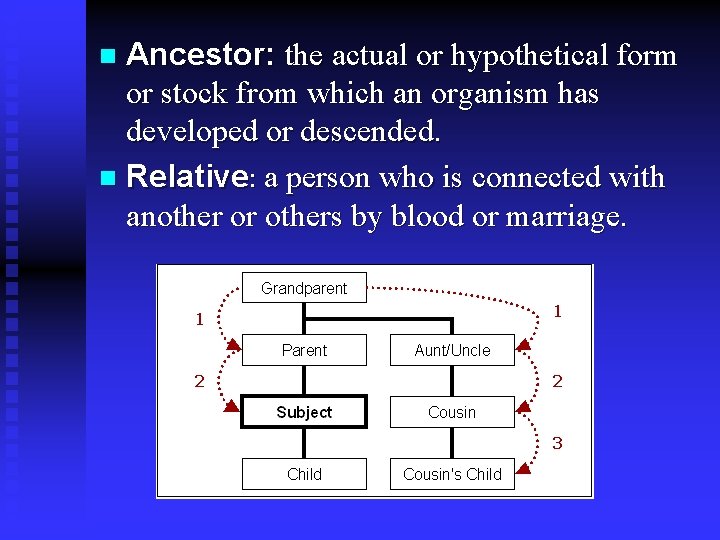
Ancestor: the actual or hypothetical form or stock from which an organism has developed or descended. n Relative: a person who is connected with another or others by blood or marriage. n
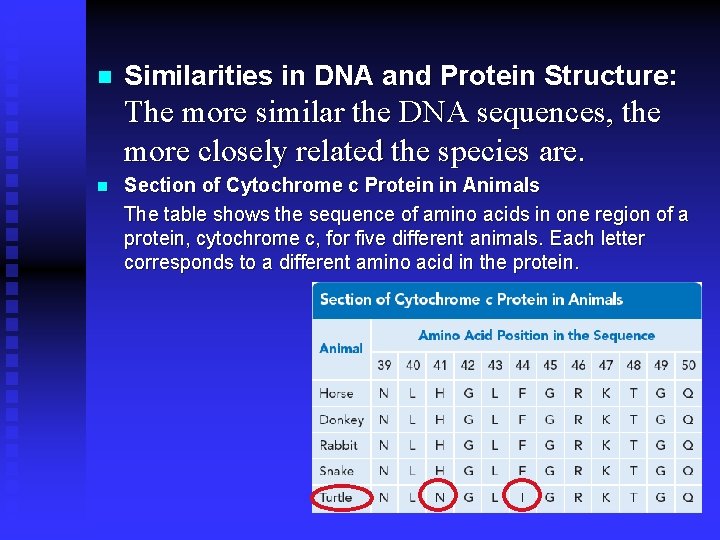
n Similarities in DNA and Protein Structure: The more similar the DNA sequences, the more closely related the species are. n Section of Cytochrome c Protein in Animals The table shows the sequence of amino acids in one region of a protein, cytochrome c, for five different animals. Each letter corresponds to a different amino acid in the protein.
Summary of Darwin’s Theory n Individuals in nature differ from one another n Organisms in nature produce more offspring than can survive, and many of those who do not survive do not reproduce.
Summary of Darwin’s Theory n Because more organisms are produce than can survive, each species must struggle for resources n Each organism is unique, each has advantages and disadvantages in the struggle for existence
Summary (cont. ) n Individuals best suited for the environment survive and reproduce most successful n Species change over time
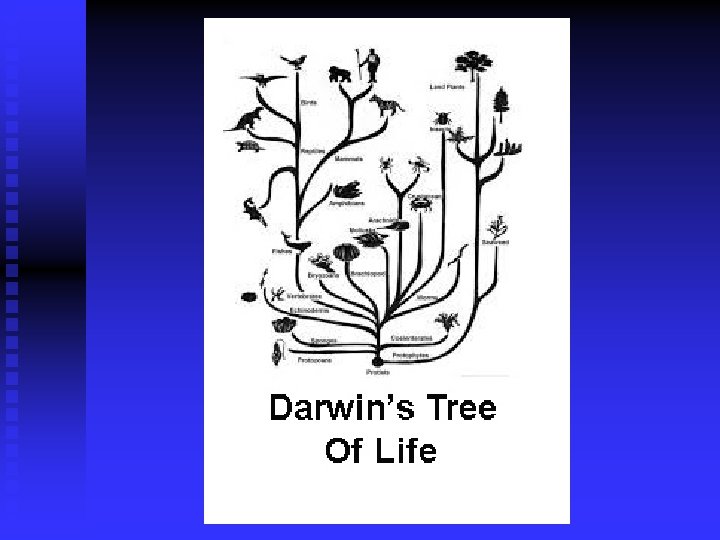
Summary (cont. ) n Species alive today descended with modification from species that lived in the past n All organisms on earth are united into a single family tree of life by common descent