
Evidence for Evolution 5 main pieces of evidence
- Slides: 15
Evidence for Evolution 5 main pieces of evidence
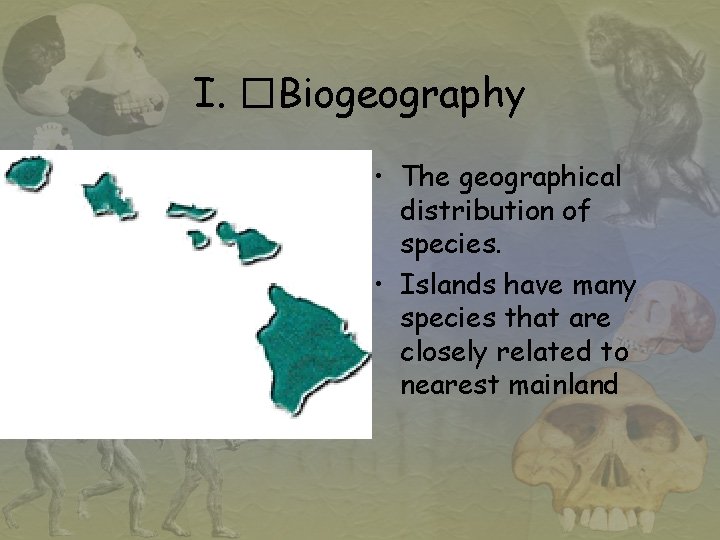
I. �Biogeography • The geographical distribution of species. • Islands have many species that are closely related to nearest mainland
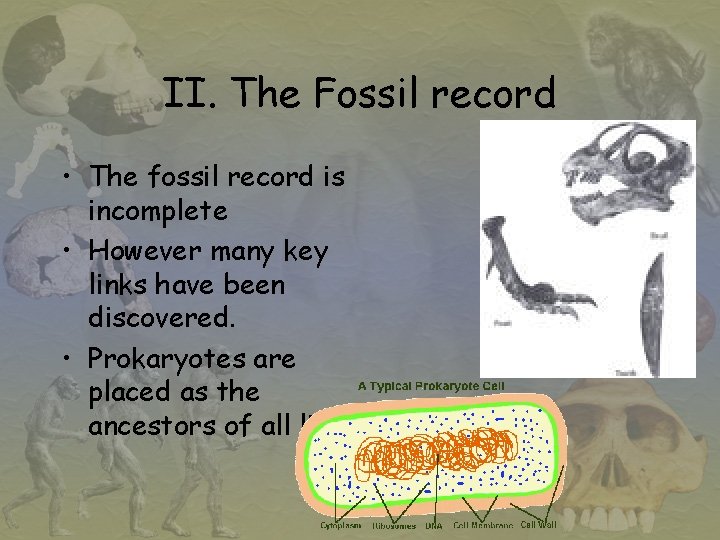
II. The Fossil record • The fossil record is incomplete • However many key links have been discovered. • Prokaryotes are placed as the ancestors of all life.
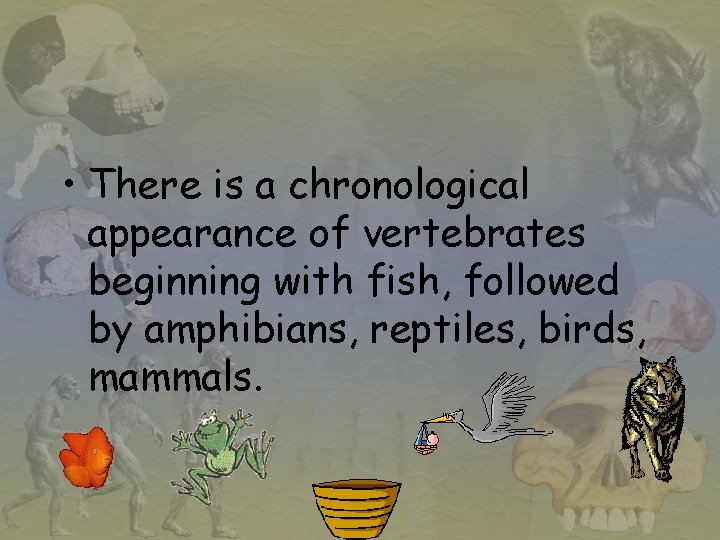
• There is a chronological appearance of vertebrates beginning with fish, followed by amphibians, reptiles, birds, mammals.
III. Comparative Anatomy • Anatomical similarities among species in the same taxonomic category show a reflection of common descent
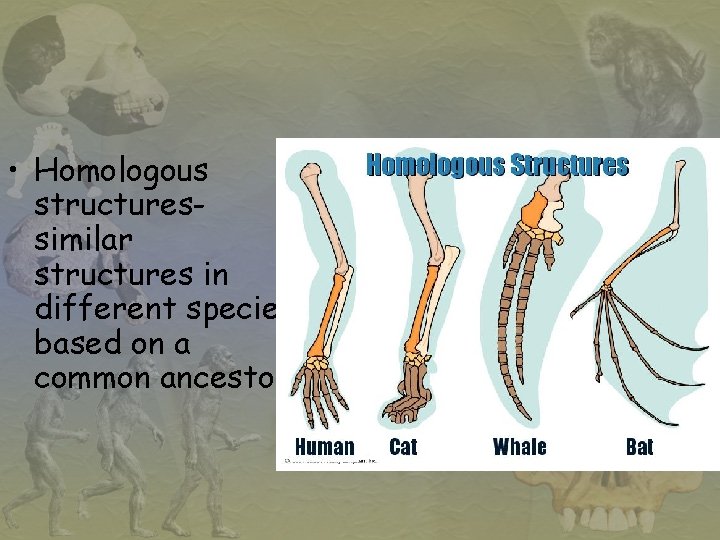
• Homologous structuressimilar structures in different species based on a common ancestor
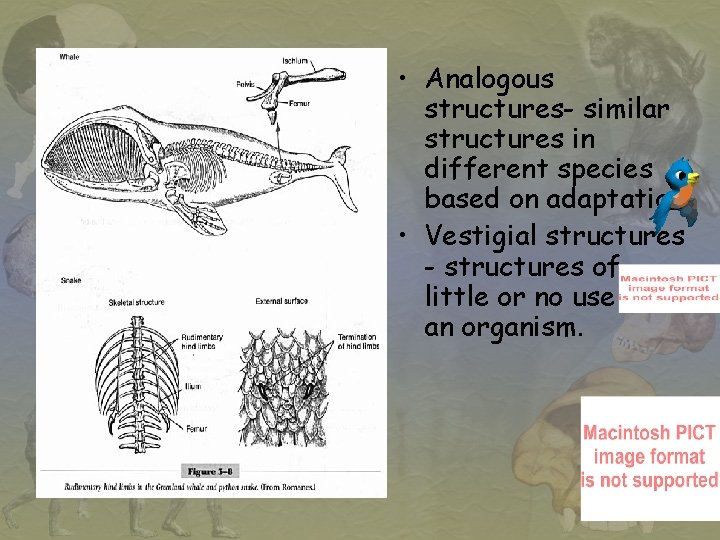
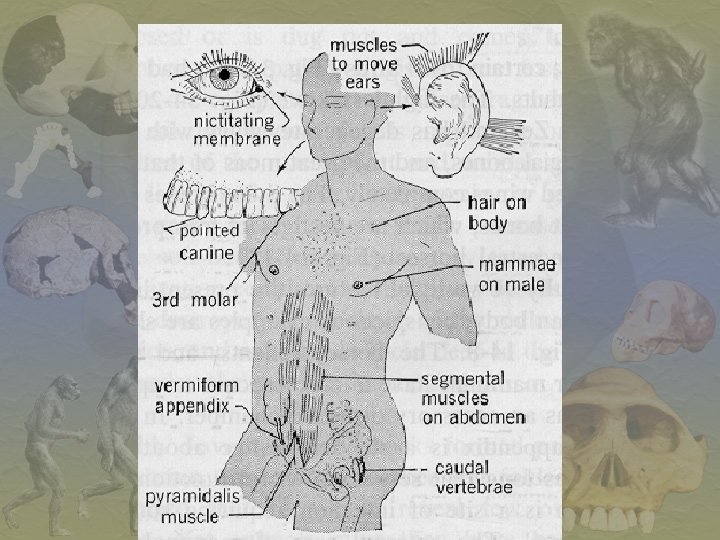
• Analogous structures- similar structures in different species based on adaptation • Vestigial structures - structures of little or no use to an organism.
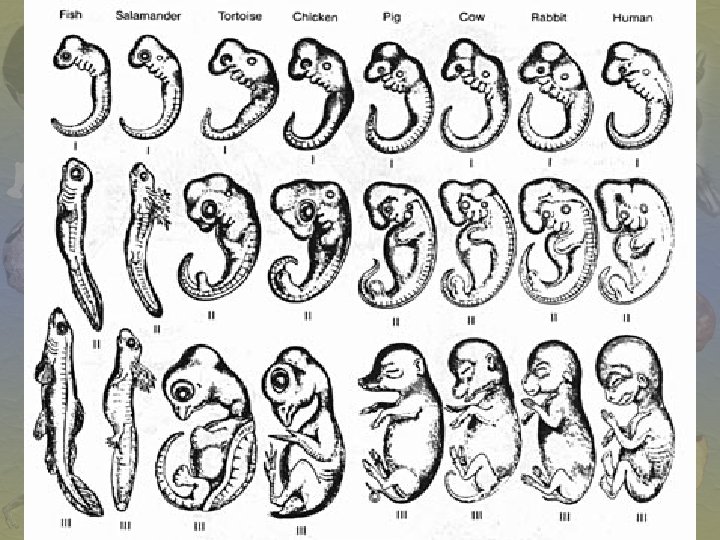
IV. Comparative embryology • Closely related species go through similar stages in embryonic development – Fish, amphibians, reptiles, birds, and mammals all have gill slits on the sides of their throats
• As development progresses traits develop into divergent structures
• Evolutionist study ontogeny and phylogeny to develop connections in evolution
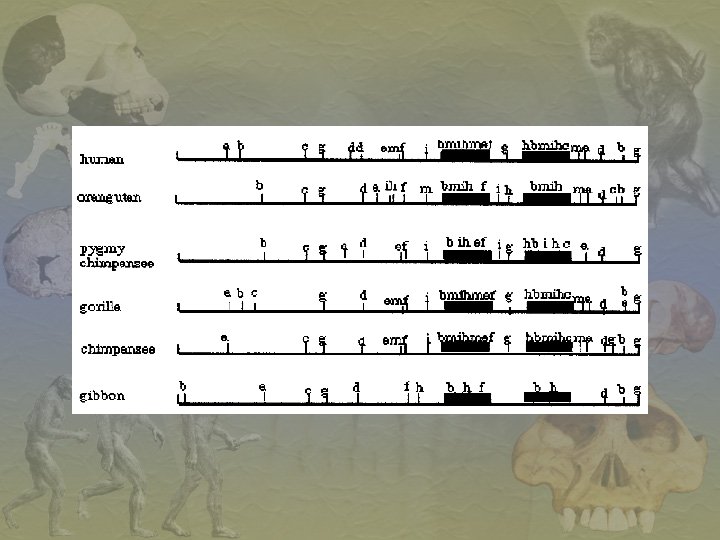
V. Molecular Biology • Hereditary background is reflected in genes and proteins • Siblings have greater similarities in DNA than unrelated members of the same species
• Even bacteria and mammals have some proteins in common.