
Evidence for Evolution 1 Evidence of common ancestry
- Slides: 23
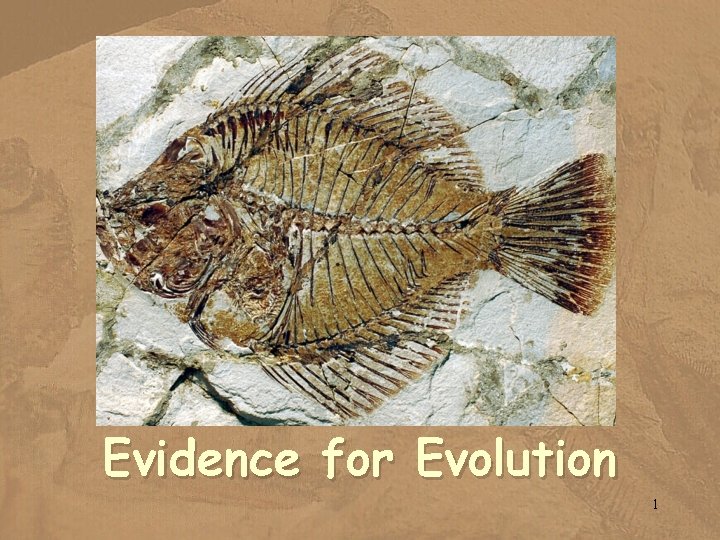
Evidence for Evolution 1
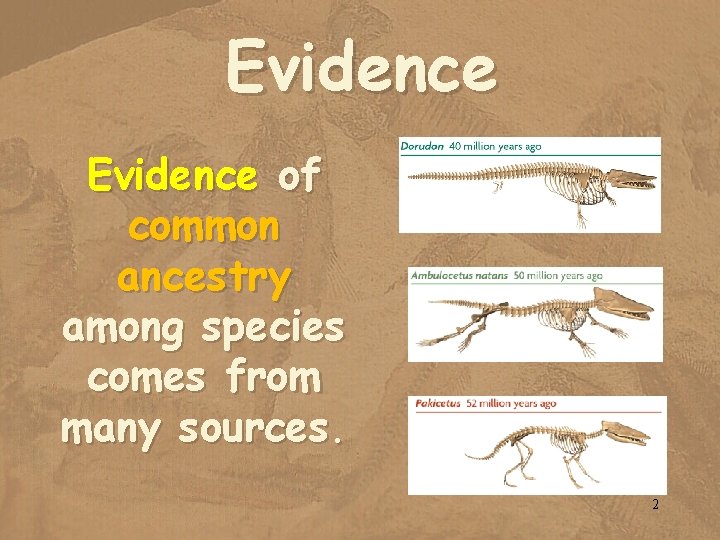
Evidence of common ancestry among species comes from many sources. 2
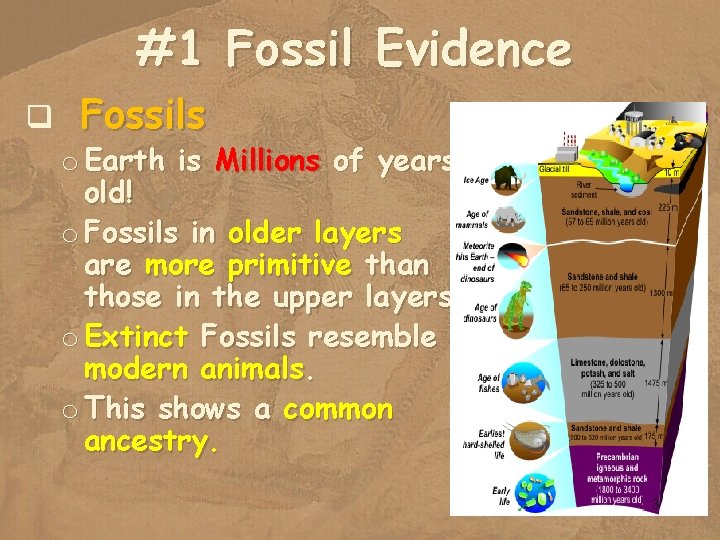
#1 Fossil Evidence q Fossils o Earth is Millions of years old! o Fossils in older layers are more primitive than those in the upper layers. o Extinct Fossils resemble modern animals. o This shows a common ancestry. 3
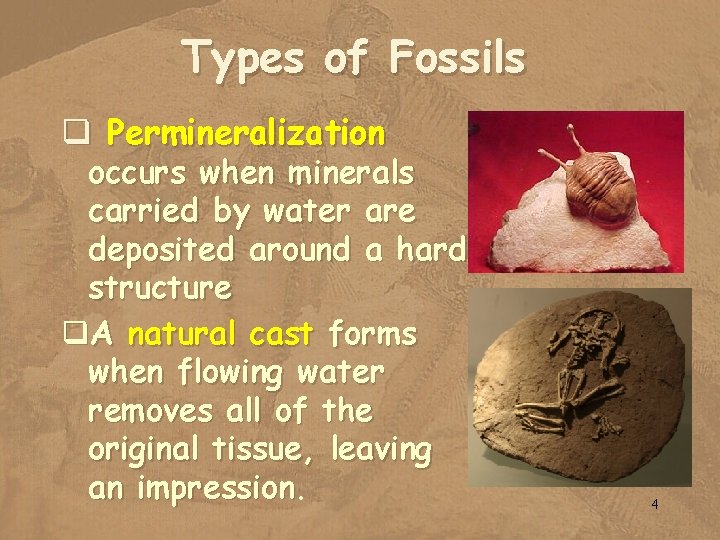
Types of Fossils q Permineralization occurs when minerals carried by water are deposited around a hard structure q. A natural cast forms when flowing water removes all of the original tissue, leaving an impression 4
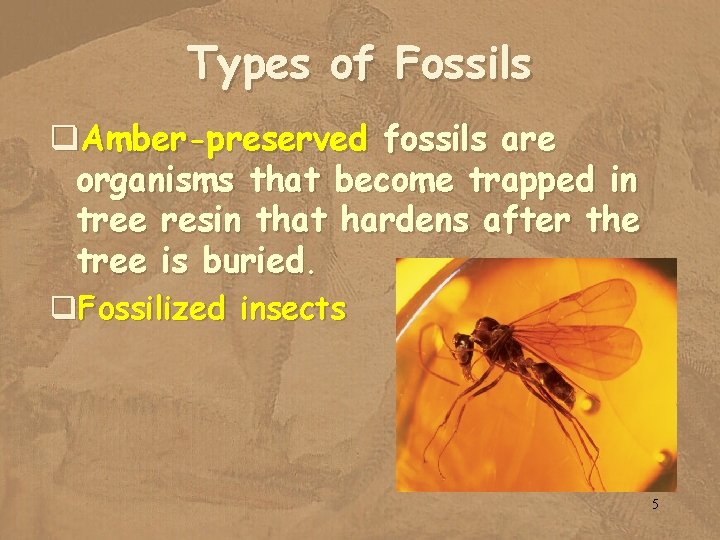
Types of Fossils q. Amber-preserved fossils are organisms that become trapped in tree resin that hardens after the tree is buried. q. Fossilized insects 5
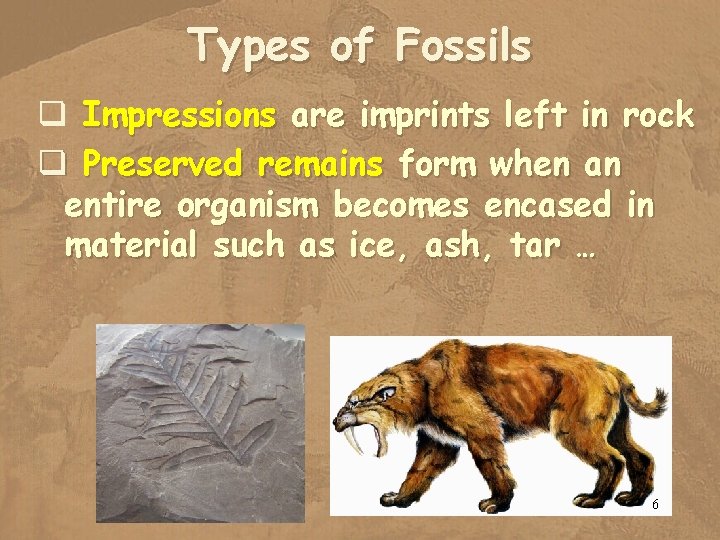
Types of Fossils q Impressions are imprints left in rock q Preserved remains form when an entire organism becomes encased in material such as ice, ash, tar … 6
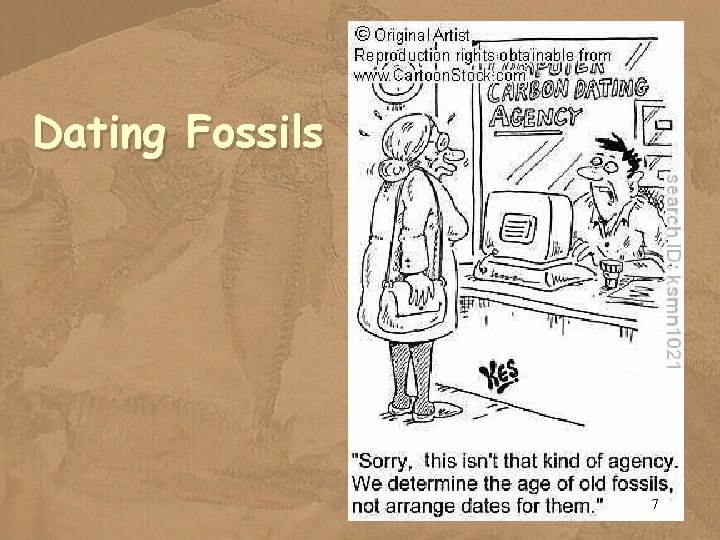
Dating Fossils 7
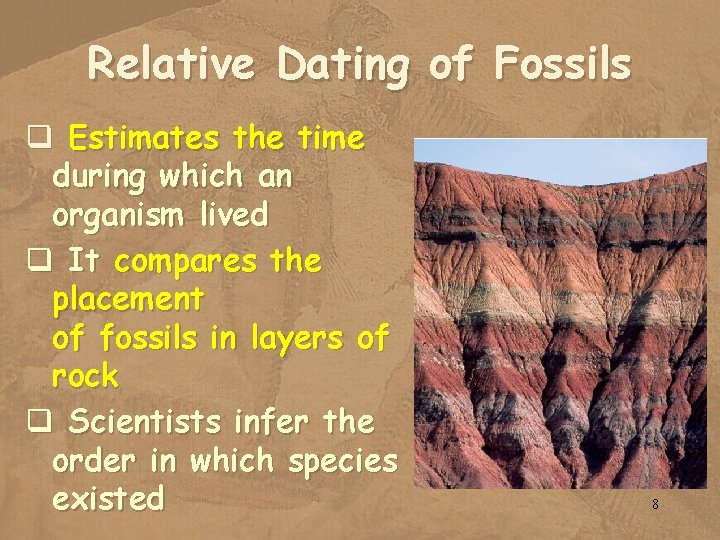
Relative Dating of Fossils q Estimates the time during which an organism lived q It compares the placement of fossils in layers of rock q Scientists infer the order in which species existed 8
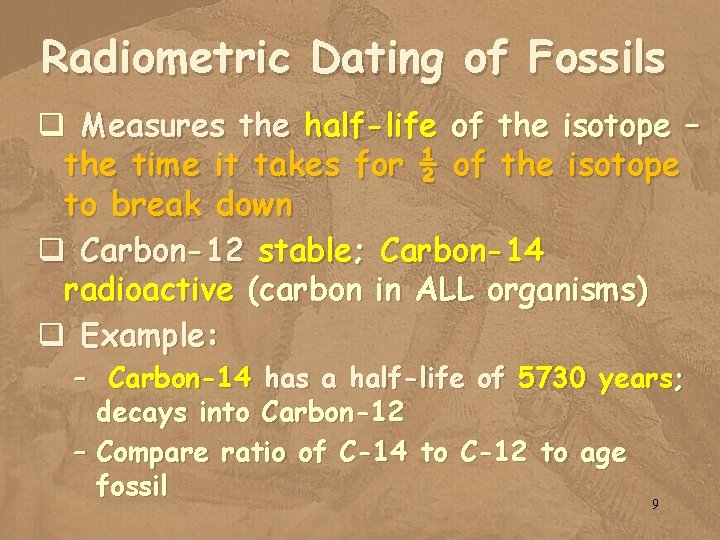
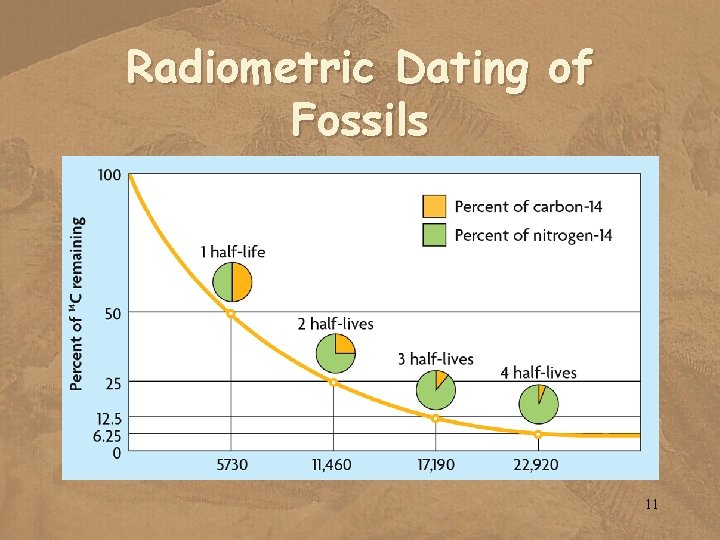
Radiometric Dating of Fossils q Measures the half-life of the isotope – the time it takes for ½ of the isotope to break down q Carbon-12 stable; Carbon-14 radioactive (carbon in ALL organisms) q Example: – Carbon-14 has a half-life of 5730 years; decays into Carbon-12 – Compare ratio of C-14 to C-12 to age fossil 9
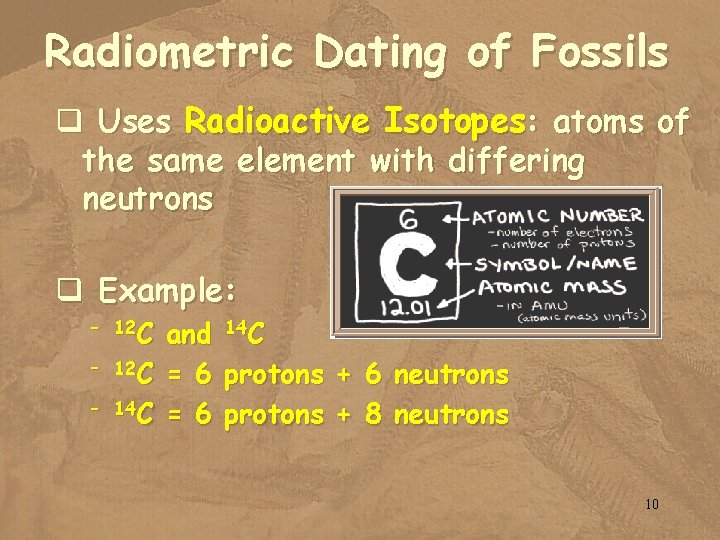
Radiometric Dating of Fossils q Uses Radioactive Isotopes: atoms of the same element with differing neutrons q Example: – 12 C – 14 C and = 6 14 C protons + + 6 8 neutrons 10
Radiometric Dating of Fossils 11
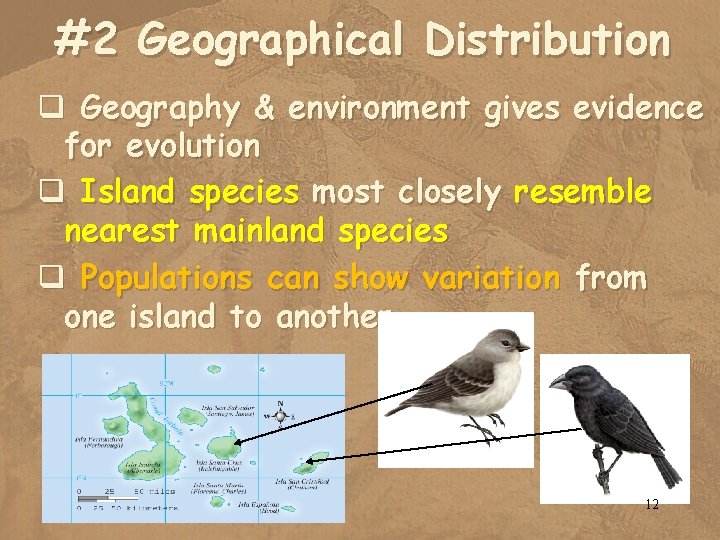
#2 Geographical Distribution q Geography & environment gives evidence for evolution q Island species most closely resemble nearest mainland species q Populations can show variation from one island to another 12
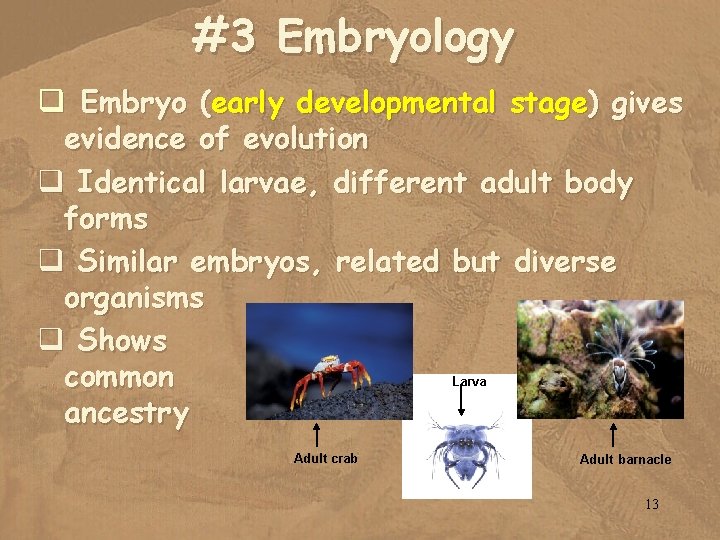
#3 Embryology q Embryo (early developmental stage) gives evidence of evolution q Identical larvae, different adult body forms q Similar embryos, related but diverse organisms q Shows common Larva ancestry Adult crab Adult barnacle 13
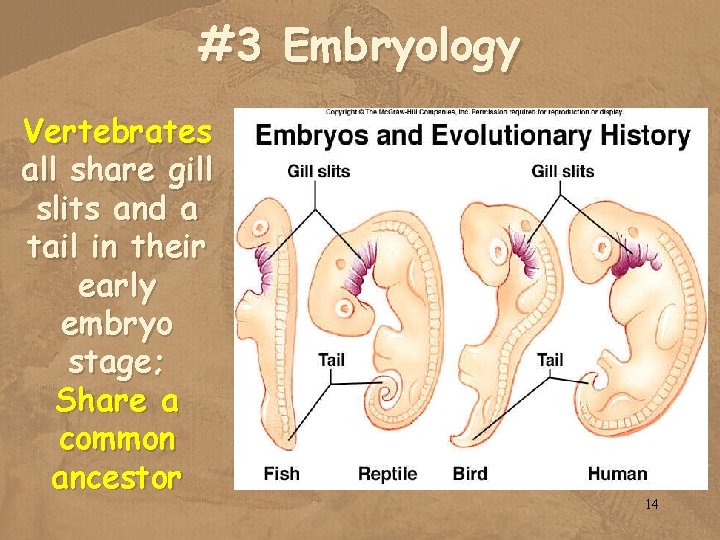
#3 Embryology Vertebrates all share gill slits and a tail in their early embryo stage; Share a common ancestor 14
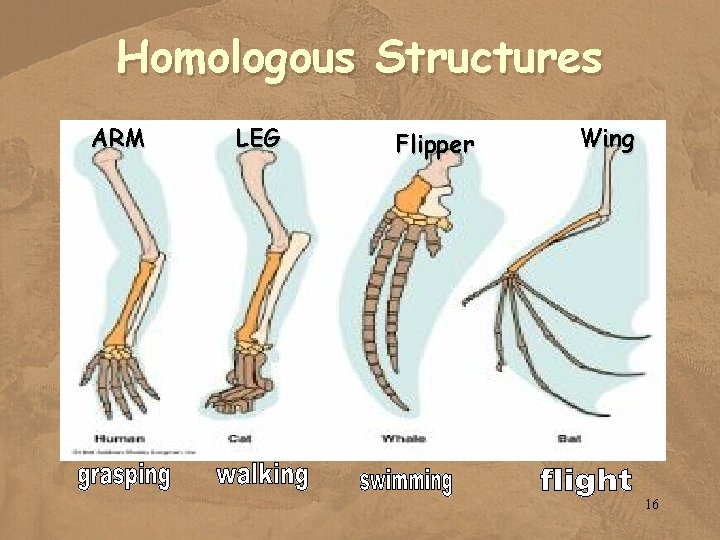
#4 Comparative Anatomy q The study of anatomy provides evidence of evolution q Homologous structures are similar in structure but different in function. q Homologous structures ARE EVIDENCE of a common ancestor. 15
Homologous Structures ARM LEG Flipper Wing 16
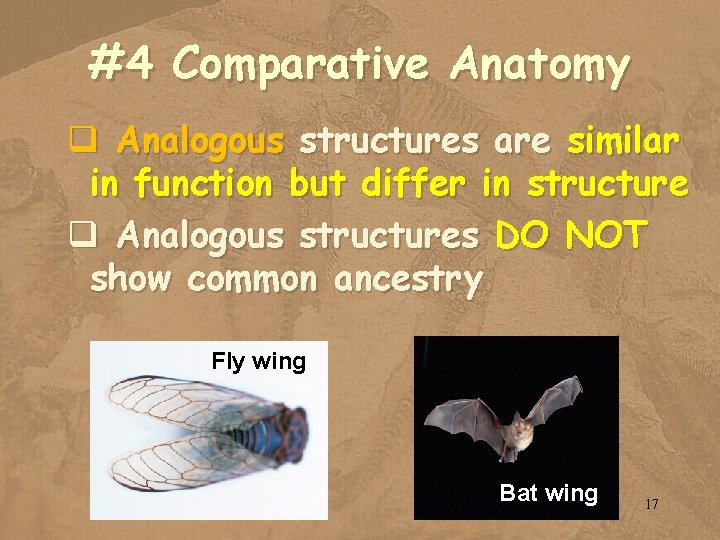
#4 Comparative Anatomy q Analogous structures are similar in function but differ in structure q Analogous structures DO NOT show common ancestry Fly wing Bat wing 17
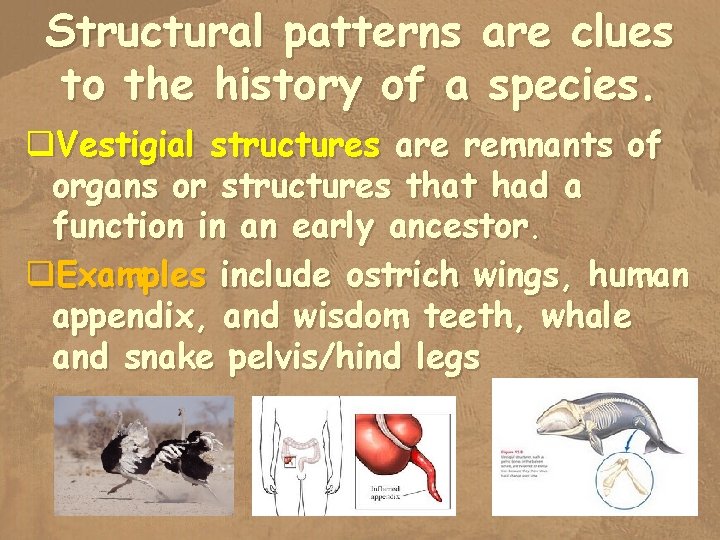
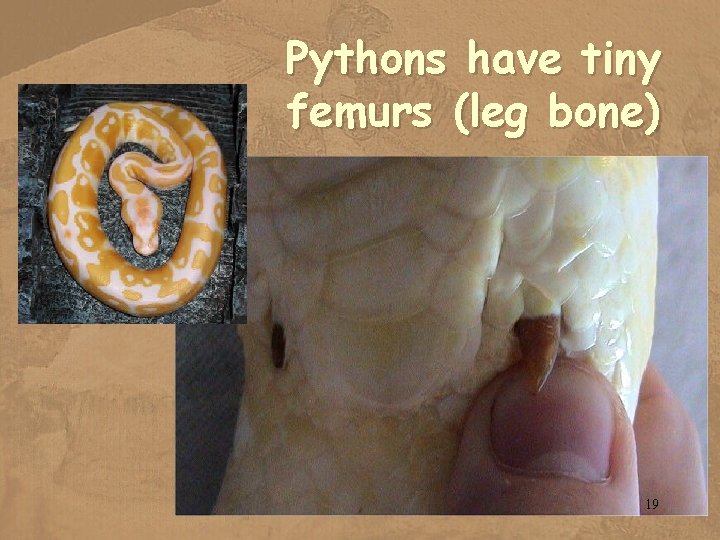
Structural patterns are clues to the history of a species. q. Vestigial structures are remnants of organs or structures that had a function in an early ancestor. q. Examples include ostrich wings, human appendix, and wisdom teeth, whale and snake pelvis/hind legs 18
Pythons have tiny femurs (leg bone) 19
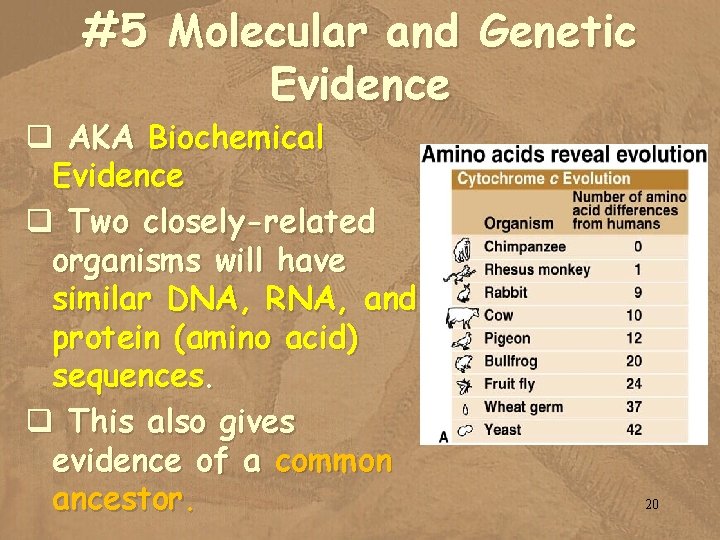
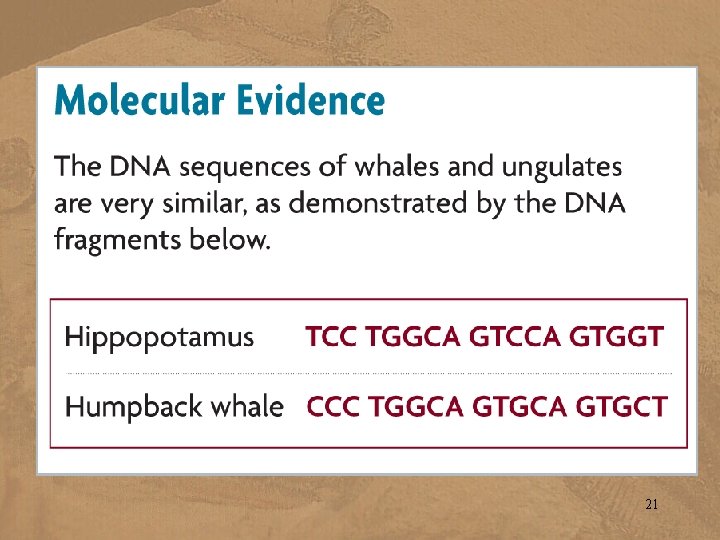
#5 Molecular and Genetic Evidence q AKA Biochemical Evidence q Two closely-related organisms will have similar DNA, RNA, and protein (amino acid) sequences. q This also gives evidence of a common ancestor. 20
21
Five examples of Evidence for Evolution 1. Fossils 2. Geographical Distribution 3. Embryology 4. Comparative Anatomy 5. Molecular and Genetic 22
23